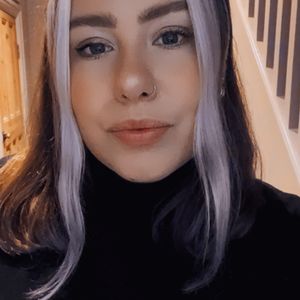
The brilliant Todd L. Burns published the final edition of Music Journalism Insider a few weeks ago. As my luck would have it, around the same time that I finished my answers to the interview he had asked me to contribute to the newsletter. With Todd's permission, seeing as I went, well, long, I am publishing the full interview here.
_____
How did you get to where you are today, professionally?
This is going to be a long one as I really went around the houses before joining Resident Advisor. I started off interning at Ministry of Sound in London when I was 18 (and obsessed with trance!). This was back in 2010, and I spent most of my weeks hauling a trolley full of flyers around London, updating the flyer racks the club had in record stores and shops all across the city. Back in the office I did things like organising the photo gallery uploads after the weekend's parties and preparing post for prize winners. Towards the end of my time there, I got to transcribe and edit some interviews to go up on the MoS blog. Looking back, that was my first taste of thinking about what I would like to ask artists about their work.
Next, I went to university in Manchester where I worked on the promotions team for The Warehouse Project and started a club night called The Wall Street Mash. Haters will hate, but it was an electro swing night, which I loved at the time. I did everything from the ticketing to promo (shout out to my friends who helped me shift thousands of flyers in the dreary Manchester weather) and bookings, so I learned a LOT from that process. And it was a success! Seeing a dance floor full of happy dancers is a great feeling.
In the summer of my second year I also interned for RA in Ibiza, where the company had an office there for a short time. I was the "general intern" which involved mostly administrative tasks to do with the–now defunct–Ibiza microsite. I also worked with the editorial intern (Chandler Shortlidge) to source local news stories in mainland Spain and South America, as well as increasing RA's footprint in those regions through adding event listings and reaching out to venues and agents to find out about upcoming artist tours.
When I graduated I did another internship, this time at Sunday Best Recordings in London. (I'll add here that I'm acutely aware of how fortunate I was to be able to do all these internships. Particularly as back then, they generally covered my travel and lunch at most.) I remember I was reading David Byrne's How Music Works concurrently and loved learning about the workings of this different pocket of the industry. I assisted the product manager and the label manager, basically helping with anything that needed doing and absorbing all this information about record labels. They also had an agency on the side, and I would occasionally assist with contracts so I got a peep into the world of booking agents too.
I then spent some time working in customer service at a travel company, before landing a permanent job at The Columbo Group in London (then responsible for XOYO, The Nest, Phonox, Jazz Cafe), as a reservations manager. I was booking tables for large groups, which included trying to get people into the clubs pre-10 PM (read: a thankless task!), as well as helping with the group's takeover of Jazz Cafe. This involved answering an iPhone that had been redirected from the venue and rang every 30 seconds (barely exaggerating) with people who needed refunds or to amend their bookings. It transpired mine was a fairly impossible role and I was unceremoniously fired having been there just under a year. I considered myself to be hard working, diligent and what I hoped was a good employee, so it was a major blow for my confidence to have the rug taken from under me like that. At the time, having wanted to work in dance music for so long, in a way it was my first experience of grief. I was devastated. I'd lost this job I loved and a team of people who had become like my family.
A few months later, when fabric lost its licence, I resurrected an old Blogspot page I'd occasionally posted on at uni. I wrote about the importance of fabric, and the misinformation that was being discussed in the council hearing surrounding its licence, as if I were explaining it to my mum. I'd had a similar conversation with her the day before, trying to explain that while tragic, the club was not responsible for the deaths of the people who had died, and how closing down a club will not stop young people from taking drugs.
That blog post led to me doing some unpaid–which later became paid–writing at Radar Radio. The platform came to a sticky end, as I'm sure most people reading this will know, but the support I got from the editorial team there (shout out JB and Alice) and the space I got to start to figure out the kind of writer I wanted to be was invaluable. I did this series called ThroughTracks, which was basically interviewing an artist through a series of tracks they'd chosen based on prompts I'd given them. I spoke to Pinch, Ikonika, Bok Bok, DJ Haram, Jossy Mitsu and more–pretty sick for a new writer! Around the same time I started freelancing for London in Stereo, which is no longer running but was such a special platform and magazine for me and many others for a long time. I started out doing release reviews and wound up being their Club and Festivals Editor, contributing to each issue of the magazine, writing several cover stories and getting stuck into writing and editing in a way I had never thought possible. Imposter syndrome is real, and I had honestly never thought of myself as someone who would be able to write about the music I loved, let alone have people be interested in what I had to say about it.
London in Stereo led to more freelance opportunities, including my first RA byline, and I then spent a few years working various part-time jobs (barista at Starbucks, assistant at a hair salon, runner for a music visa company, back to the original travel agent) so I'd know my rent was paid, and spending every other waking hour reading and writing as much as I possibly could, sending pitches and going to clubs.
By the time I joined RA permanently in May 2022, my portfolio had grown to include bylines in publications like Crack, DJ Mag, The Face, Dazed, The Quietus, Mixmag and Rolling Stone UK. I'd been freelancing on RA's news desk for nine months at that point, contributing to as many other sections as I could and basically trying to be as useful and indispensable as possible. I'd quickly realised how at home I felt there, so joining the editorial team felt really good and right for me.
I started as Events Writer, managing RA Picks, writing events news, curating our Top Ten Festivals series, that sort of thing, and I also led on curation and editing of RA's first print offering, Sacred Spaces. I then became Brand and Events Editor in January of this year. And I will talk about my role a bit more in the coming questions :)
In some ways it feels like it's taken me a long time (and 1200 words apparently!) to find the place that's right for me–I'm 32 now–but I wouldn't change any of it because of the experience and understanding I've been able to gain across the industry.
Did you have any mentors along the way? What did they teach you?
There are plenty of kind and talented people who've helped me hone my craft as a writer and editor, boosting me with the confidence to approach my work with conviction. For one, RA is full of inspiring and supportive people who encourage me to keep improving and growing in my role. One of those people is Carlos Hawthorn, RA's UK/EU deputy editor. We've been working together since my first-ever review for RA in 2017 (Sasha live at The Barbican!) and he's taught me a lot. In particular, we share a dogged commitment to sharp, consistent editing practice, the value of keeping prose dynamic yet uncomplicated, and the idea that style guide = bible.
I would also shout out Jess Partridge and Dave Rowlinson, the editors at London in Stereo. Without Jess and Dave I don't know if my career would have developed in the way that it has. They gave me some of my first writing opportunities, my first editor gig and put a trust in me and my ideas that I will always be grateful for. There's also Tom Adcock, from Ninja Tune, who was one of the PRs I worked with often in the early days. I was always grateful for his feedback and support, helping guide my pitches and connect me with people when I was just starting out.
While it wasn't necessarily a mentor/mentee dynamic, I've been very lucky to work with some brilliant editors over the years, particularly Lauren Martin when she was at DJ Mag. I'd admired Lauren's work for a long time, and then when we worked together on one of my favourite pieces I've ever written–this deep dive on London club The End–I remember being so happily surprised by the time she was able to invest in getting the story to its final form, getting on the phone with me and guiding me gently through the gaps in the piece and how to thread everything together and keep it from becoming about 10,000 words long! Lauren is an incredible writer and editor, and the care she put into our work together is something I've really tried to take on board as an editor myself.
Walk me through a typical day-to-day for you right now.
I would say I kind of have two jobs and work across two teams at the moment. In the editorial team I oversee all of our events coverage, which includes planning and executing events-related news and features, commissioning writers, editing, reporting from festivals myself and working with the other editors, the festival partnerships manager and the content team to decide which festivals we cover and how. And then as the branded editorial lead, I work between 23:59, RA's in-house creative studio, and the editorial team to deliver our brand partnerships content. This involves everything from getting a brief in from a brand and working on the concept, strategy and pitching, through to executing and rolling out new projects on the website and across our socials. We're selective about the brands we work with, and it's important what we publish fits comfortably within RA's editorial sections, so a reasonable chunk of my time is dedicated to finding that balance of producing work that fits the client brief while also being something we would be interested in publishing with or without a brand’s involvement. Outside of those two core components I've also project managed our guest-edited months and I contribute to editing across the wider features section.
The nature of my role means I don't really have a typical day because the projects I'm working on are always changing, but each week generally involves a fair amount of internal and external meetings, and then I try and divide the rest of my week equally between events, studio projects and keeping on top of my inbox (fellow writers will know this is a job in itself!). An average week will usually include editing features (each feature is typically seen by at least three editors, so I might be taking a first pass, a second pass or a final subedit); responding to freelance pitches and sending out briefs for upcoming pieces; brainstorming creative ideas for upcoming client pitches and then writing these up for a deck; fine-tuning and editing pitch decks which are close to completion; writing and editing RA Picks; writing events-related news stories, such as festival lineup announcements; listening to new releases; and then doing other writing of my own–I try and keep different parts of my writing brain ticking over by making sure that I'm contributing to the reviews section semi-regularly. I also still take on freelance work from time to time, so some weeks I'll be working on those commissions in the evenings.
How has your approach to your work changed over the past few years?
I suppose the biggest shift has happened naturally as I've moved from being a freelance writer with a part-time job to being a full-time in-house editor. I've gone from approaching my work in an individualistic way where I only really have myself to think about, to working within a team, within a wider department, within the company as a whole, so there's more to consider now about where my thinking and latterly my work fits within these outer layers and what we're all trying to achieve.
When you're a freelancer, of course you're thinking about the ethos and output of the place you're pitching to, because you want the pitch to land, but in my experience there's not so much to take into consideration about how each piece fits into this much bigger jigsaw, if that makes sense–that's the in-house team's job. Maybe a shorter way of explaining this would be to say I take a more holistic approach to my work these days.
How do you organize your work?
To be honest, I'm one of those people who has tried every organisational and productivity tool under the sun but hasn't quite mastered any of them. Working across multiple teams and projects can be challenging because there's all these things going on which sit at fairly similar priority levels, so managing my time is something I always think I could be better at.
For any freelance work, I have a spreadsheet for pitches and works in progress. I have a tab for ideas, a tab for pitches I've sent and a tab for successful commissions. The successful commissions tab is also where I keep track of invoices (I cannot recommend the Wave app enough, which stores all my invoice templates and reminds me the moment payments are overdue). When I was freelancing regularly, I also had a whiteboard by my desk which would list all my live commissions and their respective deadlines.
At RA, I swear by the notes app on my laptop. Each week I create a to-do list for the week and break down everything that needs to be done by general (items that aren't so time sensitive), this week and then day by day. (At really busy times, I transfer the list to a notebook because a tangible to-do list and crossing things off makes me feel more organised.) I also use my Google Calendar to keep tabs on deadlines, and always make sure I have an additional reminder in my calendar a week before anything is due. I organise my inbox by marking everything that needs my attention as unread, and it stays unread until whatever I need to do has been completed. As a wider team, we use Monday.com for planning, both for editorial and for studio projects, and we do most of our editing in Google Docs. I've seen arguments against editing this way in the past, but I think it works well in terms of making suggestions and being collaborative with the writer.
In terms of my own writing, I always save my first draft in Word even if I'm filing in Google Docs so I can refer back to my original words at any time. I also use an app called Forest when I need deep focus time. It essentially facilitates the pomodoro technique in terms of productivity, but it also grows a little tree on your phone screen while you're working. You can't do anything on your phone until the time is up and the tree is fully grown, or it will die!
Finally, one of the best techniques I've found for my own feature writing is something I started after watching I May Destroy You, where Michaela Coel's character writes and plans an entire book by sticking Post-its around her room. I now plan my features in the same way–once I've done all my interviewing, transcribing, further reading etc., I put all the points I want to hit in the feature on Post-its, and then I plan the structure of the feature by sticking them onto the wall in order from top to bottom. Then as I complete each section of the feature, I rip the Post-it down, which is very satisfying.
Where do you see music journalism headed?
In many ways, as many previous interviewees in this newsletter have identified, it can be hard to feel positive about the future of music journalism. I know many of my peers feel pretty hopeless about the situation, as in recent years the industry has seen not only extensive redundancies but also people who have been around for a long time calling it quits. It's an incredibly challenging time, particularly in terms of resources, but I'm regularly reminded of the talented and passionate people that remain in the industry–plus the influx of young talent coming in against the odds to make their mark–and that helps me hold onto all-important motivation and hope. The way I see it, most people that work in music do so because they fucking love it–this stuff courses through our veins. And that can only be a positive thing as we move forward and face new challenges. I hope there are ways for music journalism to continue to bend and mould to the changing demands of the time.
We have to do what we can with the tools we have available to us. So as it's almost impossible to sustain yourself as a freelancer these days without some sort of regular gig or part-time job like I had, people like myself who are fortunate enough to have in-house roles need to use those positions to create opportunities for others as often as we can. I read something in First Floor recently about one of our studio projects which criticised it for being "resource heavy" with a long list of credits. The way I see it, each credit in that list is a skilled person who we were able to offer paid work to. I struggle to see how that is a bad thing.
What would you like to see more of in music journalism right now?
I'd love for more resources to be dedicated to big, juicy deep dives, and for editors to trust that if the story is good, the people will keep reading. I'd like for publications to think seriously about the time required for freelance commissions, and do what they can to pay accordingly. And speaking of which, I'd like freelancers to get paid on time! I'd like for editors to prioritise finding the right person to tell the story–it's easy to rely on existing relationships, but instead we should be broadening our net of freelancers, offering opportunities to more people and sensitively matching writer to subject. I'd like to read more about people's personal experience in music writing. For example, how did this track make you feel? What does it remind you of? When did you hear it? Why do you, as an individual person with an individual story to tell, connect to it? I think in my own writing I often bring myself into my stories, and I enjoy reading things that take a similarly personal angle.
And I'd like to see the pool of music writers, and the artists and scenes they cover, continue to expand and for publications and platforms to put the work in to be more accessible, equitable and inclusive, creating opportunities and encouraging people into the fold with support, education and, of course, remuneration.
What would you like to see less of in music journalism right now?
This is connected to wanting to see more deep dives, but I'd like to see fewer interviews/profiles that have been written after spending 45 minutes with an artist on video chat. I'd like writers to have better access and more time to understand the artist through their own experience and thus paint a more unique and detailed picture. I'd like there to be less online trolling from fandoms. Fandoms are powerful and beautiful in so many ways, but there has to be room for music writers to take risks and be honest. I'd like for there to be less slapdash editing. As a writer, I so appreciate constructive, encouraging editing and additional pairs of eyes on my work, and I think it's pretty easy to tell if a piece has been published without those steps.
I'd also like to see branded editorial held in less contempt (I can already feel some eyebrows raising). Someone said to me at an event recently, "anyone criticising brand partnerships in this economy is a fool," and with the right parameters in place, I agree. If you are thoughtful about the brands you partner with and the work you produce as a result, I see it as an opportunity to create work opportunities, pay people for that work (in my experience, branded work typically pays 50 to 100 percent more than I would expect from a non-branded commission) and essentially use brand capital to do something positive or tell a story that's interesting. Advertorial is nothing new, anyone who's ever read a magazine can attest to that, and in my experience, branded content is not replacing anything, it's an additional offering. The industry is not in a position to sneer at an additional income stream in these challenging circumstances, and this is income that can help facilitate other work, like those heavily researched deep dives I want to read more of.
Finally, I'd like to see less on-the-spot criticism. And by that, I don't mean the criticism of music as a form of music journalism, rather the ease with which we, as consumers, are critical or make assumptions without context. I suppose this is a wider comment on how the internet works nowadays rather than specifically music writing, but I sometimes find the speed at which we make critical judgement to be such a hindrance to balance and nuance. This is definitely not to say that we shouldn't have room for criticism, but I think clickbait has a lot to answer for in my frustration. I've lost count of the number of times I've seen writers on Twitter frustrated because the final headline/standfirst on their work misconstrues or makes a sweeping statement about their words.
What's one tip that you'd give a music journalist starting out right now?
It sounds obvious, but be professional. It's so easy for the lines to get blurred in this industry and the way we communicate in a business setting is markedly different from how you might discuss work elsewhere, but being pleasant, responsive, receptive to feedback and punctual with deadlines will mean that editors will want to work with you again. You could be the best writer in the world, but if you're unreliable, editors will find someone else.
The other piece of advice I would give is: Read! There's no better way to improve as a writer than to read, read and read some more. And I don't just mean music writing, read it all! Read about things outside your interests too, so you can find the hooks, ledes and styles that really suck you in and keep you engaged. Then, read your own work aloud. This will ensure your sentences aren't too long, smooth out your structure and, most importantly, help you find your voice.
How do you typically listen to music, both in a professional and personal sense?
At this point I think I might be the only person in London who still uses wired in-ear headphones, but when I'm out and about I use these affordable Sony ones because I love the sound quality. At my desk at home, I listen to music throughout the day on a Bose system I've had since uni, and then if I'm listening to something specifically related to a piece of work and I really want to focus and hear every detail, then I use the Sony over-ear WH-1000XM4 headphones. Elsewhere in the house we have Google Nest speakers in the bedroom and kitchen, and then we have a record player and sound system in the living room.
In terms of the time of day, I'm listening to music pretty much all the time (unless I'm engrossed in someone else's drama in the form of my preferred Real Housewives franchises.) I've also recently taken to listening to some kind of Beta waves deep-focus podcast when I'm editing, which I find really helpful to cut out the noise and hone in on the words.
What artist or trend are you most interested in right now?
Rather than a particular artist or trend I thought I would highlight some of the artists I really enjoyed this year. I'm not uncovering any new ground here but I absolutely love pop, and I spent 2023 listening to a lot of Griff, Sigrid, Tove Lo, Olivia Dean, Jessie Ware and I am always listening to Charli XCX. Dance music wise, I think BASHKKA had an amazing year, as did Kia, and some of my standout sets came courtesy of artists like Roza Terenzi, Avalon Emerson, THC and KI/KI. Obviously it's no secret that there's this tendency towards fast BPMs and singalong pop edits right now. Don't get me wrong, I love trancey techno and a familiar vocal, but I've also really appreciated groovy, sometimes sticky tunes year, like Felix Dickinson closing out Genosys at Glastonbury or Tristan da Cunha sending me west in the absolute best way at Barbarella's.
What's your favorite part of all this?
Honestly, I still can't get my head around the fact that my favourite extracurricular activity is also my job. I get paid to spend all my time involved in the thing I love most in the world? How lucky am I! I really don't take a single day of this for granted, and I hope that gratitude will always show in my work, my work ethic and my work relationships too. I think my favourite part of all of this, then, is that even on the inevitable bad days, I always feel lucky to do what I do. Writing is an art and a craft that can encourage people to find new interests and see or hear things in a new light. What a joy that I get to spend my time with words and music.
What was the best track / video or film / book you've consumed in the past 12 months?
I think my favourite track has to be Olivia Dean's "Dive," and the book would be Joan Didion's The Year of Magical Thinking. I won't share a film, just because I tend to watch a small roster of romantic comedies on repeat throughout the year (shout out It's Complicated).
If you had to point folks to one piece of yours, what would it be and why?
Probably this personal essay, titled Dancing My Way Through Grief, which I wrote for RA in 2021. The title is pretty self-explanatory, but it really highlights what I was saying before about putting myself and my experiences into my writing. In this case, I wrote about my disco-dancing mum and my first experience back in the club after she died during lockdown. It was a vulnerable thing for me to put out into the world, but I was so heartened by the way it was received. Grief might be a shared experience, but it can also be extraordinarily lonely, and I think this piece helped people feel seen in their own loss. And it was a reminder of the power of the dance floor and how much joy and respite we can find in dancing. Although I was apprehensive before the piece went live, it's perhaps the least time it's ever taken me to get words onto paper. I poured my heart out and the words just flowed.
Anything you want to plug?
I'd like to plug that I have occasional freelance availability to take on things like bios, liner notes, speaking engagements, etc. I'd really like to use my experience to help others, perhaps writers that are just starting out, so I'm particularly interested in contributing to things like workshops.
And on the topic of workshops, I want to plug RA's community work, because we often have opportunities (such as workshops and panels) that come up for aspiring writers, producers, DJs and more to sign-up for. Most of these will be published in the news section or on Instagram, and you can see the archive of our projects here.
Finally, I want to plug my friend Felicity's newsletter, Salt Fat Acid House. She interviews artists about their favourite foods, life-changing meals and more–it's a really fun, fresh take and combines two of my great loves! DJs and food!
Please recommend a great piece of music journalism (or something that you find that might be inspiring to music journalists) and let folks know why you picked it.
It's not music journalism but I often come back to this piece by Kathryn Schulz titled My Father's Stack of Books. As the name suggests, it's about the giant stack of books that lived to her late father's bed and it links to the things I love to read and write; it's really personal, paints an intricate picture and is such a pleasure to read. May we all have our own Stack!
Each week, I invite someone to highlight a cause worth donating to. It can be music-related or not. Either is fine. If you have a cause that you'd like to highlight, please write 2-3 sentences that simply tell readers what the cause is and why you think it's an important one worth supporting. If you could also send me a link to where people can donate / learn more, that'd be great.
On a music-related tip, I would highlight War Child's platform The Right To Dance, which raises money for the charity through a subscription model that offers members new music, mixes, merch drops, tickets and more.
I'd also like to highlight Medical Aid for Palestinians, which works on the ground with Palestinian communities to develop localised healthcare services.