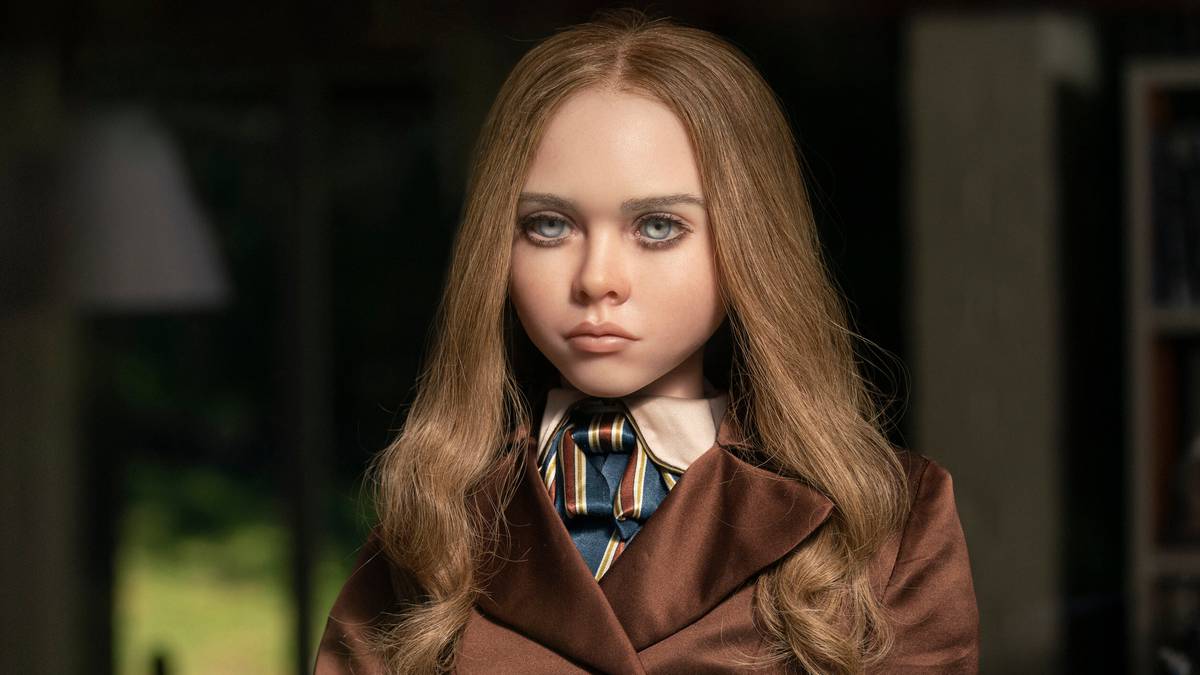
Killing it with M3GAN: The boy from Invercargill who’s conquered HollywoodThe Kiwi director of M3GAN tells Russell Baillie how pulling off a few unusual moves helped make the film a surprise box-office hit. Gerard Johnstone laughs ruefully about the art-imitating-life aspects to his film M3GAN. No, the Kiwi director behind… Jan 28 23January 28, 2023Article at NZ Listener
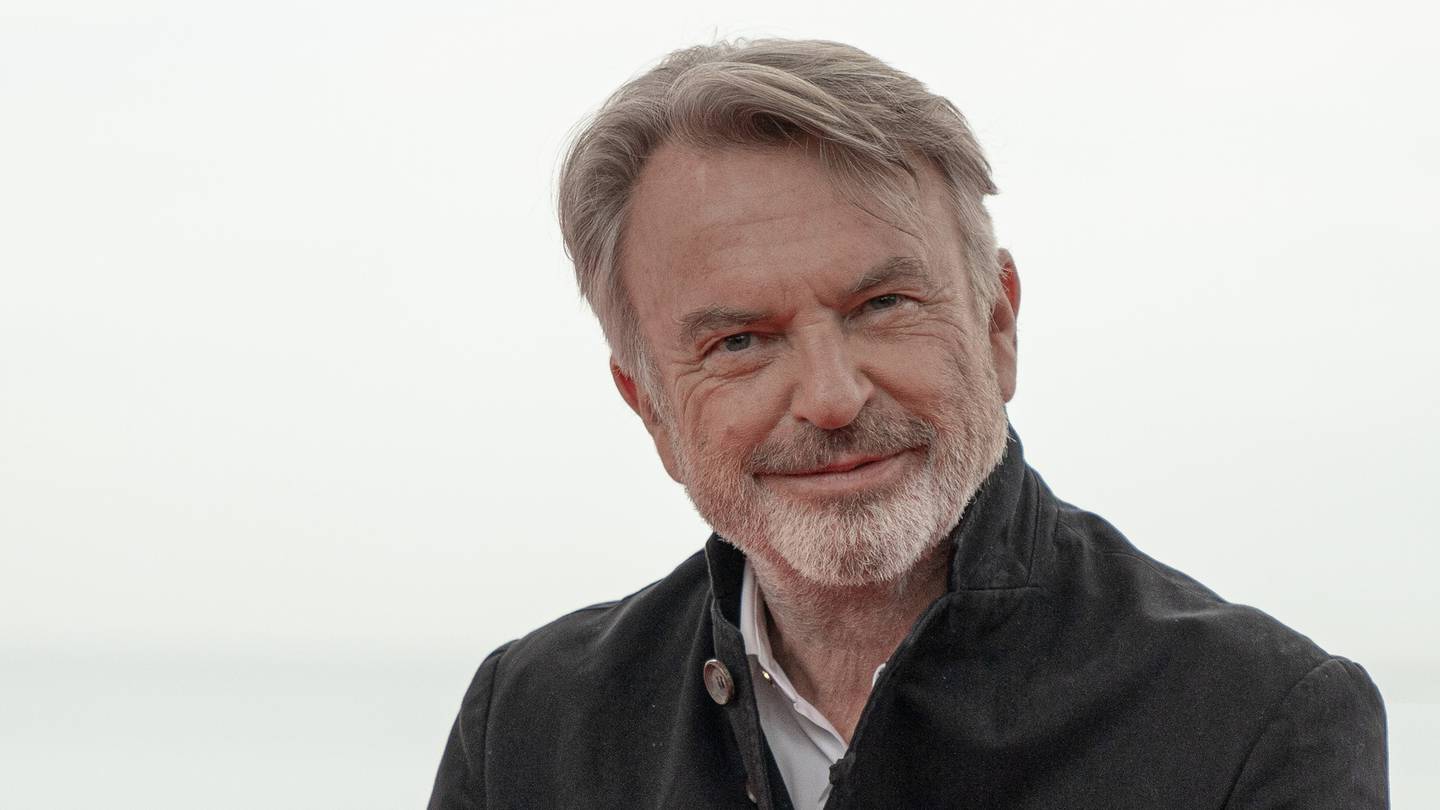
Sam Neill farewells Jurassic period of his careerAs he farewells the Jurassic period of his career with the final film in the blockbuster franchise, Sam Neill talks about the series, writing his memoir, and why he's not going the way of the dinosaur. NZ Listener Among his many achievements on… Jun 13 22June 13, 2022Article at NZ Herald
Teen spirit revisited: Melanie LynskeyOne of Melanie Lynskey’s latest roles harks back to Heavenly Creatures while another has her married to Leonardo DiCaprio. by RUSSELL BAILLIE Melanie Lynskey doesn’t mind her past catching up with her. It has helped her role in Yellowjackets, the… Dec 18 21December 18, 2021Article at NZ Listener
Kiwi film-maker Jane Campion on The Power of the DogNZ Listener November 20 2020 issue. Dame Jane Campion sits in a Los Angeles hotel suite talking to the world. A team of Netflix publicists are mustering journalists from various time zones from one virtual waiting room to another, to await their… Nov 21 21November 21, 2021Article at NZ Herald
Reservation Dogs slip the leashA famous Kiwi director lends his support to a new comedy about four Native American teens looking to escape rural Oklahoma. Taika Waititi’s name is on Reservation Dogs as co-creator and executive producer, and he co-wrote the fi rst episode. So, it’s… Sep 11 21September 11, 2021Article at NZ Listener
Why Mike Minogue is more than just comedy's deadpan manThere's more to Wellington Paranormal star Mike Minogue than just being the hit comedy's deadpan straight man. He's helping to create films and shows, including a new talkback-radio satire. By Russell Baillie, NZ Listener. It's the day after filming… Jul 01 21July 01, 2021Article at NZ Herald
Heavenly feature: An Angel at My Table, 30 years onThirty years after An Angel at My Table brought Janet Frame's autobiographies to the cinema in Jane Campion's acclaimed adaptation, Russell Baillie reveals the creation of a Kiwi classic.Thirty years ago, Janet Frame went to the movies. At the time,… Oct 21 20October 21, 2020Article at NZ Herald
The surprising inspiration behind Kiwi director Ant Timpson's Come to DaddyStrange-film buff Ant Timpson talks to Russell Baillie about how a movie so outlandish could spring from something sad and personal. It’s possibly not surprising that Ant Timpson’s feature-directing debut, Come to Daddy, is quite so nuts. Its tale of… Feb 26 20February 26, 2020Article at Noted
How the director of Poi E took on 40 years of HerbsDirector Tearepa Kahi hoped to throw Herbs a birthday party with his movie about the band, but his unconventional documentary evolved into something sadder and deeper along the way. A few years ago, as he was considering a film about the band Herbs… Aug 15 19August 15, 2019Article at Noted
Walking off the pain in Spain: Behind the blistering doco Camino SkiesHow Kiwi documentary makers put in some hard miles on an Antipodean pilgrimage along the Camino de Santiago. As a documentary, Camino Skies is following a well-trodden path. Yes, it’s an affecting film about six people, Kiwis and Aussies, walking the… Jun 06 19June 06, 2019Article at Noted
Braving The Chills: Film on Dunedin sound pioneer Martin Phillipps packs a punchThe Chills: The Triumph and Tragedy of Martin Phillipps directed by Julia Parnell Rockumentary goes beyond rudimentary as it charts the songwriter’s life and career. There are moments in this unsettling, brave and absorbing documentary about the long… May 01 19May 01, 2019Article at Noted
The Heart Dances: Lifting the lid on the culture clash behind ‘The Piano’ balletDocumentary offers an intriguing look at the clash of artistic sensibilities behind adapting The Piano into a ballet. The Royal New Zealand Ballet likes playing to the camera, as it has demonstrated on the docu-reality series The Secret Lives of… Apr 20 19April 20, 2019Article at Noted
Living dangerously: Geoff Murphy 1938-2018With his three local classic films, outspoken director Geoff Murphy became a leading pioneer of New Zealand cinema before reluctantly becoming a Hollywood gun-for-hire. Geoff Murphy’s career was a bit like the yellow mini he made famous in Goodbye… Dec 07 18December 07, 2018Article at Noted
Why Taika Waititi is making fun of the Führer“This film is going to piss off a lot of racists, and that makes me very happy,” says Taika Waititi of his new Hitler film Jojo Rabbit. There’s a curious confluence in Taika Waititi’s new movie Jojo Rabbit – fatherhood meets Fatherland. Kids in need… Jul 07 18July 07, 2018Article at Noted
The Breaker Upperers – movie review With The Breaker Upperers, a multitalented duo deliver a side-splitting anti-romcom. For a movie about splitting folks up, The Breaker Upperers does a lot of bringing people together. Occasionally, it does so in scenes that, when filmed, were possibly embarrassing for all concerned: Jemaine Clement and Jackie van Beek enjoying, some, ah, business time; Madeleine Sami and James Rolleston in a less awkward but similarly intimate exchange. Clement’s contribution is a cameo, Rolleston is the film’s male lead and one T Waititi is an executive producer. But TBU is all about the combined talents and senses of humour of Sami and van Beek, who wrote, directed and star as the relationship interventionists of the title. What they’ve done out of the long shadow of Waititi and co is make a female-powered, grown-up anti-romcom. It may feel familiar in its multicultural Auckland setting but it’s quite like nothing we’ve seen on the local big screen before. It shows traces of the pair’s pasts in small-screen sketch-based comedy and seems to give bit parts to almost all of their past colleagues. But it’s definitely a movie-sized farce that is brash, scrappy, energised, frequently knuckle-gnawingly awkward and occasionally deeply weird while managing to be an offbeat celebration of female friendship. Mel (Sami) and Jen (van Beek) are partners in an enterprise specialising in breaking up couples – one half of a relationship hires them to tell the other half it’s over. That can involve fibs about accidental deaths, last-minute wedding interruptions and singing-telegram kiss-offs. Their nasty business is the product of their own unhappy love lives: two-timed by the same guy, they were bonded by shared cynicism. But it’s another guy who poses a risk to the partnership. When young rugby star Jordan (Rolleston in goofy form) hires the pair to get the message through to his girlfriend after his text emojis fail to spell it out, he takes a shine to Mel. Mel takes a shine right back. Jen feels betrayed. In between, the women must also cope with Anna (Aussie comedian Celia Pacquola), who has not taken the fake news that her boyfriend has drowned at all well. Having posed as a cop to tell her, Mel extends her act to victim support. Soon, lies are unravelled. Hen parties are crashed. Celine Dion songs are karaoke-ed – complete with a soft-focus video starring Mel and Jen which, in its own way, is right up there with Waterloo in Muriel’s Wedding. As an added bonus, the film has Rima Te Wiata as Jen’s permanently inappropriate mum in yet another performance that shows she is long overdue a medal for her services to portrayals of Kiwi motherhood. Her sozzled socialite Shona makes The Real Housewives of Auckland look like the maiden aunts of Timaru. The movie’s biggest sparks, though, are generated between Sami’s easy-going, mischievous Mel and van Beek’s Jen, a character with a brittle edge who risks becoming positively unhinged, as in a restaurant scene opposite her unfaithful ex (Cohen Holloway). It all leads to an ending that, despite involving a musical finale, is just a little too tidy for the inspired silliness that preceded it. But it’s an original, inventive, hilarious film, one that sure leaves you wanting more from the Sami-van Beek double act. IN CINEMAS NOW ★★★★ This article was first published in the May 12, 2018 issue of the New Zealand Listener. May 10 18May 10, 2018Article at Noted
The Camera in the Crowd: The opening reels of NZ's film historyChristopher Pugsley's The Camera in the Crowd is a definitive history of how moving pictures arrived in Aotearoa. There wasn’t a lot of comedy in New Zealand film’s first 25 years. Back then, it seems, the dominant movie genres were marching, waving… Feb 12 18February 12, 2018Article at Noted
Why Gary Oldman was a natural pick for Winston ChurchillKiwi writer Anthony McCarten says Gary Oldman was his top pick to play Winston Churchill in Darkest Hour. The last time the Listener spoke to Anthony McCarten, he was midway through the awards season for his acclaimed 2014 film The Theory of… Jan 12 18January 12, 2018Article at Noted
Eight wāhine directors give a voice to the voiceless in new drama Waru Waru is eight short films by eight Māori women crafted into a whole that explores events on the fringes of a child’s death. It’s the first drama feature for 30 years directed by any Māori woman. The first voice heard in the film Waru is of the… Oct 18 17October 18, 2017Article at Noted
The Free Man – movie review A Kiwi documentary looks at what makes extreme athletes want to take the plunge. If delivering one tightrope thriller in a year wasn’t enough, New Zealand director Toa Fraser has two. As well as the hostage-crisis drama reviewed here, he’s made this moderately intriguing extreme-sports movie, starring champion Kiwi freestyle skier Jossi Wells and Gallic daredevils the Flying Frenchies. Fraser, who narrates and interviews, is after something more than an extended energy drink ad; he also wants to make this a contemplation of the philosophy driving people who spend much of their life plummeting to earth in creative ways. To give it some story drive, the film contrives to follow Wells as he is welcomed and trained by the Frenchies in slacklining – tightrope walking across webbing straps. The squad’s speciality is suspending their lines between peaks high enough to allow base-jumping. Or between hot-air balloons. Eventually, the film shifts away from Wells’s valiant efforts to an extended study of the crew Fraser calls the “poets of the mountain”, whose members offer much philosophising about facing “the void” before there is yet another vertigo-inducing plunge. Wells comes across as a thoughtful good sport, and discussion of his career comes with an inevitable montage of X-rays from too many unhappy landings. But he’s sidelined as the film progresses and the portrait of him feels unfinished. The credits, which thank American big-wave surfer Laird Hamilton, who is unseen in the final cut, suggest The Free Man intended to go wider with its probe into the psychology of extreme athletes. It does poignantly illustrate that life as a death-defying daredevil can be as short as it is exciting. But any clear answers to Fraser’s why-do-they-do-it thesis are drowned out by the sound of another Frenchie leaping into the void. IN CINEMAS NOW ★★★ This article was first published in the September 16, 2017 issue of the New Zealand Listener. Sep 22 17September 22, 2017Article at Noted
Filmmaker Gaylene Preston on stalking Helen Clark for a yearGaylene Preston was taken by surprise when her famous subject decided to apply for another job in the middle of filming. Gaylene Preston spent much more than a year on My Year with Helen. Her observational documentary about Helen Clark at the United… Jul 23 17July 23, 2017Article at Noted