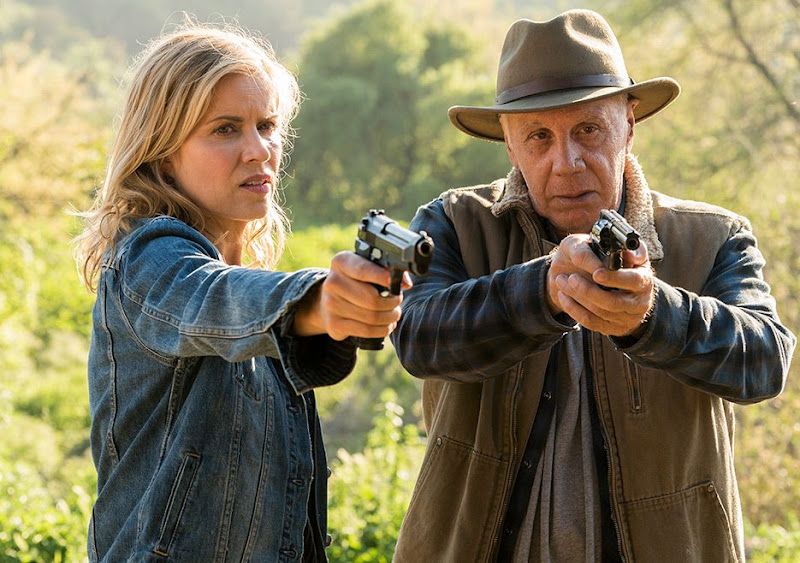
Today, we’re looking at how to create and write antagonists by comparing and contrasting the villains of AMC's Fear the Walking Dead’s excellent third season with its terrible fourth. New cast members, a new sprawling location, and fresh names in the writers' room creating gloriously broken and beautifully conflicted antagonists transformed FTWD’s third outing into a near-perfect season. So, how did a show so bad in its freshman and sophomore years suddenly become must-see TV in its junior year?
Well, season three made for great television because the writers' room created antagonists who were flawed, nuanced, and relatable. How was all that hard work undone in its senior, fourth season? Well, by the writers' room not creating antagonists who were broken, conflicted, flawed, nuanced, and relatable. End of story. That’s the article. Bye! Only kidding…
Unfortunately, I called this quality slump when news came that Morgan (Lennie James) and showrunner Scott Gimple were joining FTWD from The Walking Dead. One could say I feared Fear the Walking Dead would die its death… You went and did it, and... Goddamn you all to hell, I was right!
As we approach the final stretch of FTWD4; when your final three episodes should be mercilessly ramping up towards inescapable inevitability, that’s when your antagonists should be nearing their dastardly goals.
Season three ended with the most spectacular finale to date. But season four’s characters are milling around, literally looking for beer and wondering whether they should go back to save some randoms they’ve just met. The nails are already firmly hammered in the coffin. It's dead.
SEASON THREE: HOW TO CREATE AND WRITE ANTAGONISTS
94% of what made S03 so great was down to the writers’ room creating and writing antagonists who were rich veins of awfulness. The other 11% was down to theme and location. Math never was my strong point.
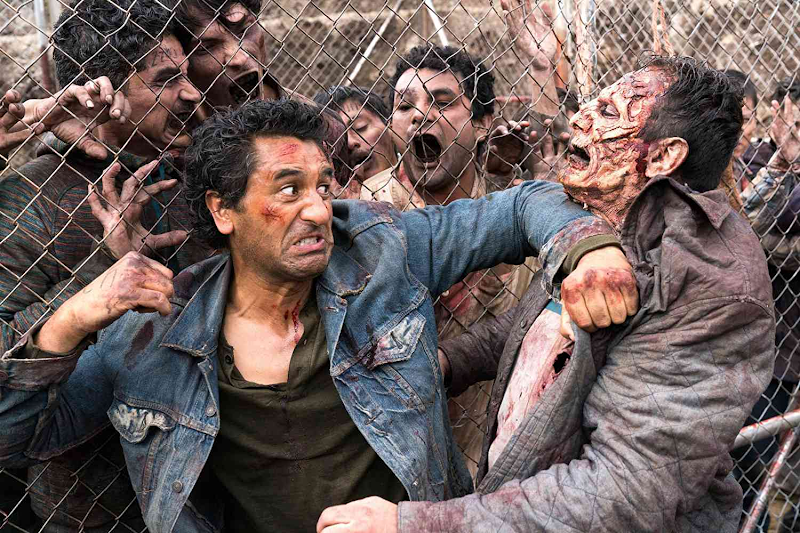
FTWD3 started with a bang; the unexpected but welcome sound of Travis (Cliff Curtis) spectacularly falling to his death from a helicopter, and establishing the season’s ground rules - no one is safe.
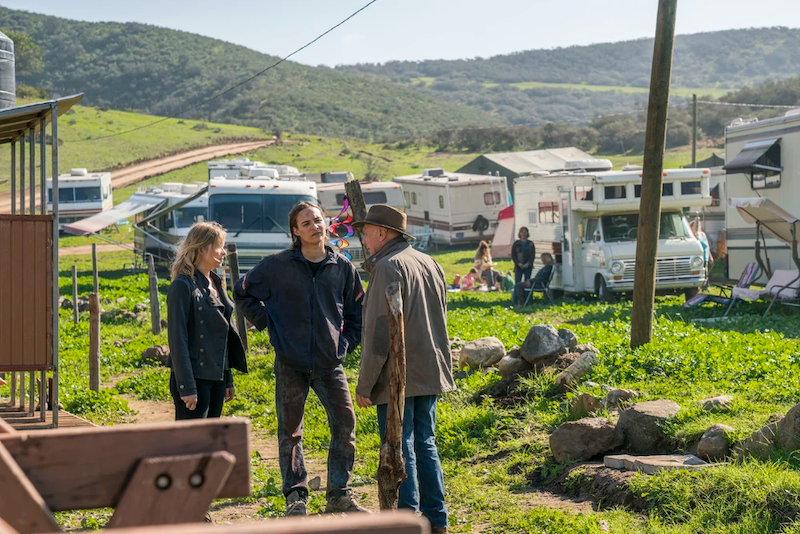
When Madison, Nick, Alicia, Strand et al. arrived at Broke Jaw Ranch, it seemed like a welcoming, utopian sanctuary for zombie survivalists. But slowly, the farmstead turned RV park became a pressure cooker of fear, white supremacy, mental illness, male toxicity, sibling rivalry, and violence waiting to go off.
Our gang slowly discovered the ranch owner, Jeremiah Otto (Deadwood and Sons of Anarchy’s wonderful Dayton Callie), and his brethren had lots of dark secrets. Jeremiah was an alcoholic racist, militant TEOTWAWKI survivalist even before the zombie apocalypse, and quasi-cult leader who was slowly drinking himself to death due to a King Lear-like madness.
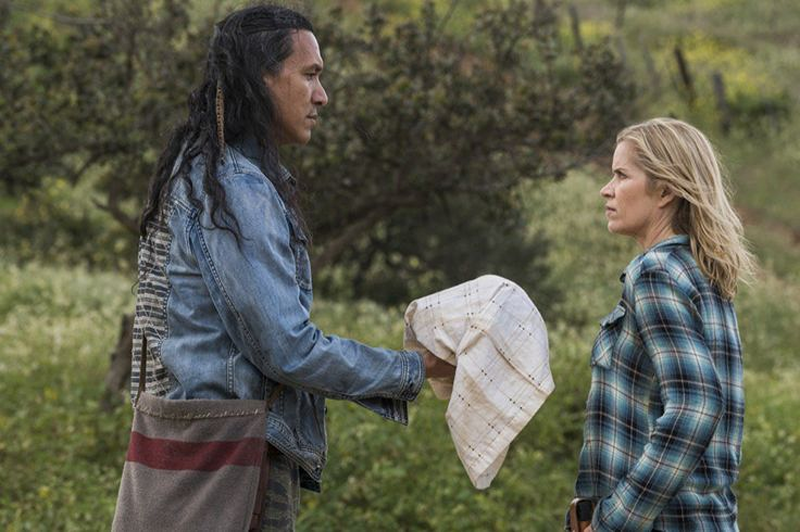
Oh, and the land that Broke Jaw Ranch and its white supremacist outlaws sits on is land that the local Native American tribe wants back. Through this one simple action, the writers created the perfect hotbed for conflict. Qaletaqa Walker (Michael Greyeyes) and his folk from the nearby Black Hat Reserve also brilliantly set up the season's thematic question - whose land is it really? - plus a feisty, zeitgeist-y metaphor for Trump’s America.
You see, create antagonists in the right way, everything from characters’ decision-making, obstacles, location, and events falls into place like dominoes. Hell, introduce four-corner opposition as John Truby writes about in The Anatomy of Story, and your show practically writes itself!
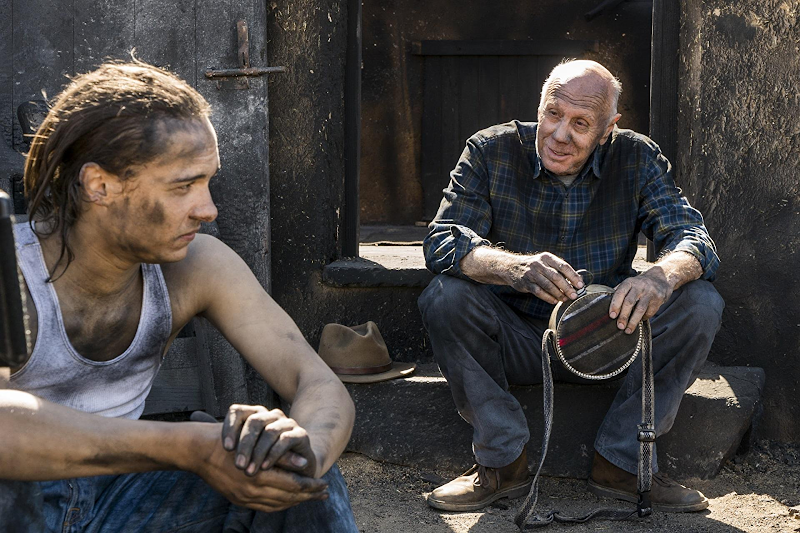
Meanwhile, back at the ranch, as King Otto spirals out of control, his sons Jake and Troy battle it out to be the Man Who Will Be King. Jake and Troy Otto are Ben Solo and Kylo Ren in the form of two brothers. Jake is light but called to the dark. Troy is hugely disturbed, conflicted, and power-hungry due to his daddy issues but called to the light.
Jake is his brother’s keeper; forever reining Troy in as he descends into his very believable, inherited madness. Troy’s unpredictable, fear-driven actions drive FTWD3: Jake must keep his brother from making batshit insane decisions that endanger everyone, as his madness spreads to Nick.
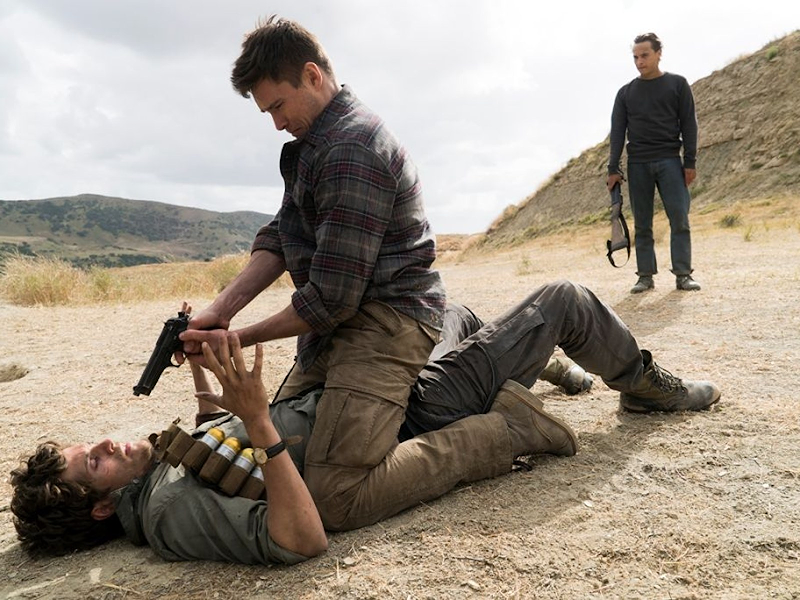
Here, Jake and Troy perform the twin roles of opposite moral compasses to push and pull our gang; Jake pulling Madison, Nick, and Alicia one way, Troy the other; but always towards irrevocable, game-changing moral or immoral decisions. Because that’s what great antagonists must do – create situations that make our heroes reveal what they’re made of… to bring out the best of ourselves.
Or the worst, because the best villains, like Troy or Heath Ledger’s Joker, force good guys like Madison, Nick, Alicia, and Batman into situations so impossible that they must break their strongly embedded moral code to beat the baddie. This was exemplified perfectly in FTWD3 (and 4A) when Madison would do anything, including killing, to protect her family.
WHO’S AFRAID OF THE BIG BAD?
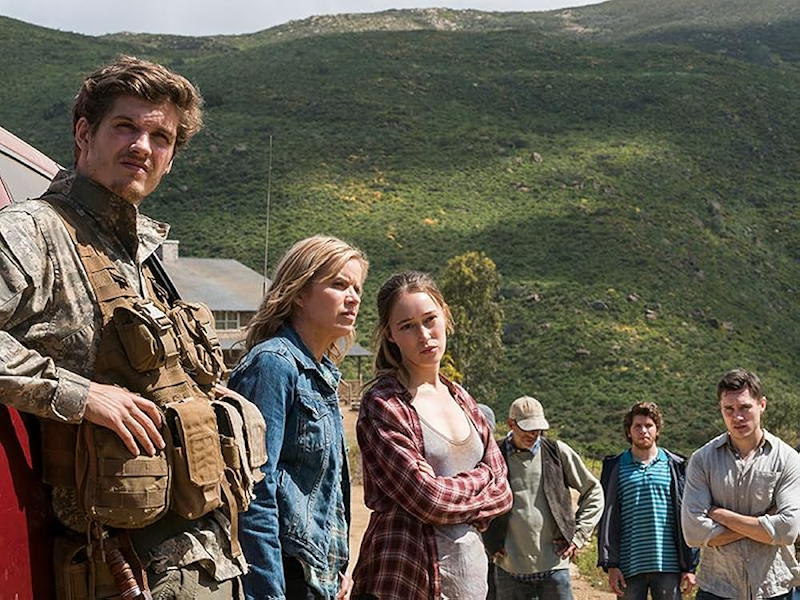
Your Big Bad should want the same goal - or a flipped version - as your protagonist. So when creating your antagonist, they should be the dark mirror of the protagonist – i.e., they should be two sides of the same coin, like Batman and The Joker fighting for the soul of Gotham or Smeagol and Gollum, fighting for the ring. Self vs Shadow-self. Superego vs Id.
If you don’t know your Jungian archetypes, think of your protagonist and antagonist as co-dependent and narcissist; two beautiful, vulnerable bastards screaming for attention, but while one uses honourable, lawful methods to get what they want, the other will go to any immoral lengths; their Machiavellian ends always justifying their means.
Then, in your High Noon town square shootout, flip that conceit on its head, just as Batman breaks his own moral code by hacking into every Gothamite’s cellphone to defeat The Joker in The Dark Knight, or young Han Solo learns to shoot Tobias Beckett first - before Tobias can shoot him - in the finalé of the surprisingly good Solo: A Star Wars Story.
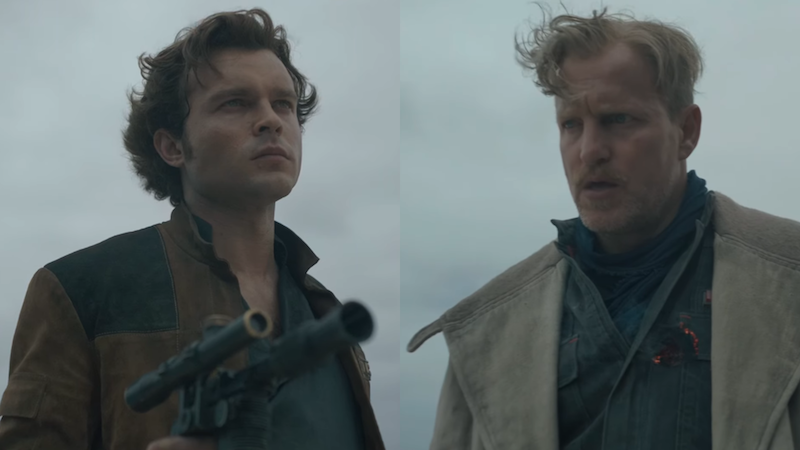
Protagonists don’t beat antagonists by being the nice guy; they beat them by becoming like the antagonist. By creating strong villains, the FTWD3 writers’ room understood that their every act was spawned by interesting, conflicted, three-dimensional characters’ realistic backstories.
However insane or dangerous Troy's actions, his every move was driven by his very believable wants, needs, and motivations. Advance planning leads to memorable, meaningful scenes, dripping with pathos and tension. When creating FTWD3’s antagonists, the writers understood that backstories with deep layers of psychological disorders, addiction, shame, and regret are the foundations that lay down strong characters’ actions.
PROTAGONISTS AND ANTAGONISTS SHOULD BE EQUALLY POWERFUL
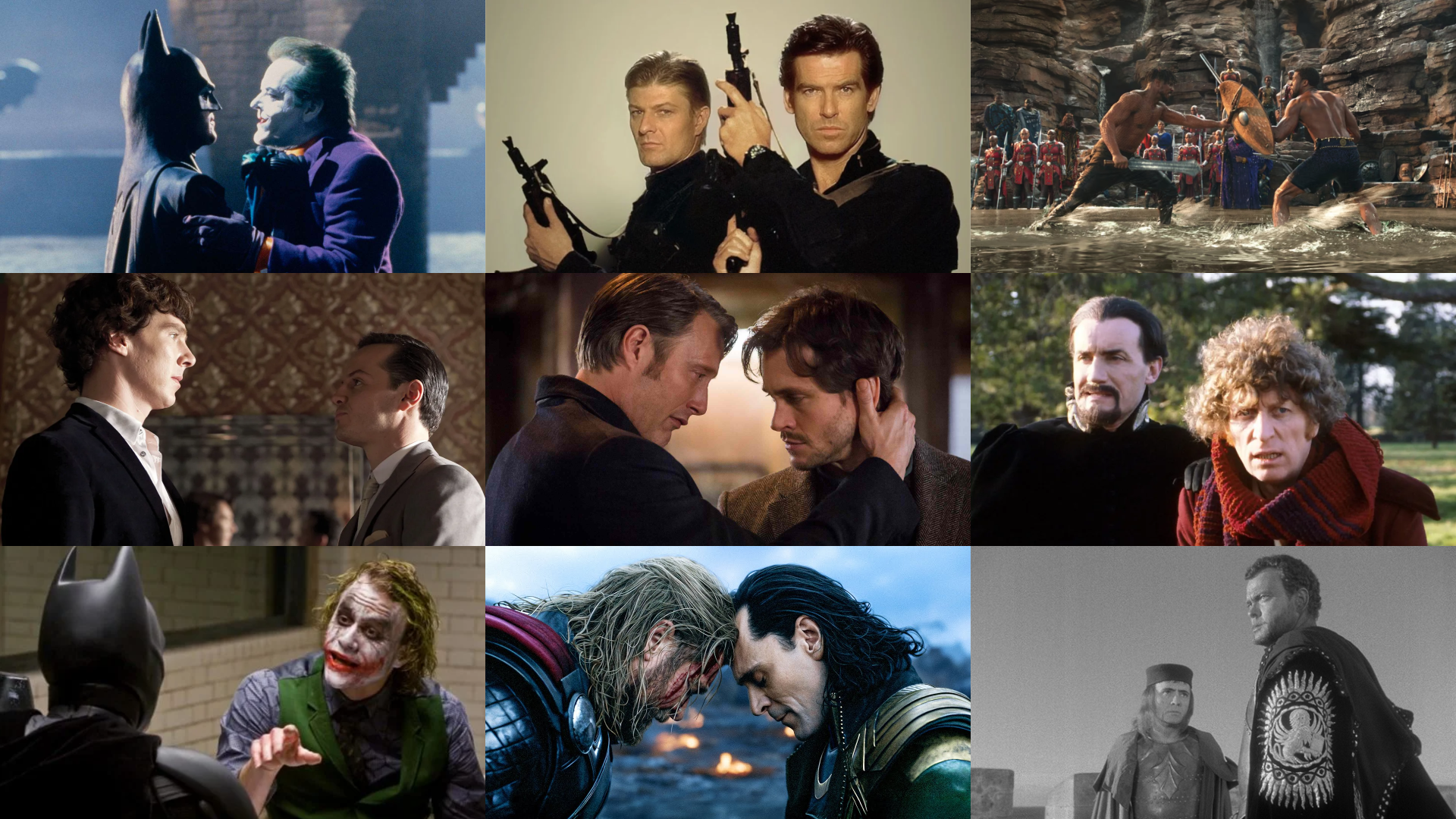
As well as having similar goals (but opposite methods) to protagonists, the writers also understood that antagonists must be equal in power. If they're not an equal match, you end up with 37-year-old Michael Keaton throwing old-age pensioner Jack Nicholson off that church tower in Batman '89!
In Goldeneye (1995), Sean Bean's 006 Alec Trevelyan is a physical match for Pierce Brosnan's 007 James Bond. The same goes for Killmonger and Black Panther. Moriarty, Hannibal Lecter, The Master, and Heath Ledger's Joker are mental matches for Sherlock Holmes, Will Graham, The Doctor, and Christian Bale's Batman. Loki might not be a physical match for Thor, but like Iago's grip over Othello, he's a puppet master, pulling the strings.
And speaking of Loki, the writers knew their mythology too; utilizing the brother archetype so often visited in Biblical, Greek, Norse, Hindi, and Egyptian myth of three thousand years hence. Hella! If Thor and Loki, Cain and Abel, Castor and Pollux, and Osiris and Set ain’t broke, don’t fix ’em! So, that’s the good… watch and learn. But we can learn just as much from:
SEASON FOUR: HOW NOT TO CREATE AND WRITE ANTAGONISTS
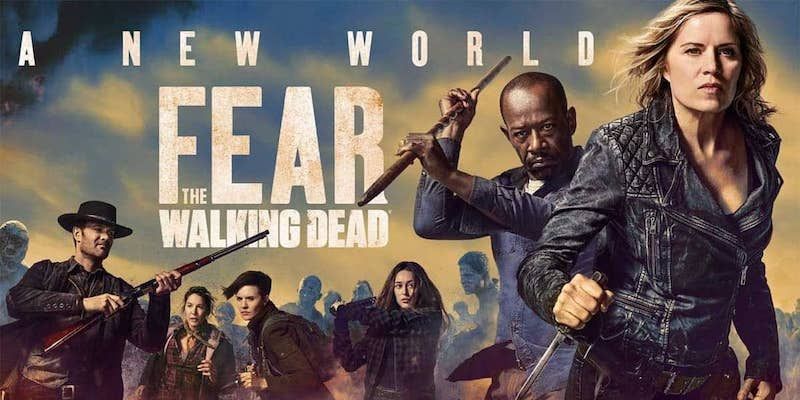
Where did it all go wrong? Well, after the best season in The Walking Dead's and this spin-off's almost decade-long history, the powers that be decided that FTWD4 needed a dreaded “creative reboot”. A seasoned TWD writer, exec, and showrunner should improve things, right? Wrong!
Heading up the writers’ room, Scott Gimple brought all of TWD's flaws with him. FTWD4 ditched all the most interesting characters: Jake and Troy were killed off, and Nick quickly followed at the start of season four (because actor Frank Dillane wanted to leave). Then, in the mid-season finalé, lead protagonist Madison went out in a fiery blaze…or did she? Clue: If we don’t see a character die on-screen, expect to see them again.
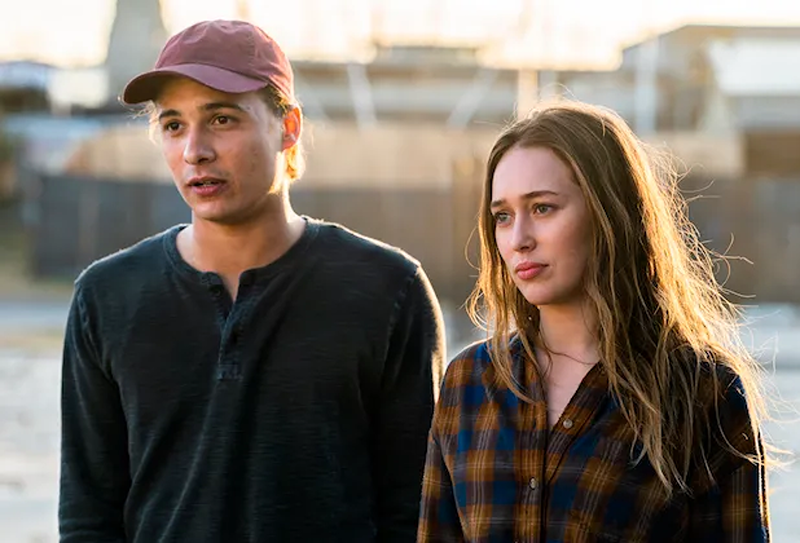
To add insult to injury, when Alycia Debnam-Carey should have been elevated to lead actress – as her character (Alicia) is now the most flawed, conflicted, and only original surviving member – she was downgraded to bit-part support to accommodate a cheap PR stunt: Morgan Jones’ arrival.
After some mildly pleasing 4A episodes featured a new (albeit very TWD-esque) forgettable set of big bads, The Vultures, at the baseball stadium, Morgan’s crossing over by walking from Virginia to mid-Texas forced FTWD to leap forward two years. This unnecessary creative reboot rendered Frank blowing up the damn in an amazing season three finalé cliffhanger both pointless and laughably inexplicable. What was the point?
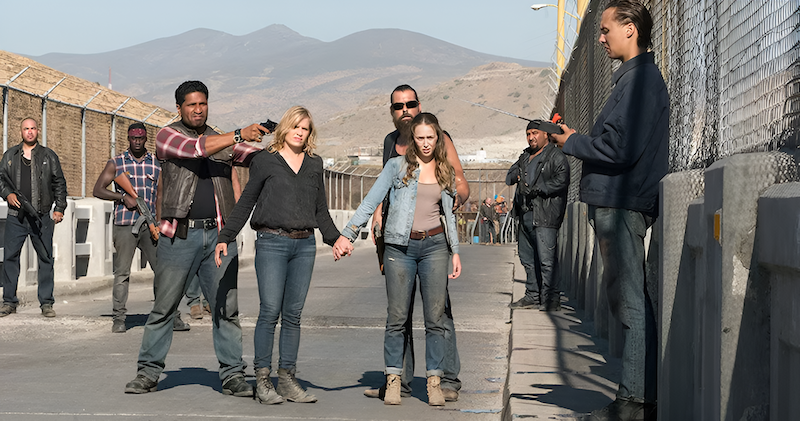
Admittedly, season 4B has picked up one or two likeable characters along the way; notably John Dorie and June, and featured one or two exciting episodes, but these are the exceptions to the rule. Without creating antagonists with realistic motivations (for let me be very clear about this: The Walking Dead’s zombies are not antagonists; they are as much a backdrop as a hurricane), FTWD4’s group has had nothing interesting to do, nor a clear mission statement. As such, most episodes became filler.
This could easily have been fixed by Kurt Vonnegut’s advice on motivation: “Every character should want something, even if it is only a glass of water.”
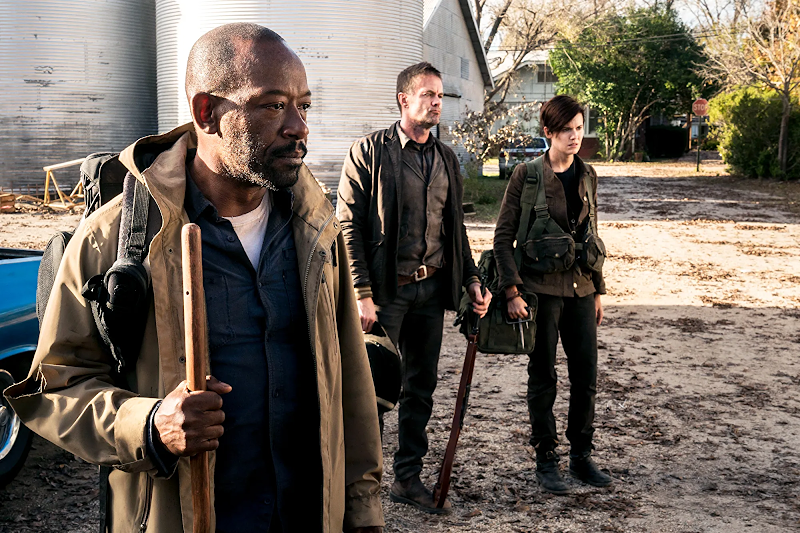
Instead, Morgan Jones endlessly walks the highways and byways looking for meaning or changing his mind, then changing it back again. "Have I decided to be a pacifist again or not? Am I going back to The Sanctuary? Why am I so bloody boring?" After eight seasons of flip-flopping between zen pacifism and revenge-fuelled violence on TWD; who cares?
Splintered and roaming a small stretch of Texas highway, our scattered heroes seem eternally to be on walkie-talkies chatting to quickly dispatched, needless randoms. There’s no urgency or tension, even when a new antagonist finally begins terrorising our gang. The problem is, “Filthy Woman” is not a three-dimensional character with a compelling, realistic backstory from the minds of craftful writers, nor is she Morgan's physical or mental match. As such, she's not believable and scares no one.
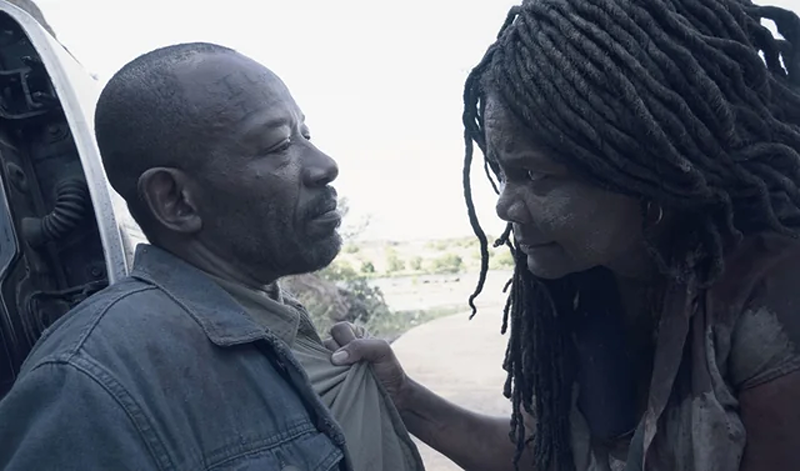
I’m sure we’ll get to see the tragic backstory that created Filthy Woman, but, at present, this dreadlocked lady is a series of broad brush strokes – her face caked in mud as she poisons supply boxes left for travelers, she collects zombies and uses them to (somehow silently) attack drifters. To try to create some mystery, the writers' room has her scrawl cryptic messages with a sharpie on her zombies’ faces…
The reason? “Oh, I dunno – because it will look cool,” offered Scott Gimple (probably), and because she’s gone like real mad and has suddenly decided her raison d’être is to teach Morgan “to be strong again.” That’s despite the fact Filthy Woman met Morgan once and has spoken to him on a walkie for thirty seconds, i.e., for no other reason other than the script needs it.
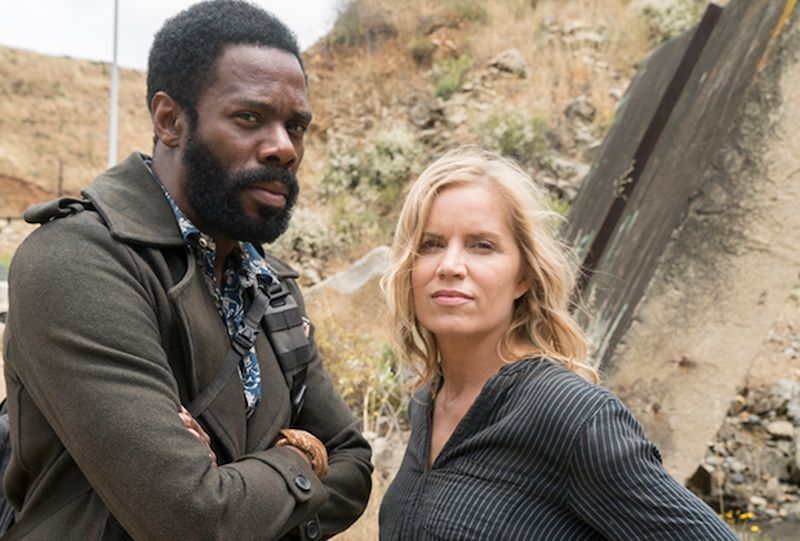
Filthy Woman's involvement in the machine gun truck cliffhanger was kinda cool, even if the arc lacked a meaningful set-up. But like every villain in TWD; from one-eyed The Governor to baseball bat-wielding Negan, Filthy Woman is a gimmick. At least The Governor and Negan were scary.
You see, creating one-dimensional villains, writing antagonists who do not mirror your protagonists, no meaningful thematic question, and no four-corner opposition has a knock-on effect throughout your whole season. This lack of planning creates a domino effect of bad decisions in the writers’ room, meaning the team has to rely on random obstacles like Jack Bauer's daughter, Kim, encountering that mountain lion in S02E11 of 24.
Episodes 9 and 10's impressive hurricane set-piece successfully scattered our gang in different directions. But instead of pairing characters off in interesting, conflicting ways, Strand and John Dorie were inexplicably stranded on a temporary island and trapped by a crocodile. The only way to escape? Why, by building a raft, then paddling past the croc, of course!
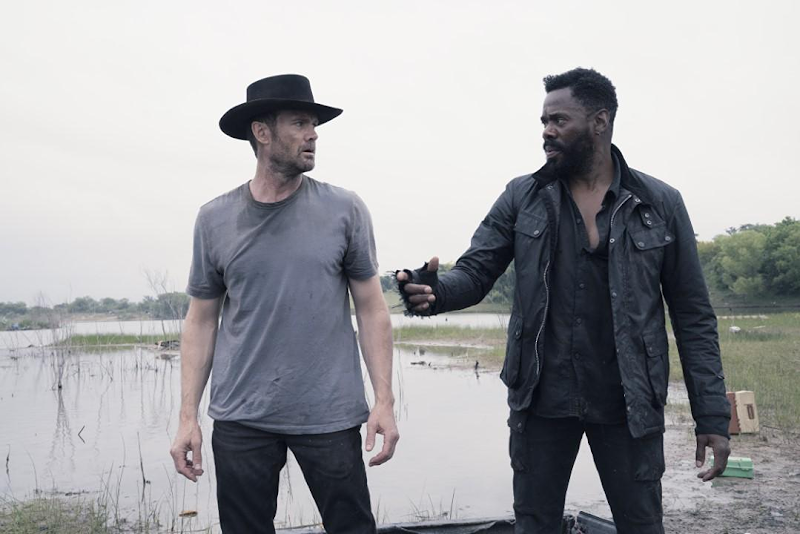
With three episodes to go in its fourth season, FTWD finally jumped the crocodile, just like Fonzie jumped the shark.
Further evidence the show has lost its way comes when this same episode devoted a ten-minute C-Story to Luciana delivering an old dying man she's never met a beer. Okay, this chap, “Polar Bear,” does eventually tie into the story arc, but this kind of filler will never engage your audience.
It was bad enough when Scott Gimple arrived, and the show began using the same, completely unnecessary, totally confusing non-linear storytelling approach as TWD to give the smoke-and-mirrors appearance of creativity and to try and stay ahead of the Redditors. But now, the unpalatable truth is clear: FTWD4's producers don’t know what they’re doing; they’re guessing, and choosing style over substance every time.
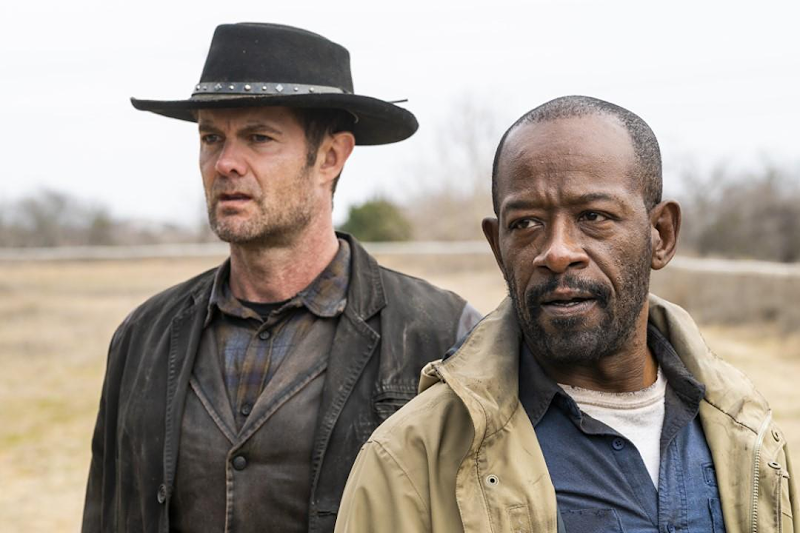
By bringing in Scott Gimple, the two-year time jump to facilitate the Morgan crossover, and losing the best writers who created strong antagonists we loved to hate, I fear FTWD’s senior year will be its last... and the producers only have themselves to blame.
Instead of relying on gimmicks and PR stunts, they should have pleaded with season three’s excellent writers; Alan Page, Jami O’Brien, Wes Brown, Mike Zunic, Ryan Scott, Mark Richard, Lauren Signorino, and British writer (and series exec story editor) Suzanne Heathcote, to steer a ship that’s become as rudderless as John Dorie’s raft. There are two lessons to be learnt here: “If it ain’t broke, don’t fix it” and “Don’t cross the streams”
Fear the Walking Dead will continue to meander aimlessly on AMC, 9 pm Sundays until… Season 9 of The Walking Dead is back on October 7th.