
After the pilot episode aired in November, I hoped Damnation would be the spiritual successor to HBO's Deadwood. Though its execution didn’t quite live up to the promise of the pilot, Tony Tost’s tale of a prohibition-era preacher and his strikebreaking brother remains a world-building blueprint for all budding TV writers. It perfectly teaches how to introduce your characters, set out your show’s themes, and populate your universe.
DAMNATION IS YOUR WORLD-BUILDING BLUEPRINT
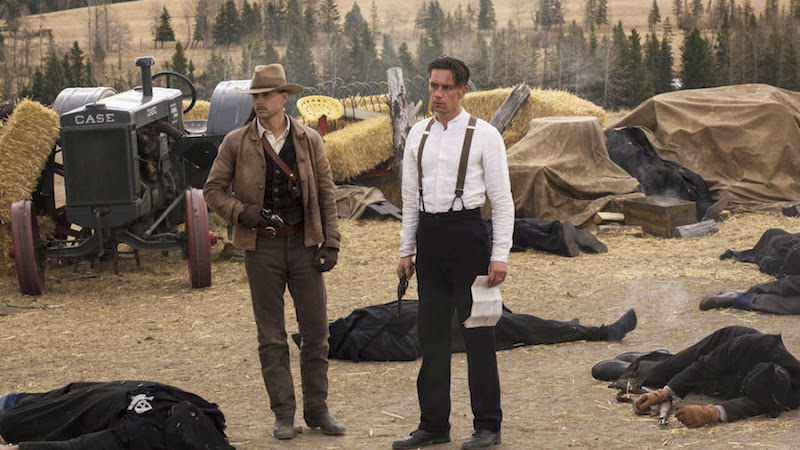
Start with a protagonist like Preacher Seth Davenport (Killian Scott). Give them a tragic, sinful backstory, but have them try their damnedest to become a better man. Add a closely matched antagonist (i.e., a brother) like Creeley Turner (Logan Marshall-Green), a convicted murderer turned Pinkerton detective who played their part in the same backstory. Now make that tragic backstory the reason they want to kill each other.
Drop them in your chosen, harsh location like Dustbowl America during the Great Depression, and place them at opposite ends of the fight for said location’s soul – make one lawful and the other lawless, à la Kane and Abel. Then light the fuse, retreat a safe distance, and watch the fireworks fly!
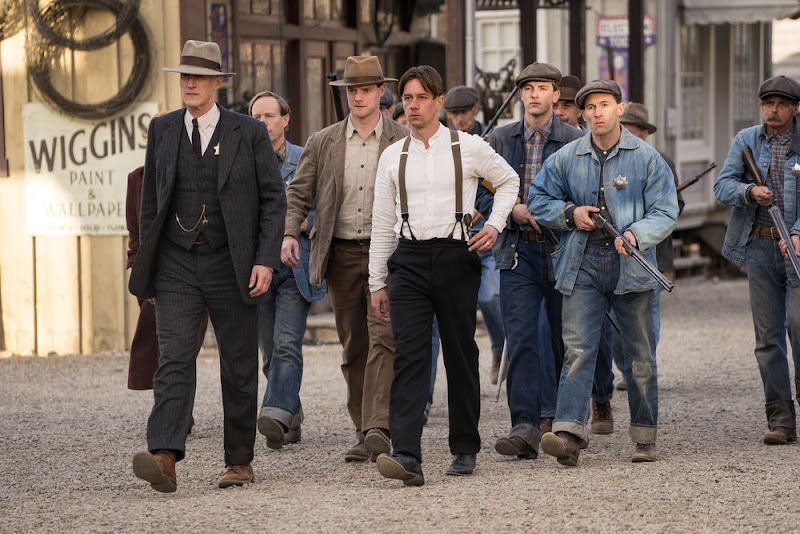
Put your protagonist through hell. Dig a pit and fill it with spikes, snakes, boiling oil, injuries, loss, and betrayal. Make them fall in again and again.
Next, make sure to give your protagonist and antagonist each a close confidant, perhaps a love interest like Seth's radicalised wife, Amelia Davenport (Sarah Jones), to act as a moral compass. Then add a web of companions (some who believe in them, some who don’t) to pull them in the right direction and push them in the wrong one when they waver.

Add a dash of local conspiracy; the best usually involve unscrupulous businessmen taking over the town. Damnation does this masterfully. Pepper your protagonist and antagonist’s world with tertiary characters they fight for, with, or against. These characters you surround them with will represent the people who must choose one side or the other.
Are your characters going to fall in line with The Man and take his blood money or stand up for what’s right? Are YOU going to be told what to do or are YOU going to become the master of your own destiny? The age-old story. The external forces represent your lead character's internal struggle.
Make sure these side characters each have their own personal reasons (due to their own secret backstories) for helping or hindering your two brothers: A cowardly farmer toes the line before finding a backbone. A local journalist makes every decision because he's secretly in love with the protagonist’s wife.
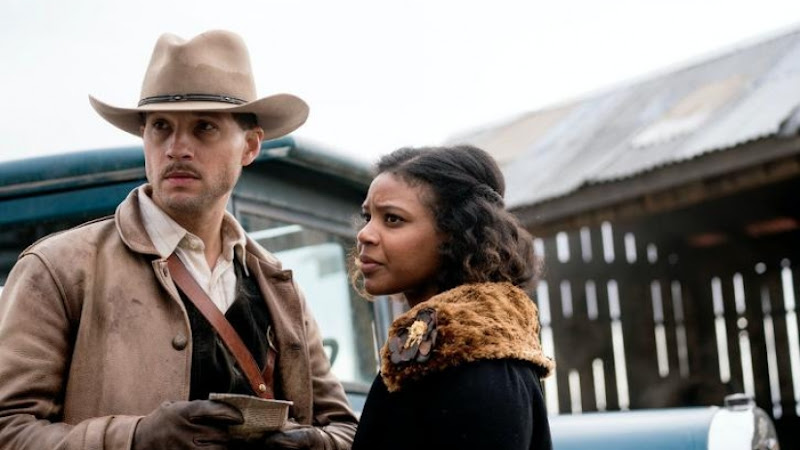
An African-American love interest adores the antagonist because he’s the only person who’s ever ignored the color of her skin. Make that beautiful girl the illegitimate child of the town’s amoral sheriff, a man who desperately wants to make amends for being an absent father. Have the powers that be falsely imprison friends. Have fair-weather friends betray the good fight.
Then expand the scale of your universe by “zooming” your lens out. Introduce newcomers from a larger nearby city, each with their own nefarious reasons to kill the protagonist. Grow your conspiracy until your shadowy, powerful elite reaches all the way up to greedy merchants, dodgy politicians, ruthless bankers, paid-off media, unscrupulous lawmen, and eventually, the government... maybe even all the way to the muthafuckin’ president!
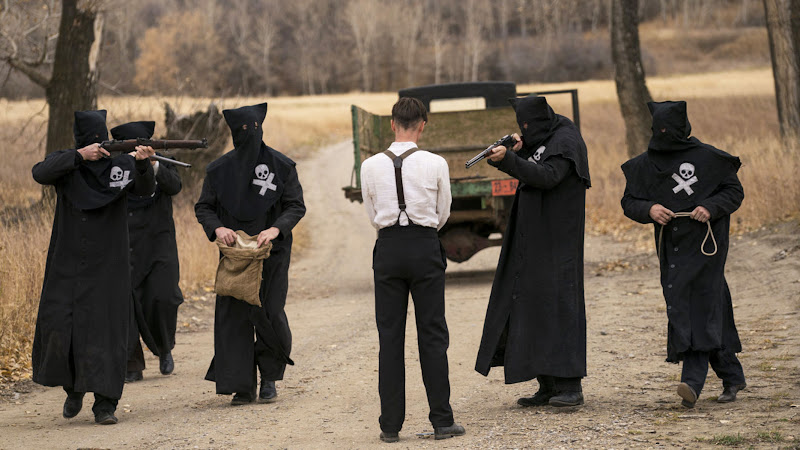
Up the ante with larger groups of agents of order and disorder arriving from surrounding towns – in Damnation, these were striking farmers wanting fair pay. They can join our cause or fall in with the Ku Klux Klan-influenced Black Legion in the employ of the aforementioned elites. Then up the ante again with higher stakes, bigger guns, and exponentially unimaginable dastardly deeds. In Damnation's case; lynchings.
Every action must tighten a noose around our characters' necks, leading them towards an inevitable crossroads of character, story, location, and theme… that I’ve christened “inescapable inevitability.”
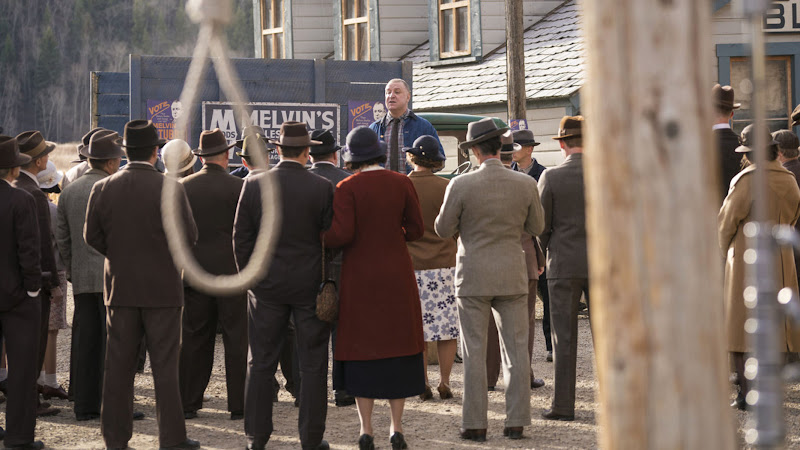
Let the tension simmer for six or seven episodes, each action more terrible and meaningful than the last, then bring to the boil as you approach the final furlong. Allow every decision to take the story closer towards a titanic David v Goliath shoot-out… at a fortified building.
As your series barrels towards its finale, crank up the tension by placing your protagonist in a situation where they must choose between their morals and something they love. Then do the same with your antagonist.
And choose whose side your story ends on. Remember, if you give your protagonist what they want, that’s the end of your story. If you give your antagonist what they want, well… you might just secure a second season.
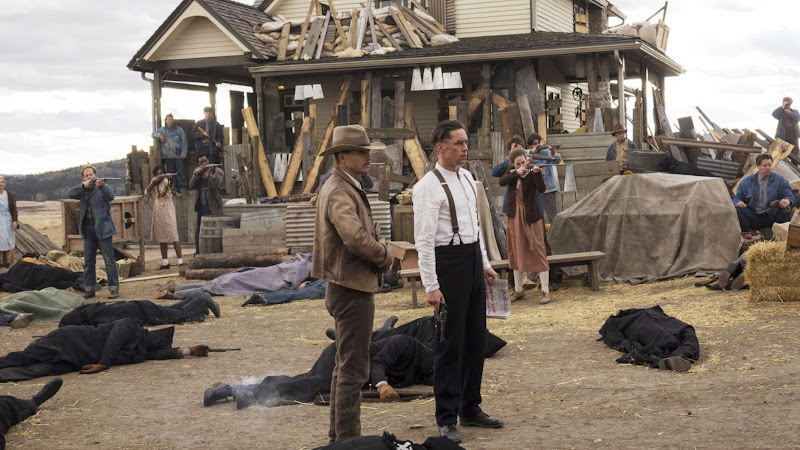
Finally, allow every major character to find out the truth they believed is actually a lie. Ensure their character arc sees them reflect, change, and grow as they become the opposite of who they (and the audience) thought they were. End your series with a giant cocktease for season two.
Et, voila! Using Damnation as your blueprint, you’ve just written your first TV show. Now I've just gotta learn to do the same… or be damned to hell for eternity!
Of course, you’ll have to watch Netflix and USA Network's Damnation for any of the above to make sense, but you catch my drift.