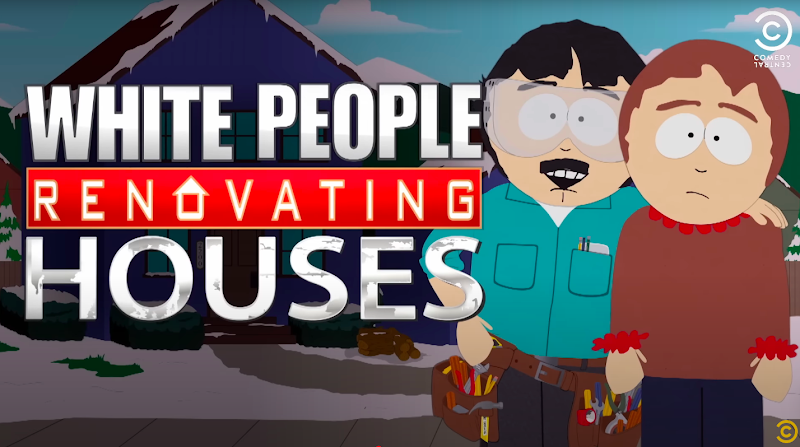
Today, we’re gonna learn how to make Story B mirror Story A. I’m not a die-hard South Park fan; I’ve watched half a dozen episodes in the last 20 years, but can you believe the show began its 21st season this week? One of the main reasons for South Park’s longevity and freshness through 278 episodes is Matt Stone and Trey Parker’s mastery of storytelling.
Yes, folks, this offensive little cartoon is a writing masterclass, and week by week, this mastery is achieved by their Story B mirroring Story A.
Most television shows feature an ABC story structure, but with a 21-minute runtime, South Park only has time for an A-Story and a B-Story. Season 21’s premiere, White People Renovating Houses, is a gift-wrapped tutorial in how to make Story B mirror Story A, but before we get to how to make YOUR Story B reflect Story A, let’s answer one question:
WHAT ARE ABC STORIES?
In the ABC story structure, the A-Story is the main narrative and dramatic core of a movie or episode of television. Therefore, it must feature your main character(s) presented with a problem they must overcome… or, what Aaron Sorkin calls Intention/Obstruction.
A-Stories are generally seen through the eyes of the protagonist. In police procedurals, this will be the main character(s) solving a case: a homicide case in CSI, a monster-of-the-week in The X-Files, or the on-island quest of the week's featured flashbacking character in Lost.
The B-Story is a parallel storyline (or “thread”) that often follows primary characters. Its job is to add depth and meaning. In a police procedural, it may feature a cop’s home life, such as Detective Chief Inspector Luther’s divorce, or it may offer a different perspective through different eyes.
Alternatively, a B-Story might feature secondary characters going off on a separate quest. B-Stories are as vital as B-roll and GVs, if for no other reason than they enable you to cut away from the main story thread.

Sometimes called a runner, the C-Story can serve two purposes; it can provide light relief from the more serious main themes – like Hurley building a golf course in Lost – or take the form of ongoing series arcs that pay off further down the line.
There can also be D, E, F-Stories, and even A/A/A stories. According to The Good Guys writer, Rick Muirragu, “An episode with A/A/A stories is an episode in which three characters have storylines that all have equal weight in the episode. No one story fills the episode; they all equally fill the episode.”
ABC STRUCTURE IN DIE HARD

In John McTiernan’s seminal 1988 Christmas action flick Die Hard, the A-Story is obviously John McClane stopping the terrorists from taking over the Nakatomi Plaza. The B-Story adds depth and meaning with John trying to win back his estranged ex-wife’s love because, and I can’t state this loudly enough… THAT’S WHAT THE FUCKING FILM IS ACTUALLY ABOUT!
In taking on the terrorists, John McClane confronts his demons and learns to stop being a total selfish dickwad who gave his life to the police force, abandoning his children, and getting jealous of his wife's successful career. McClane changes and grows by putting his life on the line for an idea bigger than himself, i.e., saving innocent hostages. His reward for killing the bad guys is winning back his ex-wife’s love and respect, brilliantly exemplified in just two words when, after years of going by her maiden name, Holly Gennero, she refers to herself as "Holly McClane."
Die Hard’s C-Story is beat cop Sergeant Al Powell’s arc. It's partly for comic relief but also has a serious side with a meaningful character arc. Powell was demoted to a desk job after accidentally shooting a child holding a toy gun and swore he’d never fire a gun again. Sergeant Powell grows and changes by finally finding the courage to pull the trigger again to kill the awakened, marauding terrorist during the film's denouement.
ALWAYS HAVE YOUR STORY B MIRROR STORY A
Remember how film noir detectives like Raymond Chandler's Philip Marlowe would investigate two seemingly unconnected cases only to find out they were not just connected, they were the same case? Well, that’s kinda how you should think when writing A-Stories and B-Stories.
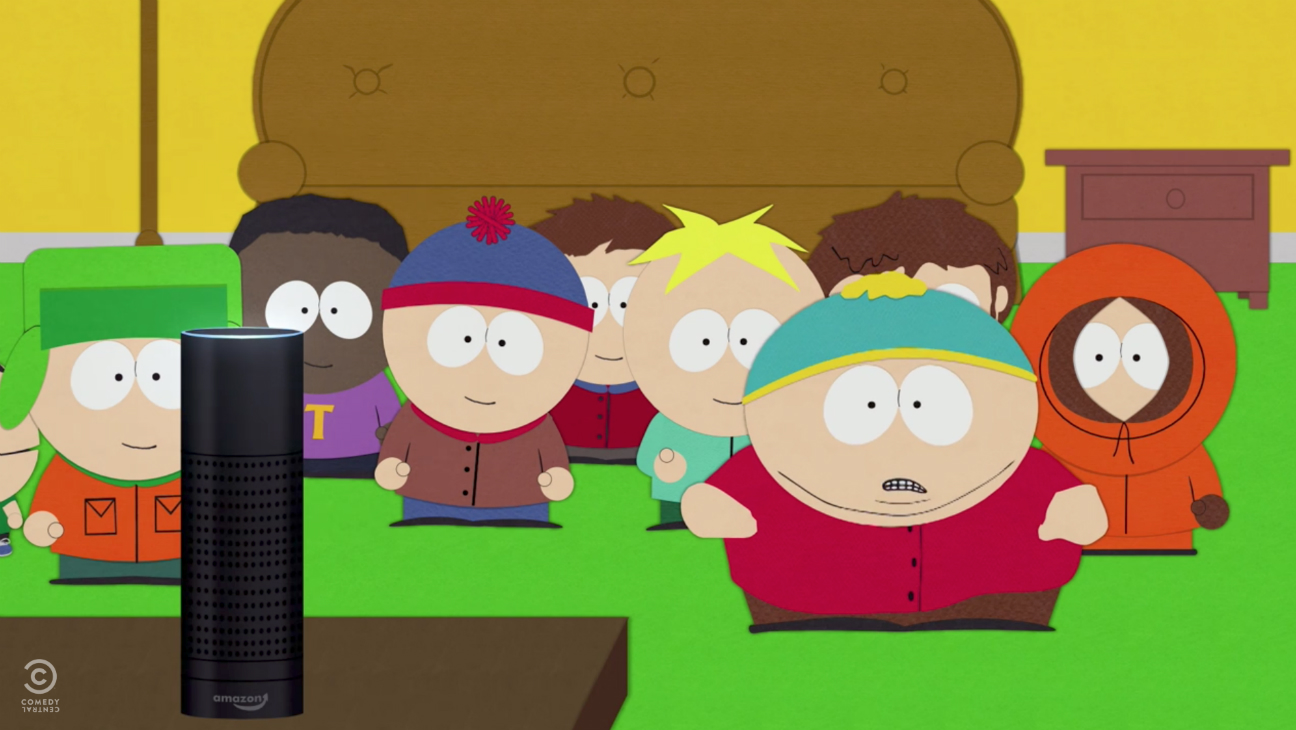
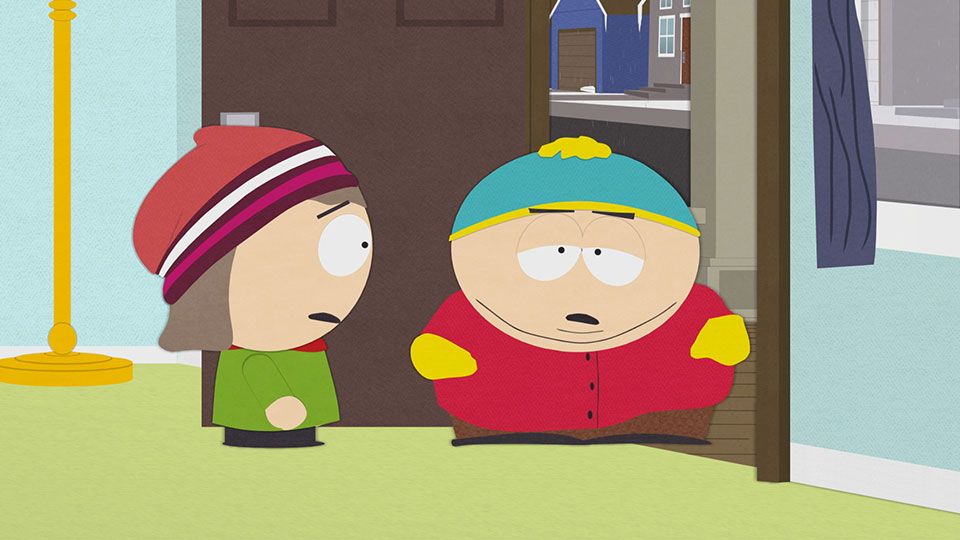
South Park S21E01’s A-Story opens with Cartman et al., laughing their fat butts off by instructing Amazon’s Alexa to say rude, childish words… until they are interrupted by Cartman’s girlfriend. Heidi wants to talk to Eric about the many mounting problems in their relationship, but Cartman gets angry and blames her for humiliating him in front of his friends.

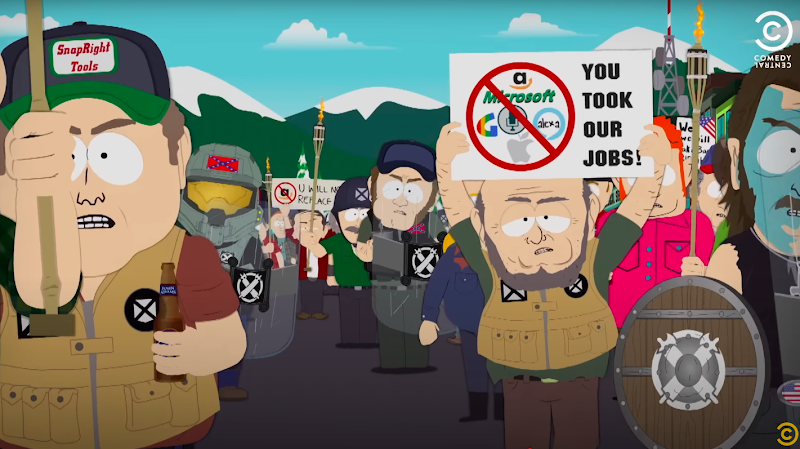
Across town, in Story B, TV host Randy is trying to help the community by redecorating people’s houses and hosting his show, the perfectly realized White People Renovating Houses. Randy is interrupted by an angry mob of Confederate flag-waving white supremacists who are sticking it to the liberals by protesting that their jobs are being replaced by Amazon, Google Home, and Siri.
Another part of South Park’s genius is that Matt and Trey don’t just attack one side of the political spectrum. They often create stories featuring two opposing philosophical, political, social, or religious themes by tackling topics like censorship or political correctness. By letting their townsfolk duke it out, they highlight the absurdities of both sides of the aisle, woke liberals and redneck conservatives. In short, they offend everyone!
Heidi wants to talk and resolve their problems. She even tells Cartman, “We have to communicate to respect each other’s opinions,” and says that he “wants to be heard but doesn’t want to listen.” Cartman just interrupts, shouts over her, and silences her like men have done to women for millennia. (Alexa's female voice is a clever extra level of metaphor.)
Randy and the white nationalists’ Story B perfectly mirrors Cartman and Heidi’s Story A. You see, these two lines from Heidi could just as easily be uttered by Randy when dealing with the white nationalists. It’s like poetry, they rhyme.
In summary, when creating your B-Story, it must reflect and deepen the themes of your A-Story. If it doesn’t (or if your script only features an A-Story), then you’re gonna need to learn more about ABC Stories and your script needs a rewrite. To learn how to make your Story B mirror Story A, use the flashbacks in Lost as a masterclass.
South Park continues next Tuesday, 19th September on Comedy Central.