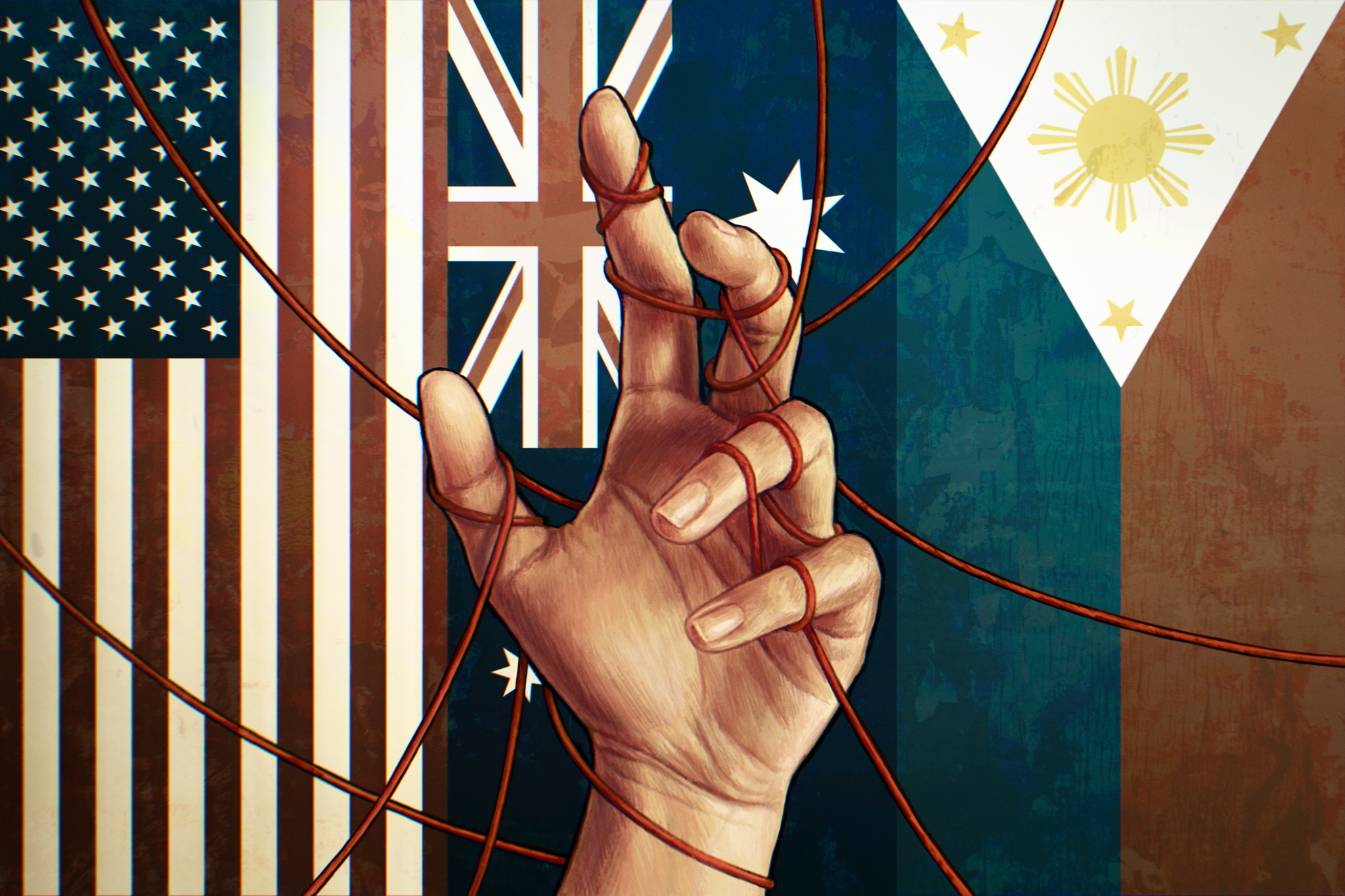
Since 2025, the world has seen significant uproar with 72 countries reporting significant protests, according to the Carnegie Endowment for International Peace. The majority of these demonstrations clamor against social and political issues: government corruption, discrimination of minorities, economic inequalities, among others.
Australia, particularly New South Wales (NSW), is among that 72. However, after the Bondi beach attack, the Chris Minns government pushed forth the Terrorism and Other Legislation Amendment Bill 2025. This has tightened the state’s anti-protest laws and enabled police brutality of demonstrators, as seen in the protests on the 9th of February during Israeli President Isaac Herzog’s visit to Australia.
These developments, which occurred within less than three months, exhibit two considerable scenarios. First, is the unchecked granting of power to the police. Second, is the use of dangerous claims to justify suppressing peaceful demonstrations.
Ambiguity enables aggression
Beyond hasty implementation of protest restrictions, certain provisions in these legislations appear concerning or ambiguous. These gaps have a role in the recent harassment against protestors, but especially in the perception against demonstrations in general.
Under the bill, the police commissioner was granted the power to ban protests in designated areas through the public assembly restriction declaration (PARD), under amendments to the Terrorism (Police Powers) Act 2002. Permitting police to use personal judgement in assuming a protest will “cause fear of harassment, intimidation or violence, or a risk to community safety” can lead to them enforcing PARDS based on misinterpretations or biased perceptions of motives.
Under the same umbrella, particularly the Summary Offences Act 1988 provisions, police are also given the ability to issue move-on directions or dispersal of crowds, though this being in place under “certain types” of conduct also constitutes vagueness and personal suspicion.
Looking elsewhere, in the Terrorism (Police Powers) Act 2022, there is no clear criterion for a protest to be declared terror-related to begin with when peaceful assemblies aim and uphold to not cause “physical damages or injury.”
Recalling the recent protestor attacks, there were also no public notice or orders given to initiate the police brutality, clearly showing a violent response to a peaceful protest.
Amidst all of this, housing protest regulation changes within counter-terrorism legislation, observing how two legislations are explicitly titled with “terrorism,” implicitly associates demonstrations with violence.
Safety amidst injustice?
NSW Police Commissioner Mal Lanyon, in an interview with ABC News, showed concern over “a significant risk to community safety” as his rationale to extend the PARD before Herzog’s visit. The context of this claim stemmed from what he mentioned was a “significant animosity,” perceiving that dangerous assemblies will rise during the visit.
After what actually happened, or even alternately, this claim needs to be reconsidered. While critics have argued that his stance amounts to shielding the Israeli government from accountability by “trying to silence opposition,” Lanyon’s perception generally frames protests as vehicles for hostility, rather than calls for justice.
On the other hand, Minns even previously lamented to The Guardian how Sydney in particular was housing weekly protests, which can obstruct the “right to enjoy the city … free from trying to navigate a protest every weekend.” While there is the aspiration to bring about social harmony and safety, this is a difficult—may it be impossible—feat as injustice itself continues to exist for many groups, such as Palestinians and Jewish people alike.
If anything, these harmful projections against protests, in the middle of democratic land, become testimonies as to why they still exist. To say that political assemblies are annoyances, and laced with malice, tramples down on their essence: enduring and supporting in the midst of struggle.
Authorities, and whoever else may be affected, are simply not ready to confront these harsh realities and obligations that it is easier to twist narratives and say less to get those over with. The acknowledgement of freedom of speech is insufficient as long as personal discretion counters calls for accountability. The same goes for lobbying public safety when discrimination continues to violate communities.
Threats to democracy and dignity will continue to be collectively responded to by the masses: and until the political powers sincerely pay attention to them, their calls will never cease.