Knowing where to turn in times of need, and working in an environment that fosters a good work-life balance and supports you mentally, physically, and professionally, goes a long way toward ensuring mental well-being. Below are possible triggers for psychological stressors in veterinary medicine, as well as initiatives and activities to improve mental health.
Sep 02 26September 02, 2026
Article at Veterinary Practice News
If you have a neurologic patient without an obvious underlying cause, rabies must be on your differential diagnosis, regardless of how low you think the risk is. Because of its lethal zoonotic potential, failing to have it on one’s radar could have serious ramifications. Further, because there is no treatment in animals, the prognosis differs markedly from that of other neurological conditions.
Jul 29 26July 29, 2026
A look at the pros and cons of various options clinics are using now
Jul 01 26July 01, 2026
How many times do you come across a coughing cat with or without respiratory distress? In cats, we usually refer to feline lower airway disease (FLAD) as asthma because owners understand this, and, as a profession, we haven’t fully clarified the distinctions between asthma and chronic bronchitis in cats. Regardless, FLAD is commonplace. Let’s take a deep dive into FLAD, clinical findings, diagnostics, and treatments.
Jun 04 26June 04, 2026
Often described as a goose-honking cough, canine bronchitis is not pathognomonic, as tracheal collapse and other coughs may sound similar. However, generally, these dogs come in stable and not in respiratory distress, making you think of noninfectious causes of cough when the duration of clinical signs passes the months, not hours or days mark.
May 27 26May 27, 2026
A lot goes into the various etiologies of pruritus in dogs and cats. Treating the underlying condition, if feasible, is optimal, but not always realistic. Managing clinical signs, improving health outcomes, and minimizing negative impacts on the human-animal bond drive therapy recommendations, options, and success rates.
Apr 29 26April 29, 2026
In cases where you suspect hoarding is playing a role in any negligent animal care, getting animal control (or related entities) involved, as well as law enforcement and public health representatives, is paramount because the health of the individual and anyone else living in the home, as well as the animals, is at great risk. Ultimately, it is a true One Health risk, with environmental concerns in the home, and animal and human health challenges.
Apr 24 26April 24, 2026
Transboundary diseases are those that are not endemic in a region, but have significant risks if they were to enter, for example, the United States. Risks include economic and threats to human, animal, and environmental health.
Apr 12 26April 12, 2026
Because we are focusing on emergency medical management, we will prioritize patients requiring comprehensive care, including oxygen therapy and hospitalization. However, for those with less severe disease or for owners who do not want to pursue hospitalization, the same principles can be used, modified, and adapted to meet the needs of your patients and pet owners.
Feb 27 26February 27, 2026
For those who handle emergencies much less frequently and don’t thrive on adrenaline rushes and potentially life-or-death decision-making, respiratory distress patients can be scary. Feeling confident in your ability to distinguish primary lung disease from primary cardiac disease from other underlying, likely systemic conditions improves self-efficacy and, ultimately, health outcomes for patients and pet parents alike.
Feb 12 26February 12, 2026
This re-emerging pathogen is commonly referred to as cat flea typhus, R. felis rickettsiosis, or flea-borne spotted fever, with the first documented human cases in 2000. Clinical signs of Rickettsial felis infection in people generally present with typical flu-like symptoms such as headache, fever, and muscle aches/pains. The cat flea is a confirmed biological vector with the ability to transmit vertically throughout 12 generations sans taking a meal.
Jan 16 26January 16, 2026
Various degrees of evidence exist for the use of various modalities in OA therapy in our canine and feline patients. Selecting therapies based on sound evidence-based veterinary medicine is paramount, as it gives the greatest likelihood of success. Ultimately, veterinarians need to combine experience and medical evidence to provide a multi-modal approach to the disease.
Dec 23 25December 23, 2025
By engaging in evidence-based practices, we improve the care we provide our patients using recommendations and guidelines developed by specialists and those with the expertise to synthesize the evidence. Gone are the days when we simply prescribed something because that was how we had always done it. Instead, it is our responsibility to base our prescribing practices, procedural care, and other medical and surgical applications upon sound, trustworthy medical information.
Dec 03 25December 03, 2025
Dr. Tramuta-Drobnis keeps herself busy as a veterinarian and public health professional, a freelancer, writer, and researcher. Receiving her Veterinary Medical Doctor degree (2005) from the University of Pennsylvania and her Master’s in Public Health from the University of Florida, she’s accrued over 17 years of veterinary clinical experience. Her work with small animals and exotics span general practice, emergency, and critical care medicine. She has a passion for One Health, infectious disease
Oct 27 25October 27, 2025
Article at thevets.com
Due to the contagious nature of leptospirosis and its higher-than-previously understood prevalence, as well as its often indistinct clinical presentation, modifications have been implemented in vaccine recommendations.
Sep 11 25September 11, 2025
While Pet Fire Safety Day is July 15, and National Fire Prevention Week is October 5-11, 2025, fire prevention and preparedness in the event of a fire are crucial 365 days a year. Many people may see prevention strategies and staff training as ancillary, less important than veterinary-related education, and even boring. However, waiting until an emergency strikes to realize the need for pre-planning, staff awareness, and training is too late.
Aug 07 25August 07, 2025
Learn more about today’s cancer tests for pets, what scientific evidence says, expert recommendations, and what new tools may be on the horizon.
Jul 20 25July 20, 2025
Animal-assisted interventions (AAIs) employ this HAB, incorporating animals into health interventions that blend contemporary medicine with holistic approaches to enhance outcomes and quality of life. Veterinarians serve a key role in ensuring the safety of these programs and the health and safety of the animal participants, working together with various professionals and volunteers to ensure success.
Jul 16 25July 16, 2025
One of my biggest pet peeves is when clients come to me, as an emergency clinician, with an emergency, and when asked about chronic conditions/problems, clients do not mention vomiting. When I ask about vomiting specifically, I often get “Oh, well, yeah, Fluffy vomits about every other day to weekly” or, well, “Lucky gets hairballs a few times a month.” Usually followed by, “But that is normal.” Of course, I could go on. Please, please stop telling owners it is normal for their cats to vomit.
Jun 04 25June 04, 2025
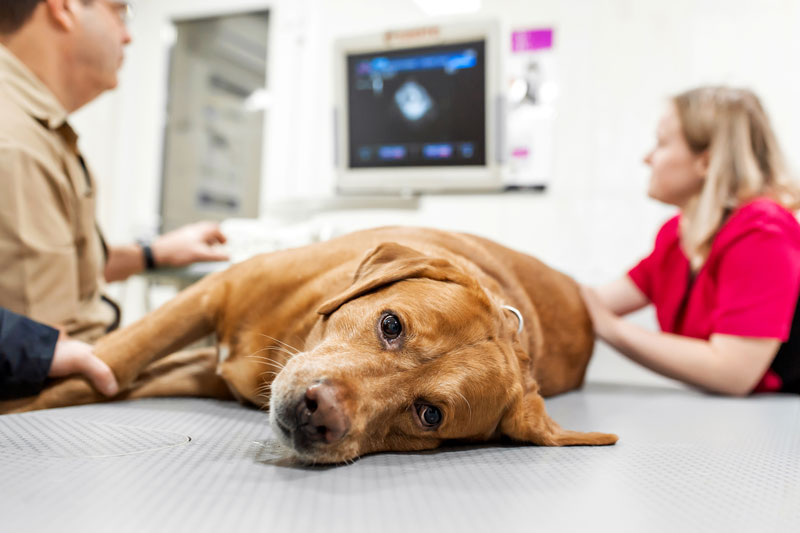
Learn how you can fine-tune your skills with point-of-care ultrasound (POCUS) to systematically, consistently, and confidently identify and diagnose patients, permitting prompt treatment and prognosis assistance.
May 28 25May 28, 2025
Built with Authory. Get your own portfolio now!