Prior to my time working in a shop, I was on a ride and I hadn’t been keeping up on my chain maintenance. During this gravel group ride, I was riding near one of my buddies, but my chain was squeaking so much I was embarrassed to even be riding in the group. I may not have known much at that time, but I knew enough that this was outside what is acceptable for a group ride.
Lubing your chain does more than just prevent you from looking like “that rider” in the group. When you lube (or wax) your chain properly it offers better shifting, improves wear issues on components, and is simply less distracting on the ride.
Whether you’ve ever been that rider where your chain is squeaking so loud that nobody wants to ride near you or you don’t want to end up in that situation, this story is especially for you. Here we’ll go through how to clean the chain (and the rest of the drivetrain), tips for lubing your chain, and when dry versus wet lube is the right call.
Cleaning Your Drivetrain
While you can purchase stiff, long-bristled brushes and degreasers designed specifically for the task, you can also use household items you probably already own, including dish soap, an old T-shirt, and a toothbrush or scrub brush.
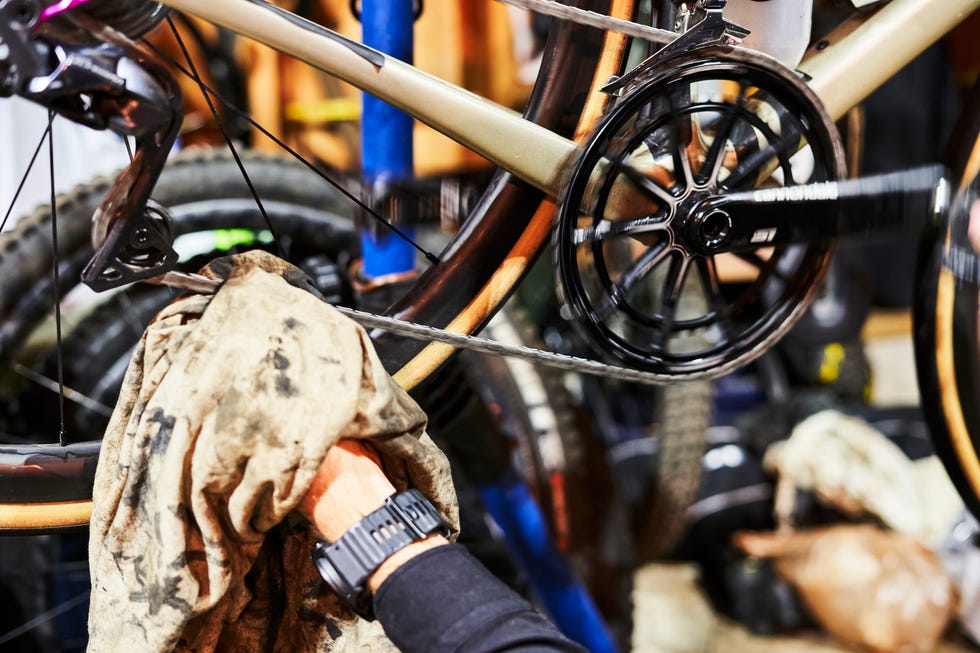
- Clean the cassette (the set of typically silver rigs that attaches to your wheel hub and holds your chain) by scrubbing it with a soapy brush. You can then use a t-shirt or a rag to “floss” in between the sprockets. Rinse with water.
- There are multiple ways to clean the chain, but the easiest is using a soapy brush to get all parts of the chain (including the inside). Then rinse with water. (You could also use a degreaser instead of soap if you have it. Just make sure you rinse with water after, too.)
- Get into all the other nooks and crannies, including the derailleur pulleys (the little cogwheels that help to move the chain across the cassette’s sprockets, also known as pulley wheels or jockey wheels), using a soapy, stiff-bristled brush. Then rinse with water.
- Dry everything off using a clean rag or old t-shirt.
- Once it’s completely dry, lube your chain.
Although lubing your chain is a distinct task, you should never clean your drivetrain without following up with some fresh lube. (More on that below.)
Lubing Your Chain
How to lube your chain depends on whether you’re using wet lube, or dry lube, or wax, a choice that depends on a number of factors. “It depends on where you’re riding, what kind of riding you’re doing, and how often you see yourself doing maintenance,” says Purdy.
For the typical novice, wet lube is best if you frequently ride in wet conditions or just want to get to and from work. It also lasts longer than dry lube, so it can be a good choice if you’re touring or doing high-volume training.
If you’re gravel riding or mountain biking in a dry climate, on the other hand, wet lube attracts and holds onto dust and sand, which creates more chain wear; in that case you’re better off with dry lube, says Purdy.
Remember, chain lubes will have precise application instructions that are essential to follow. Most high-quality lubes have a setting time, meaning you should give the lube time to sit and penetrate the chain's inner workings before wiping away the excess.
Here’s how to lube your chain using wet or dry lube:
- Make sure your chain is fully dry before you begin; otherwise the moisture will prevent your lube from adhering to your chain, says Purdy.
- Wipe your chain using a rag or an old t-shirt. If you don’t have a bike stand to place your bike on, lean your bike up against something sturdy with the drive side (where the chain is) facing you.
- Spin the pedals backward several times with one hand while pinching your rag against the upper and lower edges of the chain to absorb the old chain lube and the grime it has collected.
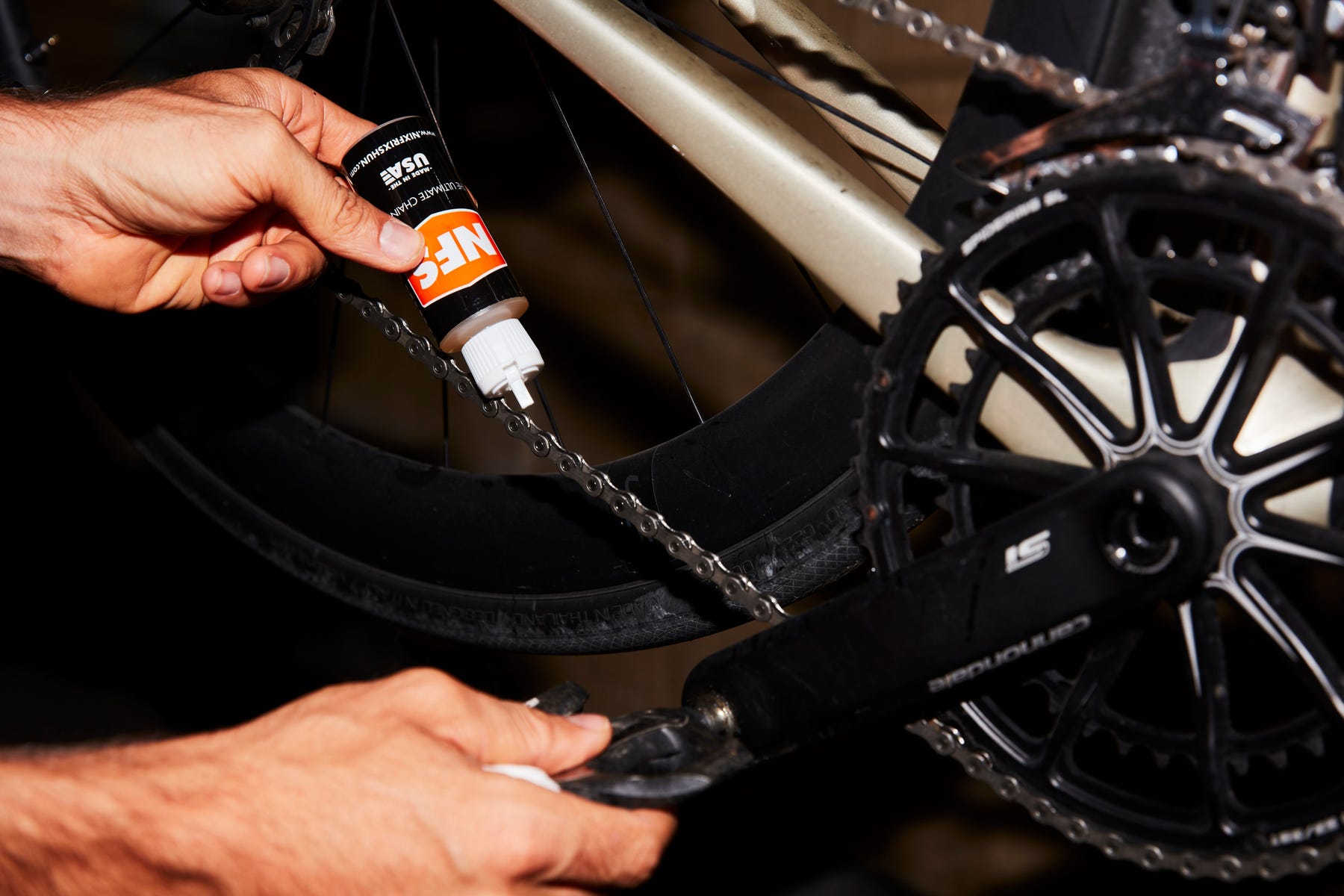
- Apply your lube to the chain according to the manufacturer’s directions on the package. Make sure you’re holding the container directly above the chain so that you’re applying the lube directly to the inside of the chain.
- Wipe your chain with a clean rag, as above, to get rid of any excess lube.