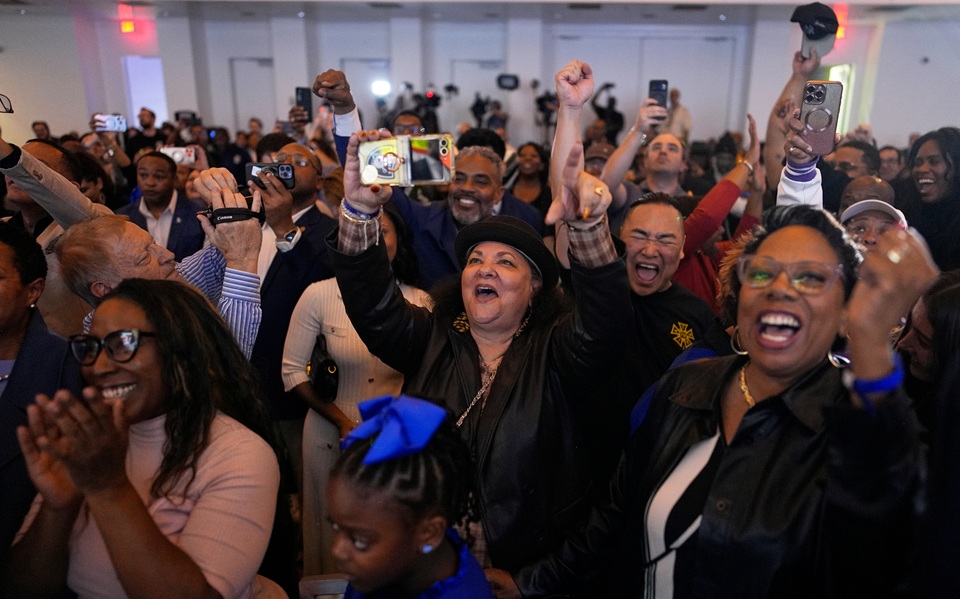
The huge international interest in America’s midterm elections proves that in our increasingly interconnected world, political developments in the United States are like a pandemic – their consequences affect us all, wherever we are, at the same time, and we are not in a position to protect ourselves on our own. With the coronavirus, we waited for big companies that had already invested large amounts in research to develop vaccines, with which countless lives were saved. In politics, and especially in democracies, we hope for citizens to bring resolution. We know that the decisions of American voters will have a decisive impact on our lives, when they elect a Donald Trump for president, when they vote against his party, when they vote for candidates who are at the other end of the political and moral spectrum that he occupies. Politics today are transnational and also dependent on the preferences, the ambitions, the fears, the bigotry and the hopes of individuals. This is revealed by polls before elections, by exit polls, and by the analyses that come later. So, why did the Americans vote as they did?
One of the most impressive aspects of these elections is how much the results differ from those of the 2024 presidential elections. States, electoral districts, social groups and age groups that had given Trump a large majority now swung to the Democrats. The U-turn was largest among young voters (18-29), Latinos, Asian Americans and men overall. These groups had turned to Trump in 2024 in greater numbers than the Republican Party had received before. In this election, though, for the first time since 2008, more men voted for Democrat candidates. Close to half Latino voters (48%) backed Trump in 2024 (from 36% in 2020), but now they surged toward the Democrats, giving them 64% of their vote.
In 2024, Trump won 40% of the Asian American vote (from 30%), but now 71% of them picked Democrats. Among young voters, 34% of those who had picked Trump in 2024 swung towards the Democrats, giving them 73% of their vote. States that for generations had not elected a Democrat senator or governor turned blue on the map, from Republican red.
Beside the fall of traditional Republican fortresses, many voters who had backed Trump in the presidential election showed buyer’s remorse. (There are no final figures yet, keeping us from knowing whether voter turnout was bigger than in previous elections). The polls and exit polls showed that among decisive factors were the war against Iran, high fuel prices and the high cost of living. These are all interconnected, and all were caused by Trump’s actions. Here, Israel becomes part of the story: its excessive response to the slaughter perpetrated by Hamas cost the Democrats dearly in 2024, while the grip that Benjamin Netanyahu has had over Trump led to the war on Iran and the reaction that supporters of Trump and the Republicans expressed at the ballot box. Latinos were shocked by Trump’s pogrom on immigrants. Many voters were repulsed by the arrogance and corruption of Trump, his family and friends, and by the shameless way in which “oligarchs” are pursuing an ever-tighter grip over society and wealth. Trump’s magical bond with “common folk” has evaporated, reshaping the country’s electoral map.
The groups that backed Trump two years ago, despite knowing who he was and what he was capable of, expected him to be tough against others but not against them. They did not expect that his obsession with tariffs, his bigotry, his pursuit of personal enrichment, his need to be acclaimed as peacemaker and/or warrior, the awe that autocrats instill in him, would damage the economy, harming them and people across the world.
The most important lesson from these elections, though, is that when autocratic leadership has not had the time to undermine the system sufficiently, democracy can attempt a correction through the ballot box. Institutions offer the people a chance to protect themselves from their errors.