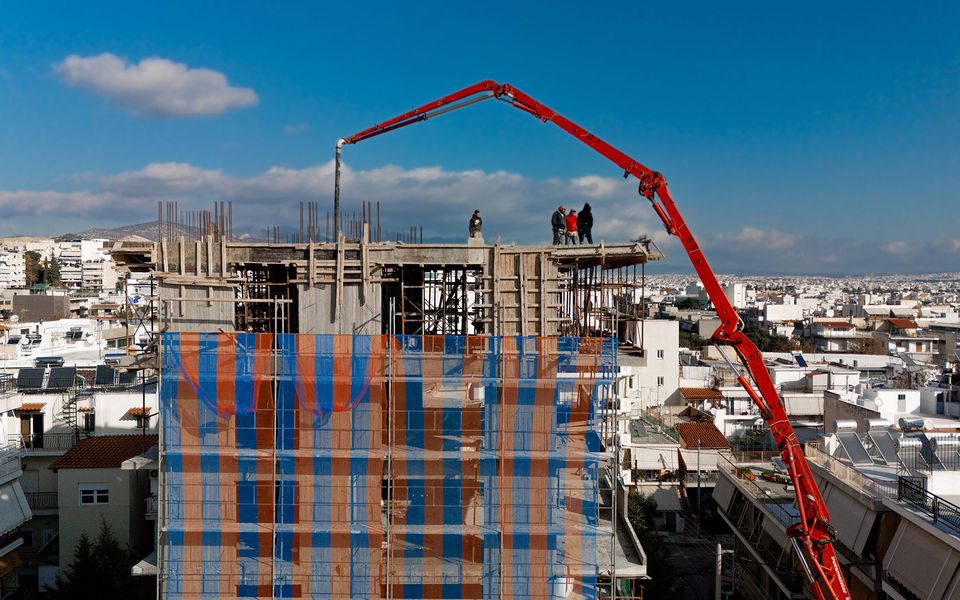
The transfer of development rights, in which an owner who cannot build higher sells that right to someone else, could be a useful tool for greater justice in construction if it did not further damage areas already suffering from the effects of previous laws and regulations. It is understandable that the mayors of six municipalities in northern Athens (and residents) should press the government to withdraw its Strategic Plan on the issue, as, in these areas alone, an additional 584,400 square meters could be built.
In a letter that led to their meeting on November 16 with Prime Minister Kyriakos Mitsotakis, the mayors of Lykovrisi-Pefki, Nea Ionia, Papagou-Holargos, Kifissia, Filothei-Psychicou and Halandri, stressed that “infrastructure in our municipalities (roads, water networks, sewage systems, parking spaces) are at their limits, if not exhausted, and from the study under discussion it seems that there has been no evaluation of the additional consequences of further construction on traffic, public infrastructure and quality of life.”
The mayors’ and citizens’ reactions, and the government’s backing down (announcing that the municipalities will decide whether the measure will be applied), may prevent a further burden on their areas. But this should be a first step toward improving the quality of life of residents in areas that have seen a building boom in recent years.
Judging from the result, it is clear that there was no forecast on the burden on these areas, or the studies were inadequate. Where adjacent gardens formed mini parks and a benevolent microclimate, buildings were raised over basements that covered the whole lot, with all the soil stripped away, with the result that the land lost its natural ability to absorb heat and rainwater. Aside from the heavier burden on the climate and infrastructure, what we don’t think of sufficiently is how the contractors stretch the limits in order to gain more construction space. It would be interesting to see what would turn up if inspections were conducted on buildings that were allowed to add an extra floor because they were ostensibly “green.”
Of course, no one is punished for stretching or breaking the rules. The only people who are punished are those who do not take part in the sell-off, either because they have no house to exchange (and are renting), or because they do not want to contribute to further undermining the area around them. They are called on to live with the consequences of others’ actions, and they do not have the luxury of being able to ignore what is happening because the construction frenzy raises the value of their homes while degrading the quality of their lives. Throughout Greece, this “construction inflation” devalues values and beauty. After this intervention, may the country’s mayors begin to right current wrongs.