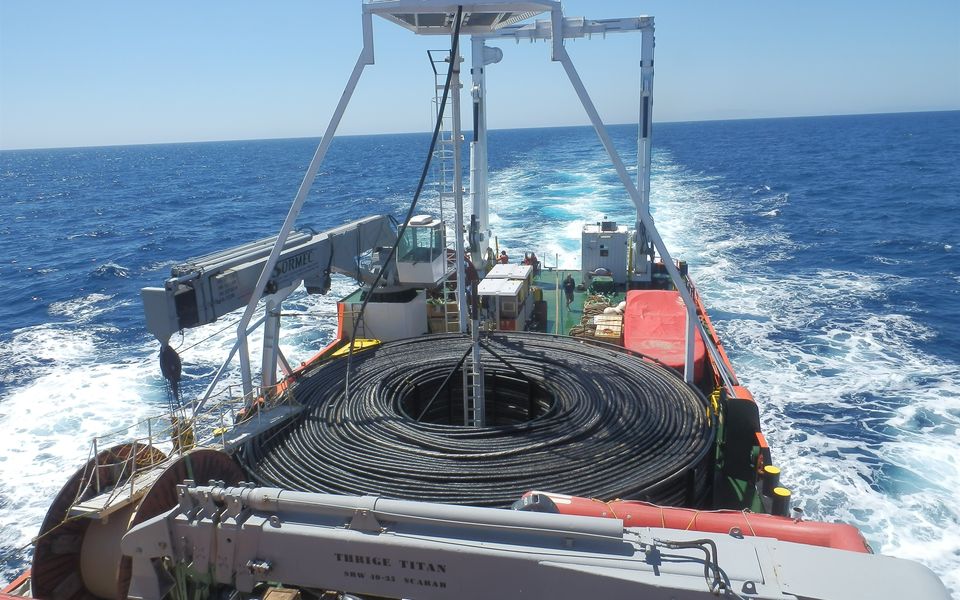
The way in which our politics are conducted does not inspire hope that there will come a time when the nation’s elected representatives will possess the personal virtues and collective methods to unite the citizens and make good use of the country’s strengths. The heated discussion on the issue of the power cable that will join Crete with Cyprus, (and the involvement of Turkey and France), shows how far we are from a cool appraisal of the situation, of the dangers and of our capabilities – an appraisal that would allow us to act as the national interest demands. Instead of the consensus needed to handle Ankara’s unprecedented demand that it “approve” of such a project, we are consumed once again by a head-on collision between the government and the whole opposition, with the sole criterion of those shouting at each other being their “patriotism”. This comes at a time when global instability demands great care and conservation of the nation’s energies. And it comes after the crisis, which, while threatening to destroy the country, gave us a chance to work on our weaknesses.
Yet, here we are, heading for elections with a government that, on one hand, is forced to handle difficult issues without the support of any other political group, while, on the other, it acts on a wide range of issues as if it did not have to listen to any dissent, whether from the political world or concerned citizens. The lack of consensus is a feature of our politics; its driving force is not the ferment of ideas but the condemnation and (if possible) erasure of rivals. This applies to all issues, from those that determine the nation’s course to the ephemeral. Instead of debate, we have conflict. This is nourished by fixed mentalities and behaviors, such as the endless effort to outdo each other in patriotism. Even leftwing parties (old and new) understand that they will lose out if they take a different stand, and so, they, too, raise the banner of nationalism. The Prespes Agreement, which the Syriza government signed with the aim of ending the dispute over our northern neighbor’s name, showed once again that compromise is taboo in our domestic politics, even though unavoidable in diplomacy. (As the same mentality dominates in Turkey, it will be extremely difficult to reach agreement on delineating the continental shelf and the Exclusive Economic Zones of the two countries). Tied to all this is the way in which we “strain at a gnat” in order to accuse a domestic rival of being a sell-out, even as we “swallow the camel” of our foreign rivals’ presenting us with new challenges. This delights the opposition, which sees it as evidence of government inadequacy, even though opposition parties contribute to inertia by pushing maximalist positions so as to embarrass the government. Of course, Greek parties are not to blame for Turkish belligerence, but the dead-ends that our domestic political disputes produce encourage the other side’s arbitrary actions (seeing as Turkey has a method of insisting that its adventurism creates faits accomplis).
Under such conditions, it appears impossible that any political group would undertake the responsibility of pursuing solutions (on any issue) that would provoke the reaction of opposition parties, the news media aligned with them, and, consequently, a large part of the population, as cries of condemnation from all sides maintain a climate of continual polarization. This determines not only our positions in foreign affairs, but also the quality of our politics. Everyone against everyone, in other words. Consider how parties reject cooperation, even though they know that after the elections they will all be looking for coalition partners. It’s not only that parties don’t dare to step out of the framework of endless confrontation, but the dominant mentalities and behaviors discourage the entry of young people into politics.
As the crisis did not overturn this political climate, as we acquired a government that tried to change things but with limited success, as even new political parties have old ideas, we are forced to compromise between what we do and what we could do. Even as we brag about how we never compromise.