The division between European Union members on major issues such as the negotiations for the 2028-2034 budget and the need to deal with high energy costs shows in the clearest way why the Union moves so slowly, and uncertainly, toward decisions necessary for its survival. Jean Monnet’s dictum, from 1978, was spot on. “Europe will be forged in crises, and will be the sum of solutions adopted for those crises,” he said.
But, to understand why the Union is struggling to respond to the time’s challenges, it is useful to consider the comment attributed to Winston Churchill, regarding the Americans of his time: “You can always count on the Americans to do the right thing, after they have exhausted all other possibilities.” Today we cannot count on the Americans doing the right thing at some point, so, it is up to the Europeans to find their way to solutions for the dangers they face. And we cannot tell whether the current difficulties will lead, in the end, to a positive result or whether the Union will pass the point of no return.
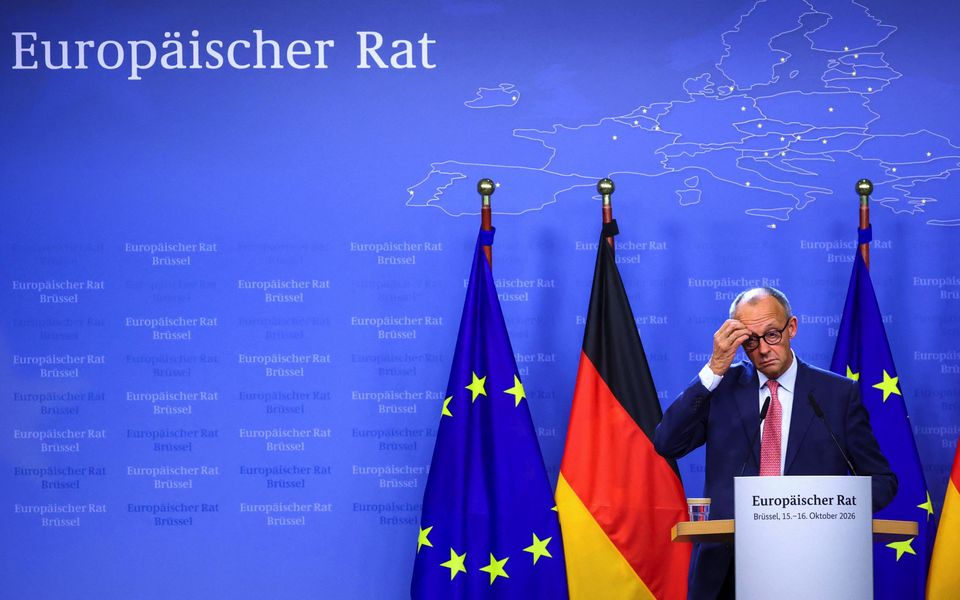
At the European Council in Brussels on Thursday and Friday, the leaders of the 27 member-states decided to postpone decisions on the vital issue of the seven-year budget, because of intense differences between countries that contribute more than they get from the budget (the so-called “frugals”) and those who draw out more than they put in (the “Friends of Cohesion”). This is a classic and understandable difference between the member-states, which up to now always led to compromise and the Union’s uninterrupted functioning. But if we add the lack of decisions on the urgent need to deal with the high cost of energy and forecasts of fuel shortages, then playing for time multiplies the dangers.
President Emmanuel Macron’s warning that a solution to the budget must be found by the end of the year because of the French elections in April, highlights the magnitude of the problem. France is one of the countries in which elections are scheduled in the coming months. Among them are Spain, Italy, Poland, Greece and Finland. In Germany, Chancellor Friedrich Merz is not facing federal elections but he has been gravely wounded in recent state elections by the rise of the extreme right Alternative for Germany (AfD) and the decline of his CDU. In April, elections will be held in another three states, and if the CDU does not maintain its strength – especially in North Rhine-Westphalia, the most populous and richest one – this will be catastrophic for the chancellor. As the “euroskeptic,” “pro-Putin” AfD is the rising power, Merz will not have much room to give in to pressure to contribute more to the budget and toward dealing with the cost of energy. Similar dynamics are evident in other member-states.
The energy issue highlights the structural problem at the Union’s heart. An external factor provokes a crisis, as the Russian invasion of Ukraine did, followed by the US war on Iran, which sent energy prices rocketing. Seeking solutions, the Europeans are immediately divided between those who want to avoid the cost of any new policy, and those who cannot get by without support. When elections hang over the negotiations like the Sword of Damocles, the governments of “frugal” states are in danger of being accused of wasting national funds to support the Union, further strengthening anti-EU forces, whereas the governments of countries that need support will pay the political cost for high energy prices (as will the richer countries, of course). Imported challenges trigger problematic procedures by governments that are fighting for their own survival and not for the Union’s. In this way, governments jeopardize the Union, and their own countries, too.