Editorial Leadership | SEO Strategy | Conversion Optimization
Context
Hinge Health set out to build a scalable, search-driven acquisition channel capable of creating demand outside of employer-dependent deployments for B2C marketing. At launch, the growth content library did not exist. Over 3 years, we built it into a core engine for awareness, traffic, and enrollments.
The strategy centered on publishing clinically credible, search-optimized education while continuously strengthening EEAT signals and improving on-page conversion pathways in a highly competitive healthcare landscape.

My Role
As content director, I oversaw the scaling of the library from 0 to nearly 1,000 articles, managing a team of two editors and a small, high-performing stable of freelance writers. I partnered closely with a Growth Marketing Manager and external SEO agency to:
- Develop and evolve a data-driven content strategy
- Lead monthly topic selection informed by traffic, conversion data, and search behavior
- Prioritize high-performing categories (e.g., women’s pelvic health)
- Oversee large-scale refresh strategies to sustain legacy cohort growth
- Build and optimize on-page modules to strengthen EEAT signals
- Support CRO experimentation, including eligibility flows and engagement modules
- Top edit all articles before publication
We maintained a cadence of 20–25 high-quality articles per month while maintaining high quality standards through SME attribution, proprietary insights, and structured clinical review.
I top-edited all content across MSK, exercise and physical therapy, pelvic health, pregnancy, menopause, senior health, and lifestyle medicine to ensure clinical rigor, consistency, and brand alignment.
Top Articles
Here is a sample of top-performing articles:
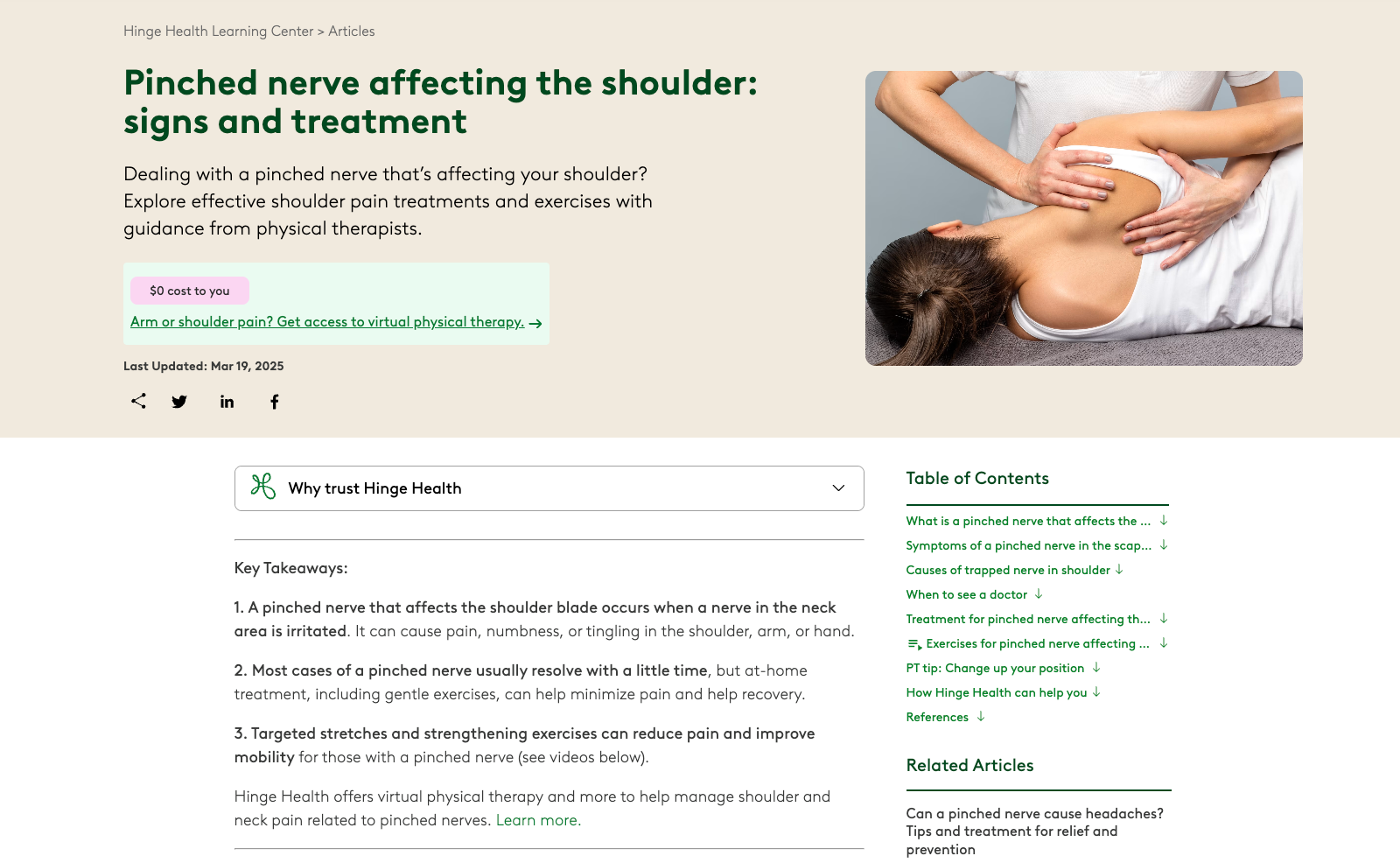
1. Pinched nerve affecting the shoulder: signs and treatment (link)
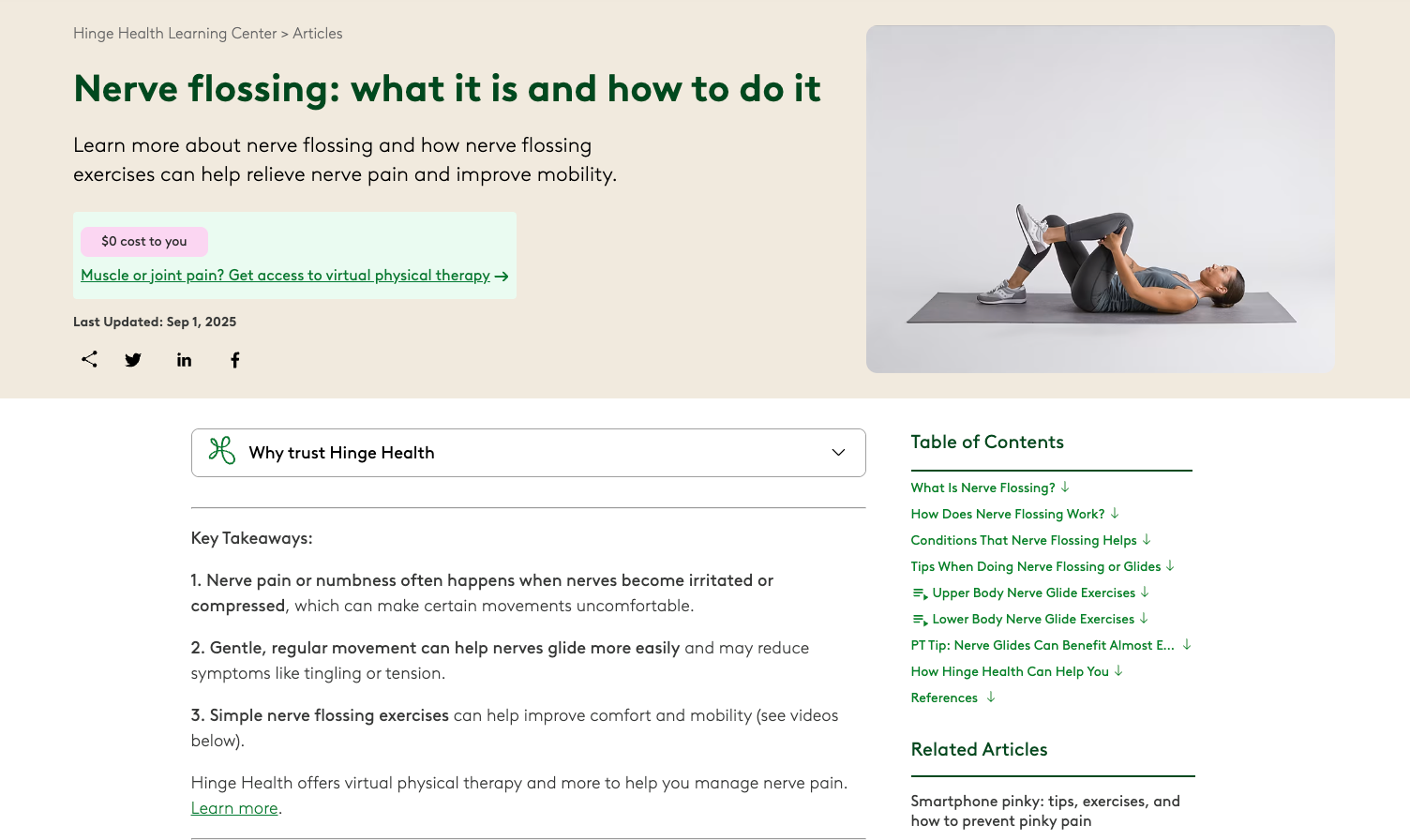
2. Nerve flossing: what it is and how to do it (link)
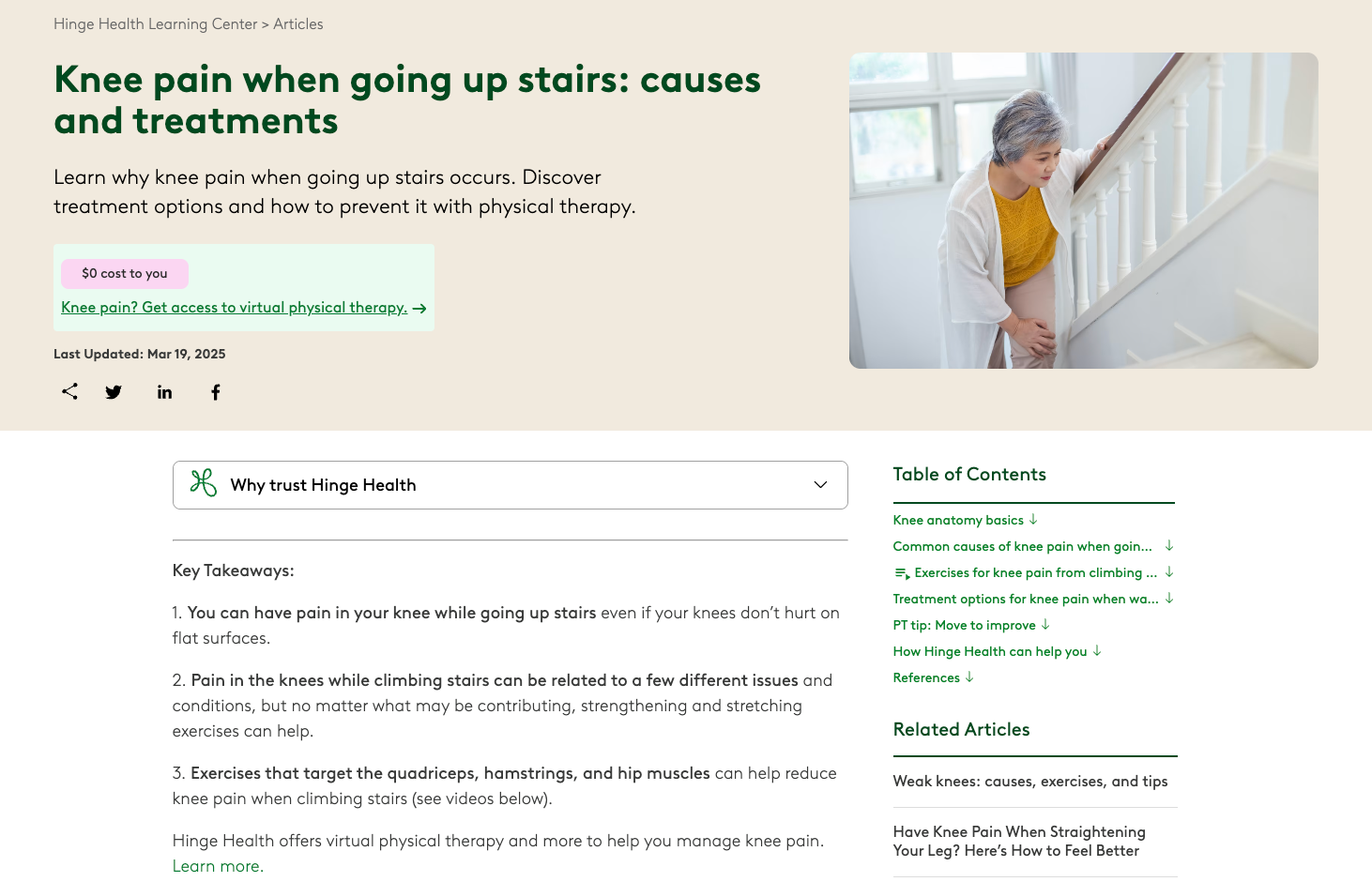
3. Knee pain when going up stairs: causes and treatments (link)
4. The 6 best pelvic floor stretches to relax tight muscles (link)

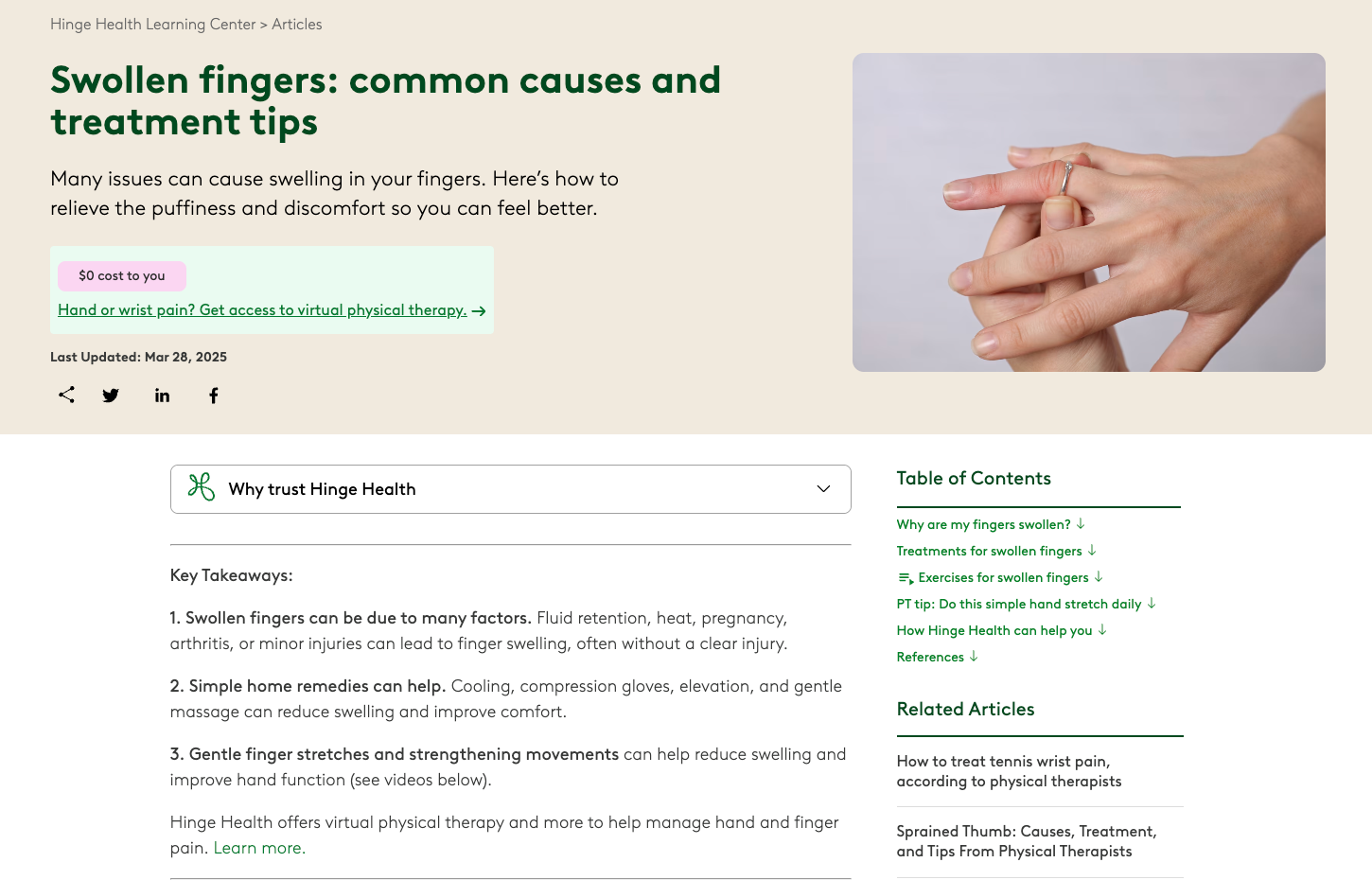
5. Swollen fingers: common causes and treatments (link)