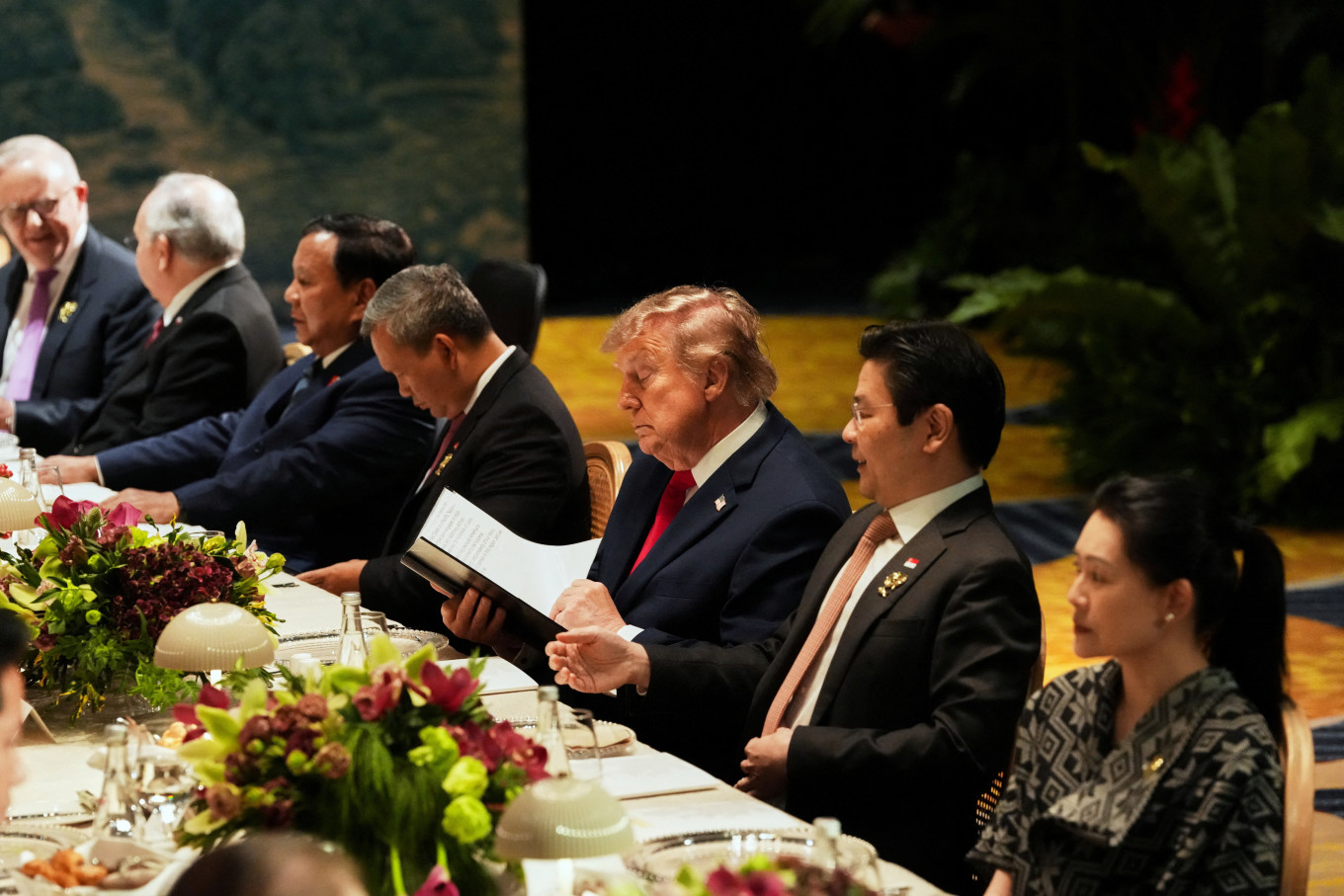
ASEAN, the East Asia Summit (EAS) and Asia-Pacific Economic Cooperation (APEC) represent three overlapping yet distinct layers of Asia-Pacific regionalism. ASEAN provides the institutional core; the EAS supplies the strategic leaders’ forum; and APEC offers the widest trans-Pacific economic platform.
Together, they sustain dialogue among states with vastly divergent interests, though their effectiveness remains constrained by consensus politics, weak enforcement mechanisms and intensifying great-power rivalry.
ASEAN’s greatest strength lies in its role as the organizing center of Southeast Asian diplomacy. Since its founding, the Association has given smaller and medium-sized states a collective voice, enabled regular engagement with major powers, and helped preserve regional stability through dialogue rather than coercion.
Its “ASEAN Way”, rooted in consensus, consultation, non-interference, and incrementalism, has allowed countries with differing political systems, levels of development and external alignments to remain within a single regional framework.
Rather than an inherent flaw, this flexibility is precisely what enables ASEAN to convene rivals and keep communication channels open. Its approach also reflects a comprehensive view of security, with its summits and three Community pillars addressing not only traditional security concerns, but also political, economic, socio-cultural, and environmental challenges, including disaster relief, migration, digital safety, climate resilience and public health.
Yet ASEAN remains more effective at preventing escalation than resolving underlying disputes. While its consensus rule safeguards national sovereignty, it also allows a single member state to block collective action or dilute a common position. The organization has similarly struggled to translate rhetoric into tangible results: intra-ASEAN trade remains modest relative to its stated aspirations, and persistent implementation gaps hamper deeper economic integration and policy coordination.
Furthermore, ASEAN’s authority depends heavily on whether major powers choose to respect its centrality. It can convene China, the United States, Japan, India, Russia and other dialogue partners, but it cannot compel them to alter their strategic conduct.
As ASEAN’s premier leaders-led strategic forum, the EAS brings ASEAN member states together with Australia, China, India, Japan, New Zealand, the Republic of Korea, Russia, and the US, making it one of the few venues where the region’s major powers regularly engage at the highest political level. Its principal value lies in strategic reassurance.
In a region marked by maritime disputes, technological competition, supply-chain disruptions, and US-China rivalry, the EAS helps stabilize expectations, reduce uncertainty, and preserve diplomatic channels. Crucially, it also operationalizes ASEAN centrality: rather than allowing great powers to organize the region exclusively around competing alliances, ASEAN retains the chairmanship and sets the diplomatic agenda.
However, the EAS is often more symbolic than transformative. Its outcomes consist largely of leaders’ statements and dialogue rather than binding agreements, and its institutional capacity to monitor or enforce commitments remains limited. Great-power competition further constrains its efficacy; when the interests of the US, China, Russia, and regional powers diverge, the Summit risks becoming an arena for competing narratives rather than a mechanism for collective problem-solving.
Institutional overlap compounds this challenge, as the EAS coexists alongside ASEAN Plus Three, the ASEAN Regional Forum (ARF), the ASEAN Defence Ministers’ Meeting-Plus (ADMM-Plus), and APEC, creating duplication and ambiguity over institutional mandates.
APEC, by contrast, is the broadest economic forum in the Asia-Pacific, bringing together 21 member economies across both sides of the Pacific to advance trade and investment liberalization, business facilitation, economic cooperation, and regional connectivity. Its core strengths are its inclusiveness and practical agenda.
By linking East Asian, North American, Latin American, and Oceanian economies, APEC is uniquely positioned to address supply-chain resilience, trade facilitation, the digital economy, food and energy security, micro, small, and medium enterprises (MSMEs), and structural reform. Its voluntary, consensus-based model allows economies with markedly different economic systems to participate, sustaining its relevance despite the absence of a binding treaty framework.
Nevertheless, APEC’s central weakness is its inability to enforce its goals. While it sets ambitious targets for trade liberalization and economic cooperation, compliance remains strictly voluntary and implementation depends entirely on domestic political will. Its broad membership is both an asset and a constraint: accommodating economies with divergent priorities makes consensus elusive and often prevents the forum from focusing on the region’s most pressing economic challenges.
Facing growing competition from narrower, binding trade agreements and plurilateral initiatives that offer concrete commitments, APEC’s value increasingly lies less in formal tariff liberalization and more in policy dialogue, capacity-building, and practical technical cooperation.
ASEAN, the EAS, and APEC are frequently judged by whether they produce binding treaties, resolve crises, or deliver immediate breakthroughs. Yet that is not their primary function. Their deeper utility lies in managing complex interdependence in a region where no single power can unilaterally impose order and where the cost of diplomatic breakdown is prohibitively high.
Each pillar plays a distinct role: ASEAN gives regionalism its institutional life, providing the organizational core through which Southeast Asian states coordinate, engage external powers, and preserve a measure of strategic autonomy; the EAS gives regionalism its strategic reach, creating a high-level channel for crisis communication and rivalry management; and APEC gives regionalism its economic breadth, sustaining trans-Pacific cooperation even when formal trade negotiations stall.
Even so, all three institutions confront a shared structural dilemma: their inclusive, consensus-based designs sustain broad participation at the expense of decisive action. ASEAN’s consensus rule protects sovereignty but dilutes collective positions; the EAS convenes rival powers but cannot compel cooperation; and APEC promotes economic integration without enforcement mechanisms.
The result is a regional architecture that is wide but shallow, capable of preventing diplomatic rupture, yet prone to policy drift; adept at convening leaders, yet inconsistent in translating summits into sustained implementation. Consequently, the Asia-Pacific does not require another grand multilateral institution; it needs its existing architecture to function more effectively.
ASEAN must bolster its credibility by closing implementation gaps and mitigating internal divisions. The EAS must evolve beyond ceremonial dialogue into a more substantive venue for managing strategic competition. APEC must revitalize its practical economic mandate, particularly in supply-chain resilience, digital trade, and climate-related cooperation.
The imperative is not to replace ASEAN, the EAS, or APEC, but to make them more consequential. If these institutions can transition from issuing communiqués to delivering measurable outcomes, they will remain indispensable pillars of regional order; if they cannot, they risk degenerating into purely ceremonial forums in an era that increasingly demands concrete solutions.
The writer is a professor of ASEAN Studies at International Islamic University of Malaysia and director of Institute of International and ASEAN Studies.