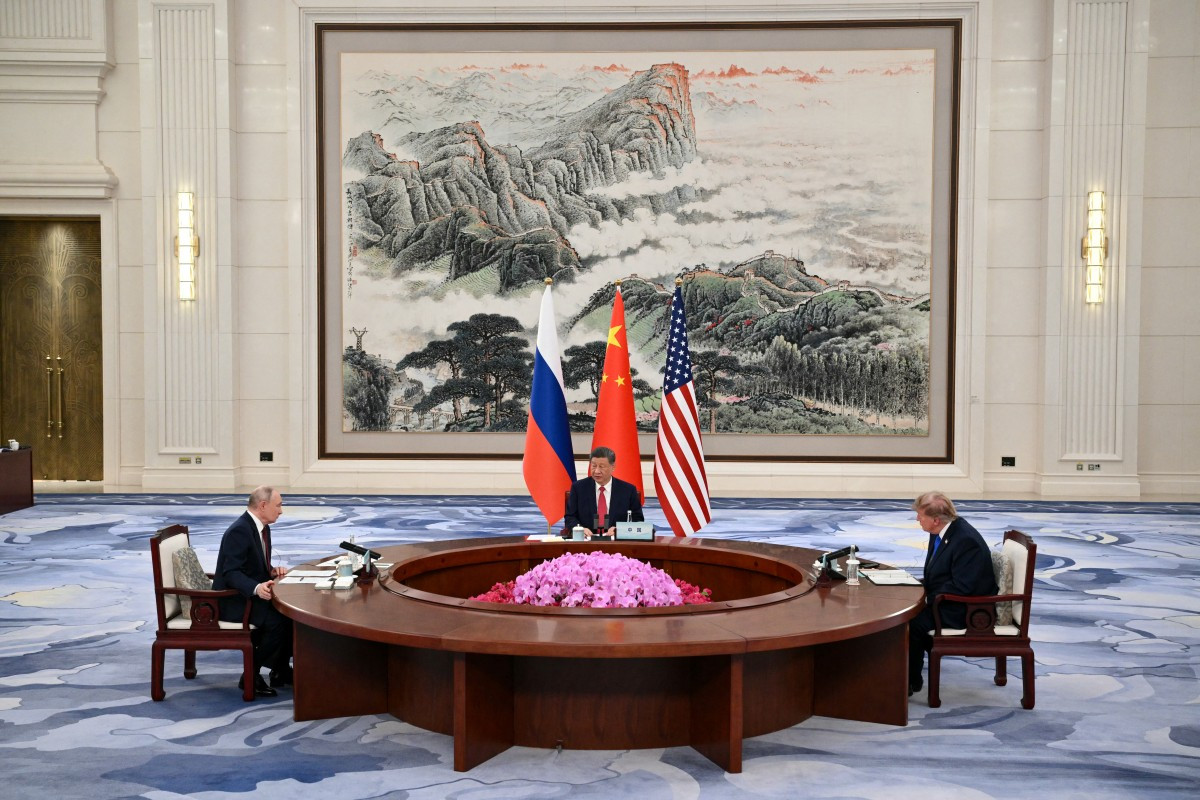
The historic trilateral summit between Chinese President Xi Jinping, United States President Donald Trump and Russian President Vladimir Putin in Shenzhen on Nov. 19, should not be dismissed merely because it failed to produce immediate breakthroughs. Diplomacy is not solely measured by signed agreements; often, its significance lies in the willingness of adversaries to convene, acknowledge their differences, and begin constructing a framework to manage them.
Lasting approximately 90 minutes, the meeting produced a joint peace declaration addressing nuclear risks, international stability, energy security, and United Nations reform, yet yielded no concrete arms-control treaty or settlement for the war in Ukraine.
Patrick Wintour, diplomatic editor of The Guardian, suggested the summit might ultimately become little more than a diplomatic footnote. While that interpretation warrants serious consideration, it risks judging a potentially consequential opening by the absence of instant results. Shenzhen’s true significance lies not in what was achieved on Nov. 19, but in what the three powers subsequently accomplish.
History demonstrates that diplomatic breakthroughs rarely emerge fully formed. When then US President Richard Nixon visited China in February 1972, Washington and Beijing had not resolved their fundamental differences over Taiwan, political systems or strategic objectives, yet that opening transformed the Cold War’s geopolitical architecture.
Similarly, the 1975 Helsinki Final Act did not immediately end East-West confrontation, but it established diplomatic processes that gradually reshaped European security. Diplomacy must therefore be evaluated by whether it establishes communication channels capable of reducing miscalculation, managing crises, and eventually resolving conflicts.
Examined through this lens, the Shenzhen summit carries profound weight. As permanent members of the UN Security Council and nuclear-armed powers, the US, China, and Russia possess immense military, economic, and technological capabilities. Their interactions shape global financial markets, energy supplies, food security and regional stability.
When they confront one another without adequate dialogue, the consequences reverberate worldwide, as demonstrated by the protracted war in Ukraine, energy and maritime vulnerabilities in the Strait of Hormuz amid conflict involving Iran, and intensifying Sino-American competition over semiconductors, artificial intelligence, and critical minerals. None of these challenges can be managed through military deterrence alone; the greater the powers' divergences, the more indispensable sustained engagement becomes.