As world leaders gather at the United Nations Climate Change Conference in Scotland to address the planet’s many urgent climate concerns, Devex is taking a look at the hiring trends around environmental work in the global development sector that will be key to achieving some of the goals set out at the event.
This analysis incorporates data from more than 1,900 positions related to the environment and natural resources posted on Devex’s job board since April 1, providing a snapshot of the hiring landscape in this subsector — including which organizations are hiring, what level of experience they are looking for, and where the jobs are located.
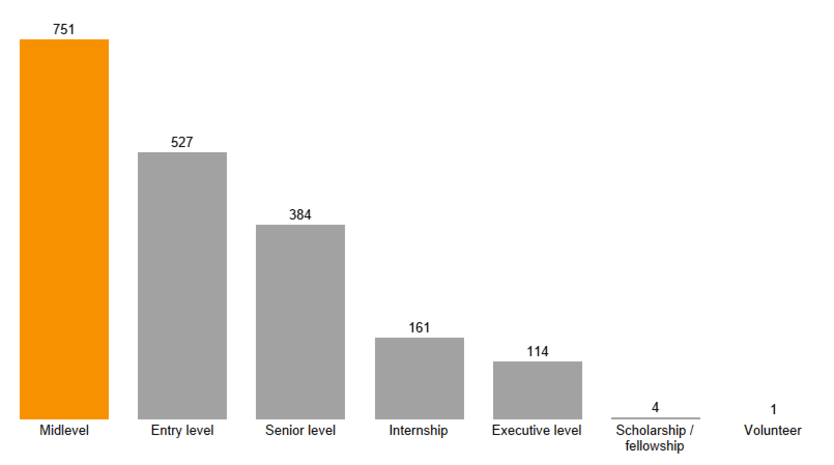
Compared with a similar analysis in December 2019, there were generally more opportunities for entry-level candidates, which increased in proportion from 17% to 27% of all job openings. More than 65% of postings were seeking entry-level or mid-level candidates.
Which organizations are hiring?
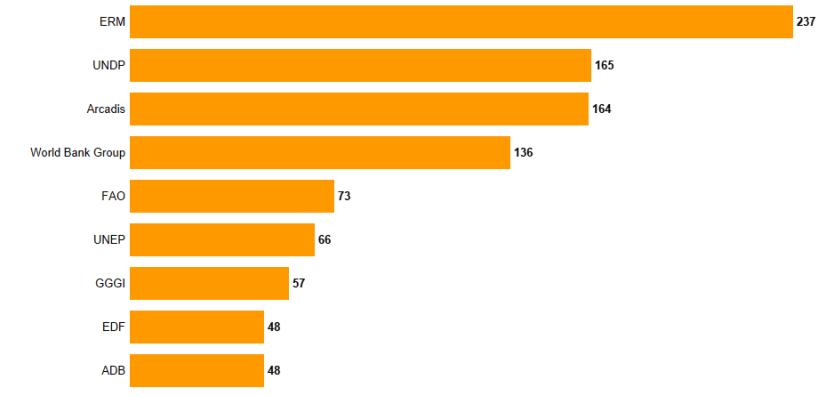
Environmental Resources Management, which accounted for only 4% of the subsector’s roles in the 2019 analysis, has been hiring the most since April. It posted 237 openings related to the environment and natural resources, or 12% of the total. The company has been hiring for a wide range of roles, with nearly half for consultants and many available to entry-level applicants.
Of the hundreds of ERM positions that are currently open on Devex’s job board, 48 are remote, while roughly half are based in North America, mainly in the United States. Several roles are available for consultants in the areas of air quality engineering, environmental compliance, and sustainable chemicals strategy.
Among the top 10 organizations offering the most opportunities, four are U.N. agencies, led by the United Nations Development Programme. UNDP had fewer opportunities for entry-level applicants, with over 80% of its 165 positions seeking mid-level experience or higher.
These jobs were spread out across a wide range of regions and countries, with Egypt, Papua New Guinea, and Azerbaijan hosting the most. The agency is currently seeking a technical expert on renewable energy in Kazakhstan and a remote intern in Norway to assist with its Blue Resilience project.
Organizations that showed a significant increase in hiring since Devex’s previous analysis include the Global Green Growth Institute and the Environmental Defense Fund. Based in South Korea, GGGI has been particularly interested in applicants with expertise in climate finance while offering consultancy roles with focuses ranging from climate-resilient agriculture technology to deforestation.
Meanwhile, EDF is currently seeking applicants in the U.S. with midlevel experience to manage its Climate Corps program, as well as a senior manager for its oceans program in Mexico.
Other top employers, based on the number of job postings over this period, include Arcadis, the World Bank, the Food and Agriculture Organization, the United Nations Environment Programme, and the Asian Development Bank.
Where are the jobs?
About a quarter of the advertised jobs were based in the U.S. or the United Kingdom. Beyond that, top European locations included Switzerland with 74 openings, Germany with 64, and Belgium with 40. Among African countries, Kenya hosted the most opportunities at 58, while India provided the most roles in Asia at 47. Worldwide roles, undertaken remotely, accounted for 69 positions.
Among the 277 jobs that are currently open in the environment and natural resources space, 36 — or 13% — are advertised as remote positions.