You have a preview view of this article while we are checking your access. When we have confirmed access, the full article content will load.
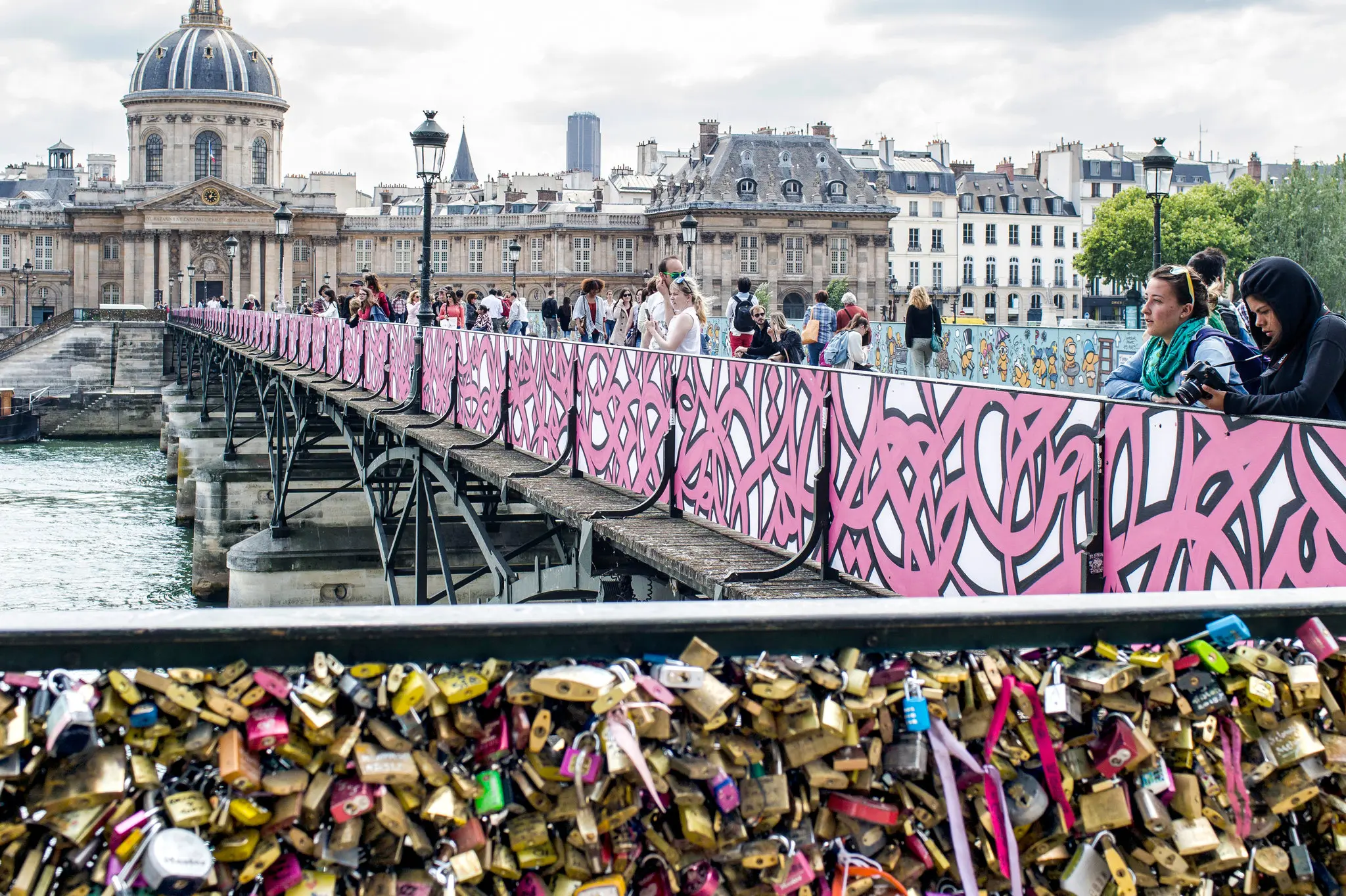
When an estimated 45 tons of eternal love (roughly 700,000 padlocks) were removed from the Pont des Arts bridge in Paris on June 1, love as we knew it did not end, despite the outpouring of mourning on social media.
Love locks are alive and well in Paris and in many other cities around the world, where tourists are determined to deposit them as a ritual to mark a romantic trip. Whether that’s a good thing depends on the city. Officials view them either as a scourge or as an attraction.
In Paris, where there may be more locks than ever, it’s the former.
“People who haven’t been to Paris can’t understand how bad it is,” said Lisa Anselmo, a co-founder of nolovelocks.com, a grass-roots group whose goal is to educate the public about the damage the locks can cause. “When we travel to other cities as a tourist, we should think about our impact on the people who live there.”
The group’s online petition requesting that Paris ban the locks citywide has more than 10,000 supporters.
Using a formula based on how many locks the city said it removed from the Pont des Arts, Ms. Anselmo estimated that there are now roughly 1.5 million locks in the city, attached to 11 bridges and several landmarks, including the Eiffel Tower.
The locks became a craze in Rome almost a decade ago, inspired by a successful novel, and Paris became a destination for people in search of a bridge on which to hang their locks more than five years ago.
Thank you for your patience while we verify access. If you are in Reader mode please exit and log into your Times account, or subscribe for all of The Times.