If the “Electraliner” name emblazoned on its flanks didn’t immediately give away the game for a long, gleaming lakester at Bonneville Speed Week last August and at El Mirage in October, then the push-less start and Star Trek-ish whine of an electric motor surely did. To mangle William Shakespeare’s words, record-setting speed runs by a Tesla-powered lakester at two of hot rodding’s most sacred proving grounds, though not full of sound and fury, nevertheless signified something.
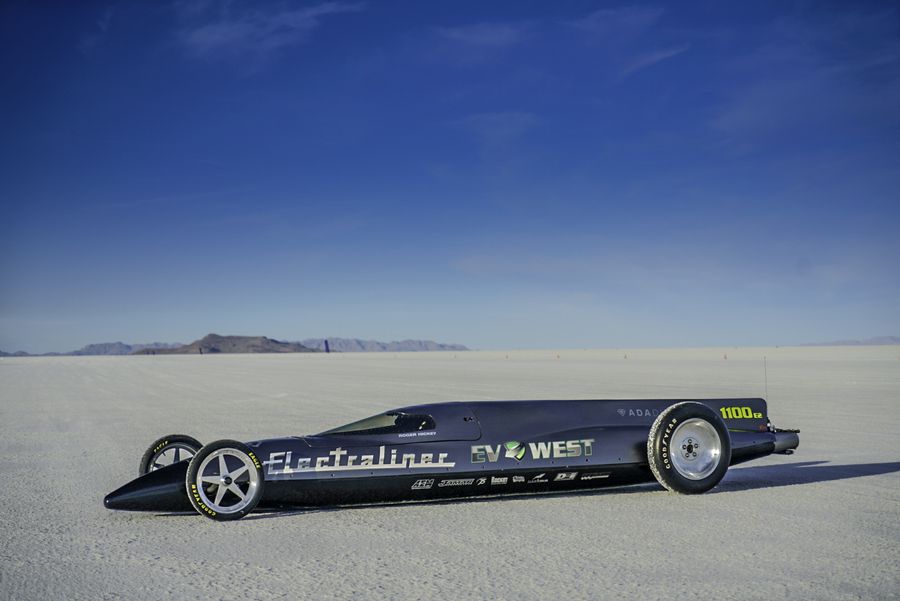
Photo Credit: Patrick Stevenson / EV West
The something in this case is the growing trend in electrifying classic and collectible cars. Though not without its detractors, the movement is viewed by those behind the Electraliner and others as a modern take on the hot rodding hobby and industry that emerged after World War II.
Built by EV West in San Marcos, California, the Tesla-powered Electraliner set a 229.363-mph record at Bonneville. As per the time trial rules, that was the average of two required runs, one in each direction. The car reached a 238-mph top speed, and EV West founder Michael Bream says there is potential for perhaps 300 mph in the future. It was the only EV on the salt, but Michael believes its record run portends a growing embrace of electrification even in this ultra-traditional corner of the hot-rodding world.
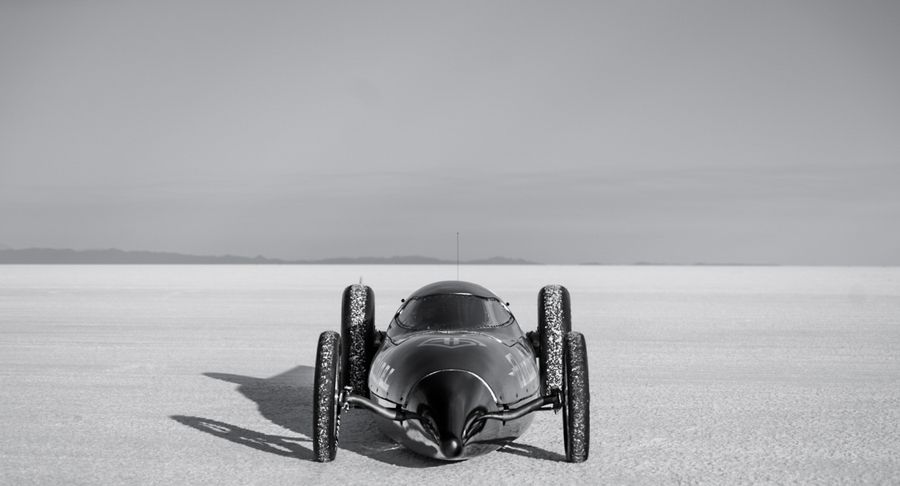
Photo Credit: Patrick Stevenson / EV West
“The Electraliner got a lot of attention from traditionalists at Bonneville,” Michael says. “It’s really tough to get into the 200-mph club. We just lined it up and went, with no need for a push car to launch because of all that torque. Our car could go from 0-230 mph with no shifting. ICE cars are so high-geared they can’t start off on their own, but we can spin the wheels on the start.”
The team’s “refueling” station also drew much attention. The mobile solar charging trailer from Tier 4 Solar looked like something built for a moon base. The panels provided power for recharging the Electraliner’s battery packs and for running the pit equipment and electric pit bikes. The car’s battery packs were swapped out between runs.
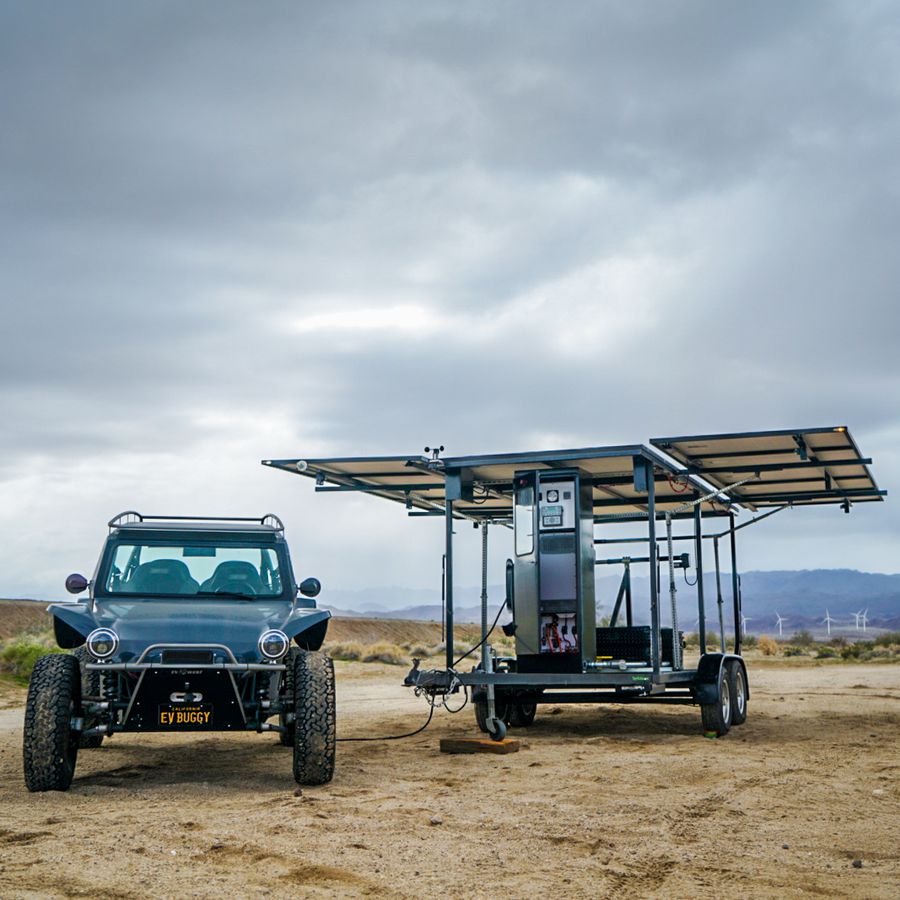
A buggy charging on one of Tier 4's portable solar charging stations. Photo: Patrick Stevenson / EV West
“We wanted to go out there and inspire people to have fun in a more environmental way,” Michael says, adding that he sees the same kind of spirit that ignited the hot rod culture now firing up EV enthusiasm.
Michael describes EV West as a speed shop in the traditional sense in that it develops and builds high-performance cars and powertrains. It is the type of the powertrain, however, that is viewed as non-traditional, at least for now. The Electraliner, he explains, is a testbed for power control, heat dissipation, traction control, and other aspects of EV tech that the shop works into its conversion kits.
Growth Industry
The enthusiasm for EVs that Michael sees is indeed driving the growth of a conversion industry for classic cars. Even a quick glimpse at enthusiast media reveals a steady flow of news on the topic. Newcomers like ICON, Everrati, and Zero Labs promise not just conversions but new, reimagined, electric versions of classic designs.
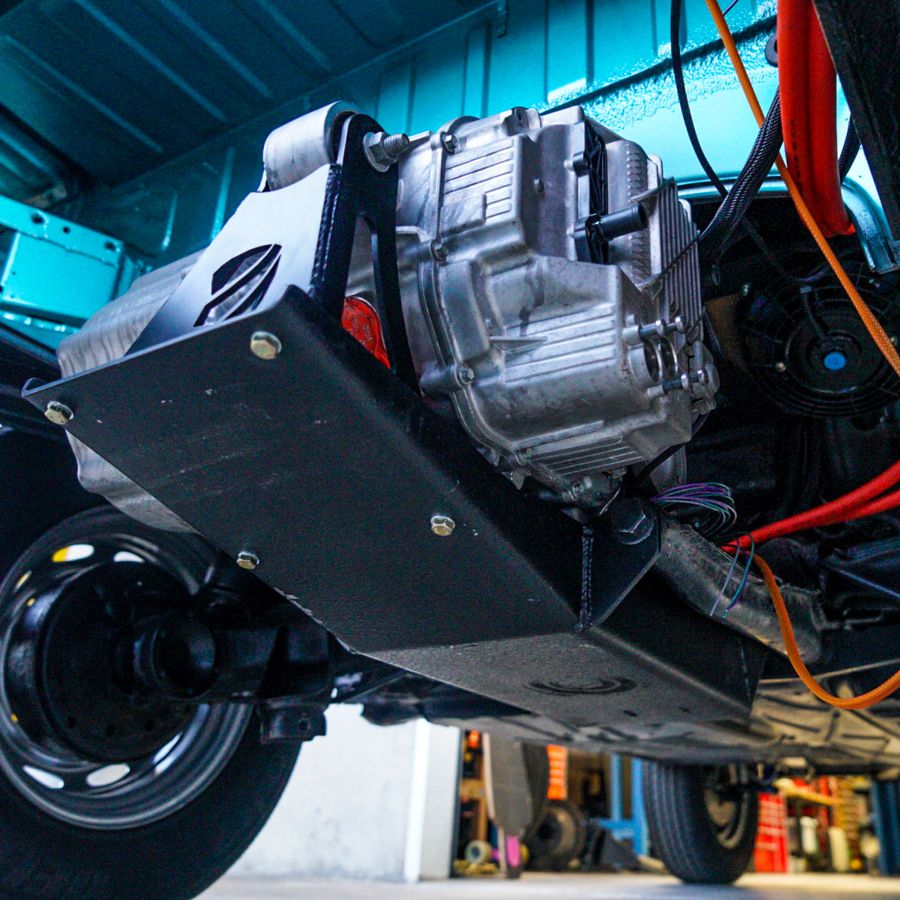
There are numerous others. Revolt Systems recently introduced a Tesla-based longitudinal crate motor package for rear-drive cars. Michael confirms that the prototype was designed and built in the EV West shop. Michael also recognizes Sam Polyak for the first use of a longitudinally-installed Tesla motor. In 2017, Sam’s New Jersey-based company, Polykup, mated a custom gear reduction to the Audi Quattro S5’s AWD system and integrated a Tesla motor and battery system into the vehicle. Polyak began doing EV conversions with a junkyard Mazda MX-3 in 2013.
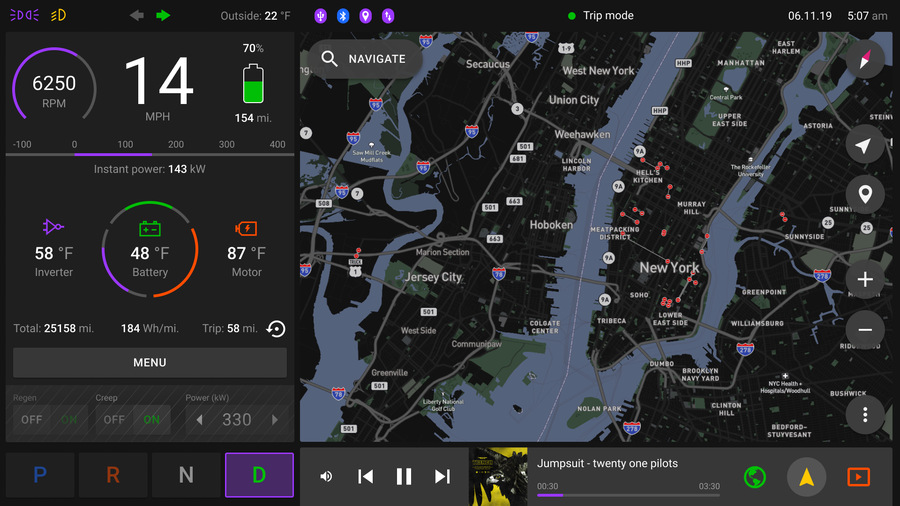
Polykup builds EV conversions and has also developed a Tesla-like display for those cars that it calls the Main Computer Unit. This large central display gives the driver many features expected in a modern EV, including animations showing current vehicle status, navigation system with charging station locator, Bluetooth and internet, efficiency displays, and over-the-air diagnostics and updates.
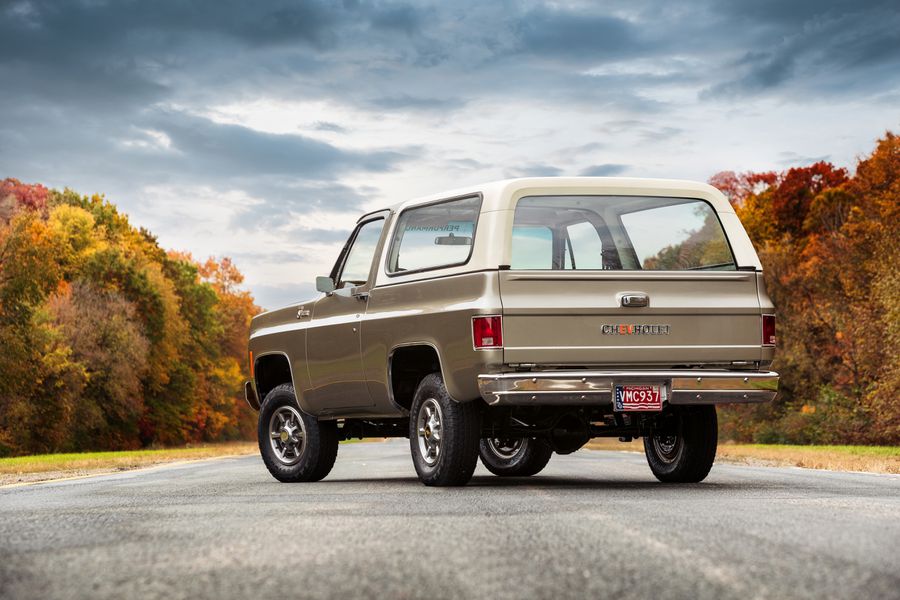
Another California company, Electric GT, has shown an EV crate motor designed to outwardly resemble a V8. Major OEMs, too, are joining the EV classic-car conversion scene. Later this year, Chevrolet Performance will begin selling the Electric Connect and Cruise package, which it previewed last fall in a 1977 K5 Blazer. The system uses the motor and other components from the brand’s Bolt EV and could be used for other older vehicles.
EV West, meanwhile, is working with traditional performance shops to help them offer EV conversions. In many cases, an EV conversion makes a classic more powerful and faster, which should certainly appeal to car enthusiasts. The EV versions are likely to be far easier to maintain and more reliable, which may appeal to classic car veterans and newbies alike. For enthusiasts who might find EV conversions controversial, EV West has already engineered a solution. “Our kits are reversible, so there’s no buyer’s remorse,” Michael says. “So far, nobody has asked us to reverse one. But if we did, you could then take the car to a concours and nobody would know there had ever been an EV motor in there.”
One EV conversion that Michael will likely never reverse is his own 1965 Volkswagen double-cab pickup. “I’ve beaten old Vettes in my VW. That never gets old,” he says.
Hot Rod Heart, Engineering Mind
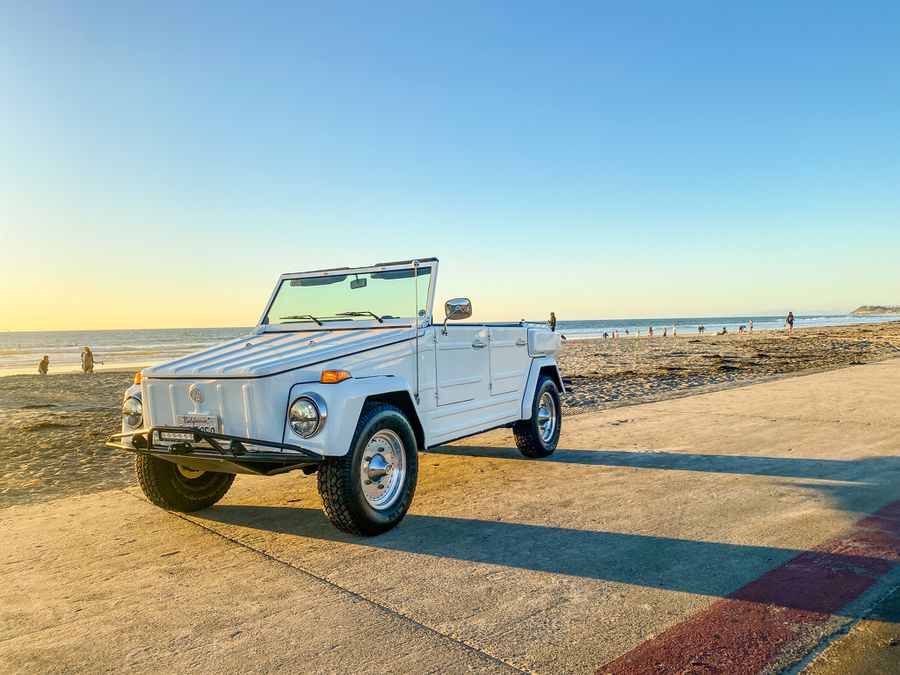
Photo: Patrick Stevenson / EV West
Michael, whose father owned a speed shop in North Hollywood, was raised around the hot rod scene. “My dad hung out with Von Dutch,” he says, referencing the legendary pinstripe artist whose real name was Kenny Howard. “I grew up watching my dad do engine swaps, install camshafts, headers, intakes, you name it. I’m a full car guy and a bit of a nerd.” Michael’s family moved from North Hollywood to San Diego, where he went to engineering school. In the early 1990s, he started Gravity Skateboards, which became famous for its Hyper-Carve long board. He began experimenting with EV conversions about 12 years ago as gasoline prices were rising.
“It wasn’t like one day I woke up and said I want to save the environment,” he says. “For me, it was more about getting the performance without paying for foreign oil. “This was just on the heels of ’07 and ’08, when gas was over $5 in California. That was the start of the modern EV conversion trend.” Michael recalls that EV conversions at the time tended to focus on economy cars like the Ford Escort and Geo Metro. He had no interest in such projects. “I felt we had to put something out there that really respected the car and performance. I wanted to play around with these electric motors that could make 800 lb-ft of torque.”
Michael opened EV West in 2009, and what became a side gig turned into a new business. He eventually sold the skateboard company. Influenced by the Tesla Roadster, his shop built a Tesla-powered BMW E36 M3, which won its class at Pikes Peak in 2012. “Our time was faster than teams that had been doing it for so long,” he says. “I had an epiphany on the mountain. I thought this was the great equalizer. A small team with limited funds could come to Pikes Peak with an EV and beat big, well-funded teams.”
Even with the success at Pikes Peak and all the attention it generated, Michael says he still faced skepticism. “Up until five years ago, I had friends saying I was crazy, asking me if this was really going to take off,” he says.
“Big” Motor in a Lighter Car
Michael draws another parallel between EV conversions and high-performance ICE vehicles: “Like they did with muscle cars, we’re basically taking a motor that can accelerate a 5,000-pound Tesla from 0-60 in under 4 seconds and putting it in much lighter cars. What if you take that motor and put it in a 2,800-lb Porsche 911?”
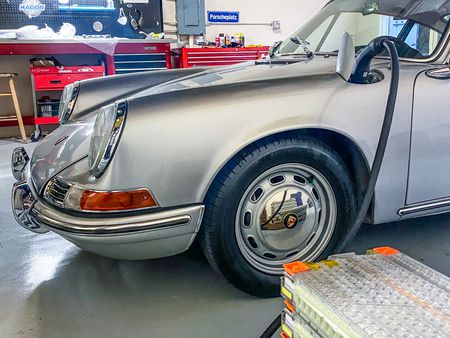
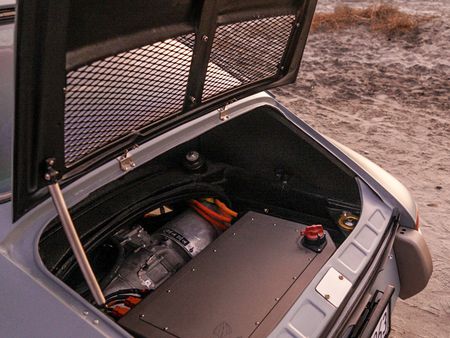
A pair of Porsche conversions, showing a charging port inside the original fuel door and a tidy rear compartment. Photo: Patrick Stevenson / EV West.
EV West has done that many times. The shop offers conversion kits and batteries for classic air-cooled VW and Porsche models, along with the Toyota MR2 and the Factory Five 818 kit car. The kits include the motor, controller, regenerative braking, and other components, though some leave battery selection to the customer. “It’s pretty much a plug and play drive unit that will get you 0-60 in about two seconds flat,” he says about the 911 kit. “It’s a common swap. We have three 911s in the shop now. We get Porsche owners calling who just got beaten by a Tesla.”
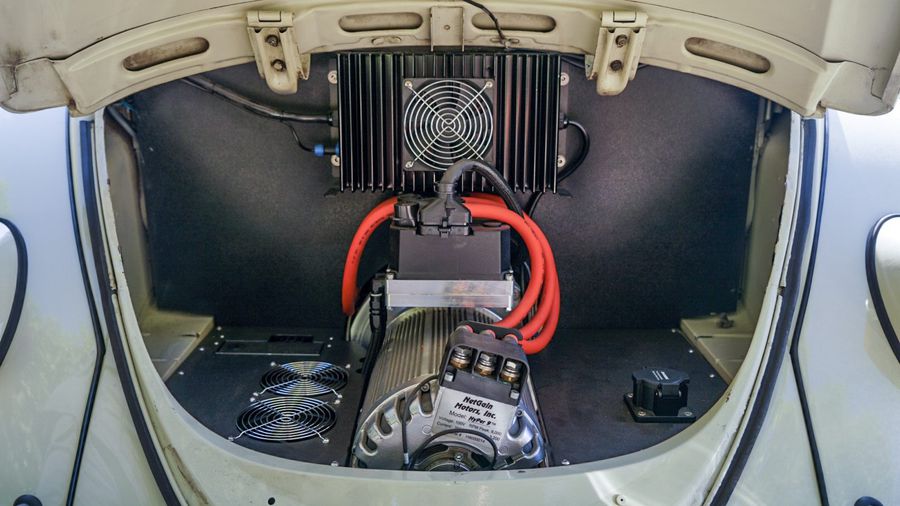
EV West built its own special electric shop vehicle using a rusty old VW bus pulled from a field. The shop sorted the structural and mechanical bits for safety and added the Porsche race team livery just for fun. The “Rust Bus,” as they refer to it, has a Hyper 9 and gets 200 miles of range from 60 kW worth of recycled Tesla batteries. The batteries has been used in a now-defunct car-sharing program that used Smart cars.
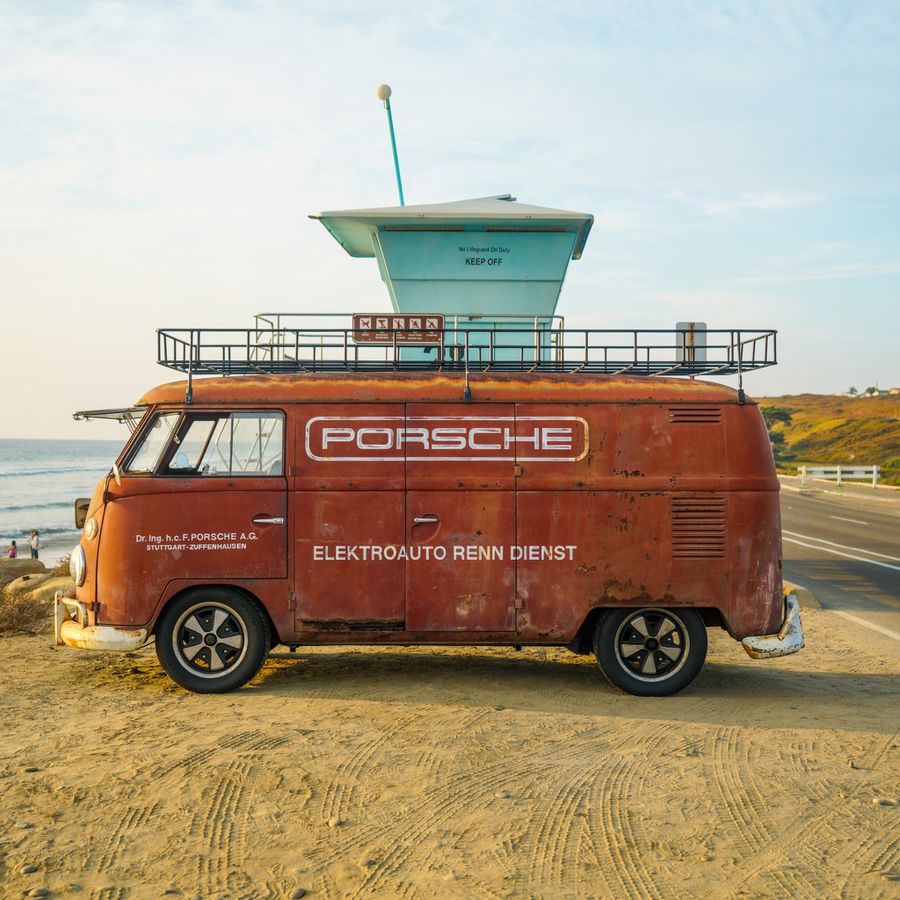
Photo: Patrick Stevenson / EV West
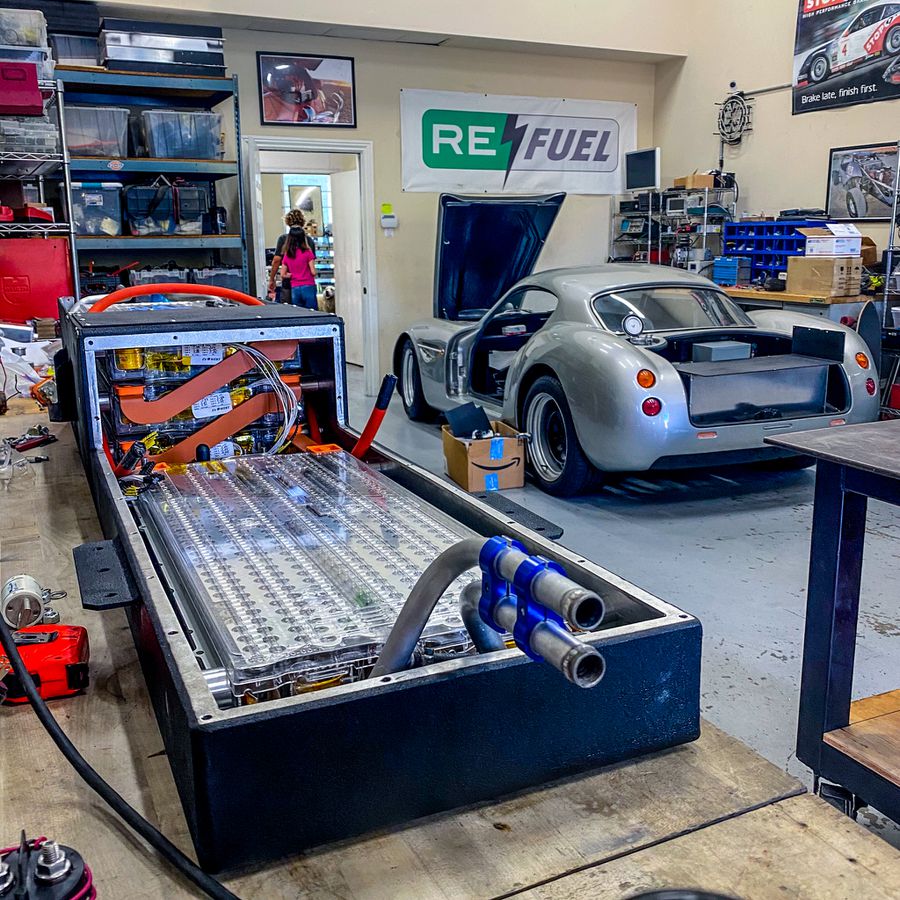
Another surprise in the shop is a conversion of a Comet from Dowsetts Classic Cars in England. The classic-inspired creation of Ant Anstead from the Wheeler Dealers and Master Mechanic TV shows, this coupe will be joined by a converted Comet roadster as well.
Future-Proofing, with Classic Character
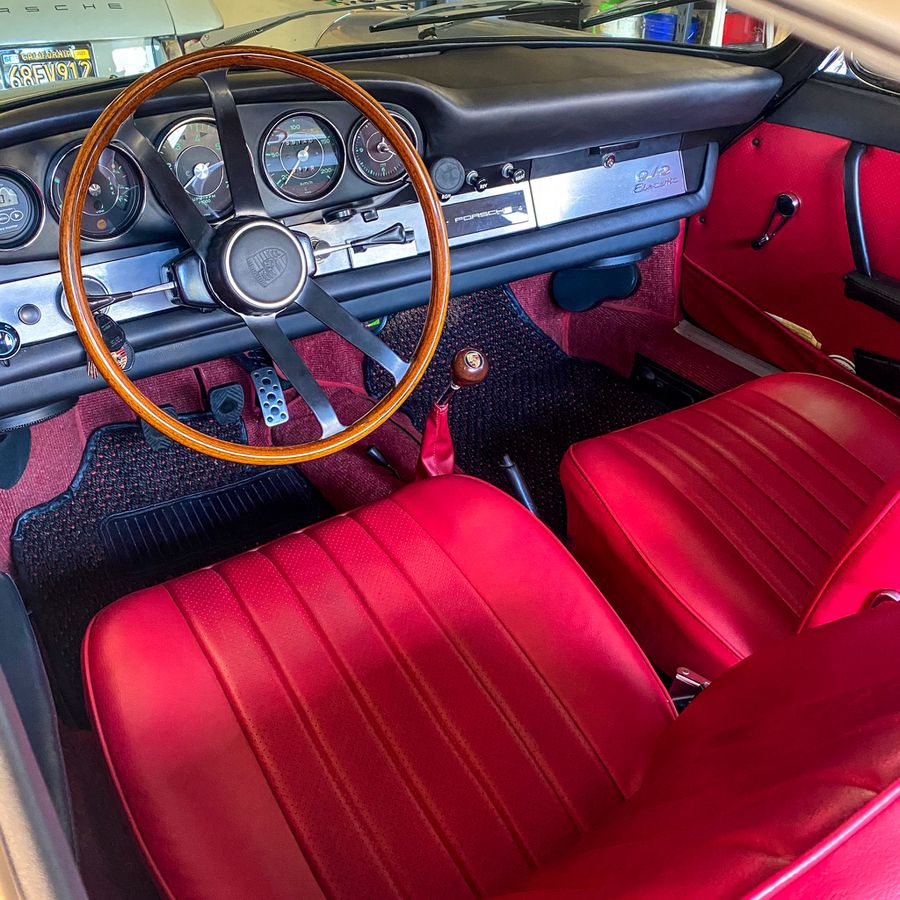
An EV West conversion adds about 200 pounds to a 911, according to Michael. The electric motor is lighter than the Porsche six-cylinder engine, while the batteries add weight. Although a 240-pound battery pack replaces the fuel tank under the front hood, the electrified 911 still retains a rear weight bias. Michael points out, as well, that the electric version’s weight distribution remains constant, while in a stock 911, the bias steadily shifts rearward as the gasoline is consumed. “We improve the polar moment a little, but we keep the handling characteristics original,” says Michael. “You can also do a manual transmission with an EV. We’ve done many. But you don’t have to, because there’s so much starting torque.”
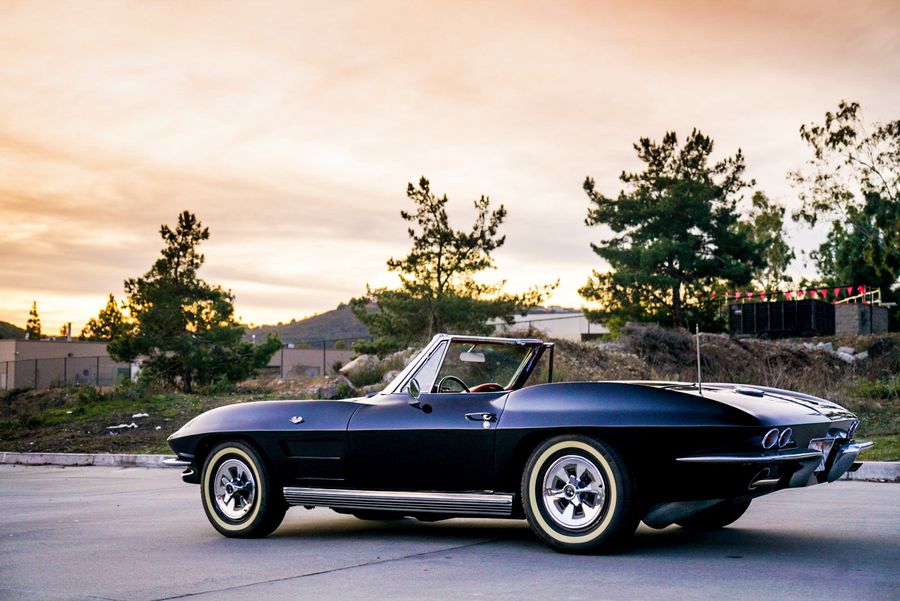
Photo: Patrick Stevenson / EV West
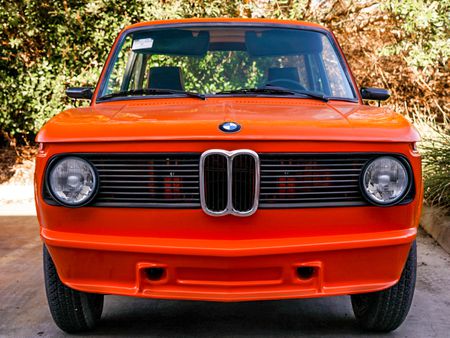
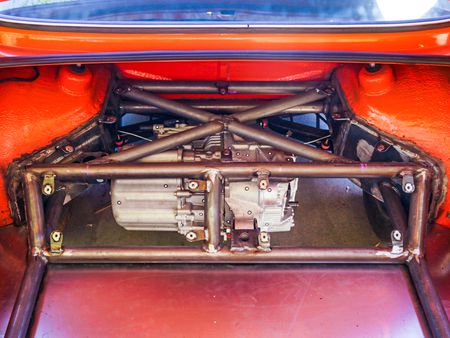
EV West has also converted classics including the BMW 2002 and C3 Corvette, has built a triple-motor Ferrari, and also converted electric Mustangs.
“When designing a conversion kit, we need more than one of that particular model in the shop,” Michael explains. “A Porsche 911 is a good example. We have to test fitment on different versions before we can offer the kit to customers. We’re constantly working to improve conversion kits, because the motors and other hardware are continually evolving at a faster pace than ICE hardware is evolving.”
While EV West still does conversions for customers, most of its work involves developing new components to make EVs better and faster, and also helping traditional speed shops expand to offer EV conversions. He gave the example of one shop that specializes in turbocharged Corvettes converting a customer’s 1970 VW Beetle. EV West provided the kit and technical assistance. “The shop owner told me the Beetle conversion got more attention at a local car show than his $300,000 'Vettes,” says Michael. “He said he lost his voice talking to so many people about it.”
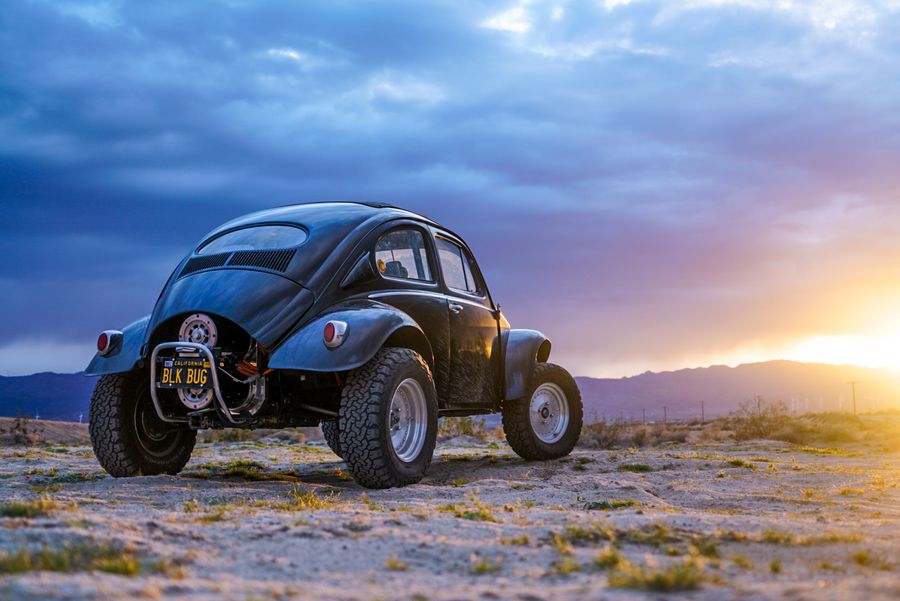
Photo: Patrick Stevenson / EV West
Michael believes EV conversions will help turn more classic cars into frequent drivers and could become instrumental in preserving both the cars and the industries that support them. “Some people that love the old cars want more power but also want it to be quiet and clean,” he says. “The EV drivetrain makes the car more desirable as a driver. Once the customer drives it, they want to drive it everywhere. It gets the cars out there.”
He cites his experience with his own VW pickup, saying he put barely 5,000 miles a year on it when it had its gas engine but now does three times that as an EV. “I drive it to Lake Havasu in Arizona for camping, to Joshua Tree, and to Los Angeles car shows with my family. I get to enjoy it more, and more people get to see it.”
Even as an avowed convert to EVs, Michael agrees that the sacrifice of engine sound removes a major emotional connection point for many enthusiasts. “I still get nostalgic for Porsche flat sixes,” he says. “EVs are not silent, but it’s not a sound that many would associate with power. You get six or seven other positives, but you might struggle at first with the different sound and feel.”
“Stomp the pedal right away”
In many parts of the country, putting a classic car into winter hibernation is an expected ritual of ownership. With an EV, there are no worries about cold starts causing powertrain wear or damage. “You’re always thinking about that with an ICE,” Michael says. “With an EV, you just turn it on and don’t have to be afraid to stomp the pedal right away.”
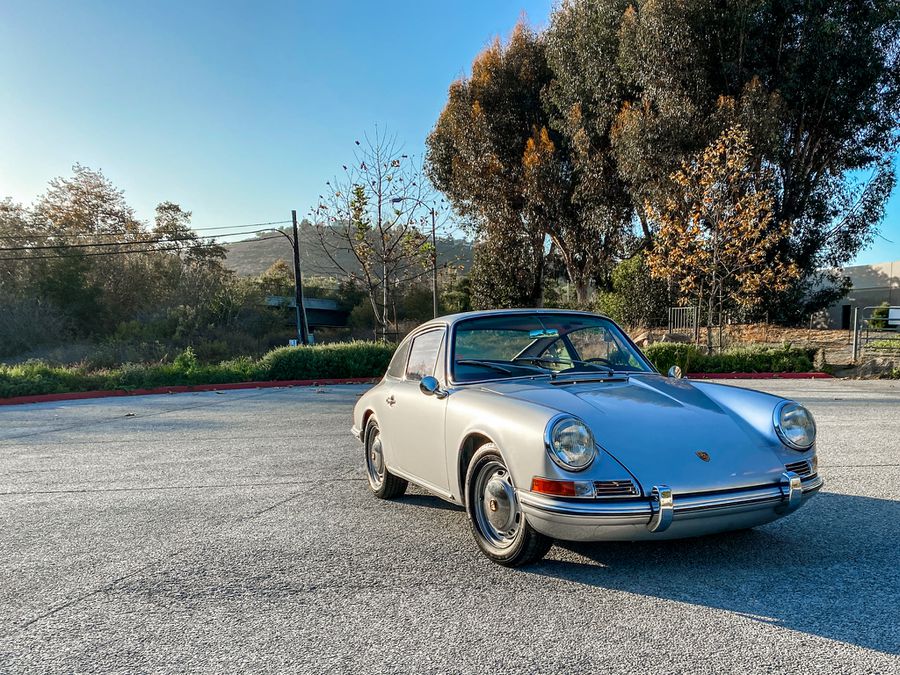
Photo: Patrick Stevenson / EV West
He explains that if you choose to store an EV, you simply charge the battery to 80 percent and use a maintenance switch that disconnects the battery monitoring system. “The batteries do not self-discharge,” he says. “They don’t go flat as long as nothing is monitoring voltage. Batteries can be stored for years like that. We have some on the shelf for eight years still sitting at nominal voltage. I could put one in a car today and drive it.”
Michael reports that EV batteries are lasting longer in everyday use than originally thought. He sees Teslas with 200,000-plus miles on an original battery and powertrain and has pulled battery packs with more than 40,000 miles that show just 1-percent degradation.
Michael is one of many who are confident that EV conversions will gain popularity with classic car owners as time goes on. Such cars will be especially appealing to younger enthusiasts who might feel a stronger connection to modern performance and reliability than to traditional sound and feel in an old car. Michael says that conversions done today can be updated and upgraded with new lighter, denser battery tech as it evolves.. “The hot-rodding hobby has always been about trying new things,” he says. “History shows us that the people who are more open to new things will advance more quickly with it. Today, it might be two guys in a garage coming up with the next advance in power control.”