Federal government lawyers may take over legal representation for hundreds of unaccompanied immigrant kids in Michigan, according to a Federal Register notice published at the end of September.
These children, who arrived in the United States without a parent or guardian, received legal help from the Michigan Immigrant Rights Center (MIRC) under a contract with the U.S. Department of Health and Human Services until the agency allowed it to expire earlier this year over a data-sharing dispute.
After announcing new contracts totaling more than $100 million with nonprofit organizations based in Utah and Virginia, President Donald Trump's Department of Health and Human Services appears poised to represent migrant children across the country with its own lawyers amid the administration's aggressive deportation efforts. The notice did not indicate when the change would take effect, and HHS did not respond to a question about the timing.
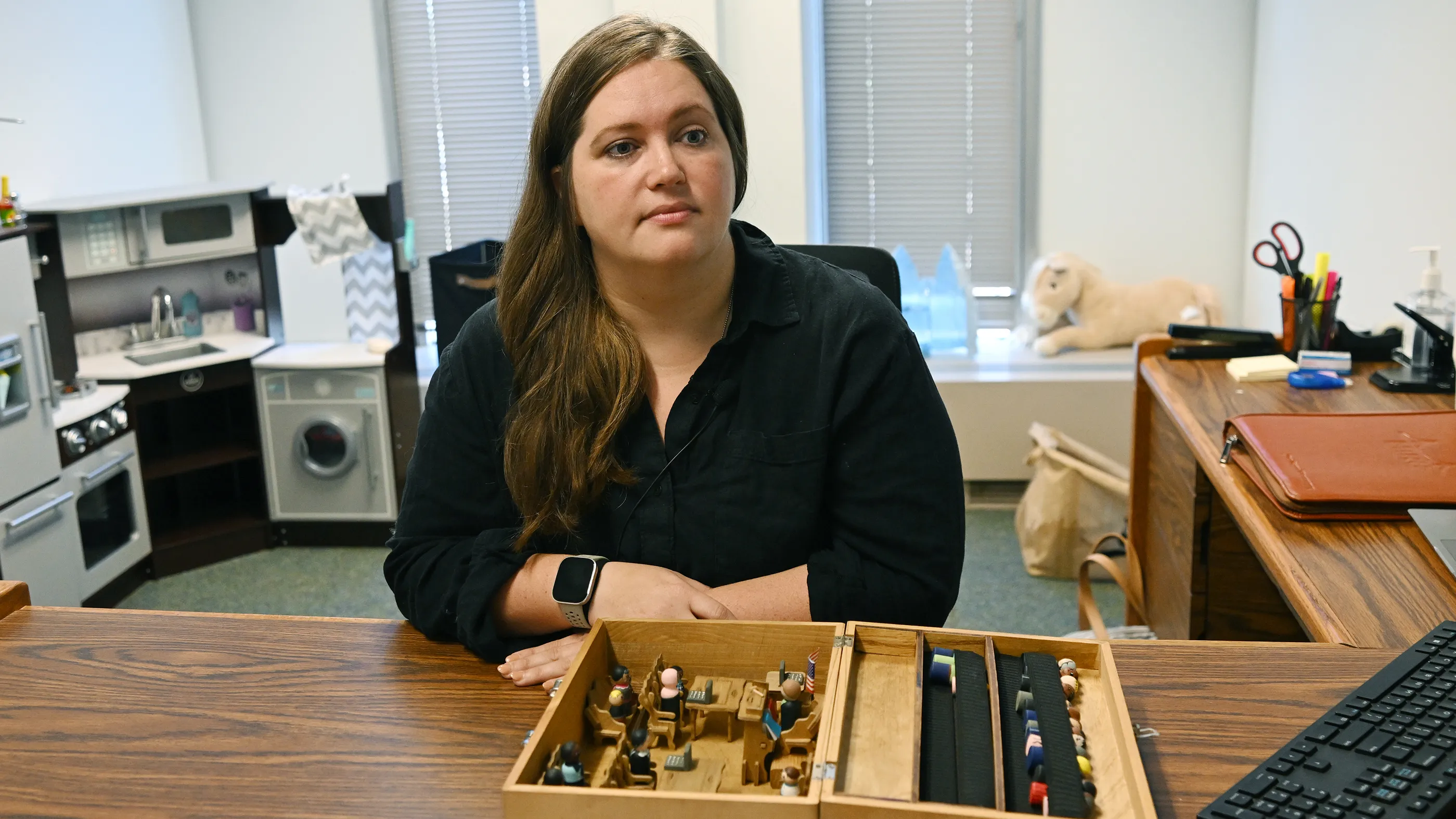
The proposed move has sparked concerns about the ability of those attorneys to vigorously advocate for the children, said Ana Devereaux, who directs the unaccompanied minors program at MIRC.
“I think the concern that we have is that it is now hard to imagine how there’s going to be true independence … or if the nature of being in the federal government will create a lot of barriers to representation,” Devereaux said.
An HHS spokesperson said the Office of Refugee Resettlement (ORR) "is committed to ensuring every UAC (unaccompanied alien child) has legal representation in immigration court."
The Federal Register notice, published on Sept. 29, contained a brief description of a proposed new division in the HHS Office of General Counsel called the Unaccompanied Alien Children Legal Representation Division (UACLRD).
The new division would provide direct legal services to unaccompanied children in immigration proceedings, including legal orientations and representation in court. Attorneys in the division would be responsible for representing children throughout their immigration proceedings, according to the published notice.
Several lawmakers, including Sens. Elizabeth Warren, D-Massachusetts, and Dick Durbin, D-Illinois, criticized the plan to have government lawyers represent unaccompanied immigrant children in a letter to HHS Secretary Robert F. Kennedy, Jr. on Oct. 19.
"HHS holds these children in custody, decides where they live and shares information about them and their families with immigration enforcement. HHS cannot also be their lawyer," the senators wrote.
The senators demanded that HHS rescind the decision creating the new division and confirm in writing that no HHS attorney will represent an unaccompanied child in immigration proceedings by Oct. 30.
Michigan's two Democratic senators were not signatories of the letter, but a spokesperson for Sen. Gary Peters said via email that Peters "believes unaccompanied minors need to have access to appropriate, independent legal counsel."
Sen. Elissa Slotkin's office did not immediately respond to a request for comment.
New turn in monthslong dispute
Until this year, the federal government provided legal services to unaccompanied children through a major grant to the Acacia Center for Justice, a Washington, D.C.-based nonprofit. Acacia then distributed money to legal service providers across the U.S. whose attorneys worked directly with the children.
MIRC was one of those service providers, employing a team of 70 attorneys to represent unaccompanied minors in immigration court. Losing the federal funding meant the organization had to lay off those attorneys and cut its caseload from more than 900 active cases to just over 400.
Typically, unaccompanied minors come to the United States fleeing violent or abusive situations, or as a result of human trafficking. At least 1 in 4 people named in deportation filings in Michigan over the last five years — a total of 47,229 cases — were children younger than the age of 18, according to data published by the Transactional Records Access Clearinghouse, which collects court records through public records requests.
The most recent contract between Acacia and the federal government, which expired at the end of July, was worth around $220 million and financed legal services provided by about 100 nonprofit groups across the country.
After the federal government's contract with Acacia expired, two nonprofit groups, the U.S. Committee for Refugees and Immigrants (USCRI) and Our Rescue, were chosen to provide legal services to migrant children. USCRI received a $20 million contract. Our Rescue, a Utah organization, received a $158 million contract.
Devereaux, the Michigan immigration attorney, said USCRI lawyers appeared in Michigan immigration court twice. In both cases, she said, the attorney attempted to appear as a "friend of the court," a limited role that stops short of direct representation.
"Friend of the court is a highly limited role that is not representational, and typically you do in concert with the client and their wishes," Devereaux said. "They never met with the client."
MIRC has continued to receive requests for legal representation and know-your-rights presentations from facilities that house unaccompanied migrant children in Michigan, despite those responsibilities being assigned to USCRI under its current contract, she said.
An HHS spokesperson said in an email that the U.S. Committee for Refugees and Immigrants began providing legal services for children in its care on Aug. 5 and will continue through the end of 2026.
Advocates raise accountability concerns
One reason legal representation was previously provided by nongovernmental organizations was to ensure that the attorneys were "zealous advocates" for migrant children, regardless of whether it served the interests of the federal government.
With government lawyers on both sides of the courtroom, that advocacy could be called into question, said Devereaux, the managing attorney at MIRC.
She worried that information disclosed to an attorney by a child may be shared with immigration enforcement to facilitate their removal from the United States.
That level of information-sharing would mean that "these children don’t have full rights to an attorney and the full protections that come with that," Devereaux said.
In the past, attorneys representing unaccompanied immigrant children were also responsible for pursuing legal remedies for mistreatment by HHS staff or sponsors. Now that the lawyers will also be employed by HHS, Devereaux said she doubts they will hold the agency accountable.
"When we faced this in Michigan, there was an employee of an ORR custodian that was sexually abusing them," Devereaux said. "We found out, and we assisted these children in reporting this to law enforcement and made sure they had attorneys to have candid conversations about that."
"Would an attorney who is assigned to represent a child abused in custody be as zealous about defending them if they have the same higher-ups as the other office?" she asked.