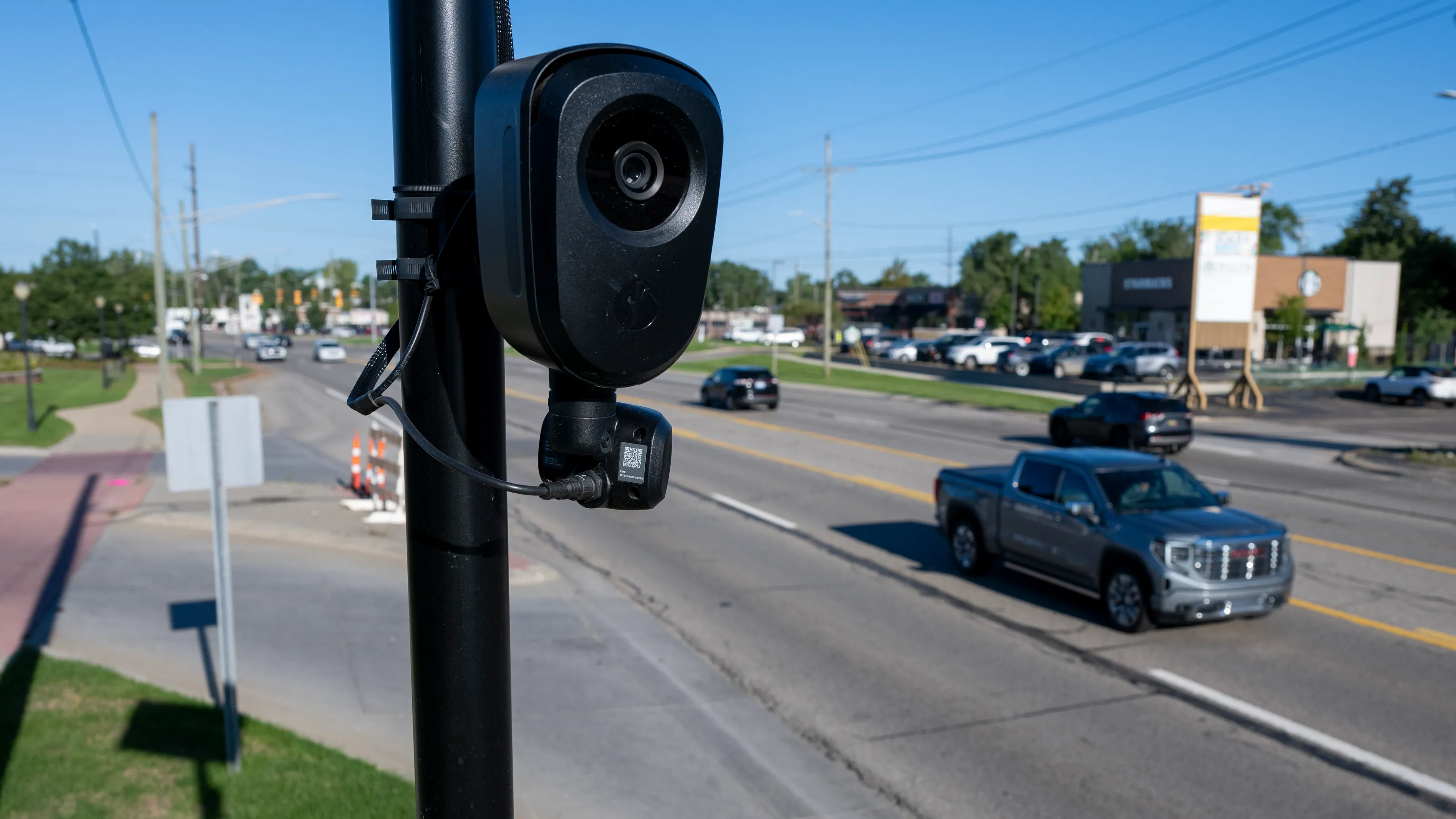
Employees of at least five Michigan law enforcement agencies, all of them in Metro Detroit, searched Flock license plate reader data with immigration-related queries since the beginning of 2025, according to audit logs compiled from public records requests.
That's despite assurances from multiple agencies that use the controversial surveillance technology that it would not be used as a tool for immigration enforcement.
They include a former Oakland County sheriff's employee who could face criminal charges after conducting dozens of searches of a Flock database when he was no longer employed by the agency. The employee performed at least 58 immigration-related searches in February, according to audit logs.
A Detroit News analysis of USA TODAY data surfaced more than 120 Flock searches from 12 Michigan law enforcement agencies containing "immigration" or "ICE" — for the Immigration and Customs Enforcement agency — since January 2025. Though several searches were typos or mistakes — for example, entering "ICE" instead of "VICE" — five agencies confirmed that their officers performed immigration-related Flock searches.
The five agencies were the Oakland County Sheriff's Office as well as the Taylor, Southfield, Troy and Brownstown Township police departments.
White Lake Township's police department also conducted one search in March that it said was related to an internal investigation involving one of its officers, according to Police Chief Matthew Ivory. No federal agency was contacted as a result of the inquiry, Ivory told The News in an email.

The Oakland County Sheriff's Office license plate reader policy said the only valid uses for license plate reader data are to alert officers to the presence of a vehicle on a "hot list," locate a criminal suspect or assist in locating a missing person.
"Those queries were unauthorized and violate our policy," said Oakland County Sheriff's Office Public Information Officer Tyler Sweers.
Sweers confirmed in a text message that the ongoing criminal investigation was focused on the fact that the individual continued to access the Flock database after he no longer worked at the sheriff's office.
Oakland County Sheriff Michael Bouchard declined requests for an interview, citing the ongoing investigation. The Oakland County Prosecutor's Office said no charges had been filed.
Flock provides automated license plate reader technology to agencies across 49 U.S. states, including around 180 police departments and sheriff's offices in Michigan. The company operates more than 120,000 cameras nationwide that capture images of vehicles as they drive by, feeding into a data-sharing network that police officers can search.
The company has touted its product as a game-changer for police, helping them solve crimes and track down missing persons faster than traditional investigative tools. But critics of the technology have said it enables mass surveillance.
Undersheriff previously said no data shared with ICE
In March, Oakland County Undersheriff Timothy Willis told Pontiac City Council members that Flock data had never been requested by ICE or given to the agency.
"Our interest is not deporting people. That is not what we do," Willis told the council.
“I want to make it very, very clear: the sheriff’s office does not enforce immigration status offenses. We don’t. We don’t have any agreement with ICE, and we don’t in the future plan to participate in any ICE enforcement," he said.
Pontiac Mayor Mike McGuiness said the sheriff's office incident "really drives home" the importance of state legislation governing the use of license plate readers by law enforcement. He said he wants to "pursue greater scrutiny and verification" around the tools.
McGuiness supports bills introduced into the state House and state Senate that would limit how long agencies can retain Flock data and require search logs to be published publicly.
"As this technology keeps rapidly changing, we need to make sure that there’s safeguards and protections in place," McGuiness said.
Dave Woodward, chair of the Oakland County Commission, told The Detroit News he would demand the sheriff's office investigation be shared with the county commissioners when it was completed.
Activists with the group Oakland Community Aid for Empowerment (CAFE) said they weren't surprised that a sheriff's office employee used license plate reader technology for immigration queries.
"This is something that's been discovered across the country," said Alexis Huyck, one of the group's leaders. It didn't matter "at all" that the individual was no longer employed by the sheriff's office when he made the searches, Huyck said.
Taylor PD searches unrelated to ICE partnership, chief says
While Oakland County has no formal cooperation agreement with ICE, one of the other agencies that appeared in the search database does: The Taylor Police Department is the only local law enforcement agency in Metro Detroit that partners with ICE through a so-called 287(g) agreement.
The agreement, which Police Chief John Blair signed last April, gives officers limited immigration enforcement authority while performing typical police duties or serving as part of an ICE task force. Blair confirmed that Flock searches linked to Taylor police accounts were "probably accurate," but said the searches were unrelated to the agency's ICE partnership.
“Nothing has changed in our agency regarding illegal immigrant enforcement in the 35+ years I've been with the City of Taylor Police Department. The 287G program has not altered a single thing,” Blair wrote in an email.
The Taylor Police Department does not use Flock cameras for immigration enforcement, “because we have neither the time or desire to actively search for someone illegally in our country," Blair said. But he said the queries in the database, which were tagged "IMMIGRATION (CIVIL/ADMINISTRATIVE) - WANTED," did not violate any department policies.
Any Taylor police officer who uses Flock for personal reasons will be terminated, Blair said.
“They don't deserve to be a police officer if they use the system for personal reasons. Terminate them and pull their license. That ends the debate,” he said.
Blair went further in an email in a blunt defense of Flock, saying the backlash over surveillance might prevent police from using a critical crime-fighting tool.
“People are going to continue to complain about FLOCK until something happens to someone they care about or themselves and the police have to tell them sorry," the Taylor police chief wrote in the email. "We could have saved your loved one, but you took away one of the greatest tools to locating criminals because you were afraid of your privacy being invaded.”
Officers used Flock to assist federal partners
The data analyzed by The News contained a "search reason" linked to each Flock search made by a law enforcement officer. The reason for each search is documented to ensure that audits can be conducted and catch unusual search activity.
In other instances, the officers who performed the searches were assisting federal agencies including the Federal Bureau of Investigation, the Drug Enforcement Administration, Border Patrol, and Immigration and Customs Enforcement.
A Southfield police officer was assigned to a human trafficking task force that worked with ICE during early 2025, according to Deputy Chief Aaron Huguley, who said he was not aware that Flock search tools were used during the investigation.
Huguley wrote in an email that the searches did not violate department policy because they were from before March 2026, when Southfield PD started prohibiting officers from using license plate readers for immigration enforcement.
In a similar instance, a Troy police officer was assigned to a Drug Enforcement Administration task force in April when Flock searches were performed with the search reason “IMMIGRATION (CRIMINAL) – SURVEILLANCE.”
“Troy Police Officers, to include all task force officers, do not enforce immigration law. Now, no different than the previous 30 years, there are times when criminal acts and immigration status intersect,” Troy Public Information Officer John Julian wrote in an email.
Julian said the searches fell within department guidelines because they were related to a criminal investigation. Julian told The News that the “IMMIGRATION-CRIMINAL” option is no longer available to select in the agency’s Flock system.
“We believe this change aligns with current best practices and gives a more accurate picture of what the tool is being used for by our officers,” he wrote.
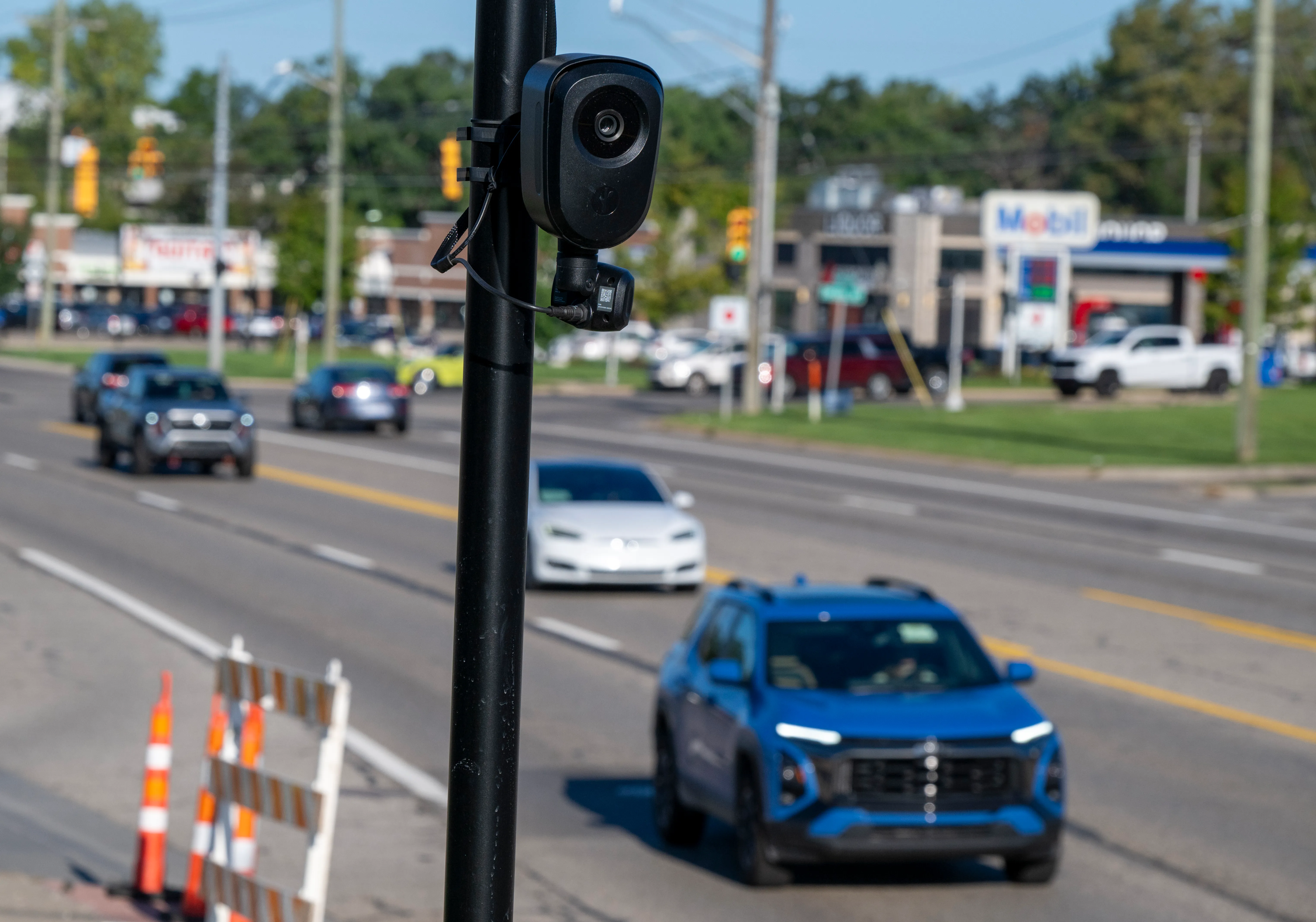
In Brownstown Township, Police Chief Jeff Watson said Border Patrol does not have access to his agency’s network of Flock cameras, but a Border Patrol agent requested data on “a person of interest who was not lawfully in the country.” The agent told a Brownstown police sergeant that the individual was connected to criminal activity in the area, Watson said.
“The searches did not locate the suspected vehicle in our jurisdiction and therefore the investigation ended at that point for Brownstown PD,” Watson wrote in an email. “These types of cross-jurisdictional investigations are not uncommon, and we often share investigative information with all of our local, state, and federal partners.”
The Brownstown police chief said the sergeant followed department policy by assisting the Border Patrol agent with the Flock searches.
Flock use spurs privacy concerns
Divya Ramjee, a public policy and criminal justice professor at the Rochester Institute of Technology, said surveillance researchers like her have been following the rise of Flock since long before the company became a household name.
“A few years ago, if you said Flock … , the average person wasn’t aware of it,” she said, but that has changed dramatically over the last 18 months.
The backlash to the use of Flock cameras in Oakland County has included at least eight incidents of vandalism in Orion Township, Commerce Township, Independence Township, Novi and Pontiac. The Oakland Sheriff's Office also reported that someone stole a camera in Rochester Hills.
Several Oakland County communities, including Clawson, Ferndale, Sumpter Township and Independence Township, have ended their contracts with Flock after residents voiced privacy concerns. The city of Eastpointe in Macomb County ended its contract with Flock after an internal investigation by its police department found that two officers misused the technology.
Ramjee said the backlash to the license plate reader network is “unsurprising” because of Flock's rapid expansion.
“Here you’re accelerating putting these cameras everywhere and accelerating to the forefront of the bad things this could potentially do: AI leading to police harassing the wrong people, taking away autonomy. … All of those negative consequences are right in your face,” she said.
Ramjee called the recent changes made by Flock, including additional audit features, “a step in the right direction,” but she said the company “has a lot of ground to make up with the public.”
“I think we have a serious issue in general with public trust and policing, public trust and technology. … I’m not sure if there is really a way to gain public trust back,” Ramjee said.