Ruth Pujols Beltre didn’t know where she was.
After experiencing chest pains while in the custody of the Immigration and Customs Enforcement agency at the North Lake Processing Center in Baldwin, the 44-year-old Lincoln Park resident from the Dominican Republic didn't know where authorities had moved her. Finally, a Spanish-speaking aide explained that she was in a hospital in Grand Rapids, where the North Lake staff brought her to have a pacemaker implanted.
Unfortunately for Beltre, her lawyer still had no idea where she was — and she had a court date, an opportunity to make her case to be released from the detention center.
“When they came to get me for the hearing, they said, she’s in the hospital, because even my lawyer didn’t know,” Beltre told The Detroit News in a phone interview conducted in Spanish.
Before receiving hospital care, Beltre had been detained by ICE three months earlier, after immigration officers pulled over the vehicle of an acquaintance who was driving her home.
Since she was discharged back to North Lake, Beltre said, she has been “constantly” in the infirmary for nagging health issues, medical staff won’t give her access to her own records, and she has yet to receive another court date.
“I came here looking for my American dream,” Beltre told The News, “but it’s turned into a nightmare that I want to wake up from.”
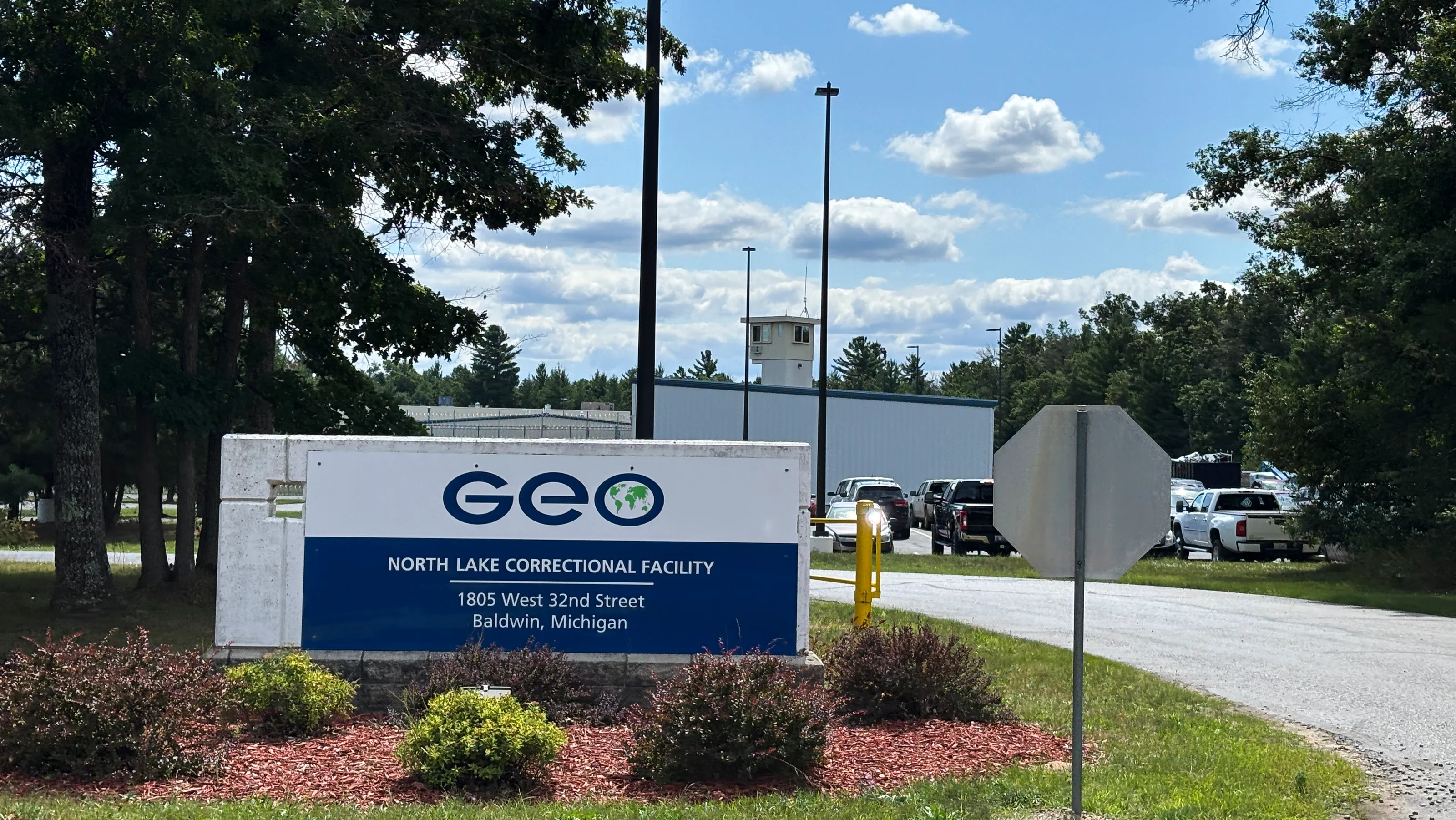
North Lake, which is owned and operated by GEO Group, a private company, began housing ICE detainees last June, amid the Trump administration’s push to detain and deport hundreds of thousands of undocumented immigrants in 2025.
Since then, both the number of detainees and how long they're detained have increased dramatically.
According to research firm Relevant Research, which uses statistics released by ICE to calculate a more accurate number of detainees in each facility, the number of detainees at North Lake rapidly increased from a few dozen shortly after it opened in July 2025 to nearly 1,500 by the end of the year.
Detainees have now been held there for an average of 45 days.
The result, critics said, is an overcrowded facility where the federal government is legally obligated to provide care for more people than its medical staff can handle.
Unaddressed medical issues are common at North Lake, according to interviews with immigration lawyers and advocates, and a review of 911 call records since the facility opened showed that detainees frequently required emergency medical services. Facility staff requested emergency medical services more than 50 times in the last three months of 2025 alone.
"The sheer number of people … is stretching the capacity of these facilities to provide the care," said Ruby Robinson, managing attorney at the Michigan Immigrant Rights Center.
"From what I see, I don't think they have the capacity to provide the medical care at the scale it's needed," he said.
The GEO Group told The News it follows ICE’s detention standards and provides detainees with “access to teams of medical professionals.”
Spokesperson Christopher V. Ferreira declined to answer specific questions about the number of health care providers employed at North Lake or when facility staff are instructed to contact outside emergency services. He wrote in an email: “Ready access to off-site medical specialists, imaging facilities, Emergency Medical Services, and local community hospitals is also provided when needed.”
Lauren Bis, a spokeswoman for the U.S. Department of Homeland Security, told The New York Times two weeks ago that ICE had "higher detention standards than most U.S. prisons." ICE did not respond to four emails from The News to its Midwest media office seeking comment.
Immigrants in ICE custody are considered civil detainees, a distinct category from individuals who are imprisoned after being convicted of a crime. More than 85% of the detainees held at North Lake have no criminal record, according to facility data released by ICE on April 9.
Does North Lake facility meet ICE standards?
ICE sets national detention standards to govern its facilities across the United States, including the types of medical care detainees must be able to access.
That care includes an initial medical screening, 24-hour emergency care and off-site specialized treatment when needed. The federal government must provide care for chronic conditions like asthma or diabetes, according to the standards, most recently updated in 2025.
But several immigration lawyers told The News their clients were not receiving adequate medical care at North Lake.
Robinson said one of his clients was denied medication to treat chronic pain stemming from a serious injury sustained prior to his detention. Another told Robinson he wasn't receiving any care for a festering wound that remained after an amputation as a result of diabetes.
Richard Kessler, a Grand Rapids-based immigration lawyer, said he talks to clients at North Lake who no longer seek medical care when they’re sick.
“A lot of them don’t even bother to go any more for any type of fever or headache or anything, because all they do is give them an ibuprofen and that’s about it,” Kessler said.
Stephanie Blumenau, a Detroit immigration lawyer, said one of her clients, who has diabetes, also struggles to get the medication he needs.
“When he first arrived, he had his meds on him, and they took it away," Blumenau said. Now, when he runs out of medication, he faces a long wait to see medical staff at the facility, causing dangerous delays, she said.
“It seems like maybe an overcrowding issue. He submits complaints and doesn’t hear back,” Blumenau said.
ICE standards also require detention facilities to provide mental health services, but Robinson said one of his clients, a man who requires "considerable mental health care," has been left without care for months.
"And as a result of him being untreated, he's become mute. He can't speak," Robinson said.
An active job listing on GEO’s website showed that the company is soliciting applications for a licensed mental health professional.
911 calls show emergencies were common in late 2025
North Lake staff frequently requested emergency medical services through late 2025, often mentioning a detained individual in the call, according to 911 call records.
The News reviewed event reports for 88 calls placed by North Lake staff, provided by Lake County 911 Dispatch through a public records request. The reports included information on the time and nature of the call, as well as dispatcher notes describing each situation.
The first call from the facility that explicitly mentioned an ICE detainee occurred in August, when the facility staff told the dispatcher a 28-year-old man was unconscious after possibly having a seizure.
But as more detainees arrived at North Lake, the frequency of medical emergencies increased. From Oct. 1 through the end of December 2025, Lake County 911 Dispatch received 54 medical calls from the facility, with 23 of them explicitly mentioning detainees.
One man was thought to have a stroke. Two others suffered heart attacks. At least one attempted suicide, according to the 911 records.
Nearly every call appeared to come from a central control center at North Lake, meaning that the caller was rarely in the physical presence of the individual suffering a medical emergency.
The 911 dispatcher recorded in the log of a late July call that the caller "has zero information was only directed by a nurse to call and request immediately." A later addition to the log shows that a male detainee had attempted to hang himself with a sheet, prompting the call.
Dr. Samantha Chao, an emergency medicine physician and clinical professor at the University of Michigan who has worked with incarcerated patients, said it seemed like the caller "may have never called 911 before and doesn't know what kind of questions will be asked of them or what information to share."
It’s possible that a medical professional was administering first aid and simply delegated the call to another staff member. But that indirect line of communication “could cause delays and life-threatening emergencies,” said Chao, who is not affiliated with North Lake.
The nearest hospital is located 18 miles east at the Corewell Health Reed City Hospital in Reed City. The next closest hospitals are Corewell Health Ludington Hospital, which is 33 miles west, and Corewell Health Big Rapids Hospital, which is 35 miles southeast.
How North Lake responded when a detainee collapsed and died
At least one detainee has died while in custody at North Lake.
On Dec. 15, 2025, near the end of the deadliest year on record for ICE detainees, a 56-year-old Bulgarian man named Nenko Gantchev collapsed in his cell, according to 911 call records of the incident obtained by The News.
At 9:15 p.m., a man identifying himself as an officer told the dispatcher, “I have a detainee that is unresponsive, late 50s, male, and they’re doing chest compressions as we speak.”
Gantchev had arrived at North Lake just over two months earlier, after being detained in the Chicago area, where he had lived for 30 years.
Detention officers performing a facility count heard a crash, then found him struggling to breathe and turning blue when they entered his cell.
“I quickly assessed the detainee was in need of medical assistance. I radioed control while checking for breathing, and safely moving the detainee to a fetal position,” the officer who found him later wrote in an internal memo to North Lake’s security chief.
Two nurses and two higher-ranking officers arrived minutes later. They placed Gantchev on a gurney and brought him to the medical area, where they delivered a shock with an external defibrillator. The officers performed CPR until emergency medical technicians arrived a few minutes after the 911 call.
They attempted to revive Gantchev for another 40 minutes, but just before 10 p.m., he was dead.
An autopsy found that Gantchev died of cardiovascular disease, after large amounts of plaque built up in his arteries, stopping the flow of oxygen-rich blood to his heart. His Type 2 diabetes was listed as a contributing factor.
Gantchev had suffered a heart attack in the past, according to the autopsy report, which The News obtained from the Lake County Sheriff's Office through a public records request.
ICE released its own brief report on Gantchev’s death in February. According to the agency, Gantchev had a history of high blood pressure, diabetes and high cholesterol.
Gantchev was given medications for these conditions while at North Lake, according to the ICE report, but frequently refused to take them despite reporting dizziness, fatigue and congestion. In the report, ICE wrote that the medical staff addressed his refusal with "education and counseling about the risks of noncompliance."
Chao, the emergency medicine doctor at UM, said the description of medication refusal raised questions about Gantchev’s medical care.
"In any situation in which somebody is declining recommended medical intervention, my first question is always, why?” she said.
ICE and GEO officials did not respond to questions about facility policies on medication refusal.
Beltre, the Lincoln Park woman from the Dominican Republic detained at North Lake, said she continued to experience medical issues after her hospitalization, describing swollen legs, a tingling sensation in her hands and trouble breathing at times.
She said she has reported her symptoms to North Lake medical staff, but they have only offered her over-the-counter pain relievers like Ibuprofen and acetaminophen.
"I’m getting really desperate. I’ve spent six months here, if you can imagine," Beltre said.
Beltre told The News that before she was detained, she was running a small business that she started with the savings she had when she arrived in the U.S. from Spain, where she lived after leaving the Dominican Republic.
She rented a small booth at a salon in Taylor, where she gave massages and sold beauty products, which she also sold from an online store.
“That business I have was growing, but being here has really hurt it,” Beltre said. “I was building up a clientele, telling people to come, to bring their friends. All that’s a process, right?”
“The year I got here, I was already declaring my income. I was paying taxes,” Beltre said. Michigan business records show she registered Ruth Pujols Spa LLC with a Detroit address in December 2024.
“I haven’t committed a crime. I’ve never committed a crime,” she said. “I came here hoping for an opportunity. I want to go free.”
A family member of Beltre's told The News that she arrived in the United States from Spain with approval through a program called the Electronic System for Travel Authorization, which allowed her to visit the country for 90 days without a visa. She stayed for more than a year before she was detained by ICE.
Staying in the United States without authorization is a violation of the Immigration and Nationality Act, but not a criminal offense.
“It’s hard. It’s really hard. I’m tired of crying,” Beltre said, "but this is my situation.”
“I just want my health to recover, I want to go home, but I’m still here … , and I don’t know what’s going to happen to me.”