When I founded Become Odara in 2018, I wasn’t thinking about launching a global initiative. I was thinking about my mother.
A single woman who carried entire worlds on her shoulders, she taught me early that resilience isn’t a choice — it’s survival. But as I watched her fight patriarchal constraints, I also noticed something heartbreaking: most women around us couldn’t see their own light.
Every woman I knew was a survivor of something: family struggles, toxic relationships, financial hardships, or workplaces that diminished their worth. Yet, they rarely recognized the quiet heroism of simply existing, healing, and moving forward.
That realization became the heartbeat of Become Odara: a platform that would mirror back to women the strength they’d forgotten they had.
The power of storytelling
In the years that followed, storytelling became my creating transformations. I built Become Odara as a digital sanctuary where women could see themselves — raw, unfiltered, and whole.
I created a bilingual platform on Medium, YouTube, and Instagram, blending storytelling with ritual. Each video, each article, became a small ceremony of remembrance: a reminder that self-knowledge is also a political act.
Responding to the pandemic
Then came COVID-19, and with it, an avalanche of inequities that hit women hardest. Education for rural girls collapsed. Healthcare systems ignored the emotional toll of gynecological pain. Women, once again, were expected to carry everything.
It was no longer enough to tell stories.
I had to build solutions.
Turning stories into actions
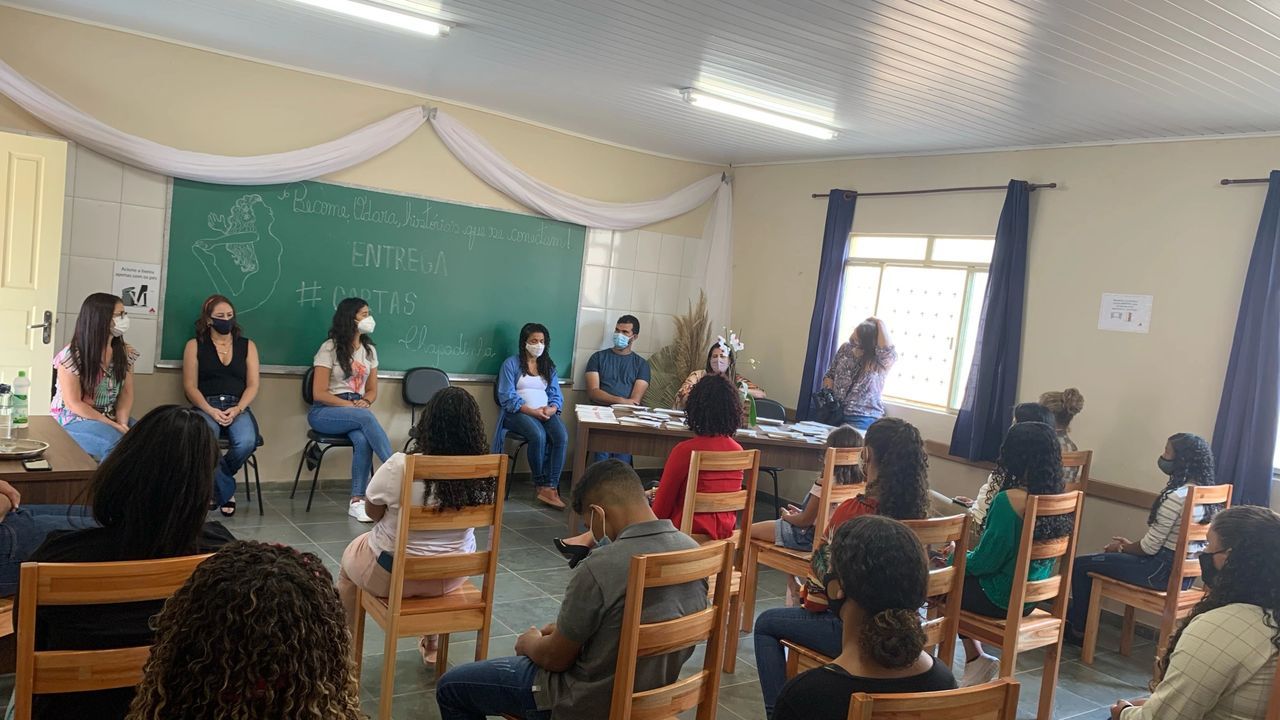
One flagship program, Letters to Chapadinha (#CartasChapadinha), emerged from a simple question: What if mentorship could reach the most remote corners of Brazil?
The COVID-19 pandemic deepened existing inequalities, especially for rural girls. According to El País, UNICEF estimated that 5.5 million children in Brazil were denied their right to education during the pandemic. School closures forced many families to rely on older children—often girls—to care for younger siblings, making it harder to stay motivated in their studies.
In response, Become Odara connected 144 mentors — from Brazil, the U.S., Mexico, and Australia — with students at Escola Estadual “Sebastião Peçanha de Oliveira” in Chapadinha, a rural district in the Vale do Jequitinhonha. Each letter was gender-neutral and printed on recycled paper, containing guidance, encouragement, and the mentor’s contact information to foster ongoing support.
Students were able to share ambitions, ask questions about post-secondary paths, and learn from experiences beyond their immediate environment. Media coverage, including TVC, highlighted the delivery of the letters and students’ engagement.
The program offered connection and guidance at a moment when access to mentorship and educational resources was limited.
Listening and acting: Gynecology with Empathy
Another initiative, Gynecology with Empathy (Ginecologia Com Empatia), began as whispers from women who felt unseen in medical spaces. Weaving partnerships that could turn empathy into action, I collaborated with Girl Up Conceição Evaristo, a UN initiative empowering girls in Brazil, and the Brazilian Federation of Gynecology and Obstetrics to bridge the gap between patients and providers.
We interviewed 20 women worldwide, gathering stories of experiences with inadequate or dismissive gynecological care. Partnering with Dr. Marta Rehme from Febrasgo, we transformed these insights into an open letter advocating for compassionate, adolescent-centered care.
The art of letting go
Despite the growth and love Become Odara generated—60,000+ readers, mentorship programs across continents, and partnerships influencing policy — there came a moment to pause.
Financial realities collided with personal ones. My body, navigating endometriosis, PMDD, and hypothyroidism, demanded care I had been giving to others.
Closing operations wasn’t failure — it was an act of grace.
Empowerment doesn’t disappear when the platform does. It multiplies.
Every story, ritual, and connection continues to ripple outward—in classrooms, clinics, and quiet moments of courage across continents.
What I carry forward
Become Odara taught me that true leadership is not about sustaining a brand, but sustaining meaning.
It taught me to:
- Transform personal pain into collective healing
- Build networks where empathy is strategy
- Balance between passion and practicality
- Execute complex initiatives while wearing multiple professional hats (business planning and nonprofit sustainable funding models)
The spirit of the platform lives on in the collective memory of all the women whose lives it touched.
Every story shared, every ritual performed, and every connection made contributed to a larger narrative of women's empowerment and self-discovery.
Key professional skills demonstrated:
Storytelling, Content Creation, Bilingual Communication, Digital Marketing, Social Media Strategy, Project Management, Community Building, Mentorship, Partnership Development, Stakeholder Engagement, Advocacy, Research, Educational Program Design, Event Facilitation, Public Speaking, Cross-Cultural Communication, Cultural Competency, Video Production, Multimedia Skills, Crisis Response, Empathetic Leadership, Strategic Planning, Execution, Audience Engagement, Community Listening.