The state’s special education system is struggling under severe staffing shortages, high turnover, increasing enrollment and growing calls for more support for teachers and families.
By Alice Kazakov
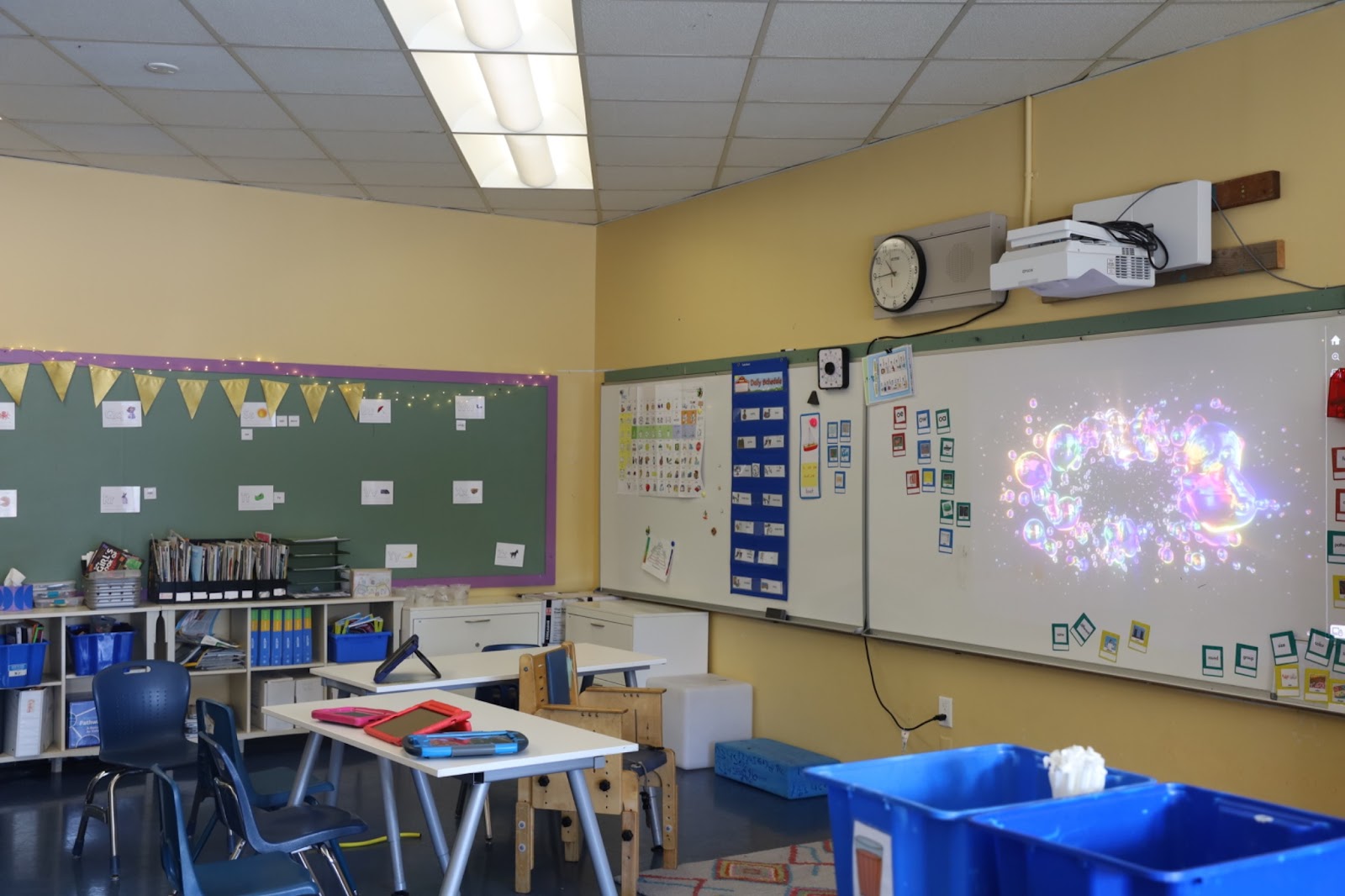
Kimberley Anderson often misses the opportunity to eat lunch or use the restroom as she bounces around her special education day class at Dolores Huerta Elementary School in San Francisco. It’s recess time, which is usually her chance to breathe. Instead, Anderson jumps from one student to the next, flinging open different drawers for supplies and catching food before it falls. One of her paraprofessionals is out on the playground with a few students. The other aide did not show up.
Already strained by legal challenges and growing demands, California’s special education programs are bracing for an uncertain future under the Trump administration’s proposals to slash the Department of Education, the largest source of funding for special education. Now, as conversations arise on how to best support students with disabilities and special education programs, teachers are calling for more support at the staffing level.
Though staffing shortages across California are not unheard of, special education teachers are grappling with gaping job vacancies, low retention rates of paraprofessionals and an influx of students with complex needs.
Anderson credits the growing crisis to the general lack of administrative support and stigma associated with special education.
“A lot of people just cannot afford to do this job,” she said. “There's not much training and support centrally for paraeducators. They're hired and thrown into a position, sink or swim, and it's usually up to the classroom teachers to then provide training while we're teaching.”
At San Francisco Unified School District, Anderson says positions for paraeducators are often vacant. When that is the case, substitutes with minimal to no special education teaching credentials are brought in. This, she says, leads to even more frustration and lack of understanding of the students and their capabilities.
“We are getting substitutes who are completely afraid of our children,” Anderson said. “They just stand around. They don't know what to do, and that's really unhelpful.”
The biggest challenge that arises without adequate staffing is the increasing number of lawsuits filed against school districts for not adhering to a student legally binding Individualized Education Plan, or IEP.
IEP’s serve as the basis of a student’s needs and a guideline for accommodations they are entitled to under the Individuals with Disabilities Education Act, which guarantees students with disabilities the right to an accessible, equitable education and currently serves 15% of students nationwide.
According to Anderson, when a school is lacking the staff to accommodate a student’s needs, like having a speech teacher, or if the staff is not fully trained to handle high needs, they are especially vulnerable to lawsuits.
Under provisions in the IDEA and Section 504 of the Rehabilitation Act, the family filing a lawsuit can request that their attorney fees be paid for by the school district. Congress included these provisions to uphold certain rights for disabled students, and provide accessible legal process when those services or rights are not provided.
This financial obligation gives school districts the added pressure to settle the case and provide the services that are being requested.
“If [they] put the effort in upfront, [they’re] going to spend less further down the line. So because we're not training teachers, parents, staff- that leads to more lawsuits,” Anderson said.
The most common lawsuits Anderson has seen in her district and others are from not being able to provide the behavioral support documented in a student’s IEP. This can include accommodations for sensory issues, like reducing distractions and providing sensory support, as well as frequent sessions with a school psychiatrist or nurse.
Without additional funding, schools are at risk of losing valuable resources needed to support students. “This worries me, because the district is talking about cutting social workers and nurses,” Anderson said. “They are extremely essential in helping me.”
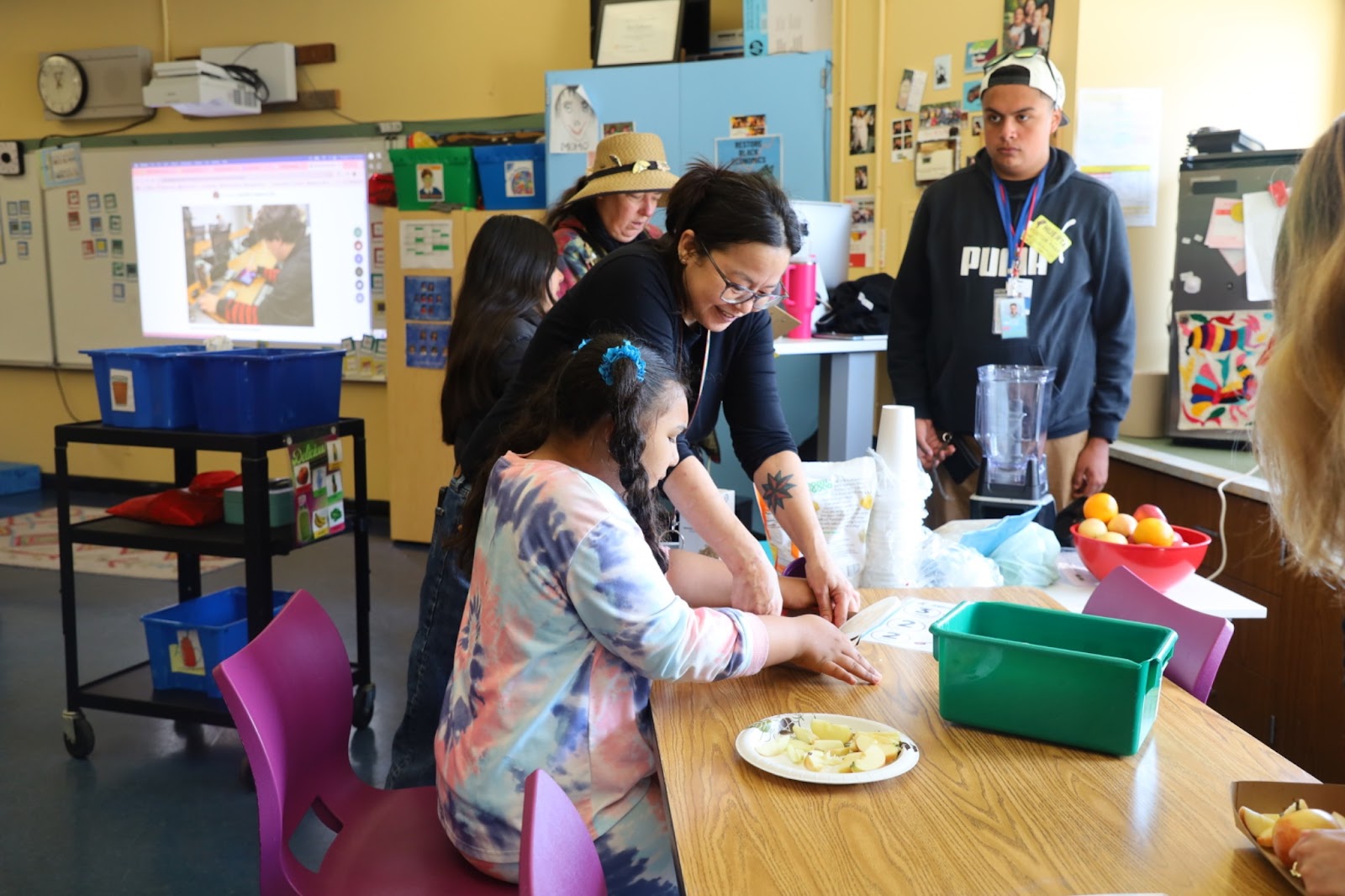
The solution to the staffing crisis seems simple, but uncertain budget cuts and changes in the near future will stress the programs even more. California public schools are seeing a yearly increase in the students enrolled in special education classrooms and programs. In 2023-2024, special education enrollment rose to 836,846 students statewide, up from 793,985 enrolled the year prior, according to data reported by the California Department of Education.
Thomas Anderson, a resource specialist program teacher at SFUSD, said that union negotiations in 2024 led to the district reducing the maximum “caseload,” or number of students assigned to a teacher, to 27 from the previous 28. “So if you're over [the limit] then they're supposed to hire a point-five person. But once again even if you post the job, will someone come?” he said.
“We're already in a crisis just in terms of how much money they owe for lawsuits and other things that if you load the case we will be more in a crisis,” Thomas Anderson said.
He believes that lowering the number of students assigned to one special education teacher will help the school meaningfully serve both the students and the teachers. With an increased case number of students enrolled in special education, to Anderson the solution is simple: hire and retain full-time, well-trained staff.
At McKinley Elementary School in San Francisco, transitional kindergarten and reading intervention teacher Kaya Kim shared that earlier in the school year their school’s resource specialist was reassigned to work in a special education day class due to the vacant positions. For what the students and families miss out on in education and behavioral support, the school tries to make up for with minute compensation- essentially giving families money to hire outside help.
“We're still short of para[educators] who are supposed to be supporting students throughout the day. So [the district] is basically saying, okay we owe you,” Kim said. “Your student hasn't been receiving their number of minutes of support so we're going to give you money to go and get a private tutor or go get help from outside sources.”
Kim explained that this puts parents from socio-economically disadvantaged backgrounds or those that simply don’t have the time in a difficult position. “Then the student just totally loses out because all of a sudden, your mom has to figure out arranging a tutor or signing you up for a reading class across town, and having to come pick you up from school,” she said. “That requires a lot of parent resources that they may not have.”
Kim believes the district seems to prefer this method because compensation minutes are less expensive than an inevitable lawsuit for not providing services under an IEP.
Kristi Gaglio has been calling for adequate support for years. Her daughter Logan was diagnosed with autism and an intellectual disability at an early age. Logan has been part of the Los Angeles County’s Las Virgenes Unified School District special education programs since preschool and is now finishing up her post secondary program.
Reflecting on her daughter’s journey, Gaglio said that high school had been the easiest to navigate in terms of services compared to the lower grades. “At the preschool level it's like pulling teeth because at that time there's no clear cut obvious signs of exactly what kids need or what works for them,” she said in an email. “You have to fight, beg and threaten to get services.”
Logan’s IEP includes physical, speech, and occupational therapy to develop her physical and more importantly- her social skills. Gaglio said the hardest service to meet was speech therapy because of the very few times it was offered during the week.
“The most difficult support to get was one-on-one support. They absolutely do everything they can to deny this, and the simple reason is cost”, Gaglio said. This all changed when she hired an advocate who knew more about the system.
“Most of the staff know how to address [Logan’s] needs, but the turnover and temporary aides make things difficult. Not just in addressing their needs, but these kids need stability to thrive,” she said when asked about the changing future of special education. “I think the school districts should offer parent training or seminars on how to navigate the IEP process and figure out a way to retain staffing.”
Oftentimes, students enrolled in special education programs are in general education classrooms for most of their day as it is costly to provide one-on-one support. Students with moderate to high needs or multiple disabilities spend most of their academic day in a separate classroom or area.
Gaglio said she wishes that students in special education programs would have more of an opportunity to interact with general education students as it would help dispel the stigma around the capabilities of a student like her daughter and foster inclusion.
Including students with disabilities in general education classrooms has proven to be beneficial for students and teachers alike. Students work on their social skills and confidence, and it fosters an environment of inclusion.
Logan wasn’t the only student who received adequate services later in education. Linnea Kristensson, elder sister of 19-year-old Oscar, was shocked to learn that staffing shortages plague the programs of younger grades.
Oscar was diagnosed with autism and learning disability at the age of 2. He attended public school in Sweden until the Kristensson family moved to California in 2022 and enrolled him in Mountain View High School.
Kristensson explained that when discussing the move with Oscar’s primary doctor, the family was told that California was the best state they could move to for quality support and education for Oscar.
“Here he learned more about how to survive after school, how to go to the grocery store, handle money, order food, and take the bus,” she said. “Whereas in Sweden, he would learn more how to read, count, write- strictly school stuff.”
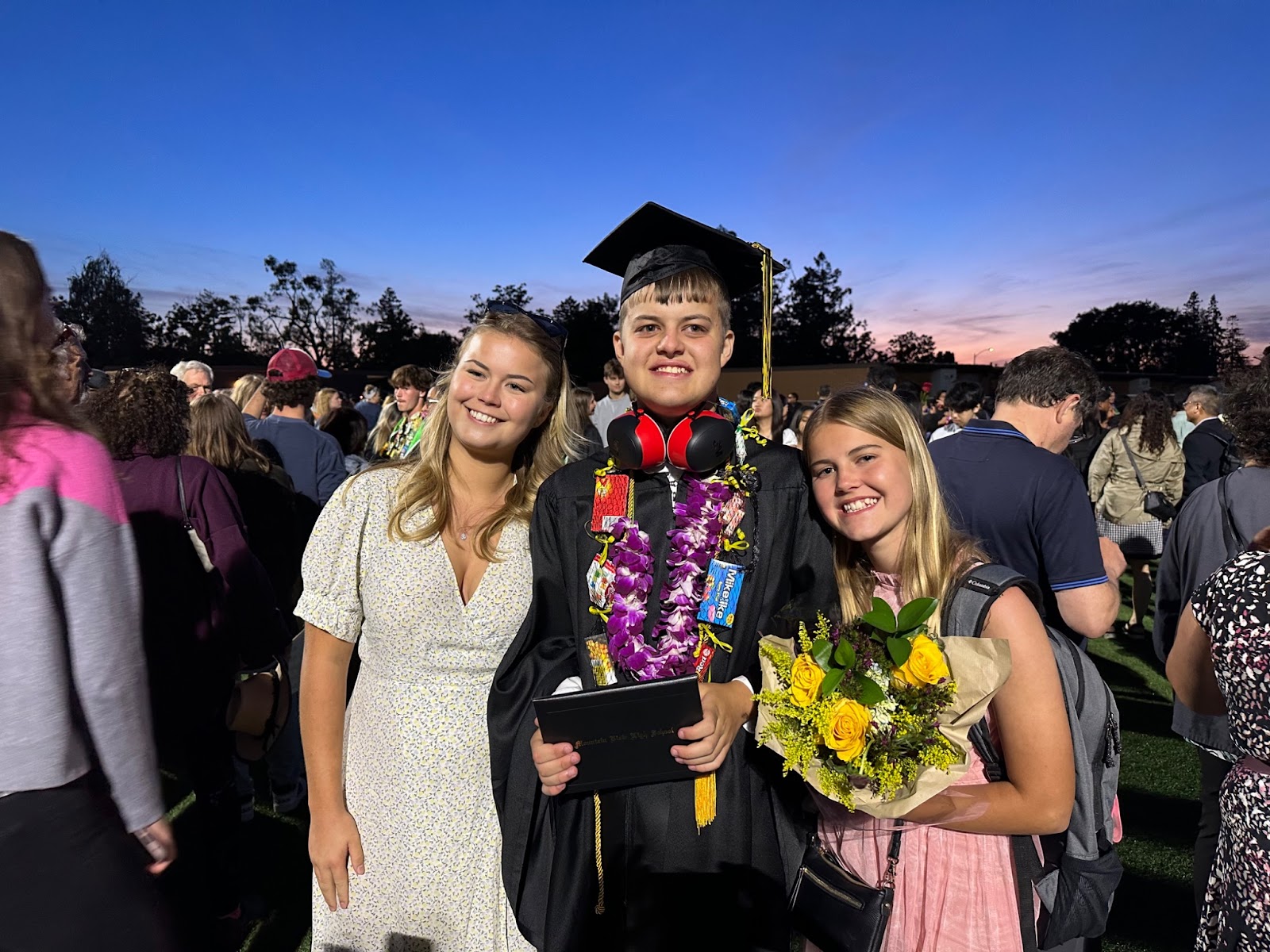
When the Kristensson family was originally figuring out the enrollment and paperwork for Oscar, the evaluation process raised concerns for Kristensson. “[We] would sit through interviews and talk about only things that he can’t do… they go through each step and it's kind of depressing at the end,” she said. “It’s kind of tedious.”
Despite the frustrating process of getting her brother enrolled, Kristensson said she is glad that Oscar had a positive experience, and is surprised to see the public support and funding for special education slide backward.
On April 16, U.S. Health Secretary Robert F. Kennedy Jr. delivered a speech referencing a study from Centers for Disease Control and Prevention showing that rates of autism spectrum disorder have risen to 1 in 31 in 8-year-olds as of 2022 – almost double the 2010 rate of 1 in 68.
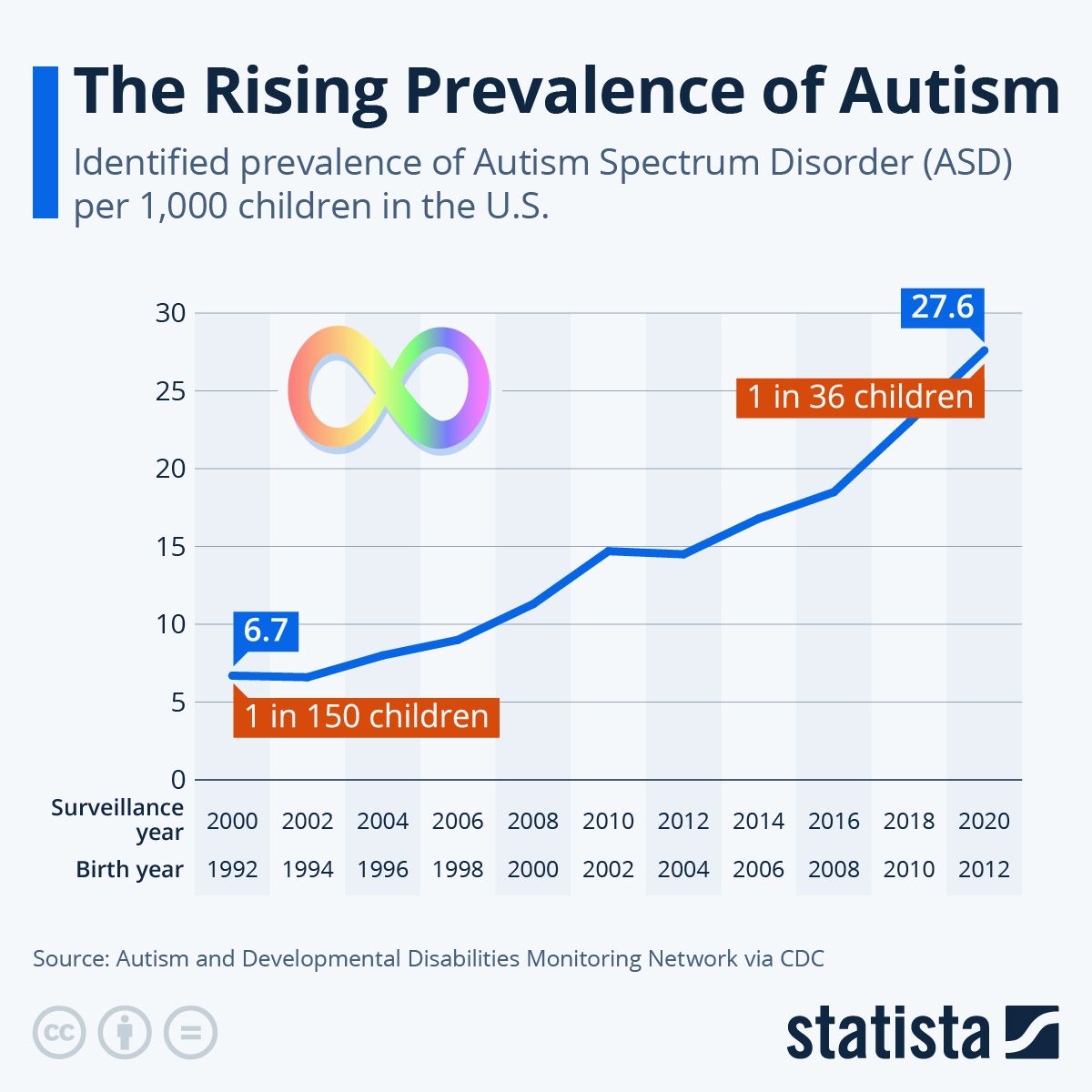
Julia Stone, a special education program specialist for KIPP NorCal public schools, is worried schools won’t be able to adapt to the increasing number of students with disabilities.
“We have such an influx of evaluation requests, and I think it's due to two things,” Stone explained. “I think disability is just on the rise. General education teachers know what to look out for a little bit better. [Then,] it's a lot of schools being inundated and saying ‘Oh my God, this kid's got a lot of behavioral issues, or they're behind academically. That's going to mess with our scores. Let's evaluate them for special education’.”
With the rise of evaluation requests and limited staff, Stone’s schools have had to contract assessments out to private companies, costing the schools even more and increasing the chances of mis-evaluation when the company, according to Stone, doesn’t know the student or the environment.
Stone contemplates how special education programs will stay afloat when comparing the staffing shortages and turnover rate to the increasing number of high needs cases. Although Stone recognises that funding limitations are real, she believes options exist to understand a student's needs and retain staff to ensure schools are properly equipped.
One way, she explained, is to ensure any administrative staff as well as general education teachers are trained in educating students with disabilities and handling certain behaviors. At two of the schools she works at, almost no one on the administrative staff has any special education credentials.
“It’s interesting to hear how little knowledge they have,” she said.
Kimberley Anderson agrees, saying she has come across multiple administrative personnel with no formal education or experience of how to implement the law and accommodations.
“That's where I think there's a big disconnect too, is that people feel like these requirements are extra, but they shouldn't be,” Anderson said. “It should be under Universal Design for Learning. If we focus on that as a district, differentiating for other kids who get accommodations is not going to be hard at all, because in theory, this should be happening anyway, because it helps everybody learn.”
Aside from implementing special education at a higher level, loan relief for credential programs and increasing teacher salaries, Julia Stone believes the issue is larger than money. She says that society needs to prioritize education now more than ever, and Kimberley Anderson agrees.
“There's still a lot of wasting [money] out there. Our priorities are wrong here- we're prioritizing test scores, over actual healthy children, in my opinion,” Anderson said. “Despite this, I love the profession and I'm always about anything that can shed more visibility on us and our needs.”