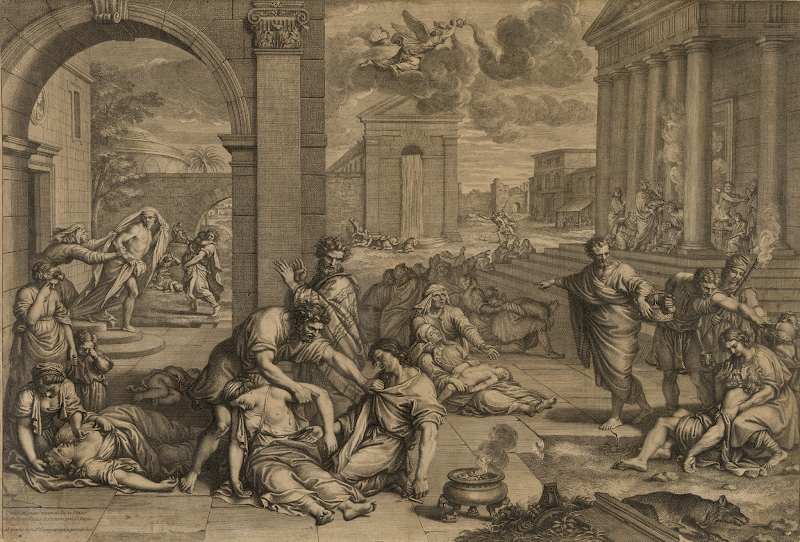
When was the worst time to be alive? Perhaps living in Egypt during the ten biblical plagues? How about the 1300s, when the Black Death wiped out half of Europe? Or 1918, when World War I killed 18.5 million, and well before COVID-19, Spanish Flu wiped out a further 50 to 100 million?
Well, the worst year ever to have lived was 536 AD. The earth was plunged into darkness, crops failed, bubonic plague killed one-fifth of the world's population, and a mini-ice age lasted for almost a century. For decades, scientists were clueless as to what caused the cataclysmic events of the sixth century. Today, we will delve into what it was like to live through the worst period in history. Along the way, we'll look at contemporary writing, ancient Norse myths, and modern science to uncover the culprit. So strap in as things are about to get darker than an end-of-days solar eclipse.
536 AD: THE WORST YEAR IN HISTORY
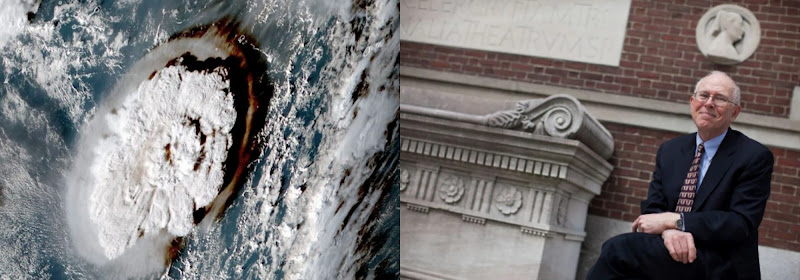
Due to surviving contemporaneous records, historians have long known that the mid-6th century was the worst era to be alive. But Harvard University history professor, medieval scholar, and archaeologist Michael McCormick pinpoints 536 AD as the worst year to be alive: "It was the beginning of one of the worst periods to be alive, if not the worst year."
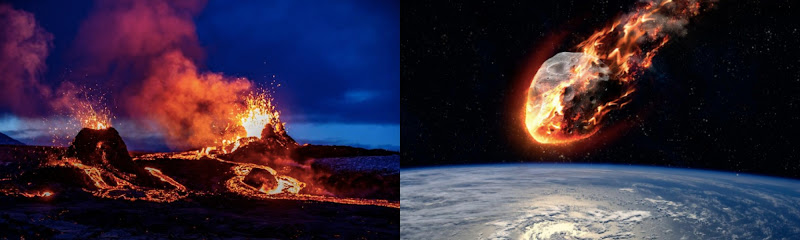
That was the year global temperatures plummeted, a dense fog blotted the sun from the sky, and snow fell in the middle of summer. For centuries, no one could work out why global temperatures dropped during the sixth century's Late Antique Little Ice Age. But more recently, scientists proposed these events were all interconnected and were kicked off by a major volcanic eruption or meteor impact.
Researchers hypothesized that there was a major volcanic eruption or an extraterrestrial object impacted Earth with enough force to eject massive amounts of sulfate aerosols into the atmosphere. The explosive chain of events blocked the sun and stopped its life-giving radiation from reaching the Earth's surface. In short, someone turned the lights off.
Although we don't know which volcano might have been responsible or where an asteroid might have crashed into the Earth's surface, the fallout caused a nuclear winter. For it wasn't the volcano eruption or comet impact that wiped out millions. It was the multitude of knock-on effects that ravaged the earth. But first, let's take a look at what life was like with some geopolitical context...
THE EASTERN ROMAN EMPIRE
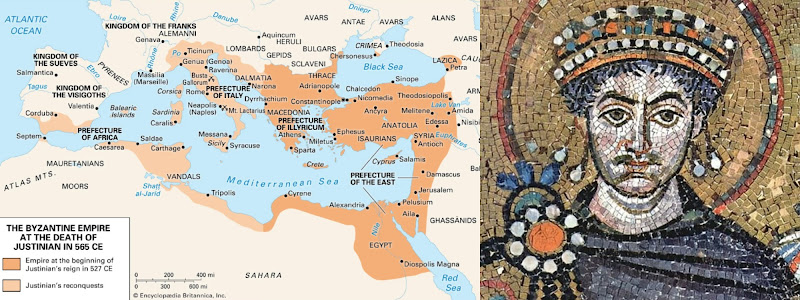
In 476 AD, the Western Roman Empire collapsed when Germanic warlord Odoacer defeated Emperor Romulus Augustulus' armies, becoming the first Barbarian King of Italy. Without Rome's law and order, Europe fell into disrepair and lawlessness. As former Roman colonies and provinces became increasingly isolated, barbarians and warlords clamored to power. Nowhere was safe because cutthroats and brigands ruled the highways.
By 536 AD, war raged across Europe, the Middle East, and North Africa. Emperor Justinian I, aka Justinian the Great and the Emperor Who Never Sleeps, ruled the Eastern Roman Empire from Constantinople with an iron fist. His military commander, Belisarius, waged the Gothic War and conquered much of the Mediterranean territory that had formerly belonged to the Western Roman Empire.
Most contemporary accounts come from Byzantine authors in Constantinople. Now known as Istanbul, the city was the hub of Western civilization and the gateway between Western Europe and Eastern Asia. In March 536, Constantinople first began reporting darkened skies and sudden cool temperatures. But it wasn't just the Middle-Eastern seat of civilization that reported the effects. Chinese, Persian, and Mayan Empires all felt the icy grip of death, too, and the ill effects of the worst year ever were reported across the known and then-undiscovered world.
In his report on the wars with the Vandals, Emperor Justinian's Byzantine historian, Procopius wrote, "During this year, a most dread portent took place. The sun gave forth its light without brightness, like the moon, during the whole year," and, "men were free neither from war nor pestilence nor any other thing leading to death." The catastrophic events of 536 AD definitely justify the term the Dark Ages because the sun didn't shine for a whole 18 months.
Two years later, Roman statesman Cassiodorus described the sun as "bluish" in color, writing its rays were "weak," and the heat it gave off as "feeble." He observed, "At noon, no shadows from people were visible on the ground," and described the crepuscular skies as being "blended with alien elements," and the moon, even when full, was "empty of splendor."
Cassiodorus described the seasons as "all jumbled up together," prolonged drought, a winter without storms, a spring without mildness, and a summer without heat. He wrote of awful harvest frosts that hardened apples and made grapes sour, and of the need to use stored food to help people last through the terrible times.
GLOBAL EFFECTS ENTER INTO MYTHOLOGY
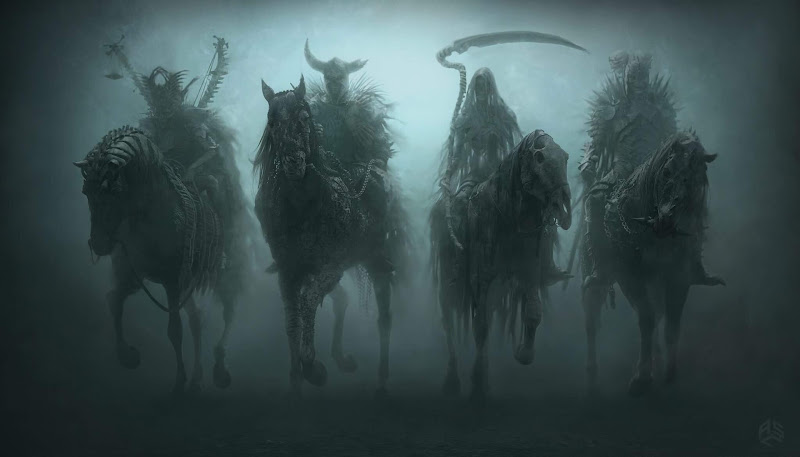
If the culprit was a volcanic super-eruption, the resulting multi-mile-high ash plumes would have covered most of the Earth, weakening the sun and causing global temperatures to plummet. What followed – death, famine, pestilence, and wars – must have felt like a punishment from the gods. Or worse, a visitation from The Four Horsemen of the Apocalypse.
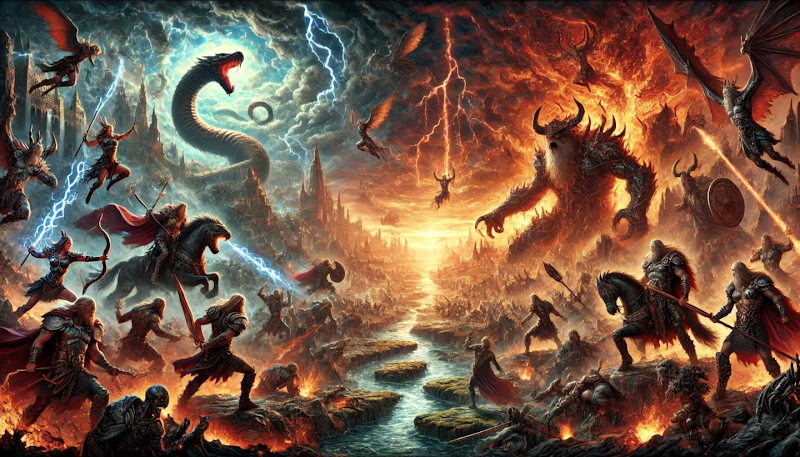
Perhaps lending a clue to the supervolcano's location, the further north you went, the worse folk fared. In Scandinavia, superstitious Vikings dumped gold into streams, lakes, and rivers in the desperate hope of appeasing their gods to bestow better times. The Late Antique Little Ice Age may even have inspired the Norse end-of-days legend, Ragnarök, which was preceded by an awful, mighty winter called Fimbulwinter.
The Twilight of the Gods appears in the Poetic Edda and the Prose Edda, compiled in the 12th and 13th centuries from earlier traditional sources by Icelandic historian and poet Snorri Sturluson. These epic sagas tell of the giant wolf Fenrir swallowing the sun and document the deaths of the gods Odin, Thor, Loki, and the fall of Asgard. The legend of Ragnarök hails from Iceland’s Land of Fire and Ice, and ends in a dark, icy, fiery apocalypse.
There was no escape from the freezing temperatures and 24/7 darkness. All of Europe and much of Asia succumbed to a debilitating famine. As far away as China, historians recorded snowfall in August. Far across the Atlantic Ocean, in the as-yet-undiscovered Peru, the Mayan Empire observed widespread droughts in the Southern Hemisphere. However, it was the Northern Hemisphere that bore the brunt of the deaths.
For these primitive, god-fearing people across the entire globe, it must have seemed like the end of the world was not just nigh, it was right here, right now. And their lives were about to get much, much worse. The lucky few who survived the first terrible few years didn't know it yet, but their lives were about to become a living hell. The following decade was the coldest spell of the last two millennia.
Borrowing from the 6th-century accounts of John of Ephesos, Michael the Syrian (1126-1199 AD) wrote, "the sun became dark and its darkness lasted for one and a half years. Each day it shone for about four hours, and still, this light was only a feeble shadow." It's no coincidence that Michael was the first writer to ever mention the Four Horsemen of the Apocalypse.
In Ireland, the Gaelic Annals recorded "a failure of bread" in 536 AD and for the next three years. Mid-10th-century Welsh Annales Cambriae texts recorded, "The Battle of Camlann in which Arthur and Medraut fell, and there was great mortality in Britain and Ireland." It seems King Arthur and his foe Mordred killed each other in a swordfight under blood-red skies and the fog of war. In his 2020 book, British Battles 493–937, war historian Andrew Breeze argues the Battle of Camlann arose from the famine caused by the 536 AD volcanic eruption.
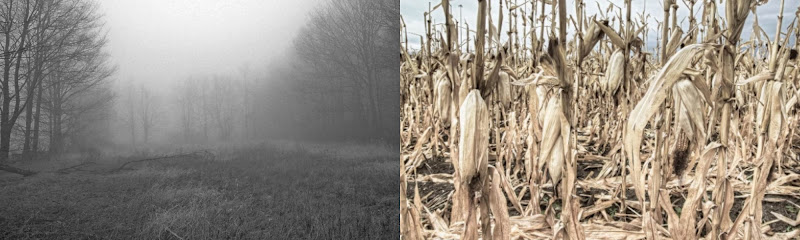
In addition to the deathly freezing temperatures, a mysterious, stifling winter fog plunged most of the world into darkness, day and night. Temperatures dropped instantly, and the smog persisted for 18 months. From China to Mesopotamia, and Scandinavia to South America, crops withered, rotted, and died in fields. Entire annual harvests were lost year after year, leaving what could have been tens of millions to starve to death.
Harvard Professor Michael McCormick says, "It was a pretty drastic change; it happened overnight. The ancient witnesses really were onto something. They were not being hysterical or imagining the end of the world." Things had never been more real for folk of the sixth century.
SCIENTIFIC BREAKTHROUGH
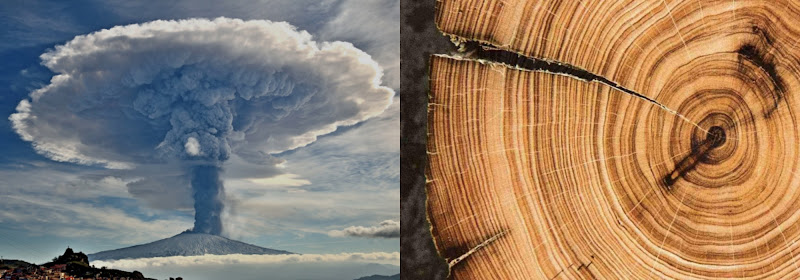
In the 1990s, researchers examined tree rings in Ireland and found their growth had been severely stunted in the sixth century. Their study concluded that summer temperatures in the Northern Hemisphere fell by between 1.5°C and 2.5°C (35°F to 37°F), initiating the coldest decade in recorded modern history. Historians had always had plenty of written evidence, but they finally had empirical evidence of a sudden and severe temperature drop beginning around 536 AD.
The ensuing years saw the most severe and protracted episode of climatic cooling in the Northern Hemisphere in the last 2,000 years. Michael McCormick posits, "The Late Antique Little Ice Age that began in the spring of 536 lasted in western Europe until about 660 AD, and it lasted until about 680 AD in Central Asia."
As if one volcanic eruption wasn't destructive enough, more violent blasts from an unknown supervolcano took place within three or four years. In either 539 AD or 540 AD, a second apocalyptic eruption occurred, and even more toxic gas, ash, smoke, bismuth, and other volcanic detritus were released into the atmosphere, further blanketing the world in darkness. It's believed that summer temperatures could have plummeted by a further 2.7 degrees Celsius (36.8°F).
Scientists believe the sudden and severe temperature drop was caused by a self-perpetuating feedback loop. With all this volcanic material in the atmosphere blocking out the sun's rays, global temperatures declined, causing more ocean water to turn to ice, leading to expanding ice sheets, which reflected even more sunlight, further cooling the planet. The mid-6th century might already have been the worst time to be alive, but things were about to get much worse…
THE JUSTINIAN PLAGUE
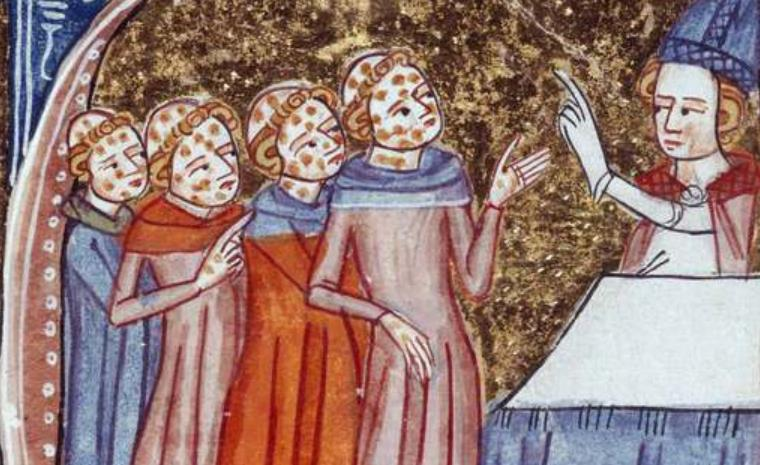
In 541 AD, bubonic plague struck the Old World for the first time. The disease appeared in the Byzantine Empire's outer provinces via the Roman port of Pelusium, Egypt, and arrived in Constantinople in 542 AD, almost a year later. In 2013, scientists discovered that this first great plague pandemic originated in Kyrgyzstan, Kazakhstan, China, or northern India.
The perfect storm of freezing temperatures, drought, global crop failure, malnourishment, disease, and weakened immune systems was the ideal fertile breeding ground for the outbreak and spread of the bacterium Yersinia pestis. The plague spread by ship, caravan, travelers, and rats along the intricate trade networks like the Silk Road into the population centers of the Persian Empire, Africa, and the Eastern Roman Empire.
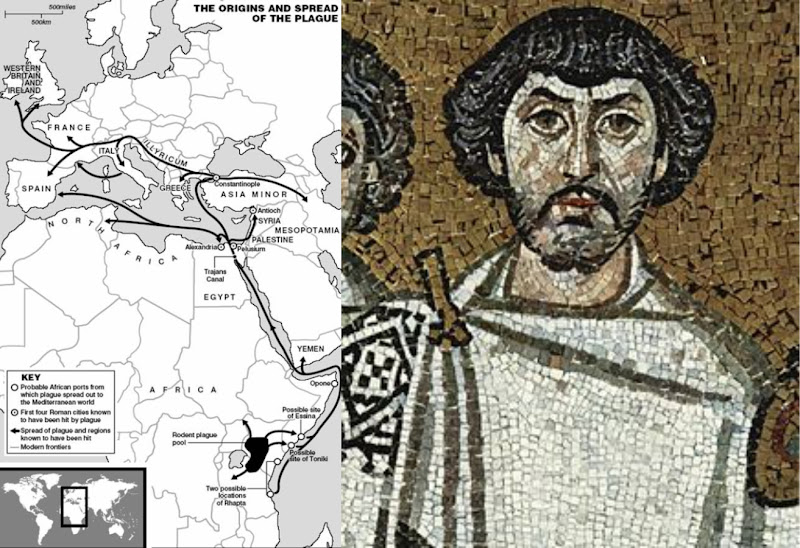
The worst-hit city was Constantinople. Procopius estimated that 10,000 people died in the city every day. He described the afflicted suffering from fevers and swellings in the armpits, groin, and behind their ears. He said sufferers fell into comas while others suffered nightmares, delusions, and hallucinations for days before dying an agonizing death. Some say the epidemic caused 100 million deaths across Europe, Africa, and Asia.
No one was safe. Not even Emperor Justinian. He became infected, lending the epidemic its name, but somehow survived until the ripe old age of 83, when he died in 565 AD. Procopius laid the blame firmly at Justinian's door, declaring him either a devil or as being punished by God for his evil ways. And he was pretty evil; even when his empire was being ravaged by pestilence, Justinian still collected his taxes from the afflicted and dying.
Some scholars believe the Justinian Plague wiped out half of the Eastern Roman Empire's population, hastening its collapse and ushering in the rise of Islam. Thanks to the Byzantine Empire's wars in Italy, the disease spread north and west like wildfire. With no respite and no food, people froze and starved to death.
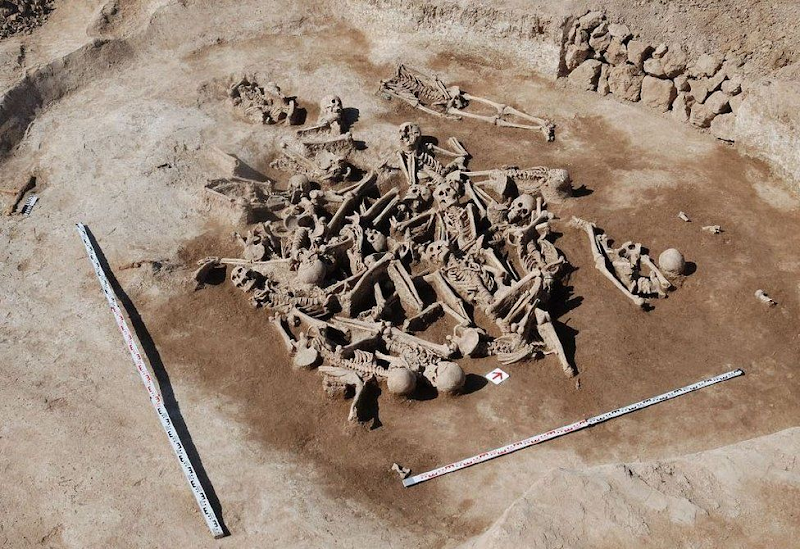
As society collapsed, entire tribes uprooted and swarmed farther north and west across Europe, seeking new lands for farming, before eventually succumbing to the outbreak. DNA samples from 6th-century Anglo-Saxon skeletal remains unearthed in Germany contained the Yersinia pestis bacterium, which caused the Plague of Justinian and the later Black Death. But it didn't stop there; the bubonic plague spread as far north as England and perhaps Scandinavia. The plague that was named after him outlived Emperor Justinian and continued to wreak havoc throughout Europe for the next 200 years, only finally disappearing in 750 AD.
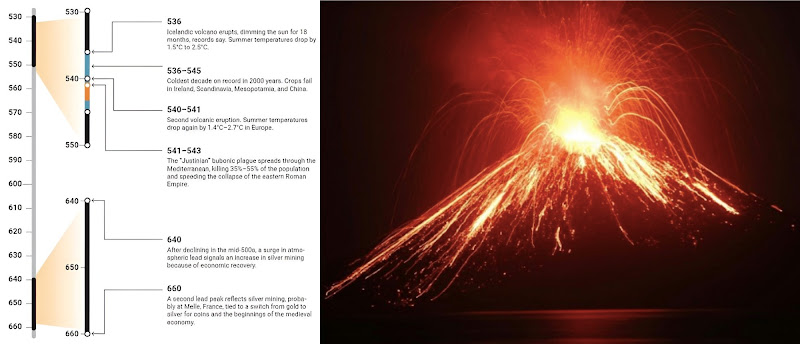
After two earth-shattering volcanic eruptions, plagues of darkness, failed harvests, famine, death, war, and disease, matters were worsened by a third great eruption just a few years later, in 547 AD. Together, this triple whammy of volcanic cataclysms and the ensuing climate affected life on Earth into the middle of the 7th century. Climatologists now believe the combined effects of these three explosions caused a century-long global temperature decline.
This triple whammy plunged Europe into an economic stagnation that lasted until the year 640 AD. How do we know? Well, thanks to chemical traces in ice core samples, researchers know that 640 was the year a spike in airborne lead demonstrated a return to making silver coins. At last, industry, trade, and economies had fired up again. It may have taken a whole century to recover, but finally, the world was back on track.
SCIENTISTS SEARCH FOR ANSWERS
Scientists have long hunted for what kick-started the chilling climate chain reaction. Those 1990s tree ring studies helped narrow things down. However, after further decades of study, researchers were still no closer to proving whether the mini-ice age, crop failures, malnourishment, and plague were caused by a volcano, a meteorite, an asteroid, or a comet impact. But then, in 2008, analysts stumbled upon 6th-century AD sulfate deposits within ice core samples.
This sulfate spike came from the exact period around 536-540 AD and proved to be of an even higher concentration than the sulfate spikes from 1815 AD. That was when Indonesia's Mount Tambora supervolcano erupted, leading to 1816 becoming known as The Year Without a Summer.
With larger results similar to the Tambora super-eruption, scientists could rule out an extraterrestrial causal event such as the 93-mile-wide Chicxulub impactor, which wiped out the dinosaurs 66 million years ago. Or the Younger Dryas Impact Hypothesis of 12,000 years ago, which some believe caused the Great Flood that almost every culture recorded.
Researchers also ruled out a comet airburst like the one that obliterated a massive part of Siberia near Tunguska, Russia, in 1908. All the evidence firmly pointed to a volcanic super-eruption. But which volcano?
Over the years, several notable experts have tried to figure out exactly which volcano was to blame for the catastrophic chain of events. In 1984, Richard B. Stothers was sure it was Papua New Guinea's Rabaul volcano. In 1999, author David Keys suggested the fault lay at Indonesia's Krakatoa volcano, which also famously erupted with devastating effect in 1883 AD, sending shockwaves around the globe.
In 2010, Robert Dull, John Southon, et al., were confident they had hit on a link between the Tierra Blanca Joven eruption of the Ilopango caldera in El Salvador and the events of 536 AD. However, a more recent study now dates the Ilopango eruption to 431 AD. Ultimately, all three expert teams were way off the mark. They weren't even looking at the right continent.
HAVE SCIENTISTS FOUND 536 AD’S CULPRIT?
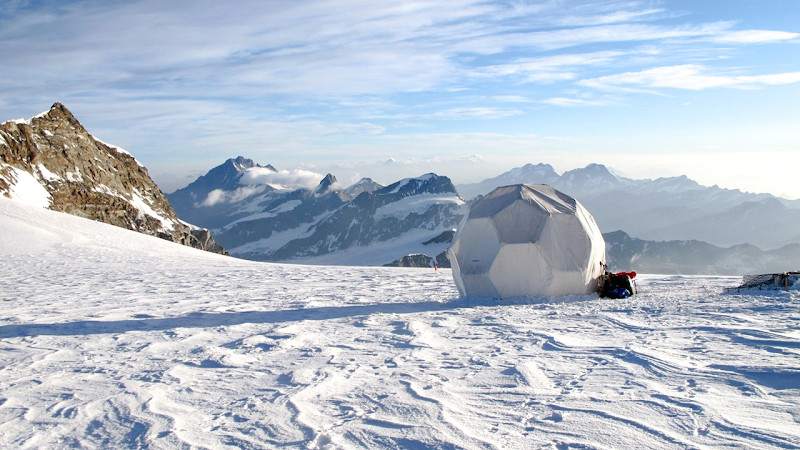
In 2015, new polar ice core samples from a 72-meter ice core drilled in the Colle Gnifetti Glacier in the Swiss Alps yielded significant clues. By comparing these ice cores with climate records from tree rings, a team led by Michael Sigl of the University of Bern, Switzerland, concluded that just about every unusually cold summer over the past 2,500 years could be attributed to – and immediately preceded by – a major volcanic eruption.
Sigl and his team now had compelling evidence that a massive eruption in early 536 AD (or perhaps late 535 AD) was followed by another in 540 AD. Though his findings don't seem to mention a third eruption in 547 AD, Sigl and his colleagues felt sure that the double whammy of super-eruptions caused the century-long cold snap that led to the darkest days of the first millennia. Finally, the boffins were getting somewhere...
In 2018, a team led by Professor Michael McCormick and glaciologist Paul Mayewski from the University of Maine carried out an ultraprecise analysis of ice core samples from a glacier in Switzerland. And from their findings, they believe they can finally identify the culprit. Well, perhaps not the exact volcano, but they have narrowed it down to a country.
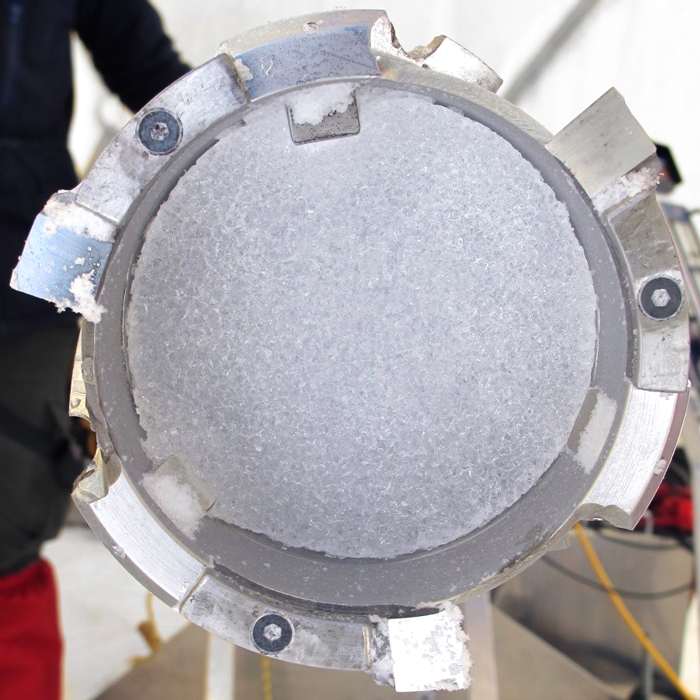
University of Maine graduate Laura Hartman found two microscopic particles of volcanic glass in ice from 536 AD. Science magazine reported Laura's breakthrough: "By bombarding the shards with x-rays to determine their chemical fingerprint, she … found that they closely matched glass particles found earlier in lakes and peat bogs in Europe and in a Greenland ice core. Those particles, in turn, resembled volcanic rocks from Iceland."
Science also reported: "At a workshop at Harvard this week, [McCormick's] team reported that a cataclysmic volcanic eruption in Iceland spewed ash across the Northern Hemisphere early in 536. Two other massive eruptions followed, in 540 and 547. The repeated blows, followed by plague, plunged Europe into economic stagnation that lasted until 640." That said, the results suggesting the offending volcano is located somewhere in Iceland are inconclusive as the sample size was too small. The possibility that the eruption originated in North America still remains.
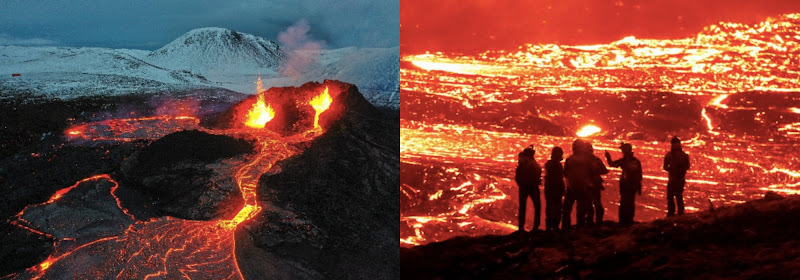
Professor McCormick and his dedicated team are determined to examine more ice cores from lakes in Iceland and elsewhere. By doing so, they hope to finally answer the question that has eluded him, his colleagues, and thousands of other scientists, including glaciologists, vulcanologists, and climate experts, for so many decades. Why were the volcanic eruptions beginning in 536 AD quite so devastating?
The Land of Fire and Ice contains the answers to the darkest decades of the Dark Ages. But was 536 AD really the worst year to be alive? The year 1349 AD is another strong contender, as it saw earthquakes, famine, fires, the Black Death, Jewish massacres and pogroms, and witch trials. But that's another story for another day…