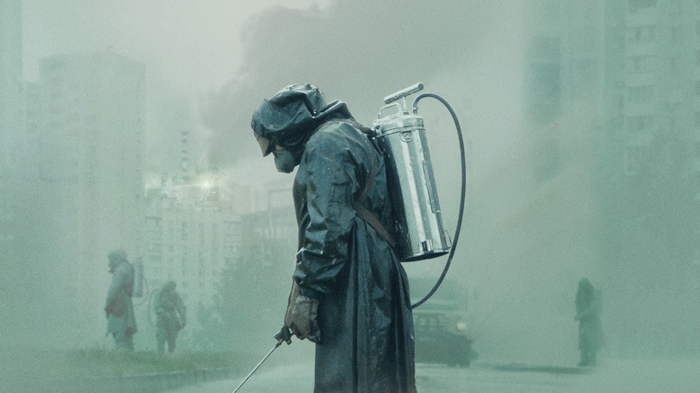
HBO and Sky’s Chernobyl is a masterclass in storytelling. Terrifying, devastating, suspenseful, and hauntingly beautiful, the five-part hour-long series, created and written by Craig Mazin and directed by Johan Renck, begins with a somber bookend 24 months after the fateful explosion.
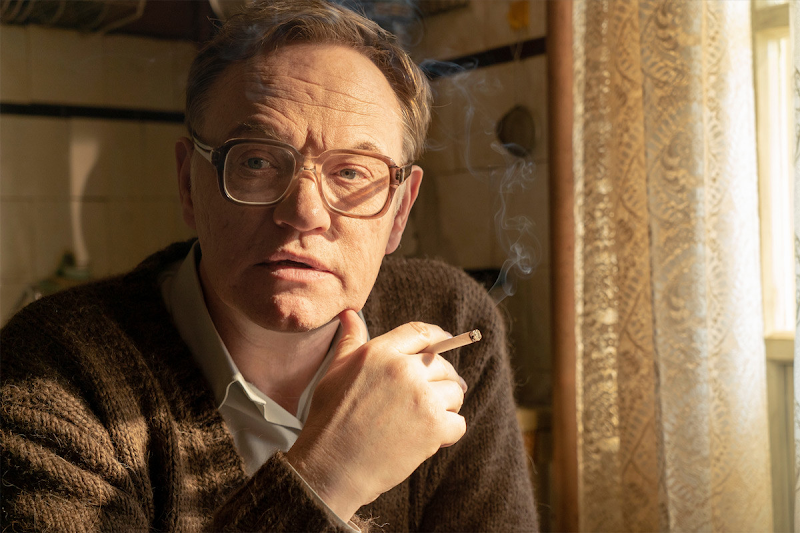
We cold open in Moscow as former Deputy Director of the Kurchatov Institute of Atomic Energy, Valery Legasov (Richard Harris' son, The Terror’s Jared Harris), and his cat sit in their dingy high-rise apartment recording chilling confessions onto old-fashioned audio cassettes. And BOOM – there it is! No, not the nuclear explosion but the series’ very first words, Legasov’s question, “What is the cost of lies?” That BOOM is Craig Mazin setting up the series’ thematic question with explosive efficiency. One minute in, and it’s clear HBO’s Chernobyl is an investigation into TRUTH.
The nuclear accident is just the inciting incident for everything that follows. Why does this tale need telling now? Well, this zeitgeist story couldn’t have come at a more relevant crossroads. Thanks to Russia's psy-op war against the West, every aspect of politics and life itself has descended into Soviet-era lies, fake news, alternative facts, misinformation, disinformation, gaslighting, pride, delusion, and madness. Now, more than ever, we need to investigate Truth…
The bookend opening fades to the title card, and is replaced by another reading: “Two years and one minute earlier,” transporting us 680 km southwest to the V. I. Lenin Nuclear Power Plant near the Ukraine/Belarus border on April 26th, 1986. One of the sleepy, night-gowned 50,000 inhabitants of the powerplant worker town, Pripyat, is almost knocked off her feet by a shockwave as a tiny glowing speck lights up the horizon.
Vodka-swilling crowds gather on a bridge to watch the Ghostbusters light show spilling out of the breached fourth reactor. And then it hits you: “What the fuck are you people doing?” you scream to your television. “Run!” or “Get out! Drive your rusty Ladas as far away as you can!”
But they can’t hear you above the deafening alarms, the industrial hum, the whir of fire truck sirens, the bitter Siberian wind rolling in from the northeast, Icelandic cellist Hildur Guðnadóttir’s haunting score, and the crackle of Lesser Spotted Eastern European (Gregorius Samsarus) cockroach-like sounds from off-the-chart Geiger counters. According to the series's footnotes, no one on the bridge that night survived.
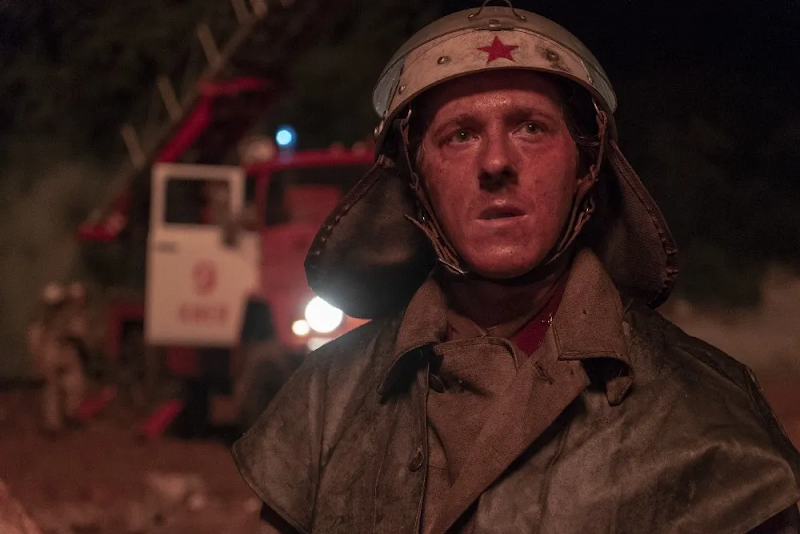
As writer Craig Mazin’s expertly executed world-building expands, firefighters (viewed from fellow The Terror alum Adam Nagaitis' POV) are deployed to fight the nuclear power plant inferno, and these brave Pripyat souls begin to unknowingly battle the show’s monster: radioactivity.
One reason Jaws and Alien are so goddamned effective is because we rarely see the monster. In Chernobyl, the monster always remains unseen because radioactivity is as invisible as it is deadly.
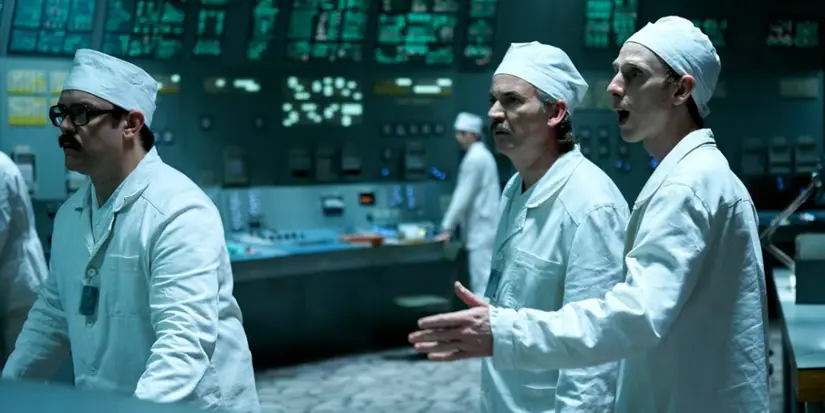
Scientists argue over the seriousness of the accident. Control room subordinates panic. Cheap, sub-standard, 1960s-era safety equipment malfunctions, disillusioned pencil-pushers try to save face, and proud propagandist politicians lie and delude themselves… all without the slightest whiff of hazmat suits or iodine pills. Not one of them has an inkling of what’s coming. But, like The Master of Suspense, Alfred Hitchcock explained in his famous bomb under a table analogy, we the audience do know what's coming, and that’s what creates a tension so palpable you feel sick with radiation poisoning just watching events unfurl.
It’s… The Knowing.
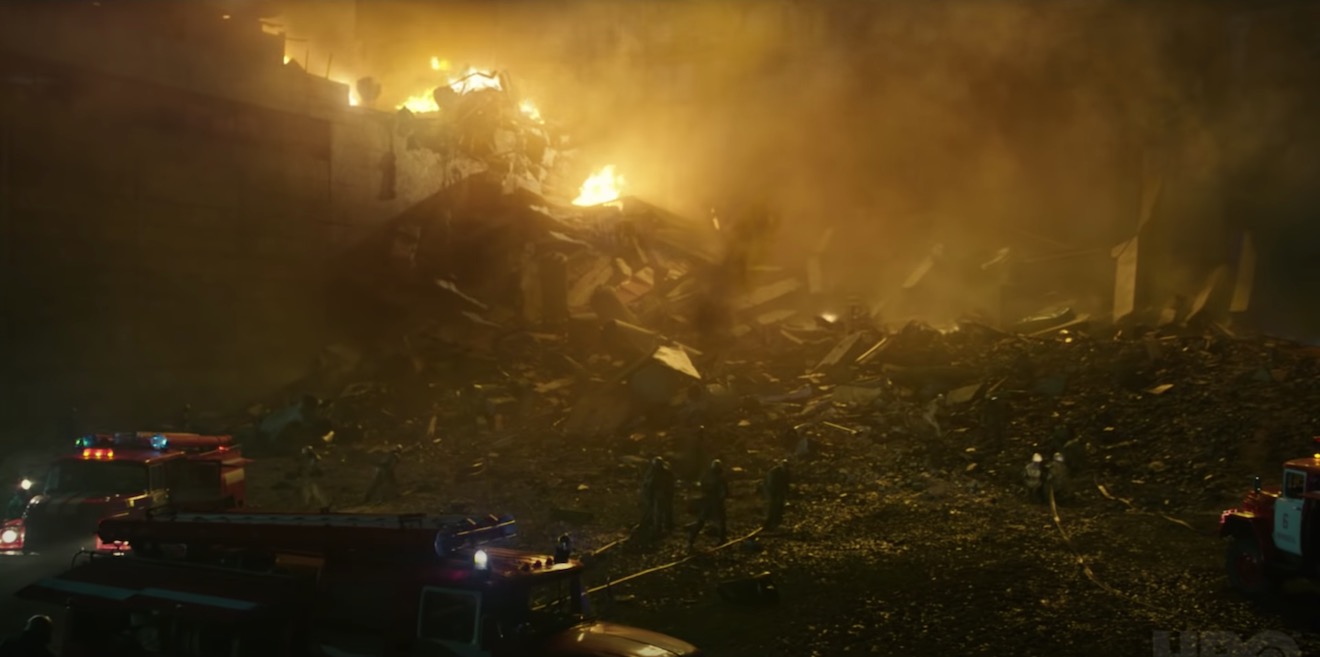
By the end of the first episode, I wished I could binge all five episodes. By the end of the second, I was physically panting. Honestly, this show really is that emotionally exhausting. Chernobyl rocks you to your nuclear core. Impossibly, the writer behind the Scary Movie and The Hangover movies has shaped historical source material into a terrifically authentic, riveting emotional rollercoaster and one of the best shows ever made.
Yet radioactivity isn’t the only monster at play here. The second monster is Communism, or perhaps pride. Throughout the series, Communism acts as super-ego to Legasov’s id. The denial, delusion, and cover-up to keep news of the accident from the poor Soviet people and the rest of the world; the heroes versus the contemptuous character barriers Mazin has created (or composited) are the perfect backdrop for all the conflict and tension that every TV drama requires. In one brilliantly telling scene, Legasov is given a choice when a random woman in a hotel lobby asks:
“Should we be worried?”
“No.” He replies.
With one word, our protagonist has not only refused the call to his Hero’s Journey, but he’s also made himself complicit. The time has come for each and every one of you to decide whether you are gonna be the problem or whether you are gonna be the solution.
WHAT MAKES CHERNOBYL SHINE SO BRIGHT?
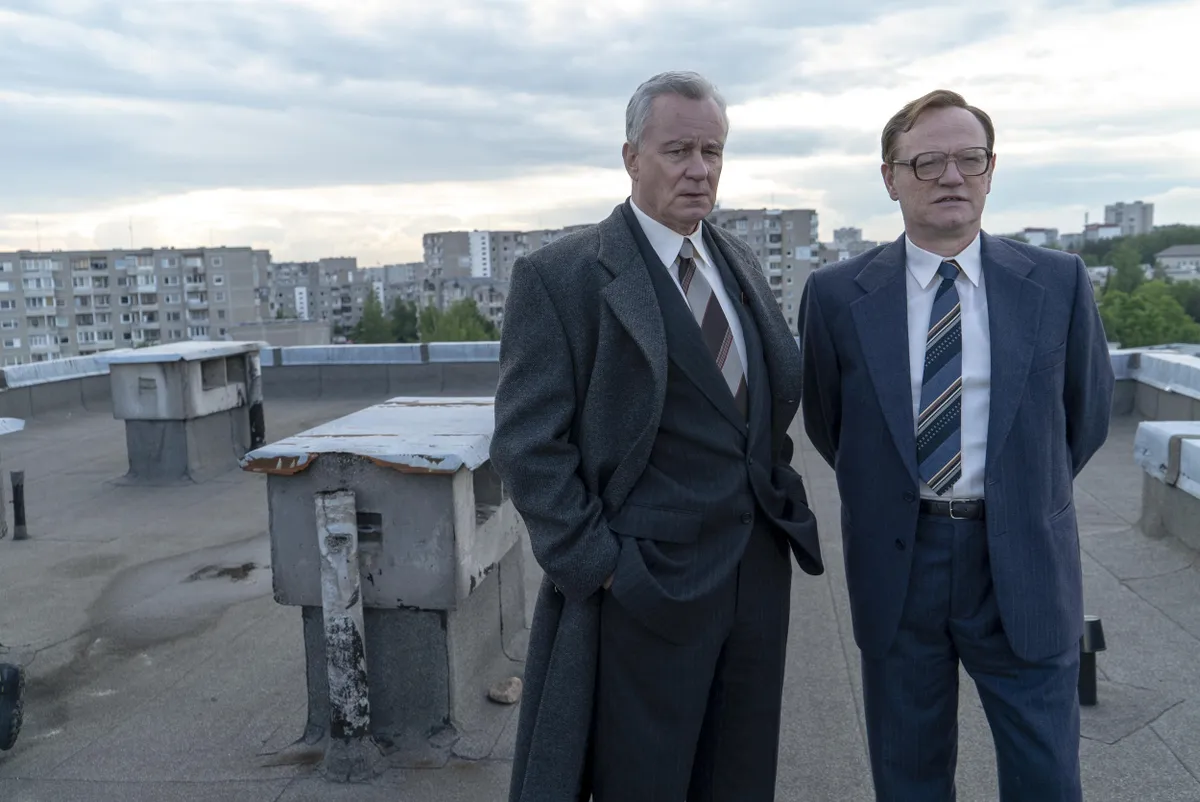
Jared Harris plays Legasov to perfection; his dogged determination is always tempered, resigned to the fact that his efforts will be in vain. Add the always-superb Stellan Skarsgård into the radioactive blender as the cynical, no-nonsense Council of Ministers' Deputy Chairman Boris Shcherbina. Introduce Emily Watson as Ulana Khomyuk, a Minsk nuclear physicist, a composite to represent several whistleblowing physicists. Together, these people literally saved the world.
Complete the ensemble of POV storytellers with Jessie Buckley as pregnant Pripyat resident and wife of Adam Nagaitis’ irradiated fireman, light the blue touch-paper, and retreat to a safe distance, as Chernobyl is some of the most visceral and powerful television you’ll see. Ever.
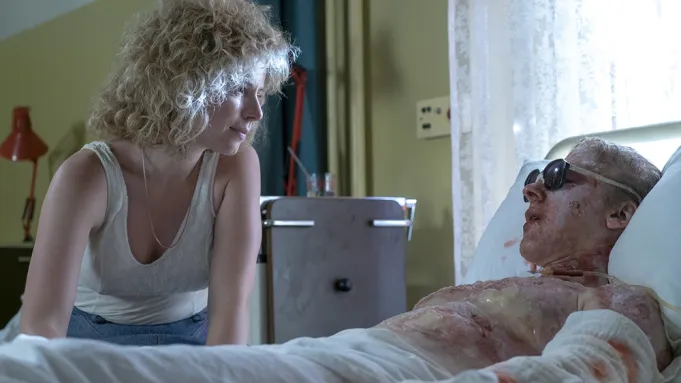
In focusing on this misplaced pride in Communism and characters who either tow or decry the official line, Craig Mazin has created an a-mazin’, near-perfect hotbed. This is how television differs from cinema; instead of one protagonist trying to achieve a goal and one antagonist trying to stop them, to make great TV, there must be conflict at every turn. HBO’s Chernobyl is a pressure cooker waiting to go off, where every line, every action, and every visual conveys the desperation, chaos, and incompetence that made the disaster so much more severe.
Hindsight is 20/20, and Mazin’s script and Renck’s understated direction understand and exploit this. The childlike naivety of every character, from bureaucrats and war generals to doctors, nurses, firefighters, and nuclear physicists, makes you scream, “Don’t get any closer to that reactor, you fools!” as their skin melts off their faces.
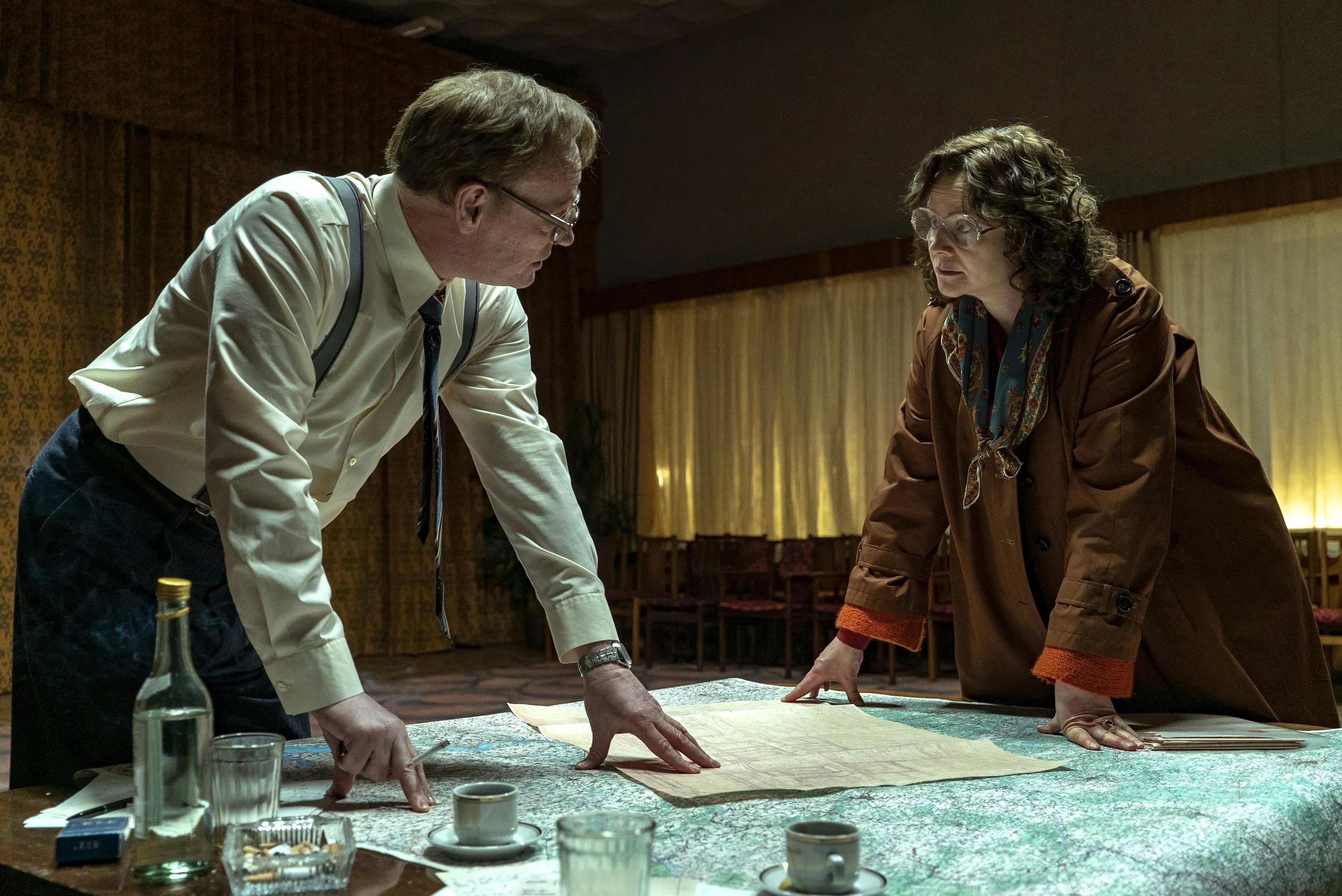
We, the audience, know the effects of radiation because of this very disaster, but these innocent workers and townsfolk do not because, in the words of Valery Legasov, “You are dealing with something that has never happened on this planet before.”
Featuring those so-ugly-they’re-beautiful brutalist high-rise blocks that remind me of Thunderbirds or architects’ miniature models of soon-to-be-constructed, 1950s Las Vegas hotels, the Lithuanian stand-in for Pripyat is as perfect as the gloomy interiors and impeccable costume design. In addition to creating a wonderfully bleak, grim color palette (which I’m gonna call Glasnost Grey), Renck’s action scenes knock you off your feet and haul you right into the belly of the Beluga whale so expertly that you feel your own skin is going to melt off your face any minute.
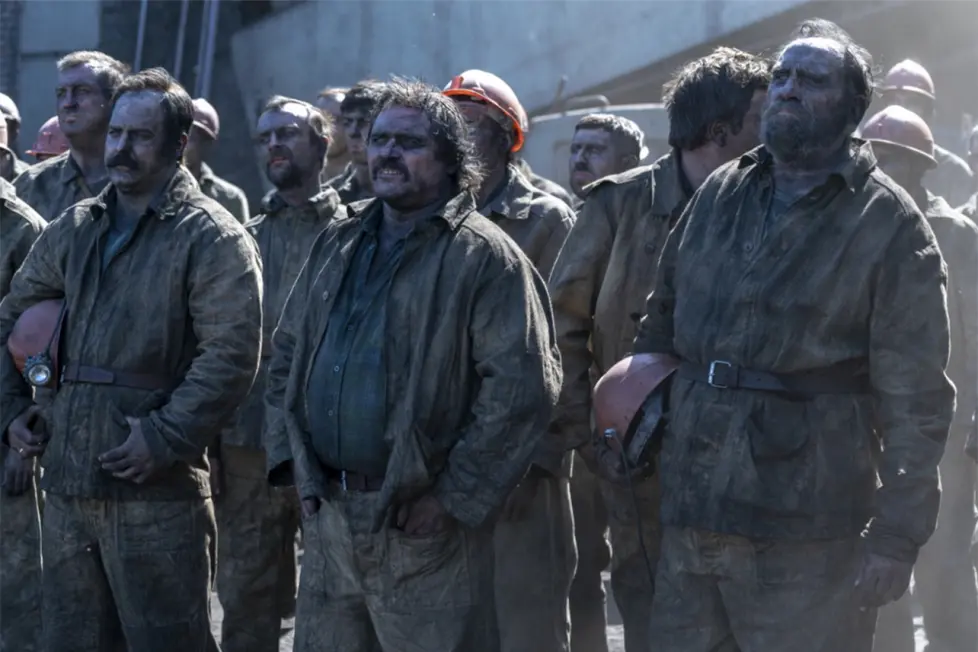
The fact that we viewers know the Chernobyl disaster killed an estimated 90,000 people (that’s thirty 9/11’s or sixty Titanics) makes the eeriness even harder to bear. When we see townsfolk watching the shaft of light from the core’s reactor leaking radioactive particles like The Avengers’ Battle of New York, or children playing in the falling radioactive “snow”, these visuals fill you with utter dread… for real townsfolk and kids died.
The Knowing I mentioned soon becomes The Dread, because you know it’s going to get worse as you realize someone, at some point, is going to have to go in there before millions more die horribly. Twenty-five million Soviets died protecting their Родина (motherland) in WW2, and they were going to have to sacrifice tens of thousands more to save their future.
Part eerie horror movie, part 70’s disaster flick, and part realsatire, Mazin’s ultra-efficient script, Guðnadóttir’s melody-free, eldritch score, the incredibly immersive sound design, the perfect pace of each reveal, and Renck’s gorgeous brand of visual storytelling are so masterful that each and every element sucks you in, spins you round, and spits you right out.
CRAIG MAZIN'S PERSPECTIVE
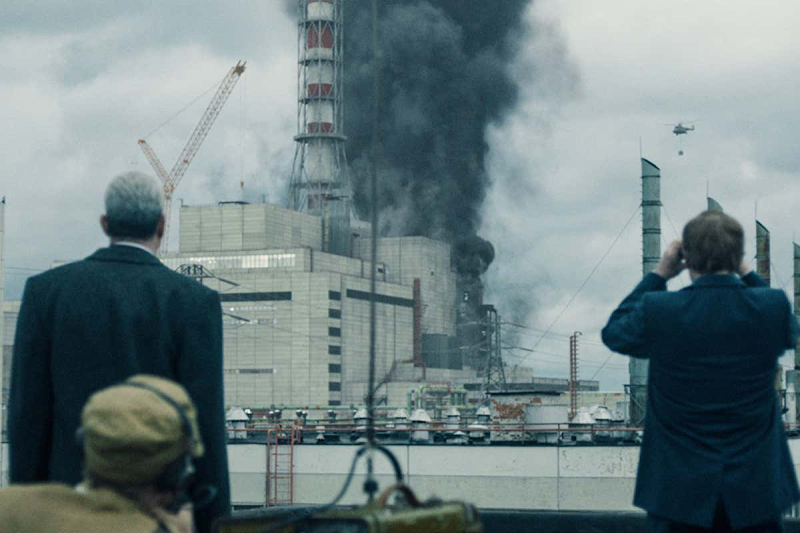
But what makes Chernobyl so utterly immersive and catapults it from great to unparalleled television is Mazin’s choice of perspective. Whether we’re experiencing the point of view of the firefighters, the plant workers, the wives, the nurses, or the crowds, each and every time (and without fail), Mazin’s script focuses on the exact right character or group of characters to squeeze out every available drop of tension.
Your lesson here is to always ask yourself, “Which character(s) does this scene/action/decision/event affect the most?” Once identified, it's your job as a writer to tell those scenes from that character's POV.
While Chernobyl is one of those rare shows that makes me mouth, “THIS is what fucking TV-making is about!” I’m actually glad I can’t binge-watch the whole series, as five straight hours of this would take my nerves to critical mass and cause a complete emotional meltdown. Televisual perfection.
HBO’s Chernobyl continues on Sunday, 19th May, if you’re in the States, and a day later on Sky Atlantic.
You can listen to John August’s screenwriting podcast, Scriptnotes, which Craig Mazin co-hosts here, and HBO’s Chernobyl podcast here.