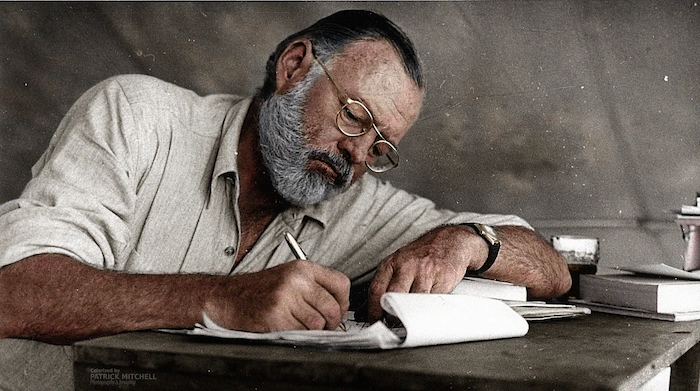
Ernest Hemingway. Novelist. Journalist. Short story writer. One of the greatest writers of the 20th century. But he was also a drinker. Eccentric. Macho-man. Soldier. Bare-knuckle boxer. Fisherman. Hunter. Bullfighter. Nazi-killer. U-Boat hunter. Revolutionary. Correspondent. Spy and War Criminal! What else is there to say? Well, unlike the man's stripped-down, clean, and spartan prose- there's plenty more to say under the surface, like his "iceberg theory," whereby deeper meaning and emotional weight remain hidden beneath the literal words on the page.
The man's life was as exciting and gripping as his stories. No other writer is considered to have had more influence on the style of English prose. His writing is as lean, hard and athletic as the man himself. So let's get to really know Ernest Hemingway, or as his mother called him... Ernestine.
EARLY LIFE
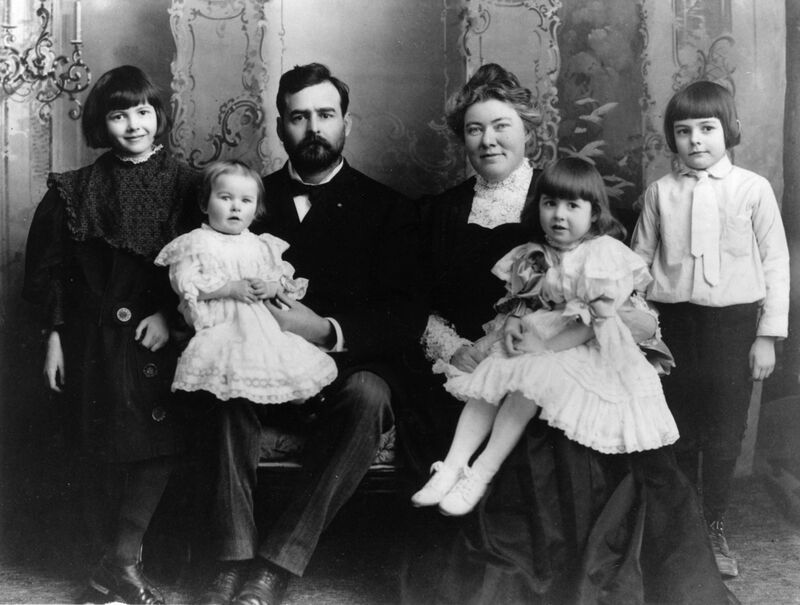
Ernest Miller Hemingway was born on July 21st, 1899, in Oak Park, as the name suggests, a leafy suburb of Chicago, Illinois. His father, Clarence Edmonds Hemingway, was a physician, and his mother, Grace Hall Hemingway, was a well-known musician and cellist in the local area.
After Clarence and Grace married in 1896, they lived with Grace's father, Ernest Hall, after whom they named their first son. Ernest Hemingway was the second of six children. His sister Marcelline preceded him in 1898, and he was followed by Ursula in 1902, Madelaine in 1904, Carol in 1911, and Leicester in 1915.
Want to know where Ernest’s hunting and bullfighting machismo came from? Well, his mother was hugely domineering. When he was born, Grace had desperately wanted another girl, so she raised him and his older sister Marcelline as twin girls for at least the first five years of his life.
Grace would dress them in identical pink, flowery dresses and bonnets, and always refer to her son as "Ernestine". She even held Marcelline back from school for a year so they could be in the same grade. So, now you know, it makes a lot of sense why Hemingway “rebelled against that identity,” hunted, fought, womanized, and boozed for the rest of his days.
Each summer, the family traveled to Windemere; their summer home on Walloon Lake, near Petoskey, Michigan. Ernest loved it there, and his father taught him to hunt, fish, and camp in the woods of Lake Michigan's Lower Peninsula. It was these early childhood experiences that instilled a lifelong passion for outdoor adventure and living in remote or isolated areas. Plus, it was probably the first time he was allowed to be a boy.
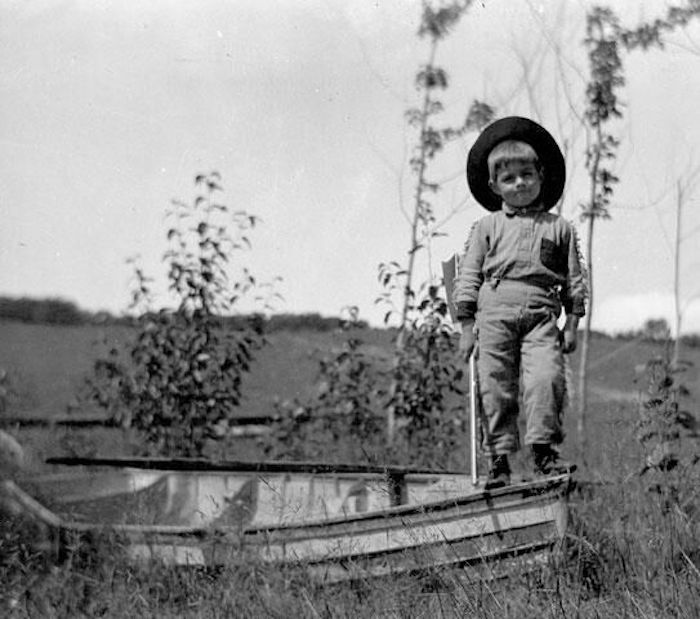
The young lad started hunting early. At the age of three, he killed a porcupine at his father's behest and finished the job by eating it. Maybe plucking porcupine quills made him want to become a writer! Nowadays, you can visit the author’s boyhood summer hangout, Windemere… although it's now known as The Ernest Hemingway Cottage.
As a child, Grace forced little Ernest to play her instrument, the cello. Not only did he detest playing the thing, he also showed next to zero talent for music. He never wanted to play in the first place, but that didn’t stop his overbearing mother from persevering. Grace kept Ernest home from school for more than a year, trying to force him to play, but Little Lord Hemingway proved more stubborn than his mother and eventually gave it up. As he put it, “That cello—I played it worse than anyone on earth.”
Hemingway’s other great passion - apart from writing, hunting, and drinking was boxing. He practised the sport from childhood and even had a boxing ring built in the backyard of his home in Key West, Florida, so he could spar with guests. At one time, he was even considered to be a successful amateur boxer. So at least he had a back-up plan if the whole writing thing didn’t work out. Luckily for him, and the world, it worked out. But first... War!
WORLD WAR ONE
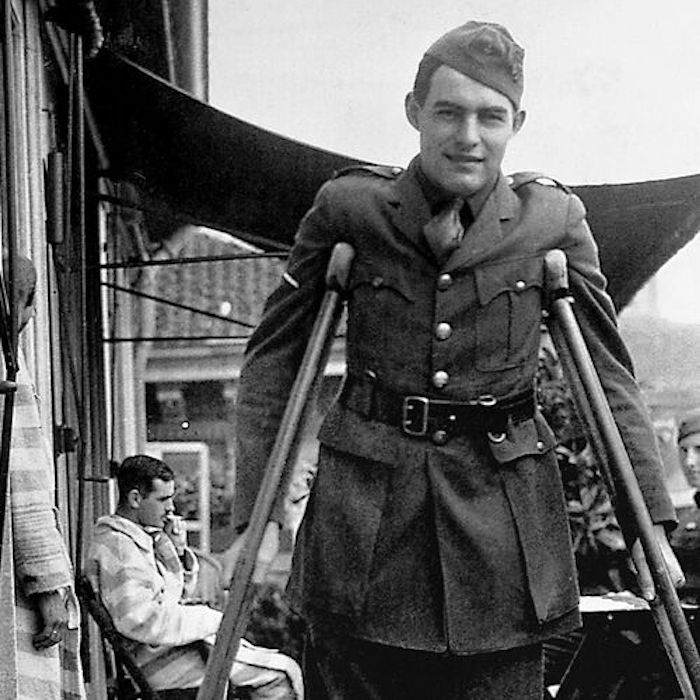
During the Great War, the 18-year-old joined the Ambulance Corps and worked as an ambulance driver for the American Red Cross on the Austro-Italian front. On his first day in Milan, he was sent to a munitions factory explosion to help rescuers retrieve the shredded remains of female workers. He described the incident in Death in the Afternoon: "I remember that after we searched quite thoroughly for the complete dead, we collected fragments." In June 1918, while giving out chocolate and cigarettes to soldiers, he was badly wounded by an Austrian mortar shell.
Knocked unconscious and buried in the earth of a dugout, he was hit by shrapnel in the right foot, knee, thighs, scalp, and hand. Despite these injuries, when he came to, he picked up one of the wounded Italian soldiers and carried him to the first aid station. For his bravery, he was awarded the Italian Medal of Valor. Pretty gutsy for someone who just got torn up by shrapnel.
His life-altering World War One experiences had a profound effect on the young man. He developed a strong interest in the effects of war on those who live through it. Few writers wrote with such stark verisimilitude, nor are as closely associated with war as Hemingway. He sent reports from the front lines, and war became the overarching backdrop for much of his oeuvre. His experiences shaped his fiction and, above all, he began to believe the writer’s duty was to tell the absolute truth.
His First World War accounts focused on the human aspect of the war and how it affected everyone - not just active soldiers, but the aftermath of their returning home with shell shock. He also chronicled civilians' experience of war; men, women, and children caught up in the horrors of wartime. Part of Hemingway's success is that he always told it like it was.
While recuperating in hospital for six months, he fell in love with 26-year-old Agnes von Kurowsky, an American Red Cross nurse seven years his senior. She called him ‘kid,’ and he called her ‘Mrs,’ and they planned to marry, but one day, Agnes sent him a letter telling Ernest he was too young and immature, and that she had fallen in love with an Italian officer. Agnes was his first great love and muse, inspiring A Farewell to Arms.
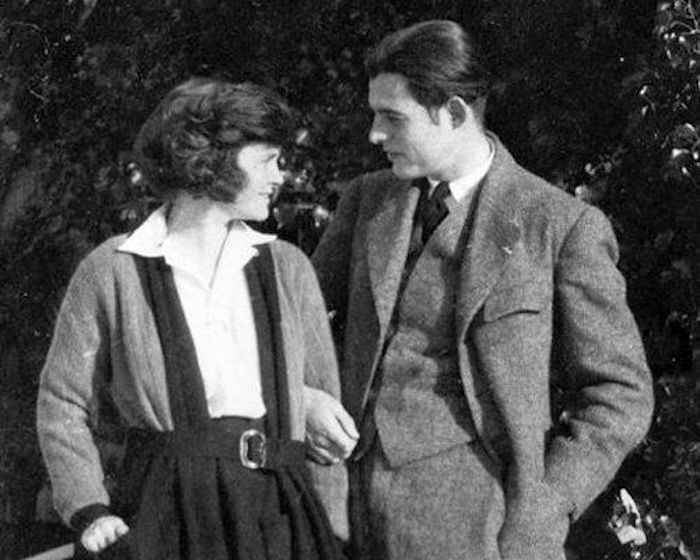
While filing stories for the Toronto Star, Hemingway became infatuated with Elizabeth Hadley Richardson, later saying, "I knew she was the girl I was going to marry." Red-haired, with a nurturing instinct, she was eight years older than him. The two corresponded for months and decided to marry and travel Europe.
They wed on September 3rd, 1921; two months later, Hemingway was promoted to the Star’s foreign correspondent, and they left for Paris. Suddenly, Hemingway had everything he had hoped for: the love of a beautiful woman, a comfortable income as a journalist, a life in Europe and, in 1923, a son - Jack.
In 1922, Hemingway’s wife, Hadley, learned firsthand why you should never put all of your eggs - or, in this case, your husband’s writing - in one basket. Ernest was on assignment in Switzerland. He asked Hadley to join him and, in an effort to surprise him, she packed all of his stories, typescripts, and carbons in a single suitcase. And you just know what’s gonna happen next...
Hadley left the suitcase unattended at Gare de Lyon station in Paris. When she realized her mistake and rushed back, it was gone. All but two of her husband’s stories were in the suitcase: one that he’d already sent to an editor, and one that he’d locked in a drawer after Gertrude Stein expressed her dislike of it! Distraught, he almost gave up writing entirely. Luckily, one of his friends convinced him to keep going.
As well as hanging out with American poet Ezra Pound, writer and art collector Gertrude Stein, and Pablo Picasso in Paris, Hemingway was also drinking buddies with Irish novelist James Joyce. The two writers couldn’t have been more different: Joyce was tall, frail, and studious, while Hemingway was known for his exuberant macho ways and boxing skills.
So, whenever he was with Hemingway, the Irishman would pick drunken bar fights with strangers before hiding behind his friend’s stocky body and shouting “Deal with him Hemingway! Deal with him!” in a thick Irish brogue. Ernest was more than happy to accommodate and fists often flew!
Upon Gertrude Stein recommendation, Ernest made his first visit to Pamplona, Spain, in 1923. The city is famous for its brilliant Encierro, or The Running of the Bulls tradition, in which locals and thousands of tourists get drunk on wine and are chased by bulls through the streets. In fact, it’s Hemingway’s fault there are so many bloody tourists in Pamplona every summer, as he wrote about the event, bringing it to the masses.
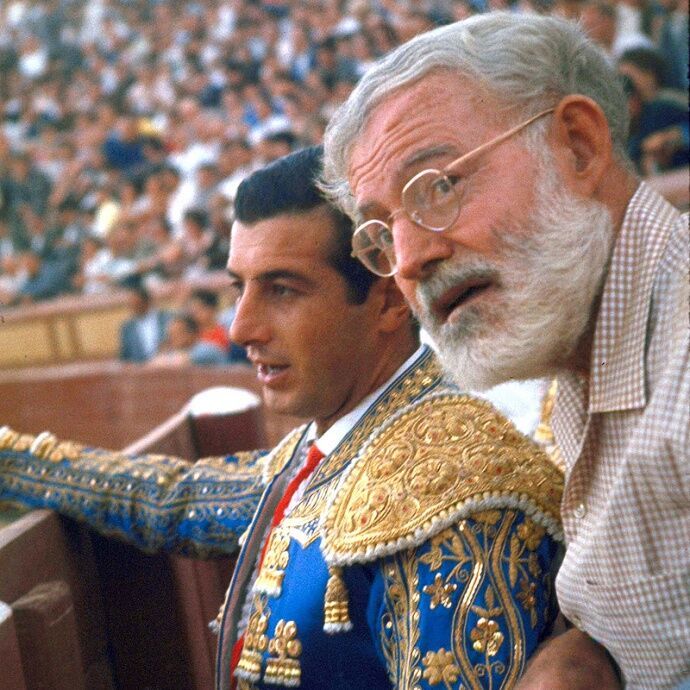
Bullfighting made such an impression on Ernest that he chose it as the setting for his first successful novel, 1926's The Sun Also Rises. He attended the Pamplona fiesta a total of nine times and, in 1932, published a non-fiction guidebook about bullfighting called Death in the Afternoon. Today, there is a statue of Hemingway in the northern Spanish city. In 1925, the couple were joined by one Pauline Pfeiffer, a writer and journalist.
Ernest fell in love with Pauline, and they soon embarked on a love affair. In the spring of 1926, Hadley discovered her husband’s affair, and in July, Pauline joined the couple for their annual trip to Pamplona. Upon their return to Paris, Hadley and Hemingway decided to separate, and in November, Hadley formally requested a divorce. They divorced in January 1927, leaving Ernest free to marry Pauline just three months later.
A DEATH IN THE FAMILY
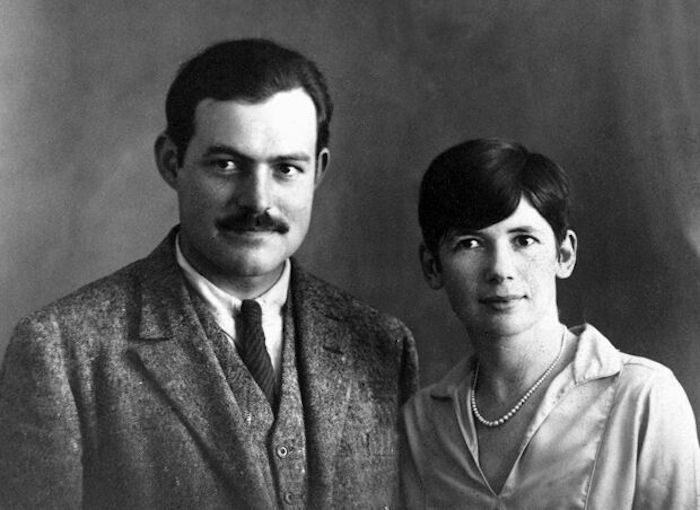
Now married, Hemingway and Pauline Pfeiffer traveled to Kansas City, where their son Patrick was born on June 28th, 1928. Hemingway fictionalized Pauline's difficult delivery and Patrick's difficult birth in A Farewell to Arms. Their second son Gregory (who later in life became Gloria Hemingway) was born in 1931, but before that, tragedy struck…
In the winter of 1928, the writer received a cable telling him that his father had killed himself. He was absolutely devastated. Legend says Ernest had written to his father telling him not to worry about financial difficulties, and the letter allegedly arrived a matter of minutes after the suicide. Prophetically, Ernest remarked, "I'll probably go the same way."
Talk about being a perfectionist... Would you believe Hemingway rewrote the final page of his 1929 novel A Farewell to Arms a staggering 39 times before he was satisfied with the result? The book is set during the Italian campaign of World War I, and when an interviewer asked him what exactly was causing him trouble, Hemingway replied: “Getting the words right.”
Around the same time, the great American novelist F. Scott Fitzgerald of The Great Gatsby fame sent Hemingway a ten-page letter offering advice on which passage his contemporary should use to end A Farewell to Arms. The advice was not well-received, and Hemingway sent back a note with just three words: “Kiss my ass!”
Critic Max Eastman wrote an essay bashing Hemingway and eviscerating Death in the Afternoon for celebrating the ceremony and traditions of Spanish bullfighting. Eastman called his book “Bull in the Afternoon” and posed the following challenge in his takedown piece: “Come out from behind that false hair on your chest, Ernest. We all know you."
When the two met face-to-face a few years later in Hemingway’s editor’s office, he showed Eastman his genuinely hairy chest and slapped him in the face with a copy of Death in the Afternoon! Way to go, Ernie!
Another great passion was fishing, and as a group of unsuspecting sharks learned, you don’t mess with Hemingway’s catch! While on a trip to the Bahamas in 1935, a frenzy of sharks tried to steal the giant tuna he was after, so he opened fire on them with a Thompson submachine gun!
That's where the idea for The Old Man and the Sea protecting his marlin came from. How different the 1952 novella would have been if Santiago had a submachine gun to protect his marlin from those pesky mako sharks! Or Chief Brody from Jaws saying, "We're gonna need a bigger gun!"
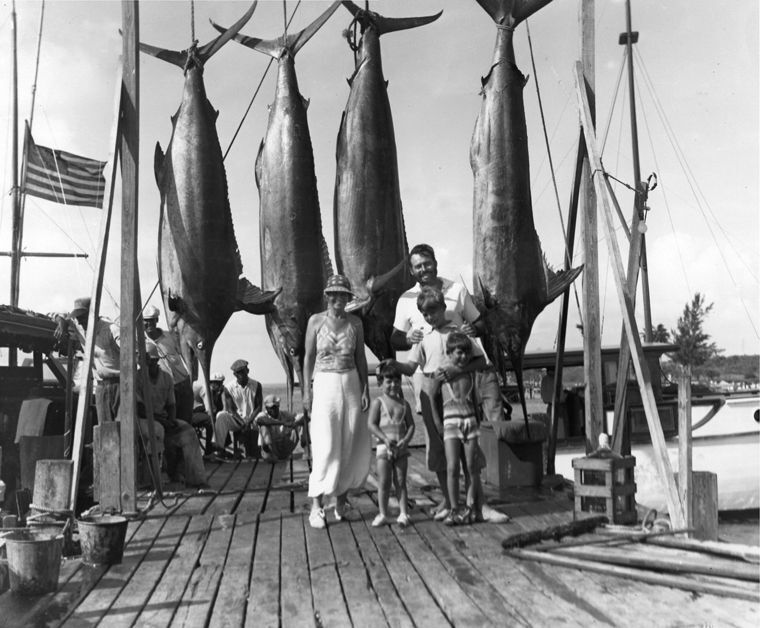
However, the blood from the gunfire only stirred up the sharks and brought in more numbers! That day, the sharks won. Hemingway made up for the loss by setting a world record in 1938 by netting seven marlins in one day. The moral of the story? Bait works better than bullets.
Orson Welles, who also loved Spain and bullfighting, first met Hemingway in 1937, having just turned 22. That's a year before he frightened the bejeesus out of America with his infamous The War of the Worlds radio broadcast. Welles was at the recording studio to narrate a Spanish Civil War documentary written by Hemingway when he made the mistake of offering the author a few suggestions on how to improve the script.
Needless to say, the always outspoken Hemingway didn’t take it well, and the two ended up coming to blows and rolling around on the floor before cracking up with laughter, opening a bottle of whiskey and drinking their way to friendship. Although Welles always claimed they were friends, behind the scenes, he loathed Hemingway’s macho enthusiasms, and Ernest apparently didn’t have much time for Orson either. Talking about meeting your match; it must have been like looking in a (very wide) mirror!
THE SPANISH CIVIL WAR
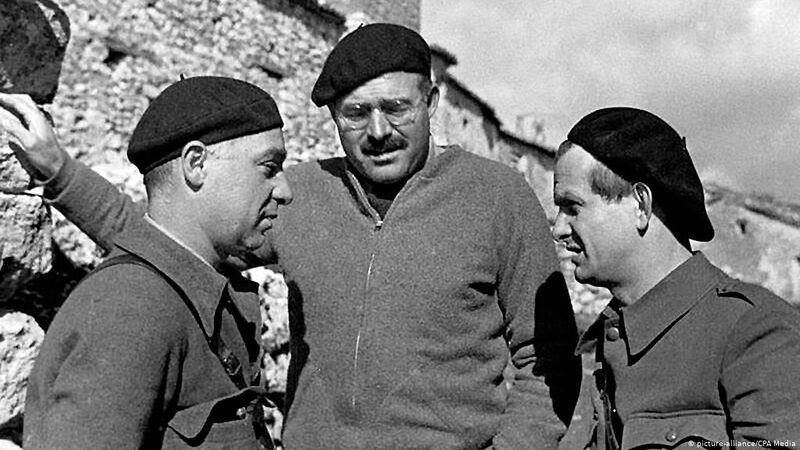
Despite Pauline's reluctance to let her husband cover a war zone, in 1937, he left for the Iberian Peninsula to cover the Spanish Civil War for the North American Newspaper Alliance. Papa (as all his friends now knew him) was to write the script for The Spanish Earth and was joined by journalist and writer Martha Gellhorn. Like Hadley, Martha was also a St. Louis, Missouri native, and like Pauline, she'd worked for Vogue in Paris.
Late in 1937, while in Madrid with Martha, Hemingway wrote his only play, The Fifth Column, as the city was bombarded by Francoist forces. He returned to Key West, Florida, for a few months, then back to Spain twice in 1938, where he was present at the Battle of the Ebro, the last republican stand. He was among the last journalists to leave the battle as they crossed the river. By this time Ernest and Martha were having a love affair, and she was about to become the third Mrs Hemingway.
In early 1939, Hemingway crossed to Cuba in his boat to live in the Hotel Ambos Mundos in Havana. Pauline and the children left him that summer after a family reunion during a visit to Wyoming. When his divorce from Pauline was finalized, he and Martha married three short weeks later on November 20th, 1940, in Cheyenne, Wyoming.
Gellhorn inspired Ernest to write his most famous novel, For Whom the Bell Tolls, which he started in March 1939 and finished in July 1940. It was published that same October. Hemingway liked to move around while working on a manuscript, and he wrote his Spanish Civil War novel in Cuba, Wyoming, and Sun Valley. Within months, the book had sold half a million copies, was nominated for a Pulitzer Prize, and "triumphantly re-established Hemingway's literary reputation". It was also made into a film with Gary Cooper and Ingrid Bergman in 1943.
In January 1941, Martha was sent to China for Collier's magazine. Papa accompanied her, wiring in dispatches for the liberal-leaning New York newspaper PM, but he disliked China. In 2009, a book called Spies: The Rise and Fall of the KGB in America was released, and it revealed some surprising and previously unknown facts about Hemingway the spy...
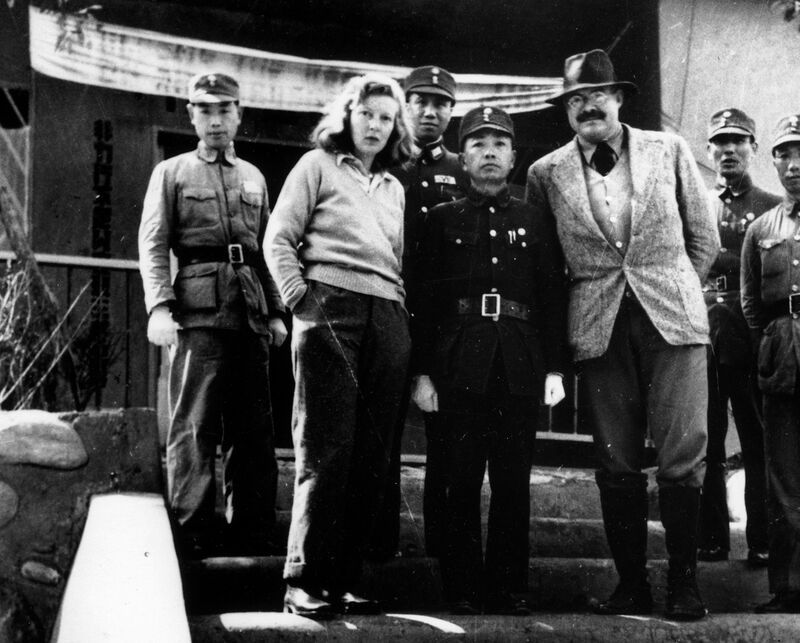
Prior to his trip to China, Hemingway had been secretly recruited by the KGB. He was given the code name "Argo" and was apparently willing to spy for the Russians. However, according to former KGB officer turned Russian-British journalist, writer, and espionage historian Alexander Vassiliev, all this amounted to nothing, as Hemingway never gave the KGB any political information or anything that could be verified.
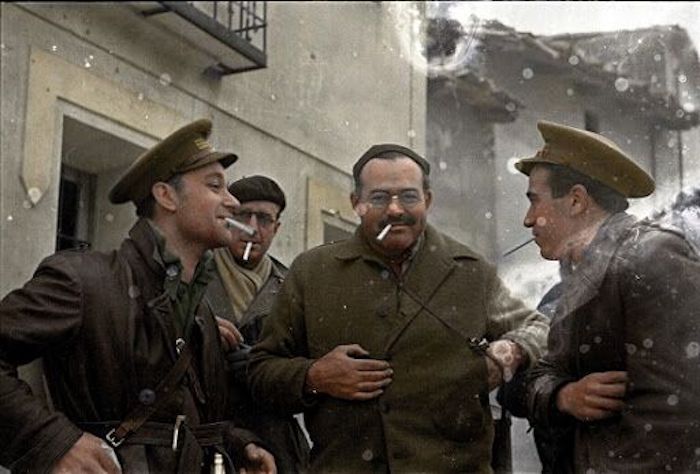
As if spying for the KGB wasn’t enough excitement, in 1942 during World War II, Hemingway set up a real-life intelligence network called The Crook Factory in order to watch pro-Franco and pro-Hitler agents in Cuba. He was meticulous in recording his sightings and submitted all his findings to American Intelligence agencies. But just one year later, the FBI disbanded the network, largely because they were embarrassed by his activities and believed his ego needed to be stopped. In 1999, writer Dan Simmons released a book called The Crook Factory, a brilliant, albeit fictionalized version of Hemingway’s real-life counter-espionage and spy ring.
WORLD WAR TWO
Having participated in the Spanish Civil War, Hemingway was in Europe from May 1944 to March 1945. Sporting a large bandage on his head, he took part in the D-Day Landings but was considered "precious cargo" and not allowed ashore. When he arrived in London, he met Time magazine correspondent Mary Welsh and, once again, Papa became infatuated.
On their third meeting, he asked Mary to marry him. Give him his dues. He didn't beat around the bush, did he! Meanwhile, his wife Martha had been forced to cross the Atlantic in a ship filled with explosives because he refused to help her get a press pass on a plane! Arriving in London, she accused him of being a bully and told him their relationship was "through, absolutely finished!" Their divorce was finalized later that year.
While working as a correspondent for Collier’s magazine in 1944, Hemingway attached himself to "the 22nd Infantry Regiment, commanded by Col. Charles 'Buck' Lanham, as it drove toward Paris." Ernest somehow gained permission to run an intelligence operation in Rambouillet, France, and formed his own version of The Dirty Dozen: a militia made up of French soldiers, civilians, and a secret agent. This posse obeyed his every command and called him Papa, Captain, or Le Grande Capitan.
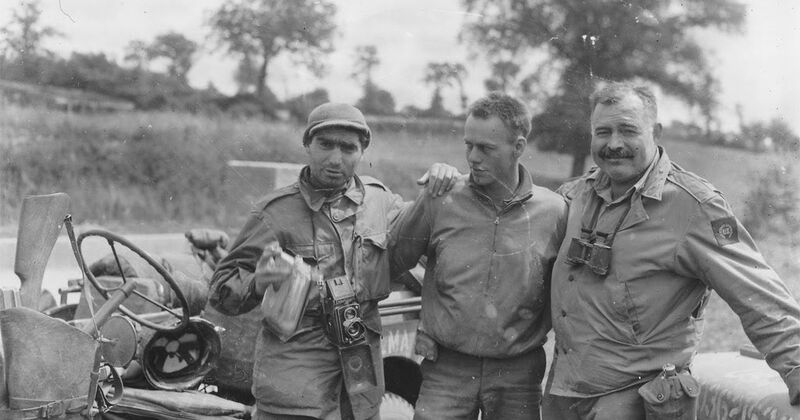
Sounding like something out of Quentin Tarantino's Inglourious Basterds, the group - known as The Irregulars – idolized Hemingway so much that they even copied his mannerisms. Although he was given permission, a correspondent/journalist fighting in the war was a violation of the Geneva Convention, and Ernest Hemingway was eventually court-martialed!
The Inspector-General of the Third Army charged Hemingway with several serious offenses, including removing patches from his clothing identifying him as a journalist, stockpiling weapons in his hotel room, and commanding a faction of Resistance operatives. Eventually, he was cleared of wrongdoing, because... Hemingway!
Ernest was able to lie his way out of it and head back to the war, where he participated in a huge battle at the German border. He even threw three hand grenades into a bunker, killing several SS officers. He was decorated with the Bronze Star. In 1951, he wrote to The New York Times, stating he “had a certain amount of knowledge about guerrilla warfare and irregular tactics as well as a grounding in more formal war, and I was willing and happy to work for or be of use to anybody who would give me anything to do within my capabilities.”
Mixing his bravery, foolhardiness, and love of the sea, during WWII, Hemingway used his fishing boat to hunt for German U-Boats that had entered Caribbean waters. The Pilar was equipped with high-frequency direction-finding equipment, and he had his trusty Thompson submachine gun and hand grenades on board should he spot any German U-Boats. Not that this would have had any effect on a Nazi submarine.
Hemingway figured that if he did spot a U-boat, the Navy wouldn’t be able to get there fast enough to destroy it, so he came up with a simple solution – attack and run. Luckily, the author never ran into the might of the German Navy to see whether or not the plan would have worked! Clue: It wouldn’t have worked. In fact, it’s kinda delusional!
THE BLACK DOG
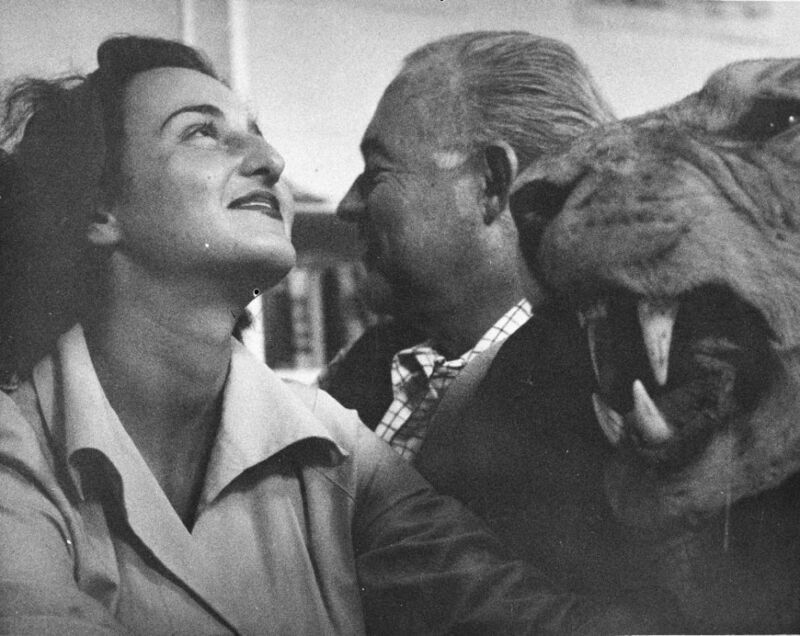
Back in 1945, Mary Welsh divorced her second husband, Australian journalist Noel Monks. But things soon went downhill for Ernest. Papa "smashed his knee" and sustained a "deep wound on his forehead" in a 1945 car accident, before Mary became the fourth Mrs Hemingway at a 1946 Cuban wedding ceremony.
The following year, a car accident left Ernest’s son Patrick severely ill. The colossus also sank into depression as his literary friends were dying left, right, and center: in 1939 W.B. Yeats and Ford Madox Ford; in 1940 F. Scott Fitzgerald; in 1941 James Joyce and Sherwood Anderson; in 1946 Gertrude Stein; and the following year in 1947, Hemingway's long-time friend and editor, Max Perkins, died.
During his depression, he suffered from severe headaches, high blood pressure, weight problems, and diabetes. These were the result of many accidents and years of heavy drinking. In 1946, he began work on The Garden of Eden, finishing 800 pages by June. In 1948, he and Mary traveled to Europe, staying in Venice where Hemingway fell in love with a 19-year-old Adriana Ivancich. The Italian poet and a noblewoman of Dalmatian origin became his latest muse, and their platonic love affair inspired his 1950 novel Across the River and into the Trees.
Being more than a little crazy, Ernest made a bet with friends that a grizzly bear could take on an African lion. In order to prove it, he concocted up a crazy scheme. He hired one of the Crandall Creek, Wyoming locals near where he used to write in his cabin to dig a deep pit. They threw in some bait, then covered up the pit and waited. Soon enough, a grizzly bear ambled along and fell into the pit.
They tied a rope around the bear's neck and easily led the bear to a waiting cage. This poor grizzly bear was then transported to Las Vegas, where an African lion awaited. The grizzly was led into the ring with the lion, and within seconds killed that lion. So Hemingway won his insane bet. Was it really worth ten dollars?
Though it’s common practice today, especially amongst hipsters in co-working spaces, unlike most other scribes of his day, Hemingway preferred to work standing up, often spending hours on his feet. He did most of his writing in his bedroom with his typewriter sat atop of a bookcase he called his “work desk.” On a good day, he’d wear down seven pencils, and only moved to shift his weight from one leg to the other. Hard on the calves, but good for productivity!
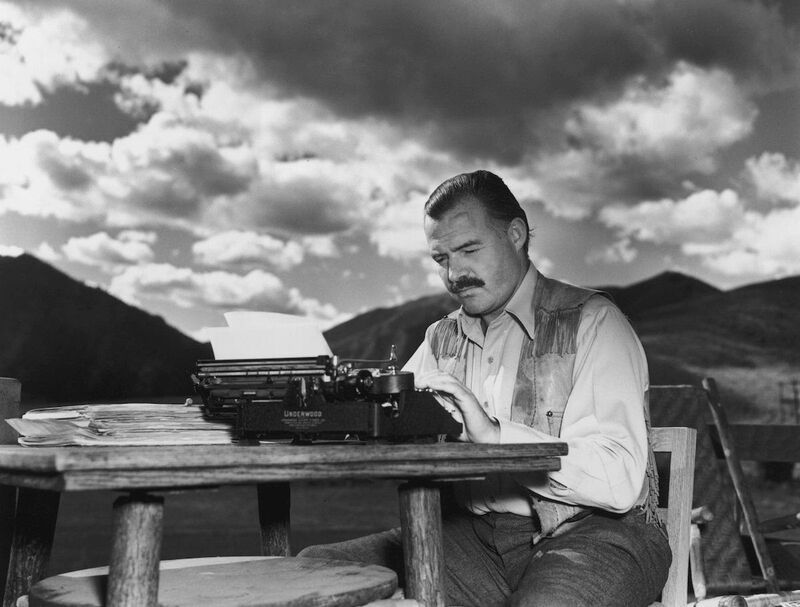
Despite it being the Golden Age of Hollywood, Hemingway – unlike most authors – adamantly refused to write for the silver screen. He did not, however, object to his works being filmed. And it’s a good job, else we’d never have got to see For Whom the Bell Tolls, A Farewell to Arms, The Snows of Kilimanjaro, The Killers, and To Have and Have Not.
That said, he was incredibly disappointed with the screen version of The Old Man and the Sea (1958). He expressed disdain for Spencer Tracy's performance, saying Tracy looked less like a Cuban fisherman and more like the rich, old actor he was. Tracey had the last laugh, though, as his performance was nominated for an Oscar. The novella had won Ernest the 1953 Pulitzer Prize for Fiction.
Hemingway was an author of few words, and there’s a popular urban legend in which he made a $10 bet while at lunch with author friends that he could write a novel in six words. He then supposedly scrawled the phrase “For sale, Baby shoes, never worn,” on a napkin and passed it around the table. The line has long been a favorite example of writing teachers, but it turns out it wasn’t originally Hemingway’s idea.
A similar line appeared in a newspaper as early as 1906, and there’s absolutely no proof that the bet ever happened or that he ever wrote or even talked about this. Yes, it certainly sounds like his minimalistic style, but a literary agent attributed it to Hemingway in 1974. Even if he didn’t write it, it’s still a good lesson in Minimalism for all writers out there.
GENTLEMEN, CHOOSE YOUR WEAPONS!
In 1954, Hemingway’s wife Mary got into an argument with New Zealand journalist Edward Scott, who was writing for a newspaper in Havana, Cuba. The disagreement occurred when Mary claimed that lion steaks were “delectable,” a statement which earned Scott’s disapproval. Proving she had a temper to match her husband’s, she had a few things to say about Scott's opinion. Her comments led to Scott writing a series of columns criticizing her, and other "women who take after their husbands."
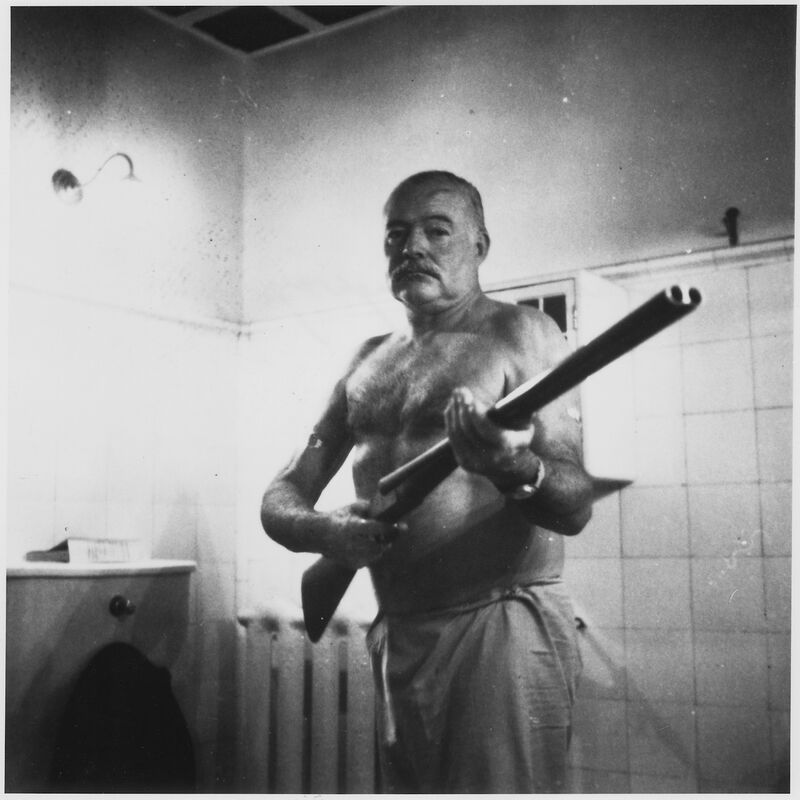
Ernest’s response was enough to make Edward Scott challenge him to a duel. Hemingway wisely passed, citing his ill health and writing as an excuse. As annoyed as Scott was by the whole situation, other than trying to force Hemingway to accept the duel, there wasn’t a lot else he could do except let it go. He'd probably have lost to Papa, anyway.
SHOT AGAIN!
Being blown up in the First World War and shot at in the Spanish Civil War and World War Two clearly wasn't enough adventure for this adventurer. Once, while trying to spear a shark on a fishing trip near his home in Key West, Ernest managed to shoot himself in both calves!
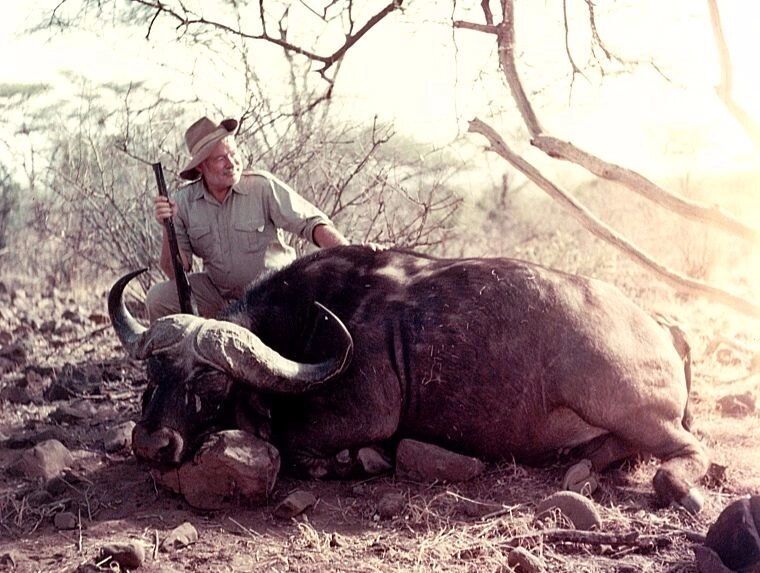
This led him to write the dispatch, On Being Shot Again for Esquire magazine, where he offered some sound advice on how to kill a large animal: “Shoot it in the brain if it’s close, the heart if it’s far or the spine if you need to stop it instantly.”
On his 1954 hunting trip to Africa, despite becoming severely ill and having to be hospitalized for part of the trip, he still hunted just about every big game animal in Africa and returned home with multiple trophies.
A 1950 profile of Hemingway in The New Yorker relayed a story where Hemingway told writer Lillian Ross that he once lived with, slept with, got drunk with, and was close friends with a bear. When we say slept with, we don't mean in the Biblical sense. We hope. But we wouldn't put anything past Hemingway! It's impossible for this story to be verified, so it could have been another of his tall tales.
HEMINGWAY CATS
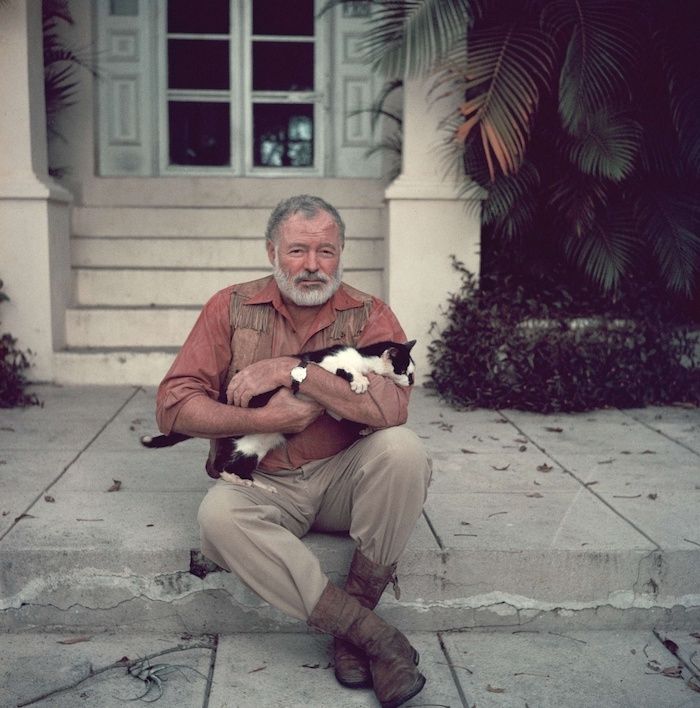
Tough-guy hunter that he was, Hemingway had a soft spot for cats, especially polydactyl cats (they have six toes on each foot). His first six-fingered feline was named Snowball, and he went on to have several more. You see, when he wasn’t eating porcupines, shooting bears, making them fight lions, or watching bullfighting, he loved animals!
He had fifty-two cats, sixteen dogs, a couple of hundred pigeons, and three cows running around his Key West home. Today, polydactyl cats are synonymous with Hemingway and are referred to as “Hemingway cats.” Fittingly, Hemingway's last words were: "Goodnight my kitten," which he uttered to his last wife, Mary.
THE FBI
It’s no secret that Hemingway didn’t much care for the FBI, and he was an outspoken critic of the agency, calling the bureau “The Gestapo”. He felt that their activities were dangerous and “anti-liberal.” FBI Director J. Edgar Hoover didn’t like Hemingway either, mostly because of his criticism of the FBI, but also because of his politics.
In the 1950s, as Hemingway's drinking increased and his physical and mental health deteriorated, he became more and more paranoid. He was always worried about money and taxes and that he would never return to Cuba to retrieve the manuscripts he'd left in a bank vault. He started thinking the FBI was actively monitoring his movements in Idaho.
By his autumn years, heading toward the end of his life, he grew more and more paranoid and believed that he was being bugged, followed, and constantly spied upon by the FBI. Guess that’s what happens when you spy for the Russians and befriend Fidel Castro!
Ernest believed he was being followed by men in cars, watched in the bar, and thought two bank employees that he spotted working late one night were government agents auditing his account. It turns out he was right: The Feds had been watching him after all, and the agent following him reported to J. Edgar Hoover that Hemingway “was physically and mentally ill.” Just because you’re paranoid don’t mean they’re not after you!
Hoover authorized and helped compile a fairly thick file on Hemingway. The file is 127 pages long, with 15 pages completely withheld or blacked out from public view, supposedly as a matter of “national defense.” The file was compiled over a thirty-year period, beginning in October 1942 and continuing until 1974, thirteen years after the author's death.
There are also references that suggest Hoover had been keeping tabs on the writer for close to a decade even before compiling the file. Hoover’s exact reasons for targeting him are still classified, but evidence suggests he believed Hemingway was a Communist and a radical, as he did many other writers of the time.
DON'T DRINK AND WRITE
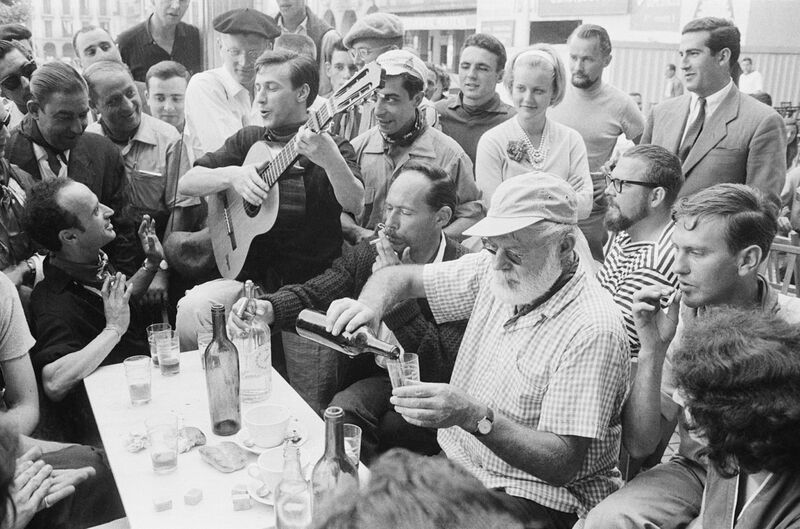
Ernest Hemingway is almost as famous for his love affair with booze as he is as an author. It’s rumored he would work drunk and take a pitcher of Martini with him to his writing office every day, but it turns out this is another writing urban legend.
When asked if that was true, Hemingway replied: “Jeezus Christ! Have you ever heard of anyone who drank while he worked?… Besides, who in hell would mix more than one martini at a time?”
Hemingway’s favorite tipple was a dry martini, and boy did he like them dry! He often had his characters drink whatever he was drinking in whatever city he was in when he was writing, and every martini became drier than the last. In Across the River and Into the Trees, his character Colonel Richard Cantwell orders a bone-dry Montgomery martini that’s one part vermouth and 15 parts gin! Like his character, Frederic Henry said in A Farewell to Arms, “I had never tasted anything so cool and clean. They made me feel civilized.”
What is true is that Hemingway loved his drinks as cold as ice. He wasn’t just known to freeze his cocktail glasses, but he’d freeze his cocktail onions as well! He also once described a method of using tennis ball cans to make tubes of ice for mixing martinis and bragged that he made the coldest martini in the world. In fact, the glasses were so cold, he claimed, “You can’t hold it in your hand. It sticks to the fingers.” Fingers that should have been used for typing! Typing while standing up.
There’s even a Champagne cocktail he invented and named after one of his novels, Death in the Afternoon, aka the Hemingway or the Hemingway Champagne made with absinthe. Legend says something Ernest couldn’t abide was leaving the table before the Champagne was done...
In a 1950 New Yorker profile, the larger-than-life author got frustrated with his lunchmates for trying to leave an unfinished bottle of Champagne on the table. He proclaimed “the half bottle of Champagne is the enemy of man” and he made the group sit down and finish it. He was quoted as saying that he “can’t think of any better way of spending money than on Champagne.”
Hemingway always woke at daybreak, claiming that his thin eyelids made his eyes highly sensitive to light. You’d have thought that with his genius brain and oodles of money, he might have bought some thicker drapes! He was quoted as saying that he had “seen all the sunrises there have been in my life” and that he wakes up quickly with a head full of sentences that he has to get rid of either by saying them out loud or writing them down. As well as sometimes seen in yellow sunglasses; perhaps this is where he got his famous phrase, "We are all broken—that's how the light gets in."
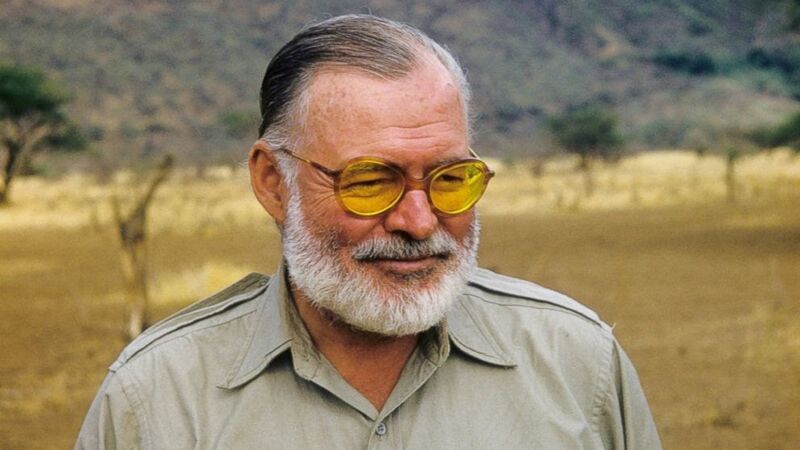
In 1954, Hemingway escaped death again by surviving two plane crashes in two days. First, he chartered a sightseeing flight over the Belgian Congo as a Christmas present to Mary. On their way to photograph Murchison Falls, the plane struck an abandoned utility pole and "crash-landed in heavy brush". Hemingway sprained his shoulder, and Mary broke two ribs.
The following day, they boarded a second plane to try to seek medical care in Entebbe, a Ugandan city on the Lake Victoria peninsula, and this plane caught fire on the runway. All in all, Hemingway ruptured his liver, spleen, and kidney, and also suffered a fractured skull. In one of the crashes, he had to use his head as a battering ram to headbutt the jammed door open.
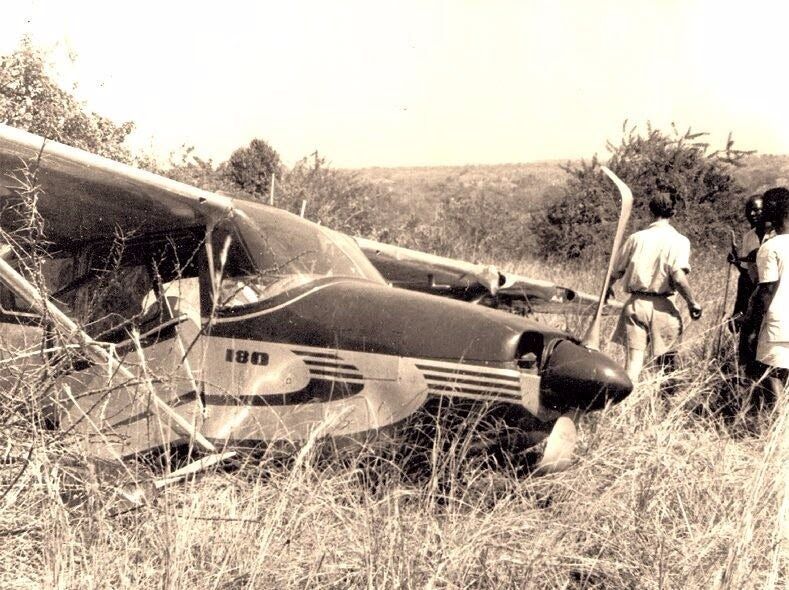
By all rights, he probably shouldn’t have survived the plane crashes and according to a local newspaper, he didn’t. A headline proclaimed him dead before he even got to Entebbe, so imagine their surprise when he came back from the dead!
Because of these two brushes with death, Hemingway had the opportunity to read his own obituary. Although never used, his suggested epitaph was "Pardon me for not getting up." A few days later, he was also injured in a brush fire.
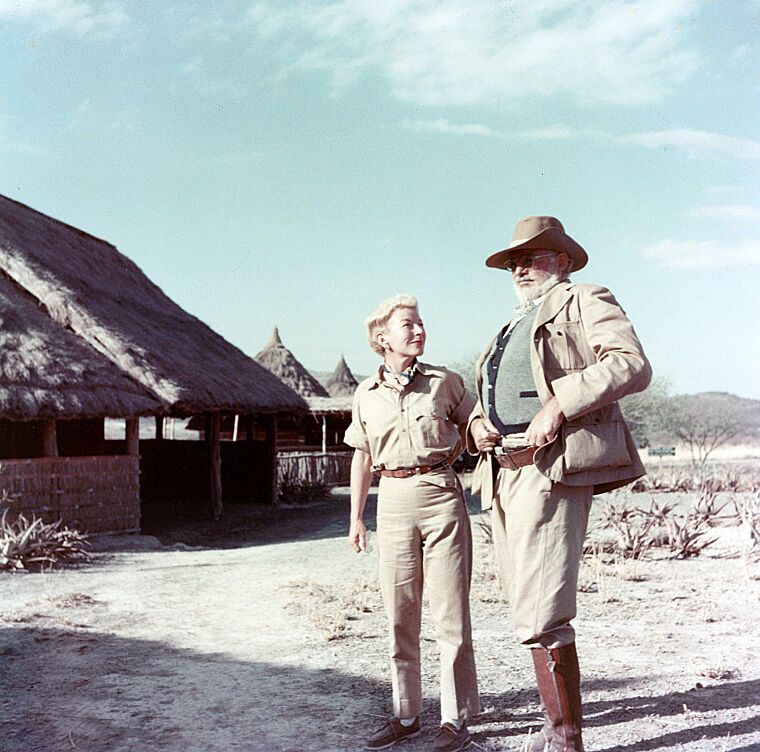
Having great respect for Fidel Castro and being enthralled with Cuba, he decided to donate the Nobel Prize medal he won for The Old Man and the Sea to the people of Cuba and the Catholic Church to display at a sanctuary in El Cobre.
Then, one day in 1986, the Nobel medal was stolen. After an ultimatum from Raúl Castro to the thieves, it was returned. After already having it stolen once, Cuba made certain it wasn’t going to happen a second time. The medal was placed into hiding, never to be displayed in public again. Thanks a bunch, robbers. This is why we can’t have nice things!
Published posthumously, Hemingway wrote A Moveable Feast after a 1956 stay at the Ritz Hotel in Paris. While he was there, staff reminded him that he’d left a steamer trunk (made for him by Louis Vuitton, no less) in the hotel’s basement way back in 1930. And before you ask, no; it wasn't the suitcase first wife Hadley had misplaced in 1922.
When he opened it, he rediscovered personal letters, menus, outdoor gear, and two stacks of notebooks that became the basis for the memoir of his youth in Paris's café culture and his years as a struggling expat journalist and writer during the 1920s.
Hemingway and Cuban leader Fidel Castro were long rumored to be friends. They definitely met briefly at Hemingway’s annual Billfishing Tournament in May 1960, and Castro had great respect for the writer.
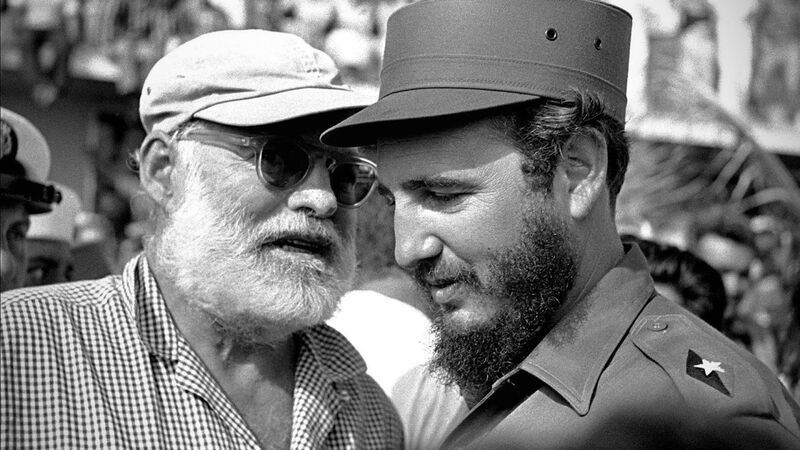
Just after finishing For Whom the Bell Tolls, he went out with his third wife and two kids and killed 400 jackrabbits in a day. Castro told him that the novel gave him ideas for battling the Sierra Maestro - only without the rabbits. Beyond that, sources suggest that Hemingway’s sole purpose for talking to Castro would have been to convince him not to confiscate his property.
For his 60th birthday, Hemingway’s wife Mary planned a lavish party that ended up lasting 24 hours. She flew in Chinese food from London, codfish from Madrid, and Champagne from Paris for the party, and hired equally diverse waitstaff, bartenders, and cooks.
In addition to all this exotic food, there were flamenco dancers, fireworks, and a shooting booth, and the guest list even included Italian royalty and the Maharajah of Cooch Behar, West Bengal. Sounds like the kinda party that even The Great Gatsby would have been impressed by!
Of all the unusual and eclectic items that are on display in the Ernest Hemingway Home and Museum in Key West, the most unexpected might be the bar urinal that he converted into a garden fountain. Hemingway stole the urinal from his favorite bar, Sloppy Joe’s, after he decided that he’d “pissed away” so much money in that urinal that he owned it.
When the prodigious author reached his sixties, Papa suddenly found himself with a killer case of writer’s block that he was never able to shake. He was asked to contribute a sentence to a presentation volume for John F. Kennedy’s inauguration in 1961, but was unable to come up with a single word. Any writer who’s had the dreaded block will feel his pain, but this is Hemingway we’re talking about here! His inability to write shook him to the core. He even cried and told a friend, “it just won’t come anymore.”
Throughout his life and many escapades, Hemingway was a very sick man, physically. As well as his many car and plane crashes, he survived skin cancer, anthrax, malaria, dysentery, hepatitis, anaemia, high blood pressure, a ruptured kidney, a ruptured spleen, a ruptured liver, pneumonia, a crushed vertebra, and a fractured skull.
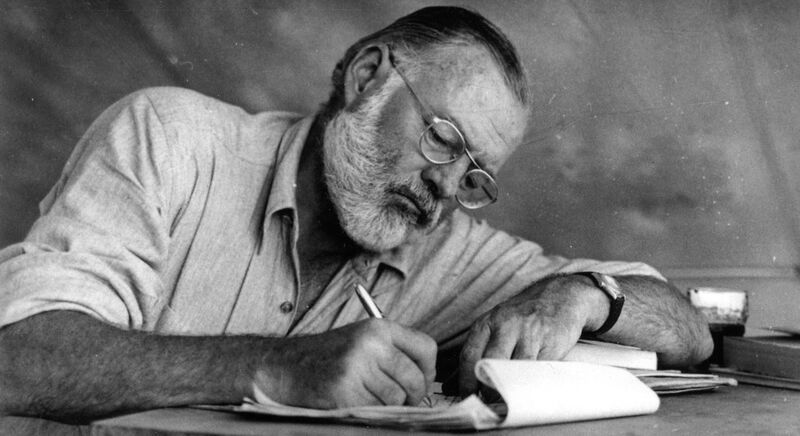
From the end of the year in 1955 to early 1956, Hemingway was bedridden. He was told to stop drinking to mitigate liver damage which at first he did but then ignored. But his health was on a slippery slope. Hemingway called his attacks of depression his "black dog days."
In the 1960s, the most common treatment for mental illness was Electroconvulsive Therapy (ECT), an electric shock to the brain. To cure his depression, he underwent the controversial treatment as many as 15 times in December 1960. Not only did ECT not help, it also made him worse; messing with his memory and making him more paranoid. One time when he returned from treatment, Mary found him standing in the kitchen with a gun.
HEMINGWAY'S DEATH
Depression, paranoia, ECT, heavy drinking, hereditary hemochromatosis (which caused his father to kill himself), and possibly even multiple concussions which may have caused him to develop chronic traumatic encephalopathy (CTE), led Hemingway to check into the Mayo Clinic for further shock treatment.
But upon returning home to Idaho on the first day of July 1961, he ate his favorite meal – a New York strip steak, a baked potato, Caesar salad, and a glass of Bordeaux – then took his own life. The genius, flawed writer "quite deliberately" shot himself in the head with his favorite double-barreled shotgun in the early morning of July 2nd. Ernest Hemingway was 61.
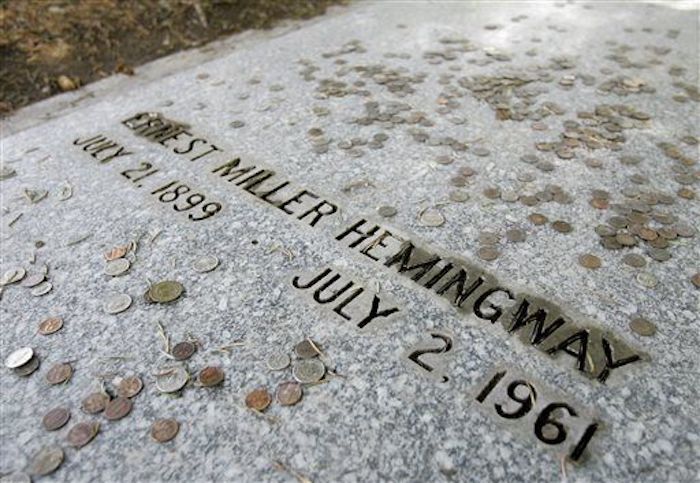
Initial reports stated he had died in a gun-cleaning accident, but Mary eventually came out to tell the world her husband took his own life.
Papa is buried in Ketchum Cemetery, Ketchum, Idaho, and a memorial just north of Sun Valley is inscribed with a eulogy Hemingway had written for a friend several decades earlier: “Best of all he loved the fall, the leaves yellow on cottonwoods, leaves floating on trout streams, and above the hills, the high blue windless skies… Now he will be a part of them forever.”
In 1964, gonzo writer Hunter S. Thompson travelled to Hemingway's house in Ketchum, where he retreated to write in the last few years of his life. While in the house, Thompson noticed a pair of elk horns hanging above the cabin door, so he decided to help himself to them as a memento.
According to Hunter's widow, Anita Thompson, he late husband was always completely embarrassed by his actions and had always planned to return the antlers but simply never got around to it. In 2016, she got in touch with the family and returned them herself. Better late than never!
THE MUSES
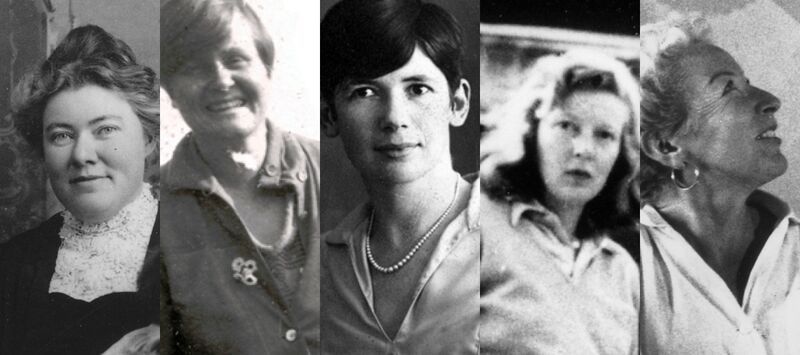
In Greek mythology, there were nine Muses, but Papa only needed five. Each time he got divorced, Hemingway was soon married again within the year but he always left something behind in print.
His dedication for The Sun Also Rises went to his first wife, Elizabeth Hadley Richardson; Death in the Afternoon was dedicated to his second wife, Pauline Pfeiffer; For Whom the Bell Tolls was for his third wife, Martha Gellhorn, and Across the River and Into the Trees went “To Mary with Love,” even though he was in love with Adriana Ivancich at the time.
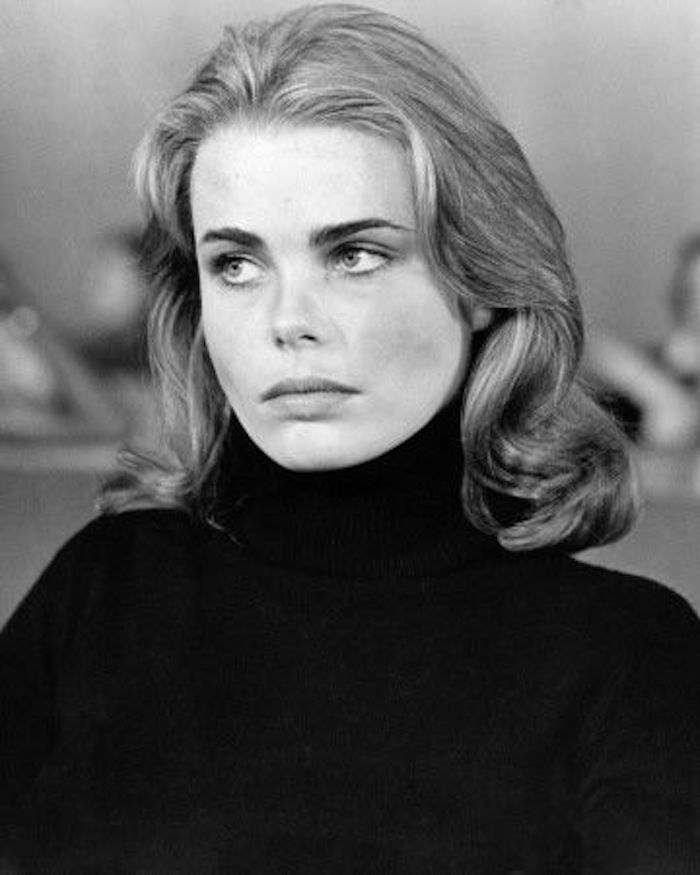
Hemingway was married four times, had three sons and was grandfather to two famous actresses, Mariel Hemingway and supermodel and actress Margaux Hemingway. As well as leaving behind some of the greatest works of the 20th Century, it’s estimated he left behind over 8,000 personal and business letters. Plans have been announced to publish his letters in a set exceeding ten volumes.
Tragically, Ernest's granddaughter Margaux (pictured, below) died by drug overdose in 1996. Suicide is a theme that runs through the family like a curse. As well as Margaux's grandfather and great-grandfather (that's Ernest's dad), two of Ernest's siblings also died by their own hand.
Suffering from cancer and depression, sister Ursula died of a drug overdose in 1966. Faced with the loss of his legs, diabetic Leicester shot himself in the head in 1982. Margaux's sister, Mariel Hemingway, has become a mental health advocate
From war correspondent to literary legend, the outspoken author lived a life as dramatic and turbulent as the stories he wrote. He survived wars, plane crashes, big-game hunts, and decades of hard drinking, all while producing seven novels, six short-story collections, and two non-fiction works that became some of the most enduring works of the 20th century.
However, Ernest Hemingway's greatest legacy was changing literature forever with his spartan prose, understated emotion, and famously economical style. He transformed the way writers approached storytelling. His influence can still be felt today, making his life - and unmistakable voice - a permanent part of literary history.
You can visit Windermere, or The Ernest Hemingway Cottage, at 6502 Lake Grove Rd, Petoskey, Michigan, 49770, and The Ernest Hemingway House and Museum at 907 Whitehead Street, Key West, Florida, 33040.