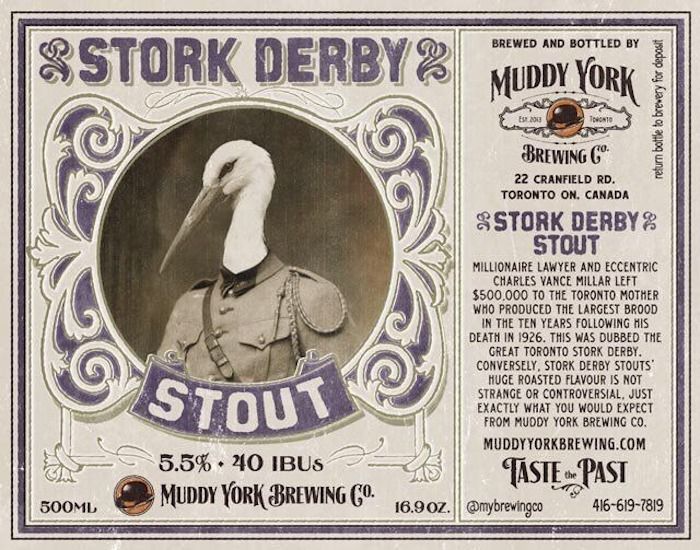
Charles Millar was a wealthy Canadian lawyer, financier, and notorious prankster with a wonderfully warped sense of humor. And he saved his greatest practical joke for after he was dead. When he died childless and without any heirs on Halloween night 1926, he bequeathed his vast fortune to the woman who could bear the most children over the next ten years. And what a decade it turned out to be... because Charles Millar accidentally spawned the biggest baby boom in Canada’s history.
This prankster turned procreating into a competitive sport, with a multimillion-dollar jackpot up for grabs. Forget the stock market – the hottest investment in town was apparently a well-timed night of passion in an attempt to inherit millions of dollars. Across Depression-era Toronto, couples suddenly started makin’ whoopee like never before.
And the man pulling all the strings? A mischievous old millionaire who was laughing his head off from six feet under. Ladies and gentlemen, welcome to the Great Stork Derby: the bizarre, hilarious and unbelievable tale of the man who turned his last will and testament into a nationwide fertility competition!
WHO WAS CHARLES MILLAR?
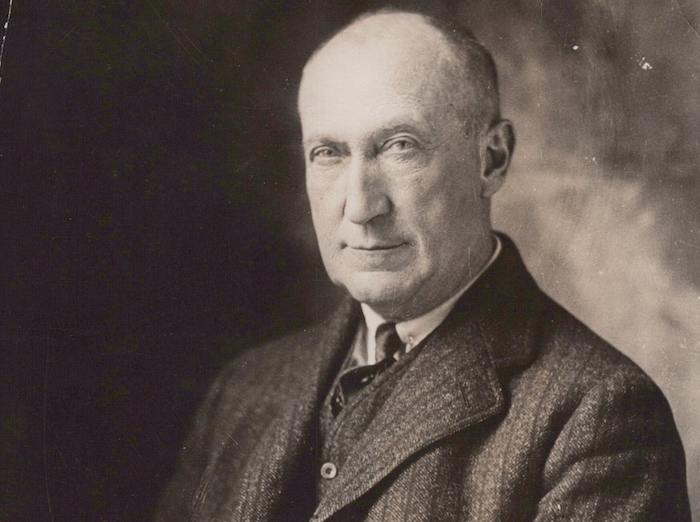
First, let’s get to know a little about the man behind this unprecedented baby-boom. Charles Vance Millar was born in Aylmer, a small town southeast of London, Ontario, on June 28th, 1854. He was the only child of farmers Simon and Sarah Millar. As a young man, he breezed through the University of Toronto with flying colors, gaining a 98% average. Upon graduation, he studied law, passed the bar exam at Osgoode Hall in 1884 and opened up his own law office in Toronto.
His early life offers a few deep-rooted psychological clues as to why he may have dreamt up his crazy posthumous project. First, being an only child of farmers was highly unusual in the mid-1800s; a time when families often had six or eight children. Second, when he was studying law, he was jilted by a young lady from a prominent Toronto family. He never had a serious relationship again.
Nevertheless, lifelong bachelor Charles went on to have a successful – if relatively unnoteworthy – career as a lawyer, financier and president and part-owner of Toronto’s O'Keefe Brewery. He also owned several racehorses, including the 1915 King's Plate-winner, Tartarean, and invested race tracks. To understand what kind of man he was, he’d often sleep on the veranda outside his house, whatever the weather, to "keep himself hard". That’s when he wasn’t holidaying at his estate in Jamaica.
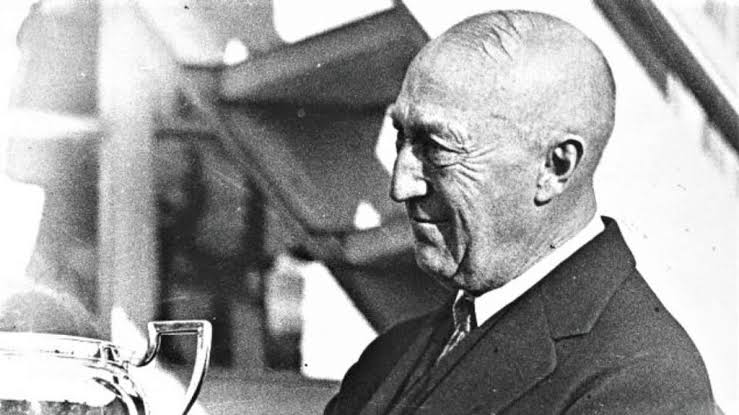
As a shrewd businessman, he invested wisely; he and a group of fellow lawyers bought up the British Columbia Express Company and took over the government mail delivery contracts for the Cariboo region. He also owned the land on which the lucrative Detroit-Windsor Tunnel would be built just four years after his death. He didn't know it at the time, but today, this route remains one of the busiest crossings between Canada and the USA.
Apart from the time the Canadian Government claimed his O'Keefe Brewery was $175,000 in arrears on sales taxes, Charlie Millar seemed squeaky clean. However, he had a darker side. For he wasn’t just an eccentric millionaire; he was also a notorious and quite brilliant trickster. Like a mischievous modern-day Loki.
He delighted in playing tricks that pointed out people’s hypocrisy, especially when it came to highlighting their greed. He relished making people jump through hoops for financial reward. One of his favourite jokes was to drop dollar bills on the sidewalk. Before you ask... no; the money wasn’t on a piece of string like in Top Cat.
Instead, Charlie would hide and watch the lucky recipient’s face as they surreptitiously stuffed dollar bills into their pockets when they thought no one was watching. He explained to his peers that his pranks were: “an education in human nature by itself.”
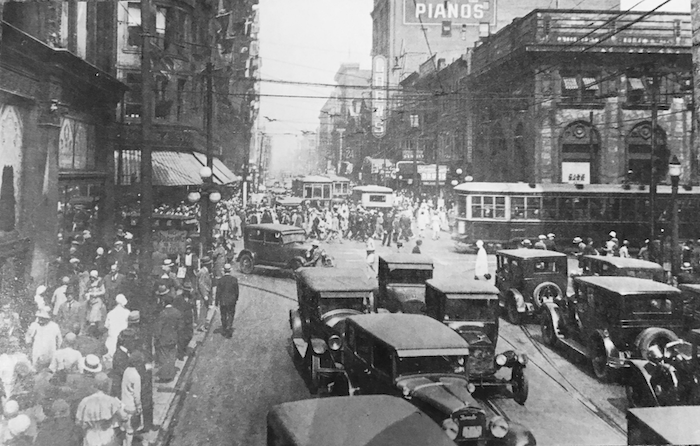
Millar died in his offices in the Crown Life Building at Yonge Street (pictured above) and Colborne Street in the Financial District of Old Toronto on October 31st, 1926. He’d been discussing a case with law associate Charles Kemp when he breathed his last at the top of a steep flight of stairs. He clutched at his chest in agony as he suffered a fatal heart attack, or possibly a stroke.
Charles was dead before a doctor arrived. He was 73 years old.
Charles Millar was buried in his family’s plot in Aylmer. His funeral was held at his home in Toronto’s Beaches district, and it was attended by many illustrious members of the legal profession. So far, everything about his death was as regular as clockwork, but that was all about to change because, just like his eccentric life, his will was a chip off the old block.
LAST WILL AND TESTAMENT
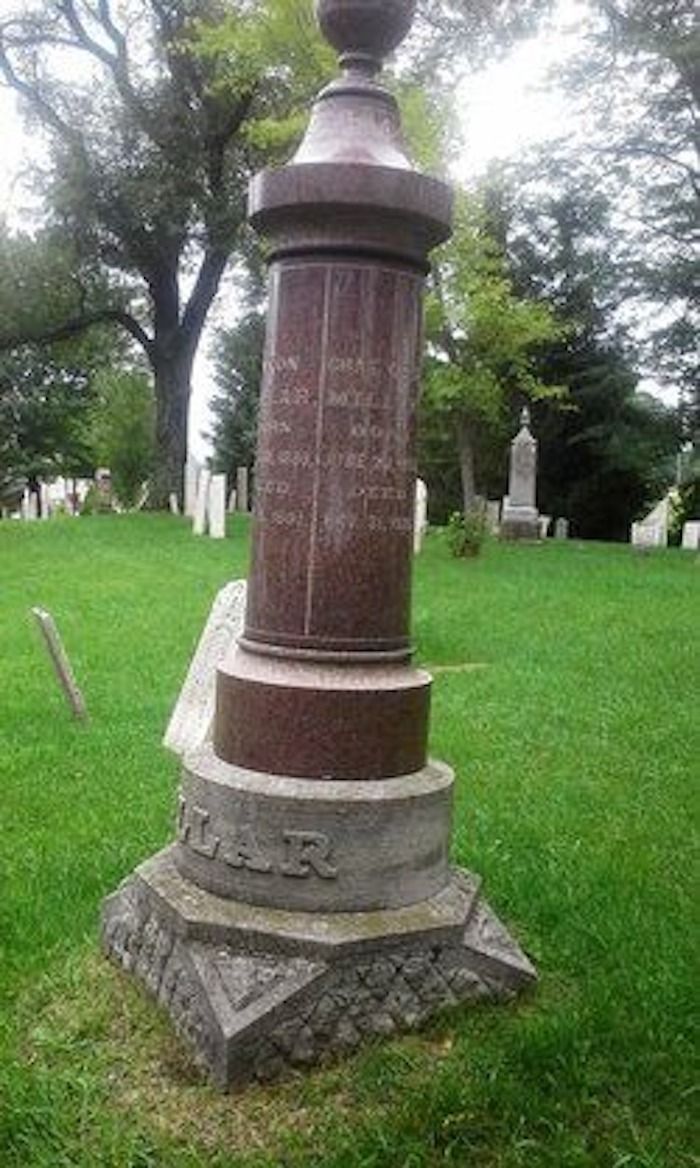
When Millar's lawyers opened and read his last will and testament, they found Millar's estate was estimated to be worth $322,309 at the time, which is almost $6 million Canadian dollars in today’s money. But the probate lawyers were in for a surprise.
Having never married, Charles had no descendants, so he promised the bulk of his gargantuan estate to an unusual, and as-yet-unknown recipient. In death, he had unleashed his biggest and best-ever prank, and today, the phrase Millar Will is still part of Ontario's folklore.
His words confess his last will and testament was strange and whimsical: “This Will is necessarily uncommon and capricious because I have no dependents or near relations and no duty rests upon me to leave any property at my death and what I do leave is proof of my folly in gathering and retaining more than I required in my lifetime.” Like a post-Christmas Ebenezer Scrooge, Millar even chastised himself for amassing more money than he could spend in his lifetime.
For want of a better phrase, we’ll get into the in’s and out’s of Charles Millar’s bizarre baby-making contest in a moment, but first, let’s take a look at Millar’s other ironic bequests as his last will and testament were positively dripping with delicious irony.
His posthumous japes pitted bitter enemies at war against each other, including leaving $500 to a housekeeper who was already dead, and bequeathing his holiday estate in Kingston, Jamaica to three lawyers, T. P. Galt, KC; J. D. Montgomery and James Haverson, KC, who hated each other’s guts… on the condition that they all live there together. Even funnier, he’d already sold the property!
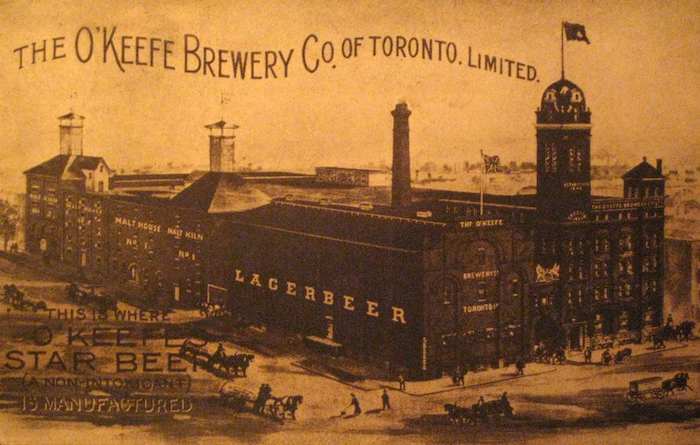
Millar left $700,000 of O'Keefe brewery stock – a Catholic company – to a host of teetotal practising Protestant ministers and Orange Lodges in Toronto, but only on the condition they “participated in its management and drew on its dividends.” When the brewery was sold years later for $1.3 million, the 99 ministers and 103 Orange Lodges who scrambled for the money ended up receiving just $56.38 each.
He left $2,500 of coveted Ontario Jockey Club stock shares to two anti-horse-racing advocates, Hon. William Raney, Reverend Samuel Chown and a man who detested the Ontario Jockey Club (Abe Orpen). He left his share of Kenilworth Park Racetrack to “each duly ordained Christian minister in Walkerville, Sandwich, and Windsor, except Spracklin, who shot a hotelkeeper”. Charles Millar wasn’t spinning in his grave; he was having the last from his grave.
But the craziest, most remarkable part of the eccentric trickster’s will was its ninth clause, which read: "All the rest and residue of my property wheresoever situate, I give, devise and bequeath unto my Executors and Trustees named below in Trust to convert into money as they deem advisable and invest all the money until the expiration of nine years from my death and then call in and convert it all into money..." So far, so good.

But then his will took a sharp turn towards the farcical: "And at the expiration of ten years from my death to give it and its accumulations to the mother who has since my death given birth in Toronto to the greatest number of children as shown by the registrations under the Vital Statistics Act. If one or more mothers have equal highest number of registrations under the said Act to divide the said monies and accumulations equally between them.” Yikes!
In summary, clause nine required the balance of Millar's estate be converted to cash ten years after his death and gifted to the woman who had the most babies during that decade, according to the Canadian birth database. If there was a tie, then the prize money should be divided equally among the mothers.
And thus, the Great Toronto Stork Derby was delivered unto the world, kicking and screaming. In theory, if a woman already had a bun in the oven and gave birth to a baby on the day the contest was announced and had another baby every nine months for the next decade, she could end up with 14 babies… and win wealth beyond her wildest dreams.
Suddenly, the race was on!
Initially, no one could believe it. They thought it was another of Millar’s famous jokes. Some believed the stunt was another prank to amuse his friends and to wreak havoc amongst the legal system he worked in for so many years. Others said it was a statement in support of contraception by “turning the spotlight on unbridled breeding” and meant to shame the Canadian government into legalizing birth control. With that in mind, remember, he was Catholic.
But whether you were Catholic or protestant, a dead millionaire had somehow convinced dozens, if not hundreds of couples to get down and make love... or, as his God-fearing, farming mom and dad might have called it - make “the devil with two backs.”
While Millar’s estate was worth $6 million Canadian dollars (in today’s money) when he died, in the ten years after his death, his stock grew to be worth closer to $10 million. Remember that strip of land he owned on the Detroit River? Well, he originally bought it for $2. Then, due to a stroke of posthumous luck, his shares in the Windsor/Detroit tunnel project turned $100,000 into $750,000!
Charles had no idea his investments would pay off so well. Nor could he have known that the halcyon days of the Roaring Twenties were about to come crashing down. The Dirty Thirties were right around the corner…
THE GREAT DEPRESSION
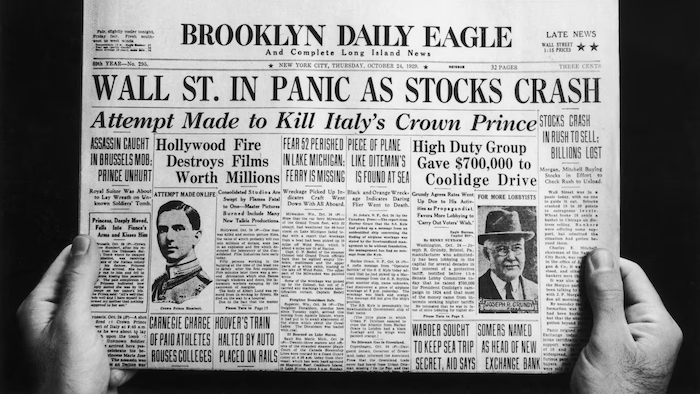
On Black Thursday – that’s October 29th, 1929, almost three years to the day after Charles Millar died – The Wall Street Crash bankrupted companies overnight. Banks saw angry mobs trying to gain entry to get their hands on their money. Working men and women lost their jobs and livelihoods, and families lost their homes quicker than you could say, "Jack Robinson." But that was only the beginning of their woes...
The ensuing Great Depression hit the 1930s hard. To make matters worse, drought and dust storms brought agriculture on the American and Canadian prairies to a grinding halt.

Canadian unemployment hit almost 20%. Total earnings in Toronto dropped 38.5% between 1929 and 1933.
By 1935, more than a quarter of Toronto families relied on government handouts. Fertility rates dropped more than during any other era in history in what some call a “Baby Bust.” Bread lines became de rigueur, and some families were even forced to sell their children.
The Canadian People needed something to believe in, and Millar’s fortune of six million Canadian dollars in today’s money became a shining beacon of hope. For many, a shot at the fortune was the only way out of poverty; even families who couldn't take part in the baby race cheered on those who could. And so it came to pass that men and women in Toronto started making hanky panky like never before!
At first, the media called Millar’s will a “freak” document and questioned its legality. But pretty soon, newspapers around the country began to run the story. News coverage of the Great Stork Derby gained full momentum in 1932, when journalists began to feverishly speculate as to who might win Millar's millions. The Toronto Daily Star even placed a special reporter on the story, who ended up chasing pregnant women around the city for exclusive stories.

Before long, all of Canada, and half of the neighboring USA and even some of the rest of the world was reading about The Great Stork Derby in newspapers and listening on the wireless. On the other side of the pond, British Movietone News ran the newsreels in movie theaters.
This highly unusual baby-making race became a much-watched social experiment. Coincidentally, in Germany during the same decade, Adolf Hitler was rising to power, and his Nazi Party introduced a similar scheme to try and create the next generation of blonde-haired, blue-eyed, Aryan children to take over the world and usher in a thousand-year Third Reich.
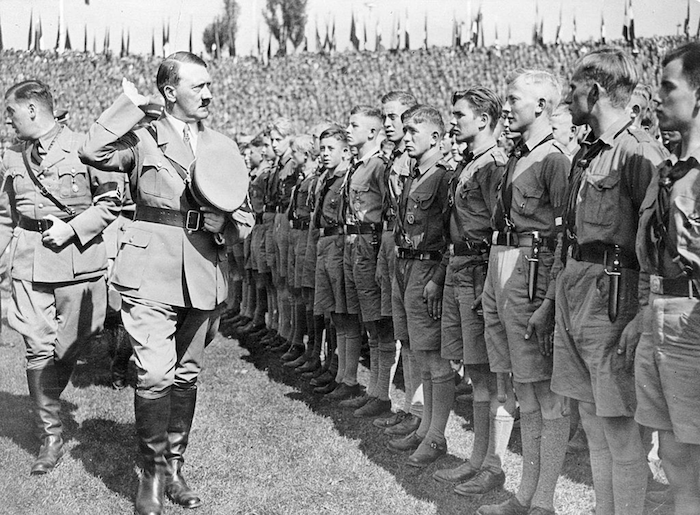
The Nazis introduced a new medal for women who produced multiple children: the Mother Cross was bronze for four children, silver for six, and gold for eight. German families also received a monthly government stipend called kindergeld, or child money. Meanwhile, back across the Atlantic, Canadian canoodling had become the nation’s favorite pastime!
Initially, Toronto bred like rabbits, but as the years went by, the contest became more of a tortoise and hare race than a stork race. The historical coincidence of the Great Depression drove a larger and more desperate group of women to try to win Millar’s fortune. Led by the local Evening Telegram and the Toronto Daily Star, the media turned the event into a feeding frenzy, and the eleven families leading the race became household names all over Canada.
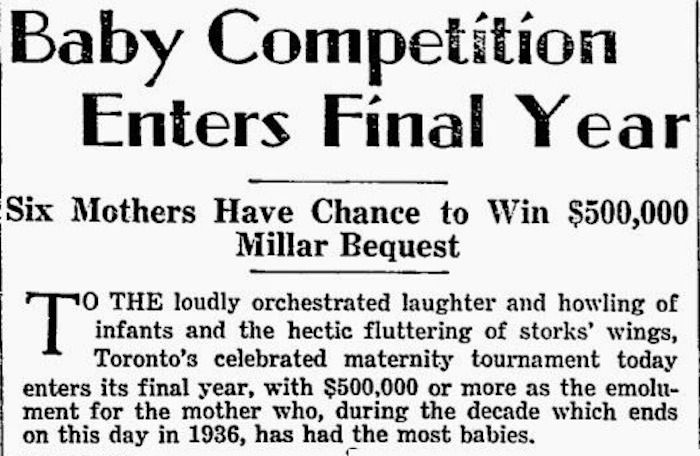
By 1933, official statistics showed five front runners: These five women had given birth to a staggering 56 children between them, but only 32 of the kids were eligible to be counted under the terms of Millar’s will.
Speaking of eligibility, there were still a hundred and one questions that needed answering: What constituted the city of Toronto’s borders? Should stillborn children count towards the total? What about children whose births weren’t properly registered in the way Charlie Millar had specified, like illegitimate children born out of wedlock? Soon, a variety of court challenges came in…
Meanwhile, over the decade following his death, the strange case of Charles Vance Millar’s last will and testament bounced from court to court. As a lawyer, he was an expert in spotting loopholes, so Millar had ensured the “stork derby” clause of his will was as watertight as a tunnel beneath the Detroit River.
Since he couldn’t have the waters break, he’d made clause nine so robust, it would withstand any and all court challenges. But that didn’t stop legal challenges coming in from all directions.
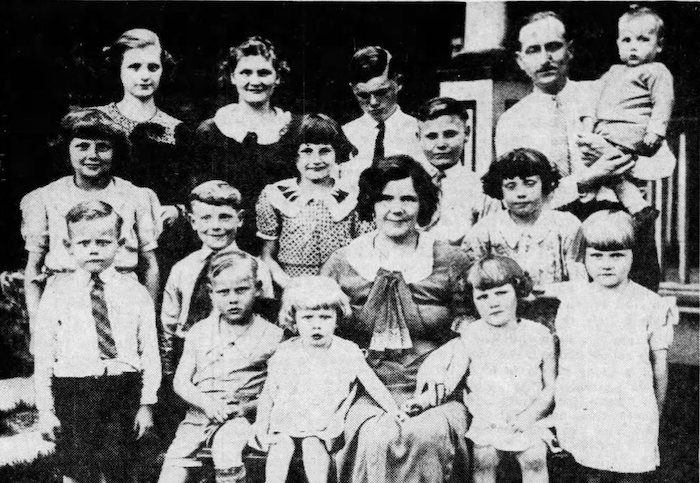
Distant relatives suddenly emerged from the woodwork trying to stop the circus and get their greasy paws on his fortune: None succeeded. Some accused the hair-brained, half-baked, cockamamy scheme of going against public policy.
The Ontario government tried to have Millar’s will voided and nullified and the money given to the University of Toronto. The Toronto Globe wrote the scheme was “encouraging the birth of children with no regard to their chances of life or welfare.” Yet despite all these claims, ultimately, the case made it through the Supreme Court of Canada and the clause was declared to be valid.
Courts would wrangle with questions like these for years after the mothers crossed the finish line in 1936. In the days leading up to the decade-long deadline, the media went insane as new contenders popped up until the very last days of the contest. The whole world watched on tenterhooks, pacing up and down like expectant fathers before cigars could be lit.
At 4:30 pm on October 31st, 1936, exactly ten years to the day after Millar’s death, the Great Stork Derby contest was closed. Even after the closing date – and in addition to those leading the race – more and more women came out of the woodwork trying to claim births that hadn’t been officially registered or had been born out of wedlock.
WINNER, WINNER, STORK DINNER!
Ten years after Charles Millar’s death, 32 lawyers attended an initial hearing to claim his millions for the families they represented. The final decision came down to one man; Judge William Edward Middleton, who knew what he was doing, as he was one of nine children himself!
Finally, he made a decision. Judge Middleton ruled out everyone who didn’t have at least nine kids younger than 10. That left six families in the running to claim the prize…
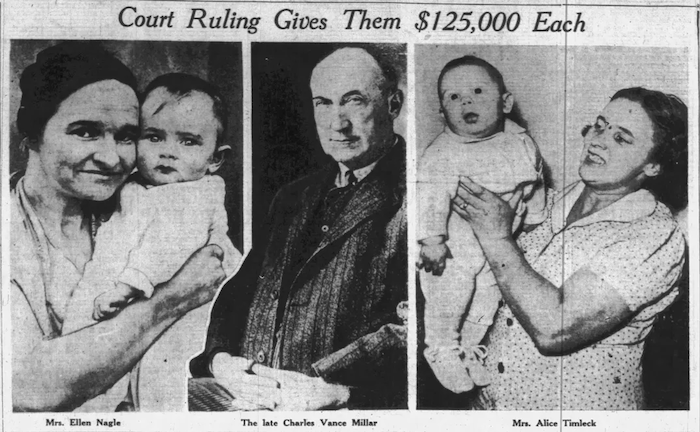
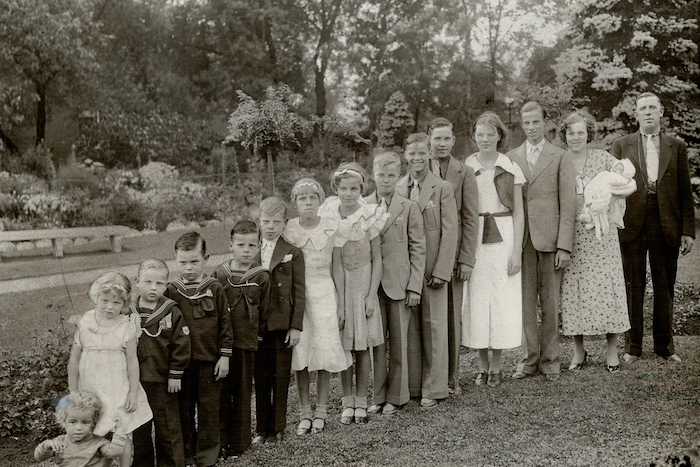
The race ended in a four-way tie when four ladies each showed proof of nine officially documented live births during the ten-year period. Their names were: Annie Katherine Smith, Kathleen Ellen Nagle, Alice Timleck (pictured below with family) and Isabel Mary Maclean. They each received $125,000, or about $2.35 million in today’s money.
For one reason or another, two mothers who had more than nine kids weren’t allowed a shot at the prize. Lillian Kenny and Pauline Mae Clarke dubiously claimed to have had at least ten children during the specified decade. Although Lillian Kenny gave birth to a staggering eleven children, three of her babies were stillborn.
Judge Middleton wrote: “A child born dead is not in truth a child … It was that which might have been a child.” So three of Kenny’s babies were scratched from the ledger. The youngest boy had even been named Charles Vance Millar Kenny, after his potential benefactor. Incidentally, another of her babies died from rat bites while living in abject poverty. We warned you the 1930s were rough.
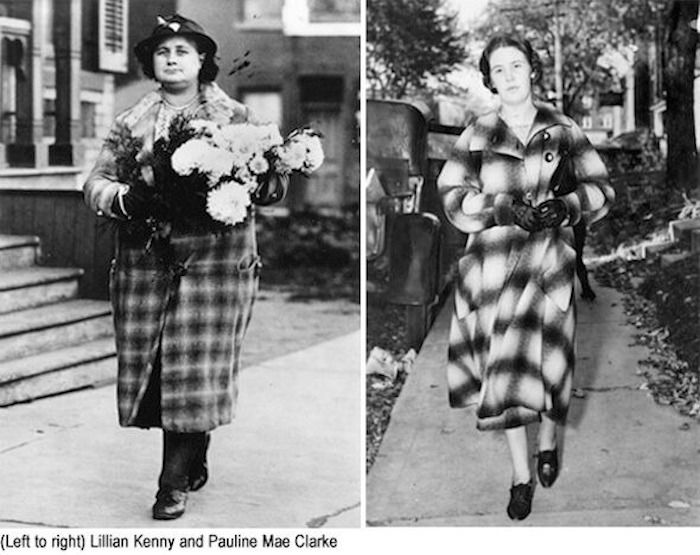
Pauline Mae Clarke gave birth to ten children within the timeframe, but only the first brood of five were her husband’s; the second menagerie of five children was by a different man. Canadian law at the time stipulated that references to children in wills referred only to “legitimate children unless noted otherwise”.
Lillian and Pauline were disqualified but shared a settlement of $25,000 to end the litigation, which was considered a windfall and a small price to pay as opposed to another round of costly appeals.
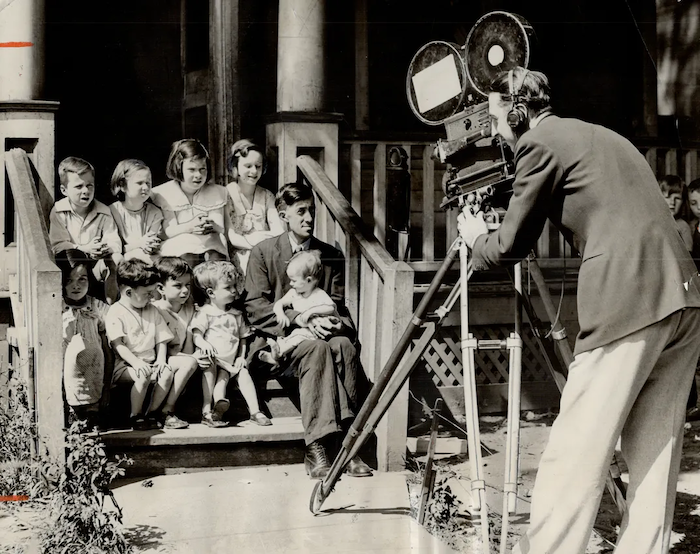
The four triumphant couples and their three dozen children: the Smiths, the Nagles (pictured above), the Timlecks, and the Macleans all went on to spend their winnings in the sensible ways you’d expect in the midst of the Great Depression. As you might have guessed, they didn’t splash out on speedboats and swimming pools. Instead, they bought homes and automobiles and paid for their children’s education. Which, with nine kids each, probably took up most of the money!
At the height of the Great Stork Derby, one of the winners – Lucy Timleck, who had a whopping 16 children by 1935 – seemed to change her mind, telling a reporter, “I think birth control is a wonderful thing,” she said in an article called “Dark Horse in ‘Stork Derby’ Now Believes in Birth Control.”
She continued: “I am sorry, in one way, that birth control information wasn’t available years ago. I know mothers who would have welcomed such knowledge.” To celebrate, Mr and Mrs Timleck pushed the boat out by taking a trip to New York.
On May 31st, 1938, the Ottawa Citizen reported that the Great Stork Derby was finally over and that this “strange chapter in legal and obstetrical history” was closed. But one question still looms large: What in heaven’s name possessed Charlie Millar to dream up this crazy idea? Well, his will’s “necessarily uncommon and capricious” statement contains some clues.
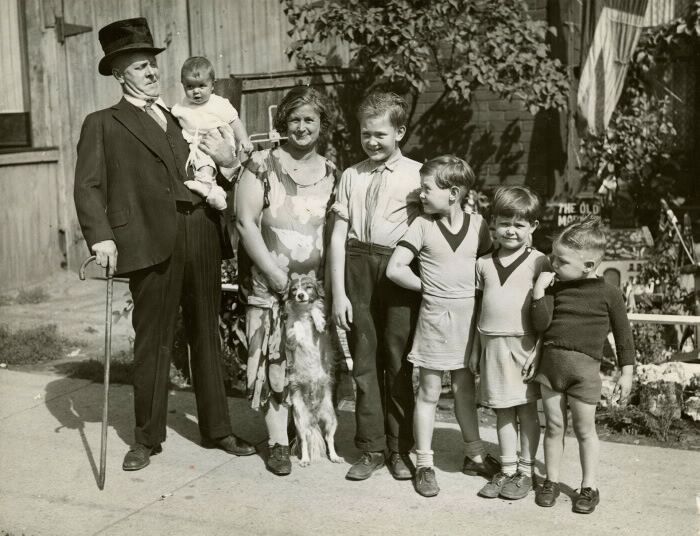
An only child with no dependents, Charles had no legacy. But by instigating a one-man baby boom, Charles Millar wrote his name into the history books, ensuring his legacy lives on long after most of his contemporaries were forgotten. Case in point; one hundred years after his death, we’re still talking about the man who got a whole city procreating!
While Charles died childless, his Great Stork Derby ushered in a whole new generation of Canadian children. So, in a way, you could say he fathered hundreds, if not thousands, of happy, grateful bundles of joy. And some of those kids, aged 18 or 19, may even have stormed the beaches at Normandy on D-Day, so his crazy Great Stork Derby may even have helped defeat the Nazis. Good on ya, Charlie Millar!