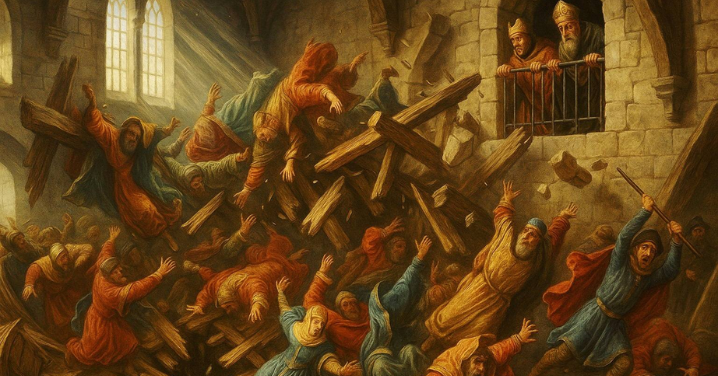
The Dark Ages were a terrible time to be alive. War ravaged Europe, and pestilence, plague, and starvation were rife. The dead were considered the lucky ones as they were in paradise, not begging for scraps of food on disease-ridden streets. However, the unluckiest folk of the 12th century weren’t pitchfork-wielding peasants but a group of noblemen who died in the most hideous circumstances imaginable in a German castle in 1184. Ladies and gentlemen, brace yourselves for the unbelievably tragic story of The Erfurt Latrine Disaster.
The Middle Ages in Europe were horrific. If you were lucky enough to have a job, medieval careers included farmer, merchant, rat-catcher, leech collector, plague burier, grave robber, torturer, and executioner. Superstition, malnutrition, and disease were rampant, and the average life expectancy was around 25. If you didn’t die from starvation, plague, war, robbery, or under-barbecued rats, you’d probably get burned at the stake for being a witch or saying the earth revolved around the sun. Or eaten by dragons.
At street level, if you managed to avoid pee and poop from upstairs windows, then greedy landlords, princes, and dukes collected most of your salary in the form of tithes. Farmers had to hand over a percentage of their crop yield in a protection racket known today as income tax. Any money you kept hold of was most stolen by cutthroats, highwaymen, and brigands, for traveling the roads was a dangerous business.
THE HOLY ROMAN EMPIRE
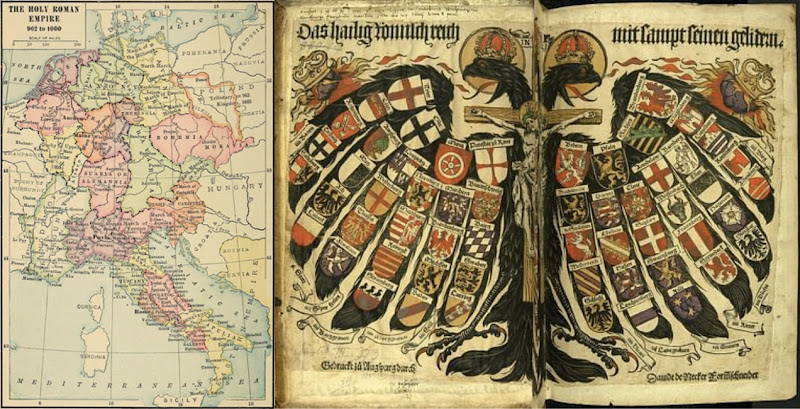
Zooming out for socio-political context, 12th-century Europe was a wholly feudal society. In 1184, Frederick Barbarossa, aka Emperor Redbeard, was Holy Roman Emperor. His 400,000 square-mile empire covered Germany, eastern France, Belgium, the Netherlands, Switzerland, Austria, East Poland, Czechia, Slovakia, Slovenia, and most of Italy. His son, Heinrich VI, had been King of Germany – and therefore King of the Romans – since 1169. But Frederick’s empire was still divided, and his Hohenstaufen dynasty was at war with the nearby unruly Saxons.
It was a period of political strife and enormous instability, brought on by constant power struggles between feudal landowners and the despotic religious leaders of the Roman Catholic Church. The Holy Roman Empire's power structure saw many land disputes between feudal lords, and religious officials relished embroiling themselves in power struggles.
THE MAJOR PLAYERS
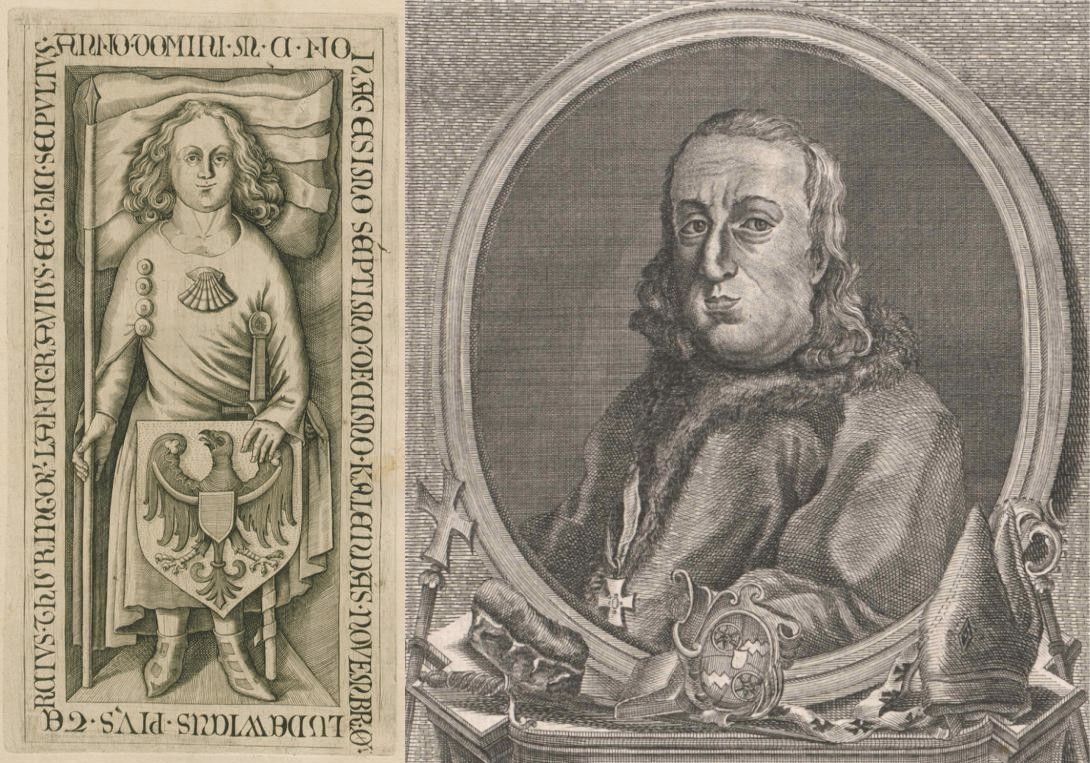
Before we get to the latrine disaster, we'd better get to know the major players and what led them to the city of Erfurt. One lord who embroiled himself in every feud going was Ludvig III, the Landgrave of Thuringia, aka Louis III. He was part of the powerful Ludowingian dynasty that ruled the region’s largest state. Bordered by Bavaria to the south and Saxony to the east, Thuringia still exists as a German State today with a population of about 2.1 million citizens.
Louis III fought countless feuds with neighboring families in Thuringia and the rulers of surrounding territories like the House of Schwarzburg and the House of Ascania. But his biggest feud came to a head in 1184 with a man who claimed to be the Archbishop of Mainz. His name was Conrad of Wittelsbach, and trouble followed him around like a bad smell.
Louis III’s most fearsome foe was Conrad of Wittelsbach, Archchancellor of Germany and self-appointed Archbishop of Mainz. Though nowhere near as aggressive as Louis, Conrad was just as power-hungry and stubborn as his counterpart and refused to back down on pain of death. When his rival for the powerful title of Archbishop of Mainz died, he named himself to the role. Even when removed from the Archbishopric, he refused to leave, claiming he had a God-given right to the job.
Unfortunately, no records survive to tell us what Louis and Conrad’s feud was about, but it was most likely a land dispute. The two men had been at each other’s throats for years, and something had to give. Unfortunately, it wasn’t one of these two men that caved in… it was the floor of a citadel church in Erfurt.
HENRY VII, KING OF GERMANY
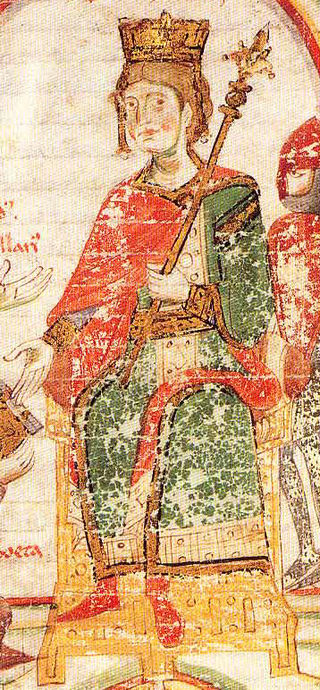
Louis III and Conrad Wittelsbach’s feud escalated so colossally that it caught Henry VI, King of Germany's, attention. As the son of the Holy Roman Emperor, it was his job to quash the many petty land squabbles that threatened his family’s far-reaching dynasty. It has been written that Henry often used an ironic phrase: “If I fail, so may I die in excrement." The king had no idea how true that statement was about to become.
So, when the feud between Louis and Conrad became too disruptive to ignore, Henry decided to step in as a mediator. If there was one man in Germany who could settle this feud once and for all, it was King Henry VI. And, as luck would have it, he happened to be passing through Thuringia on the way to a campaign against neighboring Poland.
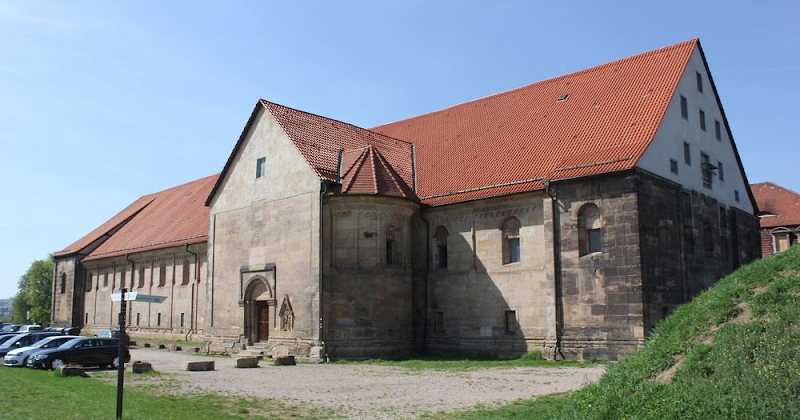
So, King Henry VI swiftly arranged for a hoftag (court day) so he could sit down with Louis and Conrad to get to the bottom of their issues. He chose St. Peter’s Church, part of an 8th-century citadel complex in the German city of Erfurt. Henry decided hundreds of brains were better than three, so he invited almost every royal, nobleman, and high-ranking official from across the Holy Roman Empire to help settle the score. Little did he know his attempts to flush away the bad feeling between the two men would end in the worst way imaginable…
THE ERFUT CITADEL
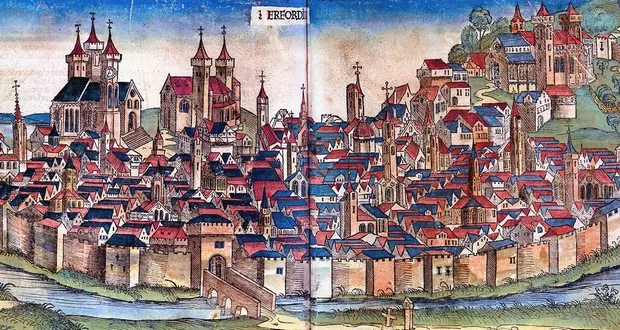
The grand diet or meeting event would take place at the Petersberg Citadel, a fortress on Petersberg Hill in the city of Erfurt. Now, if you’re wondering, Erfurt was then the capital of Thuringia, smack bang in the middle of modern-day Germany. The original building had burned down in 1080 but was rebuilt between 1103 and 1147. Nowadays, the citadel spans 36 hectares, but additions have been made since 1184.
Erfurt's citadel was the only building grand enough to host so many noblemen. Its architects had ensured the inclusion of a maze of underground passageways and, most notably, a large latrine for the hundreds of people who lived and worked there. All the castle’s human waste ended up two floors beneath a resplendent Deanery Hall reserved for important Hoftag meetings.
And so it came to pass that in July 1184, Germany’s aristocracy from all across the empire gathered in Erfurt to put an end to Louis and Conrad’s dispute. Many noblemen from across the Holy Roman Empire had answered the call, with the bulk arriving on July 25th. But not one of them could have guessed what ghastly end the gods had in store for them.
THE DAY DISASTER STRUCK
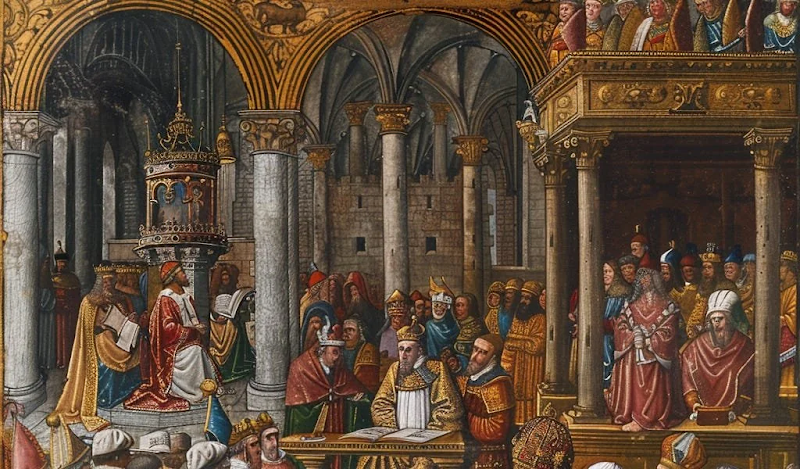
On the morning of July 26th, a hundred or more knights, princes, dukes, and landowners climbed the stairs to the second floor of the citadel’s deanery and made their way to the magnificent hall where negotiations would take place. The historical account of what happened next is, for want of a better word… muddy, but we’ll do our best to describe events. And here’s our obligatory trigger warning. If you’re squeamish about body waste, you might want to look away now.
Nowadays, we all have flushing toilets and a clean and comfortable sewage system that flushes away our waste without a second thought. But Middle Age European sewage systems were pretty basic. Many buildings featured a hole to poop into, but grand castles like the Petersberg Citadel had lots of holes for the many people who lived and worked there to defecate.
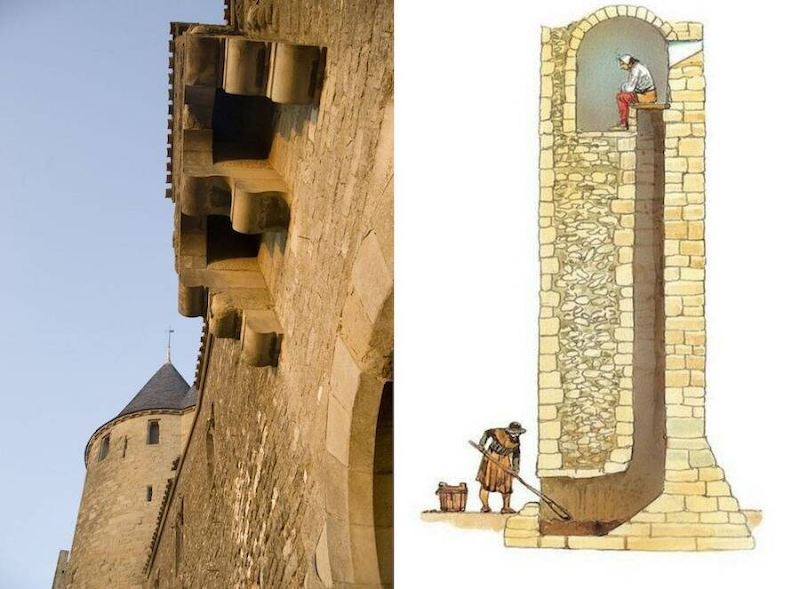
Most castle latrines featured a sewage system that would drop the offending matter and liquid into a surrounding moat. But Erfurt's citadel had no moat and was rarely cleaned because…. well, would you want to do it? Because it was served by a respected order of monks, the latrine needed to be especially large to avoid frequent emptying. As a result, a deep, dark pool of raw sewage sat for years, putrefying two floors below the hall where the meeting would be held.
As the second-floor Deanery Hall filled with influential figures, King Henry took his place within a small stone alcove to talk with Conrad Wittelsbach. Then, as the meeting began, tragedy struck. The combined weight of the guests caused the wooden floor of the deanery to collapse, sending dozens of men, stonemasonry, and wood plunging down to the first floor. But things were about to get worse…
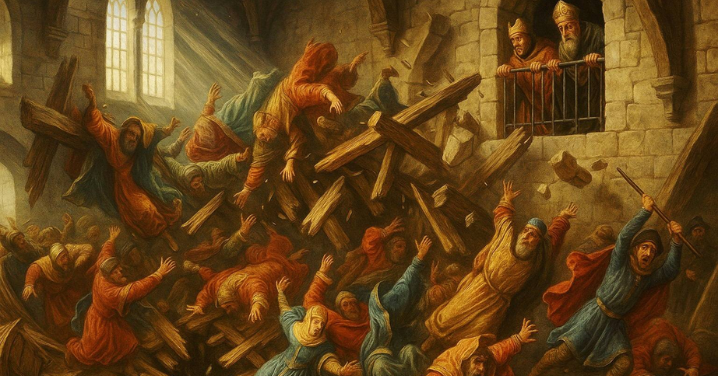
The first-floor level instantly crumbled under the weight of the collapse. Those who fell through the ceiling then fell through the next floor and down into the basement. Unfortunately for them, the basement was where the building’s latrine system was housed. They fell into a swimming pool-sized cesspit of foul-smelling, liquid human waste.
The lucky ones were killed in the fall or crushed by falling stonemasonry. As blood-curdling screams from the unlucky survivors rose from this hellish cesspit, servants, maids, and monks ran around like headless chickens trying to save their lords. In the chaos, they lowered down ladders, but no one was brave or foolish enough to climb down to help.
Those who survived the collapse tried to tread “water” in the hope of staying alive long enough to make it out of the stinking cesspool. But since it was a 12th-century landlocked region, few knew how to swim. Plus, if those knights were wearing armor or chainmail, the weight would have dragged them down into the disgusting mess. But even those wearing normal clothes drowned in the putrid pool of human excrement and urine.

So, how deep was the deathly latrine? Well, it may have measured several meters deep because the sewage system had been collecting putrefied, liquid waste for years. It must have been deeper than the average man’s height, or else those who survived the fall would have landed on top of the dead and injured and climbed out or held their heads above water until help arrived. However, the few that survived the fall quickly fell unconscious from the noxious fumes emitted by the decomposing waste matter, slipping to the most inglorious death imaginable.
The exact number of casualties is unknown, as most contemporaneous records did not survive. Most estimates suggest that between 60 and 100 notable lords, noblemen, knights of the realm, high-ranking officials, royal figures, servants, pages, and monks died in the Erfurter Latrinensturz (literally the Erfurt latrine fall), but the number could have been much higher. One of the few surviving accounts suggests hundreds of people were buried alive in the fetted filth and debris, implying the number of dead is over 100, and possibly more than 200.
The list of those who died included Count Gozmar III of Ziegenhain, Count Friedrich I of Abenberg, Burgrave Friedrich I of Kirchberg, Count Heinrich I of Schwarzburg, and Count Burgrave Burchard of Wartburg, Burgmeister Breuer of Wartschitt, and Beringer of Meldingen. But dozens, if not hundreds, more met a sticky end in the raw sewage that fateful day. So many royal figures died; you could call it a royal flush!
WHAT HAPPENED TO LOUIS AND CONRAD?
What became of the men who started the dispute and the man who tried to resolve it? Landgrave Louis III of Thuringia, Conrad of Wittelsbach, and the Holy Roman Emperor’s son, King Henry VI of Germany?
Amazingly, Henry VI survived. The only reason he made it out alive was because he’d moved to speak to Conrad Wittelsbach in an alcove on a small stone floor that didn’t collapse. However, it must still have been pretty hairy because he only managed not to fall to his death in the cesspool by clinging to the iron railings of a window. He managed to cling on for dear life until he was saved by his servants using ladders. After being rescued, Henry made a hasty exit from the Petersberg Citadel and Thuringia. Other than the names of those who died, history didn’t record much about the aftermath of The Erfurt Latrine Disaster, as the story has been wiped clean from the history books. One thing we can be sure of is that Henry VI avoided meetings above latrines for the rest of his days.
Conrad of Wittelsbach was also one of the few lucky survivors. He’d been standing on the same stone alcove as Henry VI and only survived by hanging onto the same window railings as the king. He was also saved by servants with ladders. In 1195, he took the cross to become Papal Legate and helped usher in the Third Crusade. Conrad traveled to the Holy Land but lived until 1200 and died in Hungary after reconciling the political rivalry between brothers Emeric of Hungary and Andrew II of Hungary. He was buried in Mainz Cathedral. No latrines were involved in his death.
Somehow, Louis III of Thuringia also survived, but there’s no account of how he escaped. Like Conrad, he also participated in the Third Crusade. After arriving in the Holy Land, he fought alongside Frederick Barbarossa and Richard I, King of England against Saladin in the First Siege of Acre. However, Louis was taken ill in Palestine, so he undertook the long journey home to Germany… but he never arrived home. The Landgrave of Thuringia died on a ship sailing on the Mediterranean Sea in 1190. His entrails were buried on the island of Cyprus, while his bones were transferred to the Reinhardsbrunn Monastery in his native Thuringia. In the 14th century, Louis III’s bones were moved and reburied in the Church of St. George in Eisenach, a town in Thuringia.
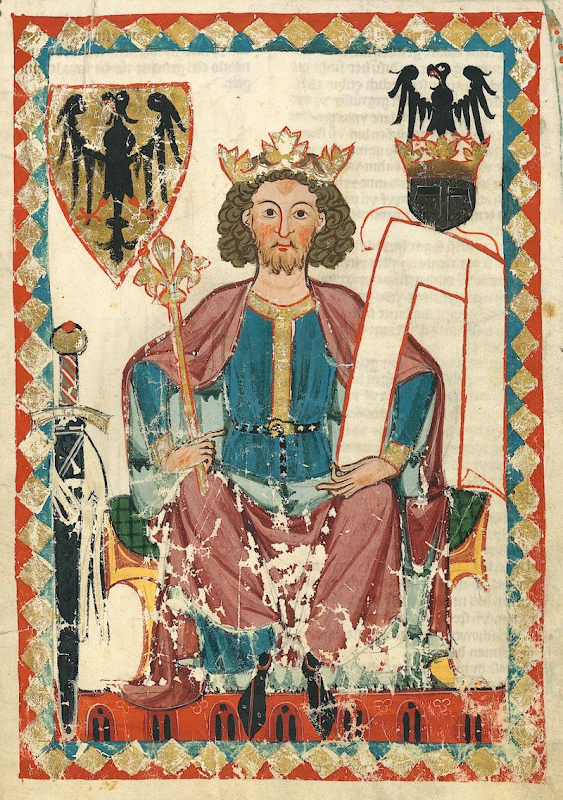
After his brush with death, Henry VI of Germany became King of Italy and Sicily, marrying Constance, Queen of Sicily. Upon his father, Barbarossa’s death in 1191, he was crowned Holy Roman Emperor. As Emperor Henry VI, he fought in the Third Crusade against Saladin and, upon his return to Germany from Jerusalem, even captured the King of England, Richard the Lionheart.
In 1197, Henry succumbed to chills while on a hunting trip near Messina in Sicily and died, possibly from malaria. He was 31 years old, which is a pretty good innings for the Middle Ages. He was succeeded as Holy Roman Emperor by Otto IV. Henry and Constance’s son, Frederick II, became Holy Roman Emperor in 1212 and was crowned King of Jerusalem in 1225.
As for Louis and Conrad’s feud, no written records detail whether their land dispute was ever settled. But what we do know is that Conrad of Wittelsbach held the title of Archbishop of Mainz until his death at the turn of the next century.
The moral of the story is to clean your restroom regularly and maybe find that money for that structural survey you’ve been putting off. And next time you complain about the First World Problems of 21st-century life, spare a thought for the men who perished in The Erfurt Latrine Disaster.
Because nothing is as bad as falling into a Medieval latrine and drowning in liquid poop!