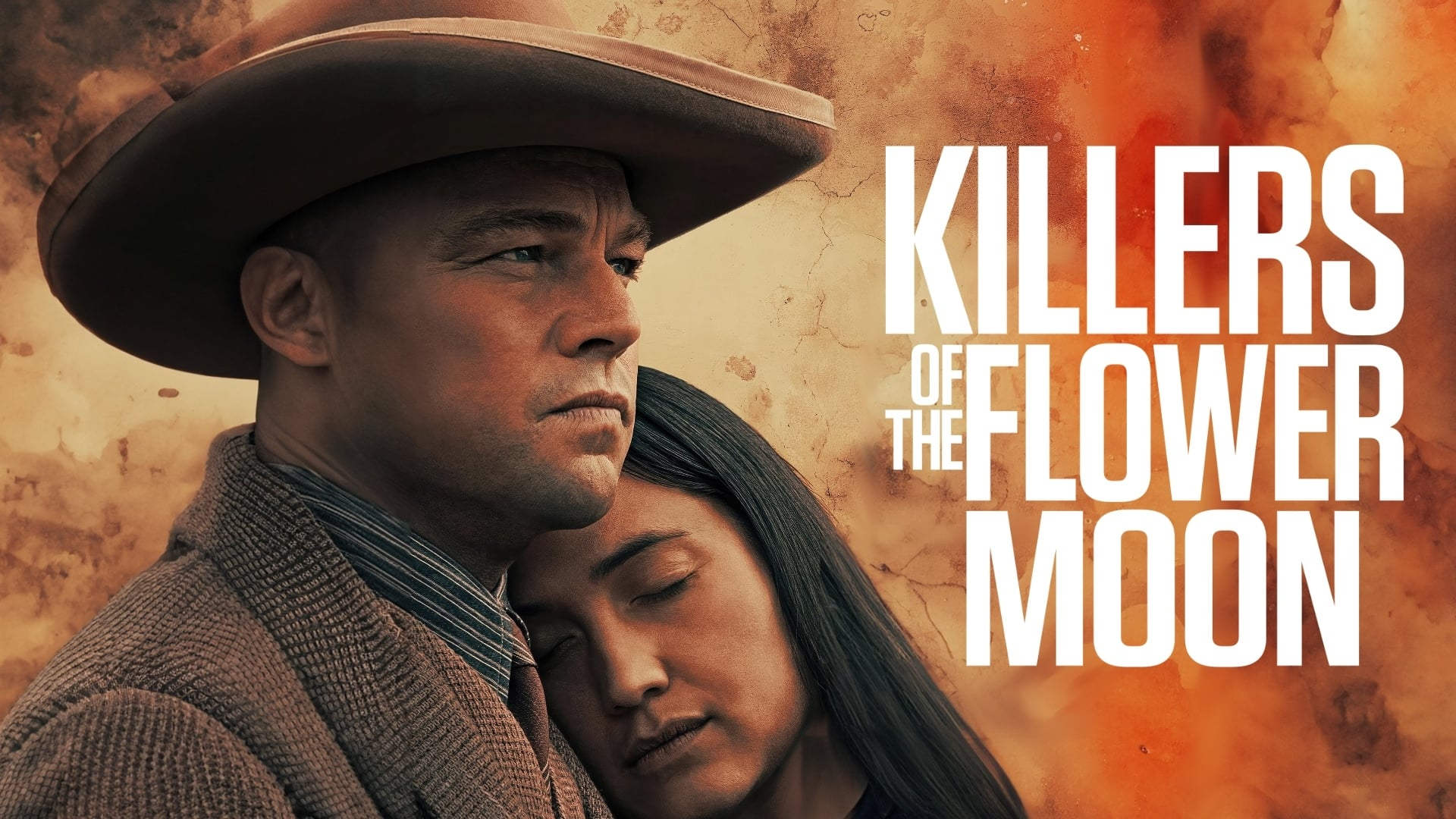
The Osage settlement town of Gray Horse, Oklahoma, struck oil in the late 1800s. Within decades, the Native American Osage Nation were the richest people on the planet. Laws meant only Osage people were entitled to the oil-rich land, but then cattle rancher William Hale and his nephews took over the town. His nephew, Ernest Burkhart, married an Osage woman named Mollie Kyle, and the uncle and nephew unleashed a brutal campaign of violence, killing Mollie’s family and 60 Osage to inherit their land and oil rights. A century after their reign of terror, Martin Scorsese turned the story into a blockbuster film, Killers of the Flower Moon. But what really happened in Osage County all those years ago?
THE OSAGE NATION
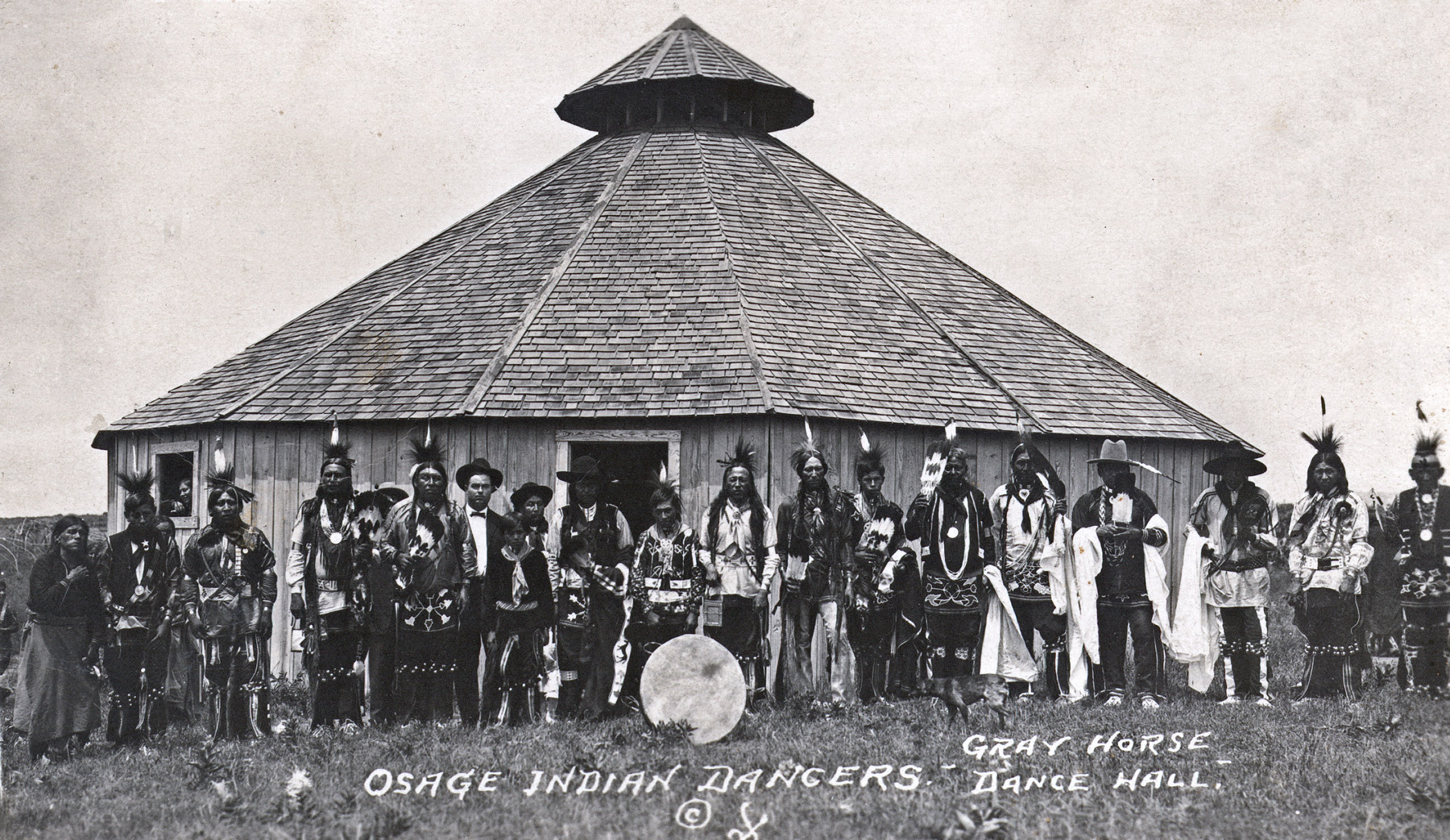
For thousands of years, the Osage Nation lived on ancient lands that stretched from the Ohio River across the Mississippi into Oklahoma and southern Kansas. Then, in the 1860s, as white settlers encroached on their territories, the United States government forcibly removed them from their ancestral lands to a new reservation in Kansas.
However, in 1870, not long after settling on their new land, the Osage People were forced to sell their Kansas lands to settlers for $1.25 an acre. Once again, the whole tribe was forced to move from modern-day Kansas into "Indian Territory" in present-day Oklahoma. Unsurprisingly, their new land was dotted with thickly wooded hills and totally unsuitable for agriculture. It was the worst farmland in Oklahoma.
THARE’S OIL IN THEM THARE FIELDS
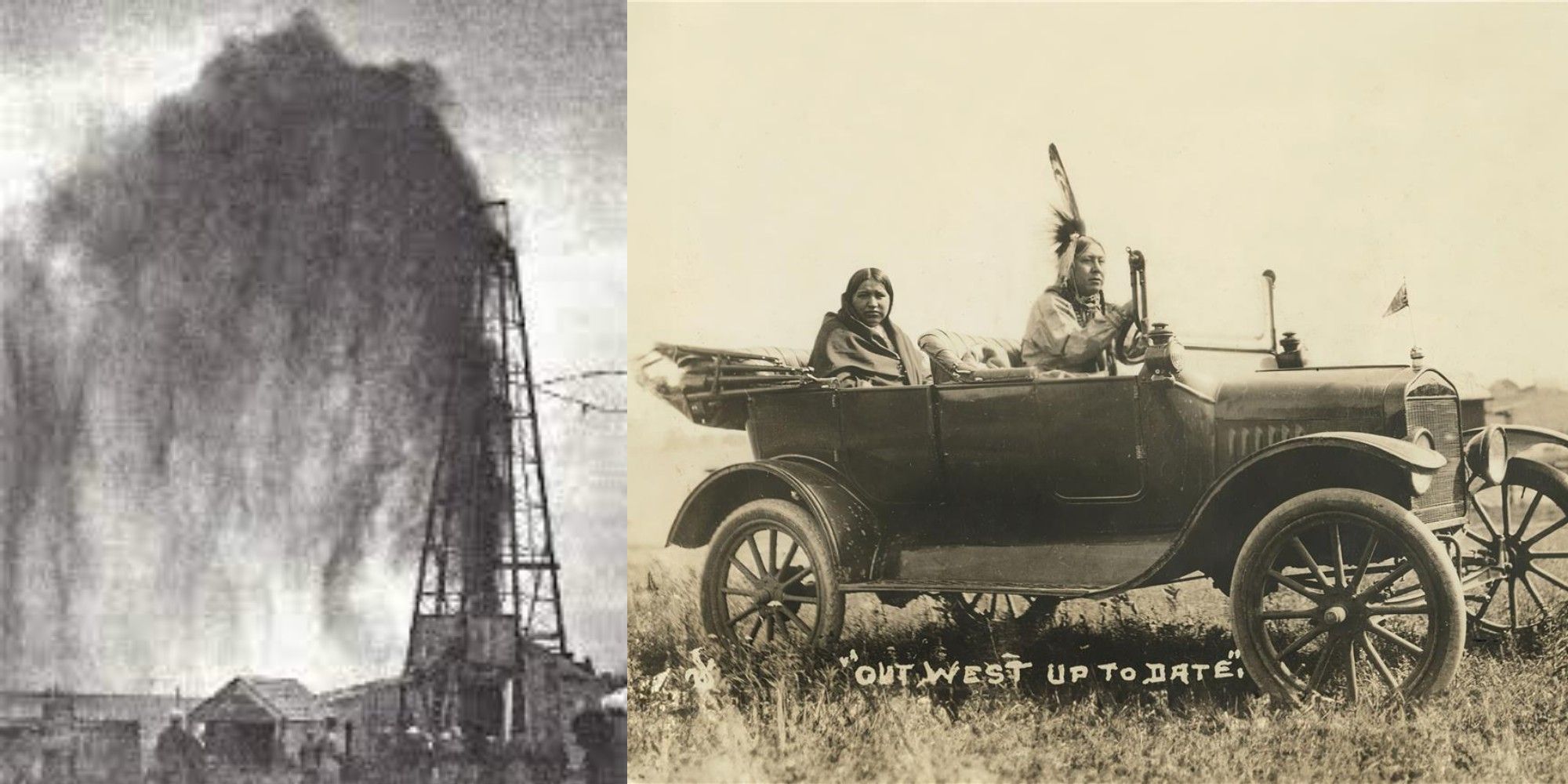
However, the Osage's fortunes changed when the government accidentally relocated them to the richest oil deposit in the country. Vast quantities of oil were discovered beneath their Oklahoma reservation in 1892. The Osage Act of 1906 gave each of the 2,229 members of the tribe “headrights” on money made from the production of oil unearthed on reservation land. As oil production boomed, the Osage Nation became rich beyond their wildest dreams.
Despite various governmental attempts to carve up the land and siphon money from the First Nation tribe, by the 1920s, the average Osage family received over $65,000 a year from their headrights ($1 million today.) Newspapers wrote of Indians living in mansions, driving around in chauffeur-driven cars, wearing fancy clothes, and living the high life. Soon, vultures began circling.
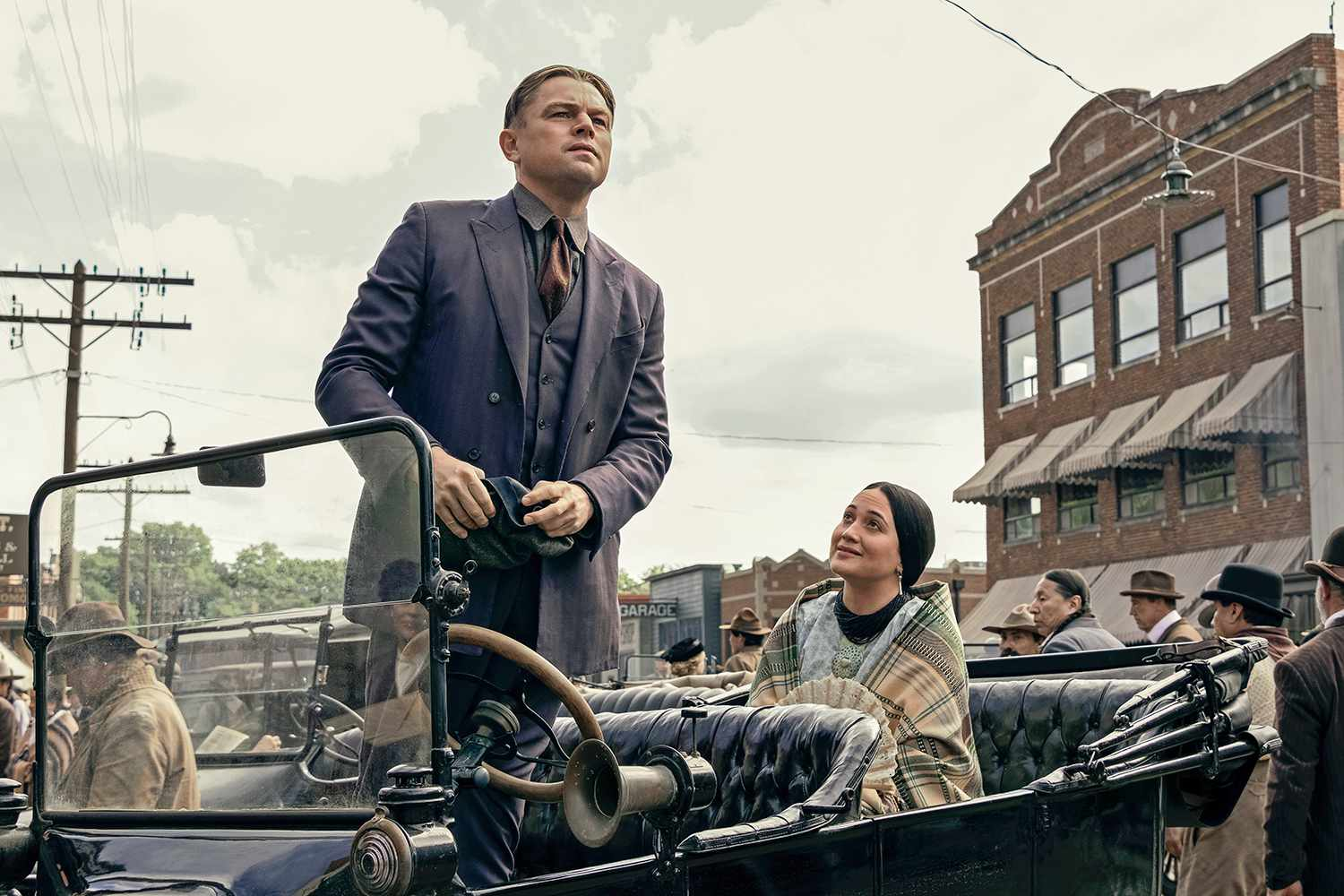
Now, these headrights could only be inherited, never bought or sold. This meant the only way outsiders could make money from the Osage Nation's oil was to marry into an Osage family or become legal guardians. The tribe’s oil wealth attracted hordes of suitors, and all of a sudden white men from all over the country had a new sport, pursuing single Osage women.
One C.T. Plimer from Joplin, Missouri, wrote, “I…want a good Indian girl for a wife… For every Five Thousand Dollars she is worth, I will give you Twenty Five Dollars. If she is worth $25,000, you would get $125 if I got her.” In short, Osage women were being bought and sold like slaves. The White Man moved in, seeking oil leases through guardianship and gaining full control of the Osage.
WILLIAM HALE
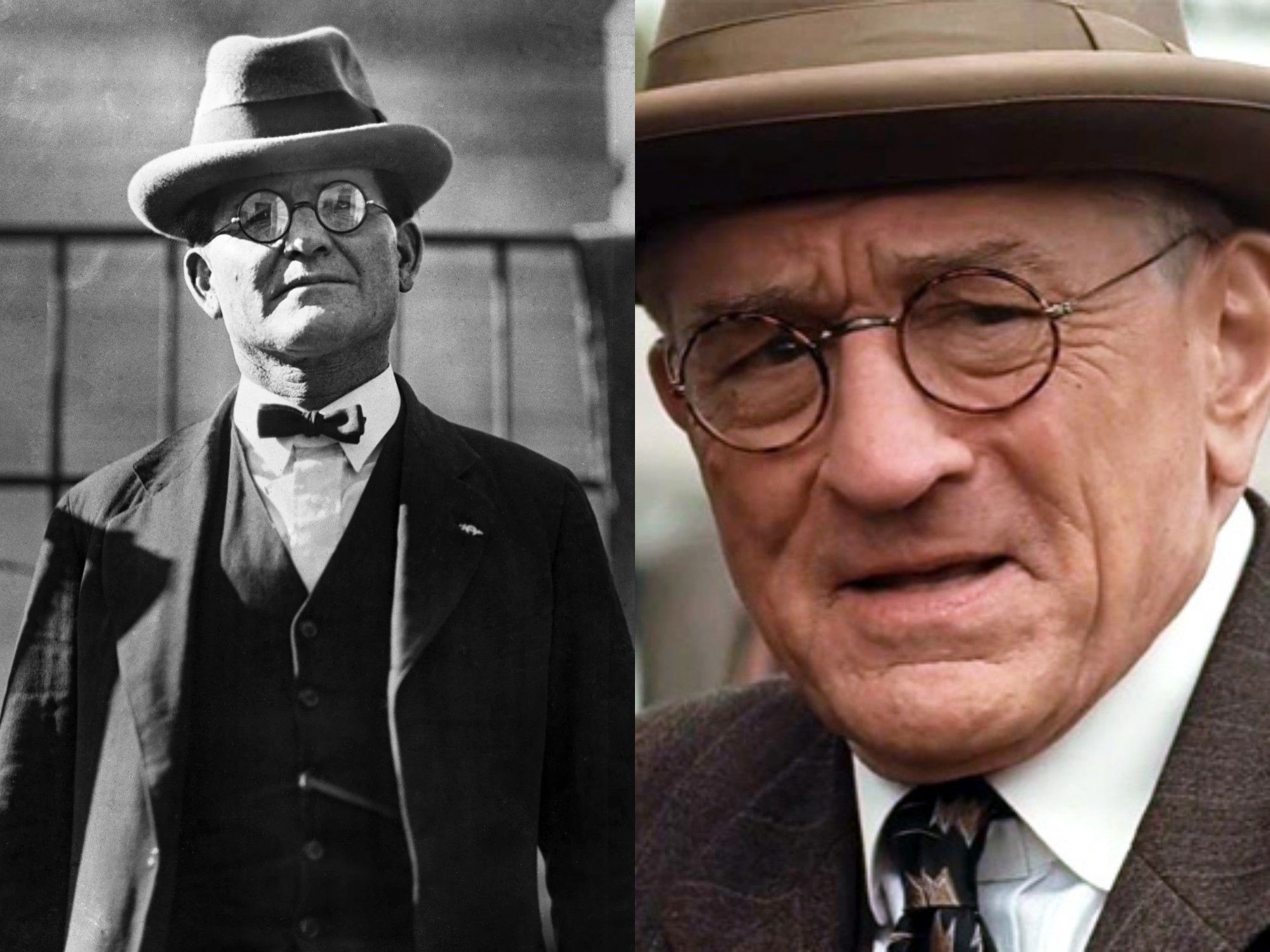
One such marriage is instrumental in the story of the Osage Killings, and it begins with a man named William King Hale. He arrived in Osage County, Oklahoma, in 1902. He was $10,000 in debt ($350,000 today) and so poor that he lived in a tent. After making his way up the ladder as a rancher, Hale formed a partnership with two local bankers and began leasing grazing land from the Osage Tribe. Eventually, he amassed 45,000 acres of leased land and owned another 5,000 acres outright. His mini-kingdom grew to part-owning a bank, a general store, and a funeral home. However, the ultra-ambitious, sociopathic cattle rancher wasn't going to stop with owning or renting grazing land. He knew the real wealth lay deep beneath the land. Black gold, as the First Nations people called oil.
Fast forward to the 1920s, and through various land leases, purchases, and partnerships, William Hale had transformed himself from a humble, penniless rancher into the self-styled “King of the Osage Hills.” He spent decades slowly amassing power while disguising his true, racist colors beneath a cloak of philanthropy. He called himself “The Reverend”, often donated to charity, and worked on behalf of the Osage people. However, Hale had zero claim on the black gold beneath the grazing land he rented, so he set in motion a plan to steal as much of the Osage oil money as he could get his hands on... and by any means necessary. What followed was one of the most heinous murder sprees in modern American history.
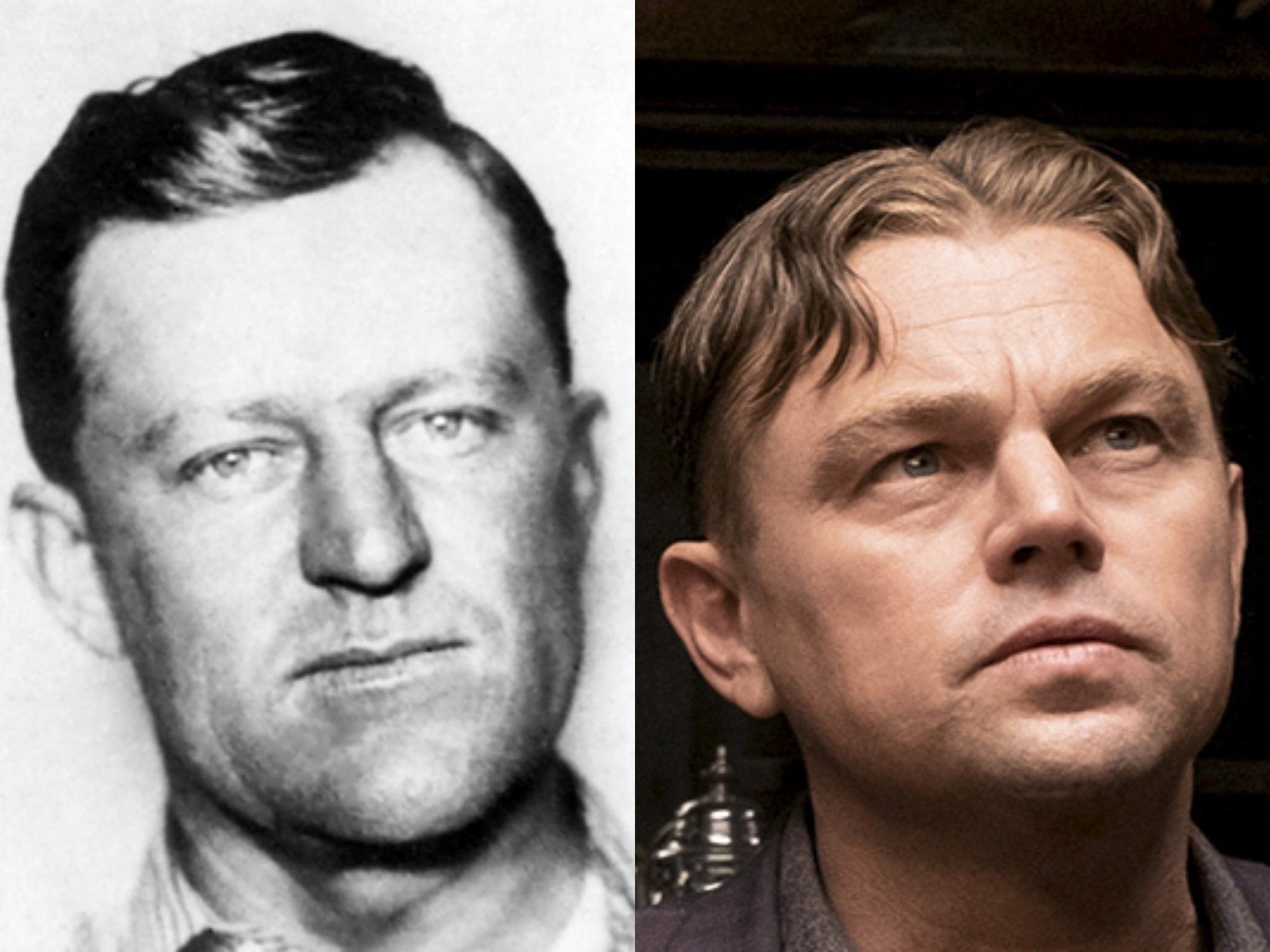
With his nephew, Ernest Burkhart, William Hale masterminded a spate of murders of oil-rich Osage tribespeople. No one knows exactly how many died, as many of the slayings were never investigated. Some historians say as many as 60 people lost their lives; others suggest many more.
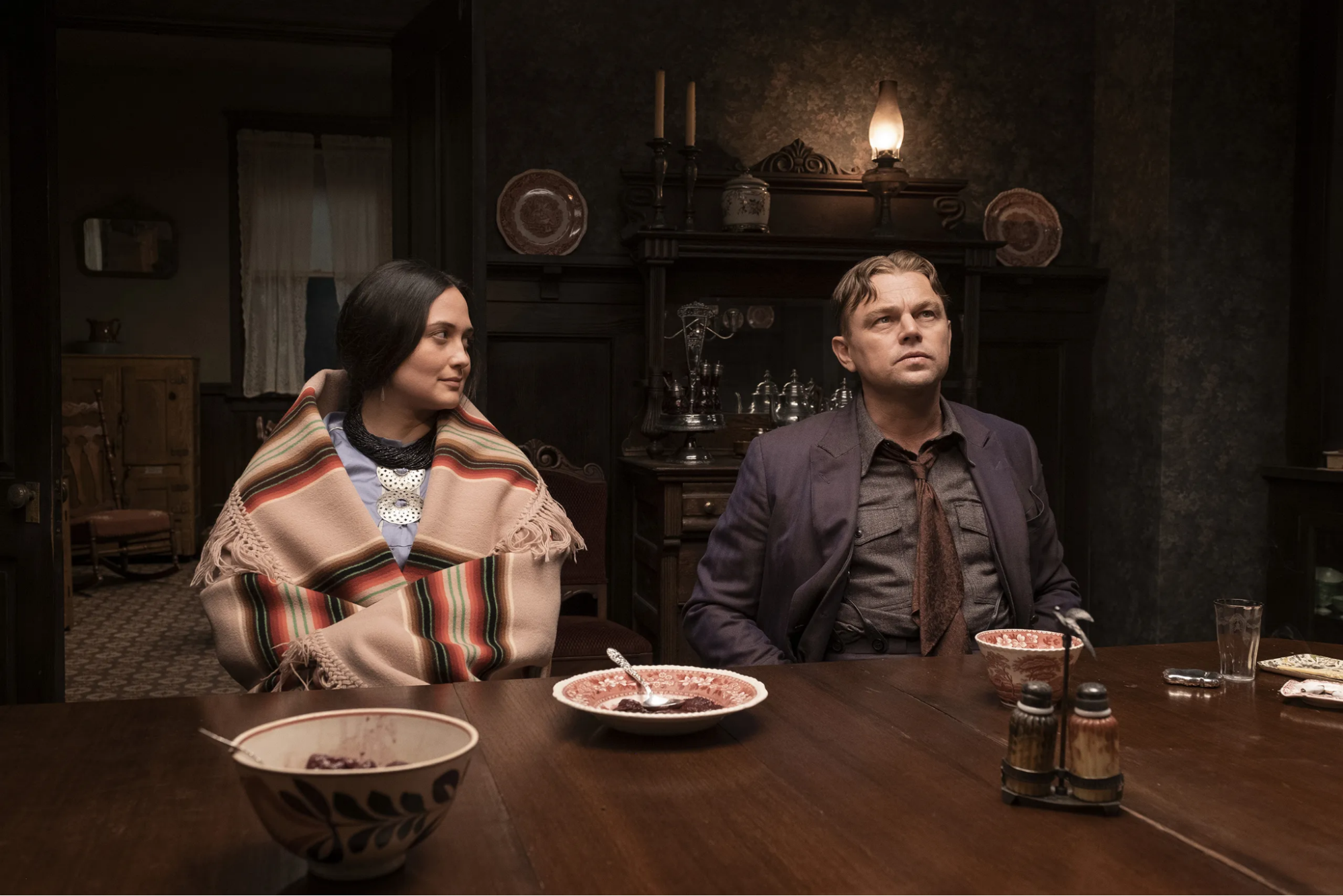
The killings became the FBI's first major case and the basis for David Grann’s meticulously researched 2017 New York Times best-selling book Killers of the Flower Moon. In turn, David Grann’s book became the basis for Martin Scorsese's 2023 film of the same name. The movie follows Hale's nephew, Ernest Burkhart, and his wife Mollie Kyle, played by Leonardo DiCaprio and Lily Gladstone as she tries to save her family and tribe from certain death. Robert De Niro plays William King Hale.
ERNEST BURKHARDT AND MOLLIE KYLE
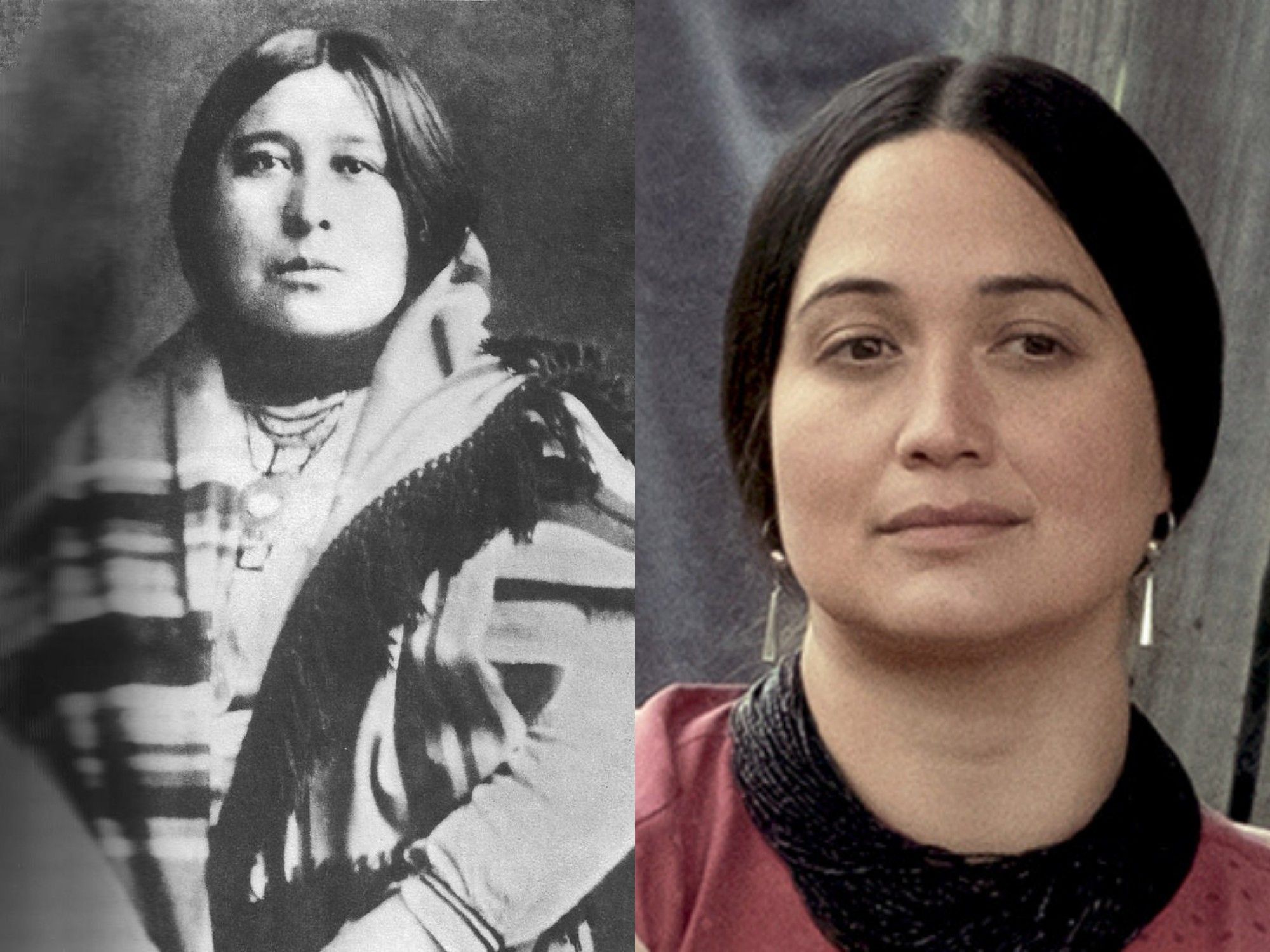
In 1917, World War I veteran Ernest Burkhart married Osage woman Mollie Kyle, or Nah-kon-tah-he-un-pah in her own tongue. At the time, it seemed their coupling was a lucky coincidence, but history shows that William Hale convinced his nephew to marry Mollie to get their hands on her money. Mollie Kyle made $2,600 ($82,000 today) every year from her headrights. But she also stood to inherit the estates and oil rights of her relatives if they died before her. And that's when her family members started showing up dead one by one in mysterious circumstances…
Beginning in 1921, a remarkable string of tragedies struck Mollie's family. Osage tradition may have believed a curse had been cast upon the tribe, but it was just that good old-fashioned all-American lust for oil, money, and power… through a reign of death and violence. Hale was about to embark on a series of brazen murders, for-hire killings, insurance scams, and fraud.
DEATHS IN THE FAMILY
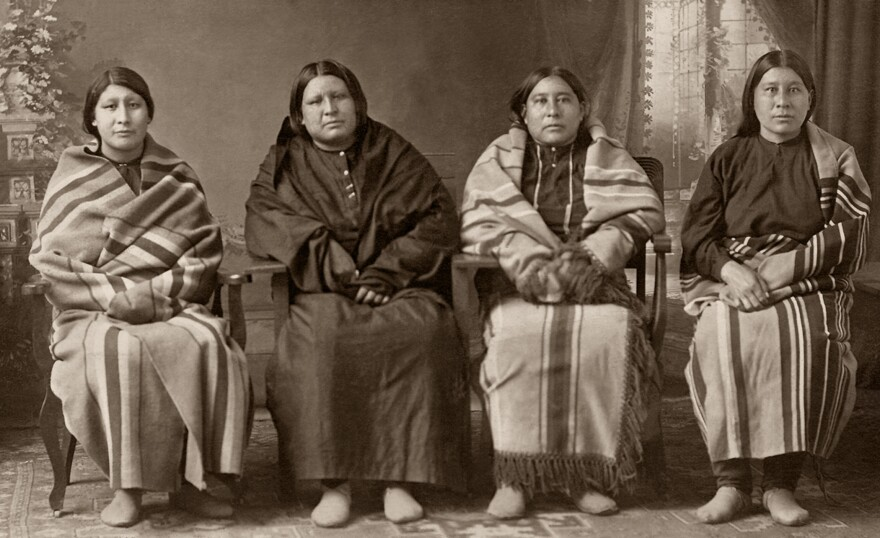
First, Mollie's 27-year-old sister, Minnie Smith (Me-se-more), succumbed to what doctors described as a “peculiar wasting illness.” The word on the street suggested that Minnie's white husband, Bill Smith, had poisoned her with strychnine. After Minnie died, Bill Smith married a third sister, Reta (Nah-shah-shah); however, fearing they might be next, the newlyweds moved to another part of town. But moving across town wouldn't save them...
In May 1921––the same month Tulsa burned in race riots––a fourth sister, Anna Kyle Brown, was shot and killed. Her decomposing body had been eaten by worms by the time it was found in a ravine by hunters three miles outside of nearby Fairfax. At trial in 1926, Kelsie Morrison admitted to killing Anna at the behest of Hale. Half of Anna's headrights went to her mother, while the other half went to her sisters, Mollie and Reta, plus a woman named Grace Bigheart. On the same day that Anna's body was discovered, her cousin Charles Whitehorn, aka Charles Williamson, also showed up dead near Pawhuska in a different part of Osage County. He had been shot to death by his half-white, half-Cheyenne wife, Hattie Whitehorn, and two other co-conspirators.
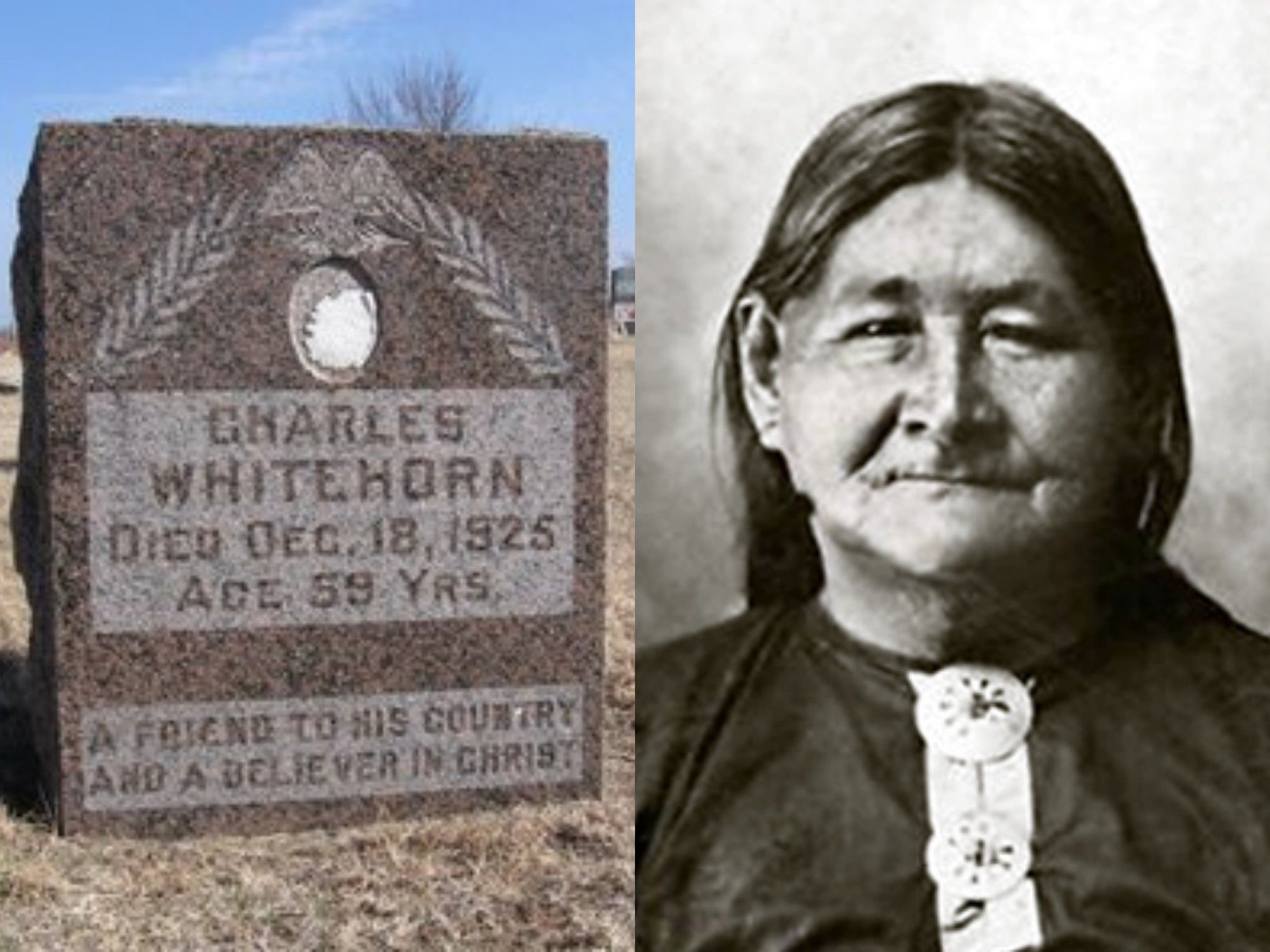
Two months later, in July 1921, the four girls' mother, Lizzie Kyle, aka Lizzie Q or Ne Kah Es Sey––who had recently inherited Anna's headrights––died in mysterious circumstances. Her estate was worth $250,000. The family matriarch had also succumbed to a wasting disease but was more likely another victim of poisoning. But how were so many people being poisoned?
Well, William Hale had just about every local official in Osage Country in his pocket. Even doctors are alleged to have discreetly poisoned their patients on Hale's behalf. The Reverend ruled the town with an iron fist through backhanders and fear; even lawmen were terrified of him. If you disobeyed Hale, then you'd most likely end up six feet under.
By this time, William Hale had wheedled his way to becoming Deputy Sheriff of Osage County. This position of power meant he could visit criminals in jail off the books and manipulate hired hands and killers to work for him. According to a later deposition, Hale “had everything fixed from the road overseer to the governor.” Late in 1921, Joe Grayhorse died after making a land deal with Hale and was found dead near Pawhuska.
MORE DEATHS IN OSAGE COUNTY
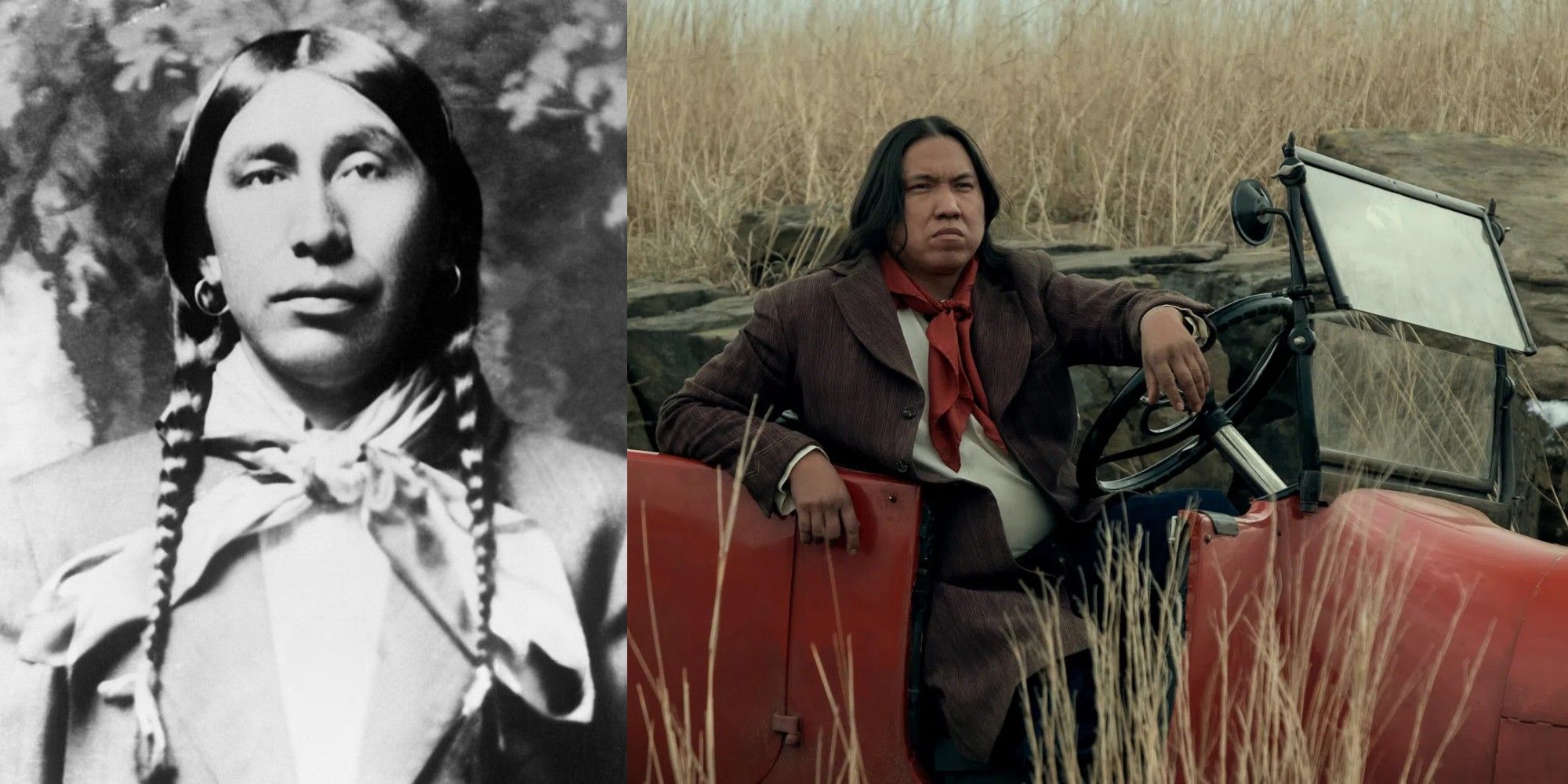
In January 1923, William Hale had a career criminal named John Ramsey shoot the sisters’ cousin, Henry Roan, aka Henry Roan Horse, to death. He was found dead in his car on the Osage Reservation with a bullet in his head. Henry Roan had borrowed $1,200 from William Hale, who then fraudulently arranged to make himself the beneficiary of Roan's $25,000 life insurance policy.
Not long after Bill and Reta Smith settled into their new home in a safer part of Fairfax, Osage County, Oklahoma, the neighborhood’s guard dogs began to mysteriously die. Bill grew increasingly paranoid, and his fears were soon proven correct. The dogs were being poisoned. Then, in the early morning hours of March 10th, 1923, Reta Kyle Smith, her husband Bill Smith, and their housekeeper, Nettie Brookshire, were killed when a colossal explosion ripped through their home.
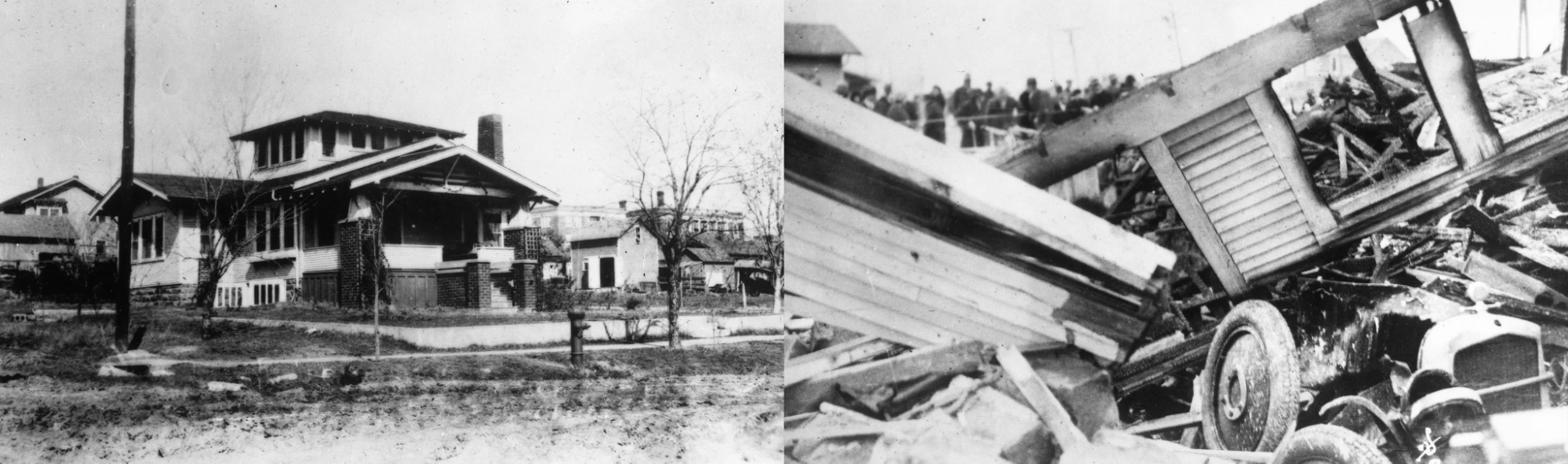
Reta and Nettie died in the blast, while Bill succumbed to his injuries four days later. Later investigations revealed that a criminal and explosive expert by the name of Asa Kirby planted the bomb under their house. The bomb contained five gallons of nitroglycerin.
Before he died of injuries he suffered in the huge blast, Bill Smith gave a statement implicating his suspected murderers and appointing his and his wife's estate. Mollie and her young son only narrowly avoided the explosion. She originally planned to stay the night at Anna's home and only left because her son, "Cowboy" had an earache. The deaths sparked panic throughout Osage County. But as regular as clockwork, with every relative's death, Mollie and Ernest inherited the victim's wealth and oil rights.
On June 28th, 1923, William Hale and Bryan Burkhart poisoned Grace Bigheart's son George and put him on a train to Oklahoma City Hospital. There, doctors suspected he'd drunk poisoned whiskey. Young George called for attorney William "W.W." Watkins Vaughan and told him of his suspicions about who was behind the murders. He also said he had access to incriminating documents that would prove his claims.
That night, attorney Vaughan boarded a train to return to Pawhuska. But when the porter went to wake him, the attorney was missing. His berth had not been slept in. Attorney Vaughan's body was later discovered with his skull crushed, beside the railroad tracks near Pershing, five miles south of Pawhuska. Poor George Bigheart died from poisoning in the hospital that same morning.
Between 1921 and 1923, at least 13 more deaths of Osage men and women were reported. Each one had court-appointed guardians. By 1925, at least sixty wealthy Osage had been murdered, and their oil-rich land had been inherited by their guardians... who just so happened to be local white lawyers and businessmen.
TIME TO CALL IN THE FEDS
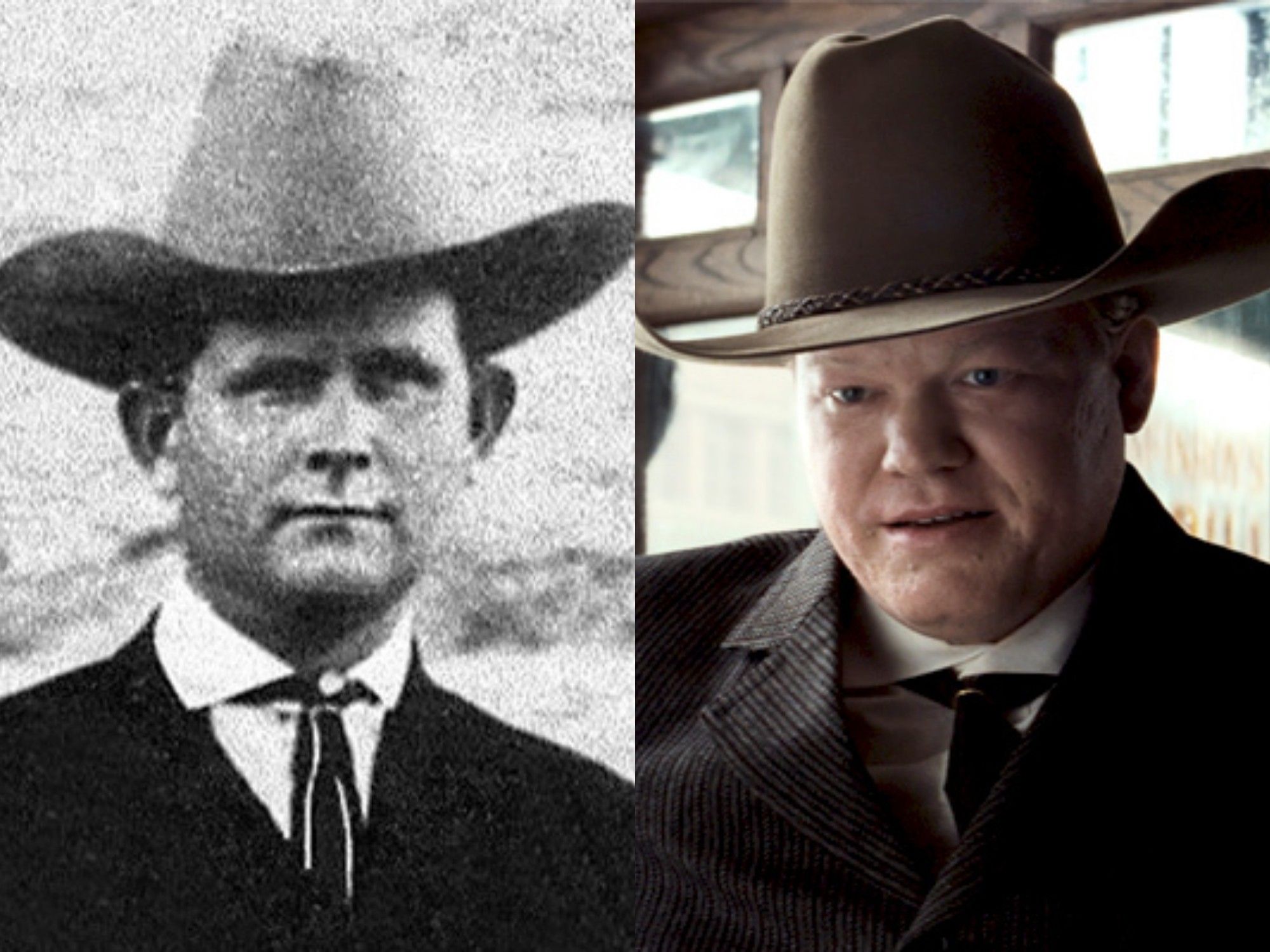
In 1925, Osage tribal elders and local law officer James Monroe Pyle sought assistance from the Federal Bureau of Investigation. The Bureau of Investigation (BOI), as the FBI was known back then, sent investigators to the Osage reservation. They uncovered a black market of for-hire gunmen, thugs, and contract killers who had been employed to murder members of the Osage Nation for their wealth.
The Osage Tribal Council suspected William Hale and his nephews were behind the murders. Working for two years, four undercover Indian Affairs investigators discovered Hales' far-reaching crime ring. The cattleman and his nephews' goal was to inherit the wealth of Osage tribe members, including Ernest's wife, Mollie Burkhart, who, by now, was the only surviving member of her family. The investigation concluded William Hale had indeed persuaded Ernest to marry Mollie Kyle. Over the next few years, the Reverend arranged for the murders of Mollie's sisters, her brother-in-law, her mother, Henry Roan, George Bigheart, attorney Vaughan, and many more to gain their headrights, cash in on their insurance policies or silence them. But the murders didn't stop there…
The BOI sent Tom White to uncover the conspiracy. But as the investigation unfolded, more witnesses and Osage tribe members were murdered. Several concerned white locals who were helping the feds turned up dead—including Barney McBride, who’d traveled to Washington, DC, to seek federal help in solving the murders. He was brutally stabbed to death outside a D.C. billiards hall.
Unbelievably, agents discovered that Ernest Burkhart was poisoning his wife. Devoutly Catholic Mollie confided to her priest she believed she was being poisoned at home. The priest told her not to touch any liquor in the house before alerting one of the FBI agents. But it wasn't liquor; Ernest's doctors had been lacing Mollie's insulin injections with strychnine. Thankfully, Mollie recovered from the poisoning, and Ernest's attempt to murder Mollie failed.
THE TRIALS OF THE CENTURY
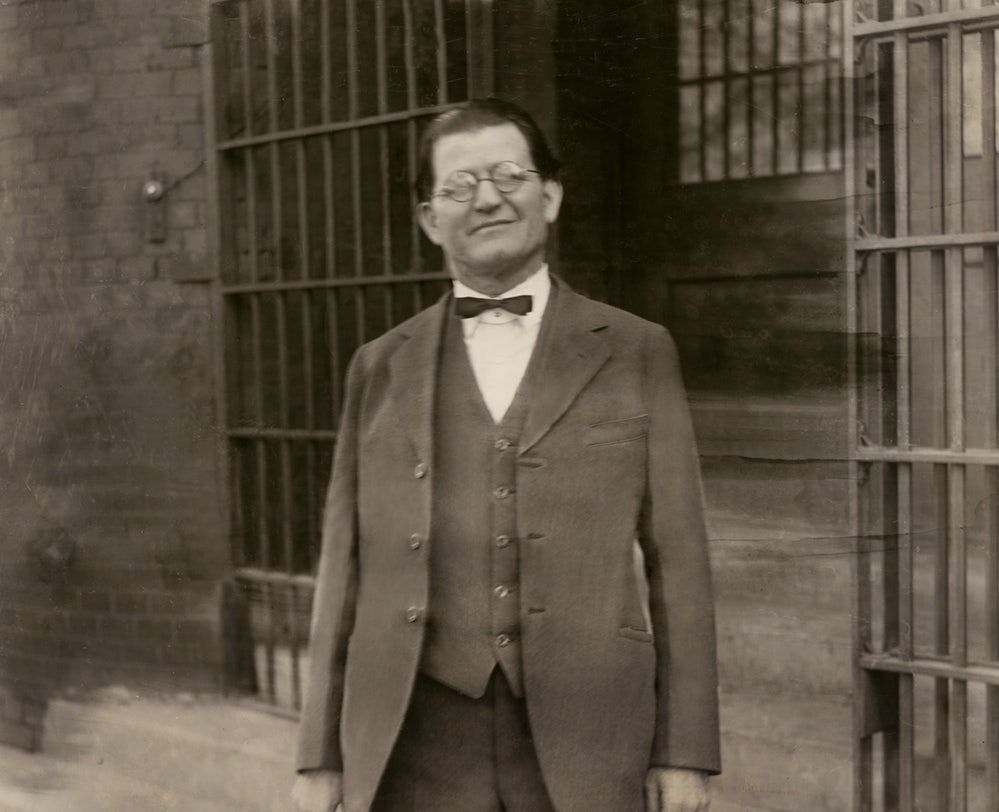
A warrant for Hale and Ernest's arrest was issued on January 4th, 1926, for the murders of Bill and Reta Smith. William Hale and his nephews Ernest and Bryan Burkhart, plus one of their hired ranch hands, were charged with the murders of Mollie Kyle's family. Faced with the death penalty, Ernest confessed and turned state's evidence against his uncle.
In 1926, Ernest was convicted for the murder of Anna Brown and sentenced to life imprisonment. Bryan served no prison time due to a hung jury. William Hale always maintained his innocence. He used his huge influence, which led to hung juries, appeals, overturned verdicts, and changes of venue. The Reverend was charged with the murder of Henry Roan Horse, who had been killed on the Osage Reservation, which meant it was a federal crime.
After William Hale turned himself in, wearing "a perfectly pressed suit, shoes shined to a gleam, a felt hat, and an overcoat with his diamond-studded Masonic lodge pin fastened to the lapel.” He was found guilty and sentenced to life in prison.
WHAT BECAME OF WILLIAM, ERNEST, AND MOLLIE?
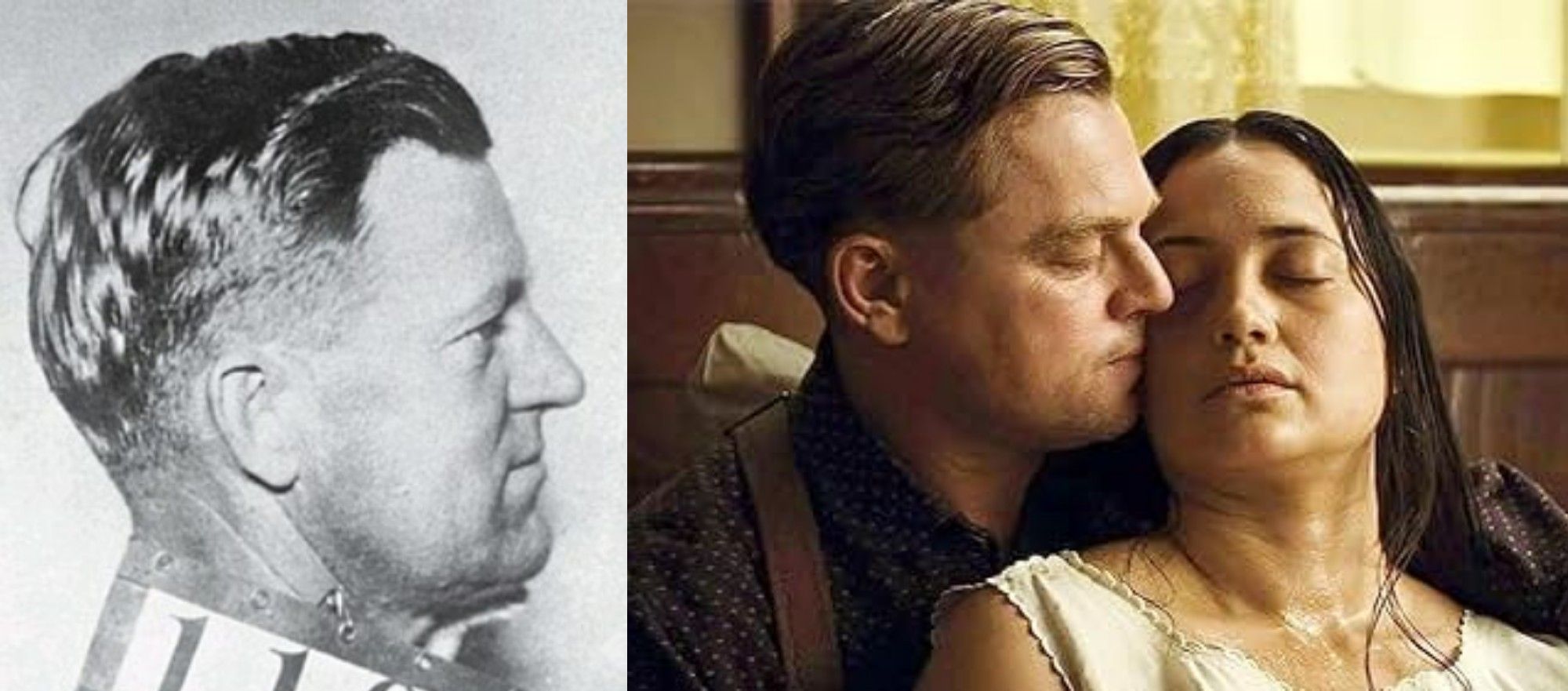
William Hale served his time in Leavenworth Penitentiary in Kansas. Ironically, his prison warden was Tom White, who headed the investigation into the Osage County murders. Hale never admitted any involvement with the murders, and a psychological evaluator observed, "he has put behind him any feeling of shame or repentance he may have had." But during a visit, Hale's relatives said he once remarked, "If that damn Ernest had kept his mouth shut, we'd be rich today." He was released on parole in 1947, moved to Phoenix, Arizona in 1950, and died in a nursing home in 1962.
Ernest Burkhart was released from prison on parole in 1937 after serving just 11 years behind bars for his role in potentially dozens of murders. Three years later, he and Clara Mae Goad stole $7,000 from his former sister-in-law's house. Ernest was quickly apprehended and sentenced to seven more years in prison. In 1959, he was paroled and later pardoned by Oklahoma's Governor Henry Bellmon in 1965 for the Osage Killings. Ernest moved back to Osage County to live with his brother Bryan. When things didn't work out, he moved to Cleveland, Oklahoma, living in a "mice-infested" trailer. Ninety-four-year-old Ernest died in 1986. His will stated that he wanted his ashes spread on the hills of Osage County. His son James said he "chucked it over a bridge" instead.
Mollie Burkhart survived the deaths of her entire family, survived being poisoned, and narrowly avoided being blown up in the bombing of her sister's home. She had three children with Ernest, Elizabeth (1918 - ???), James William 'Cowboy' Burkhart (1920 – 1990), and Anna (1922 – 1926), named after her sister, who died of whooping cough aged four.
Mollie was shunned by the Osage community for initially standing by her husband's side. However, she eventually divorced Ernest after the trial. In 1928, she remarried a man named John William Cobb and was with him until she passed away in June 1937. Mollie was just 50 years old.
CONCLUSION
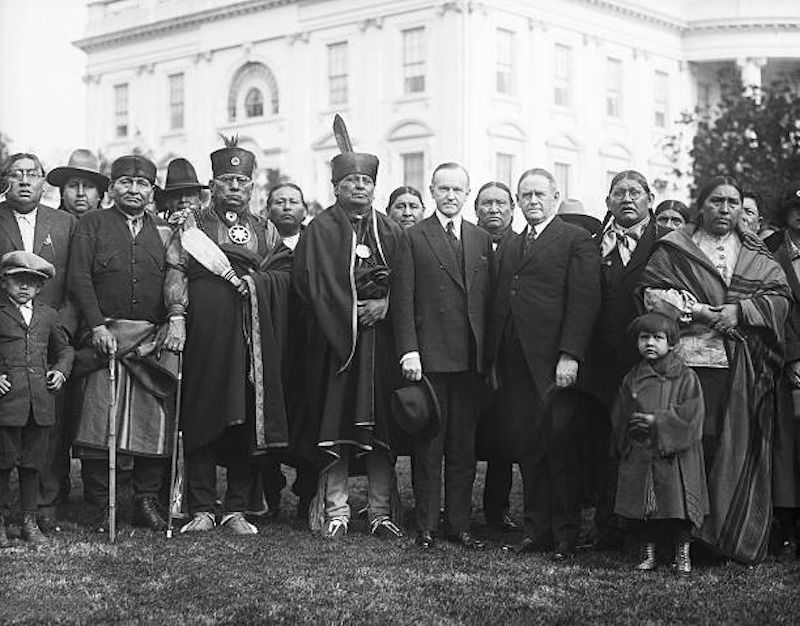
Between 1921 and 1925, at least 60 members of the Osage people were murdered at the hands of Hale and Burkhart. Some historians say the death toll could even be in the hundreds, reaching into the 1930s. Only one hundred years later––through David Grann's invaluable research, best-selling book, and Martin Scorsese's film––has the true story of the Osage Killings come to light.
William Hale and his nephews weren't the only criminals; they were aided and abetted by half the town. Corruption was rife during the 1920s oil boom, and towns like Gray Horse and Fairfax became a 20th-century Wild West. Tragically, thanks to rules on white men marrying into the tribe and inheriting their wives' fortunes when they mysteriously died one after the other, the Osage were more valuable dead than alive.
William Hale pretended to be a philanthropic best friend of the Osage Nation. Yet, beneath his convincing, charitable veneer, he was a scheming, Machiavellian racist who had scores of Native Americans murdered to line his own pockets. At his trial, he said, "white people in Oklahoma thought no more of killing an Indian than they did in 1724."
Ernest married young, naive Mollie and then tried to poison and bomb her to get his greedy hands on her inheritance and headrights. While Killers of the Flower Moon's Leonardo DiCaprio is as charismatic as ever, let's tell it how it is… Willliam Hale and Ernest Burkhart should be remembered as just two more names on America's long list of serial killers.