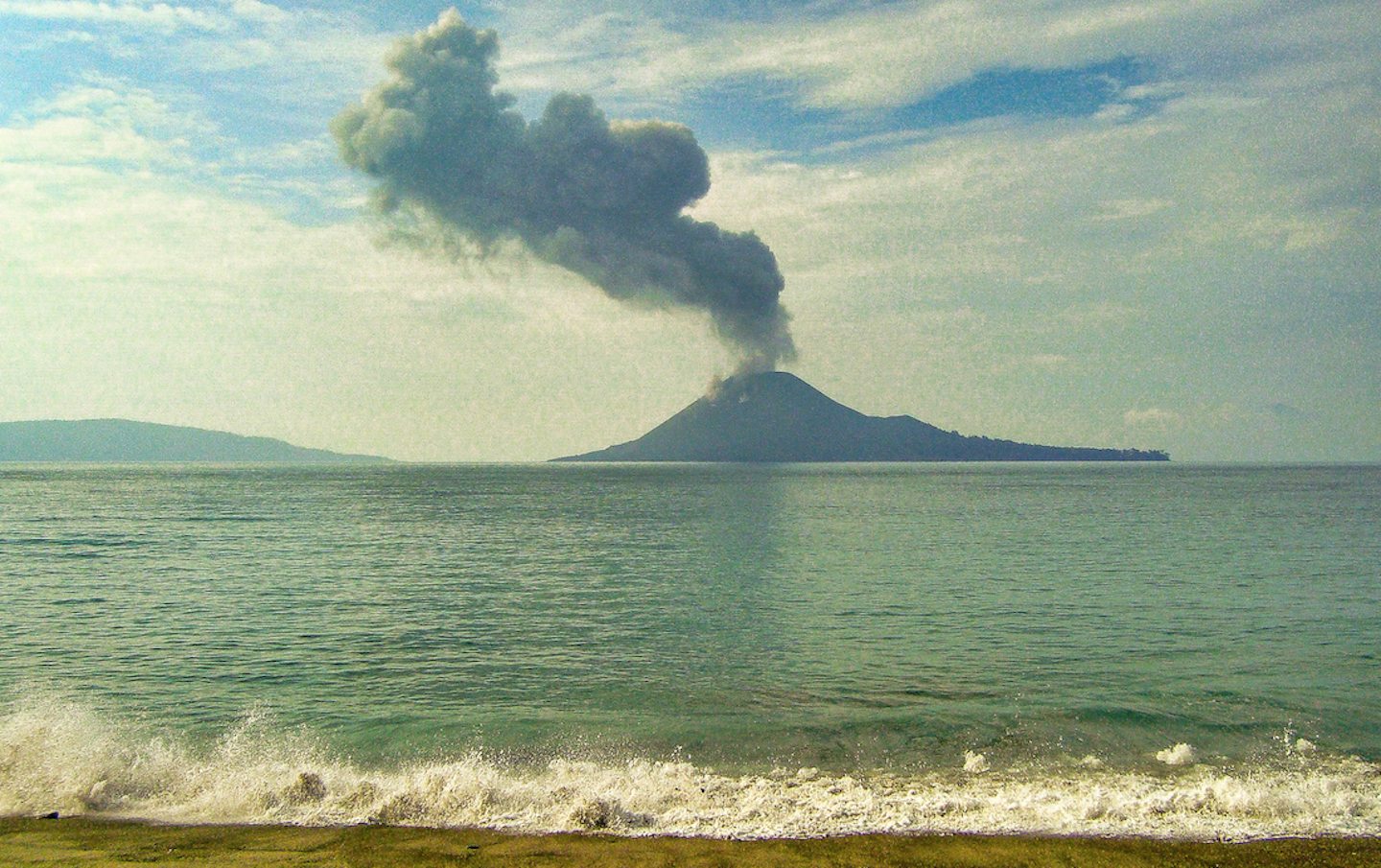
One Saturday afternoon, probably nestled between ITV wrestling and one of those awful Airport ‘77 disaster movies, I sat down to watch the 1968 movie "Krakatoa: East of Java" unfurl before my wide, eight-year-old eyes. It was 1982, and I was about to become obsessed with volcanoes.
To this day, the only thing I remember about the plot was that it took place 99 years ago in 1883, but I remember telling my mum: "One day I’m going to climb that volcano," before running to find Grandfather's atlas.
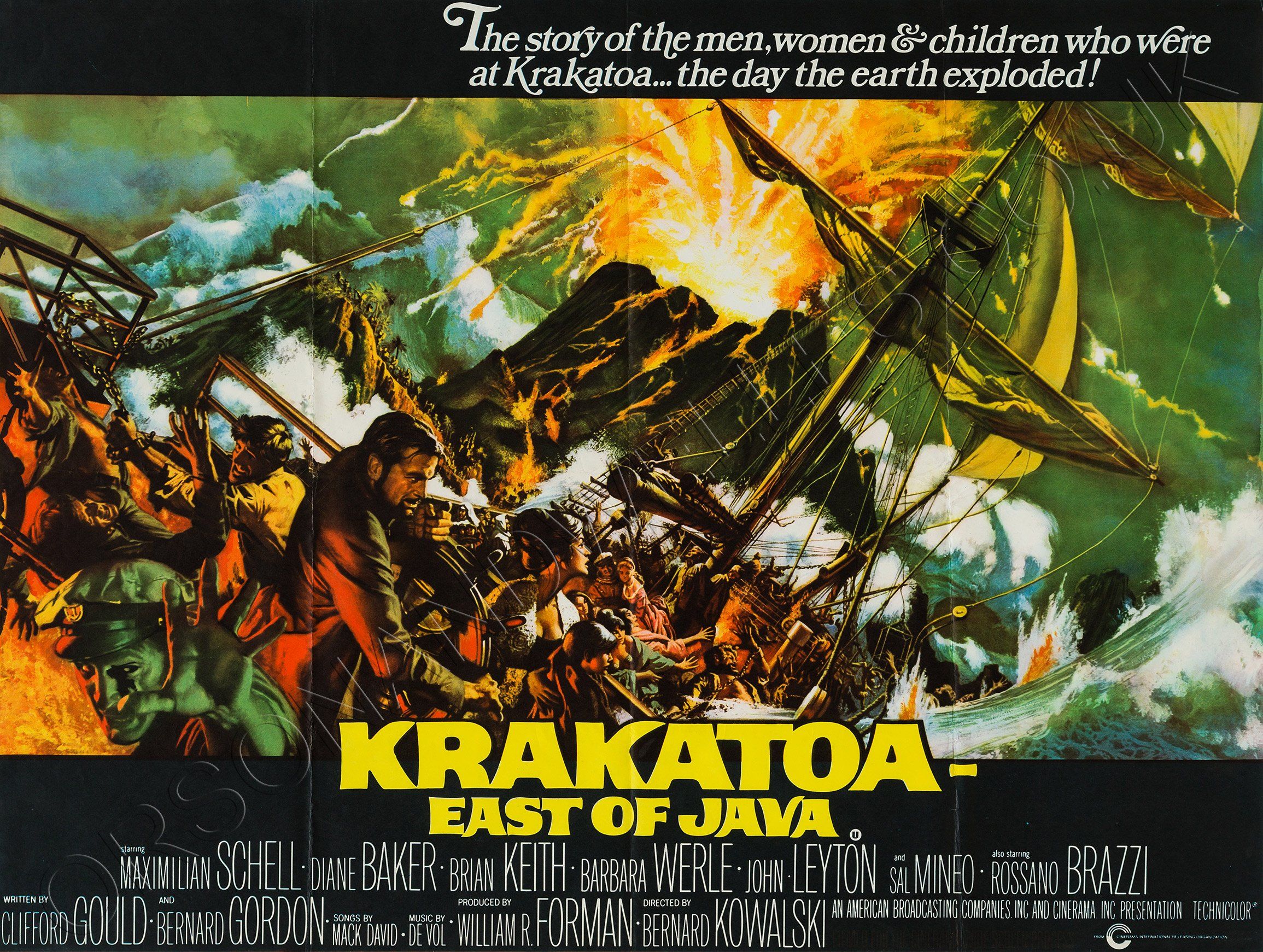
Published in 1925, it was as big as a broadsheet and as heavy as Moses' stone tablets. Probably blowing away decades of dust, I opened it to The Dutch East Indies... what we now call Indonesia.
Scanning the hand-drawn contours and coastlines, I was miffed to find no volcanic island east of Java. "Muuuuum! Gumpah’s map is wrong!" I bellowed towards the kitchen. Krakatoa was nowhere to be seen, not even with my spies’ magnifying glass. But then, in old-fashioned calligraphy, on the wrong side of Java, there it was… “The Site of Krakatoa” west of Java.
West? Someone was wrong, and I was going to get to the bottom of who.
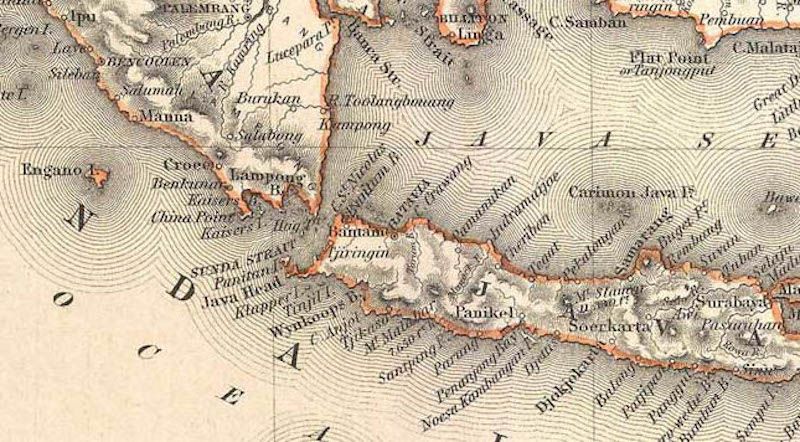
This was decades before the internet, so trips to the local library revealed that the movie producers knew the volcano Krakatau was east of Java, but believed “Krakatoa: East of Java” sounded more exotic.
The Lying Buggers. How could they do this to me? An eight-year-old boy!
Worse, all these ancient leather-bound maps either stated “The Site of Krakatoa” or showed no Krakatoa whatsoever. That was because the eruption in the mistitled movie had ripped the island asunder.
Balls! I thought... My days as my new hero, Indiana Jones, were over.
But my fascination with all things volcanic was just beginning...
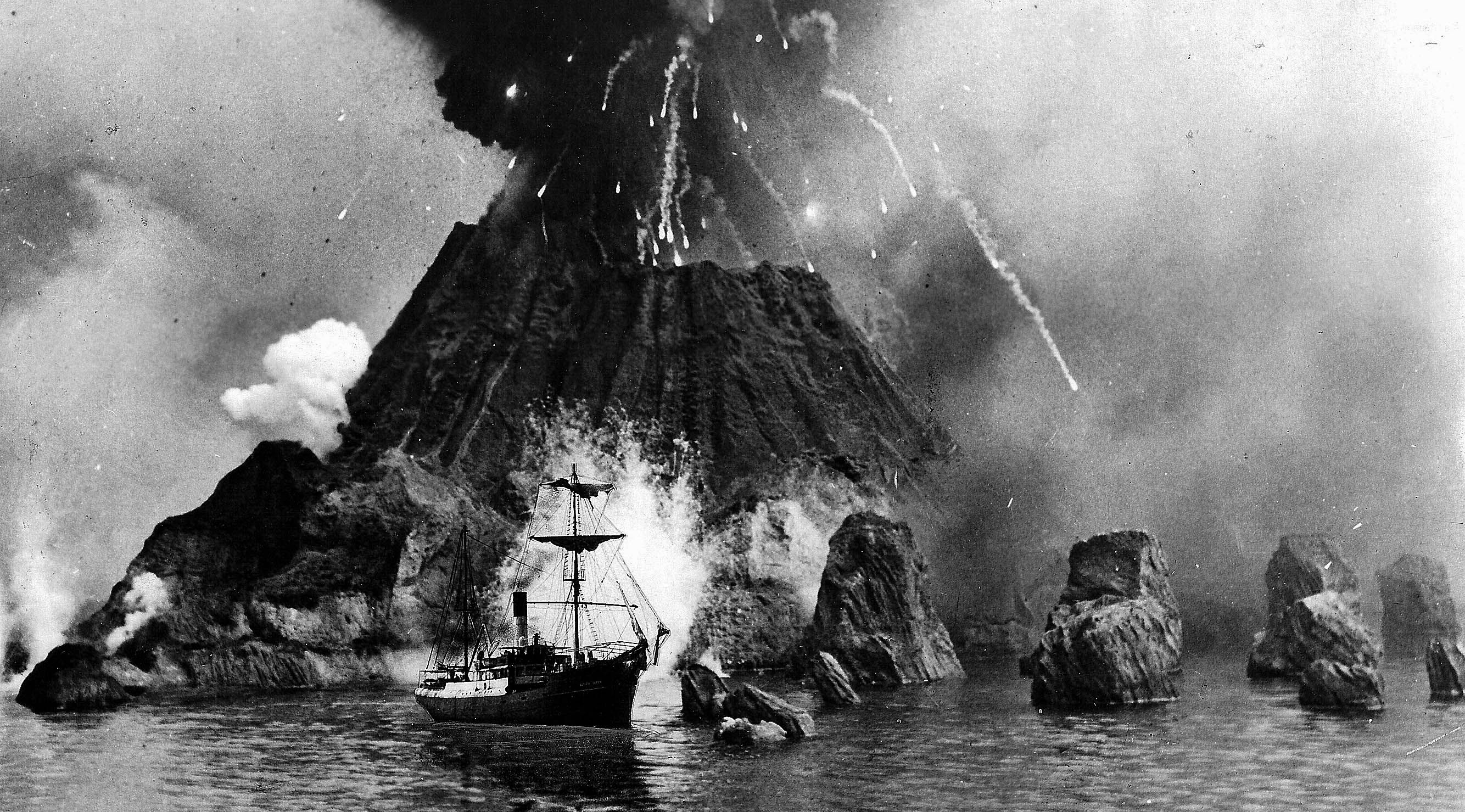
To cut millions of years of plate tectonics and subduction-zone movement short, Krakatoa erupted on the 26th and 27th August 1883 with the force of 13,000 Hiroshima A-bombs, or 200 megatonnes of TNT. Had anyone been on a boat within five miles, the shockwave would have killed them instantly, and deafened anyone standing within 10 miles.
The explosions ruptured sailors' eardrums on the Royal Mail ship RMS Norham Castle, 40 miles away, and were heard as far away as Perth, Western Australia, 1,900 miles to the south, and Rodrigues near Mauritius, 3,000 miles west-south-west. The island ripping herself apart was the loudest sound ever to be heard in the history of mankind.
Over the decades, dozens of insane facts piqued my interest, many from Simon Winchester's excellent 2003 book "Krakatoa: The Day The World Exploded".
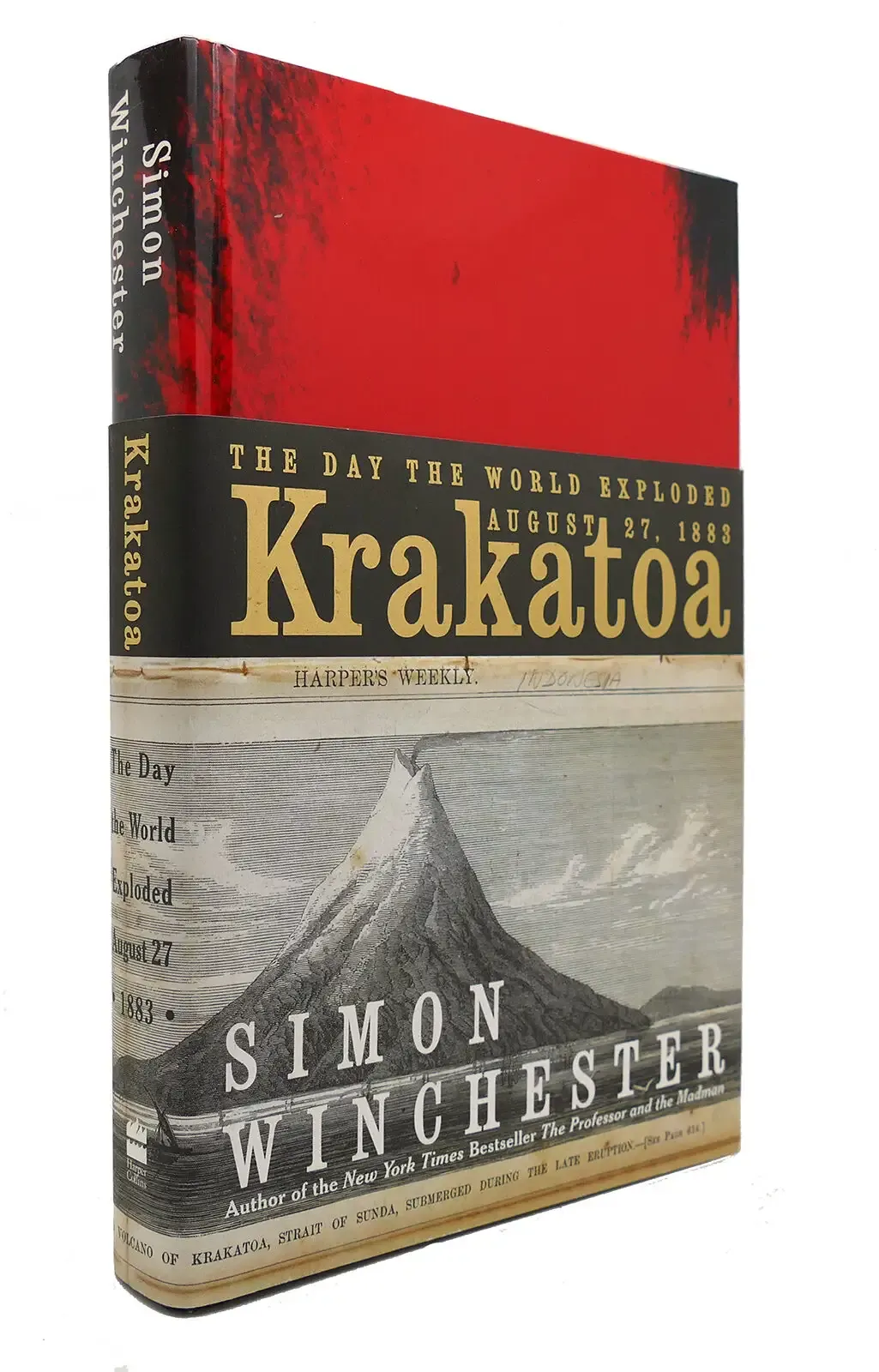
The volcano shot 13 cubic kilometers of ash 50 miles into the atmosphere at 1,600 mph; the shockwave reverberated seven times round the globe, pyroclasts rode across the Sunda Strait on cushions of air like nuclear hovercrafts to engulf Javan and Sumatran villages. The fast-moving clouds of gas and volcanic ash, 120-foot tsunami waves, and the falling tephra killed at least 36,000 people.
Further afield, the tsunamis affected the tide in the English Channel, the ejecta created halos around the sun and moon, and a micro ice-age gripped the globe for the next five years. In California, the San Francisco Fire Department was called to a fire in the west of the city, but arrived at the coast to find no fire, just a burning red sky.
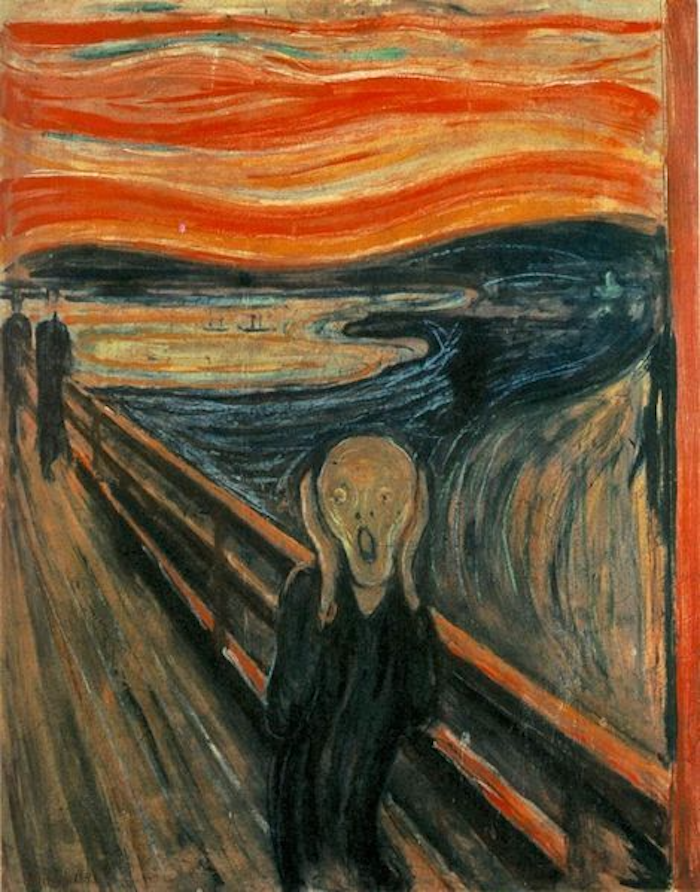
In his native Norwegian skies, artist Edvard Munch described melancholy-inducing "Clouds like blood and tongues of fire" and a "great, unending scream piercing through nature." It’s believed the red skies influenced his most famous work, "The Scream."
Even better were the legends; the tale of the German man who rode a 40-metre tsunami on the back of a crocodile before being dumped safely on terra firma. The steamship Berouw was torn from its mooring at Telok Betok Harbour in South East Sumatra, swept inland by the tsunami, before being deposited, almost intact, within dense jungle in the valley of the Koeripan River, a staggering 3.3 km from its anchorage.
Then, there were the tales of giant coral blocks being thrown across the Sunda Straight and onto the shore of Java by the tsunami. Human skeletons melded to rafts of pumice sailing themselves across the Indian Ocean to be discovered on East African shores a year later.

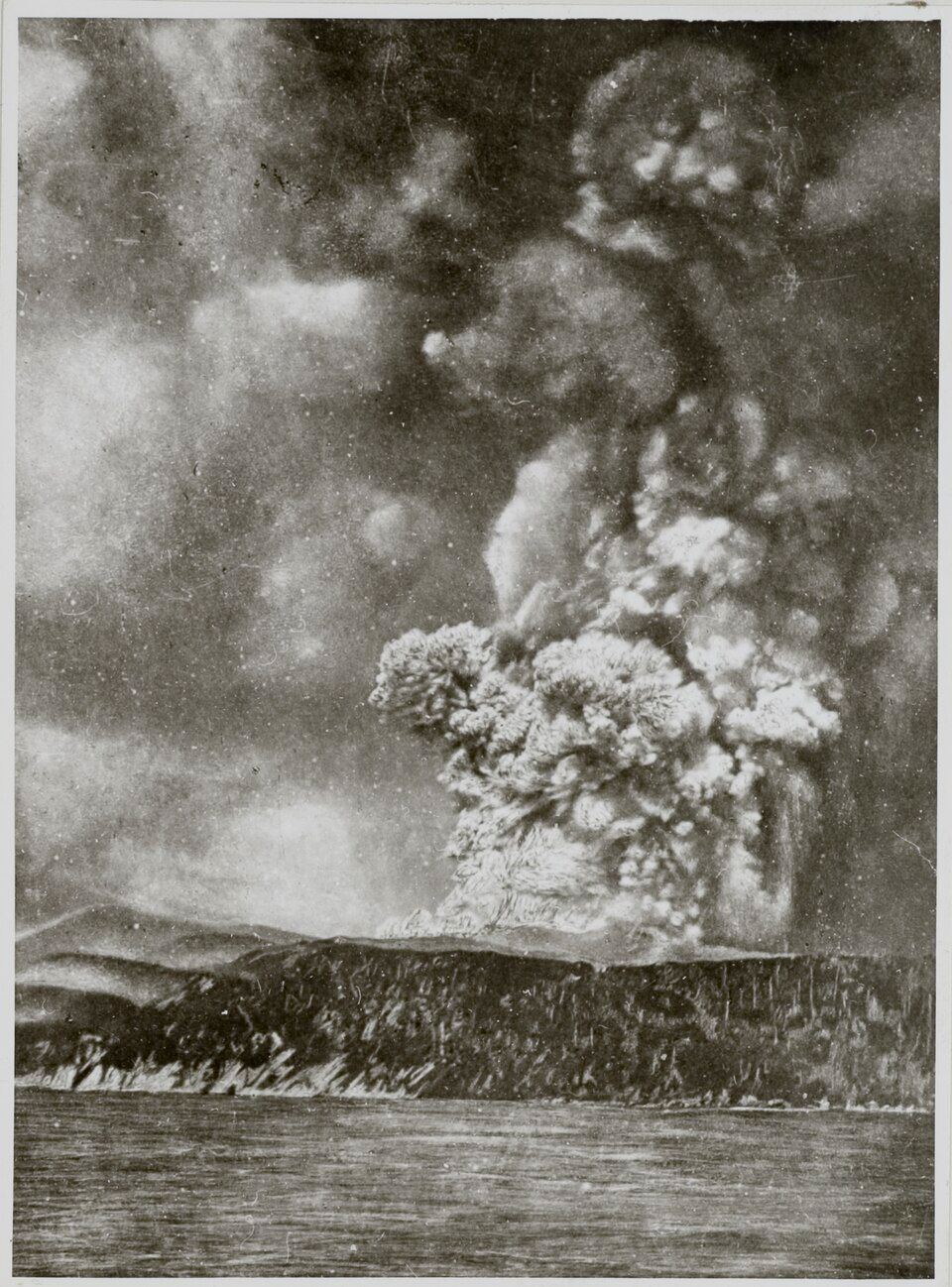
Over two devastating days in late August 1883, and four globe-shattering eruptions, millions of years' worth of mantle and lava made their way to the surface to become a colossal pressure-cooker waiting to go off.
On August 27th, the island collapsed into the caldera, and Krakatoa was no more. That’s the reason those old library maps only showed the site of Krakatoa, or no island at all. It was completely gone.
Until, that is, two years after my grandfather’s 1925 atlas was published...
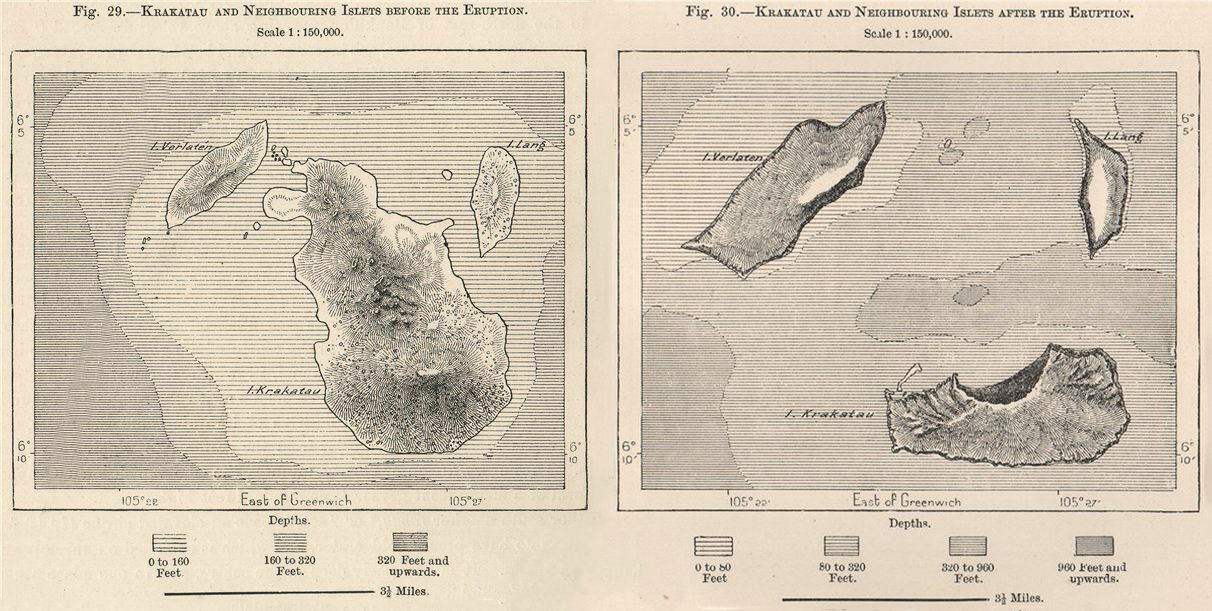
For, in the dying days of 1927, debris was witnessed spouting from the ocean above the collapsed caldera. This debris continued gathering until January 26th, 1928, when the rim of a new volcanic cone emerged from below sea level. By 1930, a new island volcano rose high above the waterline, and Anak Krakatau, the Son of Krakatoa, was born…
Fast-forwarding to the here and now... Jakarta is one of the nicest airports I’ve ever been through. Instead of the usual non-descript, grey airport nothingness, vibrant turquoise terracotta tiles adorn the walls; musicians play traditional Javan pentatonic-scale Gamelan music, and polite signs remind visitors of the DEATH SENTENCE FOR DRUG TRAFFIKERS.
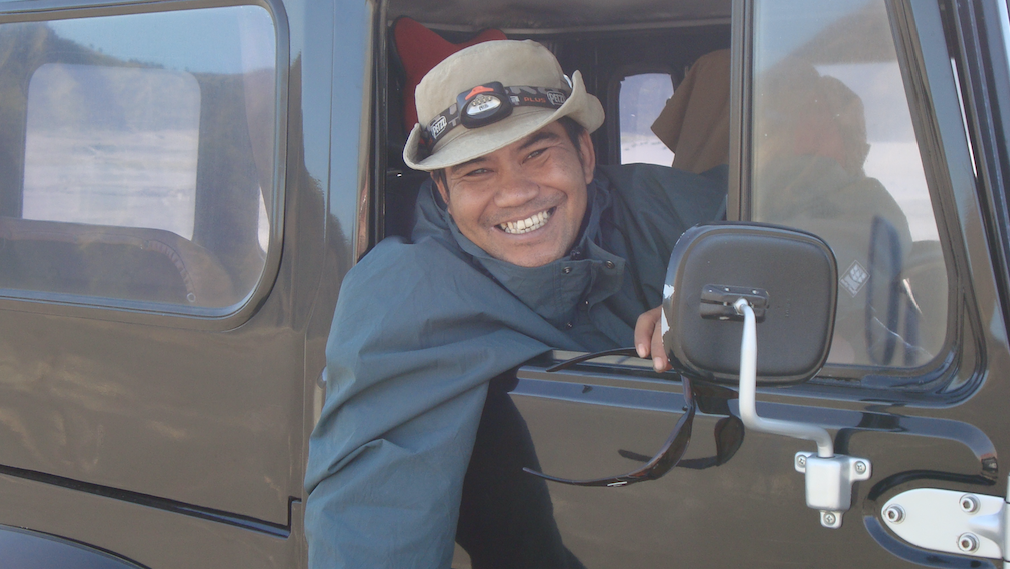
Outside, waiting by the pre-arranged, ubiquitous bowing Ronald McDonald, I was greeted by Doni, my Indonesian expert volcano guide for the next ten days. So far we had only communicated by e-mail, and this, coupled with his years of volcanology studies, made me think he'd be a serious academic, an uber-geek with one of those annoying fact-regurgitating brains. I couldn't have been further from the mark…
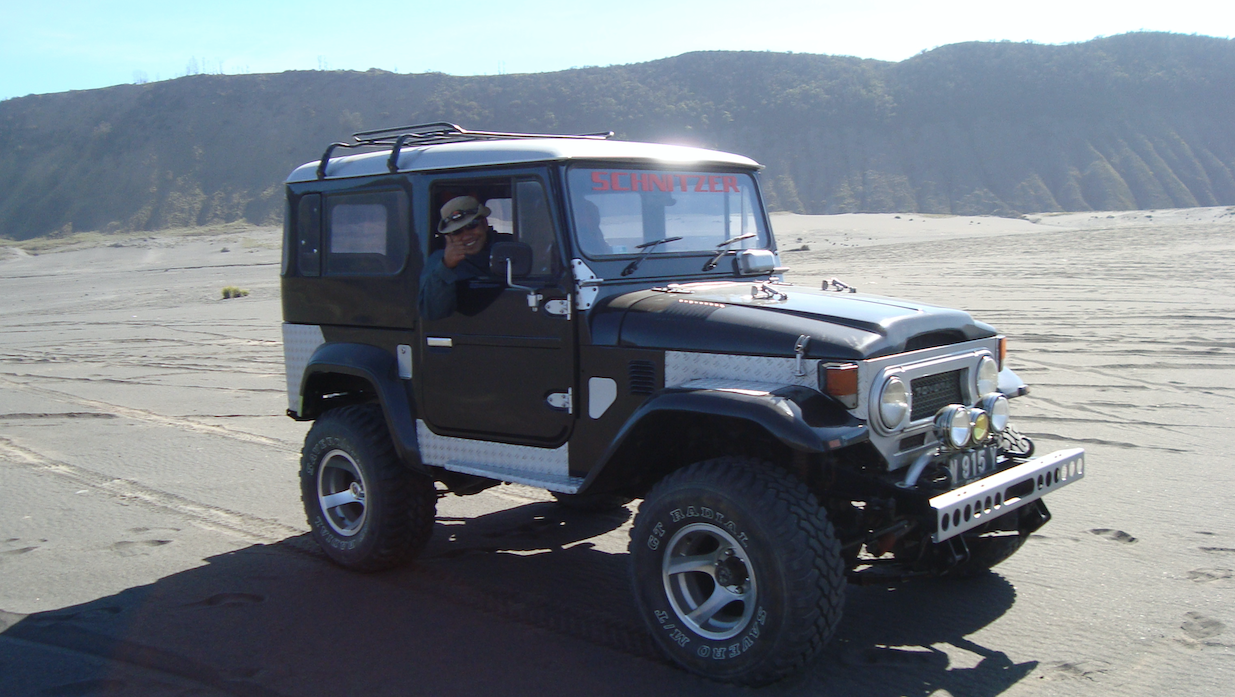
From my e-mails, Doni thought I would be a 60-year-old Englishman sporting a Panama hat, fawn-coloured linen suit, socks with sandals and wielding an umbrella, briefcase and copy of the Financial Times. He too couldn't have been further from the mark. In my mind, I was no Marcus Brody; I was a heavy-metal T-shirt-wearing Indiana Jones.
Supping the strongest Java coffee known to man (they drink the grinds!), while sitting in a café with his fixer friend Sirkip, I asked what it was like to stand on a volcano when it erupted. After a moment’s thought, Doni replied with a long, one-word answer. I won’t tell you what it is just yet, but it sounded like something an Indonesian Dick Van Dyke might say.
A hundred miles to the west of Jakarta, Anak Krakatau was on alert. Doni's volcanologist mates at the eruption monitoring station we visited on West Java and the US Geological Service recommended not venturing within several miles of the island, but I had come a long, long way.
The thought of finally seeing my first volcano up close filled me with joy, but after the six-hour drive from traffic-jammed Jakarta, a two-hour boat ride with Javan fishermen across the Sunda Strait still stood in my way.
We careened through the jade green water for an hour before the Son of Krakatoa slowly revealed itself through the mist. As we neared the dome, I regressed in age with excitement, back to that wide-eyed eight-year-old, drumming the side of the boat with my palms and whooping with delight.
The mist parted to unveil her perfect form until she loomed over us like a sleeping giant guarding the Sunda Straight with a hidden, fiery breath. Captain Stern Face, and his bosun, Mr Pink Jumper, brought the engine to an idle.
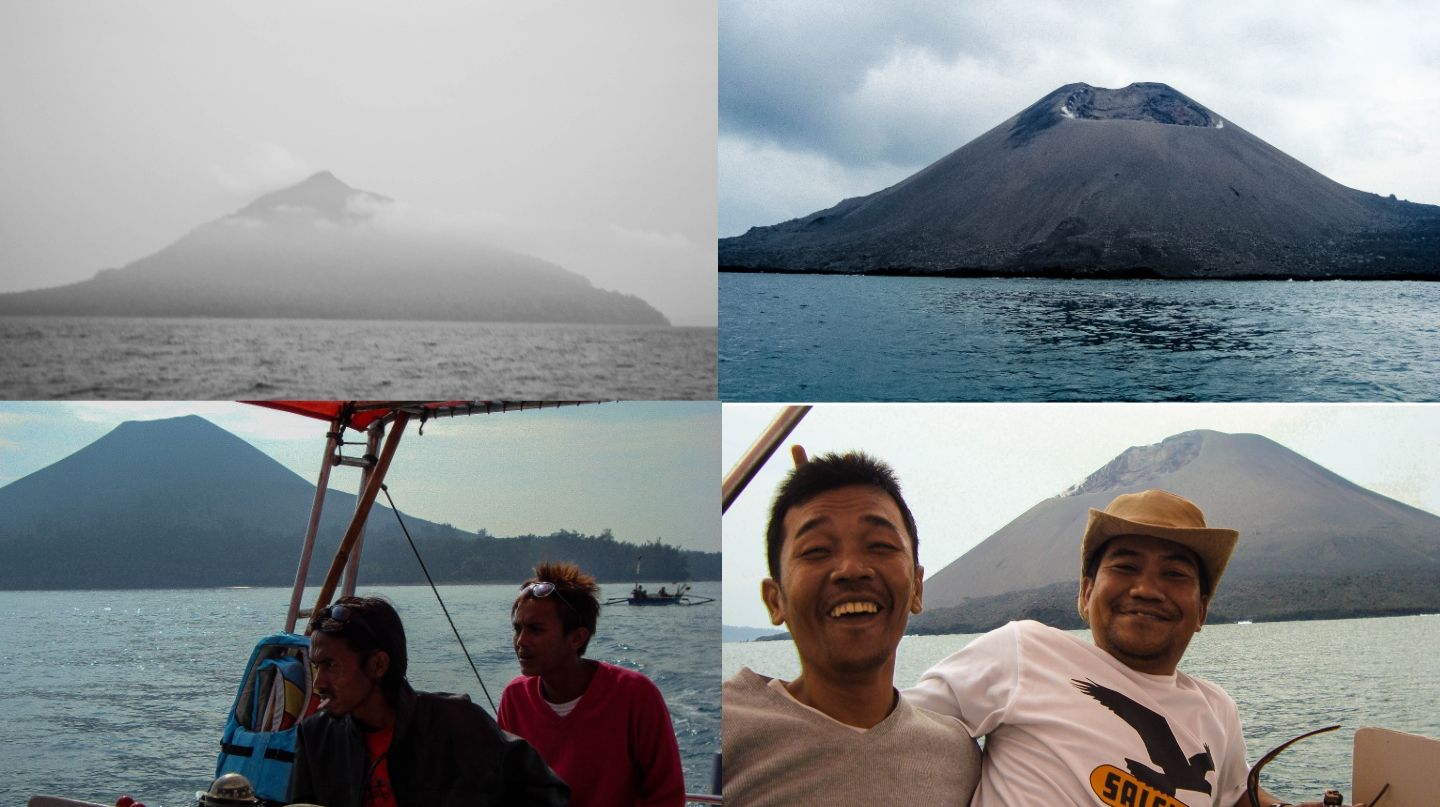
Bobbing up and down, I stared at the behemoth with wonderment. It resembled a giant grey-brown chocolate lava cake rising from a sea of green custard, the caldera a giant spoonful the Indonesian Gods had scooped away. The local fishermen informed us there had been major eruptions just three days ago. We dropped anchor and waited… we drank strong cold Java coffee from a flask… and waited some more while everyone smoked hideous clove kretek cigarettes… and we waited.
Nothing. Nada. Zip. Zero. Zilch. Best go climb the fucker.
We motored past monstrous lapilli rock formations, formed by numerous lava flows and as jagged and sharp as sword edges. Captain Stern Face moored the boat, and we waded onto land; my lily-white feet contrasting the black volcanic sand perfectly and making me feel quite out of place.
No tourists here; a welcome sign and makeshift shelter hut were the only signs of humankind. It was plain that few have ever set foot here; apart from scientists, locals, a swimming pig perhaps, and the odd adventurer.
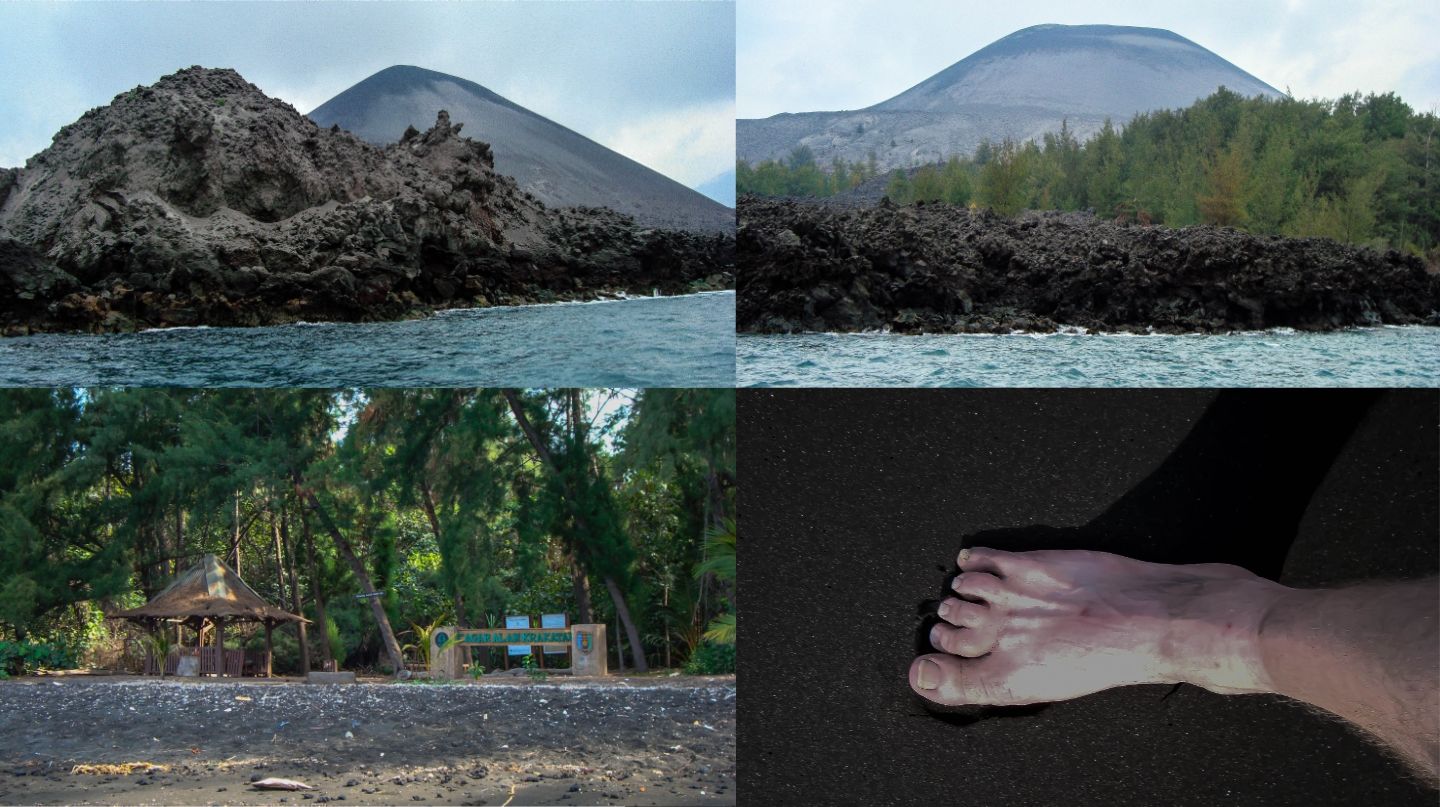
Leaving Sirkip on the shore, Doni and I changed footwear and walked the slight incline as pine trees swayed and whooshed, hypnotically calling to those gods. The small copse of green undergrowth soon gave way and before us rose a dark and desolate lunar landscape... silent and chilling.
Slipping on the talus escarpment in my canvas Converse All Stars and stopping three times for much-needed water, we made the old seismological observation station after a twenty-minute climb. It had been destroyed by lava bombs earlier in the year: paving-stone-sized slabs of molten rock ejected by the erupting vent, which cool and solidify on their earthward-bound journey, unwittingly becoming nature's cannonballs.
Some were too heavy to lift yet had been thrown half a mile by the sheer power of the insides of the earth. Although I'd really have liked to have seen some lava-bombs, I hoped there would be none today...
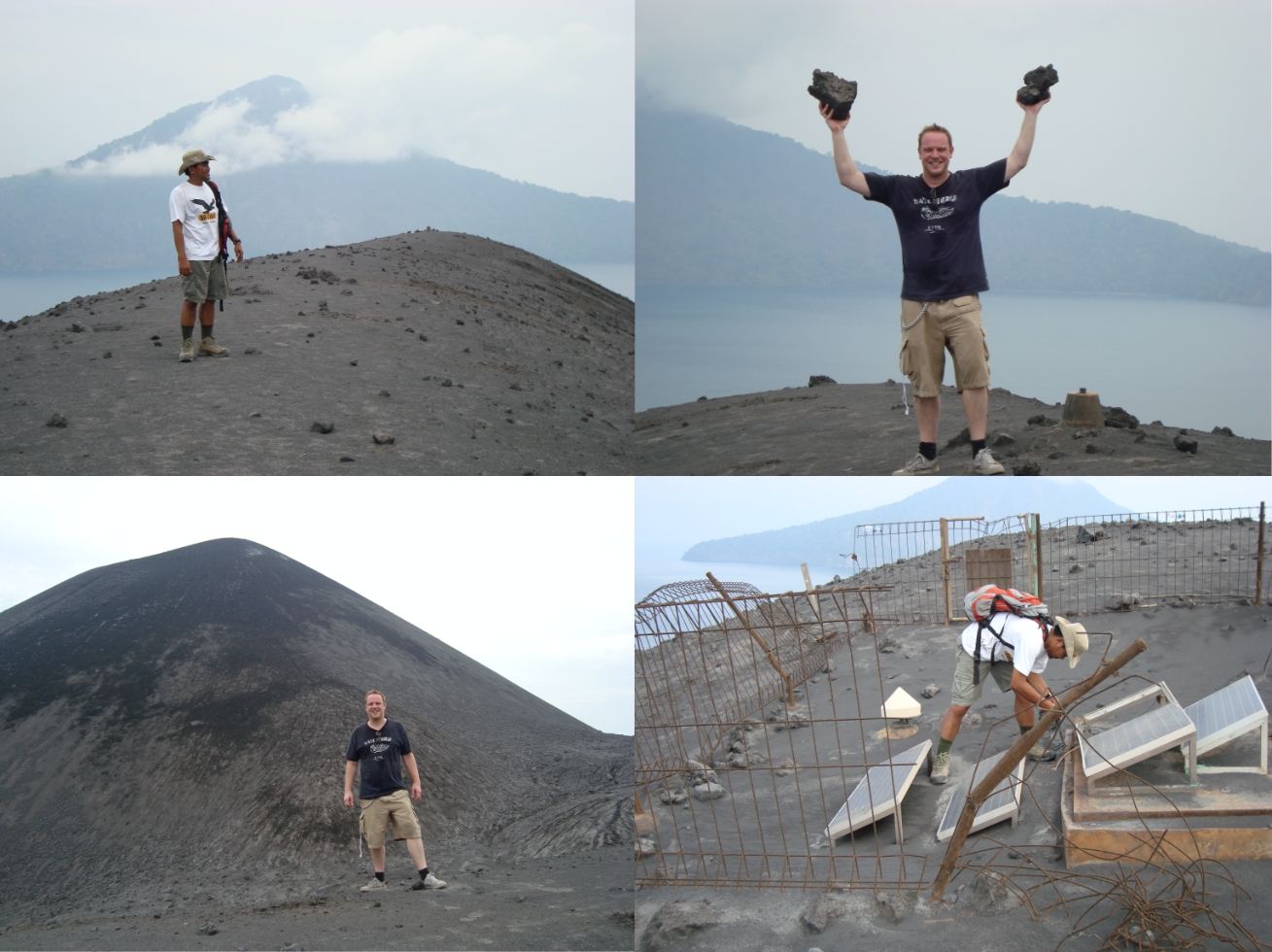
We hiked to the rim of the 1927 crater, two-thirds of the way up her impressive 300 metres, and sat to take on more water. I listened intently as Doni pointed out the islands of Rakata, Verlaten, and Lang.
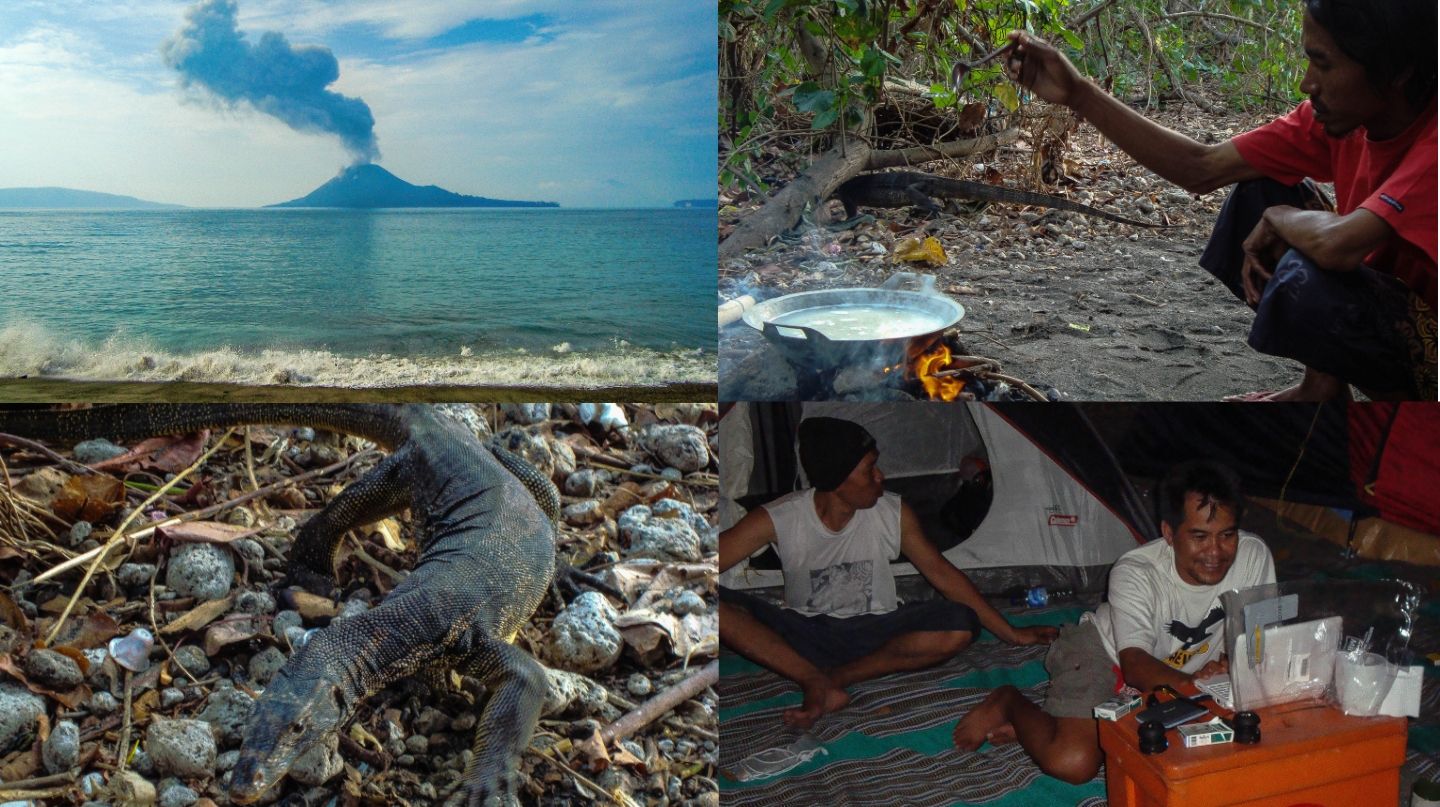
And then: tick, tick, tick, tick… Booom! With no word of warning, suddenly she erupted. The ground shook, a grey plume of ash blasted into the air, and an avalanche of scree smashed its way down the mountain towards us.
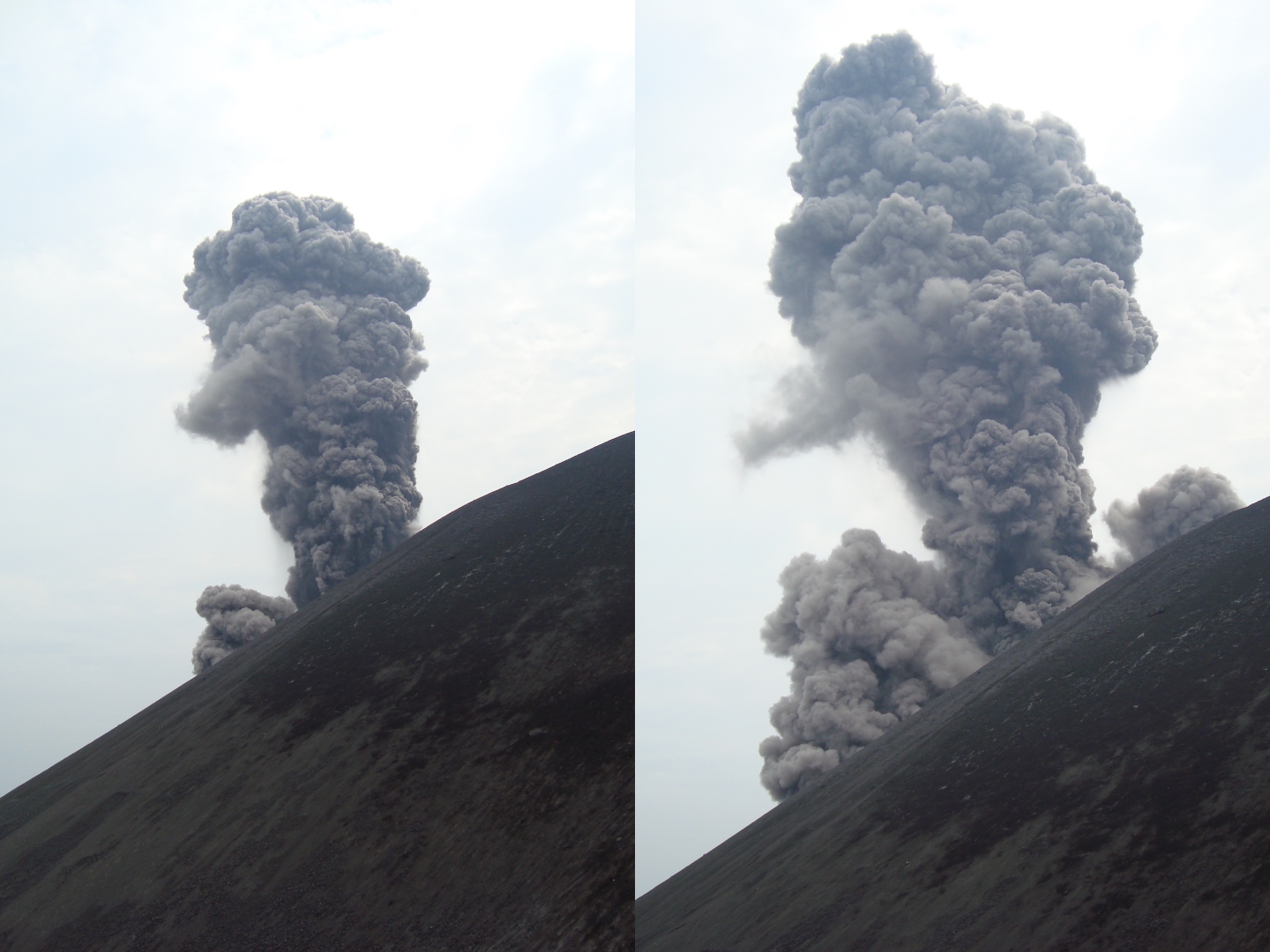
We were standing only a few hundred metres from the vent, and visions of a 200-mile-an-hour, 1,200-degree-Celsius, Pompeii-style pyroclastic flow danced across my mind. I froze as every cell in my body screamed for me to run, but my guide just stood there beaming at me with that wide, toothy, Javan grin.
With the words of World War One poet Wilfred Owen reverberating round my mind, “The Gas. The Gas. Quick boys, an ecstasy of fumbling,” I scrambled in my pockets for what I needed… no, not a gas mask, but my digital camera. Then, those few seconds of panic were replaced with awe.
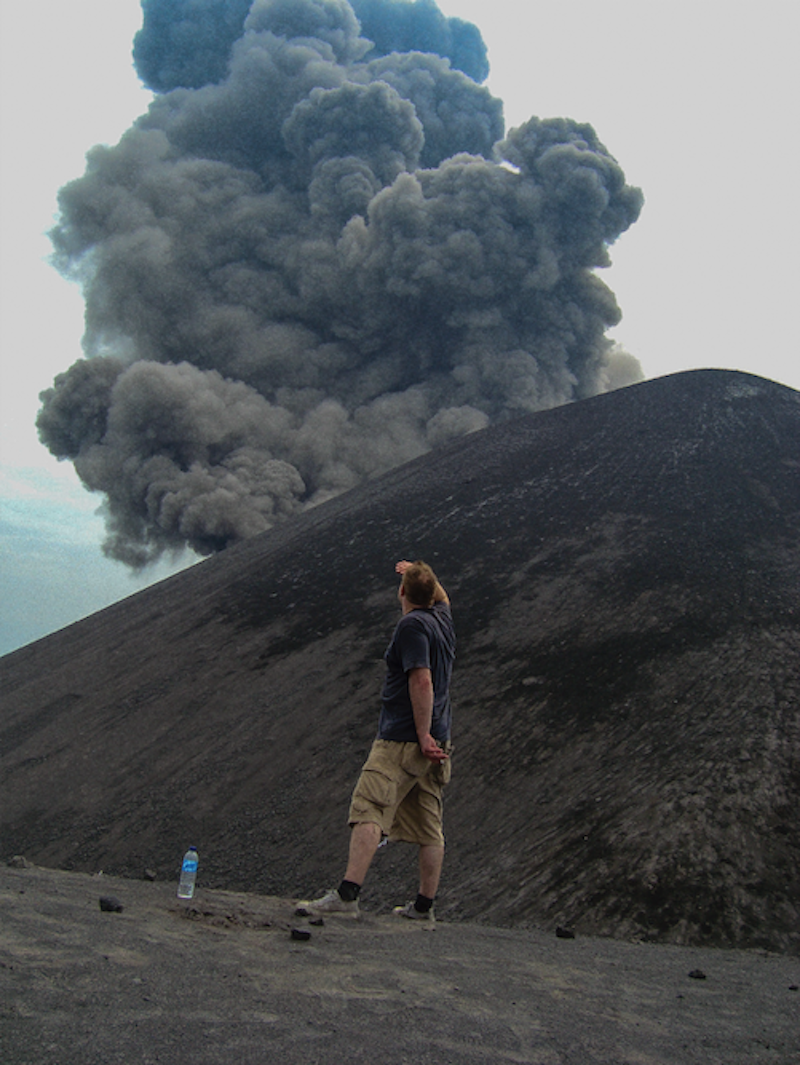
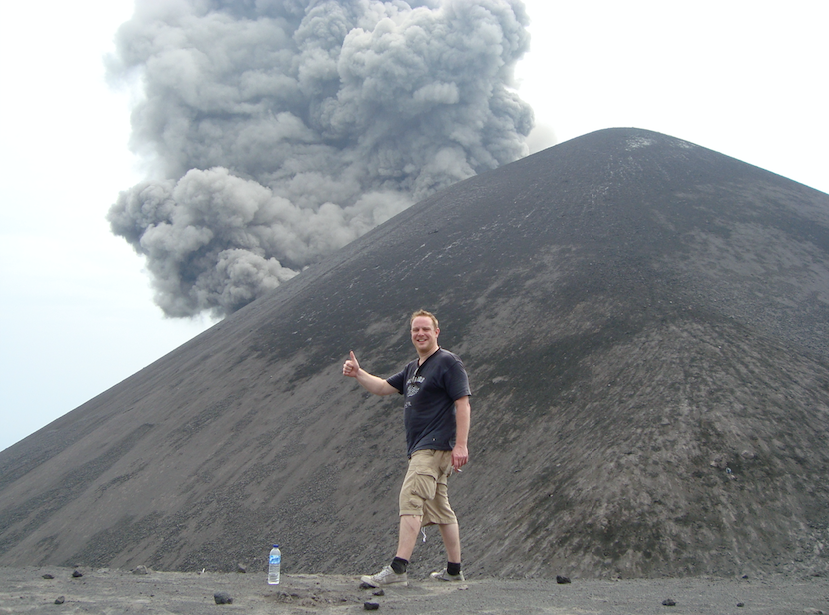
Thousands of cubic metres of ash, dust, rock, steam, smoke, pumice and noxious gas spewed hundreds of feet into the baby-blue sky, blocking out the sun. My mouth was in my stomach, but there was no real danger.
I watched, humbled by the devastating power unleashed before me as the grey cloud, which started its life as a belch in the belly of the earth, was taken up and away by the easterly wind.
I had just stood on a volcano as it erupted and lived to tell the tale!
Later that afternoon, a mile or so across the ocean, on the shore of Rakata Island, Doni and Sirkip set up tents with a military sense of having done this more than once before. Then, these two muppet tour guides set up a hammock for me, facing the smouldering volcano, and providing the perfect view across the aquamarine Sunda Straight.
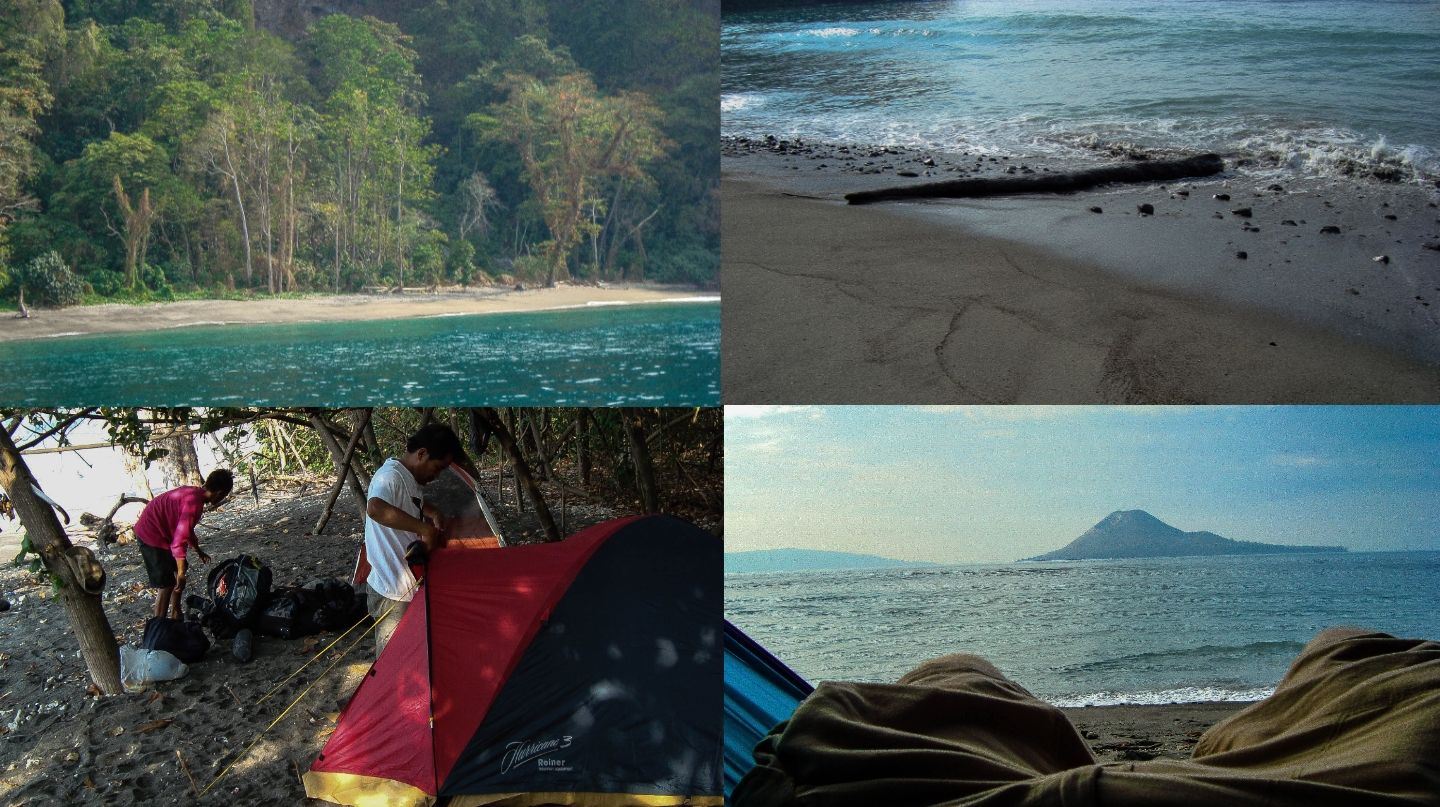
Two more massive eruptions gripped the mountain and, as darkness grew, with a giant monitor lizard for company, Doni, Sirkip, and the fishermen prepared a fireside dinner of sweetcorn soup and cheese, tomato, and garlic omelettes “to keep the vampyre away.”
Truth be told, I was waiting for a full-blown Strombolian eruption - a firework display of molten lava jetting every which way, lava bombs, volcanic lightning and all, but not even Doni's favourite song, Phil Collins' "I Can Feel It Coming in the Air Tonight," on my mini-laptop and portable speakers could anger the ancient Indonesian Gods into such a display.
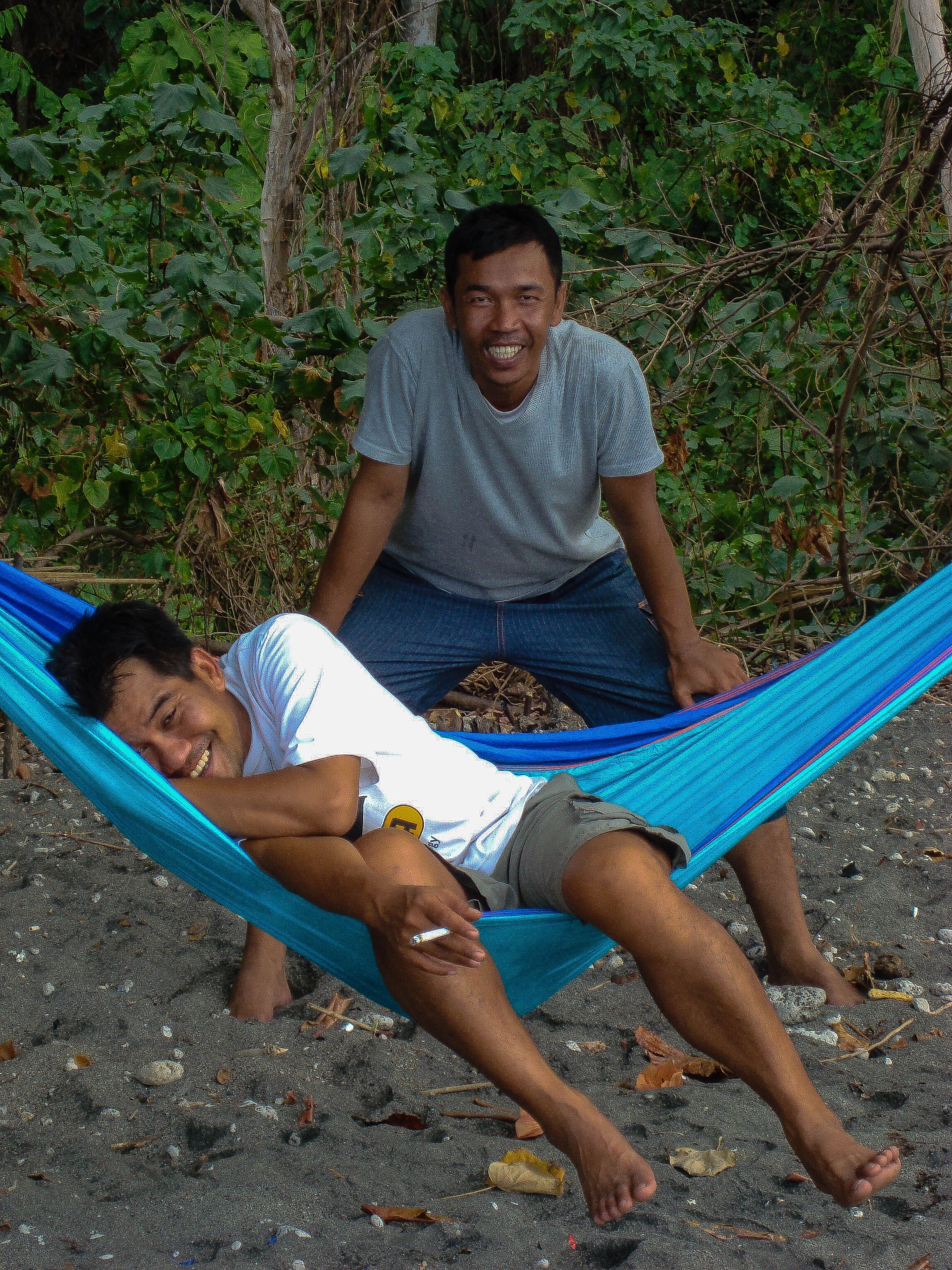
I swung in the hammock while being eaten alive by mosquitoes, a tad reluctant to get into the tent. But after Rakata Island's very first disco, Bintang beers, and a scramble to move the tents inland to escape the invading tide, it was time for bed.
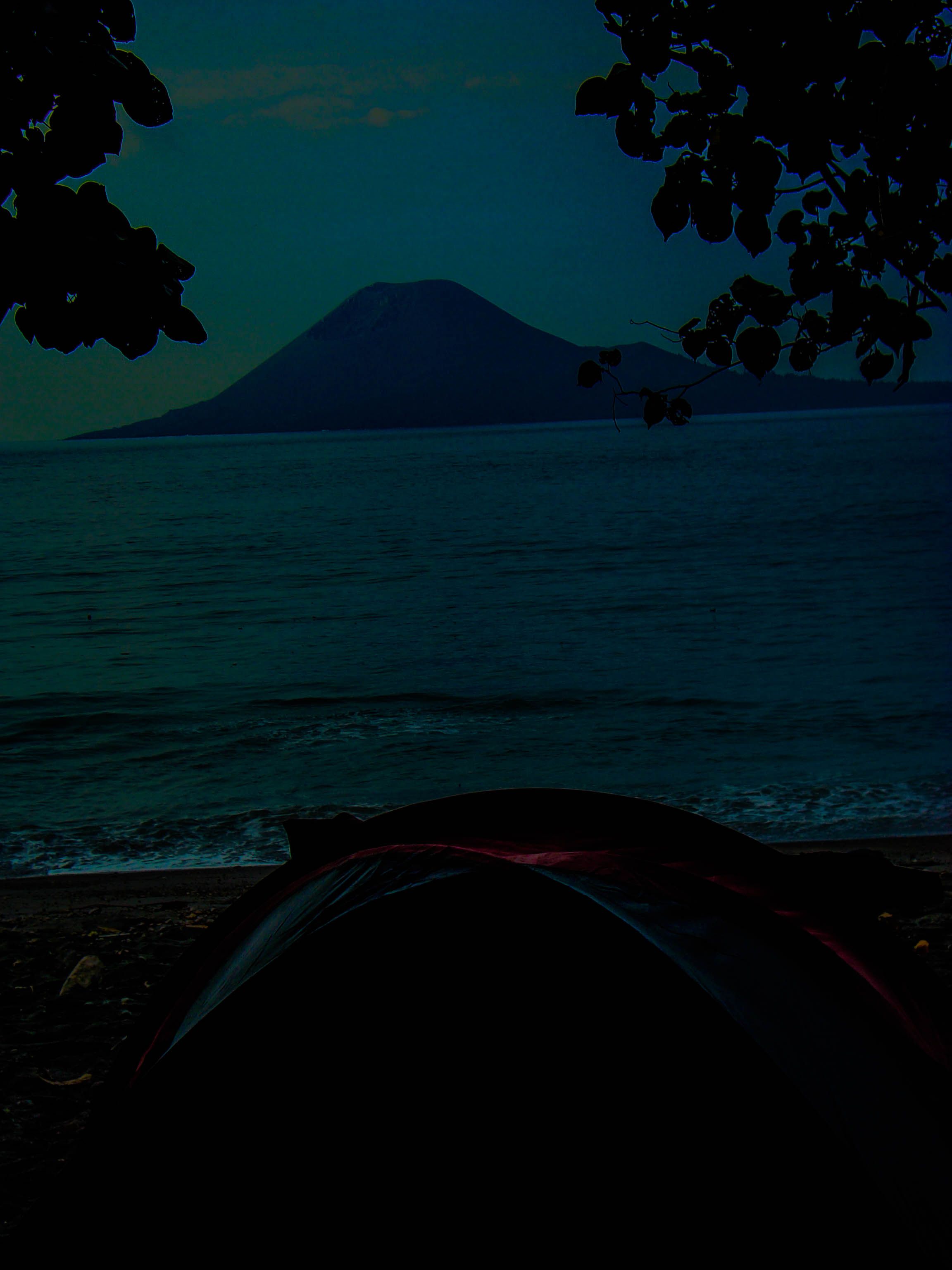
With a squint, I could still just make out the outline of the volcano - black against a blue-black sky, but Morpheus was calling me to slip into his arms. I zipped up the tent, put my head down, and eventually fell asleep. Every few minutes I would stir, but then, after one hour’s sleep, I woke with a jolt.
An Alien xenomorph bug as big as my fist had landed on the semi-transparent tent opening, its feelers clawing at the zip, trying to get inside to eat my face. More things with four legs that had come to eat me moved around outside, knocking pots, pans, and plates over. I couldn’t breathe. I was having some form of panic attack. And I needed to pee. Badly.
Adrenaline pulsed through my veins; my heart thumped in its ribcage, but I had no other option than to brave what horrors awaited me outside, or piss myself. I located a large tree with my torch but could hardly piss straight with fear. In the blackness, THINGS were moving on all sides.
The waves pummeled the shore with such force that the whole beach shook with each break, the noise tremendous and deafening. The shadowy forest moved unnaturally, and the trees narrowed like a Spielberg zoom every time I trained my torch on them.
The waves blocked my front exit, the trees my left, right, and behind, yet my heart rate was finally slowing. Petrified but safe on all four sides, the only angle I didn't have covered was... up. I shouldn't have looked up.
Gingerly craning my head upwards, six feet above me, glued upside-down from a branch hung a bat the size of a fucking pterodactyl. Its shiny vampiric eyes stared down at me. Black eyes, like a doll's eyes...
Mouth agog and tongue lolling, I blasted a salvo of garlic omelette breath at the giant bat. The winged denizen of the night recoiled in terror, flapping off into the darkness with a horror movie shriek. The next moment, the face-hugger from my tent decided to leap/fly/land on my T-shirt by my shoulder, its long antenna licking at my cheek and ear.
I crooked my head and flicked it with my hand, left-hooking it onto the sand. It looked up at me, and I swear it growled... yes, growled at me. Instinctively, I kicked sand at it, scrambled back into my tent, and quickly zipped the flap closed. I knew the only release from this, my usual antidote to vampires, xenomorphs, and insomnia... was daylight.
With one full hour’s sleep, I unzipped the tent to see Anak Krakatau erupting again in the distance. Doni brought some Farang food in the form of half a melon and a banana pancake and very kindly asked if I was okay because I “looked like sh*t.”
The muppets let me doze in the hammock for another hour before the boat had to leave for the mainland and my next Indonesian volcano hike, but that’s another story for another day...
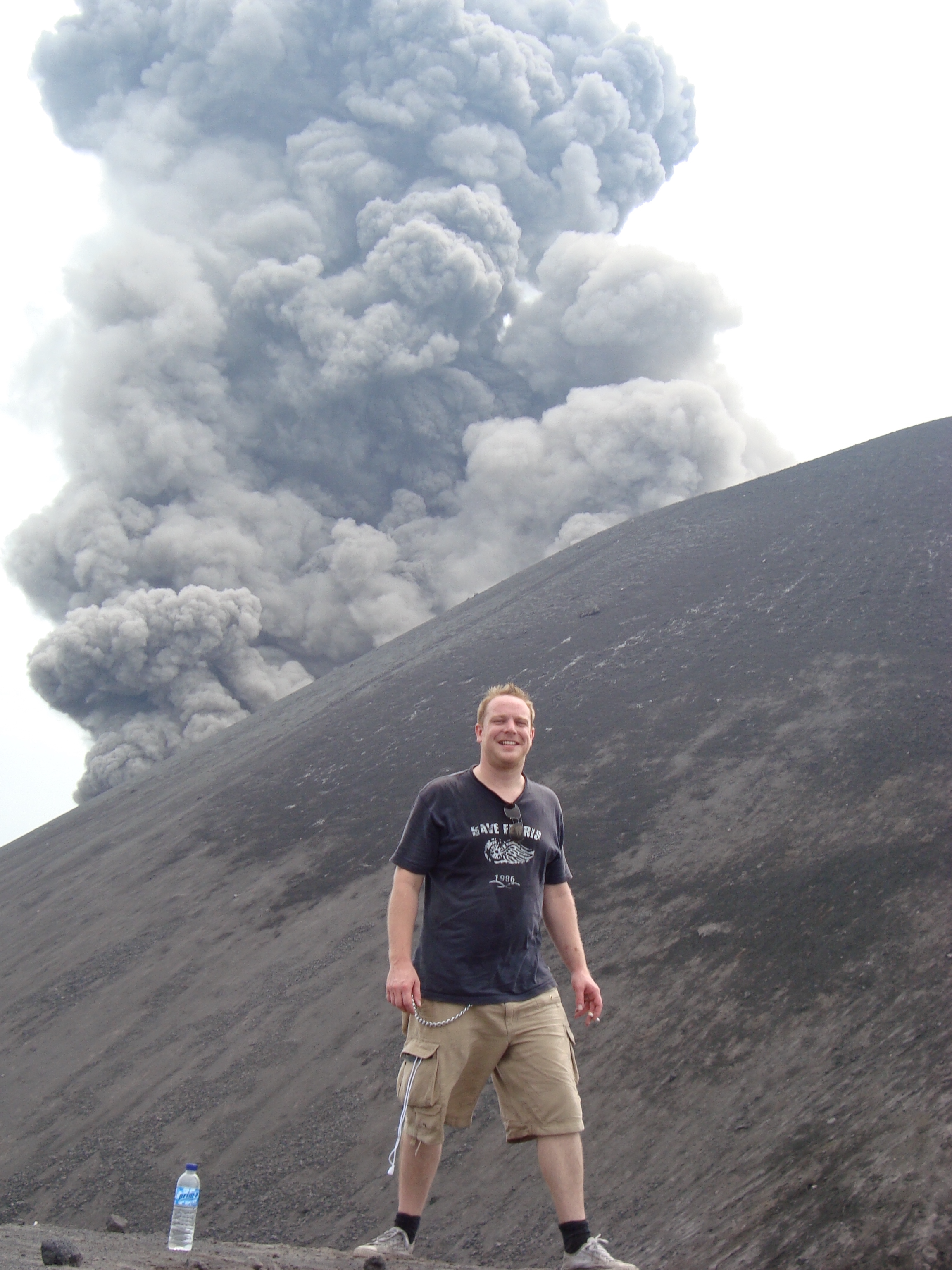
I had climbed my first volcano and survived the night on a mysterious island full of alien insects and giant vampire bats. Doni was right: being on an erupting volcano was "SuperBloodyMaximumFuckingCrazy" and in two short days I had become a real-life explorer; a bona fide adventurer.
So from this day forth, Mum... you can call me Indy.