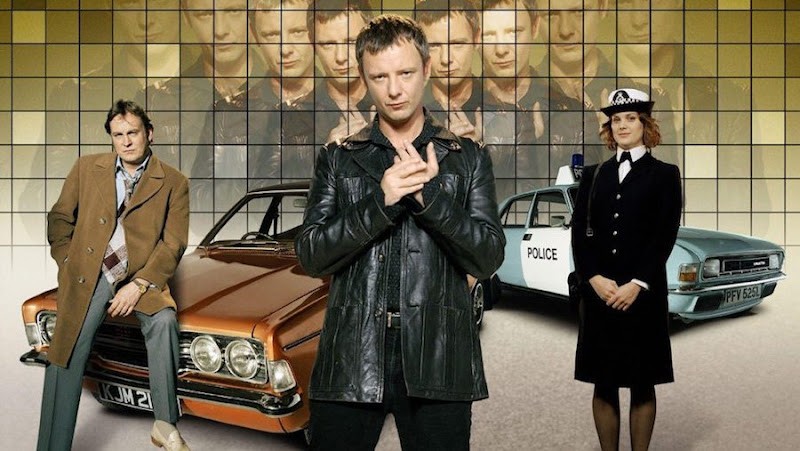
After a discussion amongst friends from across the pond who hadn’t seen it, I decided to revisit Mars. Life on Mars to be exact, and if you want to learn how to write and direct TV, I suggest you do, too… I am, of course, talking about the original version, which launched like a rocket onto BBC One screens in 2006, and not the risible American remake.
Pilot episodes are more than litmus tests to show to test audiences. A pilot must do more than set character, tone, and lay out the plot points; they must also serve as mini versions of the series as a whole: A one-hour speed date so you know what kind of girl you’re getting involved with.
There may be exceptions, but I think all great series start out with ruthlessly efficient pilot episodes. Today, I’m going to be concentrating on the first 12 minutes of the pilot, and by the end of this short article, you’ll hopefully agree that Life on Mars belongs on the list of great pilots alongside Lost, Breaking Bad, Buffy, Watchmen, Orphan Black, etc.
INTRODUCING YOUR UNIVERSE
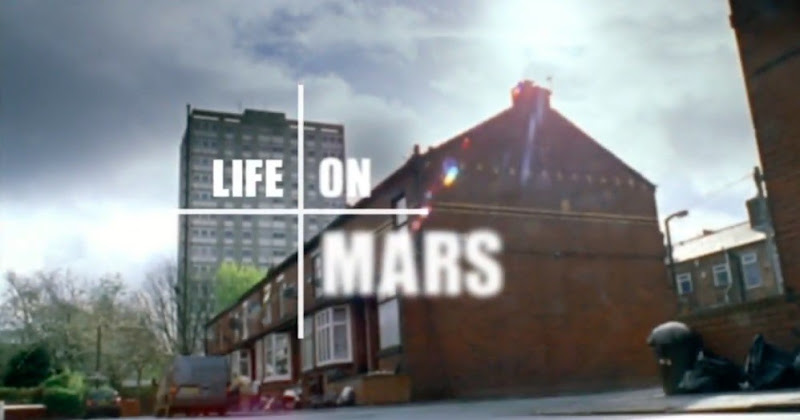
The opening establishing shot introduces us to the streets of present-day northern England. The leading car of a police convoy hurtles into shot, vanquishing the title card. This is real. This is urgent. This is now.
Forty-two seconds in, the pilot has achieved so much more than this. Highlighting the old and the new, these Victorian red-bricked, Coronation Street-style houses, 1970s grey high-rises, and trash-lined inner city streets will serve as the backdrop for Life on Mars. The speed-dating girl we’re getting ourselves involved with is a gritty, working-class Mancunian lass who speaks her mind and pulls no punches.
A detective, our protagonist, Sam Tyler (John Simm), organizes his team with a point of his finger, knocks on a door, and a mini-Point Break foot chase ensues in which Sam apprehends his suspect after a street fight.
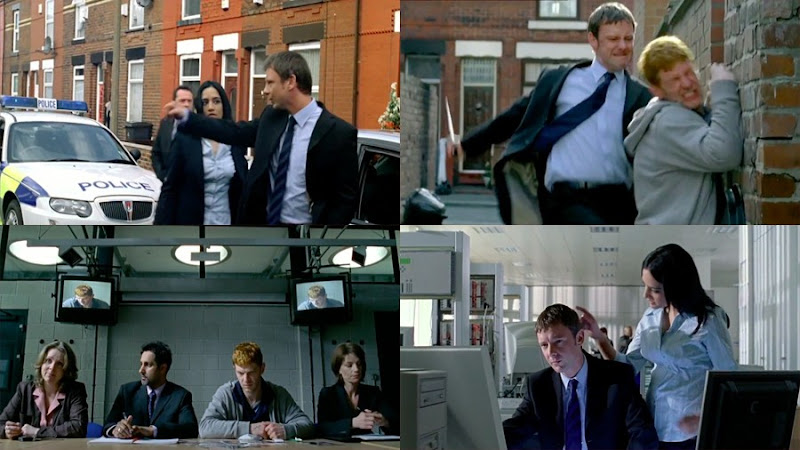
We cut to a conversation in a police interrogation room, the criminal is released on a formality and a New York minute later, Sam’s girlfriend Mia leaves the station to follow the released man... who she believes is also the kidnapper/murderer their team has been hunting.
Within four minutes, we have established our protagonist, his rank, authority, no-nonsense methods (whilst remaining rigorously within 21st-century rules), seen the excitement of a foot-chase and fight, experienced the red-tape that hampers modern policing methods, revealed his relationship with Mia, that they are experiencing difficulties, and set up the story of a murderer and the ticking clock before he kills again.
Minute five: Sam gets a call from Mia, who, despite Sam’s better judgment, has taken the law into her own hands and gone to find the murderer. Then, while on the phone, Mia is attacked by the man she went to find.
Six minutes in, and Sam and his team find Mia’s bloodied jacket in a park. The murderer she followed has abducted her.
Sam drives, listens to the greatest song ever recorded – David Bowie’s inspiration for the title of the series – Life on Mars? (with a question mark) and punches his steering wheel, clearly demonstrating he blames himself. He pulls over beneath an underpass, exits his car, and is immediately struck by another vehicle, sending him flying into the air… well, actually sending my mate, stunt performer Derek Lea, flying into the air.
A few moments later, Sam awakes in…
THE MAGICAL WORLD
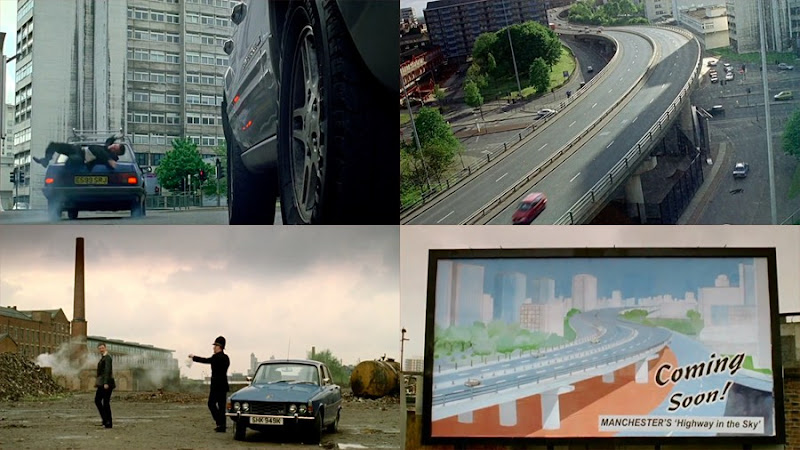
Dazed and concussed, Sam awakes to find he has crossed the threshold into an unfamiliar wasteland. A bobby in a moustache and looking like something outta Jamie and the Magic Torch arrives to deliver some deftly-written exposition from writer Matthew Graham, under the stewardship of criminally underrated veteran Eastenders scribe and Life on Mars co-creator, Tony Jordan. Sam learns from the cop that he's been transferred from another region, and, amongst nonsensical clues like “mobile what?”, he and we, the audience, realize that he has awoken in the 1970s.
Not the disco-fuelled, groove-tastic world of Studio 54, but rather Salford during the times of Ted Heath, football hooliganism, Magpie, and the three-day working week, leading to every UK street being lined with tumults of white dog poo. So we know when Sam is, but where is he?
THIS AIN’T KANSAS
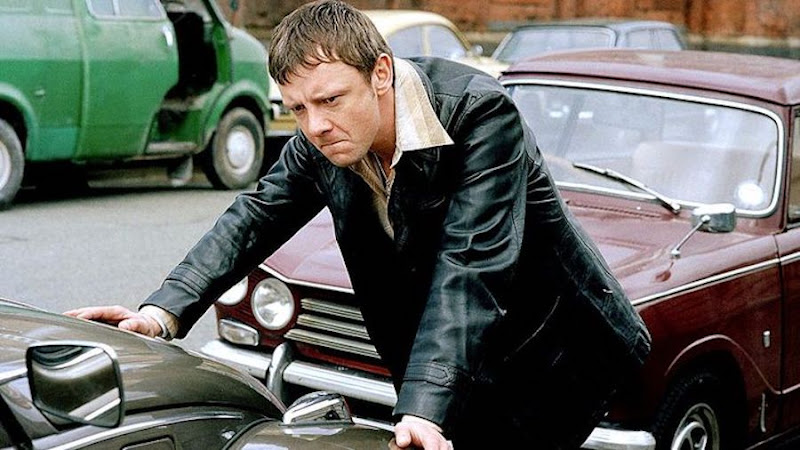
Well, via some delicious reveal-ery, Sam sees a giant billboard showing –not telling – he is at the exact same geographical location he just left; the underpass where he was hit by the car in 2006 hasn’t been built yet.
Stumbling through the decade’s shitty Ford Cortinas, sexism, and Spam fritters, Sam can’t quite believe his mince pies (eyes) until he sees he’s wearing flared bell-bottoms and a shirt collar with the wingspan of a South American condor reflected in the back of a VW Beetle’s mirror.
Checking his wallet, Detective Sam Tyler must accept that, for the time being, he is stuck in the 1970s, employed by Her Majesty’s police force. All this takes place within 12 short minutes of orgasmically efficient screen time set to Bowie’s greatest song. Next, Sam stumbles into his backwater office to be greeted by his gruff mentor, Detective Inspector Gene Hunt.
MEETING THE MENTOR
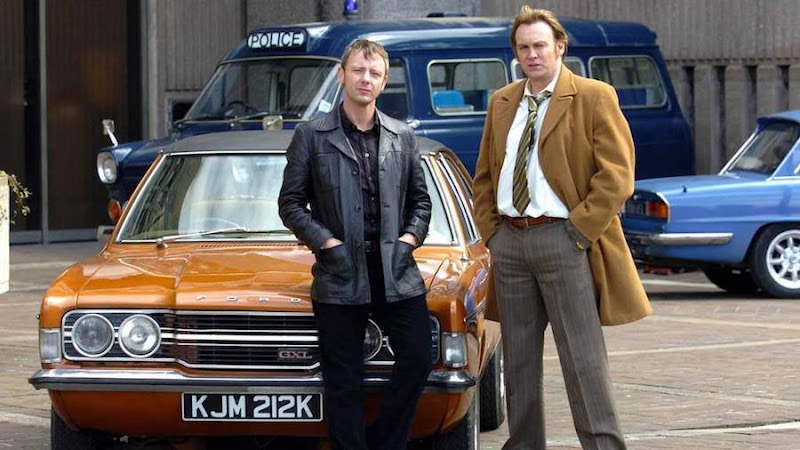
But Sam’s mentorship doesn’t come in the form of some old, bearded, sage swordsman spouting Eastern spirituality. Gene Hunt (Philip Glenister) is a relentless, corrupt, old-school misogynist bully offering rule-breaking methods, testosterone, fist fights, and profanity-laced put-downs like “Tits in a jumper” from the world of classic English cop show, The Sweeney.
Their relationship provides the series with a hell of a thematic question – whose policing methods are correct? 21st Century Boy, Sam’s modern, bureaucratic, woke, compassionate, by-the-book techniques or The Gene Genie’s policy of beating up the wrong guy and asking questions later?
The series develops into a deep, rich, and thought-provoking science fiction storyline, but I don’t want to give away too much about the rules of this magical world. Suffice to say that within this possibly illusory world (or ‘Maya’ in Hinduism), Sam must endure trials, learn unknown, old-school policing skills, question his very existence, and take massive leaps of faith if he wants to get back to The Ordinary World to save Mia.
This time-travelling cop show is a classic Hero’s Journey, brought to you through some of the finest, ruthlessly efficient televisual storytelling you could wish for. Watch and learn!
Full seasons of Life on Mars are available to stream on BBC iPlayer, but steer well clear of the awful U.S. remake, which, for some unfuckingknownreason was revealed to be the dream of an astronaut on his way to Mars. Honestly!