
There’s something incredibly romantic and fascinating about archaeology. And we have one man to thank for that - Indiana Jones. But it’s not always dashing adventurers who strike gold. It’s not always bullwhips, fedoras and jungle temples, either. A literal treasure trove of ancient artefacts and art forms: a Bedouin shepherd discovered the Dead Sea Scrolls. Likewise, the Rosetta Stone, the Xian Terracotta Army and the Venus De Milo were all also discovered completely by accident.
In this new technological age, the stereotyped Victorian-era, khaki-clad, mustachioed explorer has been replaced. First by the metal detector, then by satellites and heat-seeking and LiDAR (Light Detection and Ranging) equipped drones. But an Italian man named Luca Mori used a different tool to uncover the past. A tool that we all use, perhaps every day.
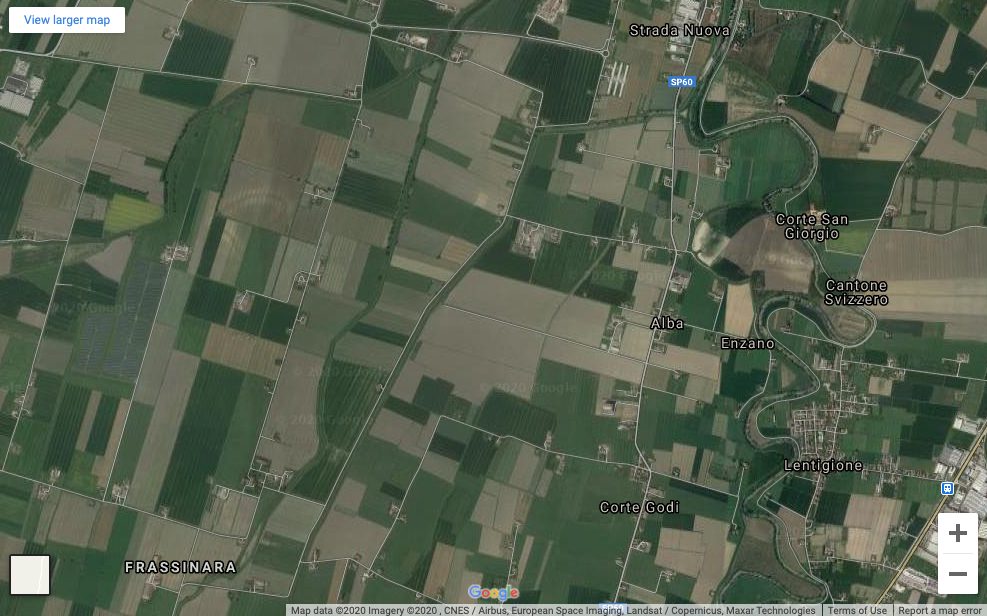
Presumably, while looking for his nearest pizzeria, Luca was checking out his small hometown of Sorbolo, near Parma in Northern Italy, on Google Earth when several “visible anomalies” caught his eye. And yes, before you ask, that is the same Parma where the ham and Parmesan cheese come from. Anyway, Luca noticed something utterly baffling. If you’re wondering, the Italian for utterly baffling is assolutamente sconcertante!
Whether he was interested in unearthing lost treasures or not, now Luca had been thrown in at the deep end. Suddenly, he was an archaeologist! This Italian Indiana Jones – let’s call him Indiano Giovanni – wasn’t a part-time history teacher like Harrison Ford in the movies; he was a computer programmer. And, at first, he thought what he saw was a technical glitch.
As he scanned the satellite images on his computer, he noticed something that wasn’t quite right - something stuck out. As a lifelong resident of the Sorbolo region, he thought he knew everything about this little corner of Northern Italy. But he had stumbled upon something he couldn’t quite put his finger on. Something extraordinary…. or straordinaria in Italiano.
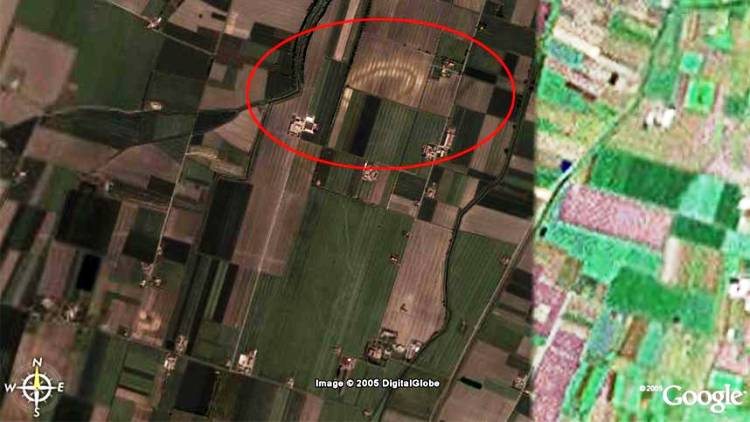
Luca was staring at a prominent, oval feature. The above image doesn't show the scale, but it was over 500 metres (1,640ft) long. This unusual feature had been formed by an ancient meandering river. The only reason it's visible is that former watercourses absorb different amounts of moisture from the air than their surroundings.
With the attention to detail you’d expect from the Italian IT Crowd, Luca's keen eye was further caught by unusual "rectangular shadows" nearby. Curious, he analysed the image and quickly came to the conclusion that the lines must represent some kind of buried structure. And he knew it had to be of human origin since nature doesn’t really do straight lines.
“At first I thought it was a stain on the photograph,” Luca told the press in an interview, “But when I zoomed in, I saw that there was something under the earth.” This humble coder from a small town with a population of under ten thousand, a place no one’s ever heard of in the north of Italy, had stumbled across something no one else in the world knew about...
After scratching his head for a short while, Luca decided he needed help to unearth his assolutamente sconcertante discovery. So he did what anyone would: he called in the experts. In this case, bone-diggers.
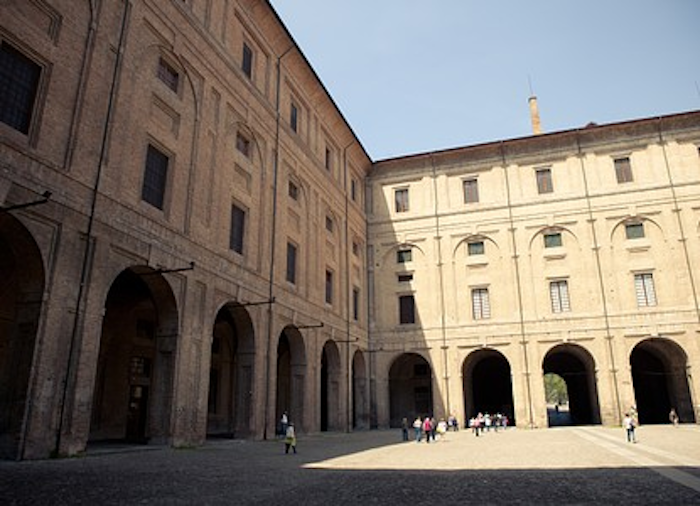
Short of traipsing out to the site himself to investigate, he wasn’t sure what to do. Luckily for Luca, the National Archaeological Museum (pictured above) happened to be in Parma just eight miles away, so he contacted them about his extraordinary find. At this point, he wasn’t even sure if his discovery was significant, but he had to be sure.
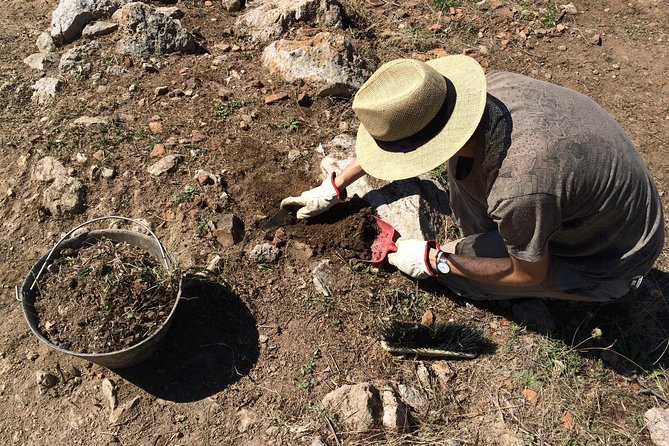
The museum's team of experts quickly made their way to the location he identified on the Google Map, and you won’t believe what Luca had found… When the archaeologists arrived in Sorbolo, they couldn’t have been more surprised by what they came across.
The area was definitely some kind of structure and, better still, it definitely contained ruins from antiquity. But without a more thorough inspection, they were still unsure what exactly they were looking at.
With their trusty trowels, sieves, and paintbrushes in hand, the expert crew began scrabbling around in the dirt and quickly excavated a few pieces of ceramic from this never-before-seen ancient Roman site.
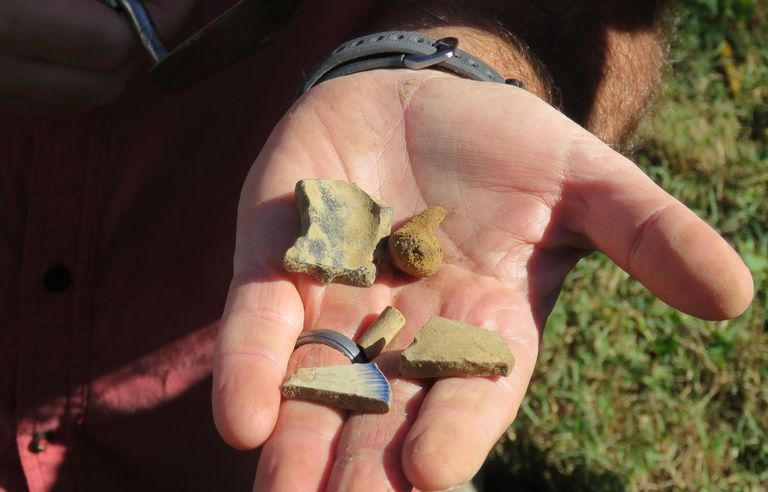
Luca had definitely found something; they were dealing with something completely unknown to the public. But what on earth was the structure?
To everyone’s surprise, Luca had discovered something big. And since we don’t want to deny him his moment of glory, we’ll let the man himself, Luca, explain what the scientists found: “At first they thought the site might be Bronze Age, but a closer inspection turned up ceramic and stone pieces that showed it was a Roman villa built some time just before the birth of Christ.”
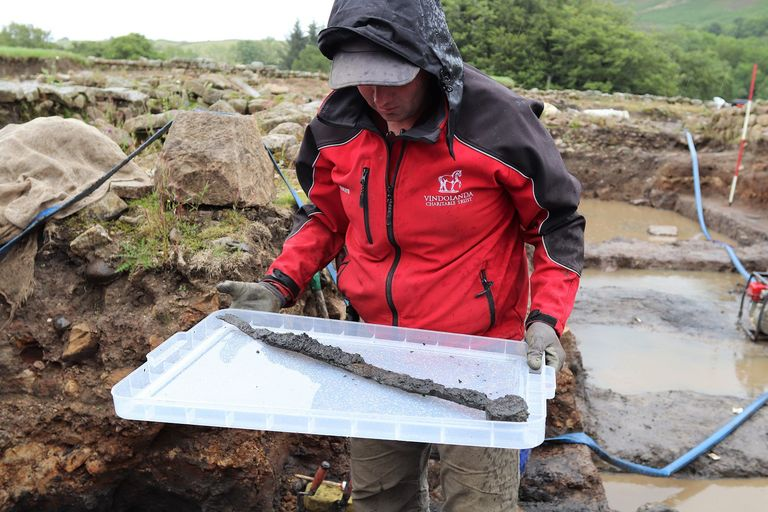
While Roman ruins, roads, amphitheaters and aqueducts dot Italy (and the other modern-day countries that made up the Roman Empire), the team of excavators from the National Archaeological Museum knew how unlikely this amazing find was. But apart from the remnants, ruins, roads, amphitheaters and aqueducts, what have the Romans ever done for us?
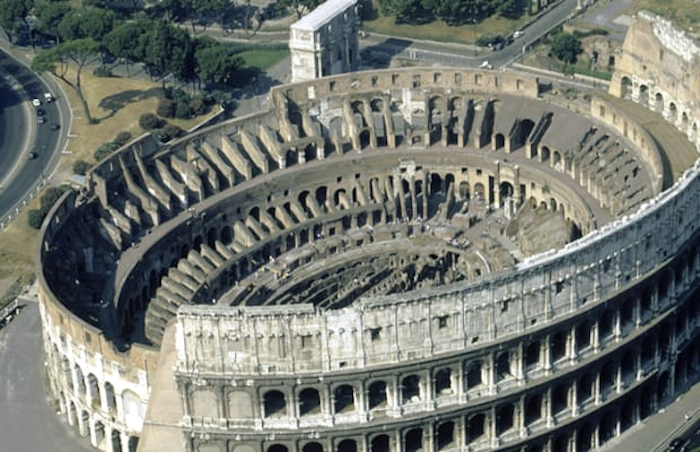
Many of the most famous Roman ruins in Italy have become huge tourist attractions. Sites like Rome’s Pantheon and Colosseum attract millions of tourists a year, even more since seeing Russell Crowe's Gladiator!
Millions more visitors flock to the ancient towns of Pompeii and Herculaneum to see people petrified in stone as their towns were annihilated by a pyroclastic flow from Mount Vesuvius in A.D. 79.
It’s highly likely that this site might never have been discovered if not for Google Earth and Luca Mori’s sharp eye. Archeologists learn so much about ancient societies from their ruins, so any new site is a massive deal.
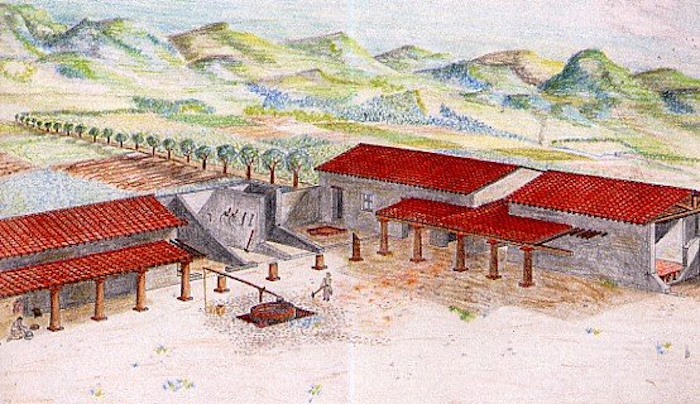
While the few pieces they uncovered proved to be promising, there was still a lot of work to be done. Here’s an illustration by Ivan Fioramonti of what the Roman villa would have looked like back in the day:
Luca describes the finding on his now-defunct blog, Quellí Della Bassa, and he and experts hoped to participate in a full archaeological dig of the site, pending the usual approval from local authorities. For all they knew, the site could prove to hold a bevy of ancient artefacts or treasure.
"Mori's research is interesting in its approach," says Manuela Catarsi Dall'Aglio, an archaeologist at the National Archaeological Museum of Parma. She says the find may be similar to a villa the museum is currently excavating at Cannetolo di Fontanellato, which was found during the construction of a high-speed rail network, before adding, "Only a scientific, archeological dig will tell."
While computer geek Luca loves the technology he used to unearth the site, he maintains: "The world abounds in places worth investigating. One can’t dispense with cooperation from local people, who know their way around sites and are well versed in their history."
The Roman Empire covered vast swathes of Europe, the Middle East, and North Africa, so next time you look up your hometown on Google Earth, pay close attention, because like Luca, you never know where you could locate something super valuable. Or you could just order a lovely pizza!