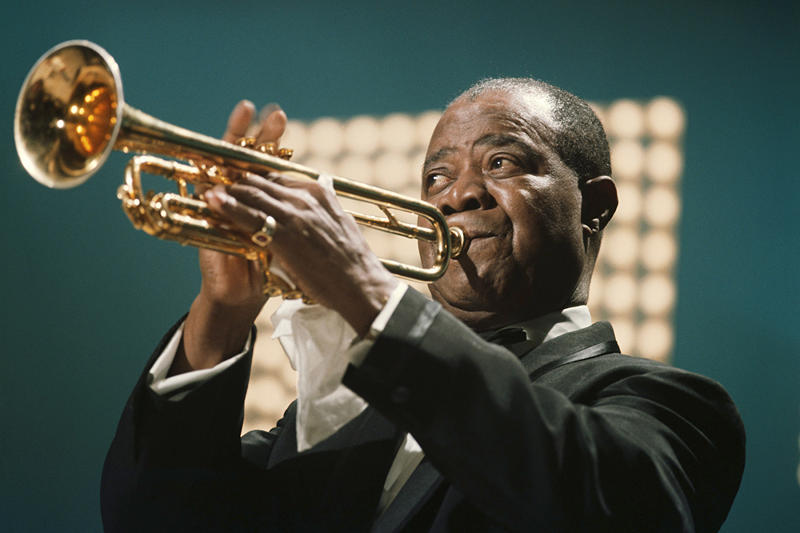
Louis Armstrong was the world's most beloved jazz-singing trumpeter who changed music forever. Yet it turns out his world wasn't so wonderful after all. Born into poverty in New Orleans, he fought racism, was forced to go on the run from the mob, and survived Ku Klux Klan attempts on his life. Against all the odds, he crossed the racial barrier to become the first African American multimedia star. Yet, even at the top of his game, he was equally loved and viewed as a sell-out by his own community.
Today, we bring you the tale of jazz music's most famous son. We'll begin with his childhood, examine his stellar career and if you’re very lucky, we’ll even reveal a shocking sixty-year-old secret!
Louis Daniel Armstrong was born on August 4th, 1901, in New Orleans, Louisiana. But did you know that his name was pronounced 'Lewis'? The man himself later described how: "All white folks call me Louie!" The tiny tot with the mighty lungs was born in a poor neighborhood nicknamed The Battlefield, a notoriously tough, impoverished "back-o'-town" neighborhood slum near South Broad Avenue and Jane Alley.
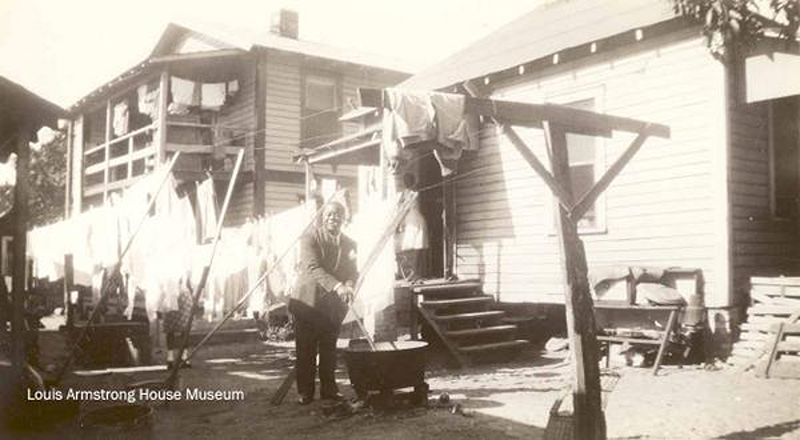
The area was a red-light district chock full of African American brothels, bars, gambling dens, and punctuated by the odd vaudeville theater. In the 1950s and ‘60s, The Battlefield was knocked down to make way for urban renewal projects and municipal expansions. Oh, and the Caesars Superdome, home of the New Orleans Saints, who moved in around 1975.
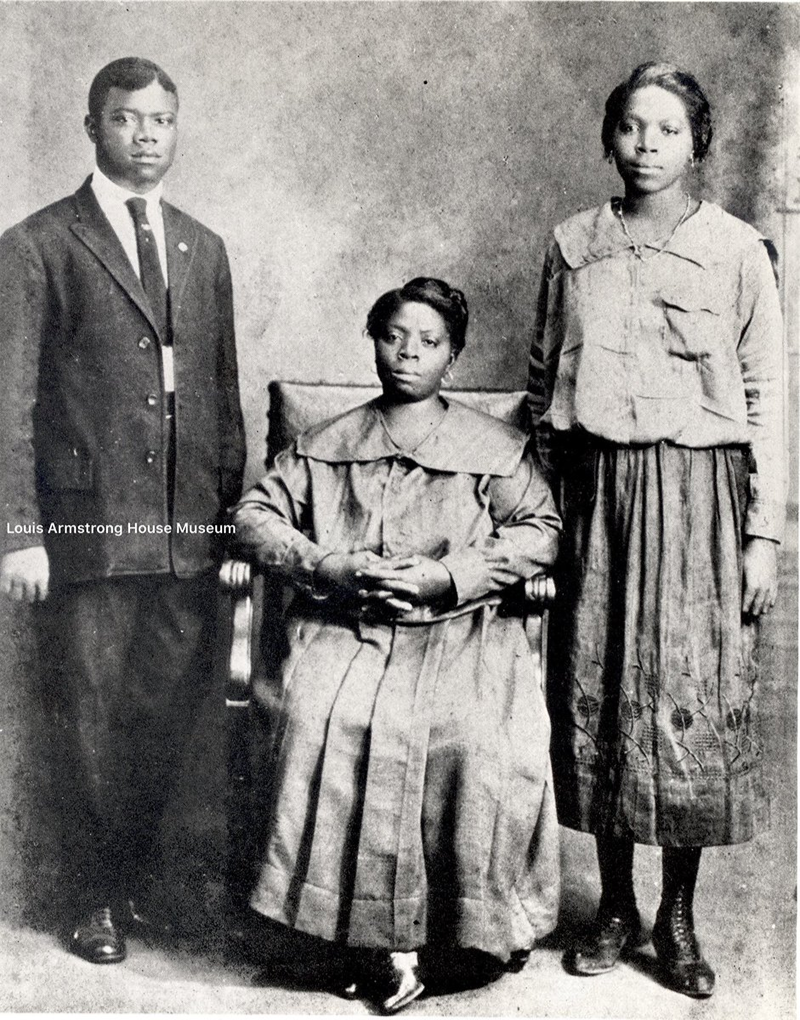
Louis was born at home to 16-year-old Mary Albert. His father, William Armstrong, abandoned the family when Louis was just a child, so he was raised by his grandmother, while Mary was occasionally forced into prostitution to support her children. Eventually, when Louis was five, he returned to his mother, who was by then also raising William's daughter from another mother, Beatrice "Mama Lucy" Armstrong.
When he was six, Louis attended the Fisk School for Boys, one of the few in New Orleans that accepted African American children. The same year, he found work with a local, hard-working family, the Karnoffskys. The poor kid would be up at five o'clock in the morning collecting scrap metal, rag and bone, and bottles from the wealthier neighborhood streets.
By day, he walked the streets next to the family's junk wagon. By night, he walked the red-light district, selling coal by the bucket. Legend says his first-ever musical performance was at the side of the Karnoffskys' peddler's wagon, playing an old tin horn to drum up business. Before long, little Louis had taught himself to play a tune to entertain other children.
As Lithuanian Jewish immigrants, The Karnoffskys suffered much discrimination yet still had enough love to show Louis much kindness. When he was seven, the Karnoffskys took the fatherless boy in and treated him like one of their own. Mrs. Karnoffsky would sing him to sleep with Yiddish and Russian lullabies, and Louis even became fluent in Yiddish.
The family introduced the boy to the horn and taught him to sing "with feeling." Morris Karnoffsky gave little Louis an advance so he could buy a $5 cornet from a pawn shop. And the rest, as they say, is history. He always remembered the Karnoffskys for their "wonderful souls" and sometimes wore a Star of David in memory of the family who had helped raise him.
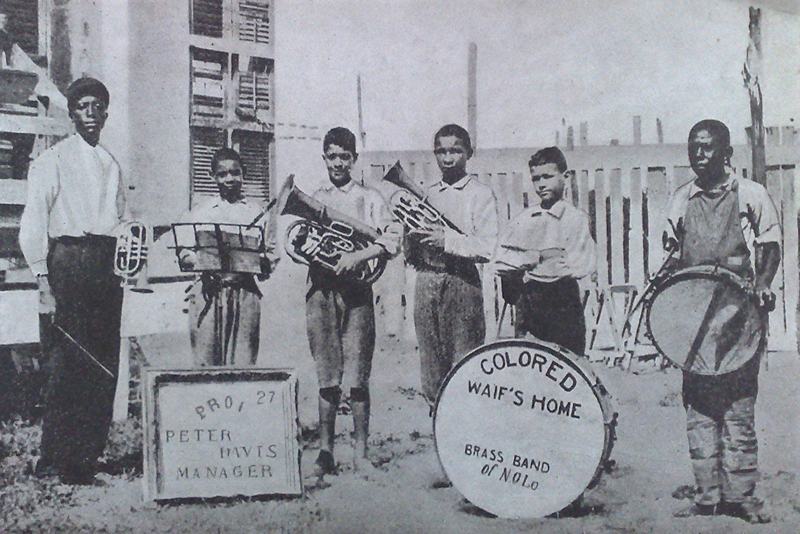
In 1910, Louis and five other boys were arrested "for being dangerous and suspicious characters." He was sent to the "Colored Waifs Home," where Captain Joseph Jones ran a military boot camp: corporal punishment, no mattresses, and meals consisted of bread and molasses.
When he was 11, he dropped out of school and joined a singing quartet who busked in the streets for money. Cornet player Bunk Johnson claimed he taught Louis to play by ear at "Dago Tony's Honky-Tonk."
But in 1913, Louis was sent back to the boy's home after firing his father's gun into the air at a New Year's Eve parade. He spent his 18-month sentence learning to play the bugle, before music teacher, Peter Davis, took the star performer under his wing and made him bandleader.
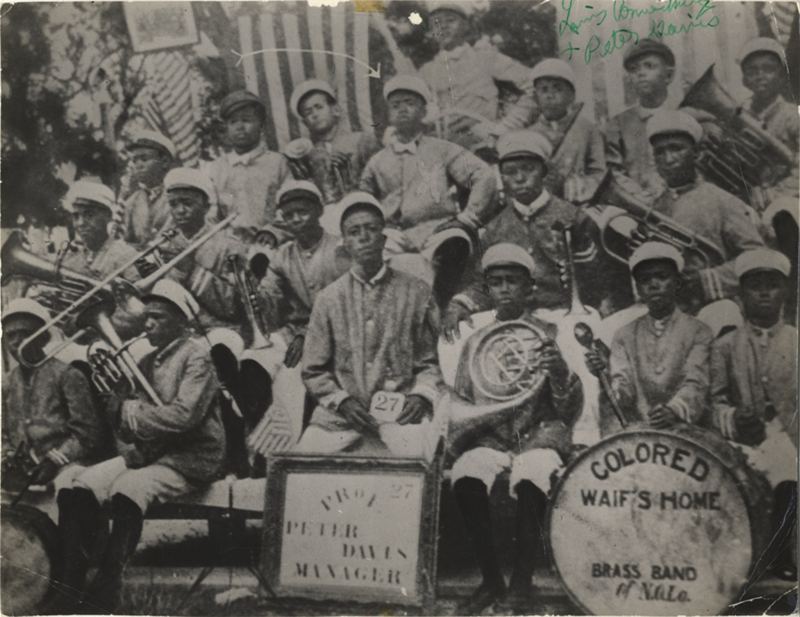
Louis soon attracted the attention of trombonist Edward "Kid" Ory. Louis wrote: "I do believe that my whole success goes back to that time I was arrested as a wayward boy because then I had to quit running around and began to learn something. Most of all, I began to learn music."
Louis was released in June 1914, at which point he sought work as a musician. But honest work wasn't easy to come by in The Battlefield. Eventually, he found a job at Henry Ponce's dance hall, whose owner had connections to organized crime.
Soon, Armstrong met Naw-lins drummer Black Benny, who became his bodyguard. At 15, Louis pimped for a prostitute named Nootsy until she stabbed him in the shoulder, so Louis’ mother almost choked her to death!
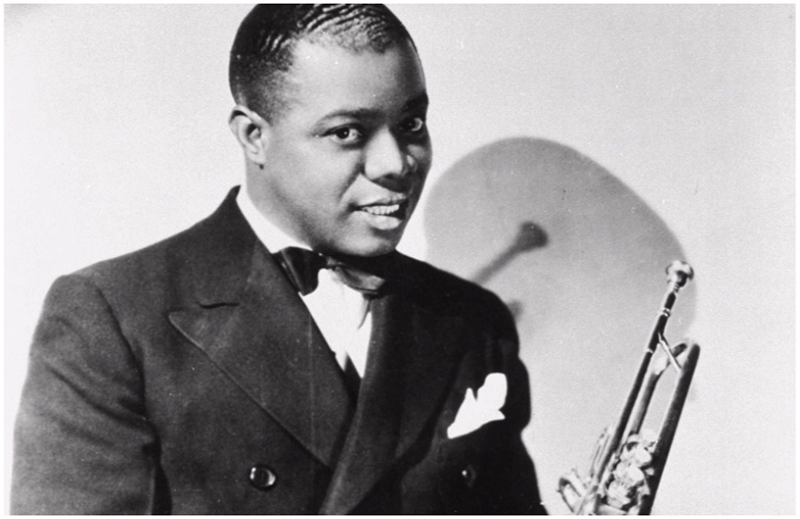
While selling coal in the smokey brothels and dance halls of Storyville, Louis accustomed himself to the early sounds of jazz and skiffle bands who made music out of household objects. If he'd have been born a few hundred miles north up the Big Muddy, in the Mississippi Delta, he'd surely have sold his soul to the devil in exchange for playing The Blues like Robert Johnson. But Louis didn't sell his soul to the devil; he was about to sell his soul to the white man.
Next, Louis landed a breakthrough gig with a riverboat band led by musician Fate Marable and played in brass bands and on steamboats on the Mississippi River. He described this time as "going to the University."
Then, in 1919, he joined Kid Ory's band and played second trumpet for the Tuxedo Brass Band. By the time he was 20, he could read music, started singing, and began injecting his own personality and style into his extended cornet solos.
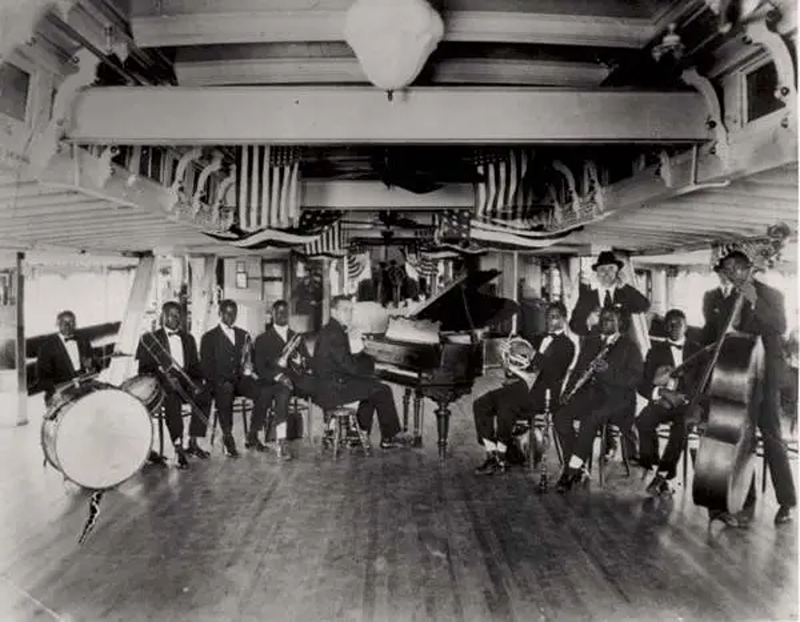
While performing in Gretna, Louisiana, he met local sex worker Daisy Parker and started seeing her as a client. But when the smitten kitten went looking for Daisy's home, he was greeted by her husband. Nevertheless, he found her, and they checked into Kid Green's hotel that evening. The next day, March 19th, 1919, they were married!
Their marriage is described as a "stormy union marked by many arguments and acts of violence," but they adopted three-year-old Clarence, whose mother, Flora (Armstrong's cousin), had died. Clarence was mentally disabled, and Louis spent the rest of his life caring for him.
His first-ever studio recording was with Joe “King” Oliver (pictured, right) in April 1923, but it didn't go so well. The band traveled by train to Richmond, Indiana – the heart of Ku Klux Klan country – and the cramped studio consisted of crude recording equipment with lousy acoustics.
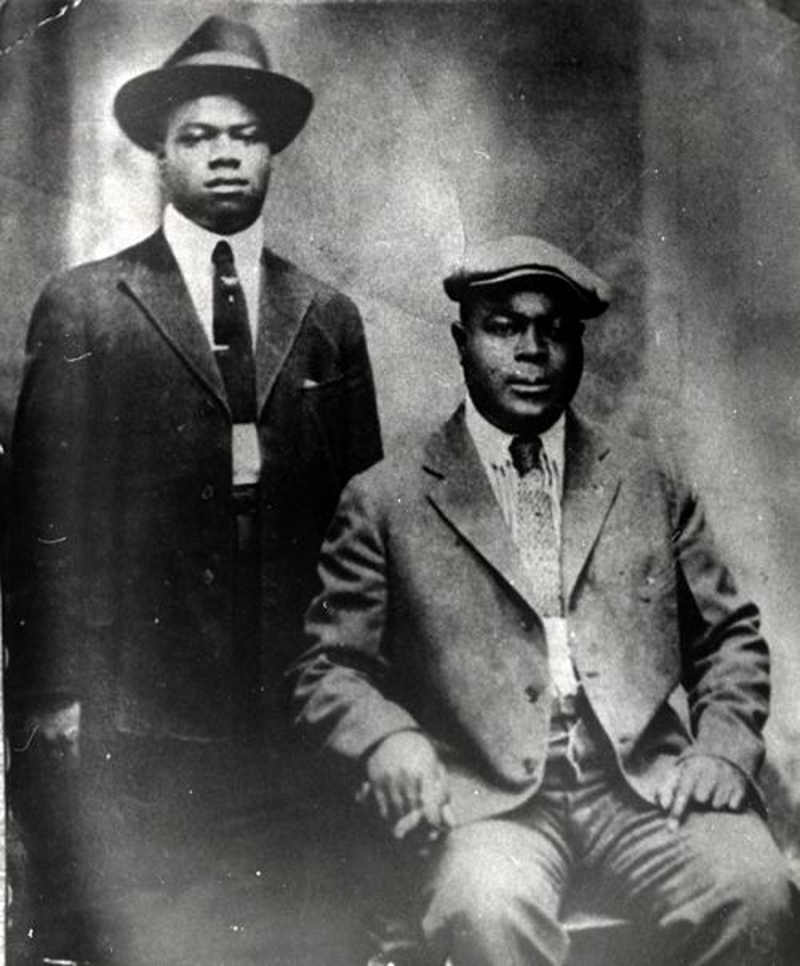
In 1922, Armstrong moved to booming Chicago, joined the influential Oliver's Creole Jazz Band, and made enough money to quit working day jobs. Rampant crime was an everyday part of life: prohibition, speakeasies, jazz, and Al Capone's racketeering mobsters all fed off each other.
As such, Louis lived luxuriously in his own apartment, began keeping scrapbooks, and wrote to friends, boasting he had his own bathtub, could blow two hundred high Cs in a row, and hang with white friends like pianist and cornetist Bix Beiderbecke, and musician Hoagy Carmichael.
Finally, Louis gained the reputation he deserved in Cutting Contests – the Golden Age of Jazz’s equivalent of rap battles. His marriage to Daisy Parker ended in 1923, around the time he met King Oliver's pianist, Lillian Hardin. She had a massive impact on Louis’ life, and not always in a good way.
First, Lillian believed Louis was too talented not to lead his own band. Next, she felt Oliver was holding him back. Then, she also encouraged her hubby to play church music to broaden his skills. Finally, she made him wear more stylish clothes to offset his ever-expanding waistline.
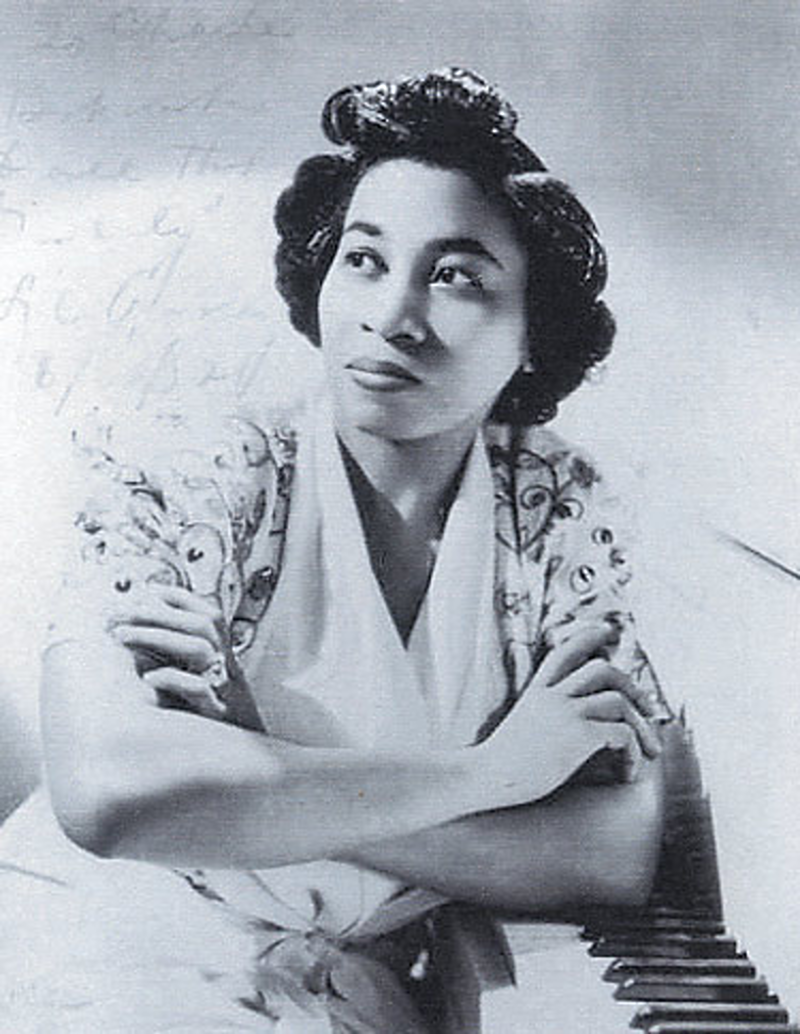
Lil's influence slowly drove a wedge between Louis and King Oliver. Armstrong's mother visited Chicago during the summer of 1923 after hearing her son was "out of work, out of money, hungry, and sick," but no man could keep Louis down, and he was back on his feet soon enough.
Louis married Lillian Hardin in 1924, but they eventually separated in 1931 and divorced in 1938. According to the New York Times, Louis told each of his four wives, "The horn comes first."
Eventually, Lil persuaded her husband to cut ties with his mentor, and Armstrong and King Oliver parted ways amicably. in 1924, Louis joined Fletcher Henderson's Orchestra - New York's top African American band - and switched from the cornet to the trumpet. His passionate improvised solos introduced the orchestra, New York, and the world to swing music.
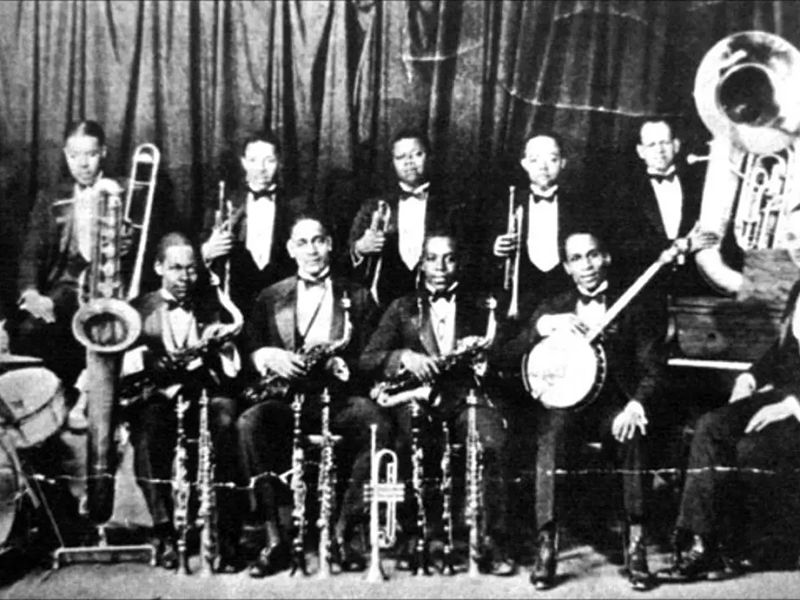
Henderson and his arranger, Don Redman, began to integrate Louis' swinging vocabulary into their arrangements - transforming the Fletcher Henderson Orchestra into the world's first Big Band jazz combo. In doing so, Louis changed jazz music forever.
Before Armstrong, you see, jazz music focused on collective improvisation. But after King Louis came along, jazz incorporated breathtaking, feverish, solo performances.
In 1925, Lil insisted her husband return to Chicago to expand his career, but she had an ulterior motive. Secretly, she knew her own band, the Lil Hardin Armstrong Band, needed him. In fact, while he was performing in Harlem, she inked a deal behind her husband’s back for Chicago's Dreamland Café to feature "The World's Greatest Trumpet Player."
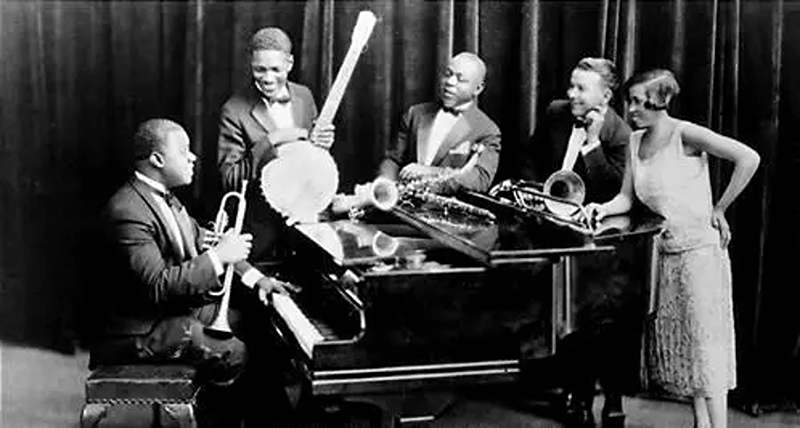
Days after he arrived back in the Windy City, he made his first recordings under his own name with OKeh Records. Next, he formed Louis Armstrong and His Hot Five, and their records introduced the world to Louis' trademark improvised trumpet solos and scat singing. Indeed, "Heebie Jeebies" is one of the first-ever recordings to use scat singing.
Legend says Louis' sheet music fell to the floor, and the music began before he could grab the pages, so he started singing spontaneous, random jazz nonsense. He thought the track would be discarded, but it became a massive hit and spawned a new style of singing.
That said, Ragtime singer Gene Greene had sung scat as far back as 1911, and Louis later explained he already knew the scat style from singing in New Orleans quartets as a child when he forgot the words.
"Heebie Jeebies" turned Louis Armstrong and his Hot Five into the country's most famous jazz band. They celebrated by becoming the Hot Seven and adding drummer Al "Baby" Dodds and tuba player Pete Briggs.
In 1929, Armstrong headed back to New York, where a role in Broadway's Connie's Hot Chocolates awaited him. He performed nightly to white theatergoers in Ain't Misbehavin', but soon found out that being famous wasn't like a box of chocolates.
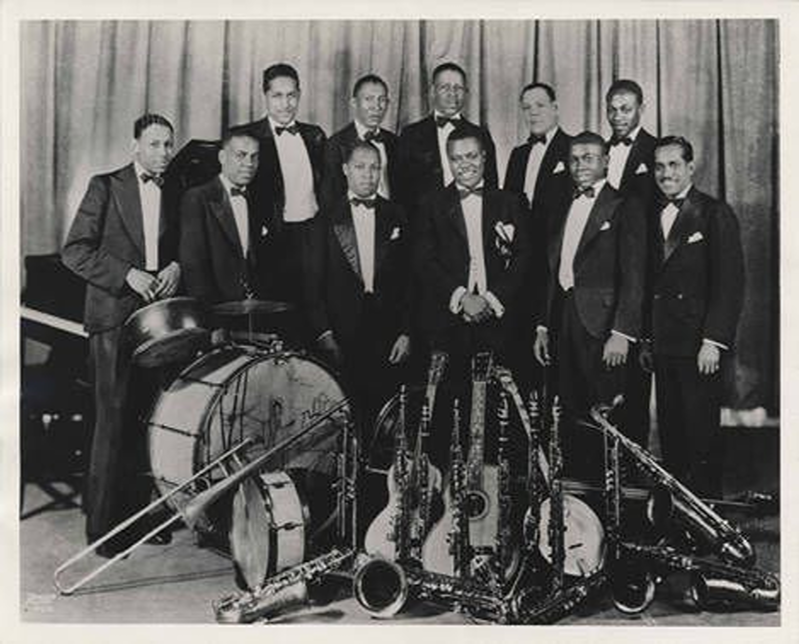
When Armstrong first played in London, he soon found out that British hotels wouldn't admit Black guests, and reviewers wrote of "rhythmical jungle noises," his "hippopotamus physiognomy," "gravelly gorilla roar," and "wild Negro African ancestor's primitive cries." The same year, he recorded "Black and Blue," a B-side that's been cited as American music's first recorded protest song against racial inequality.
The band recorded "Potato Head Blues" and "Muggles," a slang term for marijuana, which Armstrong described as "a thousand times better than whiskey." He also started calling people "Pops" when he forgot their names. In turn, he himself became known as "Pops."
In 1930, he moved to Los Angeles and appeared in his first film, Ex-Flame (1930). But he and drummer Vic Berton were arrested for smoking reefer outside Sebastian's Cotton Club, Culver City, California. Louis served nine days in jail but continued smoking Mary Jane for the rest of his days. He once revealed: "It makes you forget all the bad things that happen to a Negro," and asked for a permit to smoke marijuana anywhere in the USA.
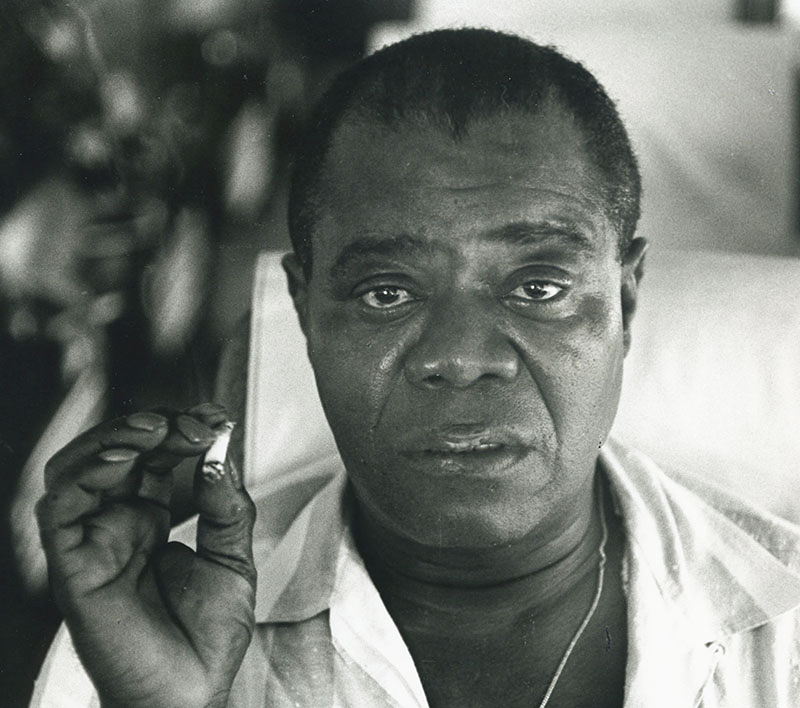
In the 1930s, The Great Depression hit America hard, even decimating the popular, upbeat jazz and dance scenes. The Cotton Club went into decline, finally closing its doors in 1936. To illustrate just how bad things got, Armstrong's one-time mentor, Kid Ory, returned to New Orleans to raise chickens. Talk about a riches-to-rags story! Having separated from Lil, our band leader and actor returned to Chicago and started dating Alpha Smith.
One night at the Showboat Club in 1931, mobster Frankie Foster pulled a gun on Louis and told him he was playing in New York the following day. And when the mob tells you to get outta town, you get outta town! So Louis fled to New Orleans… and a hero's welcome. He handed out money, bought a radio for his old orphanage, sponsored a baseball team, Armstrong's Secret Nine, and even had a cigar named after him.
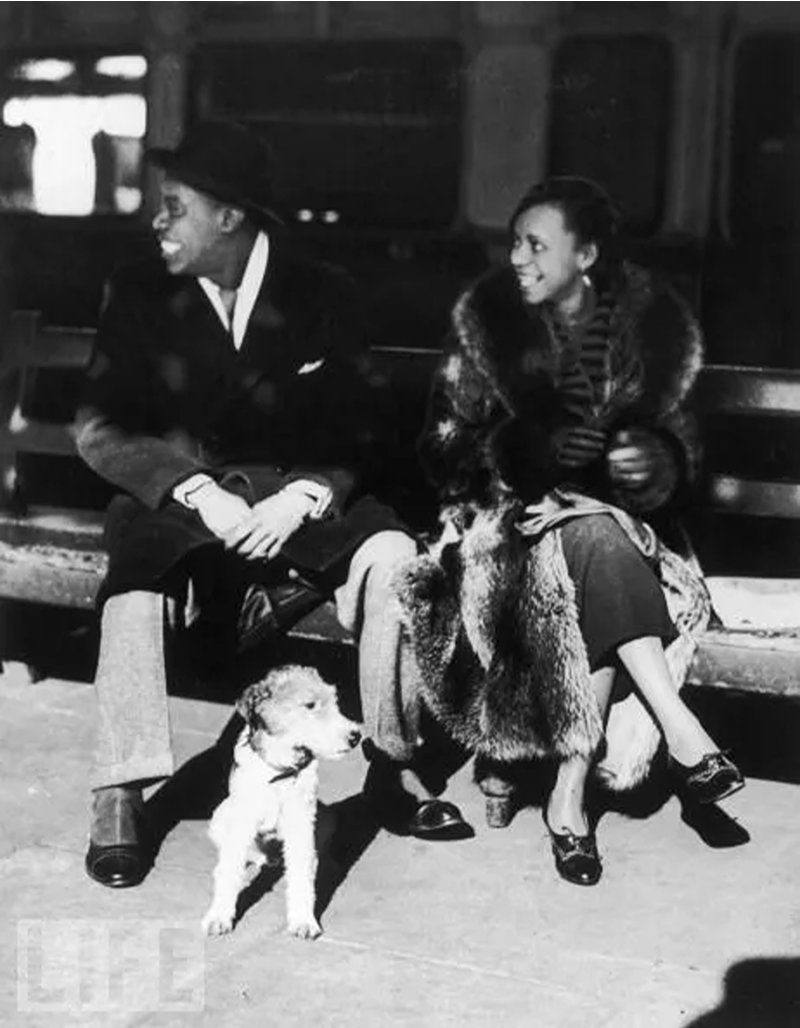
Soon, Louis was on the road again… but he wasn't alone. You see, the mob had followed him because his dodgy agent Johnny Collins owed them money. As a result, Louis was forced to spend the next few years on the run, never staying in one city for too long.
Finally, he had to hightail it to Europe to wait for the heat to die down. In 1932, he recorded the first integrated vocal duet, "Rockin' Chair," with his friend, white singer Hoagy Carmichael.
After returning to the USA in 1935, Armstrong - now known as Satchmo or Satch - undertook several exhausting tours. Johnny Collins was leaking money, breaching contracts left, right, and center, and getting his client into all sorts of trouble with gangsters. To make matters worse, Armstrong's soon-to-be ex-wife, Lil, was also suing him!
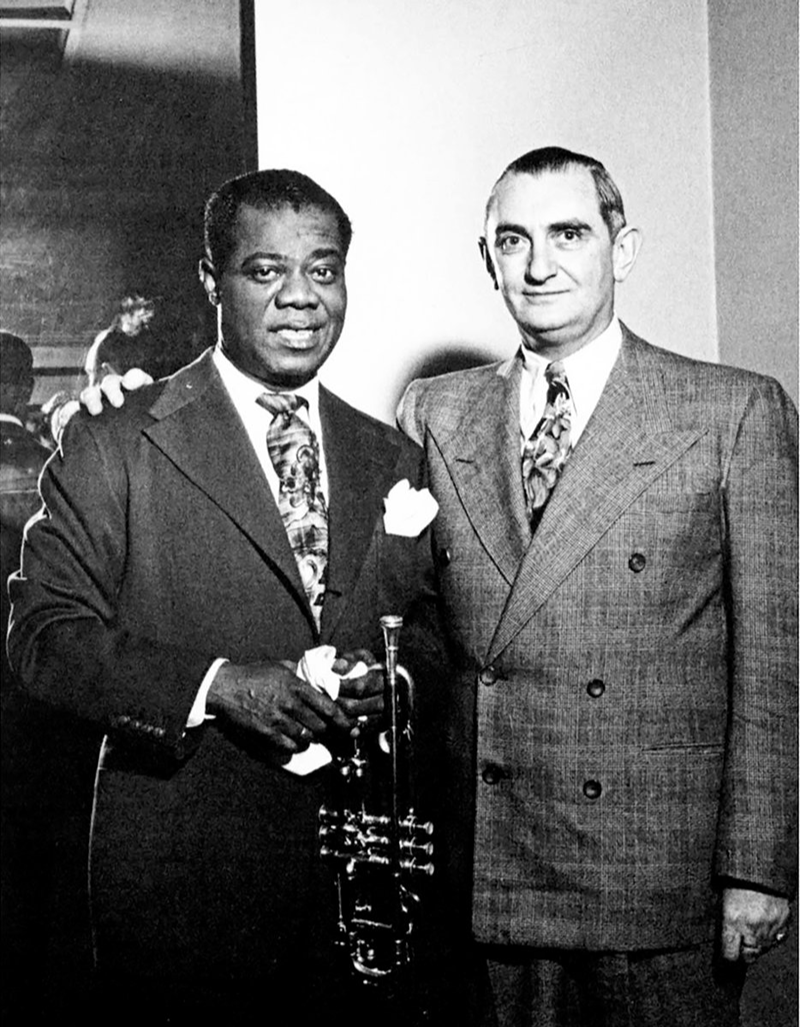
So Louis turned to mob-connected Joe Glaser (pictured, right) and asked him to make his troubles disappear. In the time it takes to sing Ba-doodly-beep-bop-dop-dop-ski-wah, Glaser had straightened out the singers' debts and legal problems and made his mob troubles vanish.
Next, Louis had a new big band and a contract with Decca Records. But Joe also ran nightclubs for Al Capone. Soon, a mutually beneficial relationship sprang up: Glaser protected Armstrong, and in return, Louis packed the house every night for the mob.
Due to his unorthodox playing style, Armstrong began developing problems with his lips and fingers. His lips were covered with hard calluses that he regularly took a razor blade to to remove the worst of the scar tissue. The lip condition is common among trumpet players, and even today, it's still known as Satchmo Syndrome.
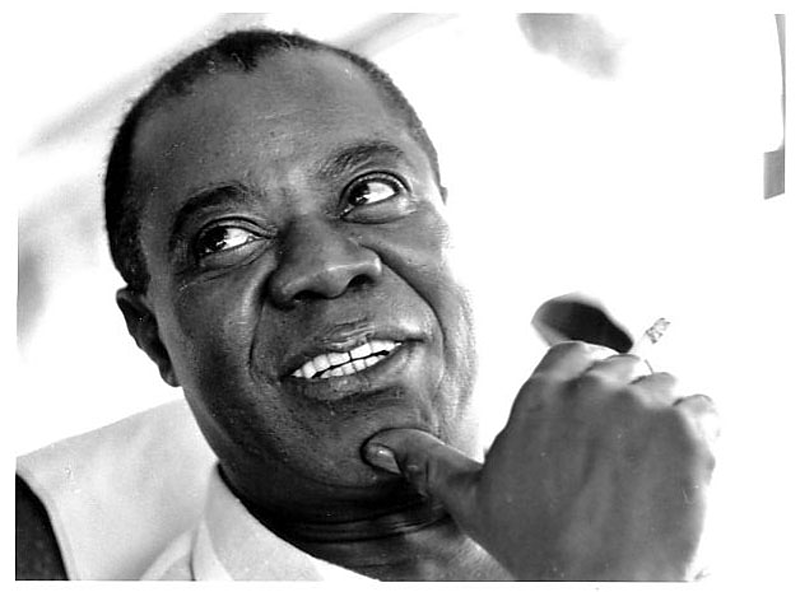
To combat this, he used Ansatz-Creme, invented by trombonist Franz Schuritz, and concentrated more on singing and acting. He appeared in more movies, including Bing Crosby's Pennies from Heaven (1936). Sounds good, right?
Well, Armstrong portrayed a simple farmer who couldn't count. Worse, back in Rhapsody in Black and Blue (1929), he had worn a Tarzan cape, and he later played a character called Uncle Tom. And every time he pandered to the White Man, he lost the respect of the Black community.
In 1937, Armstrong clawed back some respect when he stood in for Rudy Vallee for 12 weeks on the CBS radio network. In doing so, he became the first African American to host a national broadcast. However, Louis embracing his roots was often a case of one step forward, two steps back.
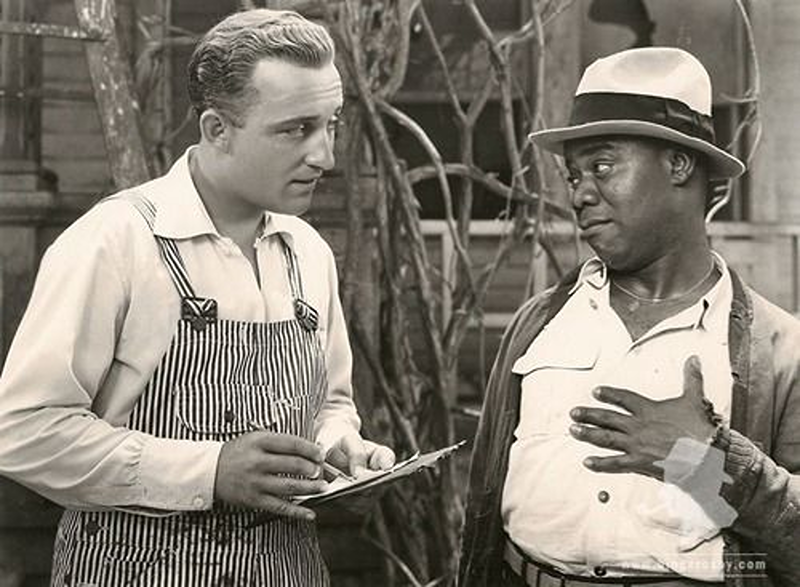
When he began working with Svengali producer Joe Kapp, he waved goodbye to respected Dixieland jazz in favor of "Bing Crosby collaborations, Hawaiian instrumentals, syrupy romances, Iberian mariachis, and B-list comedy movies." Crossing over to white audiences had made him the first African American multimedia star, but he was loved and hated in equal measure by his own community for selling out.
Louis's relationship with his third wife, Alpha, was unhappy, so they split in 1942. That same year, he married his fourth wife, Lucille Wilson, a singer and dancer from New York's Cotton Club. The early 1940s saw a widespread renaissance of 1920s jazz, but Lucille soon grew tired of living out of a suitcase, so she convinced her new husband to buy a family home in Queens, New York. The couple lived there in domestic bliss for the rest of their lives. However, Louis was keeping a shocking secret...
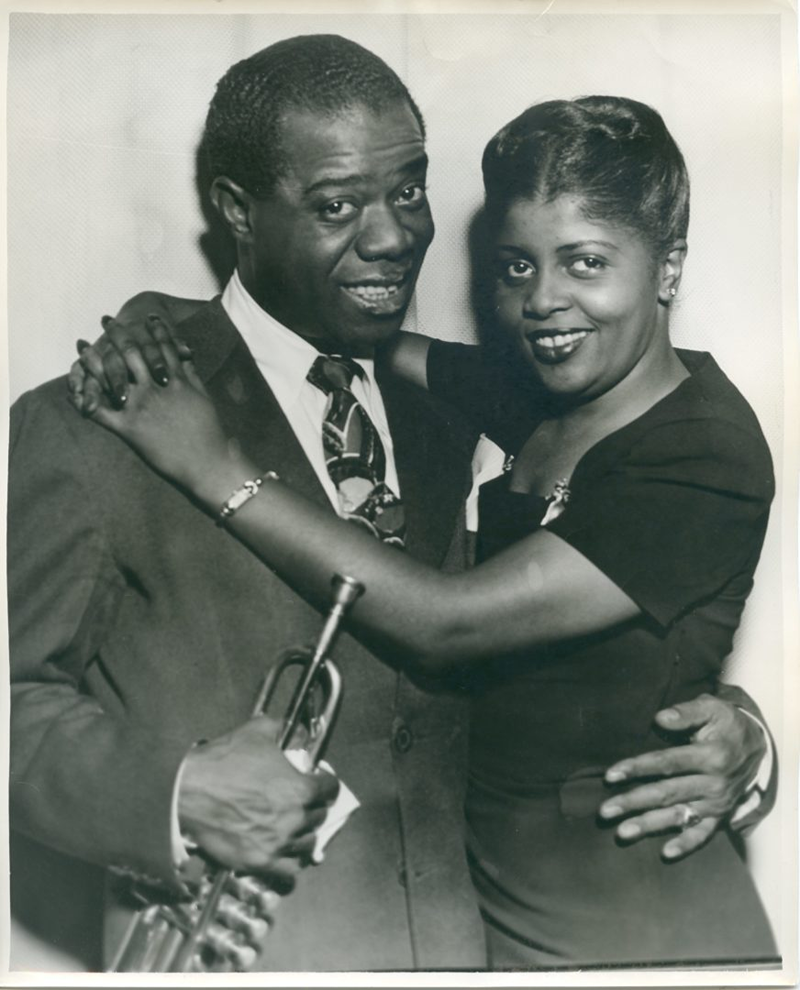
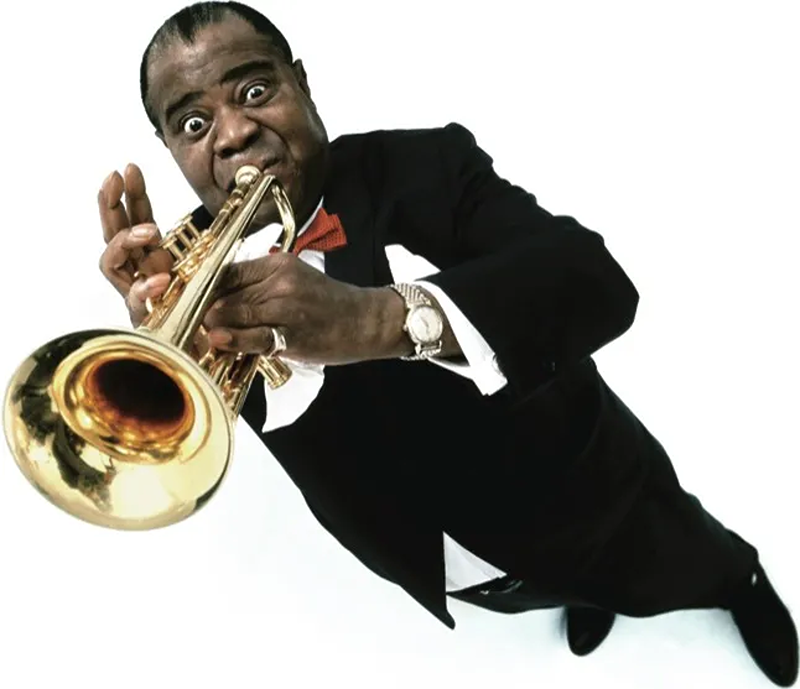
By the mid-1940s, the Swing and Big Band eras were winding down, so Louis scaled down to a smaller six-piece band, The All-Stars. In 1949, he became the first jazz musician to appear on the cover of Time magazine. By the time the 1950s swung around, Satch was a singer, trumpeter, bandleader, actor, comedian, TV personality, and national institution.
He and Lucille had settled down in Queens, but for Louis, it must have seemed like he was back in New Orleans' Battlefield. First, he was attacked from all sides: from the mob-controlled music business to Tin Pan Alley on West 28th Street between Fifth and Sixth Avenues in Manhattan. Then, jazz slowly began to die as big band and theater halls gave way to pop music, television, and the growing resurgence of racial prejudice.
Even though his music crossed the race barrier to white audiences, younger post-war Black Bebop artists like Charlie Parker reviled him as a sell-out: Dizzy Gillespie said he had a minstrel-like "plantation image." Miles Davis resented his penchant for "clowning." But Armstrong was a throwback from another era - he was born into the Jim Crow South, and his wide-eyed act came from bygone vaudeville days.
When the American Civil Rights movement gained momentum, he rarely spoke out against prejudice, angering his brothers and sisters for not taking a strong enough stance. But then, everything changed. Suddenly, Louis took a firm stand against racial injustice. It may have been a response to his hometown New Orleans banning integrated bands in 1955.
He told Ebony magazine: "I can't even play in my own hometown, 'cause I've got white cats in the band. All I'd have to do is take all colored cats down there, and I could make a million bucks. But to hell with the money. If we can't play down there like we play everywhere else we go, we don't play ... If my people don't dig me the way I am, I'm sorry."
Or it may have been in 1957, after white supremacists threw dynamite from a moving car outside his concert in Knoxville, Tennessee. Either way, he finally spoke out - calling Dwight D. Eisenhower "two-faced" and "gutless" over the President's inaction during the Little Rock, Arkansas school desegregation conflict. Louis said: "The way they're treating my people in the South, the government can go to hell!" The FBI immediately opened a file on him.
After appearing in more than a dozen Hollywood films like High Society (1956) alongside Bing Crosby, Frank Sinatra, and Grace Kelly, Louis became an ambassador for the U.S. State Department. At the height of the Cold War, he was sent on goodwill tours to improve America's image overseas. And boy, did Louis Armstrong and the All-Stars take Africa by storm!
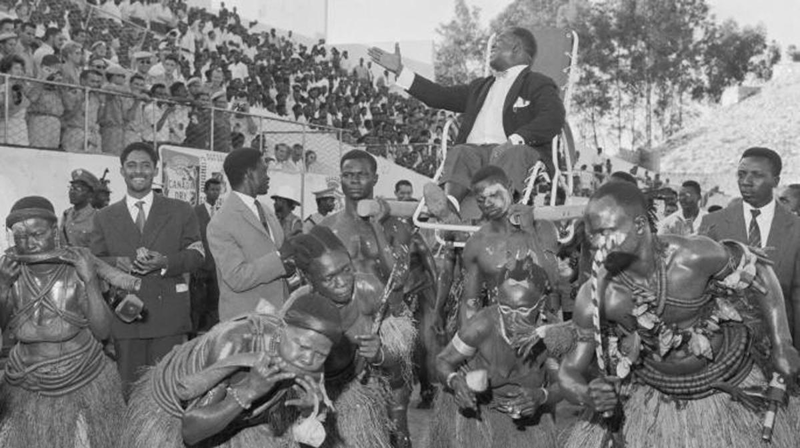
The New York Times wrote: "In Accra, Ghana, 100,000 natives went into a frenzied demonstration when he started to blow his horn … and in Léopoldville, tribesmen painted themselves ochre and violet and carried him into the city stadium on a canvas throne."
From Cairo to the Congo, Armstrong was treated like a king... King Louis! Indeed, in Congo, enemy combatants called a one-day truce so they could watch Louis Armstrong play. Satchmo later joked he stopped a civil war!
From the 1940s to the late 1960s, Louis and his All-Stars had often played over 300 performances a year. But in 1959, on tour in Europe, Armstrong called his doctor to his room as he was unable to breathe. The official story was pneumonia, but his grueling, two-shows-a-day worldwide tour had given him a severe heart attack. A few years later, he was hospitalized with swelling in his right leg and varicose veins, symptoms of poor circulation, and a steadily worsening heart condition.
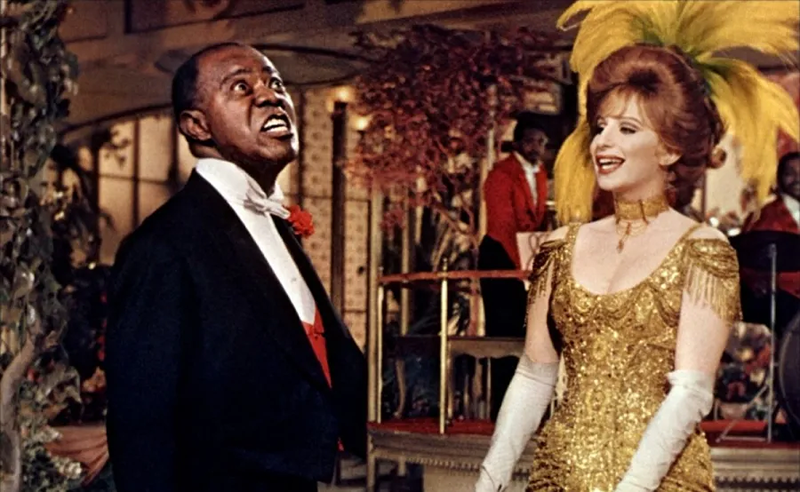
In late 1963, Satch and his All-Stars recorded the title track for Hello, Dolly! When the Broadway musical debuted, the single soared to the top of the US Billboard charts, even ending The Beatles' streak of three chart-topping hits in a row! Aged 62, Louis Armstrong suddenly found himself the oldest musician in American history to have a number one song. He went on to appear in the film Hello Dolly! (1969) with Barbra Streisand.
Armstrong kept on touring and recording even though his kidneys, liver, and gallbladder were giving up the ghost. By the time he finally sought medical help in the late '60s, he oscillated between looking gaunt and being bloated. His lungs were filled with fluid, and he often had such difficulty breathing that he could barely speak. Somehow, in 1968, Louis scored a massive hit. Yet while "What a Wonderful World" performed well overseas, this beautiful and beloved song flopped in the States.
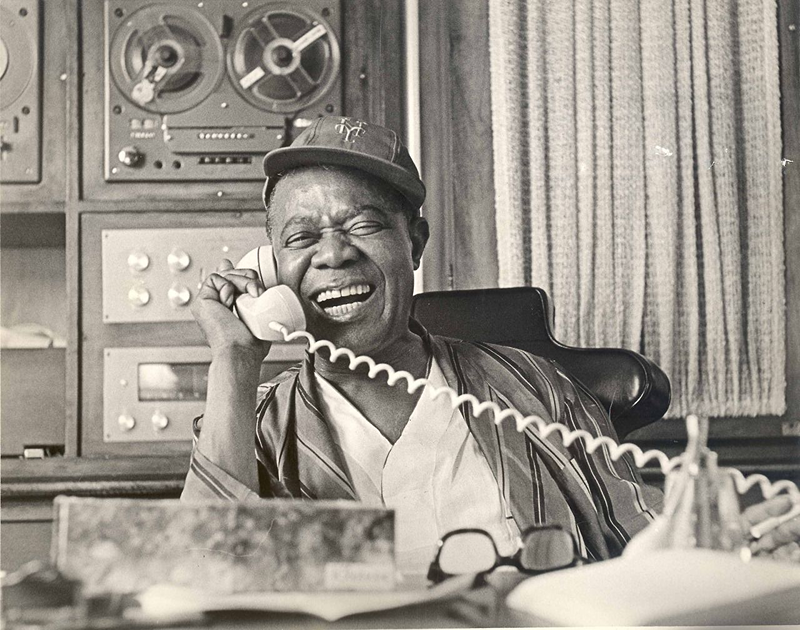
Then, Louis recorded "We Have All the Time in the World" for On Her Majesty's Secret Service (1969). He was too ill to play trumpet, so another musician took that role on. James Bond composer John Barry chose him to sing because he felt he could "deliver the title line with irony." The song title comes from 007's final words in the film, spoken after the death of his wife. More than half a century later, Daniel Craig’s last Bond outing, No Time To Die (2021), also used Armstrong's musical leitmotif.
In March 1971, Louis undertook a two-week gig at New York’s Waldorf-Astoria's Empire Room. Against doctors' orders, he performed two shows a night. He sang his classics and blew his trumpet sparingly, requiring oxygen between songs. But the strain gave him a heart attack. When he was released from the hospital in May, Pops planned to go back on the road, but he never toured again.
Louis Armstrong thought he had all the time in the world, but his saints finally came marching in when he died of a heart attack in his sleep on July 6th, 1971, just one month shy of his 70th birthday.
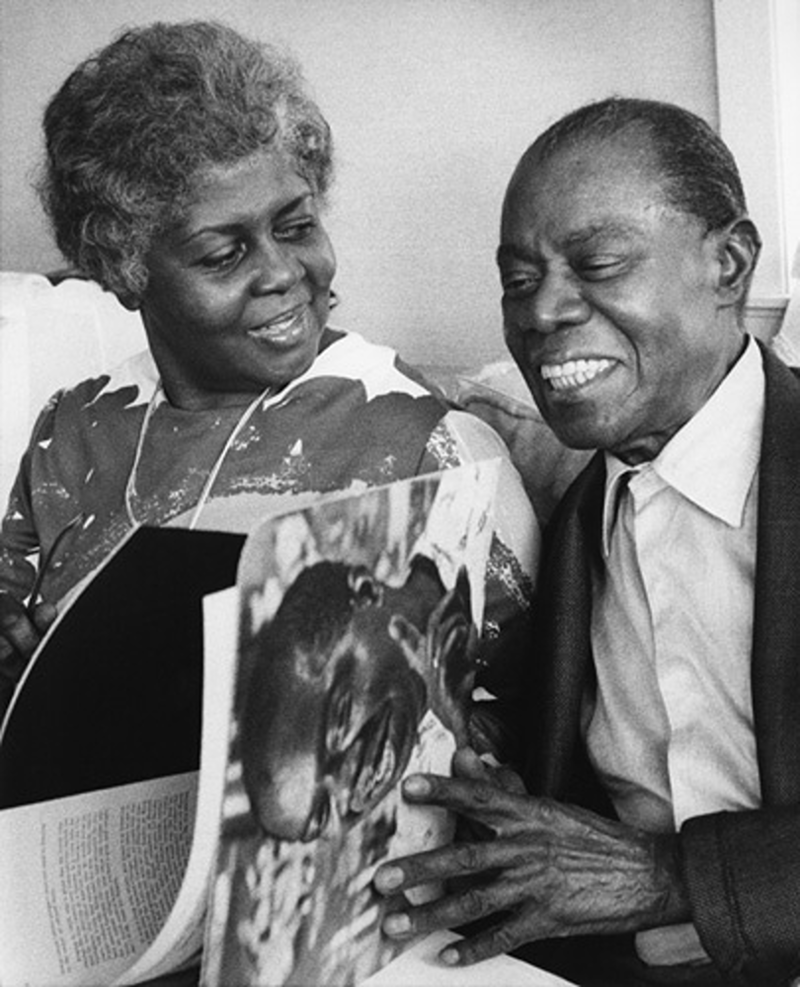
While many of his African American contemporaries reviled him for selling out, Louis Armstrong changed jazz music forever. His vocals influenced many Black and white singers, from Billie Holiday and Ella Fitzgerald to Bing Crosby and Frank Sinatra. His music has deservedly stood the test of time, and this kid from New Orleans' Battlefield brought joy to millions.
But Pops wasn't done yet; Louis left one more legacy, a secret to help make a slightly more wonderful world...
Biographers always maintained Armstrong's four marriages never produced any offspring for almost six decades. In short, they said Pops died without becoming a pop.
But all that changed in 2012, when 57-year-old advertising Sharon Preston-Folta claimed to be Armstrong’s daughter thanks to an affair with Lucille "Sweets" Preston, a dancer at New York's Cotton Club.
This was proven by a 1955 letter to Joe Glaser, in which Armstrong affirmed his belief that Preston's daughter was his, and he made his manager Glaser pay Lucille and Sharon $400 ($5,000 today) a month.
Armstrong's only child, Sharon, was born in 1955, and Louis continued seeing her and her mother until 1967. However, when Lucille Preston demanded Louis marry her, he refused and ended their relationship.
In one of his final letters, Satchmo wrote, "Sharon may not realize now what I mean to her & doing for her. But I am sure as she matures, she'll dig Pops as the man who'll be loving her until the day he dies, or she dies. That's sincerity and from the heart stuff." Amen to that!
To find out more about Louis Armstorng and his daughter, Sharon Preston-Folta wrote a memoir, and produced an Emmy Award-winning documentary, Little Satchmo.