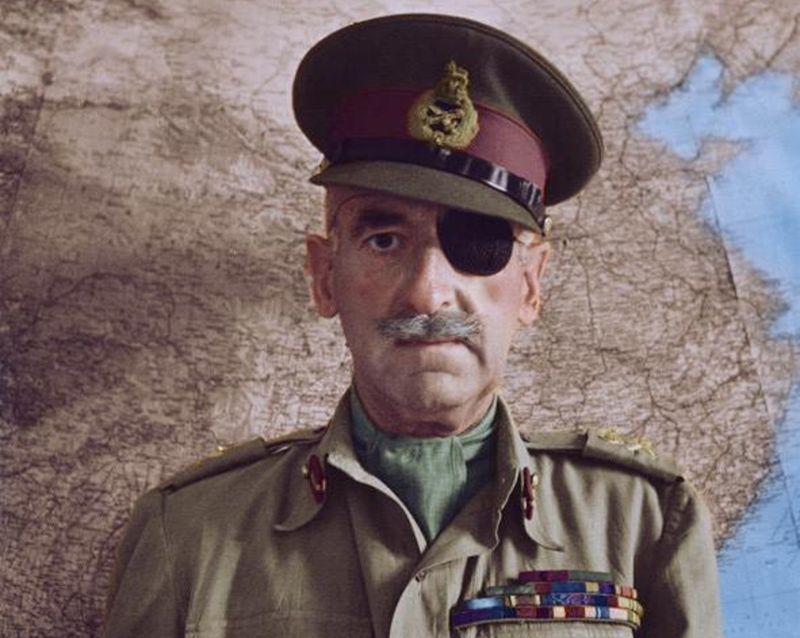
Sir Adrian Carton de Wiart was the Belgian-British soldier who simply refused to die. He served in the Boer War, the Great War, World War II, and many other conflicts. Over a decorated six-decade military career, he was shot at least eight and as many as 11 times, including in the face, losing his left eye, and through the skull, groin, stomach, hip, leg, ankle, and ear.
He was also blown up, survived two plane crashes, and escaped a prisoner-of-war camp by tunneling his way out. Oh, and when a doctor refused to amputate two of his fingers, which were hanging off after being hit by German gunfire, he ripped his own fingers off!
While he may sound like Blackadder's Lord Flashheart or an absurd Monty Python character, Adrian was a bona fide, real-life, one-eyed, one-handed, stiff-upper-lipped, pipe-smoking, half-mad, death-defying war hero. Welcome to the unbelievable story of the soldier who could not be killed...
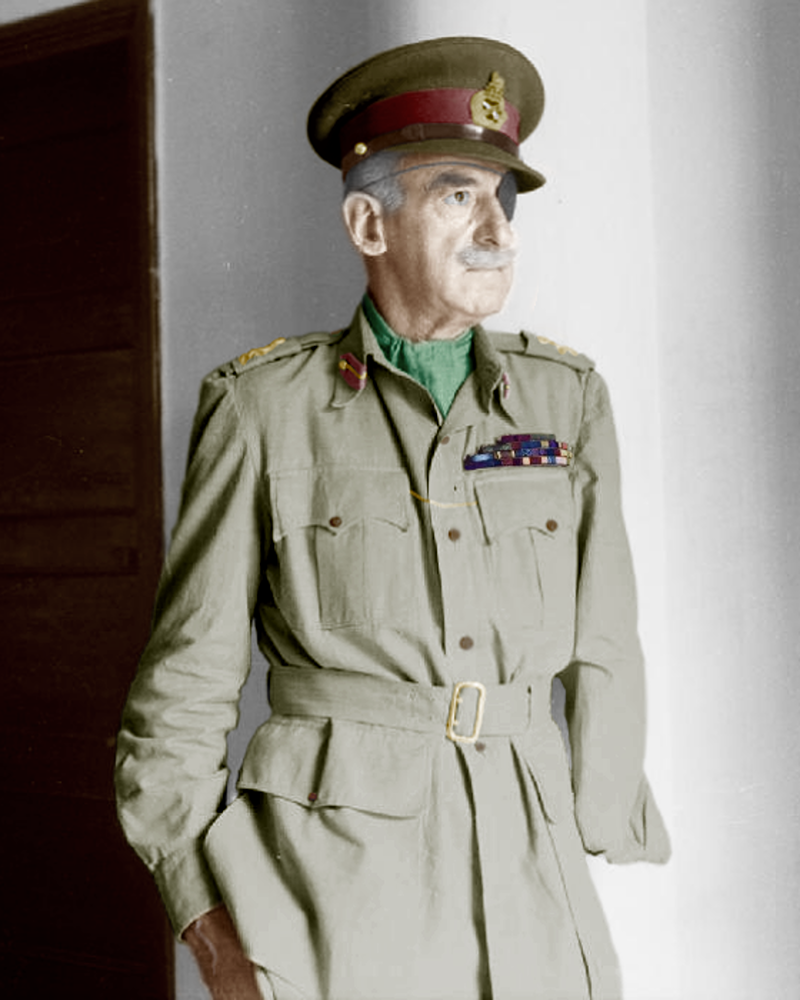
Lieutenant-General Sir Adrian Paul Ghislain Carton de Wiart was a British Army officer born into a Belgian aristocratic family in Brussels on May 5th, 1880. His parents were lawyer and magistrate Léon Constant Ghislain Carton de Wiart and Ernestine Wenzig.
That said, many at the time believed Adrian was the illegitimate son of King Leopold II. While such rumors often surround warrior heroes, this theory gains a soupçon of credence given the Belgian King's bloodthirsty campaign of colonialism and genocide in the Congo.
Adrian grew up between Belgium and England. His parents divorced when he was six, and his mother remarried Demosthenes Gregory Cuppa later the same year. As a result, his father moved the family to Cairo to practice law at Egypt's mixed courts. While the eager young boy learned Arabic, his father ingratiated himself in Egyptian high society and political circles, working for Cairo Electric Railways and the Heliopolis Oases Company.
In 1891, the eleven-year-old's life changed dramatically when his English stepmother, Mary James, packed him off to boarding school at the Roman Catholic Oratory School, near Reading, in Berkshire, England. Later, Adrian enrolled at the illustrious Balliol College, Oxford.
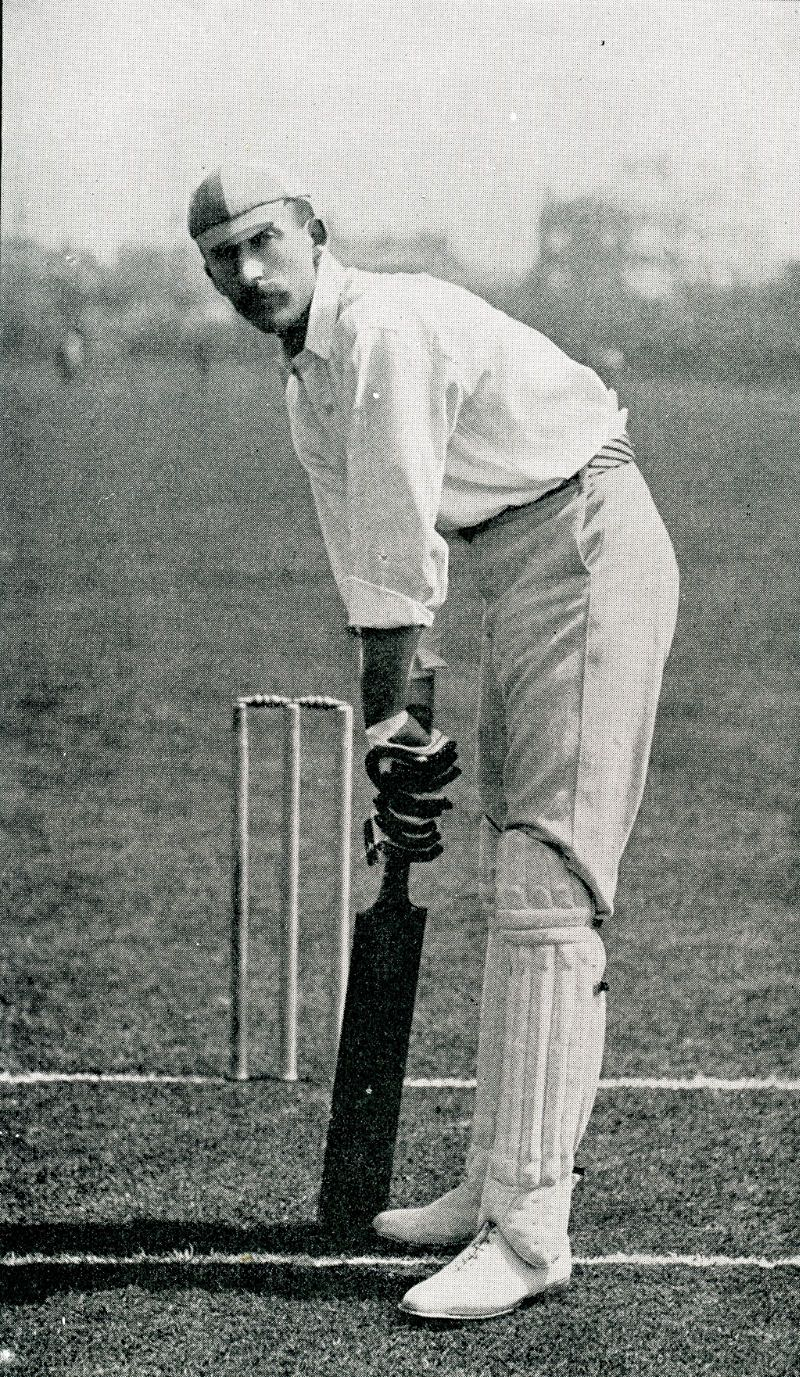
However, let's just say he wasn't suited to a life of academia. His love of wine and cricket saw him fail his law preliminary, stating, "I measured my contemporaries by their prowess at sport or taste in Burgundy and remained unimpressed by their mental gymnastics."
Yet while studying law at one of the UK's most renowned universities and falling into debt (despite his father's generous allowance) was good enough for most students, it wasn't enough for Adrian. He wanted more from life than a cricket bat and wine; he wanted other men’s flesh and blood.
As a boy, Adrian had always loved the romantic notion of the French Foreign Legion, so the outbreak of the Boer War sparked something visceral in the depths of his soul.
By 1899, the 19-year-old was determined to fight in South Africa, and his bloodlust meant he didn't care which side he fought for: "At that moment I knew, once and for all, that I was determined to fight, and I didn't mind who or what. If the British didn't fancy me, I would offer myself to the Boers," he admitted.
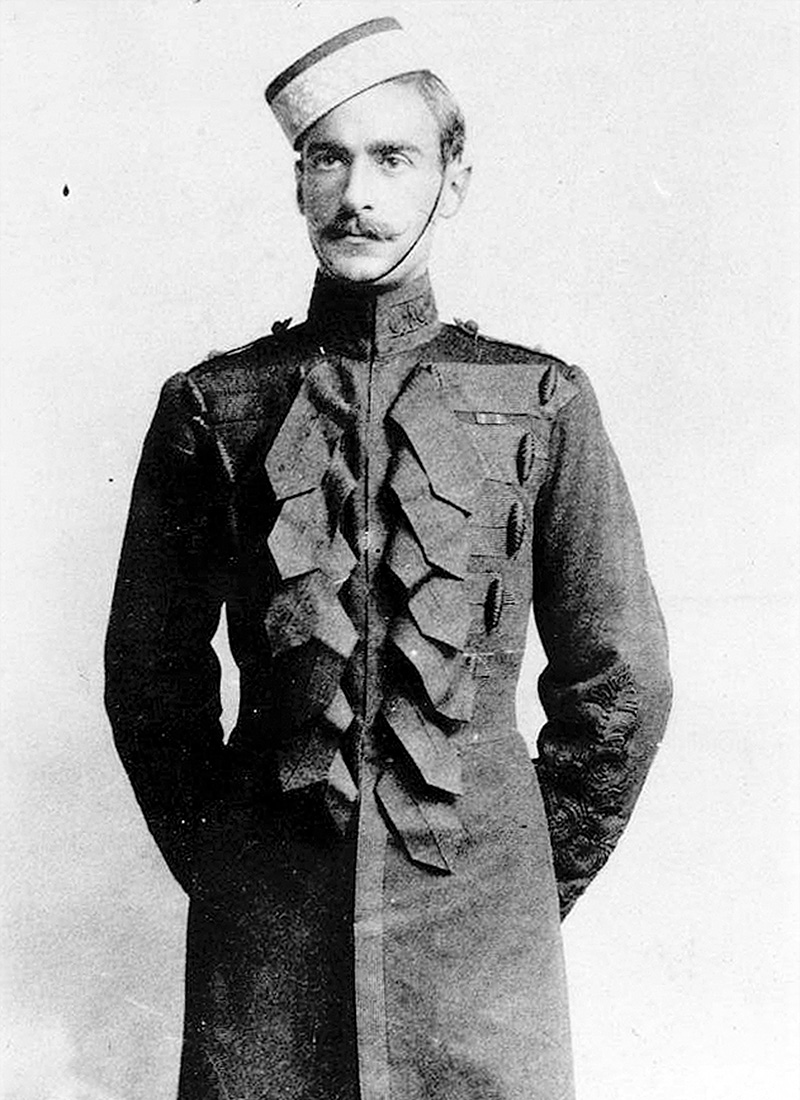
Abandoning his studies, he went to enroll as a Middlesex Yeomanry trooper. Unfortunately, three tiny problems stood in his way. First, he wasn't a British subject. Second, he wasn't old enough to fight. Third, he didn't have his father's consent. He overcame all three hurdles by signing up under the pseudonym of "Trooper Carton" and claiming he was 25.
Having lied to join up, Carton de Wiart found himself happily mopping up his fellow yeoman's vomit aboard a troopship on a long and stormy sea voyage. Impervious to the perilous Atlantic Ocean odyssey, the young and eager, thrill-seeking rookie was just happy to serve, and to finally have his first brush with danger.
As soon as he set foot in Cape Town, he was hospitalized with a severe fever. But when he was released, he went looking for action, and randomly bumped into a local corps group, so fought with them.
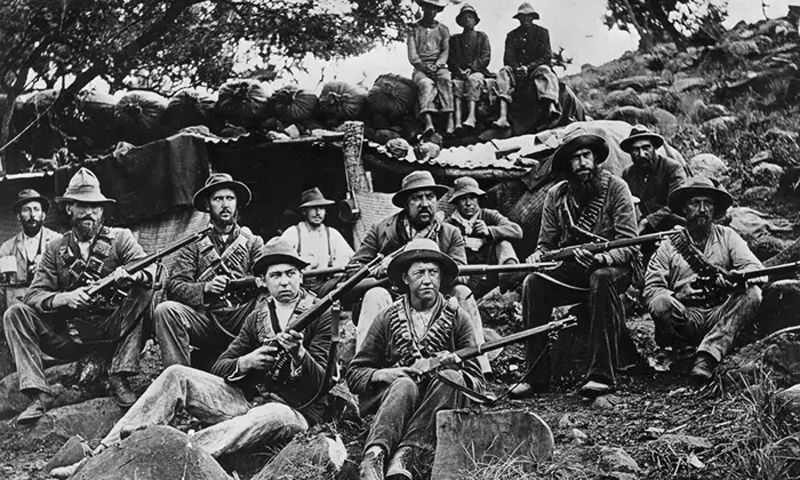
Adrian's dream of fighting in a war had finally come true, but his first sojourn to South Africa proved desperately short-lived. No sooner had he picked up a rifle than he was shot in the groin and stomach. It wouldn't be the first time he'd cop a bullet; these injuries were just an aperitif before the entree, and desert.
He was invalided to Sir Douglas Shield's Nursing Home on Park Lane, London, whose staff soon learned to keep his pajamas ready for his next visit. While convalescing, the well-to-do Belgian militiaman wrote, "I do not think it possible for anyone to have had a duller dose of war." He later reported that the nursing home would become his second home but that he "returned bereft of glory, my spirits deflating with every mile."
De Carton Wiart's healing was aided by his strong desire for running and playing sports, especially polo, whenever possible. Next, he schlepped back to Egypt to ask for his father's permission to commit to a military life. His father was furious that he'd abandoned his Oxford studies and gone off to war but, after some persuasion, eventually gave his blessing.
Arriving back in Cape Town, Adrian joined the Imperial Light Horse Colonial Corps. He proved so effective that, surprisingly, he was promoted to the rank of corporal within days. Unsurprisingly, he was demoted within 24 hours for threatening to punch his sergeant's lights out!
By 1901, he was a Second Lieutenant, and the Imperial Light Horse Colonial Corps was transferred to India. However, the lack of combat left him depressed: "India for me was a glittering sham coated with dust, and I hoped I should never see her again," he wrote.
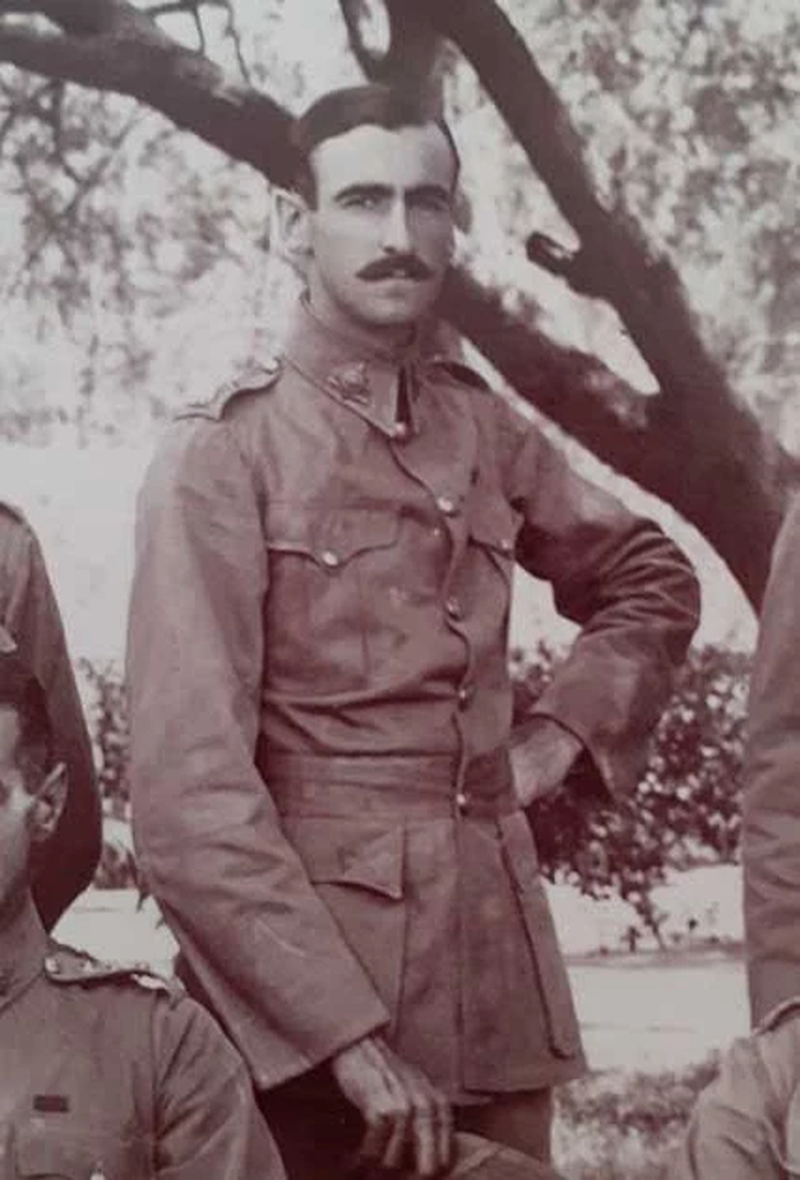
In India, he took up the hazardous hobby of horse-mounted pig sticking for thrills. Once, his horse rolled on top of him, partially crushing his rib cage and ankle. After two years on the British-ruled subcontinent, the 4th Dragoon Guards were transferred back to South Africa. By 1905, he was appointed an aide-de-camp to Commander-in-Chief Sir Henry Hildyard. In his biography, the Belgian officer called this period his heyday.
By 1907, he had served in the British Army for eight years but was still a Belgian subject. So, in September that year, he swore allegiance to King Edward VII and was officially naturalized as a British subject.
On October 27th, 1908, at St Stephen's Cathedral, Vienna, he married Countess Friederike Maria Karoline Henriette Rosa Sabina Franziska Pauline née Fugger von Babenhausen. She was the eldest daughter of Prince Karl, 5th Fürst von Fugger-Babenhausen, and Princess Eleonora Zu Hohenlohe-Bartenstein und Jagstberg of Klagenfurt of Austria.
The new couple had a daughter, Anita, born in 1909, and Sir Adrian was promoted to captain in February 1910. Another daughter, Maria Eleanora, was born in 1911. However, his newfound, peaceful life would not last long because war was brewing in Europe, the Middle East, and Africa…
At the outbreak of the Great War, de Wiart served in the Somaliland Camel Corps, fighting followers of Dervish leader Mohammed bin Abdullah, nicknamed the "Mad Mullah." During one raid on an enemy stronghold, he was shot in the arm and face, losing his left eye and part of his ear. For his exploits, he received the Distinguished Service Order medal.
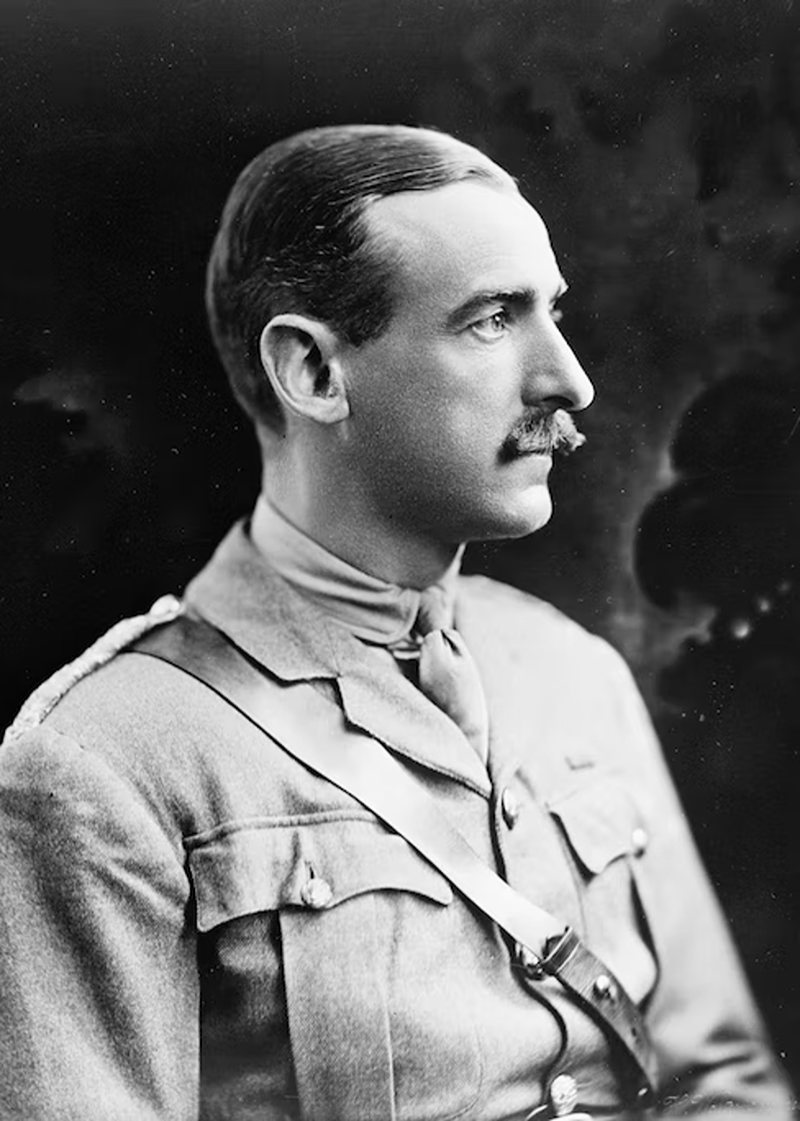
General Hastings Lionel "Pug" Ismay served with de Wiart in British Somaliland. He wrote: "He didn't check his stride, but I think the bullet stung him up as his language was awful. The doctor could do nothing for his eye, but we had to keep him with us. He must have been in agony … I honestly believe that he regarded the loss of an eye as a blessing as it allowed him to get out of Somaliland to Europe, where he thought the real action was."
Adrian returned to London to recuperate at the Park Lane nursing home. While recovering, he received a glass eye, but it caused him so much discomfort that he threw it from a taxi and took to sporting an eye patch.
The Oxford Dictionary of National Biography stated: "With his black eyepatch and empty sleeve, Carton de Wiart looked like an elegant pirate and became a figure of legend."
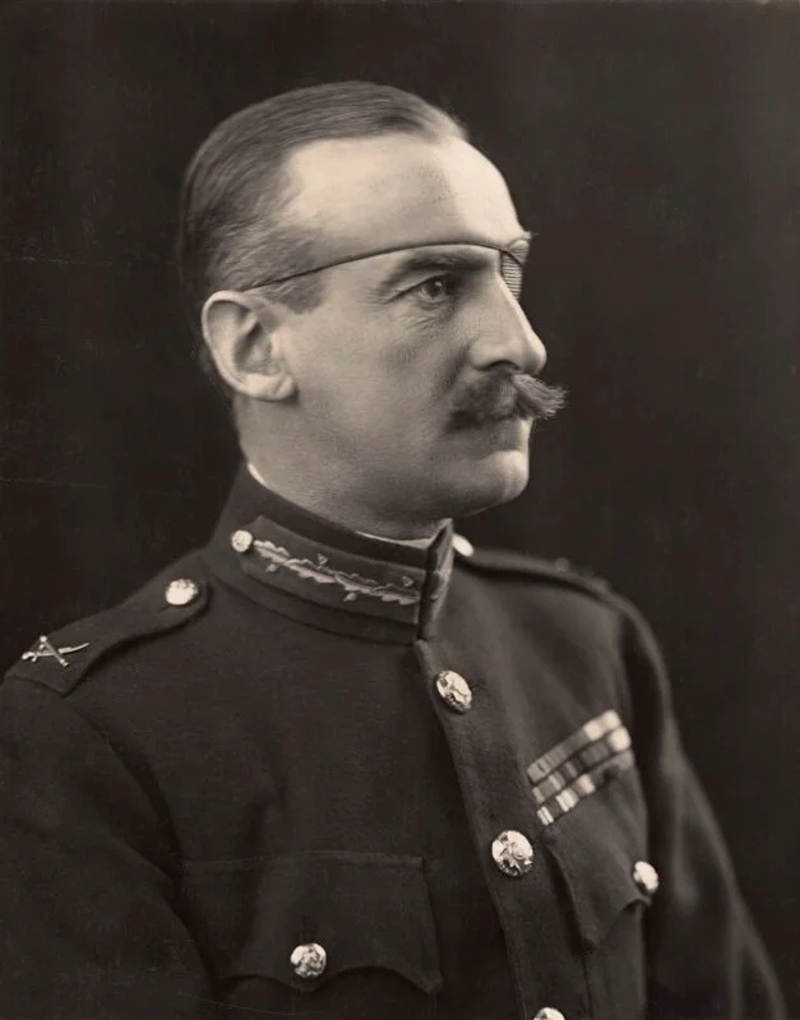
After losing his eye, the natural-born killer could have retired as a valiant war hero. But no number of bullet wounds, injuries, or explosions could keep this man from fighting. The more injuries he received, the more he was spurred to fight. He desperately wanted to visit the Western Front, especially now that the Germans had taken his homeland of Belgium.
In February 1915, he crossed the English Channel on a steamer bound for France. Crossing into his native country, he was posted to the town of Ypres. But the countryside he once knew was unrecognizable, replaced by a hellscape of mud, mustard gas, and trenches.
He successively commanded three infantry battalions and a brigade during the Second Battle of Ypres. However, a German artillery barrage left two fingers hanging by the skin and his entire hand damaged beyond repair.
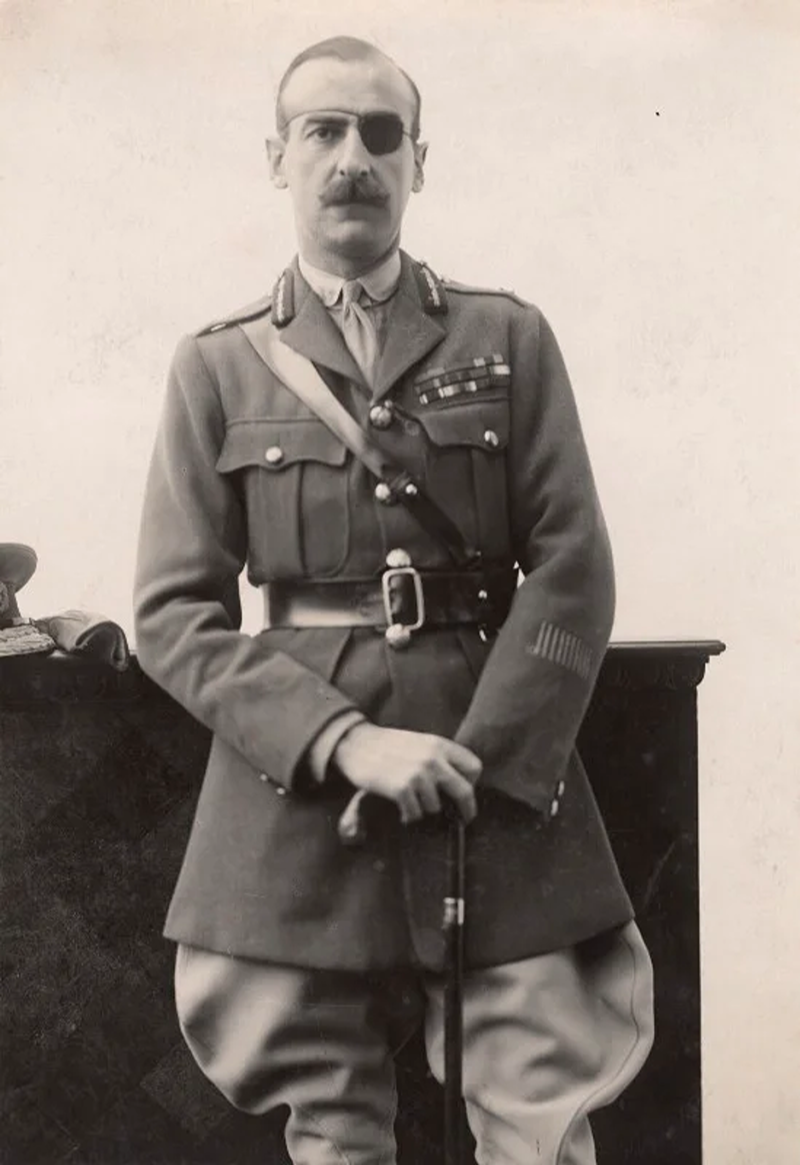
When a stubborn doctor refused to amputate his fingers, Carton de Wiart tore two of them off. The rest of his hand was removed by a surgeon later that year. Again, he returned to the nursing home to recover, where staff had presumably ironed his favorite pajamas. Yet as soon as he was well enough, he was back on a ship headed back to Belgium.
But before he left England, this man for all seasons had to pick up one of his many war medals. In 1916, the 36-year-old immortal received the Victoria Cross. Named after Queen Victoria, it is still Britain's highest award for gallantry in the face of the enemy.
The London Gazette wrote: "For most conspicuous bravery, coolness, and determination during severe operations of a prolonged nature. It was owing in a great measure to his dauntless courage and inspiring example that a serious reverse was averted. He displayed the utmost energy and courage in forcing our attack home."
"After three other battalion Commanders had become casualties, he controlled their commands and ensured that the ground won was maintained at all costs. He frequently exposed himself in the organization of positions and of supplies, passing unflinchingly through fire barrage of the most intense nature. His gallantry was inspiring to all."
After losing his hand, the Lieutenant-Colonel was described by his platoon as "pulling the pins of grenades out with his teeth and hurling them with his one good arm." One night raid during the Battle of the Somme, he felt "the entire back of his head being violently removed."
He had been shot in the skull (and ankle). He was shot in the hip during 1917's Battle of Passchendaele. He was shot in the leg at the Battle of Cambrai and through the ear in 1918's Battle of Arras. To put it simply, Britain's most-wounded soldier was unkillable.
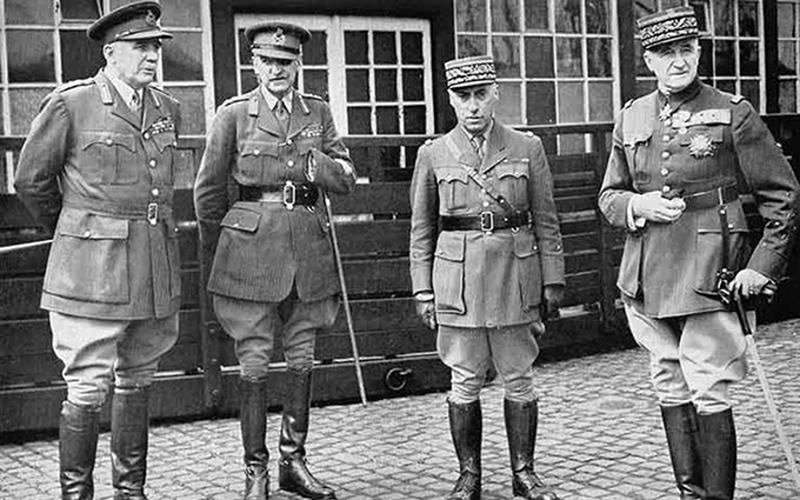
By the end of World War One, he had suffered enough painful and severe injuries to cripple any other man, but not Sir Adrian. This crazy hero actually enjoyed war. Describing his experiences in his memoir, he wrote, "Frankly, I had enjoyed the war." The title of his biography?
Written by Jonathan Cape, the war man's biography is Happy Odyssey. Or, to use its full title, Happy Odyssey: The Memoirs of Lieutenant-General Sir Adrian Carton de Wiart V.C., K.B.E., C.B., C.M.G., D.S.O…. with a foreword by the Rt. Hon. Winston S. Churchill O.M.
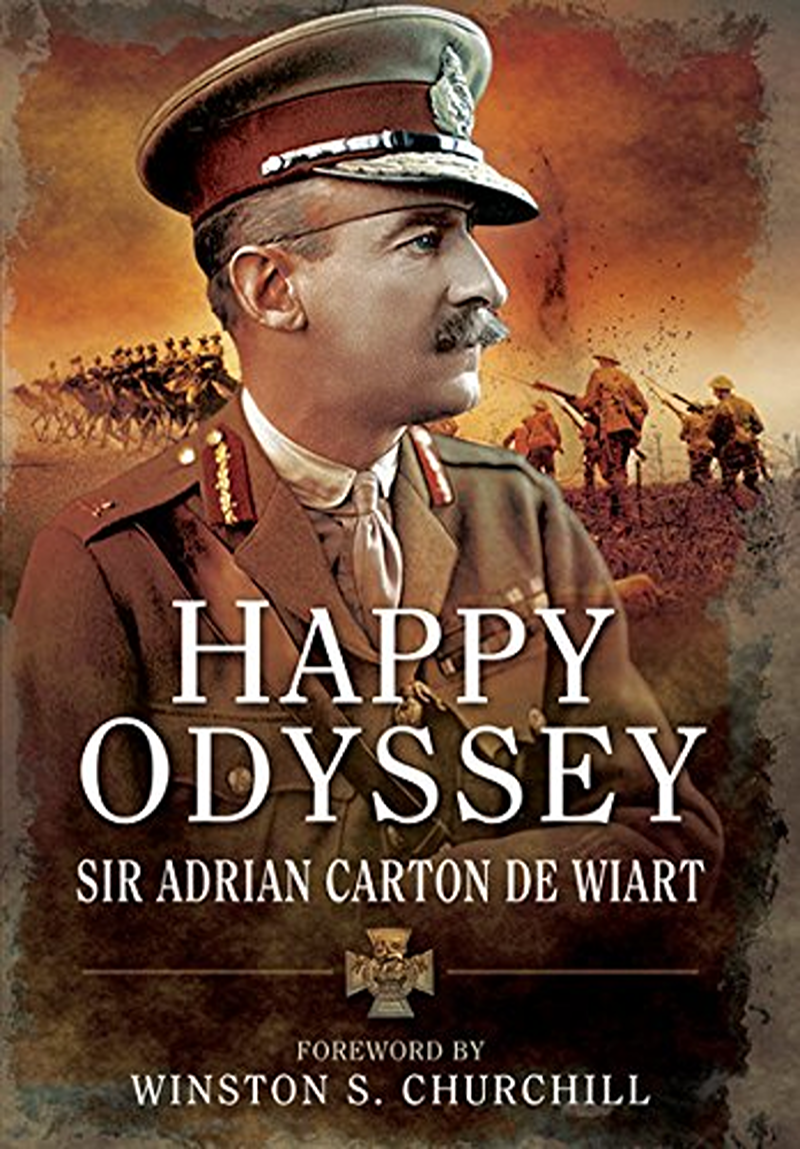
One chapter, set just after WW1, saw Adrian at his London gentlemen's club on a night out. Another cad hit on his female friend, so he challenged the stranger to a good old-fashioned duel, adding that the loser would be taken to a secluded spot in the woods, doused with gasoline, and cremated. The terrified man signed an affidavit agreeing never to trouble Adrian's friend again. "It was a tame end … It seemed to me that, as he did not like the lady enough to fight for her, he needed a thrashing."
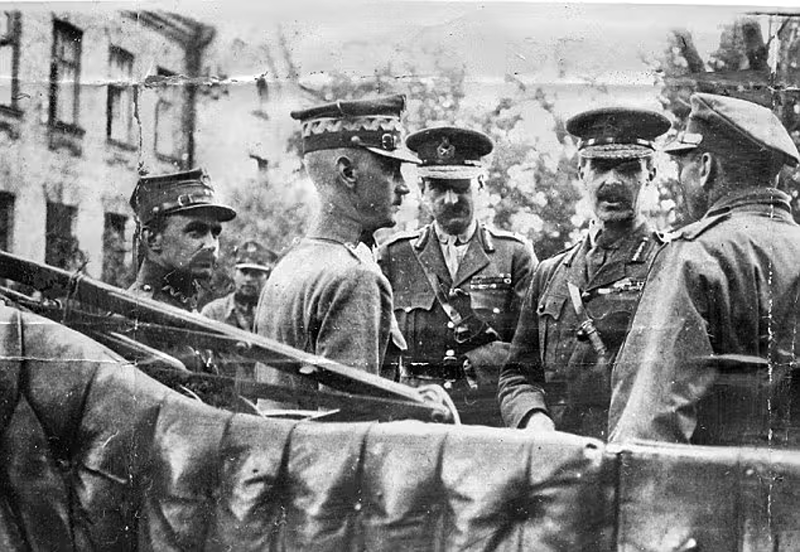
Next, Sir Adrian was deployed as Second in Command of the British-Poland Military Mission. This was part of a multi-pronged conflict, fighting the Bolsheviks in the Polish-Soviet War and the Lithuanians in the Polish-Lithuanian War. Plus the Ukrainians in the Polish-Ukrainian War. Oh, and let's not forget the Czechs in the Czech-Polish border conflicts. Here, he somehow managed to survive a machine-gun attack on a train.
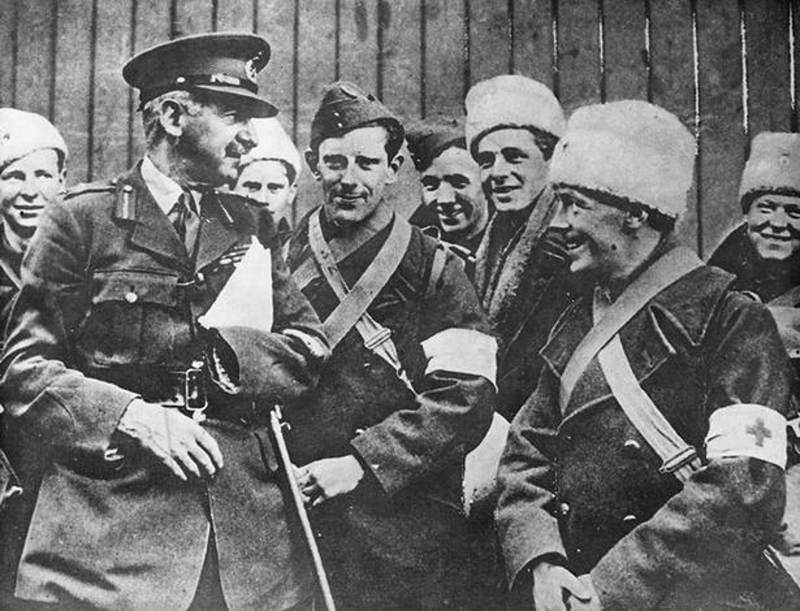
Flying at low altitude on his way to Riga, Latvia, he spotted a soldier on the ground, shooting up at the plane. When they landed, he noticed a bullet hole just six inches from his seat!
Another time, the only reason Adrian survived a crash landing was that the aircraft had run out of fuel and therefore didn't explode on impact. After being captured by the Lithuanians during the Vilna Offensive, he was reading a German newspaper in a jail cell when he stumbled across his own obituary!
Back in Poland, he led the mission supporting the newly reestablished Polish state through regional conflicts, earning deep admiration for the country and respect from its population. For 15 years between World War One and World War Two, de Wiart enjoyed a lengthy, peaceful period as a senior figure in the British military. He retired from the British Army in 1924 with the honorary rank of Major-General.
Returning to England for three months a year, he lived in Poland, enjoying the life of an aristocrat, riding, fishing, and shooting game on a grand country estate called Prostyń in the Pripet Marshes in eastern Poland that his last aide-de-camp and friend, Prince Karol Mikołaj Radziwiłł lent him.
In July 1939, the 59-year-old was shaken out of his gentlemanly pursuits and reappointed Head of the British Military Mission to Poland until its eventual, inevitable collapse. The Nazis invaded on September 1st, and the Soviets allied with Germany to attack Poland from the east.
Soviet forces looted de Wiart's guns, fishing rods, clothes, and furniture from Prostyń. While retreating to the Romanian border with the Nazis and the Soviets in hot pursuit, his convoy was attacked from the air by the Luftwaffe, and his aide's wife was killed. He was almost arrested in Romania but escaped by aircraft on September 21st using a false passport.
In 1940, Adrian went to help Norway's futile attempt to hold Trondheim from the Soviets. But upon arrival, his flying boat was attacked by a single German fighter plane. He refused to get into a rubber dinghy, saying it was a sitting duck. Instead, he waited in the wreckage until the enemy plane ran out of ammo and flew away. The campaign was FUBAR.
His troops were exposed without weapons, air cover, transport, or skis. Bombed from the air, overrun by Nazi ski troops, and with the German Navy landing troops to his rear, he recommended evacuation, but orders from HQ insisted he hold his position.
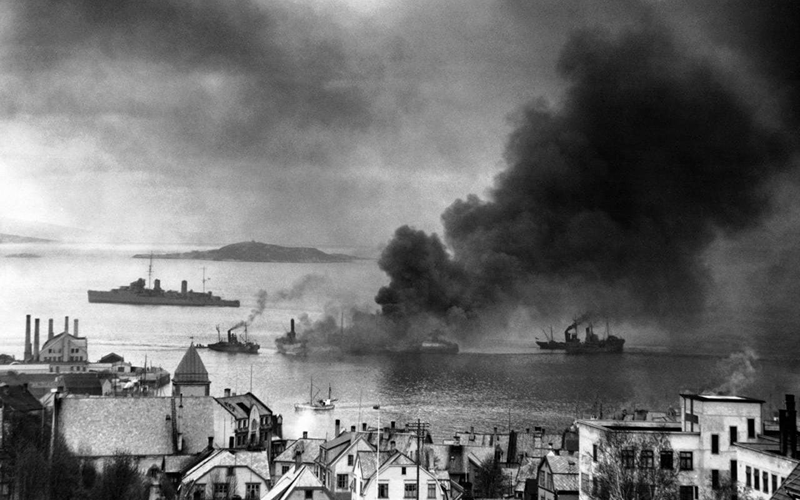
London finally decided to evacuate, but on the night that the promised rescue ships were meant to appear, they were nowhere to be seen. The next night the British Navy finally arrived, led by Lord Louis Mountbatten. Adrian arrived on the Orkney Isles on May 5th… his 60th birthday.
Next, de Wiart was sent to serve in Northern Ireland, but Commander-in-Chief Sir Henry Pownall told him he was too old to be on active duty. This news must have shattered the proud fighting man's ego, but the old dog wouldn't be out of action for long. Hitler was about to invade Yugoslavia, so they asked the Brits for help. It wasn't long before he was back in the danger zone, experiencing his third miraculous airborne escape.
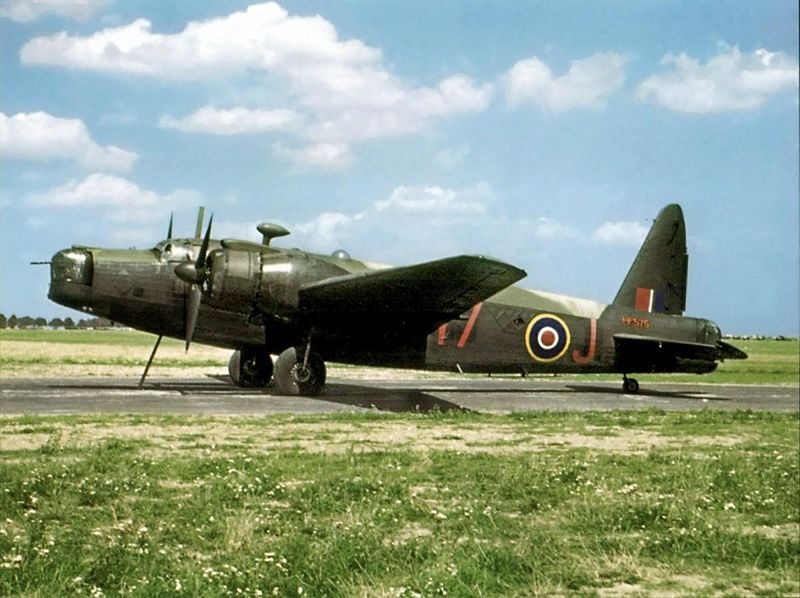
He traveled in a Wellington bomber to Serbia to negotiate with the Yugoslavian government. After refueling in Malta, the plane left for Cairo, Egypt. Everything was fine and dandy until both engines failed off the coast of Italian-controlled Libya. The aircraft limped on across the Mediterranean towards the European mainland. The pilot made an S.O.S. call and crash-landed into the sea a mile-and-a-half from the Italian coast. Striking the water, Sir Adrian Carton de Wiart was knocked unconscious.
Awoken by the temperature of the water, he managed to help his injured comrades to shore. But there was one major problem. They were now behind enemy lines in Axis-controlled Italy. He and his fellow survivors were immediately picked up by Italian authorities loyal to Mussolini and became prisoners of war.
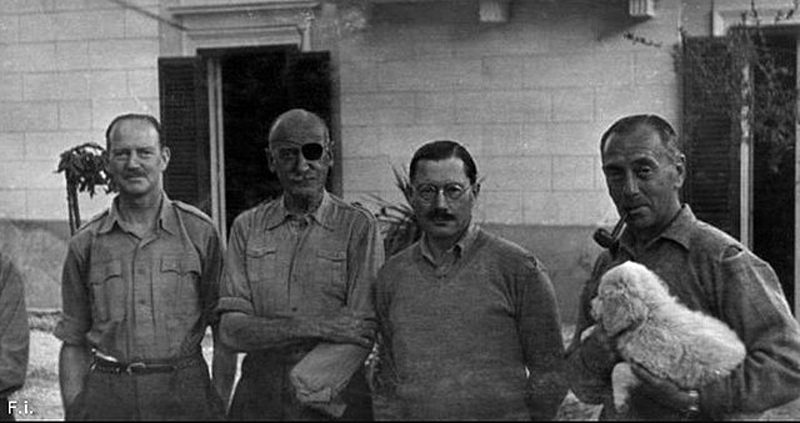
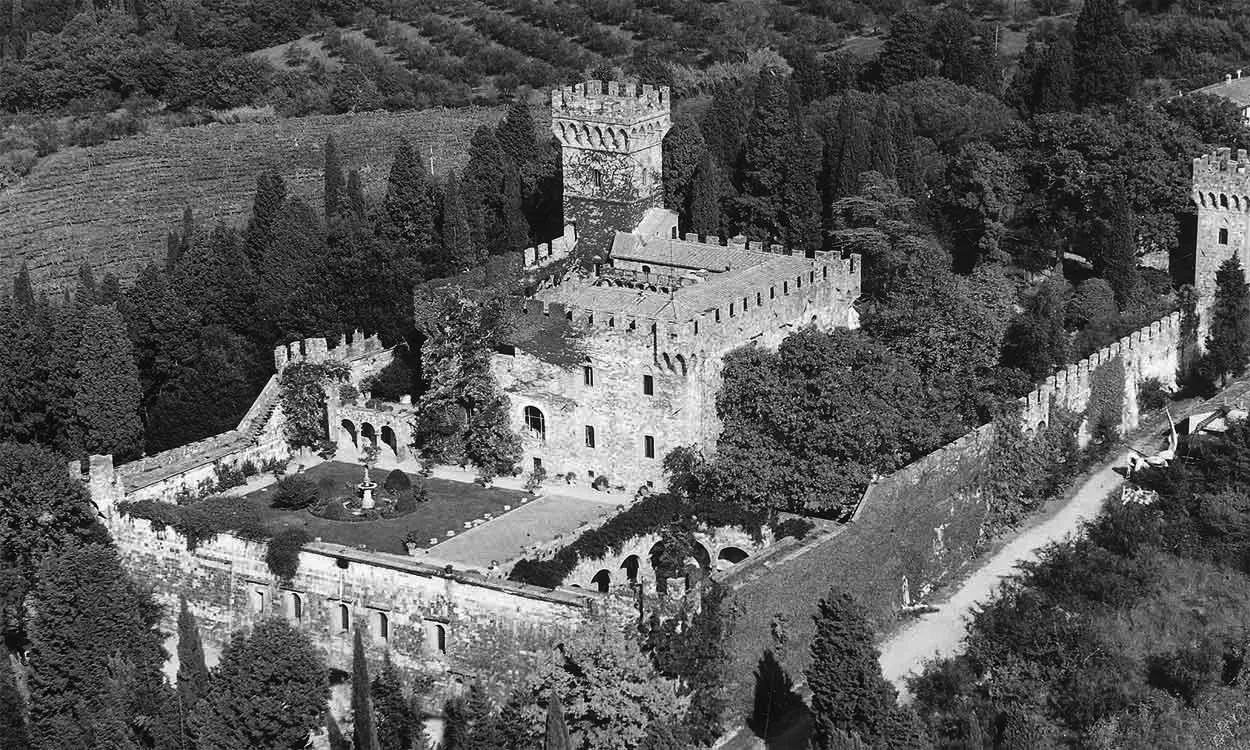
He spent the next two years as a POW. After four months at the Villa Orsini at Sulmona, he was transferred to a special prison for senior officers at Castello di Vincigliata, near Florence.
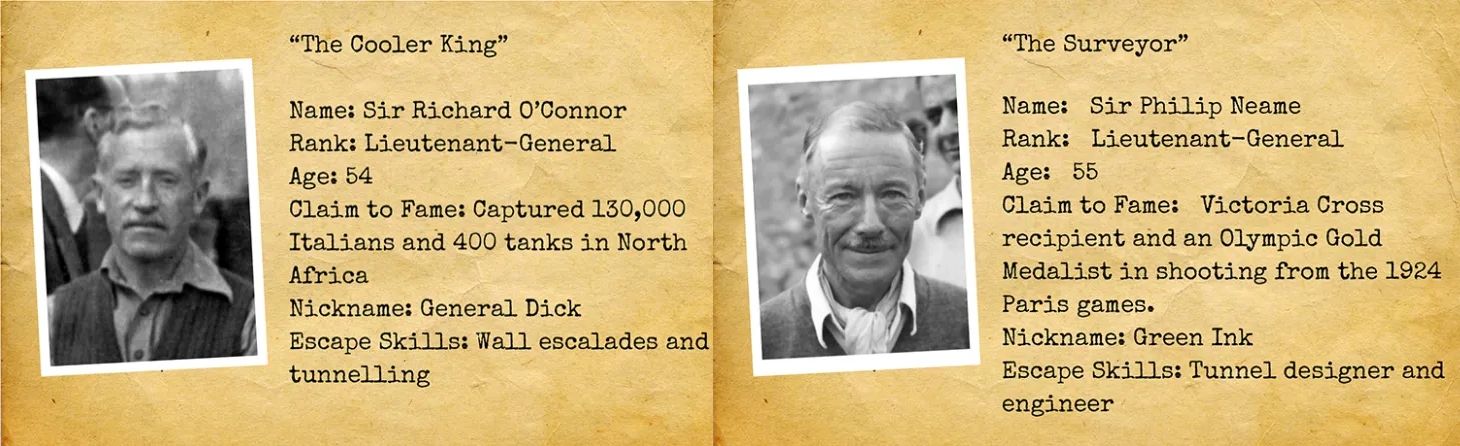
As one of the highest-ranking WW2 POWs, Carton de Wiart befriended: "The Cooler King" Lieutenant-General Sir Richard O'Connor,
"The Surveyor" Lieutenant-General Sir Philip Neame,
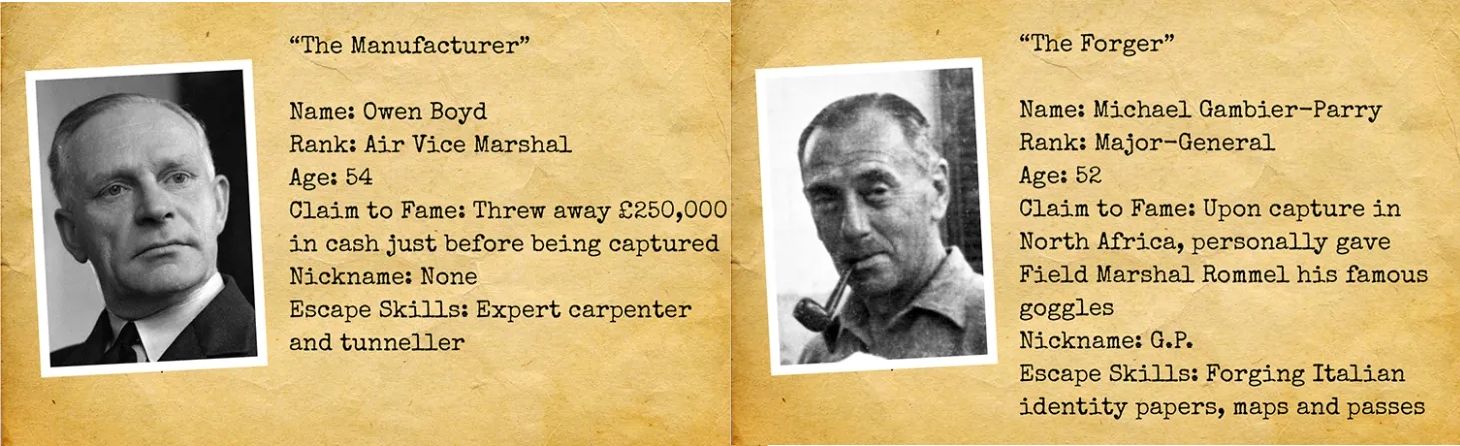
"The Manufacturer" Air Vice-Marshal Owen Boyd,
"The Forger" Major-General Michael Gambier-Parry,
and "The Tunnel King" Brigadier James Hargest, and together, they hatched a plan to escape....
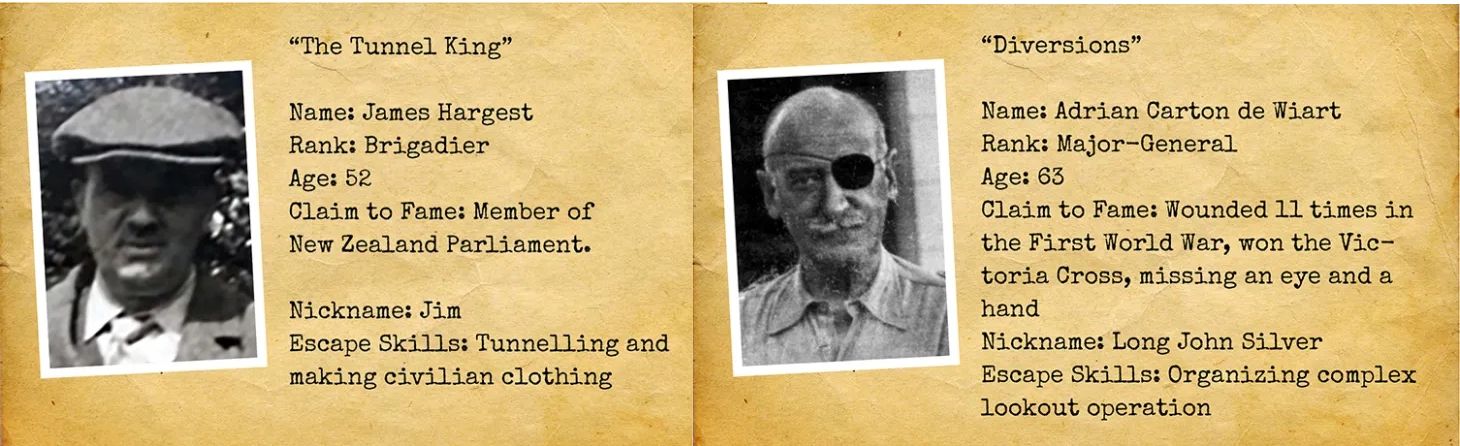
Another POW, English nobleman Daniel Knox, the 6th Earl of Ranfurly, described de Wiart as "a delightful character" who "must hold the record for bad language." Ranfurly was "endlessly amused by him. He really is a nice person, superbly outspoken."
Together, this Half Dirty Dozen carried out five escape attempts. Finally, in March 1943, after an exhausting seven-month secret digging project, the six men escaped via a 60-foot-long tunnel they had dug through the bedrock beneath Vincigliata Castle.
Splitting up to head 200 miles north to Switzerland, de Wiart evaded capture for eight days. He was disguised as an Italian peasant. Remember, the one-handed, one-eyed, 63-year-old was in northern Italy and couldn't speak a word of Italian. His distinctive eye patch probably gave him away. The irony was that while he was on the run, he was granted release due to disability, but his escape voided his repatriation back to England.
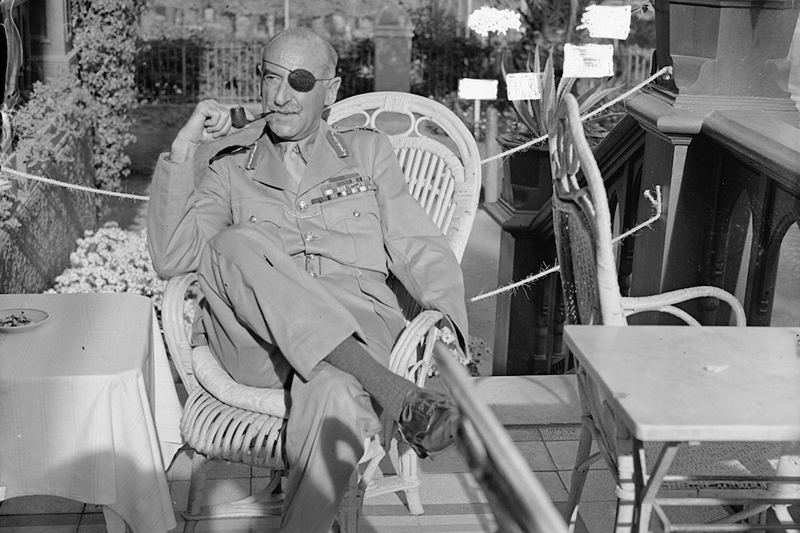
Adrian was returned to prison, but in August '43, he was suddenly summoned from his cell and driven to Rome. The Italians secretly planned to surrender and wanted him to broker a peace treaty with the British.
They handed him a tailored suit "as good as anything that ever came out of Savile Row," and he set off for the Portuguese capital. When Sir Adrian and General Giacomo Zanussi reached Lisbon, the former was released. He made his way to England, finally arriving home on August 28th, 1943.
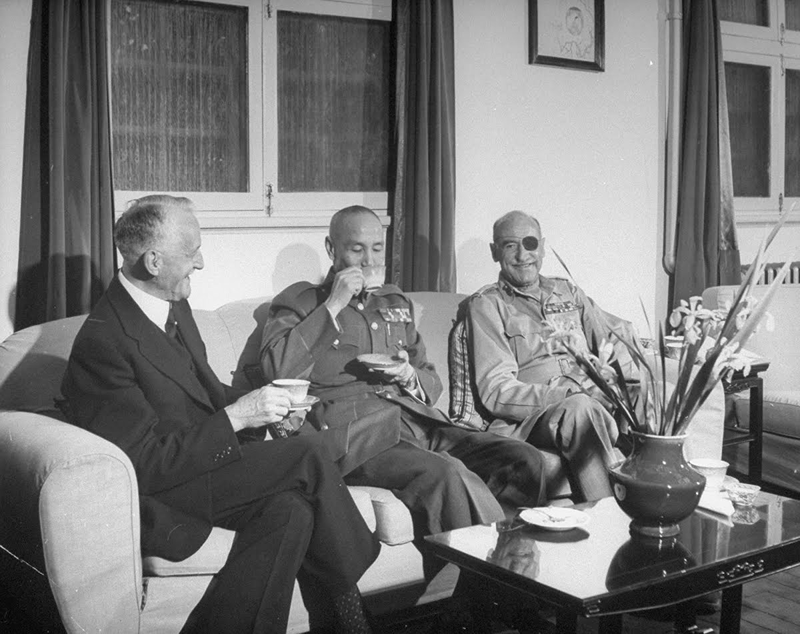
Within a month of setting foot back in Blighty, Winston Churchill sent de Wiart to negotiate with China as his representative. After unsuccessful talks, he traveled to India and attended the 1943 Cairo Conference with Winston Churchill, US President Franklin D. Roosevelt, and leader of the Republic of China, Generalisimo Chiang Kai-shek. The latter would soon be replaced by Communist leader Mao Zedong.
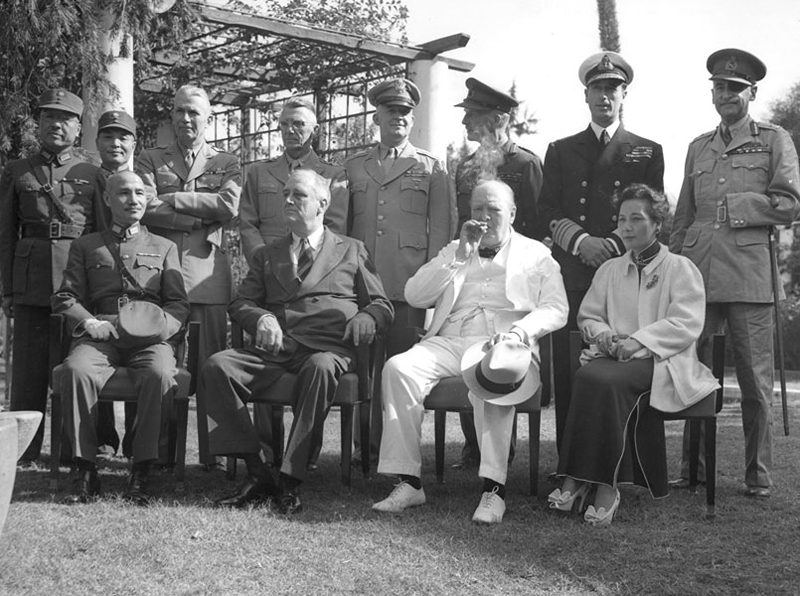
By October 1944, Adrian was promoted to temporary Lieutenant General and to the war substantive rank of Major General. Fast approaching his mid-sixties, the stiff-upper-lipped military man still yearned for conflict, but his aging body meant he was more suited for politics.
He received a Knighthood in the 1945 New Year Honours list. Then, when Clement Attlee succeeded Churchill that July, the new prime minister asked de Wiart to stay on in China.
Sir Adrian saw action again on a tour of the Burma Front as Allied forces tried to repel the Japanese. Next, he was given a seat on the bridge of the HMS Queen Elizabeth battleship for the bombardment of Sabang in the Dutch East Indies. There, air battles between Japanese fighters and British carrier aircraft exploded around and above him in the seas and skies surrounding modern-day Indonesia.
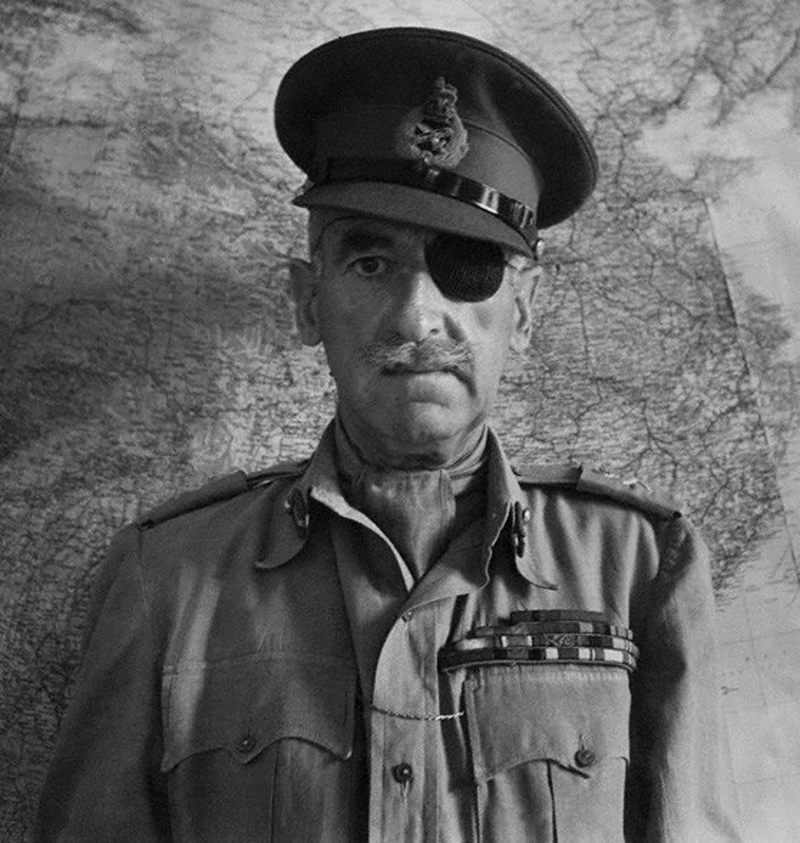
Soon, the staunch anti-Communist was back in China, where he famously interrupted Mao Zedong's propaganda speech at a dinner party. He reprimanded the Communist Party leader for China's soft stance on Japan. Chairman Mao was reported to have been briefly stunned into silence before laughing.
British historian Max Hastings once wrote: "De Wiart despised all Communists on principle and denounced Mao Zedong as a fanatic."
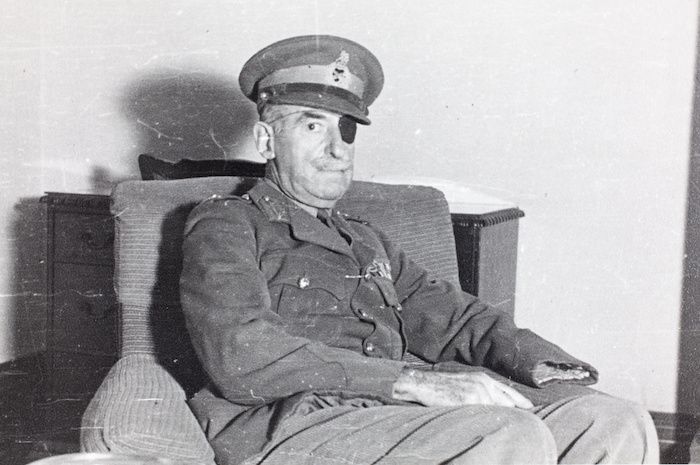
Sir Adrian retired from active duty in October 1947 with the honorary rank of Lieutenant-General. He was 66 years old. But just because he had hung up his boots doesn't mean an end to his political maneuvering. Nor would he stop getting injured in the most spectacular ways possible!
Returning home from his Asian negotiations via French Indochina, he stopped in Rangoon to stay with a British Army commander he knew. Walking down the stairs, he slipped on a coconut mat, fell, and broke his back in two places, shattering several vertebrae and knocking himself unconscious.
He woke up in a Rangoon hospital. During surgery, because the doctors had already sliced him open, they also removed a worrying amount of shrapnel. After this, the Six Million Dollar Man reported feeling much more comfortable.
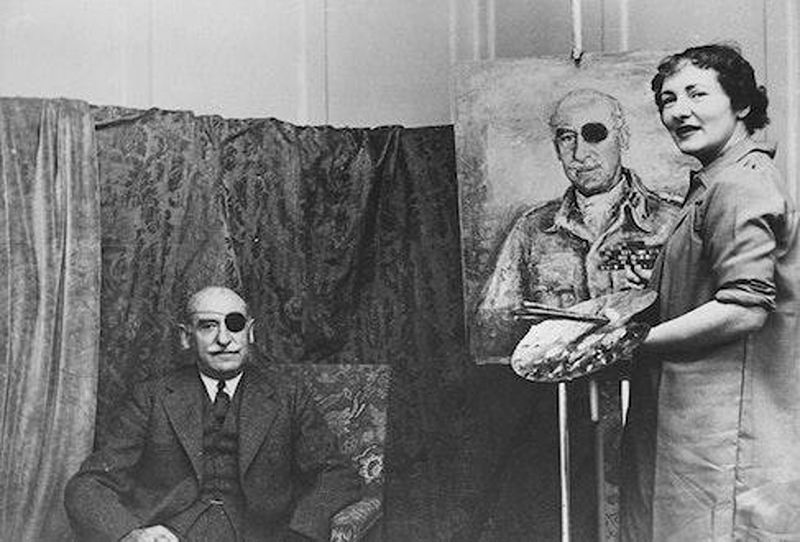
Adrian's first wife, Countess Friederike, died in 1949. Two years later, aged 71, he married Ruth Myrtle Muriel Joan McKechnie, aka Joan Sutherland, but not Dame Joan Sutherland, the famous Australian opera singer. She was 23 years his junior.
The two soon moved into Aghinagh House, Cork, and settled down for his autumn years in Ireland. Sir Adrian spent the next 12 years in retirement, shooting game and fishing for salmon on the beautiful Irish waterways.
Sir Adrian Carton de Wiart died peacefully at home on June 5th, 1963. He was 83. Incredibly, after being shot, blown up, imprisoned, and surviving plane crashes so many times, he died of natural causes. He was buried in Caum Churchyard just outside the grounds of his home.
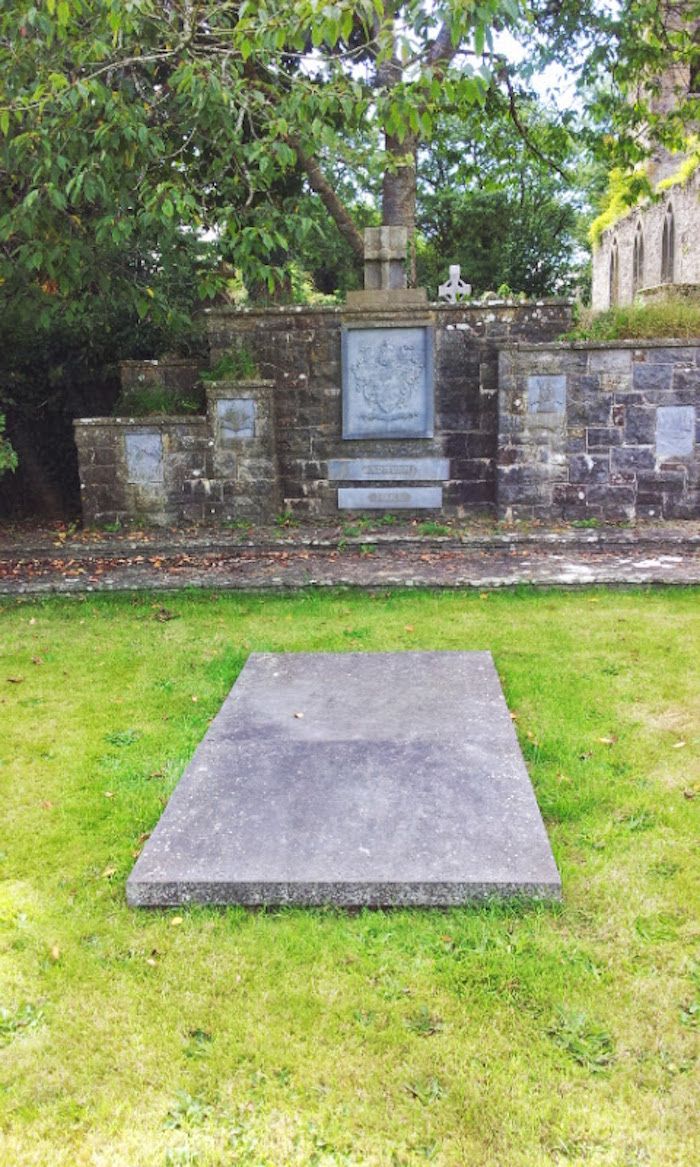
And it seems some of his immortality rubbed off on his second wife, Joan, as she lived until the ripe old age of 102. She passed away in 2006 and was buried next to her husband in Caum Churchyard.
How to sum up the life of history's most injured military man? You'll have to decide for yourself if he was the world's luckiest or unluckiest soldier. Either way, his extraordinary life reads like the original Boys' Own story.
So, since it's near impossible to do justice to his adventures, heroics, and many injuries, we'll let his impressive tally of military records and medals do the talking...
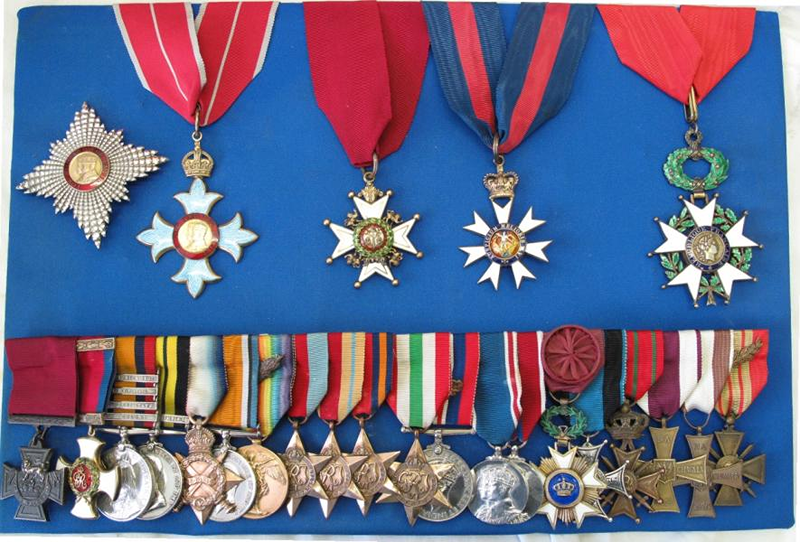
In an unparalleled six-decade career, he received the Victoria Cross, Knight Commander of the Most Excellent Order of the British Empire, Companion of the Order of the Bath, Companion of the Order of St Michael and St George, Distinguished Service Order, French Croix de Guerre, French Legion of Honour, Belgian Croix de Guerre, Officer of the Order of the Crown of Belgium, Polish Cross of Valor, the Queen's South Africa Medal, the Africa General Service Medal, the Africa Star, the 1939–45 Star, the Burma Star, the Italy Star, the British Medal, the Victory Medal, and too many more to mention.
Sir Adrian Carton de Wiart, VC, KBE, CB, CMG, DSO, we thank you for your service and raise our palms to salute you, history's most unkillable soldier.