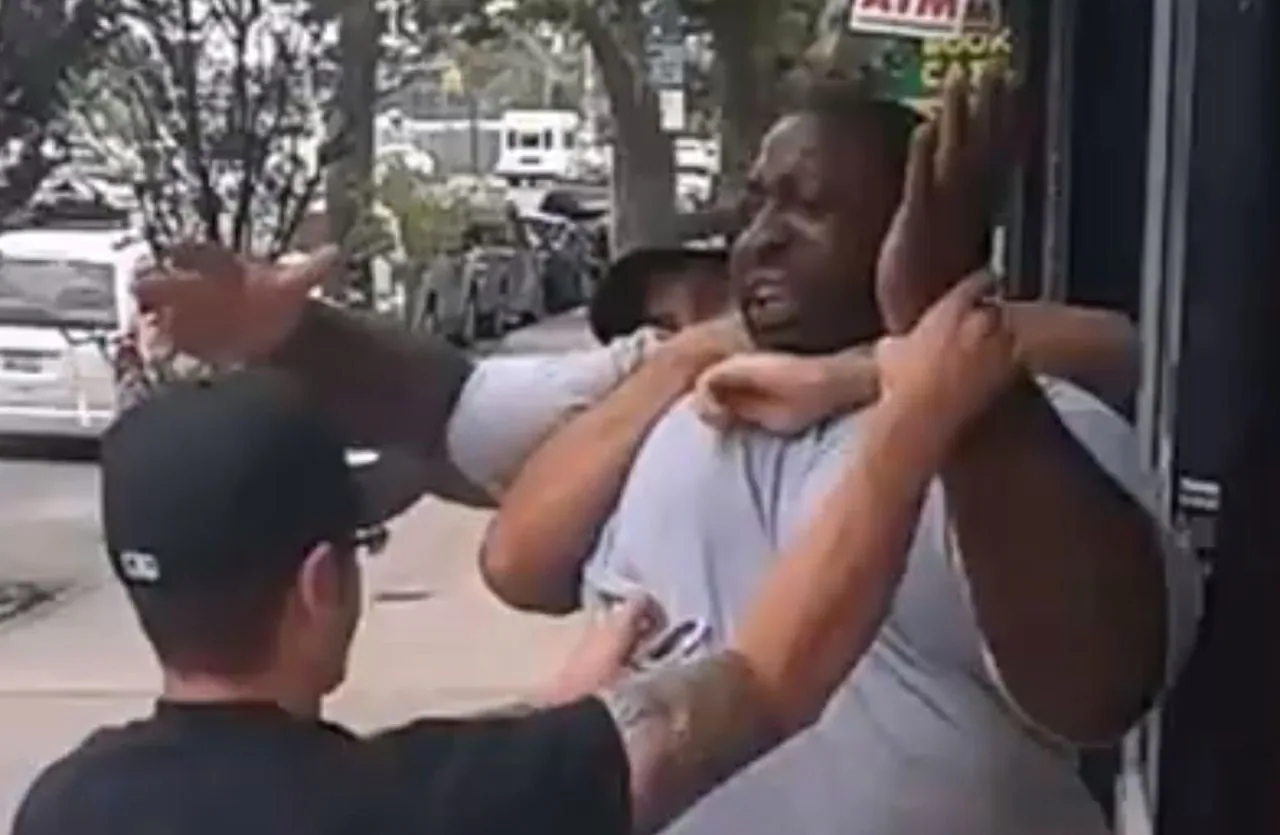
A still from a YouTube video shows Eric Garner being taken to the ground by Police Officer Daniel Pantaleo.
STATEN ISLAND, N.Y. -- In the quiet neighborhood of Oakwood, if you talk to neighbors who know the Pantaleos and the cop who has waited five years to learn if he’ll be punished in connection to the death of Eric Garner, many are puzzled over why the department is still grappling with whether he will be fired.
“It’s ridiculous … [Daniel Pantaleo] shouldn’t be fired. What happened was an accident, he didn’t wake up saying I’m going out to kill someone ... all [Garner] had to do was put his hands behind his back,” said a neighbor of the Pantaleos, a retired sergeant, who asked to remain anonymous.
Garner’s last words, “I can’t breathe,” which he repeated 11 times before losing consciousness as Pantaleo wrestled him to the ground outside of a beauty supply shop on Bay Street in 2014, became a rallying cry across the country after a spate of police-involved deaths and helped launch the Black Lives Matter movement.
Pantaleo finally faced an NYPD disciplinary trial this summer, which ended more than a month ago. The NYPD Deputy Commissioner of Trials Rosemarie Maldonado, who oversaw Pantaleo’s trial, is now working on a recommendation in the case to give to Police Commissioner James O’Neill, who will have the final say in whether and how to punish Pantaleo.
A decision is expected as early as Friday and NYPD top brass are reportedly preparing for potential unrest.
Some borough residents say they do not understand why Garner supporters and his family still want Pantaleo fired from the force, when his family received a wrongful death settlement from the city for nearly $6 million and both a Staten Island grand jury and the Department of Justice (DOJ) did not pursue criminal or federal civil rights charges against the officer.
But those from the racially diverse North Shore, who are patrolled by the 120 Precinct where Pantaleo worked during the time of Garner’s death, say firing Pantaleo would mean finally seeing justice for communities of color on the North Shore.
“No, why?” said one of Pantaleos’ longtime neighbors, a retired firefighter, who asked to remain anonymous, when asked if Pantaleo should be fired. “[Garner] resisted, he refused to even put his hands behind his back, he was in the worst physical shape.”
“But of course, they make it a racial problem all the time,” he continued.
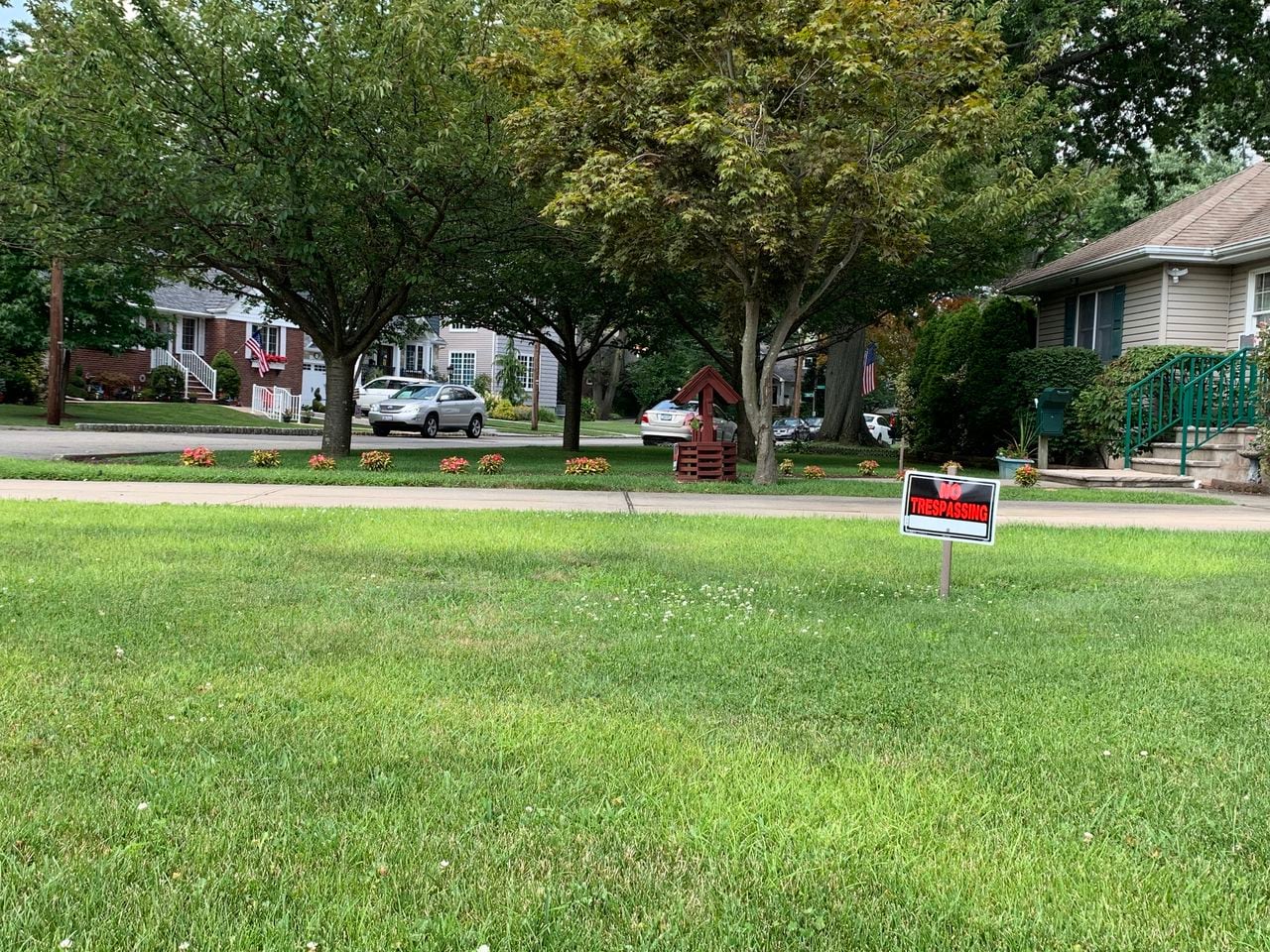
- A sign on Pantaleo family's Oakwood home reads "no trespassing." Many neighbors say they do not think the Island cop should be fired for his role in the 2014 death of Eric Garner on Bay Street. (Staten Island Advance/Sydney Kashiwagi)Sydney Kashiwagi
FIRING PANTALEO MEANS FINALLY SEEING JUSTICE FOR NORTH SHORE COMMUNITIES OF COLOR, RESIDENTS SAY
Many on the North Shore who knew Garner say a decision from the NYPD is about race and breaking the cycle of what they see as the 120th Precinct’s disparate treatment of African Americans on the North Shore.
“[Police] just need to stop trying to make this place their place, like black people don’t belong,” New Brighton resident Doug said of police officers on the North Shore, speaking to the Advance outside of the beauty supply store where Garner died. “You can’t ride up and down Jersey Street without five, 10 cop cars riding up and down the street looking at you strangely. Why ain’t they in Tottenville? Ain’t no crime over there, the only crime is on Jersey Street ... that’s not fair.”
Doug said he was a friend of Garner, and thinks that if police wanted to improve the relationship with the community they would have fired Pantaleo a long time ago. The DOJ, however, asked the NYPD years ago to pause their pursuit of a departmental trial while the federal government determined what charges it might file.
“Do the right thing for the community and people,” Doug said.
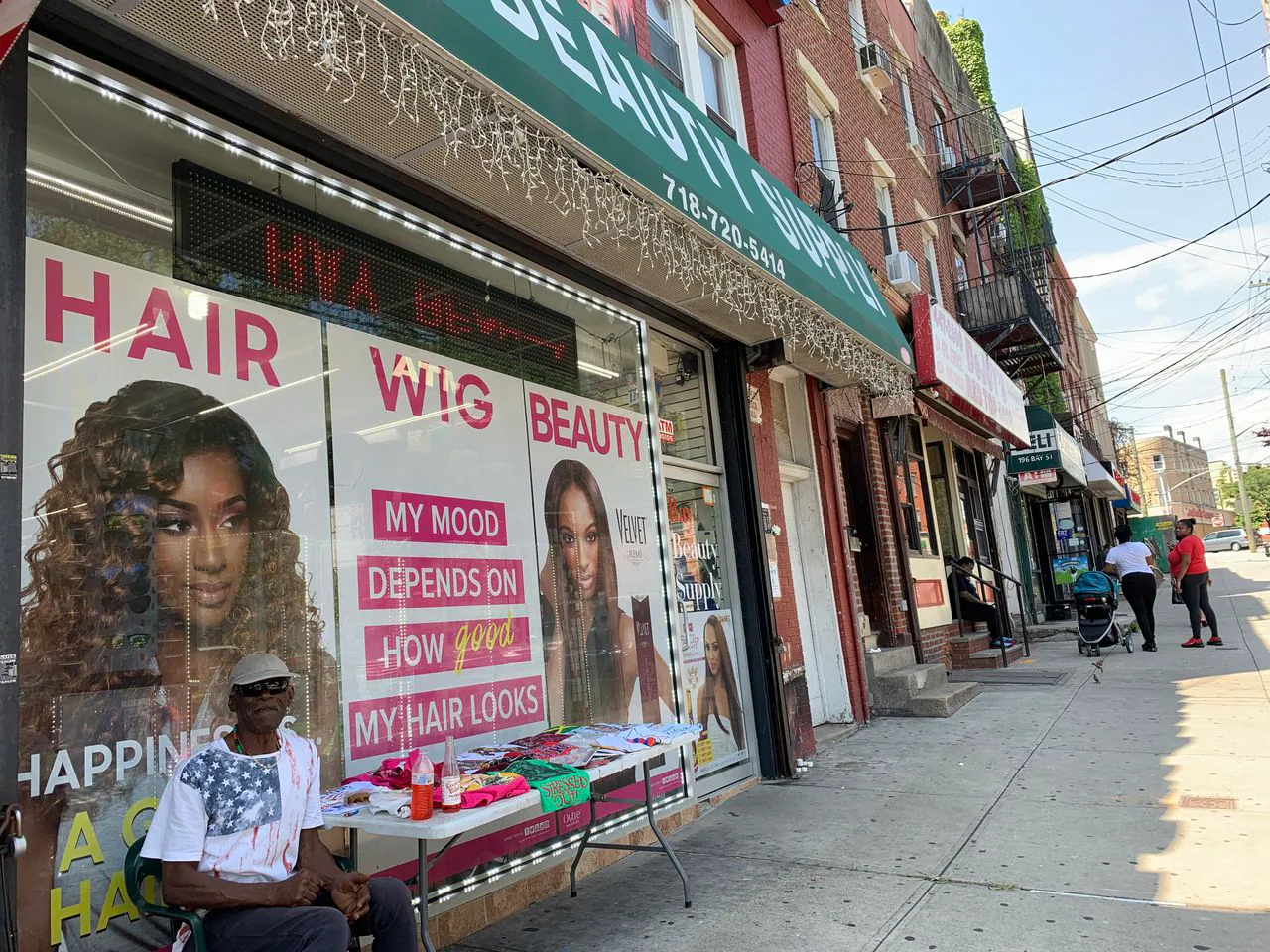
- Doug of New Brighton, a friend of Eric Garner, sits outside of the beauty salon where Pantaleo and Garner wrestled to the ground in 2014. Doug thinks Pantaleo should be fired and believes that if the 120 Precinct wanted to improve its relationship with the community, Pantaleo should have been fired years ago. (Staten Island Advance/Sydney Kashiwagi)Sydney Kashiwagi
A Staten Island grand jury declined to indict Pantaleo on criminal charges in 2014, prompting the DOJ to launch its civil rights investigation into the incident. But after five years, two presidential administrations and four attorneys general, Attorney General William Barr decided not to pursue federal charges against the officer on the eve of the fifth year anniversary of Garner’s death.
The Justice Department’s decision outraged Garner’s family and supporters who said they were blindsided by the announcement. Supporters have since embarked on protests across the city.
While the city and family waited on the DOJ’s investigation, last summer on the fourth anniversary of Garner’s death, the NYPD was freed to move forward with a police disciplinary trial against Pantaleo.
But Garner supporters have slammed the city for waiting so long and all eyes have now turned to progressive presidential candidate Mayor Bill de Blasio to fire the officer himself, a move he said legally he cannot make, despite being O’Neill’s boss.
RESIDENTS SAY NYPD DECISION IS COMMUNITY’S LAST HOPE AT JUSTICE
Many Garner supporters, including North Shore residents of color, see the NYPD’s decision as their last hope at justice.
Some think the relationship between police and the community on the North Shore has improved since Garner’s death, but others do not think the relationship can improve unless Pantaleo is fired.
“Right now, the community don’t give a f*** about cops, if they...fire [Pantaleo], we’d have more respect for the police,” said Mariners Harbor resident Anthony Hardy.
Nesha Guppy, a mother of a 10-year-old African American son from Stapleton, thinks firing Pantaleo would show a younger generation of African American children across New York City that things are different.
“I think [Pantaleo] should be fired,” Guppy said. “ … I feel like it would show that things are starting to change.”
Garner’s 2014 death in a notoriously crime-ridden part of the North Shore led the police department to change course in how it policies communities, particularly communities of color, with the help of Police Commissioner James O’Neill’s neighborhood policing strategy and the retraining of NYPD cops on the use of excessive force.