One chilly December evening, the candlelit procession started with dancing and drumming. The performance group Danza Guadalupana did an elaborate sequence of steps, hops, squats and spins to honor the patron saint of Mexico, the Virgin Mary, or La Virgen de Guadalupe.
Then, over 50 participants marched up Eastern Avenue in Southeast Baltimore — carrying bells and candy canes and singing “The Little Drummer Boy” in Spanish. The event was a Baltimore re-imagining of La Posada, a Catholic festival celebrated across Latin America to commemorate the journey that Joseph and Mary made from Nazareth to Bethlehem in search of a safe refuge.
“We want to welcome everyone no matter where they are from,” said Yesenia Mejia, an event organizer. At the Creative Alliance ― an arts nonprofit in Highlandtown — a multigenerational art collective of Latinas called Artesanas Mexicanas has organized Baltimore City’s La Posada event since 2013. Today, the event has more than 25 sponsors, such as the Cinco de Mayo grocery store in Highlandtown and Fells Point restaurant Taquito Mexicano.
“It is a day for all to be united and a day of peace and light. You can feel it as soon as we start walking and singing through the streets until we get to our last stop where we do our celebration.”
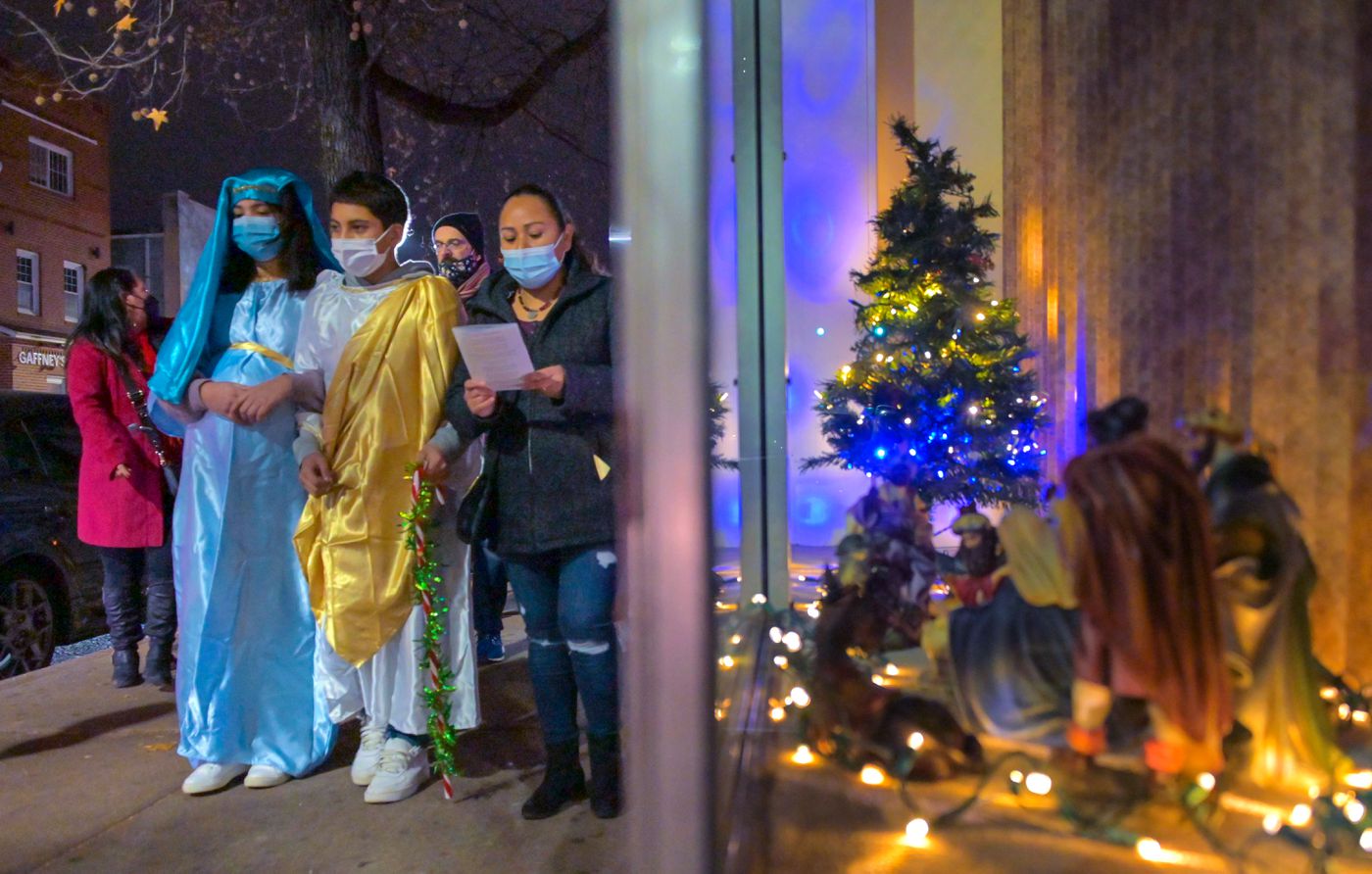
The word posada means inn or lodging, and traditionally the festival takes place across nine nights leading up to Christmas Eve. Each evening, children dressed as angels, shepherds or the three wise men lead a procession. Attendees are divided into two groups: the ones “outside” representing Mary and Joseph, and the ones “inside” representing innkeepers. Both groups alternate singing the posada litany, reenacting the couple’s search until finally being admitted to an inn.
Mejia has fond childhood memories of joy and hospitality during La Posada from her hometown of Santa María Zacatepec, Oaxaca, in Mexico. Her grandfather would play the guitar during the procession, and Mejia would break piñatas filled with mandarins and sugar cane and drink ponche, a warm tropical-fruit punch served during Christmas.
Last Saturday’s procession in Baltimore made three stops to sing the posada litany at Fruity Bar, Vargas Bakery and Salem Methodist Church before arriving at Our Lady of Pompei Church on Claremont Street. The 10-minute walk was scored by guitarists, and attendees carried songbooks to follow the lyrics of holiday songs “Mi Burrito Sabanero” and “Noche de Paz.” The procession was led by three children dressed as Mary, Joseph and the Princesita de Navidad — an Ecuadorian tradition where a young girl is crowned the Princess of Christmas and presents gifts to children.
It was Christine Peterson’s first Posada, but not her first time attending an Artesanas event. Her family went to their Day of the Dead Festival and Parade in October.
“It’s just interesting to live in a city that has so much diversity, so we are using this as an opportunity to learn about a different culture,” said Peterson, a 13-year-resident of Canton, who joined the procession with her 5- and 10-year-old sons.
“I feel like we’re getting bigger as we’re walking around. Everyone obviously knew that we were coming, because you see people peeking out of their doors like they were waiting for it.”
Prizes, like handmade piñatas by Artesanas, were raffled off. The piñatas were crafted in the form of a star, representing the light that guided the three wise men to baby Jesus. Performances included Christmas caroling by the band Bahía Vieja and folk dance routines by Danza Alegría.
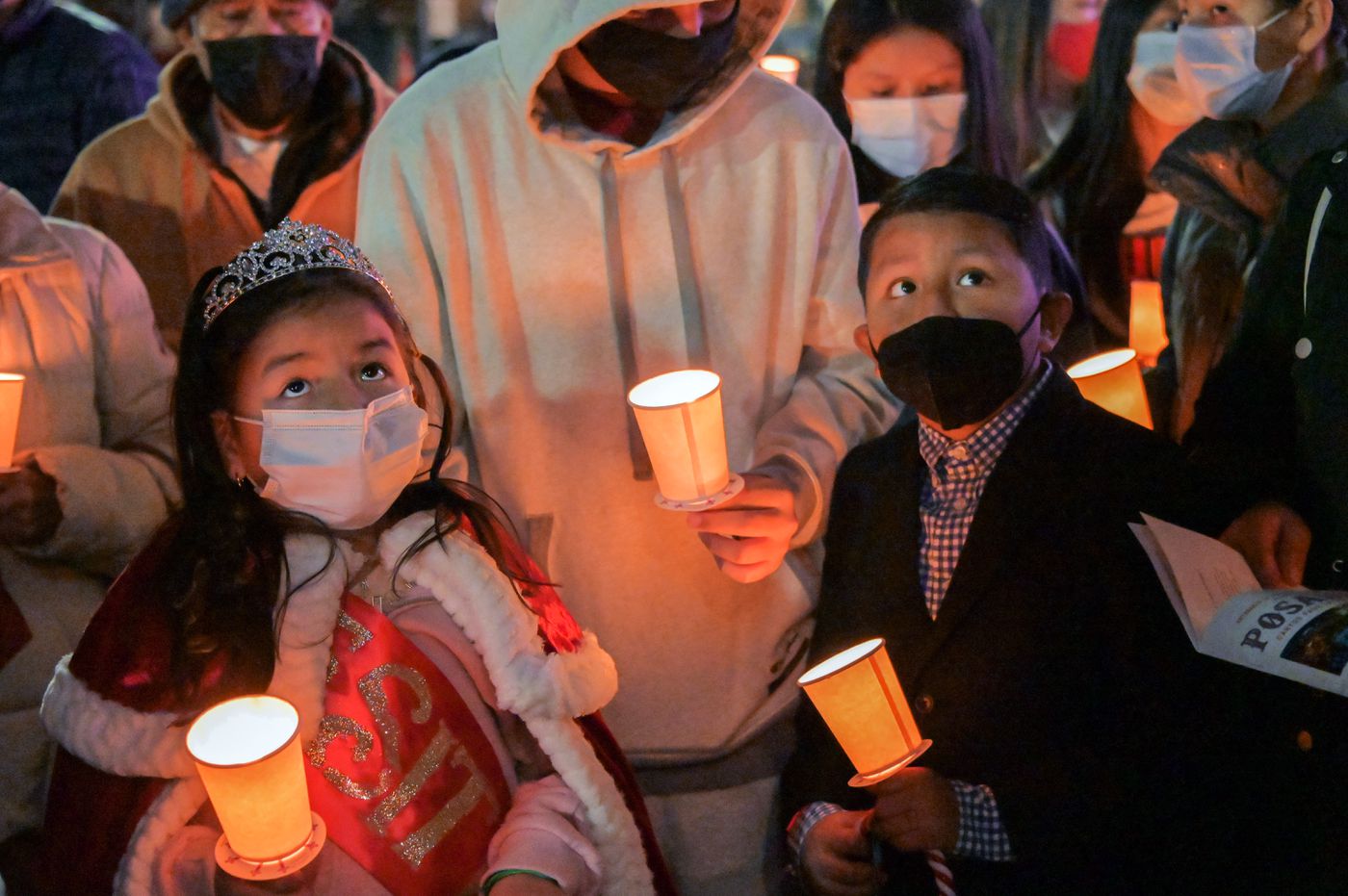
“I like that we’re sharing our culture and our traditions with many people, and for a lot of them, it’s new,’’ said Naomy Salazar Alvarado, 14, a performer with Danza Alegría — a social club that teaches Baltimore City children Latin folk dances.
In the past, Baltimore’s Posadas have seen as many as 300 attendees. Due to COVID-19, last year’s celebration was held virtually. This year, there were roughly 100 attendees, and the Maryland Department of Health provided vaccines at Our Lady of Pompei Church.
La Posada teaches peace and sentimental lessons of helping strangers in times of need and the human right to seek asylum, said Mejia, the Artesanas Mexicanas coordinator at Creative Alliance.
“We know how hard [it] can be to be far from home and to come to another country and not have a place to stay,” she said.
“This event is also about uniting with your roots or getting closer to what you have left behind. That’s why we do it with so much love and affection for the community, because it means so much to us.”