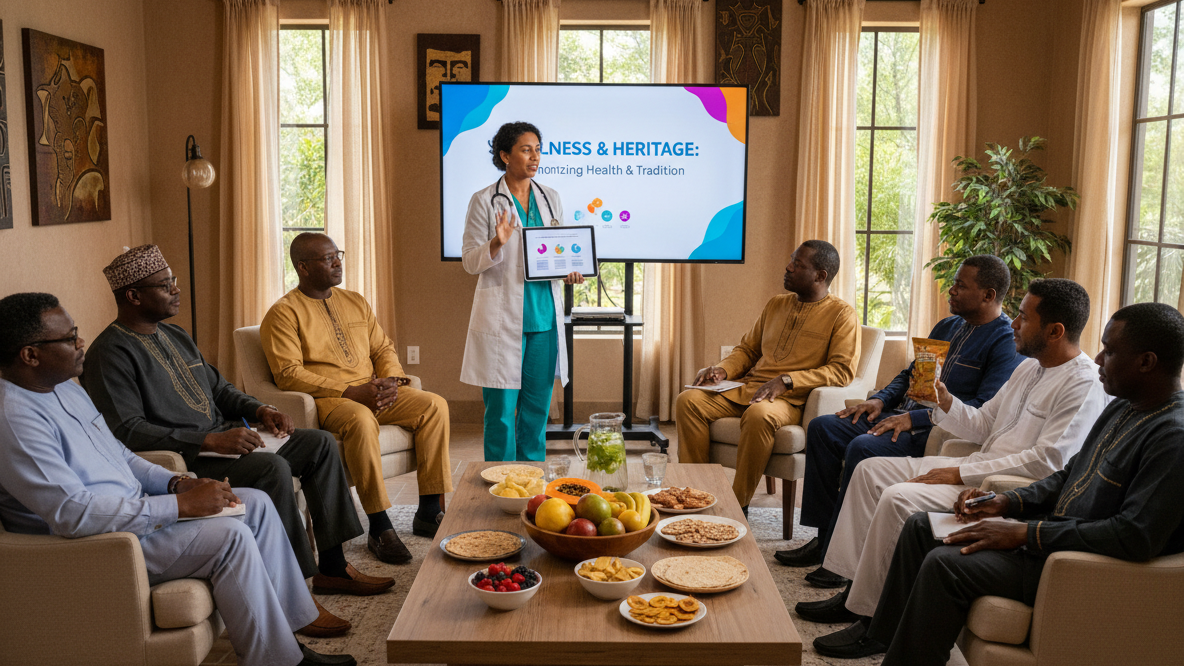
Hypertension is a complex issue, and a one-size-fits-all approach won't work. Culturally tailored care is essential to address unique health challenges for men of color effectively. In this post, we'll unpack vital lifestyle modification strategies that honor cultural practices. Below, you'll see how shifting our perspective can transform outcomes.
The Myth That Won't Die—And Why It Must
Let me be blunt: there's a narrative in healthcare that needs to end. You've probably heard it—men of color struggle with hypertension because they don't take care of themselves, don't understand nutrition, and make poor lifestyle choices. I've sat in enough conferences and training sessions to know this assumption runs deep. And it's not just wrong—it's actively harmful.
Here's what the data actually shows: Black men face a 59% prevalence rate of hypertension. That's not a personal failure statistic. That's a statistic on systemic healthcare failure. When I facilitate chronic disease self-management programs in retirement communities across Grand Prairie and beyond, I see firsthand how these assumptions create barriers to the care patients deserve.
What Culturally Tailored Hypertension Treatment Actually Means
Culturally tailored hypertension treatment for men of color isn't about checking diversity boxes or adding a few pamphlets in different languages. It's about fundamentally rethinking how we approach care.
Think about it this way: I can't count how many times I've watched healthcare providers hand patients a generic "low-sodium diet" sheet and call it patient education. No discussion about how to modify Grandma's gumbo recipe. No acknowledgment that food is culture, memory, and connection. "Eat less salt," and follow the appointment in three months.
That's not education—that's a missed opportunity. Culturally competent interventions start with respect. They recognize that the retired professionals and working-class adults I work with aren't lacking knowledge—they're navigating a healthcare system that wasn't designed for them.
These approaches also account for real-world barriers: the provider shortages in communities of color, the medical mistrust rooted in historical trauma (Tuskegee didn't happen in ancient history—some of my podcast guests remember it), and the economic realities that make "just buy organic vegetables" laughable advice for many families.
Why Standard Protocols Keep Failing
I'll share something that frustrates me: most hypertension protocols were developed using predominantly white male study participants. Then we act surprised when they don't work as well for everyone else.
The gaps are significant:
- Medication responses vary based on genetic factors that standard dosing ignores
- Chronic stress from discrimination affects blood pressure in ways our protocols don't address
- Traditional dietary patterns get dismissed instead of being adapted
- Access barriers make frequent monitoring unrealistic for many patients
Research confirms that racial disparities in blood pressure control represent the single most significant contributor to excess cardiovascular disease among Black Americans compared to white Americans. Yet we keep treating this as an individual compliance problem rather than a systems design problem.
What Actually Works: Lessons from the Field
After years of facilitating Stanford's Chronic Disease Self-Management Programs, I've learned what creates real change. It's not complicated, but it does require us to challenge some deeply held assumptions.
Start by changing the question. Stop asking "Why won't patients follow our recommendations?" Start asking, "Why aren't our recommendations working for patients' actual lives?" That shift matters more than any clinical guideline.
Work within cultural food traditions. I've seen patients light up when we talk about using herbs and spices to boost flavor while cutting sodium, or finding ways to keep beloved dishes on the table with heart-healthy modifications. Food is identity. Honor that.
Could you address the real barriers? When healthcare provider shortages mean patients wait months for appointments, when medication costs force impossible choices, when transportation is a barrier—these aren't excuses. They're the actual context of people's lives.
Build trust through representation and respect. Diversifying healthcare teams matters—so does cultural competency training. But most of all, treating patients as experts in their own experiences matters. The retired professionals I work with have decades of life wisdom—they know what works in their communities.
Leverage community connections. Telehealth and community-based programs have shown remarkable results when designed with—not for—the communities they serve.
Your Turn to Speak Up
Culturally tailored hypertension treatment for men of color isn't optional—it's evidence-based, necessary care. But it only happens when we collectively demand better and hold systems accountable.
I've watched patients thrive when they finally connect with providers who see them, respect them, and design care that fits their lives. That's not a luxury. That's what healthcare should be.
Please feel free to drop a comment below. What changes have you seen—or are you fighting for—in how healthcare addresses hypertension in communities of color? Let's learn from each other.
