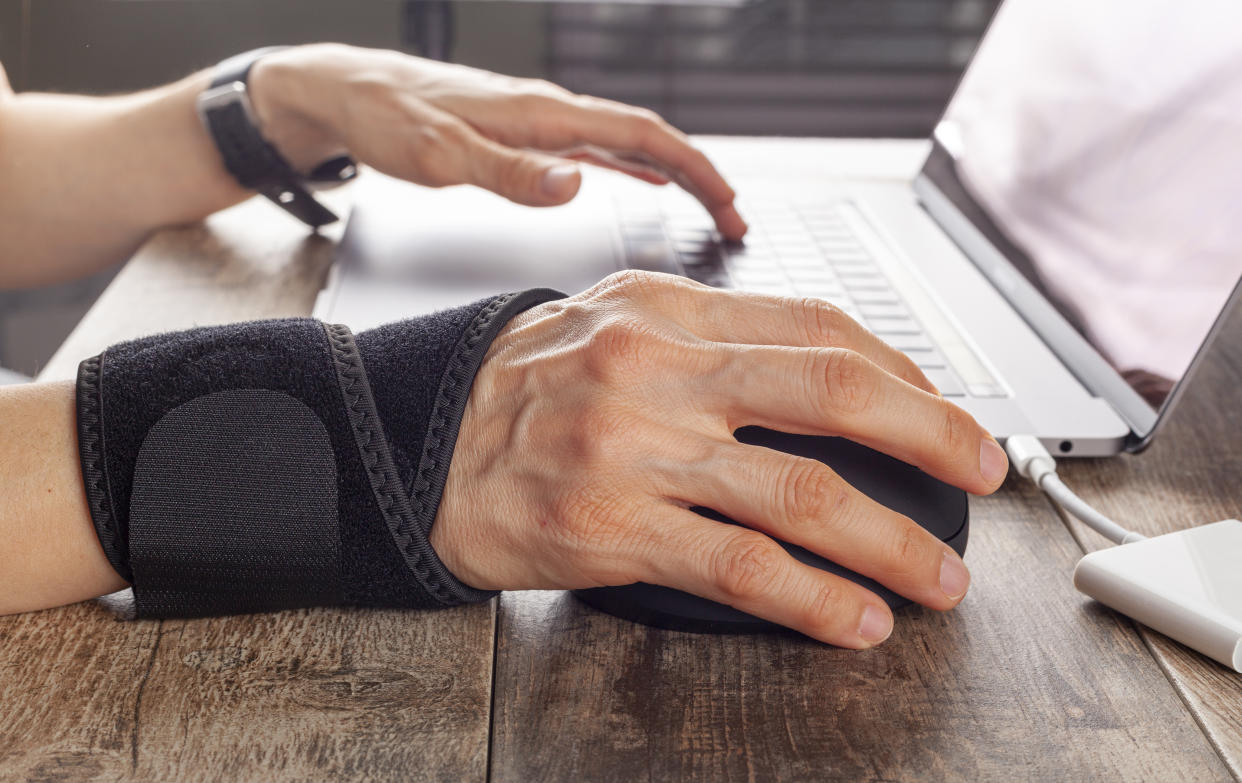
Pain, discomfort and numbness in your fingers can have any number of causes, but a common culprit is carpal tunnel syndrome, a neurological condition that occurs when there's compression of the median nerve — one of the three major nerves of the forearm and hand. Pressure on the nerve often results in a tingling sensation, pain and numbness. As it worsens, CTS can make even the most mundane tasks — pushing a shopping cart or pulling the garbage can to the curb — incredibly painful. While it's important to see a health care provider for wrist pain or numbness, one of the most common treatments for mild to moderate CTS is bracing. Dr. Raymond Hwang, medical director at Hinge Health, says, "Braces help keep the wrist in a neutral, slightly extended position, which relieves pressure on the median nerve as it travels through the carpal tunnel in the wrist. This can reduce numbness, tingling and pain."
Certified hand therapist Brenda Cummings says, "Wrist braces for carpal tunnel work by keeping your wrist in a neutral position to alleviate pressure from the median nerve." To be effective, Cummings says, it should prevent you from being able to bend your wrist more than 15 degrees in any direction.
If you determine an over-the-counter wrist brace is right for you, there are many options available. To help find the best wrist braces for CTS, we spoke with orthopedic experts to learn what to look for in carpal-tunnel-specific braces, and what to avoid. We learned that a rigid insert or stay (typically made of metal) is key to stabilizing the wrist. These stays are commonly placed on either the dorsal side (i.e., the back of the wrist), the palm side or both. A dorsal support brace is often best for carpal tunnel since it prevents flexion, but depending on your level of pain or discomfort, a simple wrist brace or wrist wrap you wear while sleeping may be the better choice.
Using our experts’ feedback, we evaluated more than 20 wrist braces for CTS, rating each based on construction, materials used, breathability, brand reputation, user and in-house tester reviews, cost, comfort and efficacy. These are the eight wrist braces for carpal tunnel that made our cut as the best of the best.
Symptoms of carpal tunnel syndrome
Carpal tunnel syndrome symptoms and level of severity are divided into three stages:
Stage 1: Frequently waking in the night with a sensation of a swollen, numb hand or severe pain that irradiates from the wrist to the shoulder. There is also tingling in the hand and fingers. After waking, hand stiffness usually persists.
Stage 2: The symptoms are present during the day as well, especially if you stay in the same position for prolonged periods, or perform repeated movements or tasks with the hand and wrist. This is the stage where you may have lost so much feeling in your hands and fingers, you frequently drop things.
Stage 3: This is the final stage where atrophy can set in and the median nerve usually responds poorly to surgical decompression. In this phase, sensory symptoms decline.
What to look for in a carpal tunnel brace:
Comfortable fit:
Carpal tunnel braces are designed to keep your wrist in a neutral position. Immobilization is important because wrist flexion puts pressure on the median nerve; bracing prevents that. However, in order for the brace to work, it needs to fit correctly. It should be snug enough to provide adequate support but not too tight to restrict circulation or cause skin irritation.
Material:
A big part of comfort has to do with quality materials. Neoprene is one of the best material choices since it offers compression, warmth, elasticity and breathability. Mesh fabric can also add to a brace’s overall breathability. Softer materials, like memory foam, can provide padding for additional comfort. Other braces use copper-infused fabrics, which can help deodorize the brace. While many of these braces can be washed by hand, most are not machine washable.
Structure and design:
Most braces have a rigid insert on either the dorsal side (i.e., the back of the wrist), the palmar side, or both. Studies show a dorsal support brace is best for carpal tunnel since it prevents flexion without adding more pressure to the median nerve. Palmar support can be beneficial, too; just make sure that the rigid stays don’t press in on the median nerve or that they’re removable.
Length is also important. “A wrist brace that is too short may apply more pressure to the median nerve,” says Cummings. Look for a wrist brace that doesn’t stop directly at the wrist and instead extends about halfway up the forearm.
Cost:
Finally, cost is something to consider. The best wrist brace for you is one that is comfortable and effective, but more expensive doesn’t necessarily mean better.
How we chose the best wrist braces for carpal tunnel syndrome
To help you determine the best carpal tunnel braces, our team looked at over 20 different wrist braces and evaluated each based on their efficacy. The truth is, there are a ton of wrist braces on the market, but not all of them work well to alleviate symptoms of carpal tunnel. We considered factors like the overall structure and design of the brace, the amount of stability it provided, and how comfortable it was to wear. Finally, we consulted with two orthopedic experts, including a hand pain specialist and an orthopedic surgeon.
Frequently Asked Questions
Do wrist braces help carpal tunnel?
Dr. John Thomas, a board certified hand surgeon, says that wrist braces can be extremely beneficial for mild to moderate carpal tunnel, especially if used overnight. “Most people like to curl up and fully flex their wrists at night,” he says. “This places pressure upon the median nerve in the carpal tunnel and increases symptoms.”
What are the best treatments for carpal tunnel syndrome?
In addition to bracing, treatments for CTS include oral anti-inflammatory medication, steroid injections, and in severe cases, surgery to decompress the carpal tunnel and increase space for the median nerve.
How long should I wear a carpal tunnel brace?
Wrist braces aren’t meant to be a permanent fixture in your life. Instead, Thomas says, they’re best worn for a few weeks. If symptoms don’t improve during that time, it’s a sign that you might need to try a more intensive form of treatment. Dr. Melissa Boyette, an orthopedic surgeon, says, “I would caution against wearing a brace longer than a few weeks if a physician has not evaluated you,” warning that prolonged bracing can lead to stiffness and weakness.
How l can I prevent CTS pain?
Hwang recommends taking frequent hand/wrist stretching breaks, especially for those with repetitive hand motions at work. He also says, "Prevention through ergonomic workstations, exercises, and avoiding excessive wrist bending is important for those at risk." You can also try oral anti-inflammatory medication or a pain relieving cream for immediate relief.
Meet our experts
Dr. Melissa Boyette, orthopedic surgeon; hand and wrist specialist, Bradenton, Fla.
Dr. Raymond Hwang, orthopedic surgeon and medical director at Hinge Health
Dr. Sara P. Simmons, orthopedic hand and wrist specialist, Bradenton, Fla.
Dr. John Thomas, orthopedic hand surgeon, New York City