These days we take the Internet and social media for granted, but imagine a world where there is no e-mail or exchange of information like we now have? That was the world for Humanities Librarian María Teresa Márquez at the University of New Mexico (UNM) Zimmerman Library and creator of CHICLE, the first Chicanx electronic mailing list created in 1991, which would focus on Latino literature and later on the social sciences.[1] CHICLE stood for Chicana/Chicano Literature Exchange.
Other Chicano/Latino lists were Roberto Vásquez’s Lared Latina of the Inter-mountain Southwest[2] created in 1996 and Roberto Calderón’s Historia-l created in 2003.[3] These electronic lists were influential in expanding communication and opportunities among Chicanx. CHICLE, nevertheless, deserves wider recognition as a pioneering effort, because it was one of the first, but its importance has been overlooked.
The Internet revolution was largely shepherded by librarians in their institutions. Libraries and librarians were early adopters of the new technology. Márquez used computers and e-mail as part of her work in the Government Information Department at UNM. However, it was in the Library and Information Science Program at California State University at Fullerton, where she first learned to work with computers in a federally-funded program in the 1970s, which sought to increase the number of Mexican American librarians. Afterwards, at the University of Illinois at Urbana-Champaign, Márquez earned a Certificate of Advanced Study in the Graduate School of Library and Information Science, where she learned more about computers and databases.
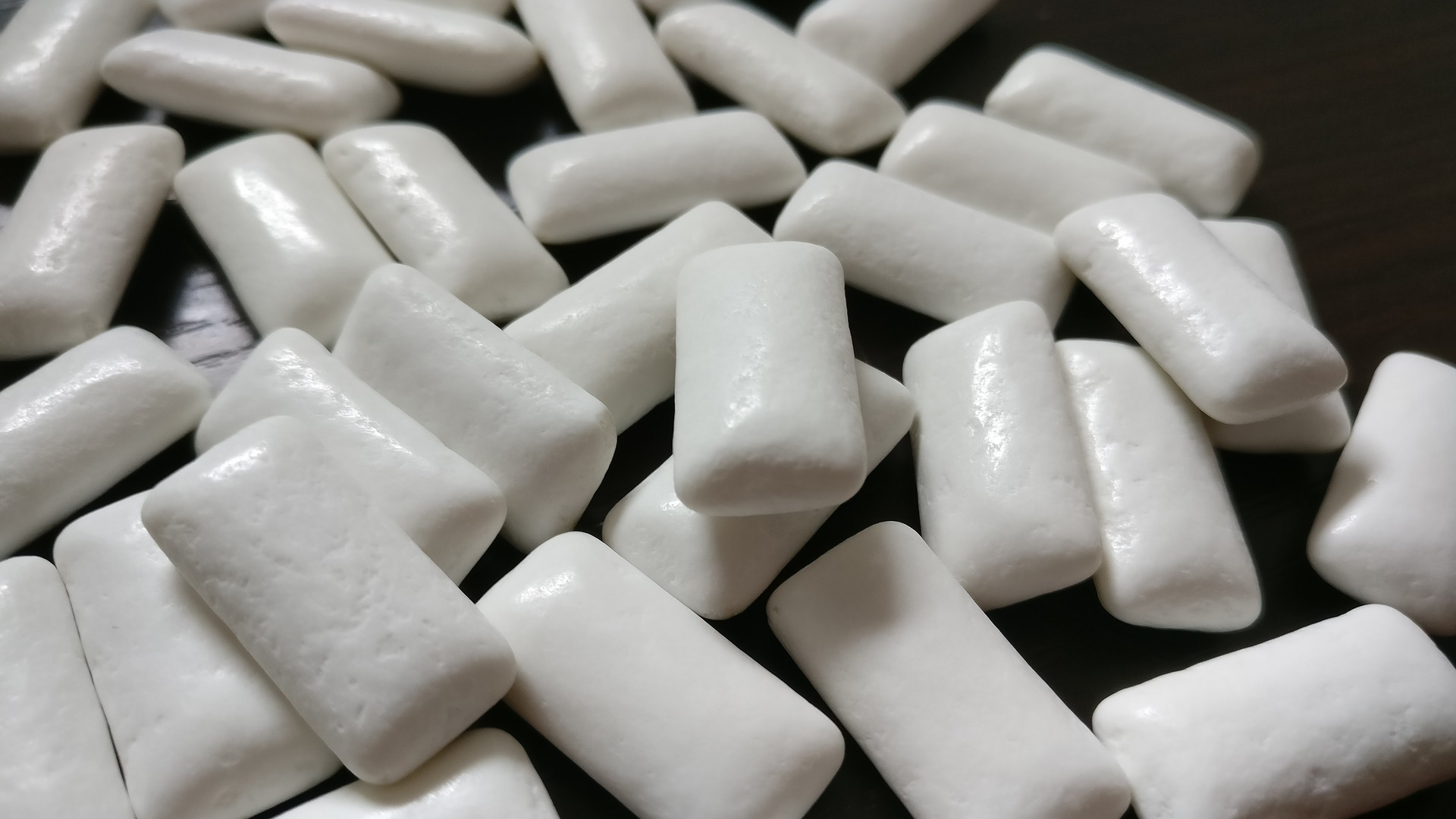
In April 1991, Márquez attended the nineteenth annual conference (Los Dos Méxicos) of the National Association of Chicana and Chicano Studies (NACCS) in Hermosillo, Sonora, México. One of the panels, moderated by Professor Francisco Lomelí, University of California, Santa Barbara, presented papers on “Literatura Chicana.” While discussing the topic, scholars raised problems encountered in communicating with each other and sharing information on new publications and current research. Márquez volunteered to create a listserv or electronic mailing list and explained how it could be used in keeping scholars abreast of new information. At UNM, she developed the list and Professor Erlinda V. Gonzales-Berry, then a faculty member in the UNM Spanish Department, coined it as “CHICLE” (which translates into gum in Spanish).
According to Márquez, initially most faculty members were unwilling to join CHICLE, citing no experience with computers nor did they wish to consider its potential use in academic work, so Márquez launched it with only eight subscribers. She attended numerous academic conferences to recruit subscribers, distributed fliers and talked to people about the list. She attempted to impress upon her listeners the need to be at the forefront of technology, but she had few takers. Believing in the importance of the list and in this new form of communication, she persevered and she states: “One day, all of a sudden, membership went up to 800!” According to Márquez as more institutions and faculty members started using computers, the list exploded in the number of subscribers.
The idea for the list evolved from Márquez’s work in the library that was used to communicate internally. At first Márquez sent out all the information on the list-because she had most of it. She would use librarian’s tools and lists of new books, information on upcoming conferences, calls for papers, and articles that would be of interest but she received very little in return, so in its early years the list was limited to her contributions. Later, as the number of subscribers in the social sciences increased the list moved away from literature.
Numerous topics were discussed over the list’s 10–year history (1991–2001), but eventually its popularity led to its demise. Subscribers often stated that the list contained too much information and was time consuming. Active subscribers to CHICLE included archivist Dorinda Moreno,[4] who later went on to work with Lared, as well as Dr. Robert Calderón, who contributed history-related information. In contrast to Márquez’s effort, Calderón created a “closed list” with a finite number of subscribers where he posted items of interest to Chicanx academic community, as opposed to CHICLE that was an open forum.[5] Initially CHICLE was designed as an open forum to encourage broad participation. Dr. Tey Mariana Nunn, Director and Chief Curator of the Art Museum and Visual Arts Program at the National Hispanic Cultural Center Art Museum in Albuquerque, played a large role in promoting the list in its early days. Nunn worked on CHICLE at UNM as a graduate work-study student. Additionally, Renee Stephens, who was also a graduate work-study student at UNM, was also editor for the list, a task inherited from Janice Gould, now an Associate Professor at University of Colorado at Colorado Springs. All these women were instrumental in the success of CHICLE. Eventually, the expansion of the Internet eclipsed Chicanx electronic mailing lists and today social media is one of many varied sources for news and information.
When CHICLE began, Márquez acted as the sole moderator, but over time, as it gained popularity, she trained students to run it. The popular list existed until her funding to employ hire work-study students ran out. Her institution was reluctant to provide further support. CHICLE was not considered an appropriate academic part of her professional responsibilities. Management of the list competed with duties at the library and as subscriptions grew, it became overwhelming and difficult. Márquez who often managed the list on her own time, stated she would have continued the list but it would have required more energy than she was willing to invest. When Márquez decided it was time to move on and discontinue the list she approached the UNM Technical Center and have them archive the CHICLE files. The Center claimed it did not have sufficient storage space for her files. As news of CHICLE’s imminent shutdown spread, people volunteered to keep the list going but were deterred by the amount of work it entailed.
Dr. Diana I. Ríos at the University of Connecticut, made attempts to create an archive of CHICLE. She made copies of conversations by cutting and pasting them into a word program, as did others. The hard drive where she was keeping copies of the list became corrupted, so to this day, there is no one CHICLE Archive in existence. There were attempts to incorporate CHICLE into another list but Ríos did not want that to happen. Eventually, Latino literary blogs such as Pluma Fronteriza[6] and La Bloga[7] emerged to continue where CHICLE left off.
After CHICLE, Márquez took her energy and enthusiasm to support Latina/o students and created a program called CHIPOTLE.[8] She used CHIPOTLE to familiarize Chicanx rural students with the academic environment and to reach out to surrounding communities. Via grant and affiliated department funded sponsorship Márquez would take posters and boxes of books by Chicanx writers to donate to students when she visited Hispanic-dominate schools. As part of CHIPOTLE, she created a forum to bring in Latinx speakers into the library and encouraged Latino students to utilize the research resources available to them. She directed two programs, funded by Rudolfo Anaya, Premío Aztlán that recognized emerging writers and Critica Nueva that honored scholars who had produced a body of literary criticism based on Chicana/o literature. For many years, Márquez, was the only Latina librarian at the University of New Mexico University Libraries. Presently, she is an Associate Professor Emerita.
In the era of search engines, web browsers, blogs, wiki’s, intranets and social media, it is important to recognize the efforts of a pioneering Chicana librarian and a pioneering electronic mailing list that was a unique academic cultural vehicle given life by so many who read it, edited it and posted on it. CHICLE was an innovative endeavor which brought many voices together and established a foundation for the future. As Márquez stated, “CHICLE was the catalyst for many things.”[9]
NOTES:
[1] María Teresa Márquez, interview by the author, Albuquerque, April 28, 2007.
[2] Lared Latina of the Intermountain Southwest, was established in the Spring of 1996 by Roberto Vásquez, as a World Wide Web Forum, for the purpose of disseminating socio-political, cultural, educational, and economic information about Latinos in the Albuquerque/Santa Fe Metro area and the Intermountain Region which includes Metropolitan Areas such as the Salt Lake City/Ogden region, Denver, Phoenix, Tucson, Boise, Las Vegas and Reno, Nevada, accessed January 30, 2014: http://www.lared-latina.com/bio.html.
[3] Dr. Roberto R. Calderón, interview by the author, College Station, Texas, December 20, 2007. Historia-l, focused on Chicano/a history, started as “96SERADC” with 200 subscribers in May 1996 and continued through October 1997. Originally housed at the University of Washington, it helped mobilize the first Immigrant Rights March on Washington, D.C., held on Saturday, October 12, 1996. The march had upwards of 50,000 participants, half of whom were Latina/o college students from across the country. The listserv list then became housed the University of California at Riverside becoming “2000SERADC” from November 1997 through August 1999, at which point the listserv list was discontinued. Though its header had two iterations the name of the listserv list throughout its 3 ½ years remained: Discussion & Advocacy on Human, Labor & Civil Rights.
[4] Dorinda Moreno, Chicano/native Apache, (Mother, Grandmother, Great Grandmother) has worked bridging Elders, Women of Color, Inter-generational networks and alliances, with a focus on Non-racist, non-sexist (LGBT community), non-toxic — Chicano/a, Mexicano/a, Latino/a, Indigenous communities, projects, networks, giving voice to under-represented groups — feminist empowerment through social change networks and innovations beginning with her participation in the creation of Ethnic Studies, brought forward in community service as a Communicator, Writer, Artist, Poet, Opinion Maker, Archivist, serving as a magnet for a multicultural-Multinational network of Social Change advocates, that today makes up a rich speakers platform of specialists committed to the educational, cultural enrichment, empowerment, through a multiplicity of projects reflecting and representing the vulnerable populations exposed to the global crisis and cross-fire of the drug cartels, and facing the dangers of falling victim to human trafficking impacted by globalization, hunger, illiteracy, and sex and gender exploitation. As an early Web pioneer and archivist, she has been actively using the Internet since 1973.
[5] Calderón interview by the author.
[6] Pluma Fronteriza began as a printed newsletter, then became a blog and currently has a companion site on Facebook: Accessed February 8, 2014: http://plumafronteriza.blogspot.com/
[7] La Bloga hosts various bloggers who write on Latino/a literature. Accessed February 8, 2014: http://labloga.blogspot.com/
[8] According to the Memidex Online Dictionary and Thesaurus, Chipotle comes from the Nahuatl word chilpoctli meaning “smoked chili pepper” is a smoke-dried jalapeño, accessed January 30, 2014, http://www.memidex.com/chipotles.
[9] Márquez interview by the author.