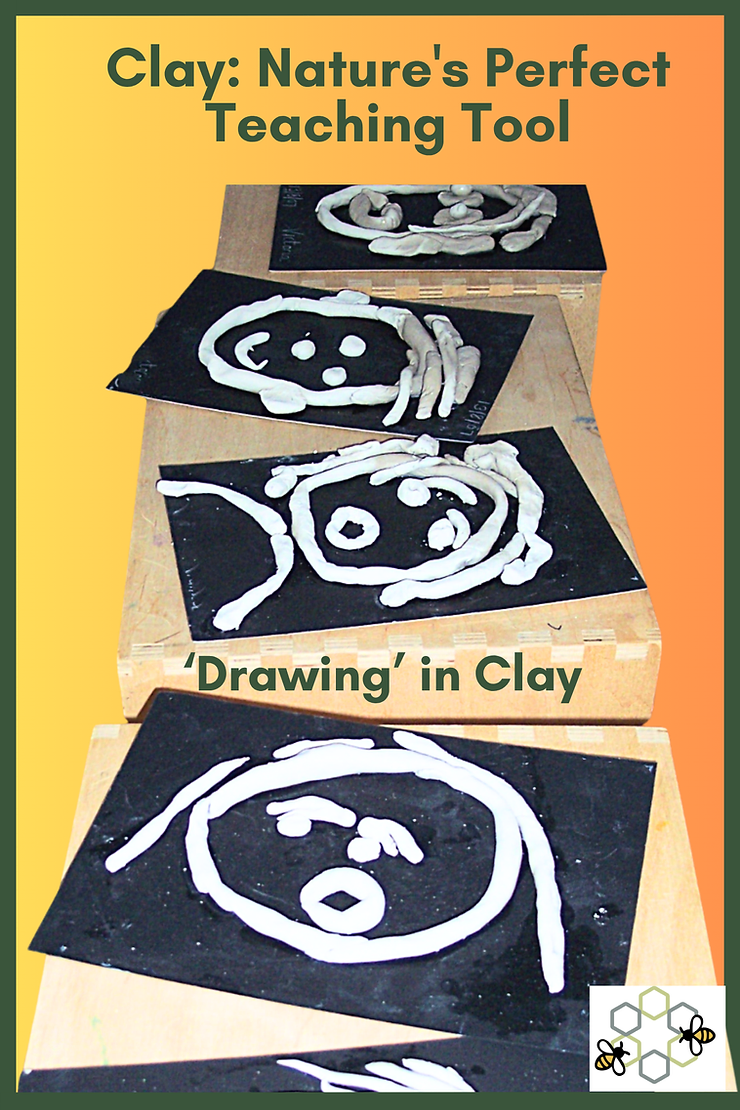
This resource is inspired by the exemplary clay program at Isabel Henderson Kindergarten, guided by clay practitioner Linh. It aligns with Project Sustainability's commitment to hands-on, environmentally conscious, collaborative learning experiences.
The Transformative Power of Clay
Clay is more than an art material—it's a powerful learning medium that supports children's cognitive, social, emotional, and physical development. This resource guide systematically introduces clay work in early childhood settings, building from simple beginnings to sophisticated learning experiences.
Clay offers a unique sensory experience that promotes meaningful connections, nonverbal expression, and cyclical understanding of transformation and renewal. It supports thinking, problem-solving, creativity, collaboration, perseverance, and planning while teaching respect for natural resources.
Pedagogical Foundations
Clay work emphasises the journey of exploration, experimentation, and discovery rather than focusing solely on results. Children develop understanding through hands-on investigation, trial and error, and reflective practice.
The clay process embodies natural cycles: wet to dry, dry to wet, creation to reclamation. This cyclical nature helps children understand transformation, sustainability, and the renewable nature of resources.
Clay teaches intentional, environmentally responsible material use through recycling, reclamation, and return to earth practices. Children learn to value and care for natural resources.
Developmental Benefits
Problem-Solving: Working with clay presents constant challenges requiring creative solutions
Planning: Children must think ahead about their constructions and consider structural possibilities
Cause and Effect: Understanding how water, pressure, and time affect clay properties
Systems Thinking: Recognising connections between process, materials, and outcomes
Collaboration: Sharing materials, techniques, and ideas with peers
Perseverance: Working through challenges when clay doesn't behave as expected
Emotional Expression: Nonverbal communication through three-dimensional creation
Confidence Building: Mastering techniques and seeing ideas come to life
Fine Motor Skills: Pinching, rolling, and manipulating clay develop hand strength and dexterity
Bilateral Coordination: Using both hands together for complex constructions
Sensory Integration: Processing tactile information and adjusting responses
Progressive Implementation Framework
Phase 1: Foundation - Just Clay and Hands

Self-drying clay varieties are excellent for early childhood settings as they require no firing. These clays air-dry naturally and can be preserved using a simple painting technique with diluted white glue, which adds durability and an attractive sheen to finished pieces.
Initial Encounter: Present children with a block of clay without tools or instructions
Sensory Exploration: Encourage touching, squeezing, and discovering clay properties
Elemental Manipulation: Support children in discovering pinching, rolling, and pressing
Property Investigation: Explore how clay changes with water, pressure, and time
Natural Material Integration: Introduce leaves, shells, stones, and other natural materials for texture exploration

Wooden pottery tools (not too sharp)
Pattern rolling pins
Plastic knives (child-safe)
Natural materials for texture (leaves, shells, stones)
Tool Exploration: Introduce one tool at a time, allowing investigation before instruction
Technique Development: Support children in discovering coiling, pinching, and basic slab building
Natural Material Integration: Experiment with natural materials to create surface designs through imprinting, embedding, and collaging
Shape Investigation: Explore how tools help create different forms and effects
Motor Skill Refinement: Develop awareness of material properties and adaptive movements
When children work with natural materials in clay—imprinting patterns, embedding leaves, or creating collages with shells and stones—they develop heightened attention to detail and material properties. They discover how strong, friable, or delicate different materials are and learn to adapt their motor movements accordingly. A delicate flower requires gentle pressure for imprinting, while a sturdy shell can be pressed firmly into the clay surface. This process develops both fine motor control and material awareness simultaneously.
Coiling: Rolling clay into long shapes and building with them
Pinching: Creating vessels and forms by pinching clay walls
Natural Material Application: Learning to imprint, embed, and collage with collected materials
Adaptive Motor Skills: Adjusting pressure and movement based on material properties
Tool Care: Learning to clean and respect materials
How can tools help create what hands alone cannot?
What happens when we combine different techniques?
How do we join pieces together successfully?
Which natural materials work best for different effects?
How do we adjust our touch for delicate versus sturdy materials?
Phase 3: Advanced Techniques - Complex Construction
Rolling tools for flat surfaces
Cutting guides
Joining materials (slip - liquid clay, or diluted white glue for self-drying clays)
Storage containers for a work in progress
Brushes for applying protective finishes
Slab Construction: Rolling flat pieces and building three-dimensional forms
Slip Introduction: Learning to use liquid clay for decoration and strengthening joins (or diluted white glue for self-drying clays)
Finishing Techniques: For self-drying clays, applying diluted white glue as a protective coating that adds durability and an attractive sheen
Multi-Session Projects: Creating works that require multiple sessions to complete
Collaborative Projects: Working together on larger constructions
Slab Building: Creating flat surfaces and joining them into forms
Finishing Application: Using liquid clay slip or diluted white glue for both functional and decorative purposes
Project Planning: Thinking through multi-step constructions
Peer Collaboration: Sharing techniques and working on group projects
Phase 4: Integration and Exhibition - Sharing Learning

How children approach problems and challenges
Development of fine motor skills and technique mastery
Evidence of planning and forethought in constructions
Collaboration and peer learning interactions
Children learn to recycle unused clay through the dry-wet-dry cycle, understanding that materials can be renewed and reused rather than discarded. For self-drying clays, unused portions can be kept moist and reused multiple times before final drying.
Understanding of clay properties and behaviour
Patience with process-based learning
Respect for materials and environment
Ability to support without directing
Knowledge of safety considerations and finishing techniques
Gradual introduction respecting children's developmental readiness
Flexible scheduling allowing for extended exploration
Adequate preparation time for material setup and cleanup
Professional learning opportunities for educators
Slower drying process, even wall thickness, and proper joining techniques. For self-drying clays, ensure the application of the protective finish is even.
Professional firing may be required for traditional clays. For self-drying clays, apply diluted white glue (mix 1 part white glue with 1 part water) using a soft brush for an attractive, protective finish.
Extending Learning Connections
Clay work in early childhood settings offers far more than creative expression. It provides a foundation for critical thinking, environmental awareness, collaborative learning, and personal growth. When implemented progressively with respect for process and materials, clay becomes a powerful medium for developing children's skills and dispositions to become thoughtful, creative, and environmentally conscious citizens.
By starting with clay and hands and gradually introducing tools and techniques, children develop not only technical skills but also the persistence, creativity, and collaborative spirit essential for addressing complex real-world challenges.
Through clay, children learn that transformation is possible, materials deserve respect, and working together creates possibilities beyond individual capability. These lessons extend far beyond the clay table, shaping how children approach learning, problem-solving, and community engagement.
Bronwyn Cron is an environmental scientist and Early Childhood Sustainability Specialist. She founded Real World Learning in 2016 and co-founded the Project Sustainability Collective with Lili-Ann Kriegler. Bronwyn co-authored STEM Detectives with Niki Buchan and develops programs that embed sustainability through project-based and place-connected learning. Drawing on the EYLF v2.0 and National Quality Standard, she helps services create environments where children’s voices are genuinely heard across verbal, visual, spatial, and embodied modes. Bronwyn champions 360° listening as the foundation for deep engagement and authentic sustainability education, empowering educators and children as co-researchers and changemakers.