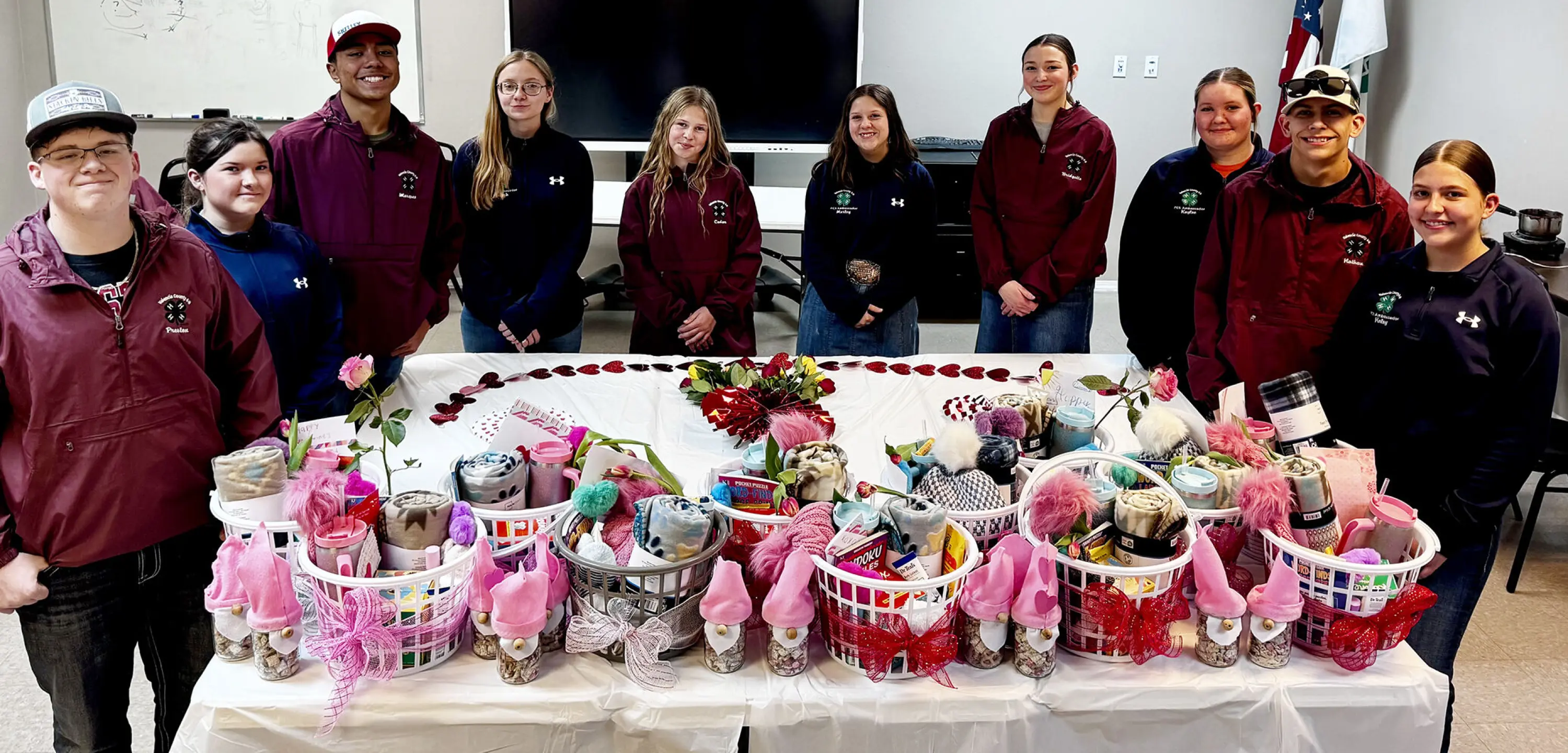
Unsung Heroes come in all shapes and sizes and even numbers.
One of this year’s Valencia County News-Bulletin Unsung Heroes is a group of young ladies who have stepped up to help their community and in turn, watch themselves and their friends grow.
Crystal L. Garcia-Anaya, the FCS/4-H Youth Development Agent with the New Mexico State University’s Valencia County Cooperative Extension Service, nominated the current Valencia County 4-H Family and Consumer Science Ambassador Team, consisting of Anne Marie Anaya, 18; Haley McDaniel, 14; Kaylee Higginbotham, 17; Marley Graham, 14; and Uriah Baca, 15, for the recognition.
“They serve because they have learned one of the most important lessons 4-H can teach: “You don’t have to wait for someone else to make a difference; you can be the person who starts.”
For their service, leadership, compassion and commitment to making Valencia County a better place, these young people may not seek recognition, but they have certainly earned it,” Garcia-Anaya wrote.
As one of their extension agents, Garcia-Anaya has watched the ambassador program grow from a small group of young people who simply wanted to volunteer and help others into an official part of the Valencia County 4-H Leadership Team.
“More importantly, I have had the privilege of watching young people discover that they have the ability to make a difference in their community,” she said.
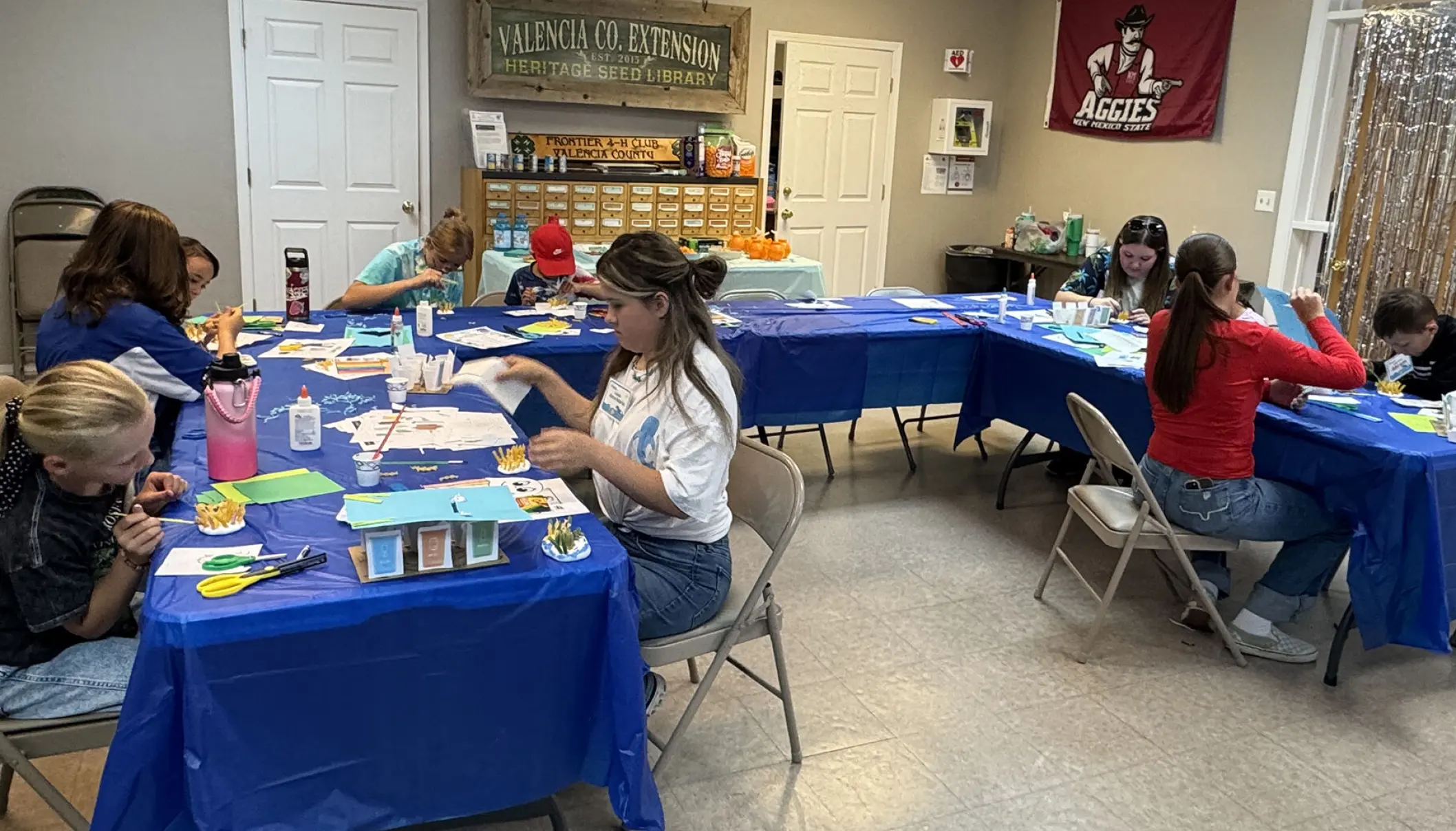
Three years ago, the FCS Ambassador program began with five young people who were willing to serve, lead and try something new set the tone and created a foundation for the team that exists today.
That willingness to serve and lead continues with the current group of five ambassadors. All five young women said they wanted to be ambassadors as a way to give back to and support their community.
“I wanted to be one of those people who could make a difference,” Graham said.
Higginbotham and Baca both recall being very shy initially and wanting a way to build confidence. The ambassador program was the perfect opportunity.
“I was incredibly shy to the point where I would sit in the back of 4-H workshops in tears. It was pretty bad,” said Baca. “I realized that wasn’t the way I wanted my 4-H career to be. I wanted to use 4-H as a way to grow myself and to be the person that I truly wanted to be.
“I realized the ambassador program was exactly what I could use to blossom myself. It’s a program you use it to help yourself while still helping the community. It grows you while growing your leadership.”
To become an ambassador, each 4-Her has to interview for the chance, Garcia-Anaya said, and they must come to the interview with an idea for a public service project.
In the last three years, the ambassadors have held pet adoption events, visited senior citizens in local facilities, made blankets for hospitalized children and gathered thousands of donations for canned-food drives, as well as serving as mentors and instructors for younger 4-H members.
Sometimes a project will evolve into something more and begin to spread, which is what the ambassadors found during their annual Easter basket project. While they were out delivering baskets to local children, the ambassadors learned about a local food pantry needing support.
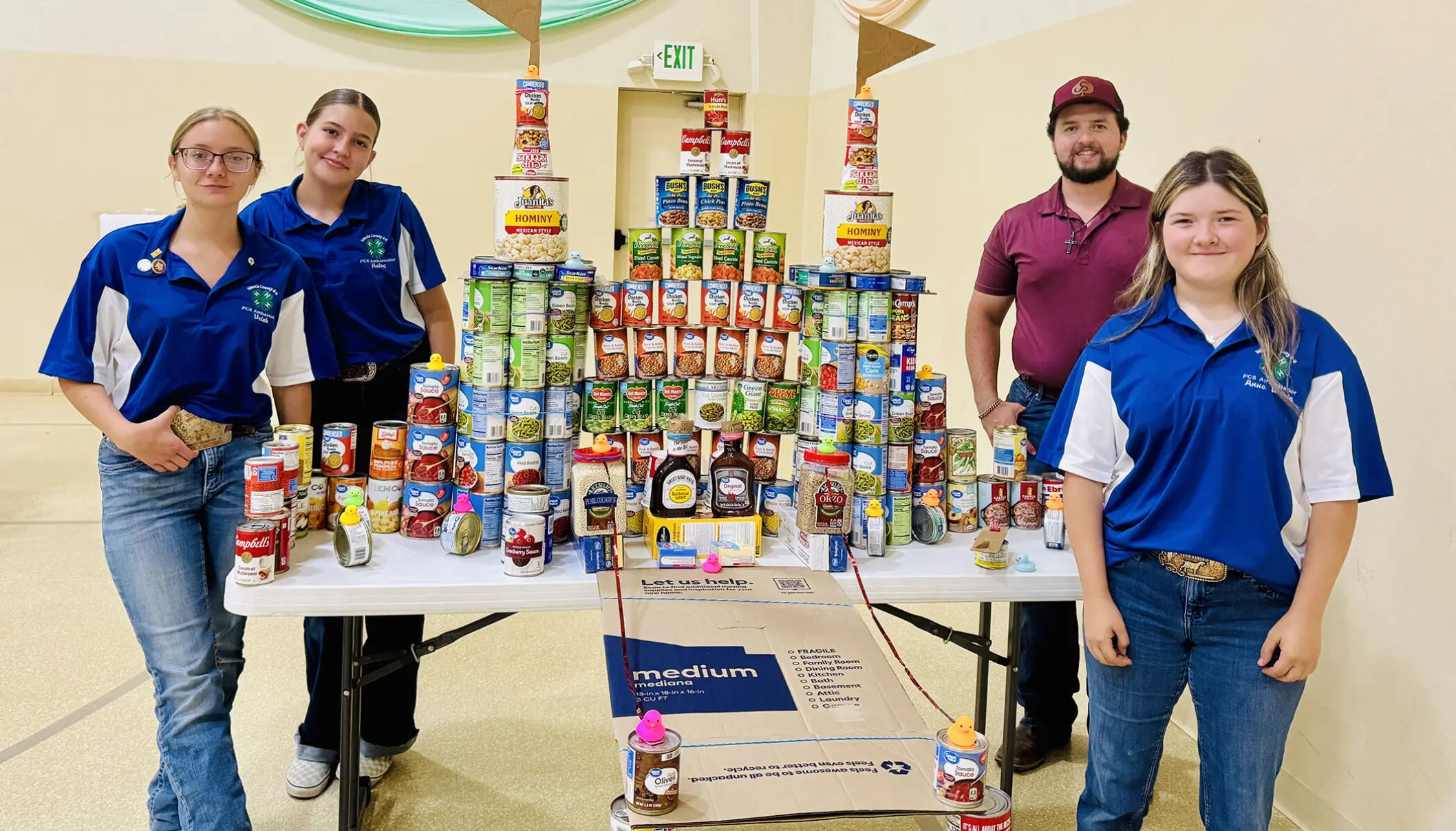
“They could have simply completed their Easter project and gone home, but instead, they listened,” said Garcia-Anaya. “They saw a need in their community and began asking what they could do about it. The result was a food drive and ‘canstruction’ project designed around the pantry’s needs.”
With a goal of 1,000 cans of food, the ambassadors ultimately collected 867 cans of nonperishable food, with another 120 coming from Socorro County 4-H, “turning a community conversation into meaningful action and much-needed support for a local food pantry,” the extension agent said. “... these young people demonstrated when you see a need, you can be part of the solution.”
Now, Higginbotham says they are being “pressured” to do the “canstruction” project again by 4-H chapters in other counties, with the goal of making it a competition among them.
“When we did it, we competed to see who could get the most cans and they won a trophy and bragging rights,” Higginbotham said. “So we challenged two of our surrounding counties to compete against. It would be really great if it got bigger. Maybe other states will think about joining us.”
The service projects done by the current five ambassadors have been meaningful to them, they all say. Graham remembers after delivering Christmas cards to residents in nursing homes seeing the impact and joy the act brought the seniors.
“They were so happy people actually visited them, you could see how it impacted them,” Graham said. “It made them happy to see people. That is definitely one of the things that I think made a difference.”
One of the original ambassadors three years ago, Baca remembers a pet “adoption shop” they hosted. During the event about a dozen dogs were adopted.
“It was crazy to see how something as simple as a home could be such an impact to anything,” Baca said. “It really shows it’s not only for animals, but the impacts can be so much more. It can reach out into the community and be not just a simple action but rather life-changing events.”
A rather personal project for Anaya was making 100 blankets for children in the Denver Children’s Hospital. That was where she underwent spinal surgery for scoliosis.
“It was very emotional. I was so happy to see our community and our 4-Hers come together to make these blankets,” she said.
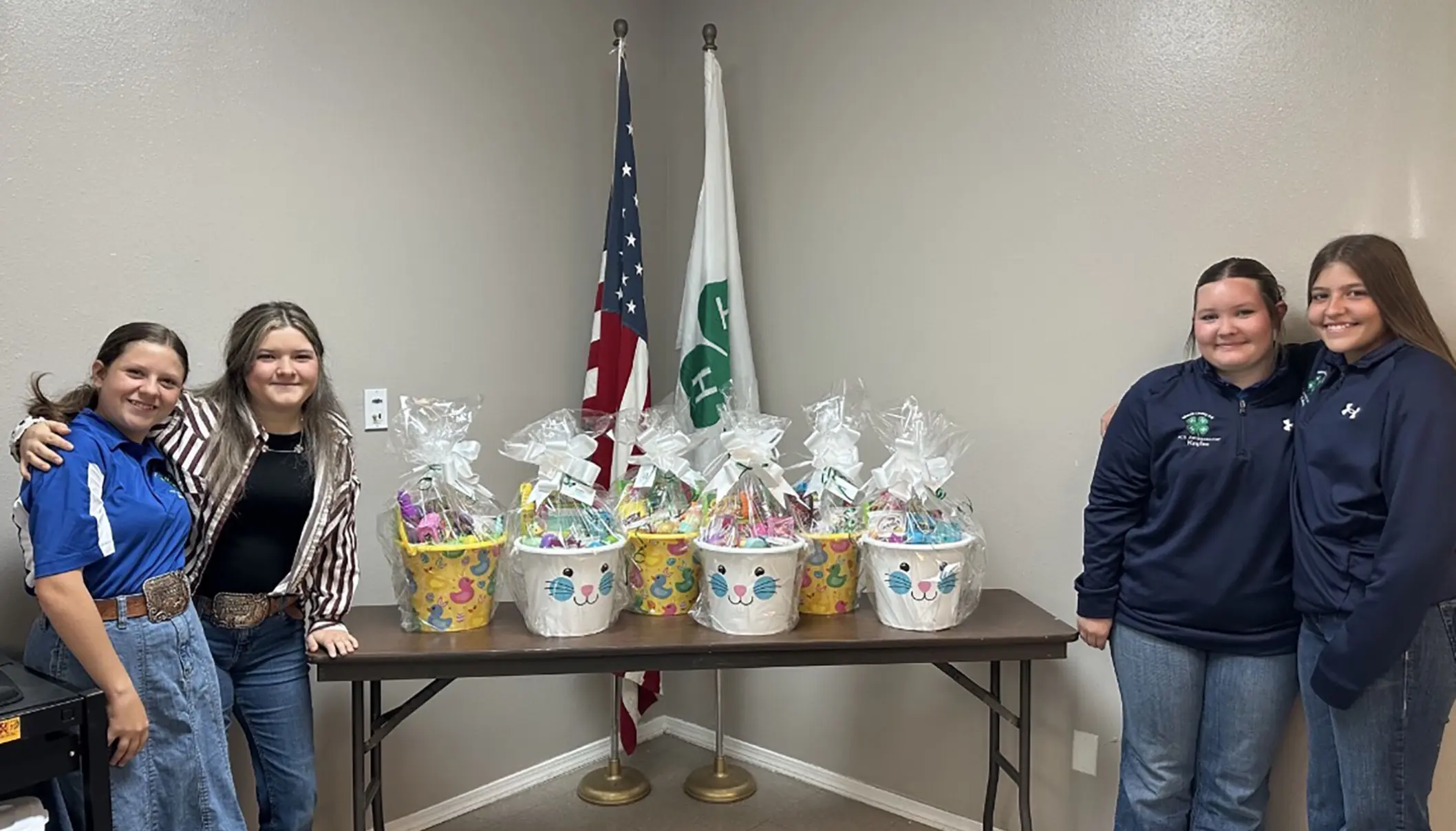
Thanks to the ambassador’s commitment to service, they have earned a scholarship to participate in Citizen Washington Focus at Ignite by 4-H in Washington, D.C.
“This opportunity is a direct reflection of the work they have already done in their community. They will have the opportunity to learn about citizenship and leadership on a national level and bring those experiences back to Valencia County,” Garcia-Anaya said.
The ambassadors say they don’t have to travel out of the county to learn and grow. When asked what they have learned by being in the program, they all agreed they have become stronger leaders and committed to being role models in their community.
“You can have an impact on the way others act around you. This has made me a better role model, not just for my siblings and my family, but even the people around me,” Graham said.
The program is a source of constant learning for Baca, who said she has learned a very difficult skill — how to ask for help.
“That is something that has always been so hard for me, but I’ve learned asking for help doesn’t show weakness but rather your want to succeed,” she said. “It shows you have a genuine respect for your position and you want to do it to the best of your abilities.”
Garcia-Anaya said none of the ambassadors seek recognition for what they do, but rather they see something that needs to be done and ask how they can help.
“Their service is woven throughout the year. They participate in and organize annual acts of kindness, including delivering Valentine’s Day gifts, cookies, cards, and other thoughtful surprises to seniors,” she said. “They plan major civic engagement projects while also taking on smaller service opportunities that may not make headlines but make a meaningful difference to the people receiving them.”