By David Haldane
Nov. 2, 2026
Two-and-a-half hours.
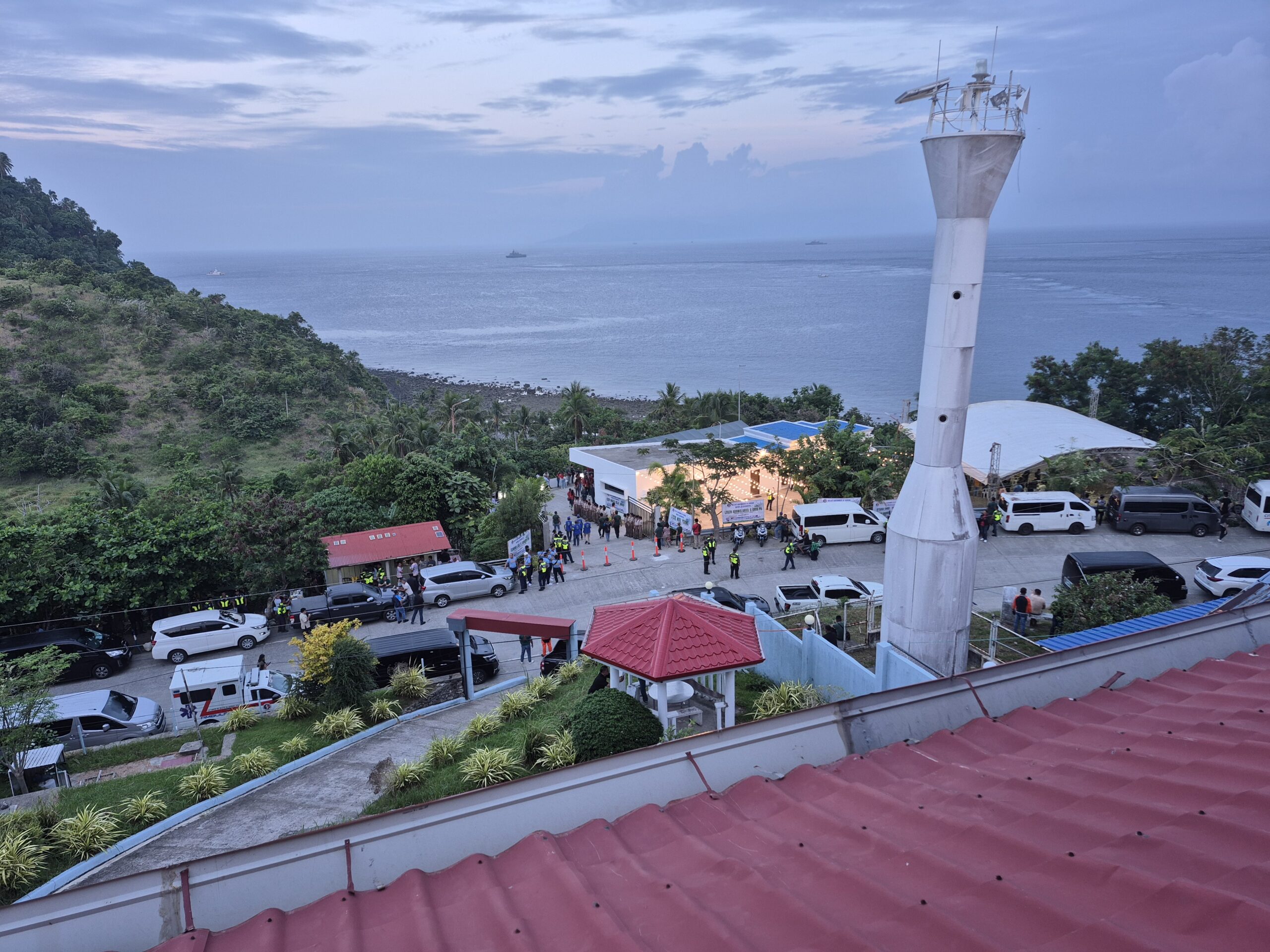
That’s how much sleep I got before the blast of a loudspeaker shattered my dreams. It was only a test, mind you; the first of several to assure that last weekend’s 83rd Battle of Surigao Strait commemoration would go smoothly. And it jolted me awake in time to watch the insanely early proceedings in my pajamas from our veranda across the street.
That’s not my usual vantage point. Nor is it my usual mode of dress for this grand annual occasion.
Last year, in fact, I donned my best black suit and fancy tie to stand at attention between the Australian ambassador and the Emperor of Japan. Just kidding, he was really only a Japanese general. But I was there because the American ambassador—apparently waylaid by the temporary shutdown of the US government—couldn’t make it. And so the organizers asked me to stand in for him, probably because I was the only American they knew.
It had actually happened once before when the US representative missed his flight from Cebu. That time, they gave me a beautiful wood-and-glass plaque with his name on it. Last year, they gave me nothing. Which prompted a young niece to describe my relationship to the event as its regular person of “last resort.” All I can say is it’s nice to be the pride of my family.
Anyway, this year—with the US government presumably back on track—its guy-in-the-Philippines made it to Surigao City. And so the big jubilee at the Battle of Surigao Strait Memorial and Museum proceeded without the presence of yours truly. Except, of course, as that man-in-a-robe watching silently from his distant veranda.
Actually, I now realize, there are certain advantages to watching from there. First, you can’t really hear the speeches, which tend to be long, boring, numerous, and repetitive. The 21-gun salute doesn’t break your eardrums. And best of all, you can explain what’s going on to your curious children.
And what was going on was majorly significant. For it was in the waters of Surigao Strait across from our house that history’s last major naval battle took place. It happened on Oct. 25, 1944, when the battleships of America, Australia, and the Philippines lined up against those of Imperial Japan, the country’s unwanted occupier. The decisive Allied victory that followed reversed the course of World War II in the Pacific, paving the way for Gen. Douglas MacArthur’s triumphant return to Manila.
The human cost, however, was high: at least five warships sent to the bottom along with thousands of mostly Japanese sailors.
“Let us pray that we never have another world war,” David Mattiske, one of the battle’s last surviving participants, said during a 2018 commemoration just down the road from where the memorial and museum now stand.
Mattiske died four years later, but here’s a historical footnote for my disparaging niece: her uncle of “last resort” reported that quote in a column which Jake Miranda, one of the memorial’s designers, later said inspired him to inscribe it on a wall of the memorial. He hoped, Miranda wrote in a comment under the column, that the shrine would be completed the following year, which it was. But what surprised him, he went on, was that “no one in the world” had previously thought to commemorate that decisive battle. “We are starting to get international attention,” Miranda gushed.
I thought about that last weekend, hearing a featured speaker repeat Mattiske’s now-famous quote as the theme of this and previous annual commemorations. I had to strain, of course, to make out the words. Which were suddenly interrupted by a commotion downstairs.
I should probably note that, in recent years, our house has become the go-to place for municipal employees to eat breakfast every Oct. 25. This time, however, so many showed up that we literally ran out of food.
The lesson: next year, we will definitely arrange for a backup of last resort.
________________________
David Haldane is an award-winning American journalist and author with homes in Southern California and Northern Mindanao. His latest book is Dark Skies: Tales of Turbulence in Paradise. This column appears weekly in The Manila Times.