Critics, scholars, and other creative types ponder the 20th anniversary of the great Buffy spinoff.
It was twenty years ago that the brooding vampire with a soul, scared off by Buffy’s mom, hightailed it out of Sunnydale and set up shop as a gumshoe in the world’s ultimate noir city: Los Angeles, literally the City of Angels. Angel — a Buffy the Vampire Slayer spinoff — ran for five seasons, left us on the precipice of an epic battle between good (team Angel) and evil (armies of hell), and ended on our hero’s now-famous last words, “Let’s go to work.” Fade to black.
Angel is widely recognized as the darker of the two shows, even by its creators, Joss Whedon and David Greenwalt. Buffy was all teen/young-adult angst; Angel navigated the challenges of adulthood, though as any fan of the episode “Normal Again” can tell you, Buffy could get pretty damn dark.
I’d never want to have to choose between the two, but that doesn’t mean I can’t ask other people to do it.
Additional context, for those who aren’t Angel literate or just have bad memories:
Angel (David Boreanaz) was Buffy’s love interest on the first three seasons of the original show. A legendarily vicious creature of the night, he one day tortured and killed a young gypsy woman whose clan retaliated by cursing him with a soul, imbuing him with guilt for every single act of evil he has ever committed— and trust us, there are a lot. Spike (James Marsters), Buffy’s subsequent love interest, also starts out as a twisted, sadistic vamp, but ultimate chooses to have his soul restored, out of devotion to Buffy. In the Whedeonverse, huge debate rage over who should have gotten the girl: Angel or Spike. This is what is known as “shipping.”
Connor (Vincent Kartheiser, aka Pete Campbell in Mad Men), who joined the show in season three, is Angel’s human son by Darla — a fellow vampire who stakes herself to death upon giving birth to the boy. Talk about postpartum depression. Many Angel fans despise the character, especially because of his brief but thoroughly ill-conceived relationship with another Buffy alum, which brings us to our fourth and final point of context:
Cordelia Chase (Charisma Carpenter): Oh, fair Cordelia! A delightfully solipsistic mean girl in Buffy who once defended Marie Antoinette for giving peasants cake, Cordelia grows up in Angel. She too develops a conscience (more through maturation than anything supernatural, though those headaches help), falls in love with Angel but sleeps with Connor (admittedly possessed at the time by Jasmine, the Blessed Devourer), and eventually becomes a goddess who literally floats . . . oh, never mind. I personally would rank it as among the worst examples of character development in the history of television, but apparently not everyone agrees (see below).
So, let’s get to work.
Note: answers are occasionally edited for length.
What is the greatest TV vampire show of all time?
Eric Deggans (NPR TV critic): Tough question to answer, because I don’t like a lot of TV shows which have featured vampires, even though I love vampires. Why? Because, too often, the shows get caught up in over-romanticizing the undead or over-horrifying them. I’d say, of course, that Buffy the Vampire Slayer was the best TV show to include vampires, because the show’s writers did a great job of reinventing the vampire mythos for nineties TV. But that show wasn’t really about the vampires . . . . So my favorite vampire-centered TV show is HBO’s True Blood, mostly because its early seasons captured the balance of sensuality, horror, and absurdity that every great vampire story must straddle. It also featured perhaps my favorite TV vampire of all, Alexander Skarsgard’s brutal yet vulnerable Eric Northman.
Melanie McFarland (Salon TV critic): Into each generation an era-defining vampire show or two is born, so the answer to this question is likely to be all over the map. For me it’s Buffy the Vampire Slayer — obviously — and I suspect that may be true for a number of critics around my age. I know several women who point to Buffy as one of the reasons they decided to become critics. It still holds up as a story of the metamorphosis from adolescence into adulthood and the exhilaration and terror that comes with moving toward independence and embracing one’s personal power. And few other series featured such memorable character archetypes — the shy nerd who grows into a dark wizard, the nice boy who hides a wolf inside, the average friend who feels left behind but keeps his supernatural friends human, and the Slayer herself, a young woman tangled up in the knotted ties between destiny and choice.
Alan Sepinwall (Rolling Stone chief TV critic): Buffy the Vampire Slayer is the best TV vampire show of all time, one of the best shows about adolescence of all time, one of the best TV dramas of all time, full stop. It was smart and funny and sad and empathetic and understood how to use genre tropes as a metaphor for universal emotions better than any sci-fi or fantasy show has done before or since.
Deborah Overstreet (coeditor, Watcher Junior: The Undergraduate Journal of the Whedon Studies Association, and associate professor of English Education, University of Maine at Farmington): Angel, obviously. Angel is the greatest TV vampire of all time in part because he fulfills all the classic vampire tropes. The fact that he’s also the main vampire in two of the best TV series (of any genre) doesn’t hurt his case.
Ellen O’Neill (creative director, The Paley Center for Media): Buffy is the I Ching of vampire TV series. Buffy is the sum of all wisdom. Buffy is the answer to any question. I find the series Angel to be deeper, richer, ultimately the more satisfying experience — perhaps because it is fully in the grown-up world, perhaps because Boreanaz in that role is very sexy — but for “greatest” accolade, I have to go with Buffy.
Brenna Wardell (coeditor, Watcher Junior: The Undergraduate Journal of Whedon Studies, and assistant professor, University of North Alabama): Buffy the Vampire Slayer, given its various portraits of the vampire figure as sexy, tortured, voracious, penitent, destructive, etc.
Zombies or vampires? Why?
Joyce Millman (former TV critic, Salon and the San Francisco Examiner): Vampires. I don’t see the appeal of zombies. I’m not a fan of The Walking Dead. I prefer more nuanced and “human” villains. There’s a Blondie song called “Die Young, Stay Pretty” which applies here. Why would you want to look at a lumbering, rotting zombie when you could be looking at Angel or Spike?
Wardell: Vampires, because they can be portrayed as witty, seductive, and multilayered. While some recent programs do create more three-dimensional portraits of zombies (particularly iZombie), I rarely find the zombie figure as emotionally or intellectually compelling as the vampire.
Deggans: Vampires, for sure. Because vampires are something like the superheroes of the horror world — youthful, immortal, endowed with great power and usually very alluring. They’re also a walking parable about the folly of hoping to cheat death and the true cost of an everlasting life (damnation, the blood thirst, the inability to tolerate sunlight, and an often-hideous real form, for starters). They were alluring monsters invented in a time long ago when life was much shorter and more brutal; now, they are a reflection of and constant warning about the pursuit of youth in our modern culture.
McFarland: Vampires, no question. They can be reasoned with to a degree, and some of them might even like a person enough to be on their side. Having said that, in a fight the zombies would eventually be victorious. This has been proven by science!
Sepinwall: Vampires have individual personalities. Zombies shuffle around and groan. No contest.
O’Neill: Vampires. I like the combination of intelligence and the idea of life giving blood, even perverted, to the act of eating flesh.
Overstreet: Vampires. Of course. Zombies are inherently boring. They either shamble around or go tearing around depending on if they’re “fast zombies” or “slow zombies.” In any zombie series, the zombies are incidental. Any kind of natural disaster could fill in. The show is about the non-zombie characters. Zombies could be replaced by aliens in any show and it wouldn’t be appreciably different. Of course, I’m sure someone is thinking of iZombie, which is a bit of an exception. I’d argue though that even though the first seasons of the show were quite charming, these characters weren’t zombies in any way that really mattered. If you can pass as a human, how is this really a zombie show?
Buffy or Angel (the shows)?
O’Neill: Angel. They took an interesting idea developed on Buffy — vampire with a soul, without a soul, with a soul — and expanded upon it with great imagination. TV doesn’t often show much interest in the idea of a soul. The dialogue in Angel is incredibly respectful, and perceptive, of what it might mean that something of us lives on, and that there are consequences to our actions on earth in the next life, whatever that is. And they did it without the crushing weight of Christianity. The soul atonement/redemption concepts are beautifully no-brand with a sense of conviction, beyond lip-service to plot points.
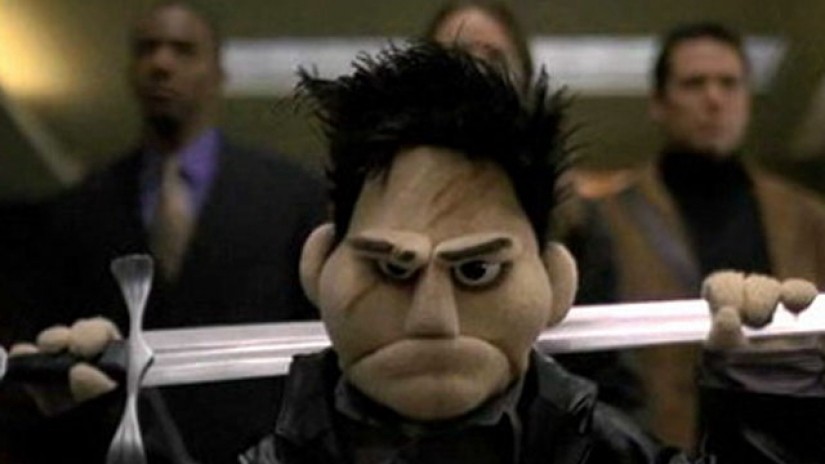
Millman: This is a tough one for me as both a critic and fan. Both shows elevated the horror/fantasy genre, and also the many other genres they both drew from. BTVS wasn’t just a show about a vampire slayer, it was a show about high school and becoming an adult that heightened the experience of growing into adulthood into a series of all-consuming life-or-death challenges. Which, to be honest, is what growing up feels like most of the time. BTVS played with tone and form in groundbreaking ways, and created a universe where the show could comfortably and plausibly flip between scenes of very heavy, dark drama and sarcastic comedy. Angel always seemed like it was made for a slightly older audience. It had the vibe and look of a film noir, with Angel as a sort of vampire version of a Raymond Chandler gumshoe in old LA. It worked so well because Angel was such a brooding loner. Like BTVS, Angel challenged the conventions of TV storytelling — I’m thinking of the all-puppet episode “Smile Time,” and the daring reinventions the show underwent each time it opened a new season. I think that over time, I’ve grown more partial to Angel, simply because Angel’s melancholy heroism worked for me, and I think that the writing was more consistent over the length of its run. The writers and showrunners always returned to the central theme of redemption. They never stopped asking, “What makes a moral person?” And in the end, as Angel slowly learned how to be human (or as human as a vampire could be), the series answered its own question, by showing that a “good” person is one who does good not with the expectation of a reward, but because it’s the right thing to do.
Sepinwall: Buffy. Angel took a while to figure itself out, and even its peak period wasn’t as strong as Buffy’s junior and senior years of high school.
Deggans: Buffy. I usually love the original above the spinoff.
Overstreet: Buffy. This show was brilliant and groundbreaking in every way. Angel is the best vampire-centered show that’s ever been on television, but Buffy was more than that.
McFarland: Buffy is about growth and Angel is a series about evolution. Different concepts, but that makes them complementary stories. I related to Buffy more closely, owing to where I was in my life when it was on the air. But I loved the intelligence with which Angel wrestled with issues of morality and personal philosophy, ending the series on a note that validates the notion of fighting the good fight, regardless of the odds.
Wardell: I am more drawn to Buffy, as it was my first taste of the work of Joss Whedon and his collaborators (and yes, I even saw the movie). It was great to see a story of a young woman balancing a “normal” life and her supernatural duties with wit and a great cadre of friends. While I enjoyed Angel, I never found it quite so engaging.
Angel or Spike (the characters)?
Wardell: While Angel is fascinating given his tortured nature, Spike is just plain fun (even if he can, at times, be truly frightening).
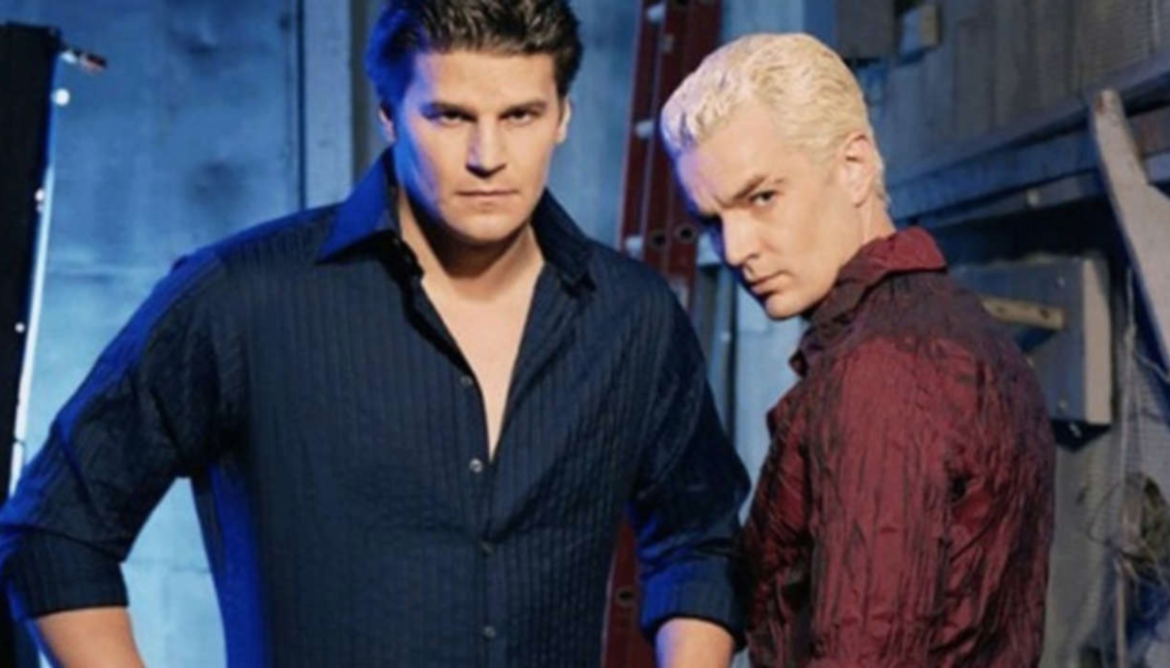
Overstreet: Angel. How could anyone not love Spike? But Angel is perfect. He’s the perfect Byronic figure. An archetype.
Sepinwall: Spike’s the more entertaining character, but the Buffy creative team decided at a certain point to just paper over his many monstrous acts precisely because he was so entertaining. It never felt honest that he’d be accepted as part of the Scooby Gang. And for that reason, I go Angel.
McFarland: Spike’s character growth on Buffy was strained and romanticized, I think, to cater to the audience. That said, I was there for it. But Angel’s overall journey was more fascinating to witness. If that weren’t the case he wouldn’t have carried his own series for as long as he did.
Millman: Hard to choose. Spike in season six of BTVS, the season where he and Buffy had a sexual relationship, was extremely hot. But he could also be great comic relief, with both his punky sarcasm and the fact that before he was a vampire he was a hopeless nerd, which came out in the show a lot. Angel was more the strong, silent type and could be quite the stick in the mud. But he was emotionally deeper than Spike. I don’t know. They both looked so good in long black leather coats.
O’Neill: Angel. Spike is a compelling character, from his early love for Drusilla to his sacrifice in the Buffy finale and his champion stance in Angel finale. But there is a power to the character of Angel that always draws me toward him, not Spike. The absence of Angel is felt throughout Buffy after he leaves.
Favorite episode of Angel?
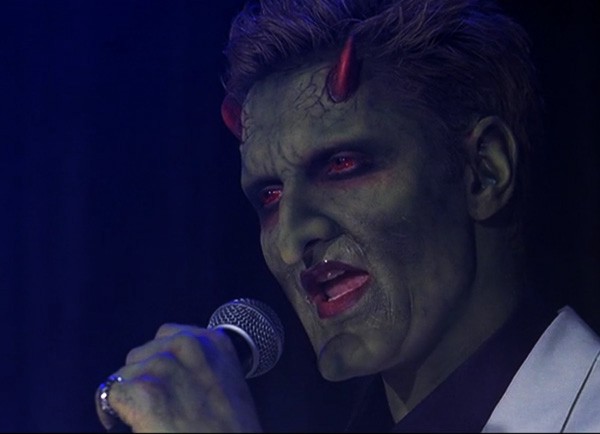
Millman: One strong thread through all the seasons of Angel was how the writers depicted vampires and supernatural beings in general as the feared, marginalized and, well, demonized “Other.” Angel and his gang became the protectors and champions of other marginalized communities — African Americans (“Are You Now or Have You Ever Been?”), LGBT folks, and women (the “Over the Rainbow” trilogy), migrants targeted for genocide (“Hero”). In “The Thin Dead Line,” Angel and his friends fought a zombified LAPD that was killing Latino and African American street kids. In “Why We Fight,” Angel and Spike are depicted in flashback fighting the Nazis. The “Big Bad” of the series was Wolfram and Hart, literally the devil’s law firm, the corporate face of evil. Though the show ran mainly during George W. Bush’s America, it’s stunningly relevant to life in Trump’s America, which I guess is more evidence of how deep-rooted racism, misogyny, and white nationalism is in this country. But you asked me for my favorite episode, so I’d have to go with the three-parter comprising “Over the Rainbow,” “Through the Looking Glass” and “There’s No Place Like Plrtz Glrb,” in which Angel and the gang enter a portal into the home hell dimension of Lorne, the green, gay emcee at the demon karaoke bar where they hang out. This turns out to be a backward, medieval, patriarchal realm where women are slaves (fitted with shock collars and called “cows”) and from which Lorne had been cast out for being “able to hear music” (read, gay). This arc has a lot of humor in it, but the horrifying parts are even more so when you watch it in 2019 and realize that it’s not so outlandish at all.
Overstreet: “Five by Five” and “Sanctuary” (carrying on the Faith storyline from “This Year’s Girl” and “Who Are You?”) are the first great crossover that show that Angel isn’t a spinoff of Buffy, but instead a parallel series. Being a huge fan of Buffy and Angel as a couple, it’s hard not to love the heart-wrenching ”I Will Remember You.” The “Soulless” to “Orpheus” return of both Faith and Angelus are five breathtaking episodes. “Lineage” is jaw-droppingly good and clearly shows that, in fact, Wesley is possibly the most complex character in all of Angel. “Damage” is brilliant. “Smile Time” is easily one of the most fun (puppet cancer!).
Wardell: My favorite episode is “A Hole in the World” because it marks the death of Fred and the birth of Illyria and epitomizes the focus on loss and hard choices that pervades both Buffy and Angel.
O’Neill: The entire Darla arc. Julie Benz brings verve and subtlety to all the shades and phases of the character. “The Trial” shows Angel the selfless champion at its best — which softens Darla as she realizes he does care about her, only fated to be turned in a shocking last scene. “Lullaby” is a tour de force of mothering/parenting fears with a miraculous last scene.
But I’m going to go with:
“Dear Boy,” when Angel first learns that Darla is actually back.
It has a great flashback to England, 1860.
Then this exchange, which every long-time ex will recognize, it is so timeless in its understanding of man/woman jealousy.
Angel: The bitch is, you have a soul now. Pretty soon, those memories are gonna start eatin’ away at you. No matter how hard you try, you won’t be able to escape the truth of what you were. Believe me, I know.
Darla: But you *can* escape. You can escape it all. Remember what it’s like to get lost, huh? Every thought a million miles away, every part of your being alive! All you have to do is let me give you one little moment of happiness.
Angel: You took me places, and showed me things, huh? You blew the top off my head. But you never made me happy.
Darla: But that — that cheerleader did? We were together a hundred and fifty years! We shared everything. You’re saying never?
Angel: You couldn’t understand.
Darla: I understand, alright. Guy gets taste of something fresh, and he thinks he’s touching God.
Angel: It wasn’t about . . .
Darla: Oh, you bet your ass it was! There was a time, in the early years, when you would have said I was the definition of bliss! Buffy wasn’t happiness. She was just new!
Angel and Darla are the epitome of what it means to have a romantic history with someone. Darla is right that 150 years of shared history has importance.
Unfortunately for her, Angel and Buffy are Burton & Taylor, Bogart & Bacall. Whoever may have come before in their lives — or after — they will always have a presence and an imprint on each other. It happens.
This scene in “Dear Boy” is another example of the series’s understanding of an immortal soul, and what specifically it meant to these two star-crossed beings. Boreanaz and Benz have the perfect chemistry throughout the entire arc.
Connor: pro or con?
McFarland: How many people answered this question with: “Not great, Bob”? He was an experiment, I guess. That said I feel better about Connor than I do about Dollhouse. That’s right, I said it.
O’Neill: In theory: pro. In execution: gross. Great creative concept for Angel and Darla to have a child. Why that child had to be the father of Jasmine via Cordelia is INSANE.
Wardell: Con, very con.
Overstreet: “Con” isn’t remotely a strong enough word. Worst story line ever. Since Conner was a classic dhampire, this could have gone somewhere interesting. It only went somewhere irritating and stupid.
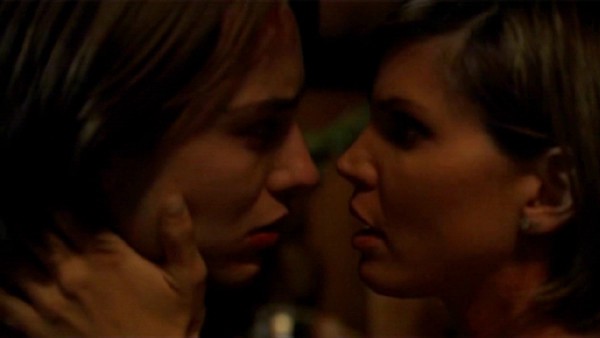
Can we ever forgive the writers for what they did to Cordelia?
O’Neill: No. For writers who worked for years with the ideas of atonement, none is possible for this sin. Cordelia started as a recognizable teenage type in Buffy, and grew by believable steps into a fearless colleague of Angel, and then someone with connection to the Powers That Be. Floating up above the LA traffic was the beginning of the end for me.
Overstreet: I never particularly liked Cordelia and never found her convincing on Angel, so honestly I didn’t care — although I agree that this is the second worst story line on Angel.
Wardell: Doubtful.
Millman: She evolved from a shallow mean girl on BTVS to a wise, exalted goddess on Angel. There is nothing to forgive.
What did you think of the ending of Angel (fifth-season finale)?
Sepinwall: Love it, and roll my eyes whenever someone calls it a cliffhanger. It’s one of the great resignedly heroic endings ever, akin to Butch and Sundance charging out to face all the soldiers in a blaze of glory
McFarland: It was a rare and wonderful epic series closer that grants pretty much every character a poetic farewell, and it’s chockablock with some incredible dialogue crowned by that terrific last line: “Let’s go to work.” But I also loved this exchange:
Angel: People who don’t care about anything will never understand the people who do.
Hamilton: Yeah, but we won’t care.
Millman: I think the final episode of Angel, “Not Fade Away,” was brilliant. It remained true to the central themes of the show — redemption, the painful price of being a moral person and the importance of family (whether the one you’re born into or the one you choose). The episode ends with Angel and his gang cornered in a seemingly insurmountable fight to save the world from every imaginable hell-beast, including dragons. Just before they head into battle, Angel gives them a pep talk that ends with “I always wanted to slay a dragon! Let’s go to work!” And then the screen cuts abruptly to the closing credits. I loved that the series ended that way. Some might call it ambiguous, but I loved its hopefulness. That’s the way I want to remember Angel, still in the process of earning his humanity, still fighting the good fight. I think it should be noted that Angel beat The Sopranos to that kind of abrupt ending by three years.
Wardell: It was frustrating, in that viewers never got to see what happened to the characters next; however, it was also a brave and stirring way to end the season and the series.
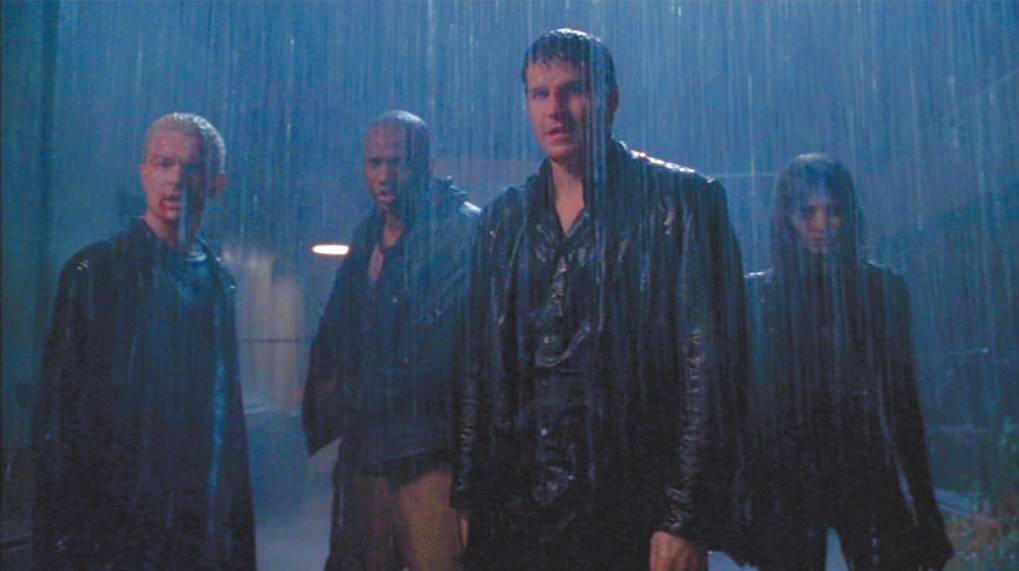
Overstreet: I always refer to it as the Hamlet ending — everyone dies, which is as it should be. It was brilliant. And one of the most interesting things was how it was in every way the mirror opposite of the very last episode of Buffy. It’s dark and raining. Buffy is bright and dry. Angel is in a closed-in alley just getting ready to fight. Buffy is in the wide open having finished their fight. Angel is going to lose. Buffy has already won. All the human characters have died or are dying in Angel and only the demons live to fight for good. In Buffy, all of the demons have died and only humans remain. Angel talks. Buffy just smiles.
Paley Matters is a publication of The Paley Center for Media.
David Bushman is a TV curator at The Paley Center for Media and coauthor of Twin Peaks FAQ: All That’s Left to Know About a Place Both Wonderful and Strange and Buffy the Vampire Slayer FAQ: All That’s Left to Know About Sunnydale’s Slayer of Vampires, Demons, and Other Forces of Darkness, and the upcoming (March 2020) Conversations with Mark Frost.