Jan 7, 2020 · 21 min read
For creator Tom Lynch, the groundbreaking teen drama was one from the heart.
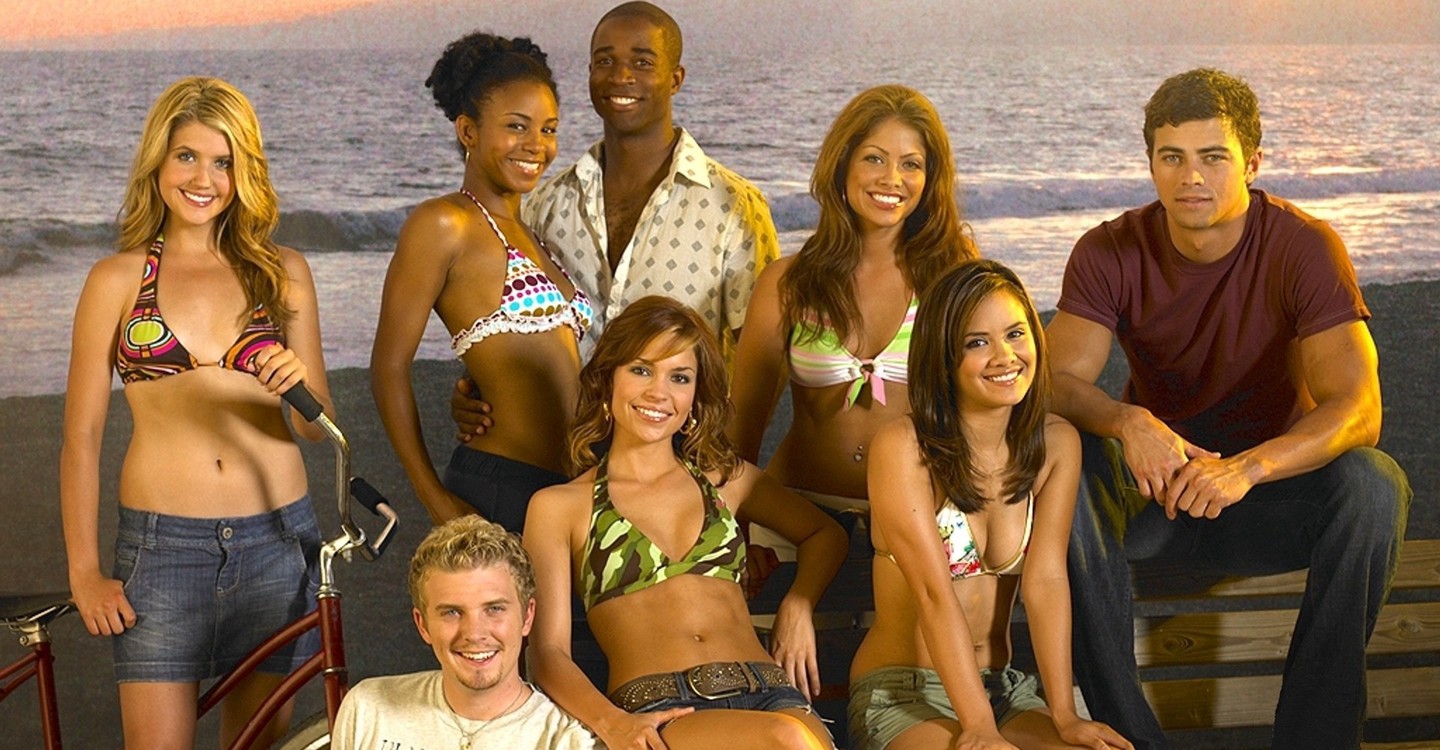
Never sure if it’s a compliment or an insult to refer to a show as hugely underappreciated, but either way I’m calling South of Nowhere exactly that. Airing on The N (a nighttime programming block on Noggin that eventually mutated into TeenNick) from 2005 to 2008, the series was fearless, dauntlessly tackling a panoply of hot-button issues, including race, gun violence, addiction, abortion, and sexual identity — and that was just in the first episode (kidding!). South of Nowhere took huge, huge risks, and television is way better for it. The show preached (but in a very nonpreachy way) empathy, acceptance, and love (hmmm, maybe time for a reboot?).
Plus, one day I will come up with a list of the greatest TV show titles of all time, and I’m betting South of Nowhere will be on it.
Briefly synopsized, South of Nowhere is the story of a Midwestern family that moves to Southern California, where, among other things, the mom and dad (Paula and Arthur Carlin, portrayed by Maeve Quinlan and Rob Moran) struggle through marital difficulties; their lone daughter, Spencer (Gabrielle Christian), discovers she is gay; one son, Glen (Chris Hunter), becomes addicted to pills; and the other, Clay (Danso Gordon), is killed in a drive-by shooting.
So, LaLa Land, but not.
SON, as it is known, was created by Tom Lynch, better known perhaps for another Nick show, The Secret World of Alex Mack, whom, in anticipation of the fifteenth anniversary of South’s premiere, we recently reached out to. His interview appears below, edited for space. Upcoming: part two of our salute to South of Nowhere, in which members of the cast chime in with their own recollections.
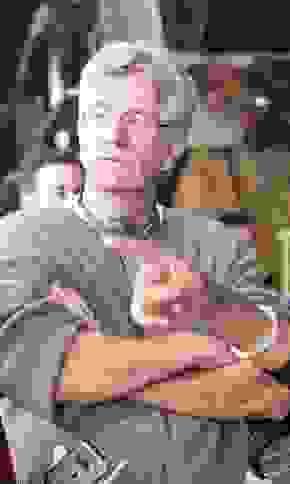
David Bushman: Where did the idea for this show come from? Did The N ask you for something or did you go to them?
Tom Lynch: The show came when a dear friend of mine and I had lunch. My friend was a staunch Republican Catholic with five kids. He told me that his fifteen-year-old son, who was my fifteen-year-old son’s close friend, had told him he was gay. I asked my friend how he reacted. He said he asked his son how he knew and his son replied, “Dad, how do you know you are straight?” That one line stuck with me, and I thing a version of it made it into the pilot, at the end of the episode, when Spencer asks Ashley if she was gay. And Ashley replies that she wasn’t into labels. I always thought that Ashley just wanted love, whereas Spencer is gay.
I carried that idea with me for about a year, reading a teen subgenre of books called out diaries/journals, which were stories about young people coming out. There were a lot of dark and heartbreaking stories about teens coming out — some banned from their families, some kids sent to diversion camps, some parents looking at it as their failure. But there were also warm, tender, and comical stories. As I read these out journals, I started to form an idea of how I could tell the story of someone coming out.

I placed the character Spencer in a traditional Catholic family as I wanted the adult perspective to have a greater weight than just homophobia. At the time I created the series, the Catholic Church was very outspoken against the gay community, and I wanted to explore a parent’s love versus their faith. Once I had the world and lead characters firmly in place, I knew I wanted to tell a story of coming of age and identity.
I had had success at Nickelodeon with The Secret World of Alex Mack, The Journey of Allen Strange, Eddie McDowd, Caitlin’s’ Way, Romeo!, etc. Nick had just expanded a channel to Teen Nick [know as The N at the time] to capture the teen audience. Tom Asheim, who I knew, was president of Teen Nick. His head of development, Amy Friedman, was starting to look for new ideas, so I pitched the idea to her and she gave me a pilot script deal.
DB: How’d the pitch go?
TL: I remember it clearly. I went to New York to see Amy and told her the story of my friend and his son telling him he was gay. I then told her I wanted to make faith a part of the story: religion versus spirituality. And I told her that it was a look at youth today (2004) as opposed to what those in power think youth was supposed to be.
I also pitched that the show was not about victims. It was about identity and trying to find out who your best self is. All of the characters presented themselves one way, and really , underneath, were the opposite. Ashley came across as a tough independent girl, and underneath she had been bounced around by so many stepparents and her mothers’ boyfriends that she just wanted to be loved. It didn’t matter to her, male or female. Aiden, we discovered, was Ashley’s’ lover for a time. He was the handsome jock who seemed to have it all together but underneath didn’t know where he was headed.

It was important to me that the series, with all of its drama, twists, and turns, showed that life was joyful. I didn’t want to be an “important” series. I wanted to show that youth is complex, emotional, explosive, and ever changing. But at its core, love does triumph.
DB: So how did they react?
TL: They were excited. Amy had to take it to Tom, and he gave it one hundred percent support.
DB: Was there any nervousness on anyone’s part, given the subject matter?
TL: Not until I made the pilot. Everybody loved the script. It was fun, original, of the moment, with fully realized, multidimensional characters. I owe a lot of this to the director, Rose Trouche. I met Rose years earlier on a project that Showtime wanted me to make. She had made some independent films, like Go Fish and The Safety of Objects. She was fierce in her own writing and cinematic approach. I talked to her about the project as I wrote the many drafts. It was a long script process, about a year from “go write” to “go shoot,” and Rose would talk to me about how this series is unique and I had to make it. I would get frustrated and she would push me to go deeper with the characters and story, always deeper. She was my muse during this process.
Once the pilot was a go, the network could pay only half of what I needed. I took a gamble and paid the other half. So I was nervous. That was all of my money. My wife, Christine, just asked if this is what I needed to do to get it made. It was, and so we went and shot the pilot. I was fortunate that Rose said yes to directing with the tight budget (we shot the bedroom and kitchen scenes at my home to save money). I convinced my kids’ Catholic grammar school to let us shoot in their parking lot.
There was a moment when the pastor came to see what I was doing and I gave him a headset. The scene was Ashley and Spencer in a car and Spencer asks Ashley if she is gay. Ashley answered, “ I’m not into labels.” The pastor looked at me and asked what kind of show this was.
But we shot it in a beautiful cinema verité style that was all Rose’s design. It was a perfect choice of director, and she in turn figured out the perfect style of shooting.
The pilot was delivered and soon ordered. It all was pretty smooth. Then it wasn’t. Early in the process, I had started to receive inklings of pushback on the series. Not from the network, but from my own peers. Writers, directors, actors who wouldn’t participate in the making of the series. They would tell me the audience wasn’t ready for a gay lead kid character, that I was going to ruin my career, that other networks wouldn’t make my shows after SON failed, which, I was assured by many, it would. Not a pleasant thought, as I had a wife and four children who I was responsible for.
But the most egregious attack came from a talent manager of a star who I wanted for another project. This manager sent me an email with a quote from the Book of Leviticus in the Bible: “You shall not lie with a male as with a woman; it is an abomination.” Chapter 18 verse 22. “If a man lies with a male as with a woman, both of them have committed an abomination; they shall surely be put to death; their blood is upon them.” Chapter 20 verse 13.
I was stunned that in the year of 2004, in Hollywood, that someone could believe this. But I remembered what my mother told me as a little boy when I saw two men kissing for the first time and told her about it. She said. “ That’s OK, God loves them too.” I will always go with what my mom and God say before what a Hollywood talent manager says.
Dismissing the insanity of my peers, off to New York I go. Confidence high, I’m expecting the usual questions about how to promote and market the series. Not what happened.
I landed to find out that a Christian right group had sent a letter to the chairman of Viacom, the parent company of MTV, Nickelodeon,Comedy Central, BET, CBS, and probably some other networks I don’t know about. This letter, which I never saw, apparently stated that if Viacom chose to run South of Nowhere, a boycott would be organized against all advertisers on all of the Viacom/CBS networks. Networks never want a problem with advertisers. Advertisers were not known for standing up to public boycotts against their products. This was serious. I went to the meeting with the head of MTV and others. So graceful and thoughtful they were, but under a lot of pressure to make the correct decision. On one hand, the advertising dollars. On the other, as I not so subtly stated, “A network cannot exist if it doesn’t support creativity. It would be unthinkable to stop a series because of censorship from an outside group.” The room took this in. I thought I nailed it. After a moment a lawyer said it wasn’t so unthinkable, to not support creativity or to stop a series over losing millions if not more, of ad dollars. They would let me know. There I was in New York City, all my money tied up in a show that may get canceled before it even began.
But Tom Asheim stood up. He said the network was going to go ahead with the series. It would have been easy for him to skirt controversy and just let South become another busted pilot. But he, in his calm, understated manner, stood tall against his corporate boss’s concerns, potential advertiser issues, the religious right, and I am sure other battles I don’t even know about, and stood behind the series. I cannot overstate what Tom means to me.

DB: You dealt with a lot of hot-button issues — homosexuality, religion, school shootings, race, drugs, plus abortion. Were they ever any issues with the network or sponsors once the show started airing?
TL: Always, but never did Tom Asheim let it affect what I was making. He and his team, Amy Friedman, Essie Chambers, Matt Welton — all were on a mission to make this show the little engine that could.
We had to walk a fine line of real life versus sensationalism. Homosexuality wasn’t a topic being televised for this age group. But it was part of their lives., just like all of the other topics. They might have been shocking to the power brokers of media, but not to the audience. They were living with these issues in their daily lives. TV seems to always be behind culture, never ahead of it.
The drive-by shooting episode was brutal. I needed to tell the story because in LA it was all around. The network was nervous but was OK if I could write a script that worked. For me the idea was not about a random shooting, but rather about how life can change radically in a moment you have no control over. I wanted to affirm life and show the importance of making every day matter. This was the episode that Rose came back to direct for me. I had to beg her. I came to set to see her shoot the drive-by scene. Cars, guns, gangstas, prom dresses, and love. A big scene that I wrote and was very proud of. I have to admit that I can be a distraction on my own sets with second-guessing the script I wrote, the actors’ choices , the framing, etc. Rose and I got into an argument/discussion about how the scene should be shot. I don’t know where it came from, but a voice in my head told me that I would hinder this shooting rather than help it if I stayed. I was a distraction. I left. Rose shot a beautiful sequence.
DB: I love the title of the series. Where did that come from?
TL: It was originally called Out, which the network thought too obvious. And marketing was not sure how to promote that name. I think people were still nervous about the same-sex element. I was not going to press after almost getting canceled. So I moved off of Out. I knew I wanted a title that captured the confusion and confidence of Spencer and Ashley specifically and youth in general. The title did that. The series sat on the idea of identity and I always felt that “ South of Nowhere “ was an expression for uncharted territory. Spencer and Ashley and the rest of the cast , family members , parents, classmates — all were in uncharted territory with who they were and where they were heading. Nowhere is far away, and this group was way south of that.
DB: Do you have a favorite episode or scene?
TL: The pilot, episodes one and two. I was amazed that I got it made and it worked. Seeing the actors together and seeing it play was a great relief.
My favorite scene is when Spencer asks Ashley if she was gay or what? And Ashley replies, “ I’m not into labels.” Ashley, Mandy Musgrave, was so fierce and had such an attitude combined with innocence. I loved it. Spencer, Gaby Christian, was open and questioning without judgment.
When Chelsea — Aasha Davis — found out she was pregnant and had to decide what to do, as she has been accepted to art school — I loved that story arc. A strong young women not letting life be dictated to her by circumstances. Aasha touched my heart in that scene.

I also loved when Mrs. Carlin, Maeve Quinlan, walks in on Spencer and Ashley in episode eighteen. It was great.
DB: What can you tell me about the audition process?
TL: It was scary. I needed two girls who would play these roles. Back then it was not so popular to have same-sex stories.
DB: Did everyone read? Or did you have certain actors in mind from the start?
TL: Everyone read. I had no names in mind to cast when I started. The budget was slim, the network was brand new, no agents had really heard about The N. We weren’t being sent name recognizable actors. I had to search. A lot of the people who came in and were cast had very little experience. I also knew that I needed actors who would make an immediate impression. I wanted the series to move quickly, so I wasn’t interested in a lot of backstory. That is a difficult task, as backstory had to come as we moved forward. I love writing that way, but it can be confusing for actors. In Ashley’s’ first scene she is slamming a locker and getting into Spencer’s face. We are interested in Ashley right away because she is fierce. We are curious about why she is so angry. We find out later that she is wounded: disenfranchised father, multiple stepfathers, unavailable mother, multiple lovers, and from this comes her vulnerability, and we love her. She is all of us at some point. Our cast had to show who their characters were in the first few moments of appearing.
DB: Was any role particularly hard to cast?
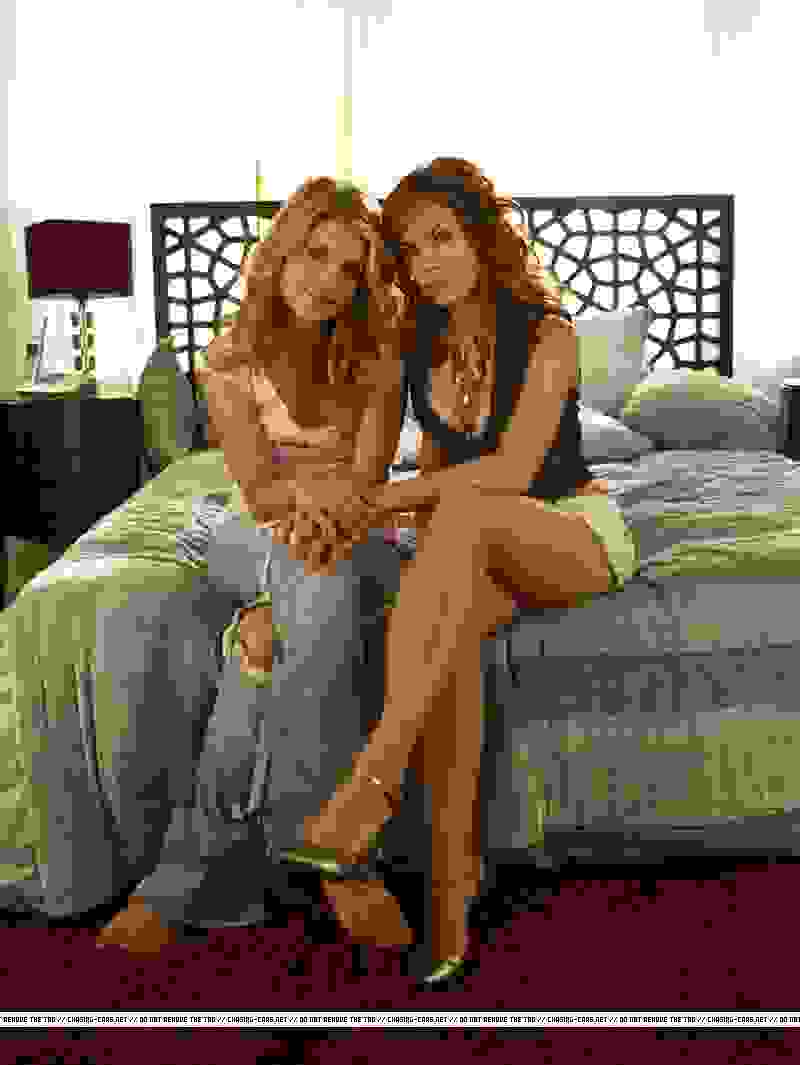
Ashley and Spencer. If these two couldn’t work together in what became a great seduction of each other by each other nothing else would have worked. And to play same-sex lovers, that was not an easy task. I wanted them to be relatively in the same age space as their characters, so you are asking eighteen- and nineteen-year-old actors to perform at first curious, then doubting, then lovers, then confusion. It was a lot. Mandy Musgrave owned it from day one. She is not a large physical presence, but when she enters a room, she fills it and you cannot help but fall in love with her. She had to come back six or seven times, but it was to read with other actors to see how they worked off of her. Gaby Christian was Spencer from the moment she read it. But I didn’t see it right away. She had a calmness and confidence and innocence that played great off of Mandy’s fierce, wounded, confused bravado. I still apologize to Gaby for making her come back so many times for the pilot. And then I had her come in and read again for the series. I just had to be sure, and she was very gracious about reading again and again and again.
Matt Cohen, who played Aiden Dennison, had a great challenge. He had to be the kid who looked like it was all working and underneath he was about to explode. He rode that line of being cool without becoming corny really well. I think one of my favorite moments was when Spencer found out that Aiden and Ashley had been lovers and that Ashley had an abortion. Matt was great in his performances around this story line. His pain over the abortion was palatable, and I don’t recall seeing a show that showed the father’s POV on this subject.
DB: Did any role change because of what happened during auditions?
TL: Aasha Davis, who played Chelsea Lewis, was a gift. I had cast another actress in the role for the pilot. Chelsea’s’ character was a cheerleader who could dance really well. The actress from the pilot subsequently was cast in an HBO series and I had to recast her. Aasha came in, read great, fun, dramatic, and I asked her if she could dance. She said yes. All good, and she was cast. We get to shooting the first episode and she can’t dance at the level I assumed. And I’m looking at her wondering, “WTF.” (I don’t think I ever discussed this with Aasha.)” She’s looking at me sheepishly like, “ I know I said I can dance but . . . hey.” But working with young actors, you need to be able to go to their strengths, and Aasha was so wonderful an actress that I changed her character to an artist, and it played great and added an intellect to the series that wasn’t there. It was so much better than if she remained a cheerleader.
This also allowed me to cast a cheerleader/dancer (scripts had been written with this character, and we could rewrite but not throw them out). That allowed me to cast Valerie Ortiz to play Madison Duarte, a Latina cheerleader who knew dance was her out and up.

She was great as Glen’s love interest. Quentin Prescott, who played Boz, was different from the Boz in the pilot . I didn’t realize it until several episodes in.
DB: Did the arc of the series deviate at all from what you originally expected it to be?
TL: In a macro sense, no. This was always to be a story about a girl coming to terms with her sexuality. A family who had to deal with their beliefs ultimately choosing between their faith and their child. A youth culture that was living out loud about what they wanted, who they were, and how are they going to get there on their own. The parents in this series are flawed, and that gave the kids an independence and knowledge that they had to make their lives happen on their own.
Now, with that said, all of the writers, led by Nancylee Myatt, came in with ideas that told stories that kept to the overall arcs but went beyond what I originally thought. That happened often.
It also happened with directors. One of them , Charles Randolph-Wright, elevated Aiden’s’ role in the series by something that wasn’t ever in the script. Charles and I had worked together on a script about Emmet Till a few years earlier. It hadn’t gotten made but we liked working together, so I invited him to direct on the series. I’m in my office and I get a call from one of the producers saying that Charles was veering from the script in a radical manner. They knew Charles and I respected each other and were friends, so the producer was treading lightly. I want directors to add to the material, but “veering from the script in a radical manner” was a problem.
I headed down to the set to see what was happening. I arrive. The crew knows there is an issue, and everybody is walking on eggshells. As I come to camera I hear music blasting. There was no music called for in the script for this episode. I continue and I see Aiden dancing on the hood of a car, shirt off , soap all over, with girls cheering and dancing around him. There was no dance number in the script. The only thing that had been in the script was a scene that took place at the school charity car wash. No music, no dance number, yet Charles turned it into a production number. I looked at Charles and he said. “You’ll love it.” And I did.
DB: I’m curious about the role religion plays in the show — the family says grace, there’s a clearly visible cross in the home, and you get the idea that Paula’s ideas about homosexuality are somewhat informed by her religious background. Why did you decide to make them a religious family?
TL: Religion is a major subtext in the series. It heightens the conflict that the Carlin family has with their daughters’ friend being “gay” and subsequently their daughter being gay. For Paula Carlin, her faith is what guided her life,

like it does for many people. At the time of the series the Catholic Church, as well as Christian Right, Muslims, and other religious groups, were very vocal about same-sex couples being sinful and wrong. They needed Christ /God/ whoever to “cure “ them. Paula ultimately had to make a choice between her beliefs and her daughter. Rob Moran, Arthur Carlin, played a great scene where he tells Paula that he is not willing to give up their daughter. I was comfortable with writing a religious family. I was raised in a religious household. All of the traditions and rites of my mother’s faith were/are part of my life. I know religion can cause people great injustice and pain. I was fortunate to have a mother who was a devout follower, but also understood that her God loved everyone and that we are all equal in their eyes.
DB: I’m curious about the thinking behind a couple of second-season developments. First, why bring in Kyla, Ashley’s half-sister?
TL: We needed to show more about Ashley’s’ home life. It also, with Aiden crushing on Kyla and Ashley being jealous of this, opened up the possibility of Ashley and Aiden getting back together, causing stress in Spencer and Ashley’s’ relationship. Plus Kyla was a good match for Ashley.

And the sisters, Ashley and Kyla, who are daughters of a rock star doing an album together ? How often can one tell that story?
DB: Why kill off Clay at the end of season two?
TL: That was a complicated choice that had much discussion. I needed to have life change for everybody. Random, senseless, and powerful. With Clay being shot, all other prejudices, emotional turmoil, and baggage were rendered insignificant. It refocused the series on what was important. Love. Not sex, not religion, not social position, just love.
DB: One very, very powerful scene happens in season two, when Paula finds Ash and Spencer undressed and throws Ash out, as Kyla recites from Romeo and Juliet. What can you tell me about that scene?
TL: This is a great moment in the series. Nancylee Myatt wrote the episode, and the idea was to see how Shakespeare’s’ greatest love story and most reimagined couple in literature would play against contemporary themes. It starts as a playful flirting with Kyla and Aiden as Kyla prepares for an audition. The episode was directed by Bethany Rooney, who captured the emotion of the moment of Mom breaking in on Ashley and Spencer so wonderfully. The use of slow motion to see all of the principals’ emotions, fear, hate, shame, mistrust, all come together. The great part of this episode is that although Glen was arrested for drugs, Paula sees Spencer as the one with the most serious problem. In the preceding scenes, we see Paula and Arthur trying to reconnect. It doesn’t happen.

I have enormous affection and pride for them all. It was like we were a band of gypsies making a show that fell apart many times before it came on air. Budgets, challenging material, almost getting canceled before we even aired. Tom Asheim is the unsung hero of this series. He believed in it, wasn’t afraid of it, and supported it against armies of doubt.
The show premiered. The ratings were good, the world didn’t end, and I was able to tell stories of the world I saw.
A strange thing happened along the way. Fan fiction started to become a thing on the web. And South was getting a lot of it. I have never read any of it, as I never wanted to accidentally take someone else’s idea, but I was blown away at the volume of it. The show had created an interactive connection with its audience. Not just in America, but globally.
And then another thing happened The fan mail started to come in. Most of it complimentary, not much hateful, but a theme emerged: kids talking about being able to tell their parents they were gay while watching the show with them. I was moved by the amount of letters that said we — our little show on a little network with a little budget and a group of unknown actors — had been and continues to be able to give a voice to those young people who felt they didn’t have one. Media is often blamed, deservedly so, for promoting negative ideas, concepts, and images to the youth audience. In this case , South of Nowhere was a positive, life-affirming image of youth.
DB: Why did the show end?
TL: I don’t know. If I was to guess it was partly expense. Viacom was in a cost-cutting phase, and acquiring existing series was still way cheaper than even our show. And I think that the tween/teen audience wasn’t where Teen Nick was heading. They were having success with reruns of Nick sitcoms. But as I wrote in my goodbye letter, things change. And because things changed , I was able to make a series like South of Nowhere, where five years earlier, I wouldn’t have.
DB: Did you know the third-season finale was the series finale as you were writing/shooting it?
TL: No, I did not find out until after we were done shooting. We wrapped it up after we found out with a series of digital webisodes that I shot at my home. So we ended it where we started it.
DB: Why do you think South of Nowhere is an important show to remember?
TL: Because it was an authentic look at life for a teenager that hadn’t been presented before. Because it showed the many sides and complexities of relationships and how we all come to them with our own rules and POV. Because the young LGBT community could see they are not apart of or outside of the norm, but an essential part of the human experience.
And because finding your truth does not only change you, but also the world around you.
Paley Matters is a publication of The Paley Center for Media.