Read more in our Turning the Tap series here.
One in five council water supplies did not have a protozoa barrier to screen out water-borne illnesses as of 2023, according to BusinessDesk analysis of data from Taumata Arowai, the government agency charged with regulating new national drinking water standards.
The lack of infrastructure creates vulnerabilities to waterborne illnesses for hundreds of thousands of people.
In the same investigation, BusinessDesk found that more than 90,000 New Zealanders have been affected by long-term water quality problems that have required measures such as boil notices for months and, in some cases, years.
BusinessDesk identified water suppliers and supplies that have relied on alerts for more than a year, multiple instances where water warnings had to be enacted repeatedly, and errors in the way the water watchdog monitored data.

Water suppliers used consumer advisories to alert people in their area to be cautious about using water from the tap.
They cross into a “long-term” advisory when suppliers are “unable to provide certainty around when they will remedy a problem with a supply”, according to a 2022 report from Taumata Arowai. A single long-term consumer advisory "likely indicated systemic problems with the supply".
BusinessDesk identified at least 116 long-term advisories on water supplies maintained mostly by large and small government entities from September 1992 to March 2024, with 80% of the orders occurring in the past three years.
Almost all were boil advisories, which mean a water supplier has found E. coli or another contaminant. People need to treat their water, such as boiling it, before they can use it.
Not acceptable
Taumata Arowai began water monitoring when it took over as watchdog in 2021.
Jim Graham, Taumata Arowai's chief adviser of water science, said long-term advisories typically occur when the water disinfection process fails. If they last months, they are typical symptoms of small communities lacking the funding for fixes.
“Generally, there’s a lack of investment,” he said. “And it’s not just simply that they haven’t spent the money. It’s that the money’s hard to find to spend.”
Water reforms now advancing through Parliament will not only require water providers to meet regulatory standards but also offer improved sources of financing for water entities that show they are ring-fencing their revenues and have a sustainable business plan.
Graham said Taumata Arowai wants to communicate to water suppliers that long-term consumer advisories are “not acceptable” to managing water supplies.
Ricardo Bello-Mendoza, an associate professor at the University of Canterbury who specialises in drinking water and wastewater treatment, said months-long consumer advisories are dangerous.
“If they are too frequent and it’s happening for too long, we might then take it for something that is commonplace instead of being an exception, and that can increase the risk of people getting sick if they don’t have access to safe water,” Bello-Mendoza said.
Lesley Smith, a spokesperson and technical lead for Water NZ, a not-for-profit organisation created to represent the water industry, said long-term advisories could be expected after a natural disaster, such as a slip that could have pushed contaminants into the water supply, a water treatment equipment failure or if a contaminant has entered the groundwater and the supplier needs time to identify the problem.
Smith said advisories were designed for use in emergencies, and it’s a problem if they are normalised in a region.
“We wouldn’t consider it an acceptable way in New Zealand to manage your water supply by having a long-term consumer advisory to tell people you can’t drink this water,” she said.
Schools affected
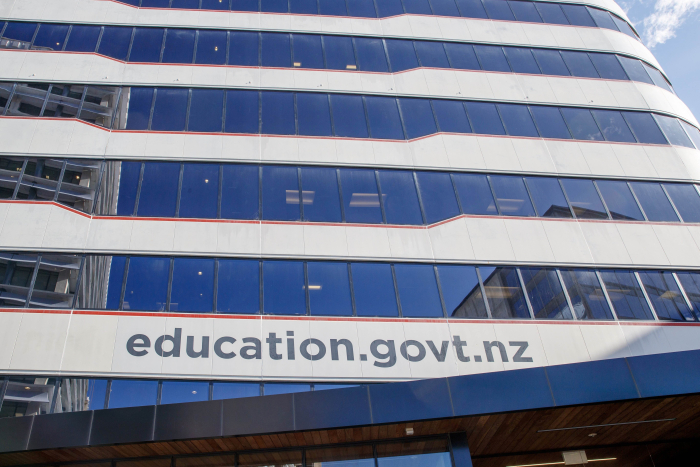
Ten schools across NZ had lasting water issues, most under “do not drink” notices.
That means the water is so contaminated that boiling it will not make it safe. People then need to use bottled water for drinking, cooking and possibly washing hands.
Robert van Bentum, the chief adviser of water services at the Ministry of Education, wrote in an email that the long-term advisories were caused by chemical contamination, and the ministry was working to remedy the issues.
“The ministry takes a safety-first approach to ensuring school drinking water is safe,” he wrote. “Whenever drinking water is found to be unsafe due to bacteria or chemical contamination, then an alternative drinking water supply is arranged until the issue is resolved.”
Van Bentum wrote that four advisories have been fixed, “full upgrades” at three schools were slated to be finished by the end of July 2024, and the agency is working to finalise the scope of fixes for the remaining three schools.
Smith said it’s important to keep the water clean for everyone, but the consequences of consuming contaminated water are more severe for the young, old and immunocompromised.
“Every kid in New Zealand should be able to go to school and drink water from their tap, I think,” she said. “I’m sure everyone else in New Zealand agrees with me on that too.”
Water monitoring became a priority in the country after a water-borne illness in 2016 infected about 5,500 Havelock North residents and may have contributed to three deaths.
‘Not actually fixing the root of the problem’
The data showed that Queenstown was the largest population affected by long-term water quality issues. A boil water notice imposed in September 2023 affected 44,708 people and lasted until December.
However, according to the analysis, most of the advisories were in rural pockets across the country from 2021 to 2024 and affected the water supply of 90,557 people.
In at least three instances, BusinessDesk found repeated long-term consumer advisories issued about the same water source maintained by the same supplier:
- The Glenkenich Rural Water Scheme, operated by the Clutha District Council, serves 705 people in Otago. A boil water advisory was in place for a few months in 2022. Another lasted nearly a year, finally ending in June 2023.
- The Stoneburn Water Supply, operated by the Waitaki District Council, had an ongoing boil water advisory for its 86 users for 139 days in 2022. Another started in October 2023 and was still in place as of March 2024.
- The Hautope Water Scheme in Hawke’s Bay had a boil water notice for a month in 2024 and 2023 for 50 people that it supplied.
Graham said those water suppliers service areas used for farming and human consumption. They cover a “huge geographic area” without much centralised filtration. People living there need a water purifying system in each home, but not many have that option.
“It’s a long-standing problem that we’ve started to try and deal with,” he said. “But it’ll take a long time to shake down.”
Smith said frequent long-term advisories typically show a larger problem.
“If you were having to repeatedly use advisories for a long period of time, that would signal that you’ve got an issue that needs addressing,” she said.
Bello-Mendoza said repeated advisories could be an indicator of systemic issues.
“In most cases, there is an ongoing activity, something that is actually happening that is putting the water supply at risk,” he said. “And if this is happening over a period of time, a number of times, and we observe that long-term consumer advisory that is happening, what I assume is happening here is that the supplier is not actually fixing the root of the problem. So this continues to happen.”
Postcode water standards
If the problems are not fixed, Smith said people can unknowingly drink contaminated water if they visit an area under a consumer advisory on holiday.
“We shouldn’t have differences in quality of water depending on where you live,” she said. “It shouldn’t be a postcode issue.”
Taumata Arowai records showed the agency upgraded the seriousness of a long-term advisory in one instance. Residents in Te Aroha were advised to boil water before use in November 2023, and then, in March 2024, they were told to “do not drink” the water.
Data errors
During data analysis, BusinessDesk also found several instances of errors in Taumata Arowai records. The agency acknowledged it was "at the beginning of the collection process".
In some cases, water suppliers are not yet providing the required data – a key issue the new regulatory regime is intended to overcome.
BusinessDesk had flagged other possible repeats, but Taumata Arowai said they were not supposed to be in the system. Someone within Taumata Arowai ended the long-term advisories prematurely.
“In our system, the existing consumer advisory records were deactivated, which should not have occurred – any duplicate records that should only relate to a single event needed to be deleted from the database, and system permissions to do this are limited,” Leanna Bruce, Taumata Arowai spokesperson, wrote in an email.
“These duplicate records were a result of human error. We are now rechecking all our records and deleting duplicates where appropriate so this reporting error does not reoccur.”

Leaders at Taumata Arowai said the agency is working to improve data collection and verification processes with water suppliers and to have high-quality data readily available internally.
Graham said some of the issues can be attributed to a relatively new regulatory agency. He has seen the data quality improve each year and will continue to do so.
“We’re at the beginning of this data collection process,” Graham said. “It would be good to have it perfect right from the beginning. But the reality is that was always going to be unlikely.”
Graham said the watchdog plans to focus on water suppliers that are not providing the required data but it was not surprising that it would take a few years.
Smith said reliable data is important to ensure regulators catch problems. She said Taumata Arowai is expected to have problems a few years after being formed. People are navigating drinking water quality software for a new “regulatory regime”.
“There’s data quality issues to work through as well to make sure that we have trusted reliable information about what’s actually going on in the field,” Smith said.
How long is long term?
The BusinessDesk analysis found instances of one-time, long-term consumer advisories that lasted months – about 50 lasting at least a year, as of March 2024 – and that seven district councils have issued three or more long-term advisories that have lasted a year or more.
However, Smith said an advisory that lasts longer than a year has stopped being an emergency and has become a strategy to manage water instead.
“That is not how long-term consumer advisories should be used,” Smith said. “In those instances, what you really want to see is that people have a plan in place to get them to be moving away from their long-term advisory.”
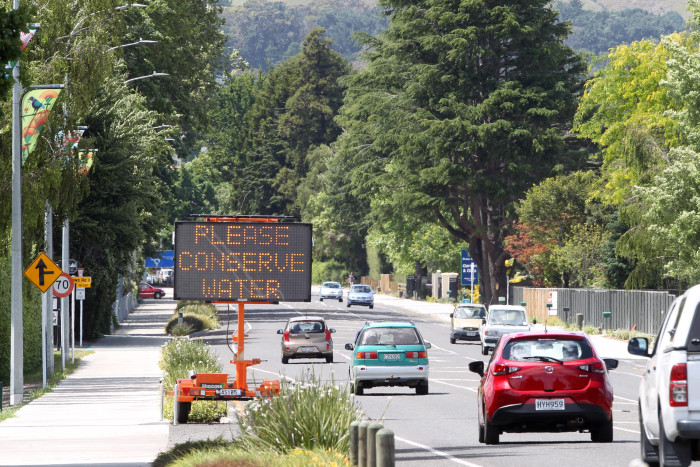
The Te Aroha long-term consumer advisory managed by the Matamata Piako District Council has lasted since 1992. The Tukurua advisory, managed by the Tukurua Water Supply Society Incorporated, began in 1994 and was still active as of March 2024.
Some suppliers had multiple long-term water issues. The Department of Conservation had 35 boil water notices at campsites that stretched for months. It is unclear if these are some sites Taumata Arowai exempted from water regulation rules in June 2024.
One long-term consumer advisory’s affect on business in Queenstown
Simon Mason is the infrastructure operations manager for the Queenstown Lakes District Council and was one of the people who responded to the 2023 cryptosporidium outbreak.
He said he remembered reading a social media post over the weekend in September 2023 about an illness spreading through the community. He continued to get notifications of more and more cases.
“It was always a background concern,” Mason said. “So I guess in my mind I went ‘oh – this is that day’.”
He said QLDC was working on systemic solutions to treat the water, but the high quality of the water and the low risk of protozoa meant a barrier was not yet in place to stop the illness. He was working on a more permanent solution at the site of the problem that would set up the district council to get ahead of a bevy of water issues like algae growth, protozoa and turbidity concerns.
Still, the outbreak caused them to rush to fix the protozoa exposure.
According to an email from a Te Whatu Ora (Health NZ) spokesperson, at least 78 cases of cryptosporidium were connected to the Queenstown long-term consumer advisory.
The “most likely” culprit was “human fecal contamination of the water supply”.
Symptoms of the illness usually included watery diarrhoea and “painful” stomach cramps that could lead to dehydration.
Mason said he recommended the council install a boil water notice until they could patch up vulnerabilities in the system. Inspectors could not find a problem system after their “extensive” monitoring of water systems.
However, Mason said he was worried that the illness could have spread throughout the reservoir without additional disinfection measures.
“We became aware that there was a significant number of cryptosporidium cases in the community,” Mason said. “Obviously, it’s a waterborne illness. We are aware that we did not have the protozoa barrier on the particular scheme where the illness appears to be concentrated.”
Queenstown added that the host of the largest long-term consumer advisory identified in the BusinessDesk analysis did not have a protozoa barrier at the likely source of the problem and added one as a result of their three-month-long boil order. Mason said other water resources in the area already had multiple barriers.

Steve Taylor, the head of regulatory at Taumata Arowai, said the most reliable way to improve water quality is through additional filtration and redundancy that keeps water clean even if one measure fails.
“There is a relationship between these barriers and the advisories,” he said. So if you have the barriers in place, the likelihood of you being in a situation where an advisory is required is significantly reduced.”
Mason said QLDC could fix the problem because the council had allocated money for fixes down the line as part of long-term budgets. They brought funding forward to fix the immediate need.
“I guess urgency is a great driver, and we were very motivated to return normal service to our community as soon as we could,” Mason said.
Mason also credited prompt offers of assistance ranging from advice, key equipment one council offered and a “collaborative” environment with suppliers.
He said there are ways that local governments can collaborate better to distribute costs more efficiently, like standardising data across councils to facilitate contractors' and consultants' collaboration with different councils, and sharing best practices.
Mason said he was unsure how councils without a large ratepayer base to pull from were making those fixes.
“It’s all about access to funding, and I think there is an infrastructure deficit across the country,” he said. “I think it’s going to be really difficult for some of these water suppliers to get out of the situation they’re in without some external funding or potential support from central government.”
Mason wrote in text messages that QLDC spent $1.3 million rectifying the boil water notice and $16.2m adding ultraviolet disinfection across seven sites to protect water safety best.
LeeAnn James, a spokesperson for Taumata Arowai, wrote in an email that councils with gaps in water treatment barriers were required to submit a plan to add fixes. The agency forecasts that they will be in place within the next year and a half.
“We are now analysing the plans that suppliers provided and anticipate that most of them will be installing their missing barriers over the next 12-18 months,” James wrote.
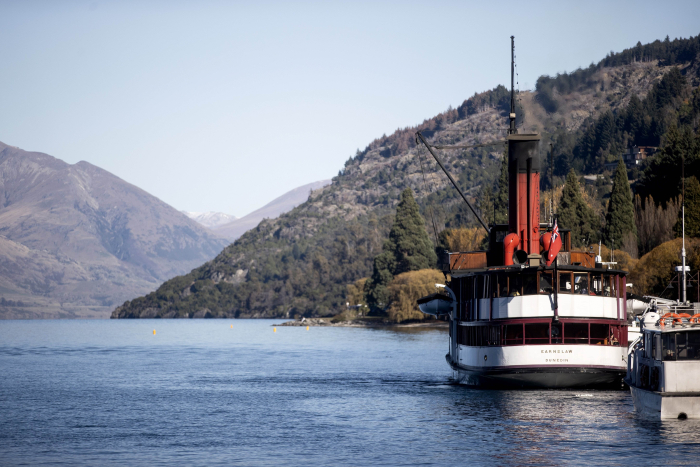
Mason felt it necessary to implement a boil water notice even if it could influence the local economy.
“We were very conscious of the fact that Queenstown is reliant on tourism and it will cause damage to our reputation and short-term implications for businesses in the area,” he said.
“So it was certainly not a decision we took lightly by any stretch. But at the end of the day, there was a potential risk to public health that had to come first.”
Mat Woods, the executive director for regional tourism organisation Destination Queenstown, said he was afraid there may be reputational harm to Queenstown because of the three-month-long boil water notice but was “surprised” he did not notice an impact for visitors.
“It was resolved reasonably fast,” Woods said. “I don’t actually think many visitors to the region knew about it before coming, even though there was information for them.
"And equally, I think when they did come, it was no inconvenience for them. And so I think that was probably the key piece. The inconvenience was to the … residents and the business owners.”
Business impacts
The long-term consumer advisory affected businesses, which did everything they could to minimise harm. Woods said Queenstown businesses were resilient and showed their “manaakitanga” in the face of the advisory.
“So you either were transporting water to your business or you’re boiling water,” he said. “So that was just another inconvenience for those businesses, adding labour and hassle and time.”
He said he wants to see a visitor levy added to help fund necessary infrastructure fixes in water, as well as in other areas like electricity or alternative methods of transportation, such as a Queenstown Lake ferry.
“How could we actually impose a visitor levy that might be able to fund the ageing infrastructure and lack of infrastructure?” Woods said. “And then [we’re] actually closing the gap that you’re referring to around reputational risk.”
Queenstown Lake District’s population is 47,808, according to the 2023 Census. There have been at least nine million international and domestic visitors to the Queenstown area from 2019 to August 2023, according to the Ministry of Business, Innovation and Employment.
The idea has circulated since at least 2019 but does not seem to have traction in the current government.