Eminent film historian David Thomson fears that the medium has finally tricked him.
A Sudden Flicker of Light: A Revisionist History by David Thomson. Simon & Schuster, 2026. 368 pages.Buy on Bookshop.org
DAVID THOMSON, the British expat film historian with 45 books to his name, fears how movies have changed us. He has portrayed the medium’s 135-year history as a high-stakes drama full of suspense, and his inviting prose has drawn many mainstream viewers into the discussion. His best work centers any serious-minded syllabus: Thomson’s A Biographical Dictionary of Cinema (1975, expanded in 2004) remains more thumbed than most reference books of any stripe—a sage, sardonic guide full of hilarious asides (see his Sonny and Cher capsule). His highly influential biographies of David O. Selznick, Orson Welles, and Nicole Kidman romance the cinema with acerbic opinions joined to perceptive details.
Now Thomson reports immense regret.
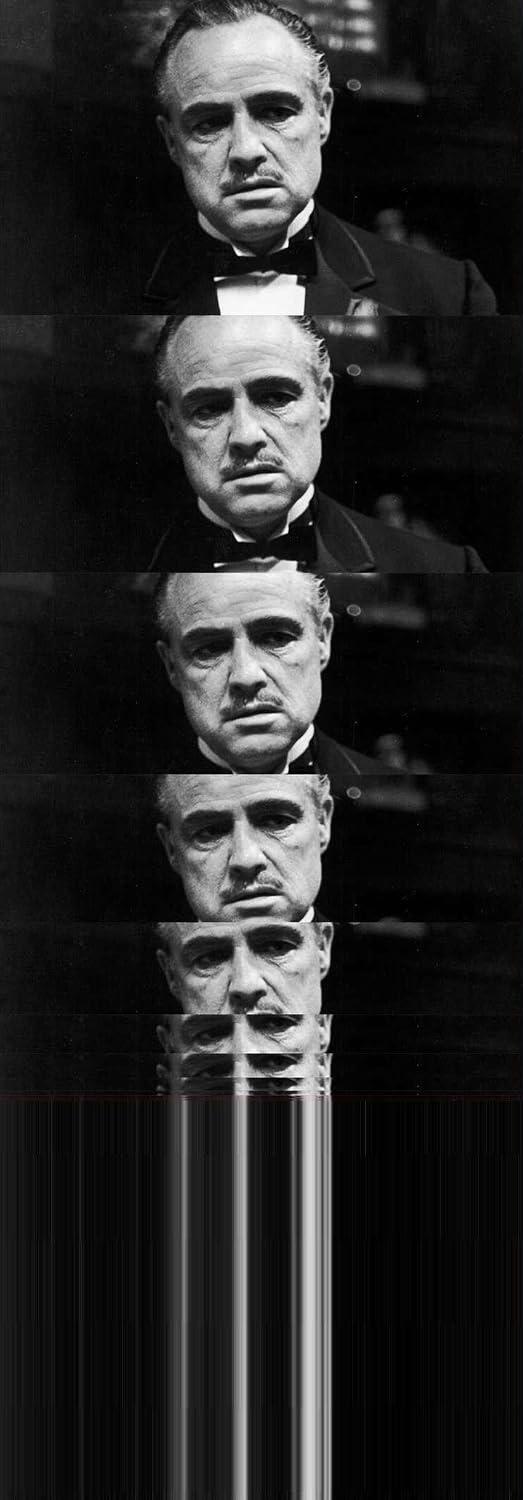
The New Yorker’s Pauline Kael presided as the most popular critic of her time (1968–91), but Thomson brought a kinetic mind to new themes, investigating business pressures, studio nationalism, and the ways New Hollywood’s 1970s ascent—the Godfather films especially—has remained contemporary. Besides his Biographical Dictionary, he also wrote two large-scale histories, The Whole Equation: A History of Hollywood (2004) and The Big Screen: The Story of the Movies and What They Did to Us (2012), both lyrical and exacting, giving interpretive shape to technology’s swerves into color, sound, and metaphysics. His more recent works include a compelling treatment of the titular medium in Television: A Biography (2016); a stirring meditation on the disaster film, Disaster Mon Amour, from 2022; and The Fatal Alliance: A Century of War on Film (2023), all punching drywall and kicking doors with clean, irrefutable manners.
In his latest book, A Sudden Flicker of Light: A Revisionist History of Movies (2026), Thomson returns to his higher perch as a sympathetic yet neurotic 85-year-old thinker whose sentences swell with implication. He has mastered the tidy summary, the brilliant offhand remark, the inspired twist on the quotidian. Restive questions season his descriptions, pushing everything forward. “Is it possible,” he writes, “that the life of spectatorship prepares us for watching anything?”
If you had to cite a weakness, Thomson tends to favor style over content. He writes in a voice so dashing that it becomes enamored of its own authority. A recurring image involves how movies transport viewers to other places, as in these three examples from different chapters:
You could imagine you were in that other there, and it feels more charming than here. There is an escapism when you had not realized you were imprisoned.
So they turned a blind eye to how the picture show was hinged on a desire to be more than reality allowed. That evasion could seem so exciting.
Thus artificial intelligence drugs the bitter history of our half-baked intelligence.
And his zingers often redeem the cheapest shots. In 1945, Humphrey Bogart married Lauren Bacall, 25 years his junior, and Thomson explains that “it was very American for a wreck in a toupee to marry a lustrous young gaze.” Did anybody think the same when Arkansas’s Billy Bob Thornton dated Laura Dern or married Angelina Jolie? (They should have.)
Films can feel overwhelming, Thomson writes, and our responses carry emotional currents that turn into fevers. He enjoys this as much as the rest of us, though now it unsettles him. When he finds the perfect detail, as in Fritz Lang’s 1931 film M, about serial killer Hans Beckert (Peter Lorre), he ties it to the way the image corrupts the viewer. Lorre’s character spies the letter chalked on his coat, refracted by a mirror, so the image captures how cinema opens a “window on the inner mind.”
But still photographs hold exactly this same property, and two centuries ago, when Civil War cameraman Matthew Brady (1822–96) emerged as a star, many argued that photographs held menace, serving as a way of “faking” reality to reinforce political views or racial prejudice. Such generalizations simply do not hold up, and Thomson himself has batted down weaker declarations.
The problem is, Thomson has such a polished style that you want to quote him all night long. He slices up Orson Welles even as he admires Citizen Kane (1941) and defends its status as a major leap forward. Thomson calls it “a requiem for ambition,” the story of a boy plucked from his home beneath an unhappy marriage in Colorado for grooming as a man in the vein of William Randolph Hearst who builds a great media empire, a forerunner to Rupert Murdoch and all today’s boy oligarchs: Peter Thiel, Elon Musk, Sam Altman. Then he adds: “as if that is the secret engine of America.” Through his signature glibness, Thomson uses hyperbole to understate his case, even as he gives a clue to his more sinister suspicions.
Describing the United States’ deep-rooted connection to cinema, Thomson argues that, while treating films as high art fits a grand narrative, movies historically held a role that was simpler, broader, and more dangerous than that status implies.
One of Pauline Kael’s trademark themes lay in how trashy material could approach the level of art, how high art need not play as stiff and forbidding; even brainiacs love car chases and sex romps. In the 1960s, with the rise of film studies and a mainstream reckoning across the popular arts in music, film, and novels, people began to square movie love with the “higher” forms. Thomson seems torn: he likes the idea of trash as art, but he thinks that it’s gone too far, that we’ve succumbed to trash; our responses grow reflexive, such that we label movies “art” without much critical thinking.
Sure, but we do the same with pop albums, concerts, milk ads, and marketing slogans. Thomson really needs to spell this out better: some of his prose soars, while other passages feel as if he’s setting off fireworks of insight for kicks like a movie with too many car chases. To put it generously, he tilts a shade too much in a counterintuitive, provocateur direction. Funneling his analogies and metaphors through this central lens of film-as-violence omits so many sappy surprises and goofy thrills. It also exposes that tiresome double standard: revered literature, from Homer and Shakespeare to Cormac McCarthy, revels in bloodlust and fakery. The movie camera didn’t invent anybody’s appetite for violence; it simply delivered, again, what audiences seek out.
Movies have a “trashy impact that wants to be profound,” Thomson writes. Hasn’t the larger arc of pop culture persuaded us that even campy fun can carry thoughtful, multilayered poetry? Thomson himself has previously written of Steven Spielberg’s mother ship sequence in Close Encounters of the Third Kind (1977) as a joyous poetry of light and sound, praising the childlike state of grace that elevates the movie into ecstatic cinema. And he found gothic poetry in Alien (1979), praising Ridley Scott’s atmosphere—the cavernous interiors of the ship Nostromo, the vast and foreboding silences of deep space, and visual designer H. R. Giger’s biomechanical dread. Acting as if somebody else wrote those passages weakens Thomson’s argument by omission and dishonors his own fine prose.
In his biggest misstep, Thomson brings up Hitler. This has grown so tiresome from so many people unworthy of Thomson’s intelligence that it pains a student to correct a mentor. A movie lover and narcissistic striver, Hitler hired Leni Riefenstahl to make proud yet empty films of his Nuremberg rallies. In his Biographical Dictionary, Thomson compares Riefenstahl to director John Ford (The Searchers, 1956), allowing that the former’s films “shrie[k] with camera aptitude.” He separated out the craft from corruption in that discussion, but in Flicker, that distinction goes missing. Thomson now claims that Hitler’s politics haunt the medium, fretting that “maybe the dream spurs authoritarianism.”
Please, don’t even bother to roll your eyes. Hitler loved Beethoven too. Does the sonata form inspire the fascist impulse? Bad people have good taste, but that doesn’t soil film, music, or any medium. Donald Trump likes chocolate: chocolate bad?
So you read Thomson’s timeline just for the juicier asides: Spielberg’s sexiest moment comes in the opening of Jaws (1975), when the shark seizes the beautiful swimmer “and ravishes her.” (You wonder if anything else in Spielberg feels even remotely sexy.) The wiseguys in Goodfellas (1990) are “so in love with each other that the lack of gay expression is kind of freakish.”
And just when you start to suspect Flicker’s more exaggerated qualms, Thomson drops a spellbinding thought bomb. Discussing a scene in Jean-Luc Godard’s knocking-for-six Pierrot le Fou (1965) in which a couple finds “a Japanese midget” stabbed beside their bed on the morning after their lovemaking, Thomson asks: “They made love in the night with that corpse nearby? And somehow the disconnect is funny?” He goads himself on: “Somehow I recall that when O.J. left the house on Bundy that fateful night to go to the airport, his children were asleep upstairs, alone in the house, with the bodies of the mother and the friend cut to shreds in the yard.” That detail didn’t end up in Ezra Edelman’s Emmy- and Oscar-winning documentary O.J.: Made in America (2016), or any other TV O. J. movies.
Flicker’s survey of film’s pantheon reveals hindsight as an unreliable projection. Beginning with The Birth of a Nation in 1915, his reassessments of directors D. W. Griffith, Erich von Stroheim, François Truffaut, Frank Capra, Riefenstahl, and Alfred Hitchcock, alongside totems such as Casablanca (1942), Psycho (1960), Out of the Past (1947), Sunset Boulevard (1950), and Bonnie and Clyde (1967), pile up with engrossing thrust. Thomson notes how, when sound appeared at the very tail end of minstrelsy (with The Jazz Singer in 1927), the dialogue and soundtrack could be understood as “a version of the white space” on a page, suggesting “hidden levels of meaning and realms that will never be reduced to mere visibility.” In a similar manner, Thomson argues, film narrative can have us believing in imagined subjects. “The picture show,” he explains, “was hinged on a desire to be more than reality allowed.” The “reactionary fortitude” of Gone with the Wind (1939), for example, propagates antebellum Southern myths and violates history itself.
But here Thomson’s argument snaps: Gone with the Wind came from Margaret Mitchell’s blockbuster 1936 novel, just as Francis Ford Coppola’s The Godfather (1972) framed Mario Puzo’s 1969 potboiler. Thomson stops just short of declaring that these films despoil their novels; another editor might have nudged him further into the plunders of 2002’s Adaptation (a jagged comic puzzle he omits). Thomson contrasts “the childish inability of movie as a language compared with a single sentence marrying two points of view more potently than coition,” which could be his sleight-of-hand confession of a literary mind preferring text as a medium. When he announces that he’s going to give some reading suggestions, it sounds less patronizing than it might: movies gain traction through reading, he argues, and a literate mind might access moving images differently than a plebeian’s would. This part of the argument has heft, pinned to his primary titles (Henry James’s The Portrait of a Lady, Virginia Woolf’s Mrs Dalloway, and Edmund Morris’s Dutch: A Memoir of Ronald Reagan). And our postliterate world certainly strikes the British literary imagination as tragic. Noted.
Thomson’s especially good on Fred Astaire, contrasting him with Gene Kelly:
He is so close to being inhuman it leaves Kelly looking vain and antiquated. […]
Fred had the songbook of a rich period. He dances and sings to the songs of Jerome Kern, Dorothy Fields, Irving Berlin, Cole Porter, Harold Arlen, George Gershwin, and he reigns in a kingdom of romance that kids itself by staying fully dressed and polite. […]
He was the most religious person on-screen in the thirties, when being swell (or saying so) was a state of grace. You see, Fred never got Depressed.
Now he builds to an unhappy conclusion—the movies have tricked him. The tacit play between screen and audience has crossed the Thomson Rubicon occasioned by the 2024 Oscars. In the book, he confesses to enjoying Best Actress winner Mikey Madison’s portrayal of Anora, perhaps too much—a pleasure his daughter disapproves of. That tension between aesthetic wonder and moral worry starts to tilt things. Now he poses that this “engine of fantasy” has warped the moving image into a “parasite to reality,” the viewer only “half aware that we cannot have what we see.”
If we mistake the photograph for reality, we mistake the movies for real life. His analogies insist on brutality: cinema “flatters killers, or people doing taboo things.” He compares the silent film to a machine gun, adding that once sound was added, the clapboard “was as commanding as a pistol shot.”
Movie villains are the most glamorous figures on-screen, and the better played, the more ominous. Thomson finds The Silence of the Lambs (1991) too tidy, too satisfying: it pulls that old Hollywood trick of giving us a resolution to an incomprehensible evil through Anthony Hopkins’s portrayal of cannibalistic serial killer Hannibal Lecter. “We have been suckered,” he says. “So little has changed. I know, Harvey Weinstein is in prison, but so was Hannibal Lecter.” And then he takes a leap:
[Hopkins’s] Lecter had an uncanny impact. Only on-screen for sixteen minutes, he deserved or required the Best Actor Oscar. He was odious and more apparently dangerous than [the previous Lecter, Brian] Cox had thought to be. But he devoured the intelligence in Lecter long before he ate human flesh. He looked at Clarice and into the camera like a director of the film. One soon felt that the actual killings in Silence were of his ordering. What I’m trying to say is that his screen being was mesmerizing, or like a cobra that out-charmed the charmer. He made us feel how much the medium was leaning on us. […] This was a quiet violence above and beyond murder.
What is Hopkins supposed to do… dial it down? Hopkins dominates the movie, certainly, and no scriptwriter could have predicted such a turn. But does he drag down cinema itself? Aren’t we meant to leave Shakespeare’s Othello feeling snookered and dismayed, just like the Moor?
What Thomson builds toward in Flicker feels more like a release of tension than an apology, and it disappoints even before he fumbles the follow-through. Thomson deems the medium itself in decay, declaring that Trump, like Reagan before him, confirms our unraveling; the after proves the before. But this reeks of the old complaint about commerce and art, suddenly coming from an émigré who buys into the counterfeit American idea about how art should elevate, purify, or restore moral order. Robert Hughes’s Culture of Complaint: The Fraying of America (1993) already flexes the counterargument: European arts don’t delude themselves into so many happy endings.
Thomson dismisses happy endings, but blaming moving pictures for today’s malaise insults everybody’s intelligence. He owns up to being “reactionary” in his title, leaning so heavily into bleakness that he avoids addressing tech’s narrative shapes entirely. Movies have an impact, but they are hardly the motor of modern terror—not in an era marked by relentless school shootings, rogue ICE operations, and unchecked political violence. Thomson leaves these stark realities unmentioned, expecting us to believe that the fault lies not with the NRA or a global right-wing fever but with Martin Scorsese’s shoot-’em-ups.
Thomson’s lament echoes some rhetoric of the Reagan era, when Hollywood belched up its pureed mediocrity as destiny and a B-movie sidekick became the nation’s leading man. But since then, Americans elected a Black intellectual twice to the presidency—first in 2008, then again in 2012—and a half-Black, half-Indian woman vice president, Kamala Harris, lost her last-minute presidential campaign by less than 1.5 percent of the popular vote in 2024. Where does this fit into Thomson’s frame? In fact, Quentin Tarantino’s arch Black revenge fantasy (Django Unchained, 2012) preceded a new era in Black historical responses, like Ava DuVernay’s Selma (2014) and Steve McQueen’s 12 Years a Slave (2013)—as well as Ryan Coogler’s Black Panther (2018), Black Panther: Wakanda Forever (2022), and Sinners (2025). This happened alongside thunderclaps like Nikole Hannah-Jones’s The 1619 Project: A New Origin Story (2021) and Heather McGhee’s The Sum of Us: What Racism Costs Everyone and How We Can Prosper Together (2021).
The backlash Thomson diagnoses has more to do with a freebase stock market, crypto’s giant sucking long con, copulating screens everywhere, and social media’s smash-cut frenzy than with Hollywood’s beautiful films orbiting black holes.
Thomson tries to play an ace card by describing Nicole Kidman’s glib and breathy AMC commercial: “We come to this place for magic,” she narrates, a celebrity celebrating fantasy alone in the theater. Thomson underlines this: she “does not notice she is alone.” But private screening rooms pockmark Brentwood and Greater Los Angeles, where isolation sells real estate. Even more than solitude, the AMC plug parades a naked gall: Kidman’s selling glittered anticipation in an ad that runs after you’ve bought your ticket. It’s the nadir of self-congratulatory pretense, flattering the viewer while we watch ourselves watch an ad. Thomson’s previous dazzle has nowhere near the nerve of an ad that knows you’ve already paid.
Thomson writes that he “feels more than regret” over the decades of attention he has given to cinema—“as if it honored society and history.” The climax comes in a chapter called “Quiet, Piggy” where he turns to our current president, who “longs to be the everlasting big bad boy, the narcissist who destroyed the world because it was not him.” Of Trump’s notorious camera hogging, he writes, “For a century the fallacy had reigned that watching would make us better. Instead of just indifferent.” But Thomson can’t persuade you that he doesn’t care—not in a book this passionate, this provocative—the critic ambushed by his own horror movie.
For Thomson, Trump’s return and Anora director Sean Baker’s Oscars sweep feel like the same nightmare: Hollywood selling sexual bravado as depth. The film’s rambunctious nookie, its bodyguard/prince-who-arrives-just-in-time, its eagerness to have it both ways—all of it confirms his worst suspicions. He’s not wrong about the film; he’s wrong about the larger stain he blames it for. Anora and Babygirl (2024) work like bad twins: powerful women who choose their own subjection, as if feminism’s next phase embraces the pleasure in powerlessness. That’s barely an idea—it’s soft-core porn masquerading as a critique.
Thomson idealizes the gilded theaters with grand balconies where we gathered with strangers to experience fantasy as a group. But that fellowship in the dark didn’t solve its era’s racism, sexism, or homophobia. “Golden Age” arguments signal retreat. Thomson swerves past how streaming and video games have colonized our phones with new stories and new rhythms. He doesn’t touch prestige TV—Deadwood (2004–06), Breaking Bad (2008–13)—whose movie-length spin-offs fared poorly, where TV eclipsed movies but it hardly mattered.
Criticism can’t save the movies: no big whoop. But Thomson has staked his professional identity on a beautifully written, weakly argued polemic that reads as patrician at best and antique at worst. Unfortunately, he joins a chorus of chatty octogenarians. Why does Steven Spielberg, turning 80 with this summer’s Disclosure Day, slight the wonder in Close Encounters by clobbering us with gilded sentimental bunkum? Is that really Mick Jagger (83) explaining aging to everybody? Thomson has nothing to say about Christopher Nolan, the closest thing to a consensus grandmaster. Nothing about Jordan Peele, Donald Glover, or Quinta Brunson—artists who invert movie and TV traditions. This book ignores them all.
Thomson’s manifest smarts argue against this rickety close, and he built his credibility on much stronger work. We’re all upset, okay. But Thomson’s body of work looms larger than this conclusion. Flicker resembles box office gold: bold ideas colliding with sex, violence, and toupees—and it doesn’t come near what he’s done before.