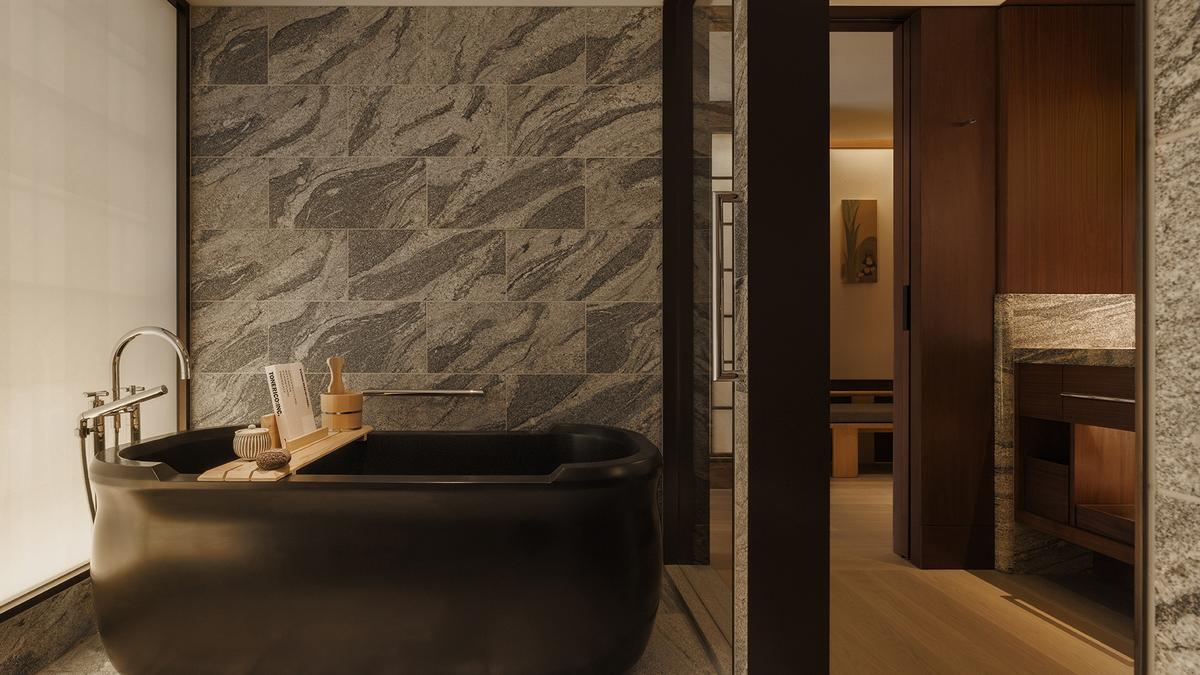
From mochi and sakura-flavoured tea on arrival, to a parting gift of our intricately carved room keys, everything about the Capella Kyoto feels peaceful and refined. Low lighting, lush courtyard gardens and an internal waterfall set the scene for a stay that is pure, understated luxury. This is Capella’s first foray into Japan, and you can feel how much care and detail have gone into the hotel’s common areas and 89 rooms and suites set across four levels. Capella Kyoto, in the historic Miyagawa-cho district, is built on a former school site, where all the trees were removed, preserved and replanted. It sits in a three-part development comprising the hotel, restored Miyagawa-cho Kaburenjo Theatre, and a new community centre. Capella Kyoto is billed as the reimagining of the machiya — the traditional townhouses seen around Kyoto, and the city was Japan’s imperial capital for more than 1000 years. It’s the work of acclaimed Japanese architectural studio Kengo Kuma and Associates (Japan National Stadium in Tokyo, V&A Dundee in Scotland) and Singapore-based interior design studio Brewin Design Office. The understated hotel entrance unfolds as a series of long Gion-styled alleyways lined with shoji screens. Inside, works by local artisans are showcased in pieces using bamboo, lacquer, washi, ceramic, bronze and timber — oh so much timber. My husband can’t stop marvelling at the smooth woodwork in our premier king theatre room, concluding a craftsman must be on call to repair any accidental damage. Slipping out of my shoes and into Capella slippers to tiptoe across the tatami-inspired floor, I am immediately drawn to the bathroom, deep soaking bath, and hinoki onsen stool and bucket. Bathroom amenities are showcased to create the image of a geiko, the Kyoto name for the performers we know as geisha. Each afternoon, guests are treated to a private performance in the lobby lounge room from a local geiko or trainee maiko, with time for questions and photos. It’s a small window into another world. The nightly turndown service also incorporates cultural elements. On the first night we receive two Ema, the wooden plaques offered at Shinto shrines to carry hopes and wishes. The next, it’s a pair of Daruma, the traditional Japanese talisman inspired by Bodhidharma, the founder of Zen. They are accompanied by a thermos of dashi, a delicious hit of umami designed to invite “a moment of comfort and restful response”. Capella Kyoto’s king-size bed is bliss, with the silkiest, most silvery sheets I have ever collapsed into, made by luxury Italian linen house Frette. The cost of a set of these could fund another flight to Japan — gulp! Best to enjoy a free mineral water or soft drink from the abundant minibar and not think about it. Lighting and blinds are easily controlled from the bedside. The room also has an excellent desk set up, with wireless charging built into the lamp and a spotlight overhead. Capella Kyoto is over the road from Kenninji Temple, Kyoto’s oldest Zen Buddhist temple, and the Zenkyo-an sub temple devoted to wild boars. It’s also a quick stroll or ride on a hotel bicycle to the Kamo River, a popular spot for date nights, picnics and music practice. After this gentle introduction to Kyoto, we give our senses a jolt by walking to the hectic Kawaramachi Shopping Street. Bright lights, big department stores and some amazing buskers can be found here. I restock my wardrobe at Uniqlo and offshoot GU. I won’t queue for food but somehow spend an hour in line at cult sneaker store Onitsuka Tiger. Two of Capella Kyoto’s restaurants are closed during the first night of our stay: Japanese restaurant and bar Yoi; and SoNoMa by SingleThread, the hotel’s signature collaboration with the three Michelin-starred Californian restaurant owned by chef Kyle Connaughton and head farmer Katina Connaughton. Venturing down the street for dinner, we find Gion Ntedon, a recently opened hole in the wall tempura joint that’s easy on the wallet. It’s fast, friendly, delicious, and exactly what we need. Both mornings we enjoy breakfast at French brasserie Lanterne, a bright, welcoming space that flows outward to the hotel’s central tsuboniwa — a traditional small Japanese courtyard garden, designed as the “contemplative heart from which all guest experiences flow”. Unlimited serves of hot mains including eggs benedict, omurice and avocado toast are complemented by a continental buffet with delicate pastries and individual bottles of juices and alternative milks. It’s nice to linger briefly in the sun before another day of exploring this wondrous city.
+ Sue Yeap was a guest of Capella Kyoto and Kyoto City Tourism. They have not influenced this story, or read it before publication.
fact file
+ Rates at Capella Kyoto typically start from $2160 per night off-peak, excluding taxes. capellahotels.com/en/capella-kyoto/ + kyoto.travel