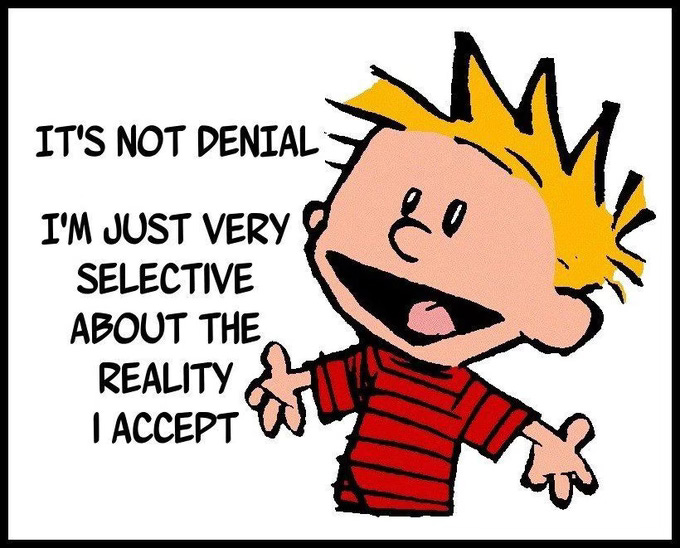
How can someone believe that a flood disaster in southern Brazil that forced more than half a million people from their homes was caused by Madonna?
The pop star was dabbling in a rain ritual that caused the flooding, according to a widespread conspiracy.
How can someone believe that contrails (crystalized water vapor from high-flying planes) are toxic chemical spraying?
How can someone believe______ or _____? I’m sure you can easily fill in the blanks.
We are not nearly as rational or logical as we like to think. Each of us has a biased view of reality.
Our perceptions—how we see and understand the world—evolved to help us survive. Things that aren’t relevant to our survival are usually filtered out. We literally can’t see them without a lot of effort.
Here’s an example known as the “Invisible Gorilla” study:
Study participants watched a short video of two teams, one in white shirts and one in black shirts, passing a basketball back and forth. Each participant had to accurately count the number of passes made by the white team.
Partway through the video, a person in a full-body gorilla suit walked into the middle of the players, stopped, faced the camera, beat their chest, and then left.
About half of the viewers did not report seeing the gorilla at all, even though it was in clear view.
Here’s another example:
Participants had to jog behind an assistant and count the number of times he touched his hat. As they jogged, they ran past a staged fight in which two men appeared to be beating a third. Even in broad daylight, over 40% missed the fight. At night, 65% missed it.
This is called inattentional blindness. Our ability to ignore distractions around us allows us to retain our focus. So now you know why your partner completely ignores you when they’re watching an important sports event on TV. You’re simply invisible to them. (Unless you turn into a roaring lion!)
Need-to-Know: We’re chock full of biases.
That’s just one aspect of our limited perception of reality. We not only ignore things, but our perceptions also shape the information we seek, how we think, what we consider important and worth remembering, and what we ignore.
All this becomes our reality. What each of us thinks of as reality is uniquely our own.
This is a big problem since we need to cooperate to survive.
Need-to-Know: We need shared realities to survive
So we developed ways to have a shared reality.
For thousands of years, we relied on trusted individuals such as elders, chiefs, clan mothers, wisdom keepers, or storytellers who would describe a reality that group members would agree to—often after considerable discussion.
Another way is the scientific method.
A scientist has an idea, they test it and provide the results to other scientists, who point out errors or things that were missed. More tests are done, and the results are discussed with others again.
Eventually, a paper or report is written for publication so everyone can discuss it. Before publication, editors send the paper to anonymous reviewers who are experts on that subject. They send back their comments and critiques. The paper is often revised and then sent out for review again.
When the final version is published, it’s usually pretty bulletproof—especially when published in a major journal like Nature or Science. Still, there is ample opportunity for correction or criticism. These are often published as a comment or letter in the journal.
This is why scientific publishing takes a very long time. It’s an arduous process designed to get as close to the truth as possible at a particular point in time. A big part of that process is designed to eliminate bias of all kinds.
The phrase—point in time—is important. All knowledge is imperfect knowledge.
We’re endlessly discovering and learning new things, expanding on what we think we know. So, scientific reports are cautious and conservative in their claims. New discoveries or new data can provide hard proof that what we thought we knew wasn’t quite accurate.
Need-to-Know: All knowledge is imperfect knowledge
Science learns, and we all benefit from a better understanding of our world.
This is the gold standard for minimizing bias and getting at the truth.
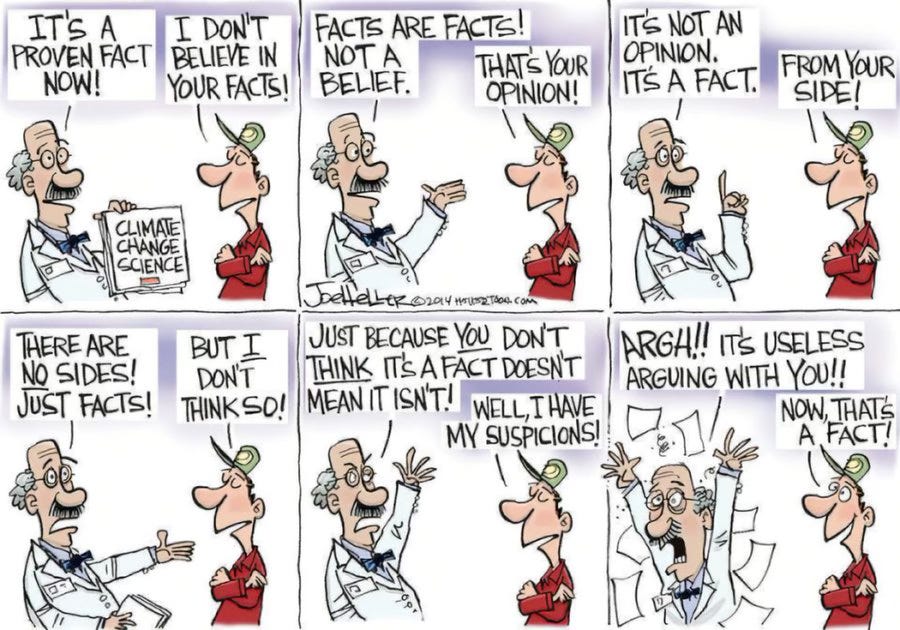
Traditional or mainstream media also have processes to verify accuracy before publication. I’ve had plenty of experience with this as a freelance journalist writing for dozens of publications in various countries.
For example, after I submit a draft article, it’s reviewed for content and accuracy by one or more editors—questions are asked, details confirmed, changes and additions made. The revised draft may go through another round with editors.
Depending on the publication, the final draft article may go to a fact-checker who verifies every quote, source, and substantive fact, including calling the people interviewed to make sure they’re quoted accurately.
After the article is published, if a reader finds an error, a notice is posted noting the error and the correction made in the story if it’s online.
This process is based on my experience as a journalist who writes news and feature articles. For opinion pieces (Op-Eds), vetting for accuracy is often less thorough. (Seemingly nonexistent in some cases.)
There’s been a great deal of change in the media landscape over the 30 years I’ve been reporting.
A few final Need-to-Knows:
Each publication has its own editing and fact-verification process.
The editing and verification process is less thorough than it once was at most publications due to staff cutbacks.
Mainstream media generally still have fact-checking and try to track down the truth. They also acknowledge errors and make corrections. And they fire journalists who get things wrong too often.
Many online-only publications have only a single overworked editor to review an article. So they are forced to trust the journalist or contributor to get everything correct.
Most importantly, there is a growing number of propaganda outlets masquerading as news media. Their purpose is to persuade readers to adopt their biased worldview as their own, for power and profit. Beware!
Until next time, be well.
Stephen
P.S.
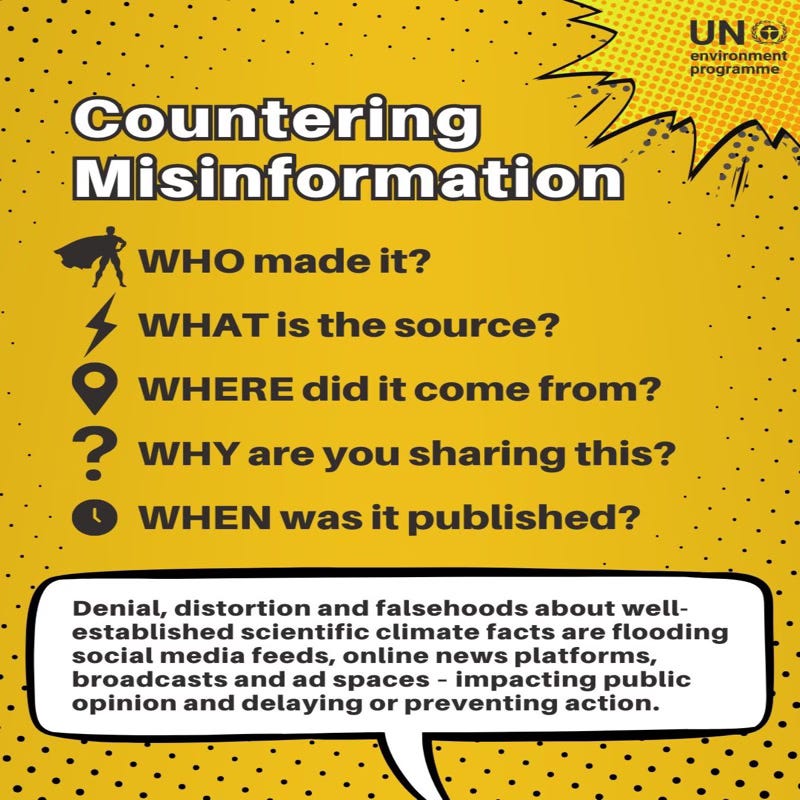
A couple of previous posts to help sharpen your BS meter:
Disinformation Designed to Ingrain Erroneous Beliefs and Lies
A Perfect Storm of Misinformation: How to improve your BS detector
P.P.S. Courtesy of Tom Tomorrow from 2010!