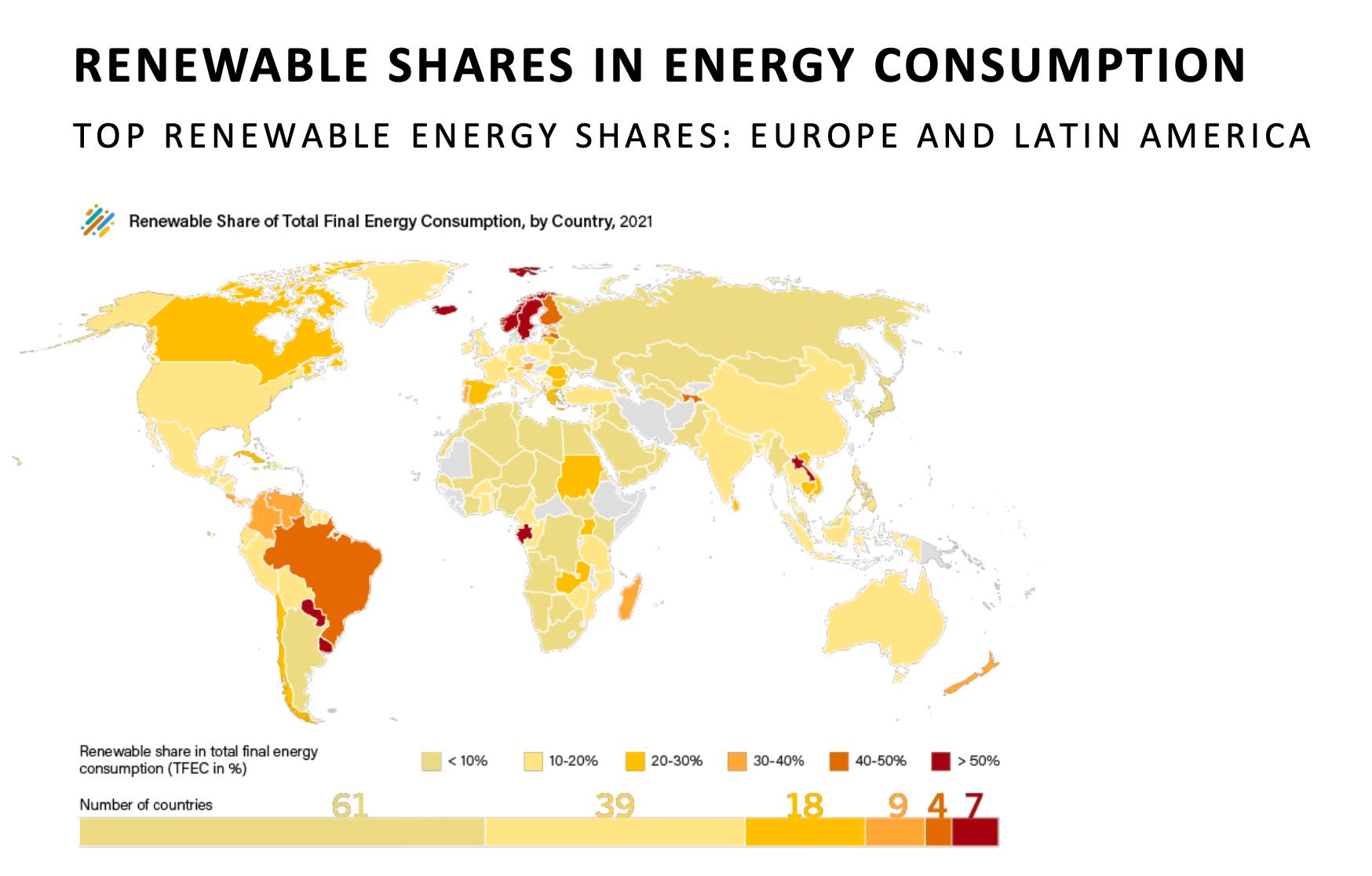
More than 90% of new renewable power projects commissioned last year were more cost-effective than any new fossil fuel alternatives.
Those renewables projects will save tens of billions of dollars in fossil-fuel costs, according to the International Renewable Energy Agency (IRENA). (Not to mention improving air quality and cutting carbon emissions.)
Thanks, China, for this breakthrough.
Yes, China is largely responsible for this.
There are plenty of good reasons to object to China’s actions both internationally and domestically. I’m just acknowledging the current reality regarding clean energy.
Need-to-Know: The unsubsidized costs of clean energy have plunged 60% to 90%
China’s policies, along with enormous investments and its unparalleled manufacturing might, have driven down the costs of clean-energy technologies by 60% to 90% since 2010.
China has done this in its own self-interest:
To clean up its polluted air
To reduce its reliance on imported oil and gas
To have products to sell to the rest of the world.
Need-to-Know: China is the world’s clean-energy technology factory.
China produces about 60% of the world’s wind turbines, 80% of solar panels, and 70% of electric vehicles.
China’s exports of solar, wind, batteries, and EVs in 2024 alone are expected to reduce global carbon emissions by approximately 220 million tons per year.
That’s roughly equivalent to Spain’s annual CO2 output. And the emission reductions in one year exceed the emissions generated during the manufacture of those products.
Need-to-Know: China generates far more clean energy than any other country
China’s solar and wind generation capacity doubled between 2021 and 2024, while energy storage tripled.
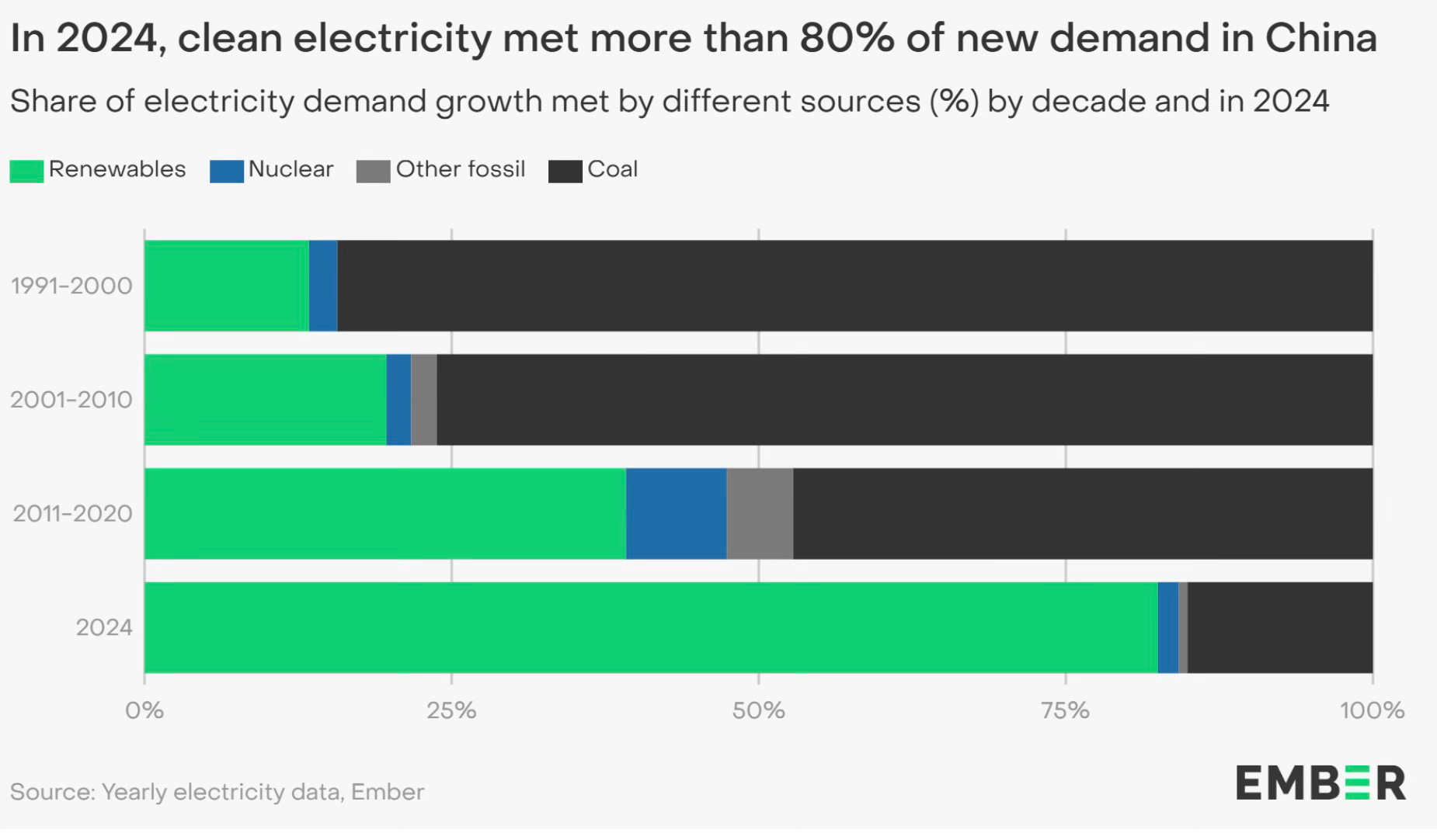
China generated 18% of its electricity from solar and wind in 2024, twice as much as in 2020, according to a new report, China Energy Transition Review 2025from Ember, a London-based clean-energy research group
The pace of new clean-energy installations in the first half of this year is even faster.
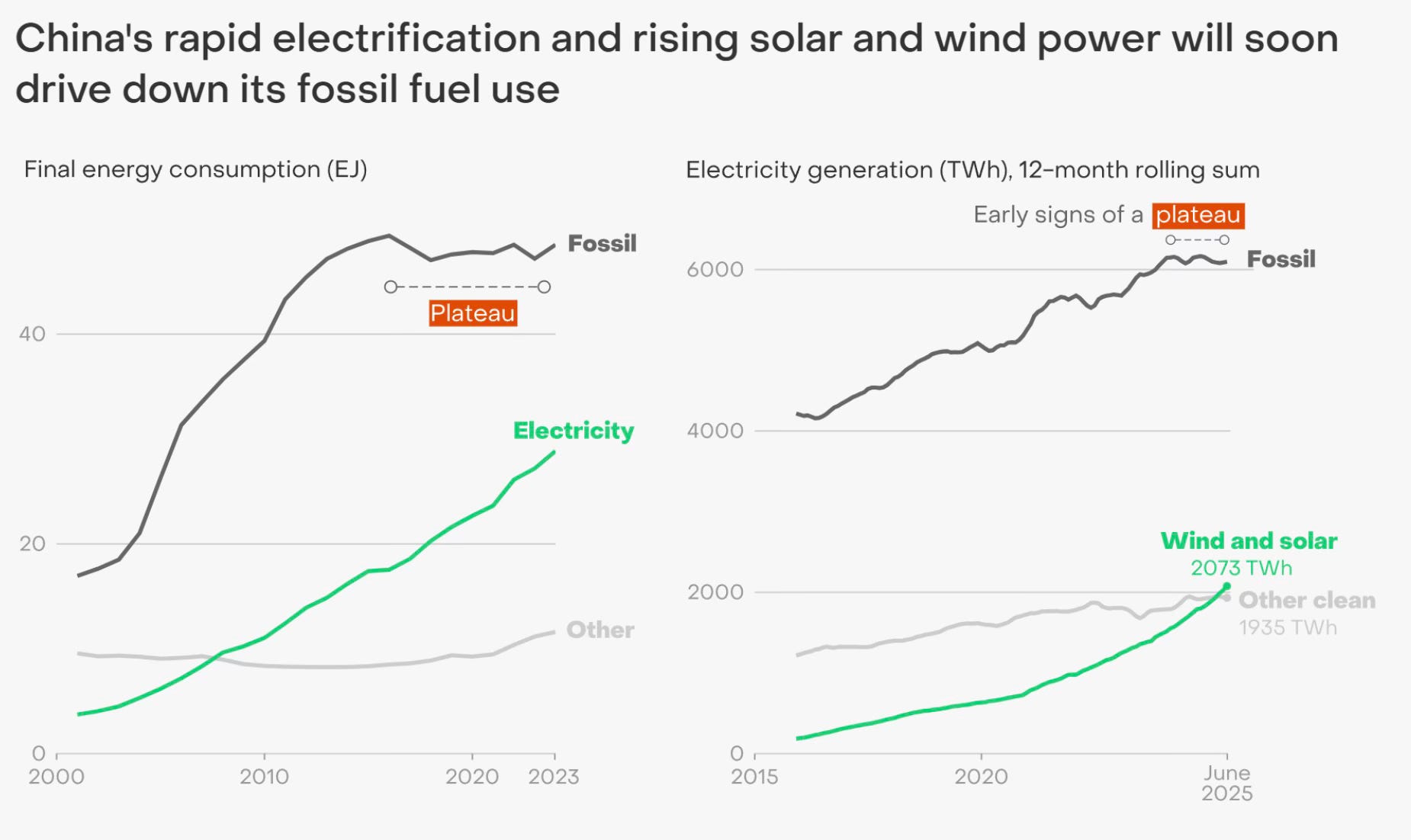
Yes, China is still building some new coal plants. One reason is to replace old, inefficient plants, and another is to prevent local power outages due to problems with their power grids.
Two important China-coal facts:
Coal generated about 51% of China’s electricity as of June 2025. That’s a big decline from around 73% in 2016.
China’s average utilisation rate of coal power plants in 2024 was around 50%. In other words, its coal plants only operate half of the time.
“Cost-efficiency is not always a central concern when ensuring that key problems are solved.”
—Ember’s China energy expert.
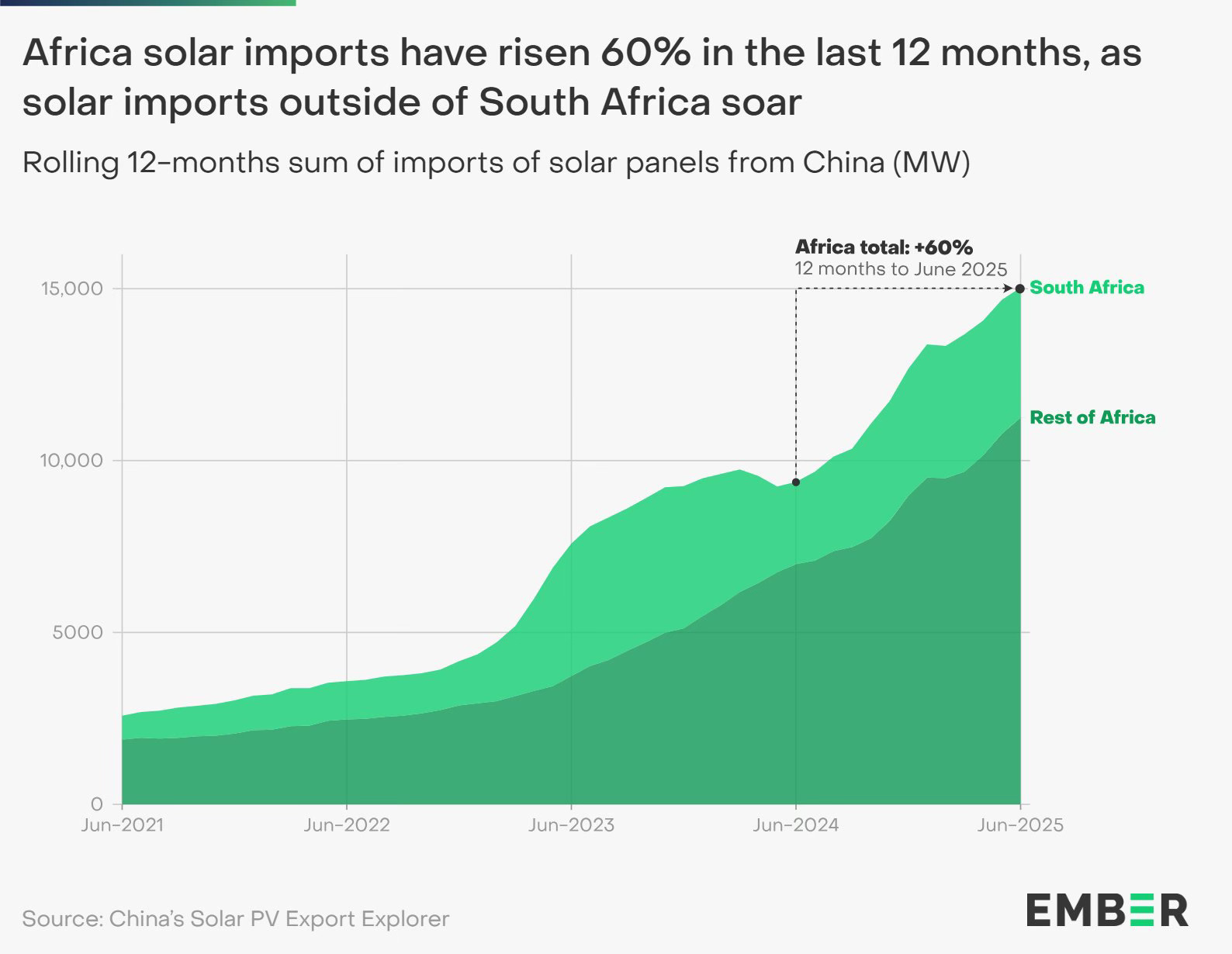
Need to Know: China’s low-cost solar panels bring cheap electricity and energy security to poor countries
China’s enormous clean-tech manufacturing capacity has opened the door to clean and more affordable energy security for even the poorest of countries.
This is perhaps the most important point:
When countries import solar panels or wind turbines, they’re importing the means to generate energy for 25 to 40 years.
By comparison, imports of fossil fuels are never-ending. Worse, they are subject to price volatility, shipping delays, geopolitical risks, and other uncertainties.
Many countries have realized this fact.
Brazil, Chile, El Salvador, Kenya, Morocco, and Namibia obtain a greater proportion of their energy from solar and wind sources than the U.S., according to Ember.
Mexico, Bangladesh, and Malaysia now produce as much green electricity as the U.S, with ambitious plans to generate much more.
All of this will only accelerate.
This is also why the Trump administration is leading a propaganda effort against green energy in order to keep pumping out oil and gas.
Until next time. Be well.
Stephen