Replacing 1 in 5 of your car trips with walking, biking, or public transit would save an average of US $1,777 per year, according to RMI’s Smarter Mobility Calculator.
Need-to-Know: The less you drive, the more you save.
The average American household could save $840 in annual fuel and vehicle maintenance costs, and over $900 per year in vehicle depreciation and parking expenses by reducing their car use by 20%.
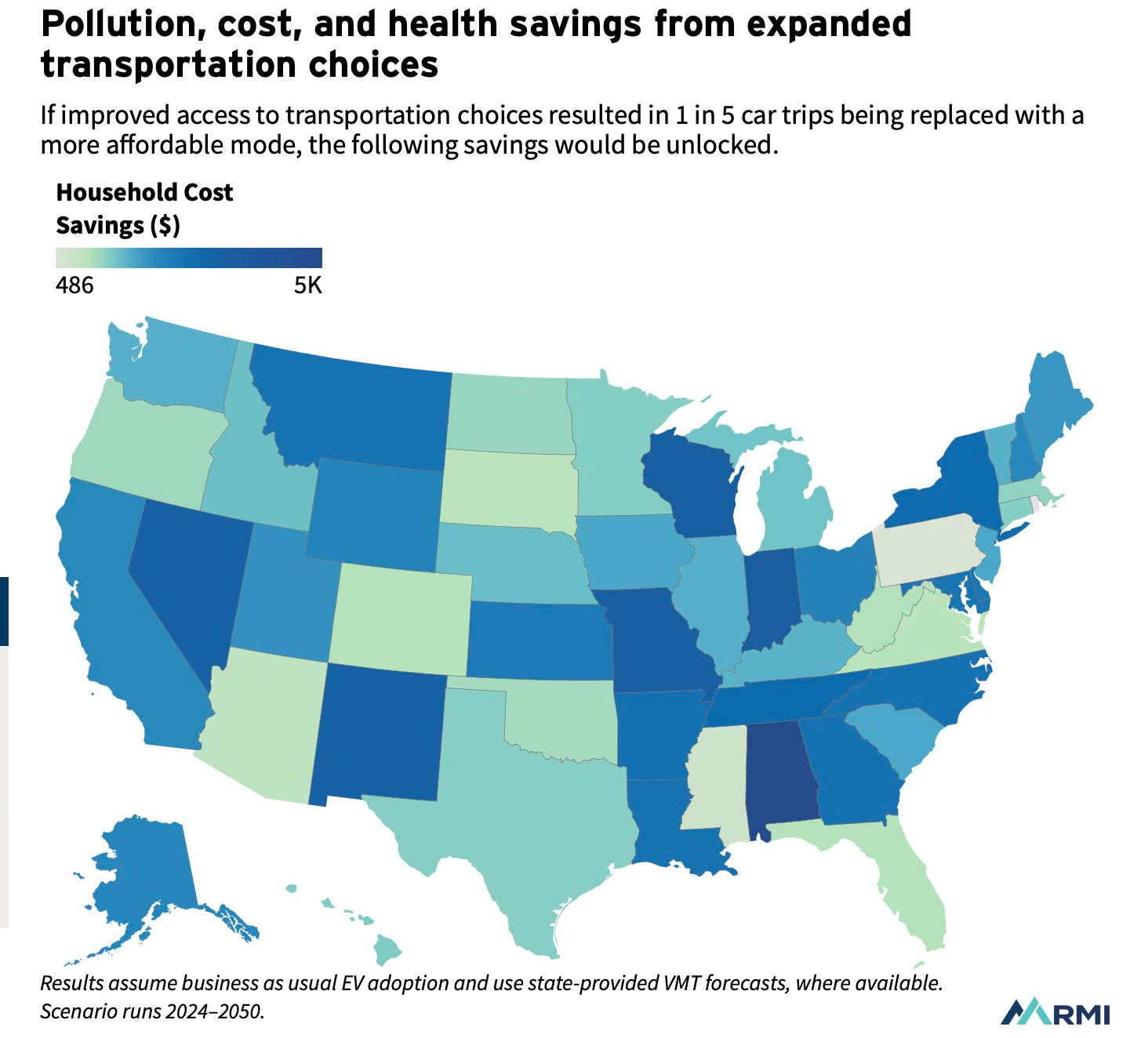
These savings are based on 2024 costs. Gasoline prices are about 30% higher today. Car repair costs have also increased, along with car prices—the average price of a new car was $50,000 last year.
I’m not going to get into how these savings are calculated. The main Need-to-Know: the less you drive, the more you save.
Here’s another Need-to-Know that doesn’t get enough attention.
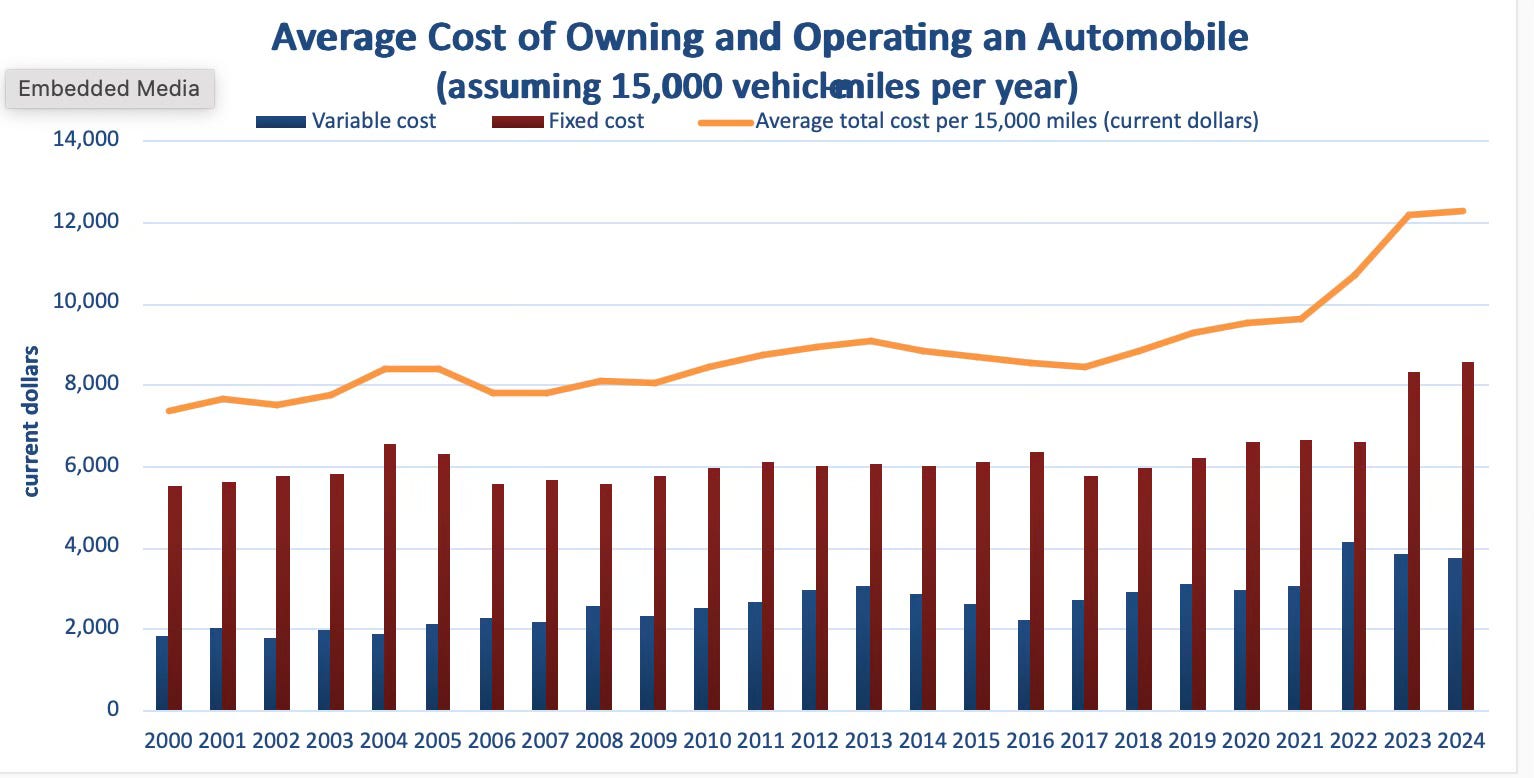
Need-to-Know: Owning a car costs $12,300/year
The average annual cost to own and operate a car in the U.S. was $12,300 in 2024, according to the US Bureau of Transportation.
Yes, $12,300* a year.
(*Includes average costs of fuel, maintenance, tires, insurance, license, registration, taxes, depreciation, and finance to drive 15,000 miles a year. $8500 of those costs are fixed, so you pay even if the car sits in your driveway all year. Details here.)
Knowing this, we got rid of our second car a long time ago.
Need-to-Know: The less you drive, the healthier you’ll be
Additional incentives to driving less: Walking and cycling are great ways to stay in shape, and less driving means less pollution that worsens conditions like asthma and heart disease.
Driving cars has social costs, too. A 20% reduction in miles driven would improve air quality and save billions in health care costs. There’d be a substantial decline in car crashes, saving even more billions of dollars, and preventing a whole lot of pain and grief.
Investments in buses and rail transit, and safe, protected routes for cyclists and pedestrians, are investments in our health and well-being. They also more than pay for themselves when the true costs of personal car use are included.
Check out RMI’s detailed analysis and pass it on to your local representative so they can make better decisions about our transportation needs.
Until next time. Be well.
Stephen